Blog

Hong Kong Itineraries — Central in Four Hours

Hong Kong Itineraries — Central in Four Hours

This four-hour itinerary will take you through some of the key heritage sites and cultural experiences in Central. If you have just one day in Hong Kong, I suggest doing this walk to get a sense of Hong Kong’s most iconic character. The walk will 

America on Foot — The Pittock Mansion

America on Foot — The Pittock Mansion

I was drawn to a tour at the Pittock Mansion for two reasons. First is that it is a beautiful heritage building in Portland. Second, one can do hiking trails in the area. Originally, I was going to do a proper hike there, but I 

America on Foot — The Multnomah Falls

America on Foot — The Multnomah Falls

I enjoyed the Multnomah Falls as a good excursion, away from the city life of Portland. On this early morning I ventured into a natural endowment of Oregon, what ultimately is the most precious heritage of the state. The Multnomah Falls features the spectacular view of a triple cascade. It is very close to the City of Portland and easily accessible by public transportation.

Getting There

From Downtown Portland I took the light rail to the Gateway Transit Center. It’s an open area transport hub with light rail and buses. I arrived before daybreak and so in the dark I inquired at the buses, asking the drivers whether the one in wait was indeed going to the Multnomah Falls, and it was. About 45 minutes later I made it to the Multnomah Falls parking lot. I walked the tunnel under the train tracks to reach the scenic spot.

The schedule of the public transportation is available on Google Maps. From what I observed, on a weekday the buses only run in three sessions, very early morning, around noon and around 3pm. Please be very aware, because missing the return bus to Portland would result in a waiting of two, three hours before the next round of return pickup comes. Of course, you would always have Uber app with you in case the public buses don’t work out.

Wait at the opposite side of the parking lot for the return bus, at the direction toward the city.

The Falls

At a height of 620 feet, the Multnomah Fall is the tallest waterfall in Oregon. There are three drops of the fall. There is an upper one at 542 feet, and a lower falls at 69 feet, both cascading downpours that loop the infinite power of nature.

The Falls is located in the Columbia River Gorge. It originates from the underground springs of the Larch Mountain. Rainwater throughout the year replenishes the fall’s spectacular roars of downward rapids. I went in the morning after significant rain in the area, and the water moved like a dragon tumbling down the pool from heavens. This water would make its way to the Benson Lake, where it drains, approximately 1,300 feet west of the bottom of the falls. The tall fir trees so typical of Oregon’s scenery line the mount before me, seemingly humming the soul songs of nature.

As a natural phenomenon, the Multnomah Falls is known to exhibit extreme powers of water erosion. It is effectively nature’s chisel, that chips away the cliff wall of the Columbia River Gorge. In the winter, when the falls freeze, the erosive power is only amplified as against the cliff wall. Over time, it has so happened that large chunks of the cliff come hurtling to the ground and the pool below.

Therefore, for the sake of safety, do not venture out of the paved trails in this area. Besides the paths being generally slippery, there is the danger of falling rocks as well. There are hiking trails surrounding the general scenic area. Please visit this website for relevant information.

A Myth of Creation

The Falls is named after the Multnomah tribe. The tribesmen believe that “the waterfall was formed after a young woman sacrificed herself to the Great Spirit to save a Multnomah village from a plague by jumping from the cliff, and the Multnomah peoples were saved. After her death, water began to flow from above the cliff, creating the waterfall.” (Wikipedia).

The Multnomah Falls Benson Bridge

The Multnomah Falls Benson Bridge was constructed circa 1917. The bridge “spans the lower falls at a height of 105 feet (32 m), and provides an expansive view of the upper falls” (Wikipedia).

The Benson Bridge was named after the wealthy lumberman Simon Benson. One day, he was having a walk at the Columbia River Gorge with his friend Samuel Lancaster, and Lancaster suggested that “it’d be nice if there were a footbridge the lower waterfall, with a path up to and across it so that visitors could look up at that magnificent waterfall above…” (Multnomah Falls Lodge website) Upon hearing this, Benson wrote a check for Lancaster and thus began the project.

The engineer’s own recollection explains well what a marvel it was that this bridge could be constructed, “Robert Ringer, the subcontractor, wrote that, ‘the bridge had to be built 135 feet in the air above the base of operations at the foot of the lower falls. It was straight up a rocky cliff’ he added with, ‘water dashing over one side of it. It was a wild tangle of Nature and we had to climb on our hands and knees to reach the building site. We installed an aerial trolley operated by horses to put up all the materials.’ (Multnomah Falls Lodge website)

The beauty of the Multnomah Falls is sung throughout history. According to the Wikipedia, the famous explorers Lewis and Clark have also visited the falls, and it was noted in Lewis’ journal entry.

The Multnomah Falls Lodge

The Multnomah Falls Lodge is itself a heritage building. Built in 1925, the Lodge celebrates its centennial in 2025, when I visited. I decided against having a meal there, because it was yet to open when I visited. If I had a meal there after I visited the Falls, I would miss the return bus to Portland.

But I did have a very early (and much-needed) coffee at the coffee stand, and it was a touch of mercy at that temperature.

I admired the architecture of the Lodge, it has a sturdy, rustic appearance due to its stony exterior. The lodge was “built in a ‘Cascadian’ architectural style using native split fieldstone laid irregularly. The building features a steeply pitched cedar-shingled gable roof with dormers and large chimneys.” (Wikipedia) The stones that give the building a rustic vibe were all locally sourced.

Between the 1930s to the mid-20th century, the Lodge provided meals and lodging to travelers. To mark the special occasion of its centennial, the Lodge has rolled out their centennial lager and bourbon for their spirited supporters, the liquor was locally produced by Wood Family Spirits and features the Multnomah Falls and the Lodge on its label.


The Multnomah Creek Bridge

The Multnomah Creek Bridge was built in 1914 to bring what is now the Historic Columbia River Highway across Multnomah Creek below the falls. It is 67 feet (20 m) long and it is part of the highway’s listing on the National Register of Historic Places. Of couse, both the Benson Bridge and the Multnomah Falls Lodge are also listed on the National Register of Historic Places.

Best Time of the Day to Visit

I arrived at the falls perhaps too early. Oregon was raining quite a bit in the three days that I was there, and that morning was very misty with drizzles. The sun has come out then but it was still too dark to illuminate the falls to reveal the truest colors that make it beautiful. I noticed though that as the sun shined more brightly, the scenery came into better focus, the colors acquiring the distinctiveness that really highlighted the roaring water.

Therefore, I suggest that one visits the under the shines of broad daylight. Since the buses only go in three sessions during the day, perhaps then the noon hours would be the best.

Source

The Wikipedia on Multnomah Falls.

Eyewitness Travel Guides, USA (2006).

The website of Multnomah Falls Lodge.

America on Foot — Portland Preliminaries and Itinerary

America on Foot — Portland Preliminaries and Itinerary

I was in Portland for two and a half days and spent two days sightseeing. Portland has quite a number of scenic spots, museums and historical venues to offer if one has a car. Since I didn’t have a car, I will be discussing places 

America on Foot — The USS Iowa in San Pedro

America on Foot — The USS Iowa in San Pedro

My heart skipped a beat when I came to a closeup view of the USS Iowa. It was stately, to say the least. Under generous sunlight the USS Iowa breathes an aged but assured glory. Its imposing image is immediately evocative of battle scenes. I 

America on Foot — The Lions Lighthouse in Long Beach

America on Foot — The Lions Lighthouse in Long Beach

I noticed that the Los Angeles mornings were always somewhat hazy. The day was young and the wintriness was gentle. In fact, it felt almost as if California was still easing into the fall. For it was even warmer than Hong Kong at this time of the year.

Looking at the haziness, I figured that I could first have an early lunch and then wait for the sun to clear up the sky. After lunch at I walked toward the shore for about 40 minutes, and by the time I got there, sunshine was plenty and the day was good for photographs.

Perhaps all that is worth seeing for a tourist in Long Beach are all concentrated in the shore. I passed by the Pike Outlets, which features some common brand names like H&M, Nike, Cotton On and GAP. Having passed the footbridge, I arrived at the shoreline area.

There are a few things in this area that are worth seeing. The first is the Aquarium of the Pacific. There were groups of school age children there when I passed by. Across from the Aquarium is a marina. The whale watching yachts stand by there for commission.

Then there is the Lions Lighthouse. Across from the Lions Lighthouse (not accessible by foot over the waters) is the Shoreline Village, which is very touristy with a little bit of photogenic quality. Then, again, across the waters, but to the south, is docked the RMS Queen Mary. It has been renovated recently, and reopened its doors for tours and visits.

I took a walk all around the Lions Lighthouse this morning.

The Lions Lighthouse

Situated at the estuary of the Los Angeles River is the Shoreline Aquatic Park. Shaped like a half-enclosed thenar space, the Shoreline Aquatic Park is a bay where the Los Angeles River meets the ocean. The Lions Lighthouse glistens under the midday sunshine. The vibe was relaxed. People took walks, jogged, biked, and living life there in as Californian a manner as it could be.

The Lions Lighthouse is a decorative lighthouse of the Downtown Long Beach Lions Club International, which set it up to commemorate their dedication to the blind. The lighthouse was first lit in 2000.

The fact that it was not a historic relic in the real sense of the word did not make it any less valuable. Its charitable purpose was plenty interesting to me. Besides, it was at the lighthouse that the love for Long Beach as a community shines. There are captions there explaining various aspects of Long Beach at the Light House.

A Brief History of Long Beach

Early Settlement

It is said that this area was long inhabited by the Native Americans, as early as the 1500s. At the time, the people called it “Bay of the Smokes,” referring to the smoke signals that the Native Americans used for communication at what is now the Signal Hill area. During the late 1700s, the area was owned by the Spanish, and it was divided into Rancho Los Cerritos and Rancho Los Alamitos (thus the beach being named Alamitos Beach).

In the 1880s, the residents voted to incorporate the city as Long Beach.

A Fortune Befallen

In 1921, with discovery of oil in Long Beach came an enormous economic boom. Long Beach also became a popular seaside resort and port town. The Pike was the area of recreational activities and boardwalk entertainment. Between 1902 and 1979, the Pike was first an amusement park, then throughout the years was the designated venue for different configurations of entertainment. Its main walkway was lined with hotdog stands, arcades, shooting galleries, and cafes. It stood for the best of all fun in Southern California, and was known as “Walk of a Thousand Lights.” As I walked in the shoreline area, I figured that perhaps a lot of the old Pike has retained its historical role to this day.

Another interesting history of Long Beach is that Calbraith “Cal” Rodgers, who flew the first airplane across the continental U.S., landed in Long Beach as the final destination for his flight that began in New York. This 1911 fanfare was known as Vin Fiz because Armour & Company, the sponsor of the flight, wanted to use the occasion to advertise its grape soda.

A Community Dedicated to the Nation

Yet Long Beach is much more than fun and adventures. Between 1943 and 1997, this is the site for the major naval base on the West Coast. The shipyard served fully its patriotic function during WWII, having done 303 major repairs on 9 battleships, 14 cruisers, 31 destroyers escorts, 46 destroyers and 30 oil tankers.

The story of Long Beach is a decorated one, and it really ought to be proud as a community.

After an easy walk at the Shoreline Aquatic Park, I decided to return to the hotel. That was a nice first day in Southern California.

Sources

The Wikipedia on Lions Lighthouse.

Descriptions on site at the Lions Lighthouse.

The City Government of Long Beach, Long Beach History.

America on Foot — Preliminaries

America on Foot — Preliminaries

It has been over a decade since I set foot in the United States, the country that I also consider to be home. There was urgency in returning this time because my driver’s license has expired, and every ten years, the renewal requires an in-person 

Historic Macau — Tak Seng On

Historic Macau — Tak Seng On

Before you head out on the Senado Square, perhaps it is worthwhile to visit the Tak Seng On on Avenida de Almeida Ribeiro. This was the street where many pawnshop businesses set foot during the late Qing dynasty in Macau. The streets of Rua de 

Historic Macau — A Two-Day Itinerary for a Heritage Tour in Macau

Historic Macau — A Two-Day Itinerary for a Heritage Tour in Macau

In this two-day trip in Macau, I visited a host of significant historic heritage in the Macau Peninsula area. The following is an itinerary for those two days. There are relatively less historical sites in the Taipa area, and that is for another occasion.

Macau is a very walkable city, and so I visited all these sites on foot.

Day 1 Morning

Site Significance Time required Nature of Scenery
View of Nam Van Lake A man-made lake that is bisected by the Macau-Taipa Bridge. 10 minutes City views
Sei Kee Café in Nam Van Besides its claypot brewed coffee, Sei Kee’s pork chop buns also top the charts for this distinctly Macau delicacy. However, at the Nam Van Lake, the restaurant only serves the beef variation of the bun. 30 minutes Food
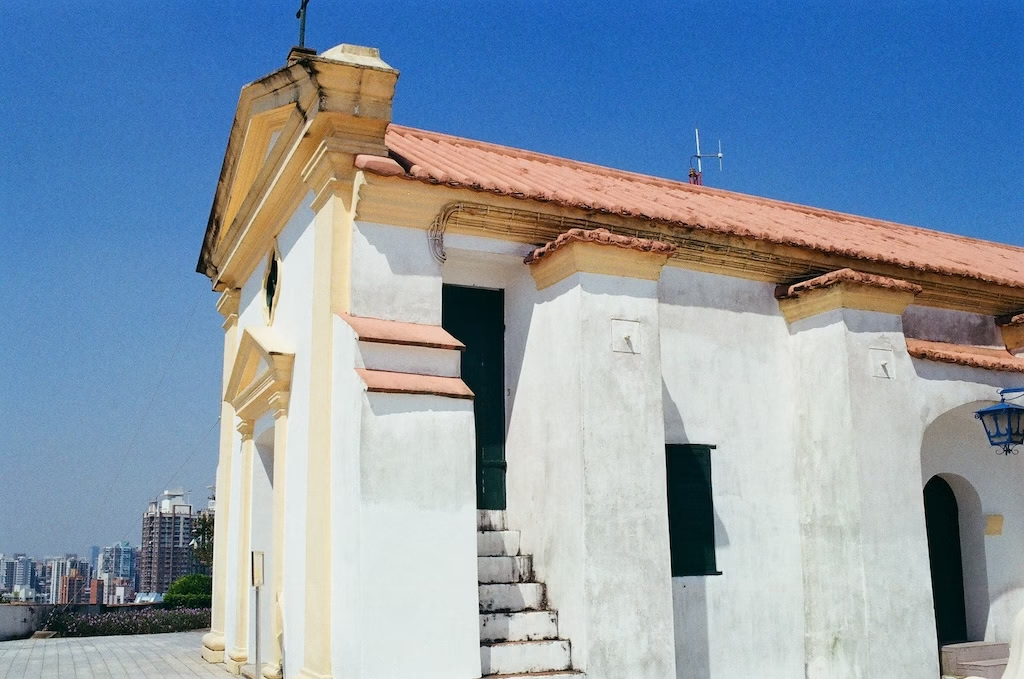
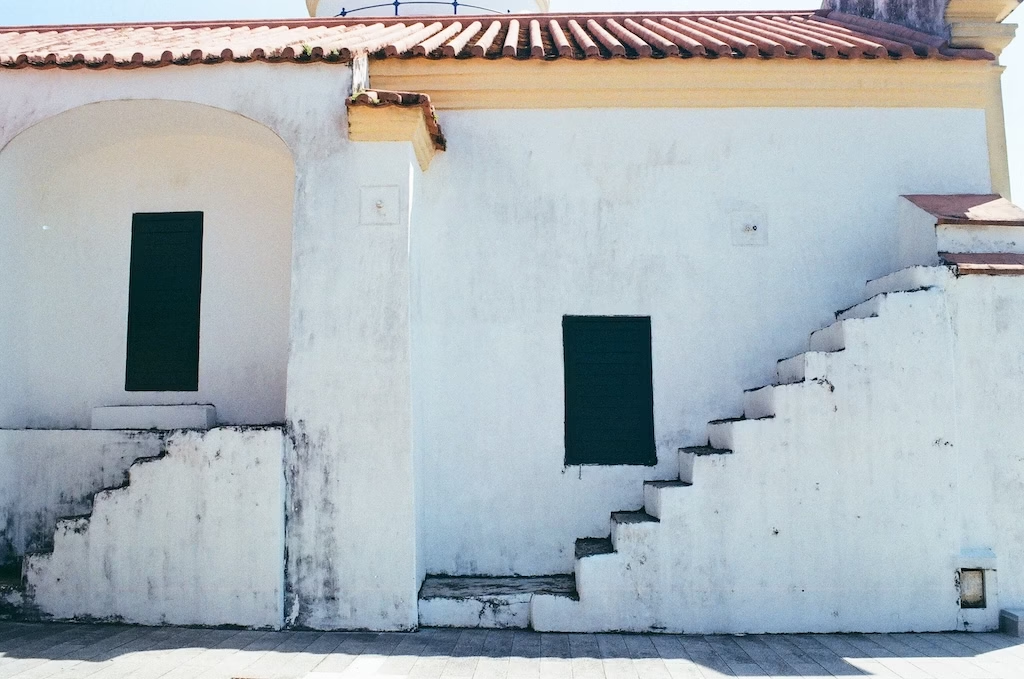
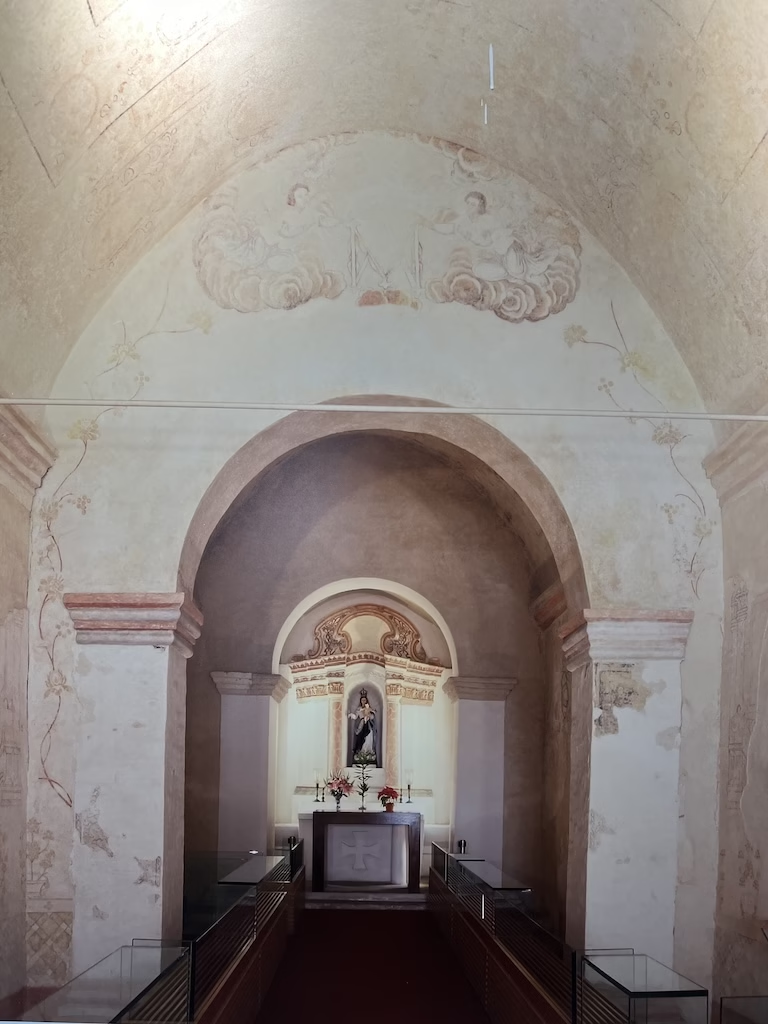
Our Lady of Penha Chapel Colina de Penha is the third highest elevation point in all of Macau at 62.7 meters above sea level. Our Lady of Penha Chapel was established in 1622 by the Augustinian priests. The church originated from a crew of the ship São Bartholomeu, which was pursued by the Dutch when it was near Formosa, en route to Japan. The Crew then established this church to thank for a safe return. 30 minutes Religious & architecture
Moorish Barracks The barracks was built in August 1874 to accommodate a regiment from Goa, Portuguese India. It was designed by an Italian architect. 15 minutes Historical Architecture
The Lilau Square Legend has it that an old woman built a pool that collected fresh water here. In Chinese, Lilau Square means, “the grandma’s well square.” It is said that “once you have drunk the water of Lilau Square, you would never be able to forget Macau.” 15 minutes Historical and cultural
The Mandarin’s House Of the Zheng’s, the Mandarin’s House was built in 1869. The Mandarin’s House is the only Tai Fu Tai in all of Macau that celebrates the Qing official title of Ronglu. Tai Fu Tai was the traditional mansion type of residency for a civilian government official, in Qing dynasty times known as Tai Fu. 45 minutes Chinese heritage in Macau

Day 1 Late Morning to Noon

Site Significance Time required Nature of Scenery
St. Lawrence’s Church St. Lawrence is the patron saint for navigation. This church used to overlook the shore of Macau. The family of the Portuguese seamen would pray here for the safety of their beloved, as well as watching -the approaching vessels moor to the safety of home. The current structure is of 1846. 20-30 minutes Religious & architecture
St. Joseph’s Seminary and Church Along with the St. Paul’s Ruins, this church stand for the only two examples of baroque architecture in China. 20 minutes Religious & architecture
St. Augustine’s Church St. Augustine’s Church features neoclassical elements of architecture, with just a tiled and gabled roof, no dome, and one tower. Overall, its style reflects the spirit of the Renaissance. The current Augustine’s Church is a structure of 1814. 15 minutes Religious & architecture
Dom Pedro V Theatre Built in 1860, it was the first western-style theater in China. Needless to say, its establishment was originally to serve the cultural and social circles of the Portuguese / Macanese in Macau. 15 minutes Cultural and architecture
Sir Robert Ho Tung Library Sir Robert Ho Tung purchased the mansion in Macau in 1918. The original structure was built in 1894 in the Macanese style. During the Japanese Occupation years in Hong Kong, Sir Robert Ho Tung lived in this mansion, as Macau remained neutral during the war. He left the mansion to the Macau government in his will, designating its use as a public library. 15-20 minutes, can sit at the benches to rest there. Cultural and architecture


Day 1 Afternoon

Site Significance Time required Nature of Scenery
Tak Seng On A very small but engaging museum that showcases the history of the pawn business in Macau. 30 minutes History and museum
Senate Square (Senado Square) Namely the heart of Macau that drives all pedestrian flows, the Senado Square is a must-see before one reaches the famous Ruins of Saint Paul’s. In this square, you will come across an innumerable number of historic structures, including the St. Dominic’s Church, the Municipal Administration Office, the Santa Casa Misericordia, the Macau Post Office, amongst others. 1 hour


Urban scenery, historical architecture, street food.

Day 2 Morning

Site Significance Time required Nature of Scenery
Ruins of Saint Paul’s The Jesuits  set up a college at St. Paul’s to give home to Japanese students due to the persecution of Christians in Nagasaki. The very first St. Paul’s cathedral was thus known conterminously as St. Paul’s college. The college was an institute of higher learning, with didactics in theology as well as mathematics. 15-20 minutes, depending on the crowd and how well you can take good photos. Historical architecture
Na Tcha Temple This old temple lies on the way from the Ruins of Saint Paul’s to the Monte Fort. Built in 1888 and the Na Tcha Festival takes place annually in May of the Lunar calendar. 10 minutes Religious and architecture
Monte Fort (Fortaleza do Monte or Mount Fortress) The fort was built between 1617 and 1626 on Mount Hill by the Jesuits in order protect their properties. The fort had also served as the governor’s residence. 1 hour (longer if you want to visit the Macao Museum) Historical architecture
Wabi-Sabi A super economical and good restaurant, but very small space, so be prepared to line up at 11am for lunch. 1 hour Recommended restaurant

Day 2 Afternoon

Site Significance Time required Nature of Scenery
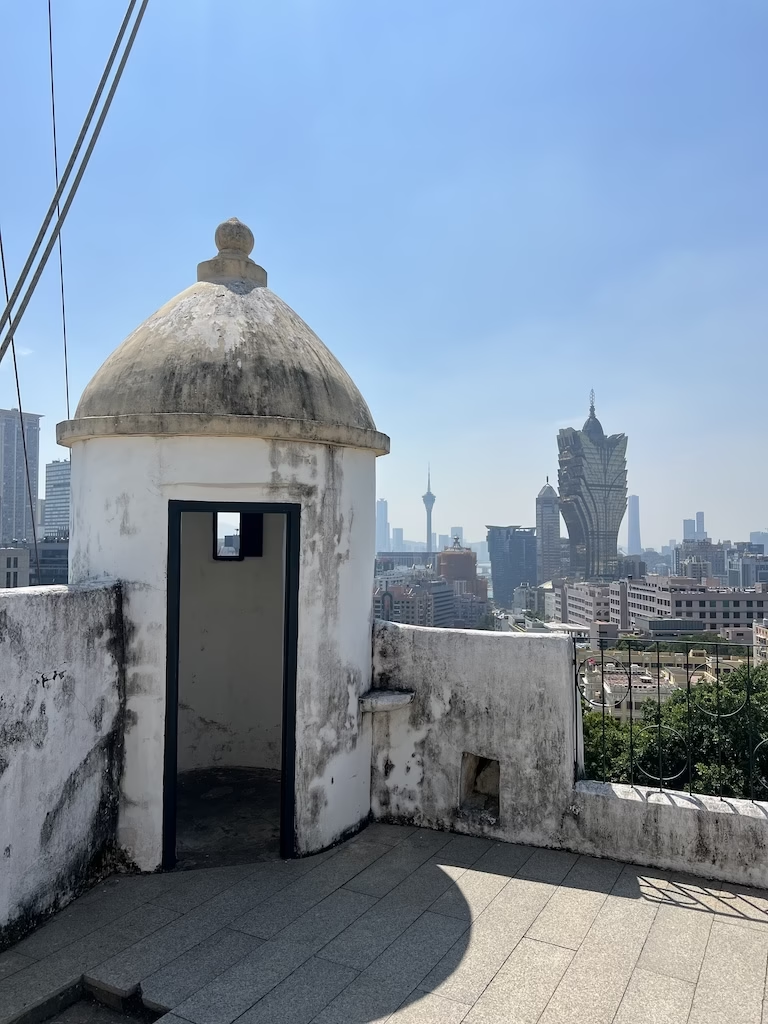
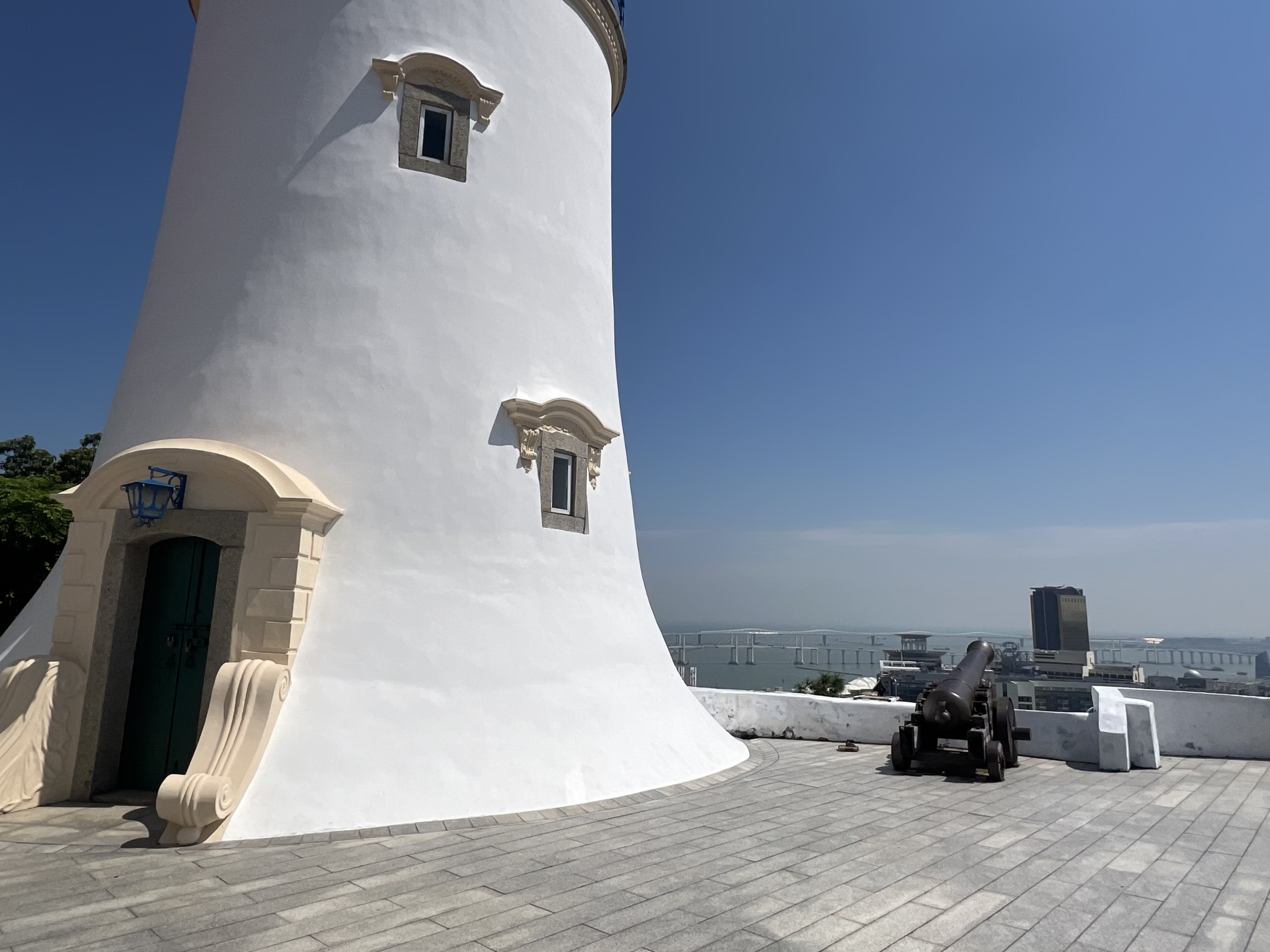
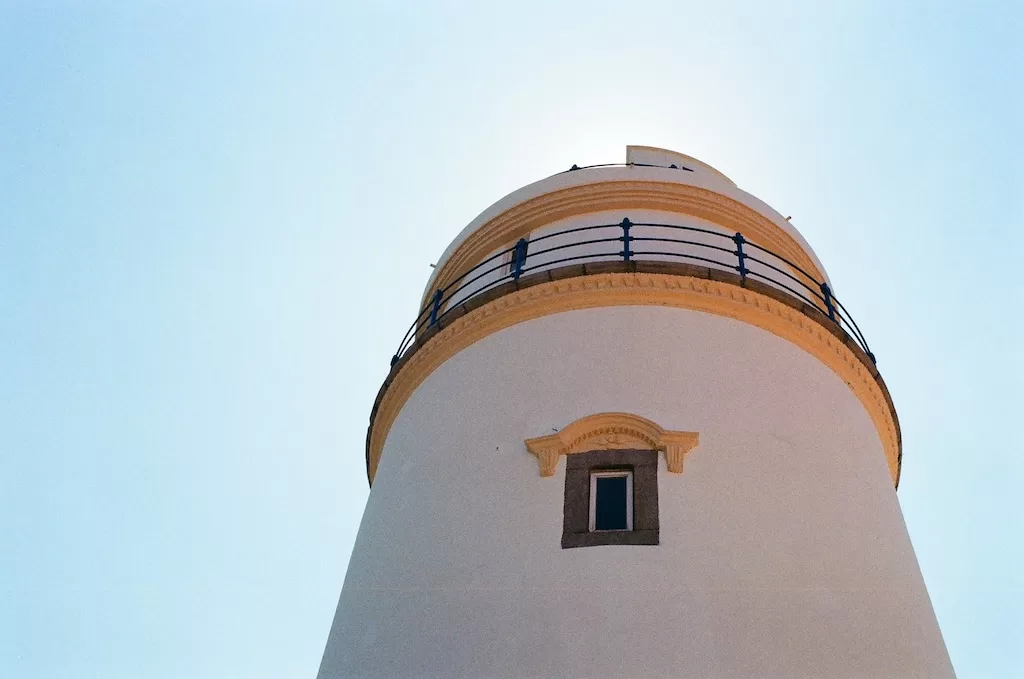
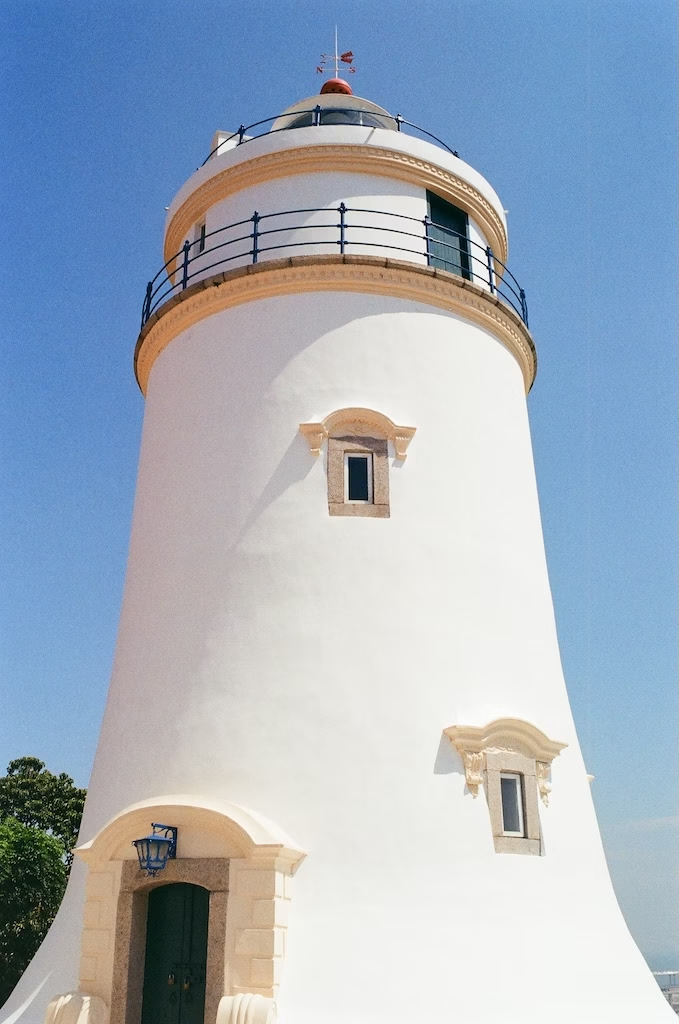
Guia Fortress and Lighthouse The fort was built in the 17th century as a colonial military facility. At the time of the Dutch invasion, it was partly constructed. 1 hour Historical architecture
Historic Macau — The Dom Pedro V Theatre and Sir Robert Ho Tung Library

Historic Macau — The Dom Pedro V Theatre and Sir Robert Ho Tung Library

Right across from the St. Augustine’s Church is the Dom Pedro V Theatre, built in an exceptionally beautiful style of neoclassical architecture. Its elegance, being distinctly cultural in character, is a nice change of scenery from the multitude of churches that I saw in Macau.