
America on Foot — The Multnomah Falls
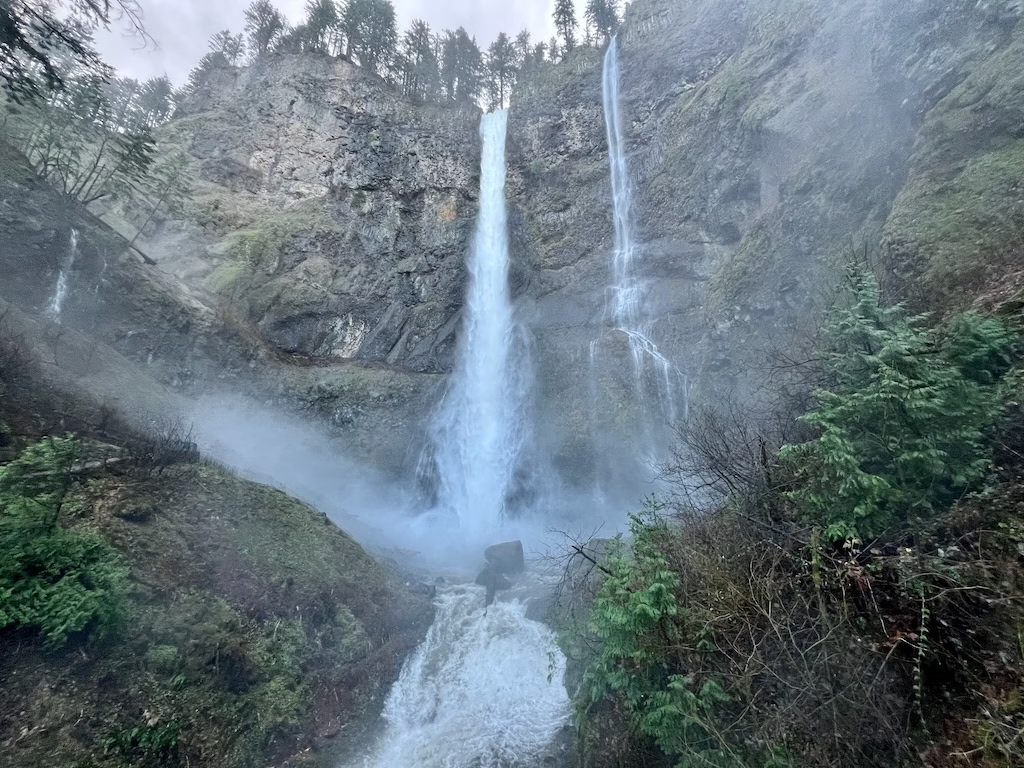
I enjoyed the Multnomah Falls as a good excursion, away from the city life of Portland. On this early morning I ventured into a natural endowment of Oregon, what ultimately is the most precious heritage of the state. The Multnomah Falls features the spectacular view of a triple cascade. It is very close to the City of Portland and easily accessible by public transportation.
Getting There
From Downtown Portland I took the light rail to the Gateway Transit Center. It’s an open area transport hub with light rail and buses. I arrived before daybreak and so in the dark I inquired at the buses, asking the drivers whether the one in wait was indeed going to the Multnomah Falls, and it was. About 45 minutes later I made it to the Multnomah Falls parking lot. I walked the tunnel under the train tracks to reach the scenic spot.
The schedule of the public transportation is available on Google Maps. From what I observed, on a weekday the buses only run in three sessions, very early morning, around noon and around 3pm. Please be very aware, because missing the return bus to Portland would result in a waiting of two, three hours before the next round of return pickup comes. Of course, you would always have Uber app with you in case the public buses don’t work out.
Wait at the opposite side of the parking lot for the return bus, at the direction toward the city.
The Falls
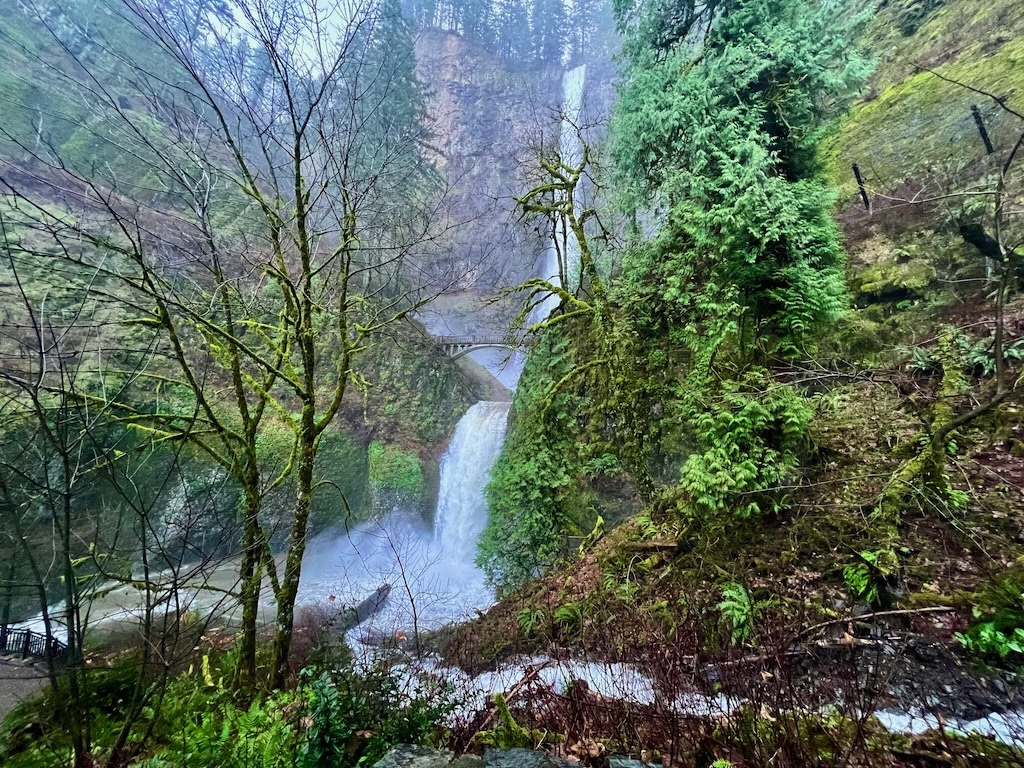
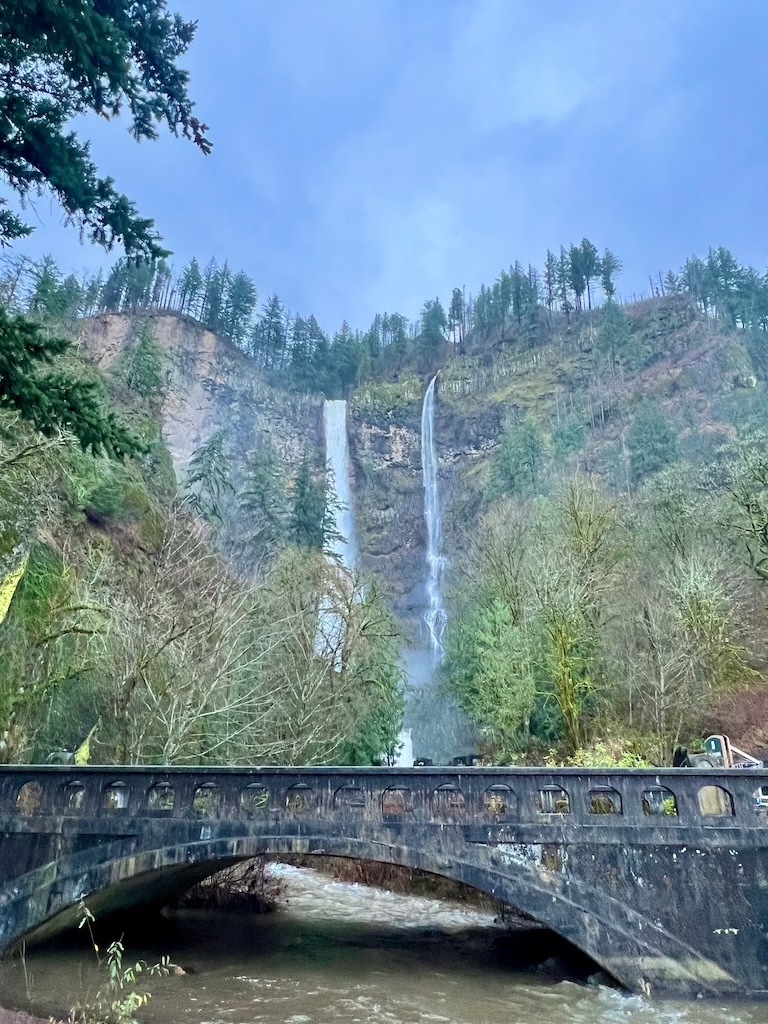
At a height of 620 feet, the Multnomah Fall is the tallest waterfall in Oregon. There are three drops of the fall. There is an upper one at 542 feet, and a lower falls at 69 feet, both cascading downpours that loop the infinite power of nature.
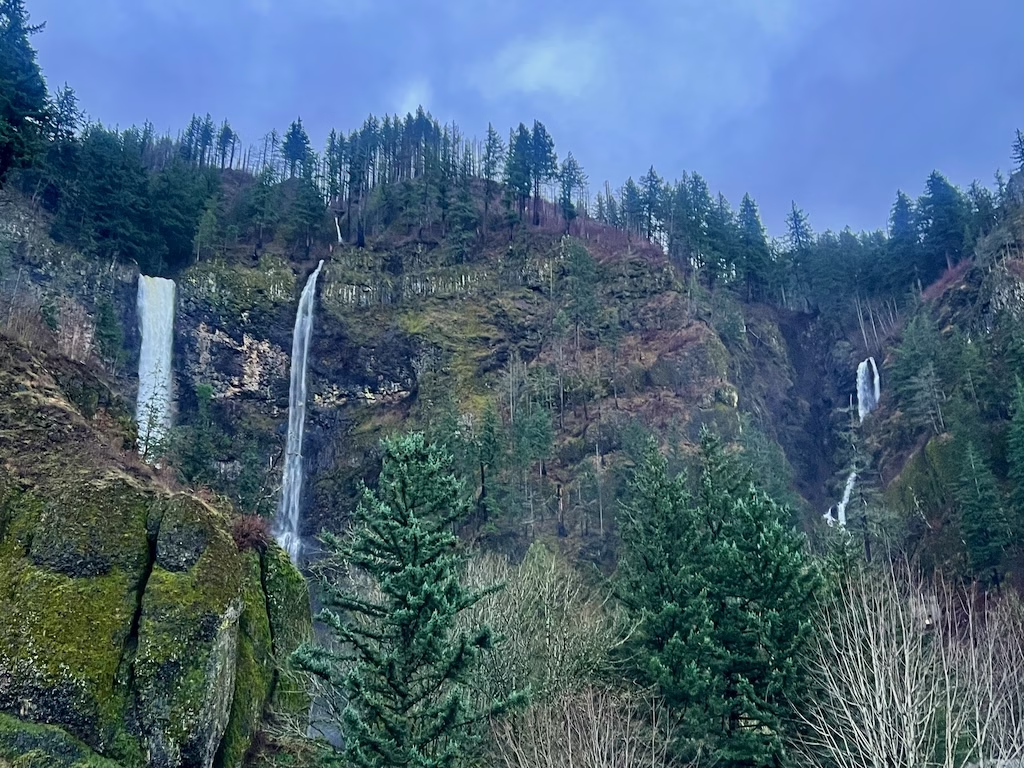
The Falls is located in the Columbia River Gorge. It originates from the underground springs of the Larch Mountain. Rainwater throughout the year replenishes the fall’s spectacular roars of downward rapids. I went in the morning after significant rain in the area, and the water moved like a dragon tumbling down the pool from heavens. This water would make its way to the Benson Lake, where it drains, approximately 1,300 feet west of the bottom of the falls. The tall fir trees so typical of Oregon’s scenery line the mount before me, seemingly humming the soul songs of nature.
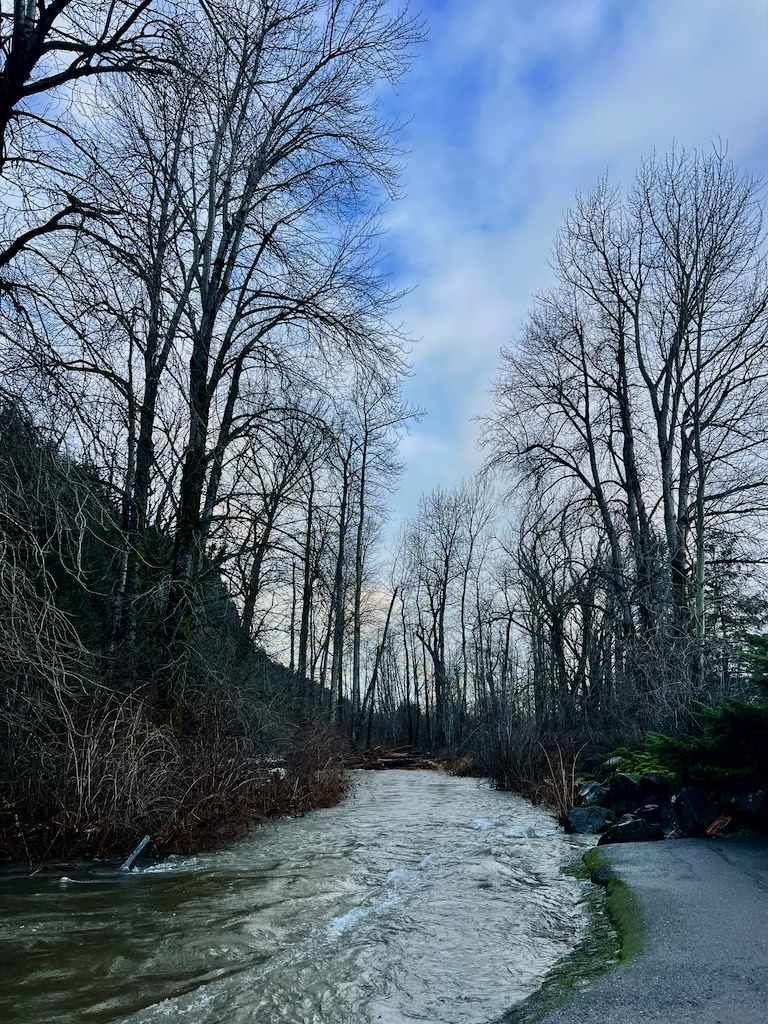
As a natural phenomenon, the Multnomah Falls is known to exhibit extreme powers of water erosion. It is effectively nature’s chisel, that chips away the cliff wall of the Columbia River Gorge. In the winter, when the falls freeze, the erosive power is only amplified as against the cliff wall. Over time, it has so happened that large chunks of the cliff come hurtling to the ground and the pool below.
Therefore, for the sake of safety, do not venture out of the paved trails in this area. Besides the paths being generally slippery, there is the danger of falling rocks as well. There are hiking trails surrounding the general scenic area. Please visit this website for relevant information.
A Myth of Creation
The Falls is named after the Multnomah tribe. The tribesmen believe that “the waterfall was formed after a young woman sacrificed herself to the Great Spirit to save a Multnomah village from a plague by jumping from the cliff, and the Multnomah peoples were saved. After her death, water began to flow from above the cliff, creating the waterfall.” (Wikipedia).
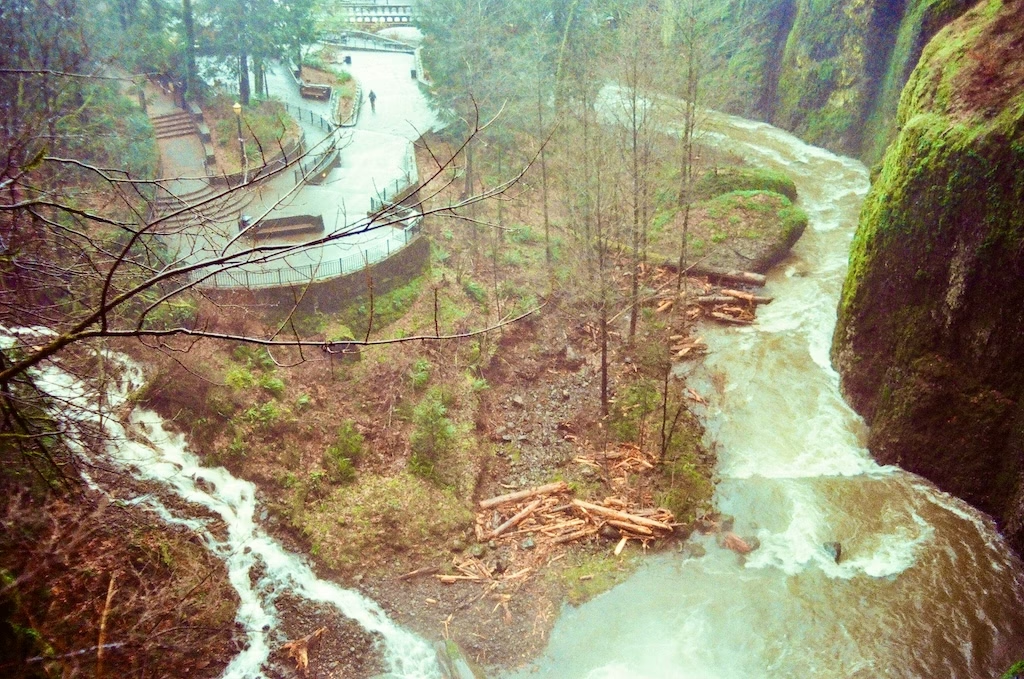
The Multnomah Falls Benson Bridge
The Multnomah Falls Benson Bridge was constructed circa 1917. The bridge “spans the lower falls at a height of 105 feet (32 m), and provides an expansive view of the upper falls” (Wikipedia).
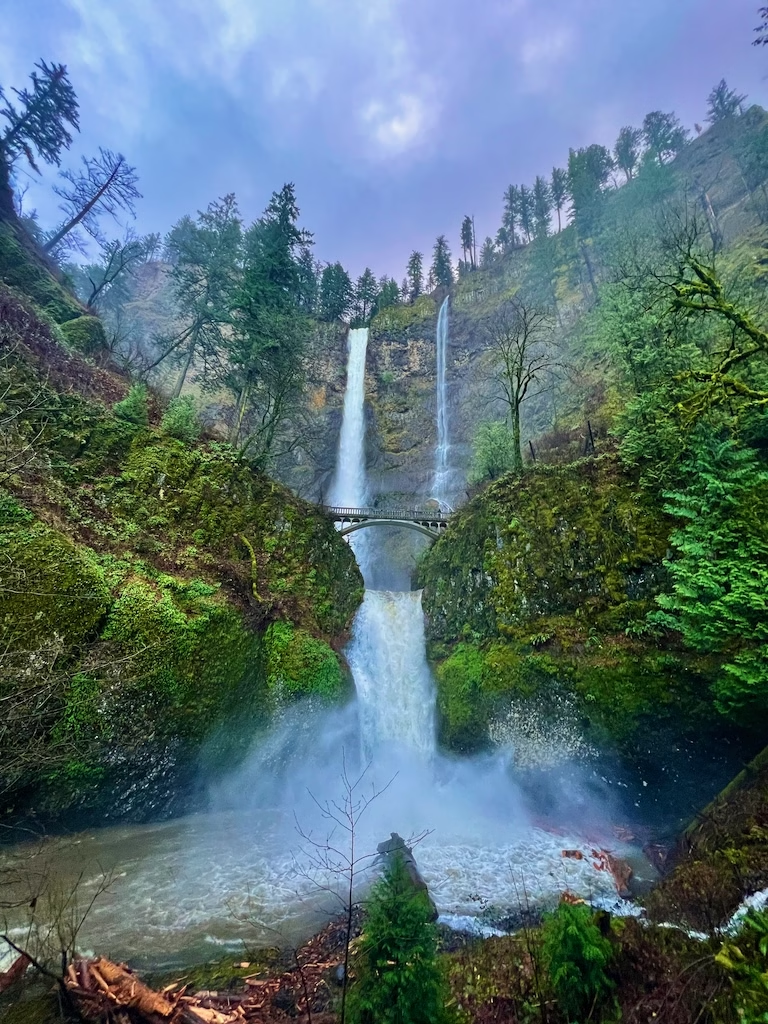
The Benson Bridge was named after the wealthy lumberman Simon Benson. One day, he was having a walk at the Columbia River Gorge with his friend Samuel Lancaster, and Lancaster suggested that “it’d be nice if there were a footbridge the lower waterfall, with a path up to and across it so that visitors could look up at that magnificent waterfall above…” (Multnomah Falls Lodge website) Upon hearing this, Benson wrote a check for Lancaster and thus began the project.
The engineer’s own recollection explains well what a marvel it was that this bridge could be constructed, “Robert Ringer, the subcontractor, wrote that, ‘the bridge had to be built 135 feet in the air above the base of operations at the foot of the lower falls. It was straight up a rocky cliff’ he added with, ‘water dashing over one side of it. It was a wild tangle of Nature and we had to climb on our hands and knees to reach the building site. We installed an aerial trolley operated by horses to put up all the materials.’ (Multnomah Falls Lodge website)
The beauty of the Multnomah Falls is sung throughout history. According to the Wikipedia, the famous explorers Lewis and Clark have also visited the falls, and it was noted in Lewis’ journal entry.
The Multnomah Falls Lodge
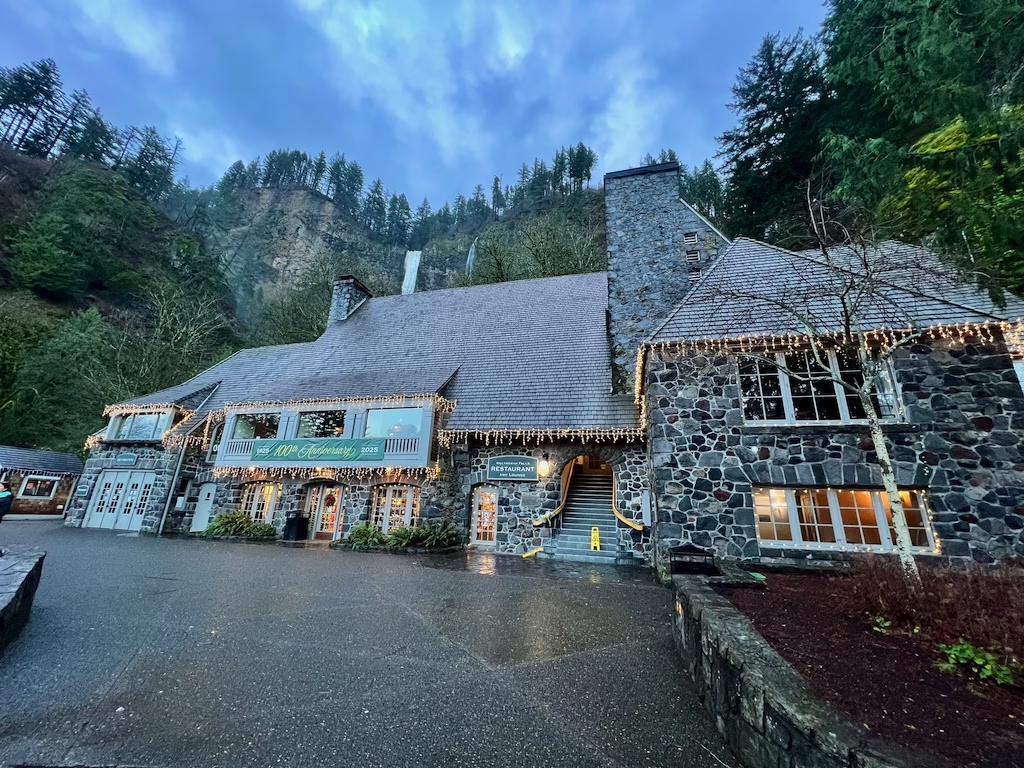
The Multnomah Falls Lodge is itself a heritage building. Built in 1925, the Lodge celebrates its centennial in 2025, when I visited. I decided against having a meal there, because it was yet to open when I visited. If I had a meal there after I visited the Falls, I would miss the return bus to Portland.
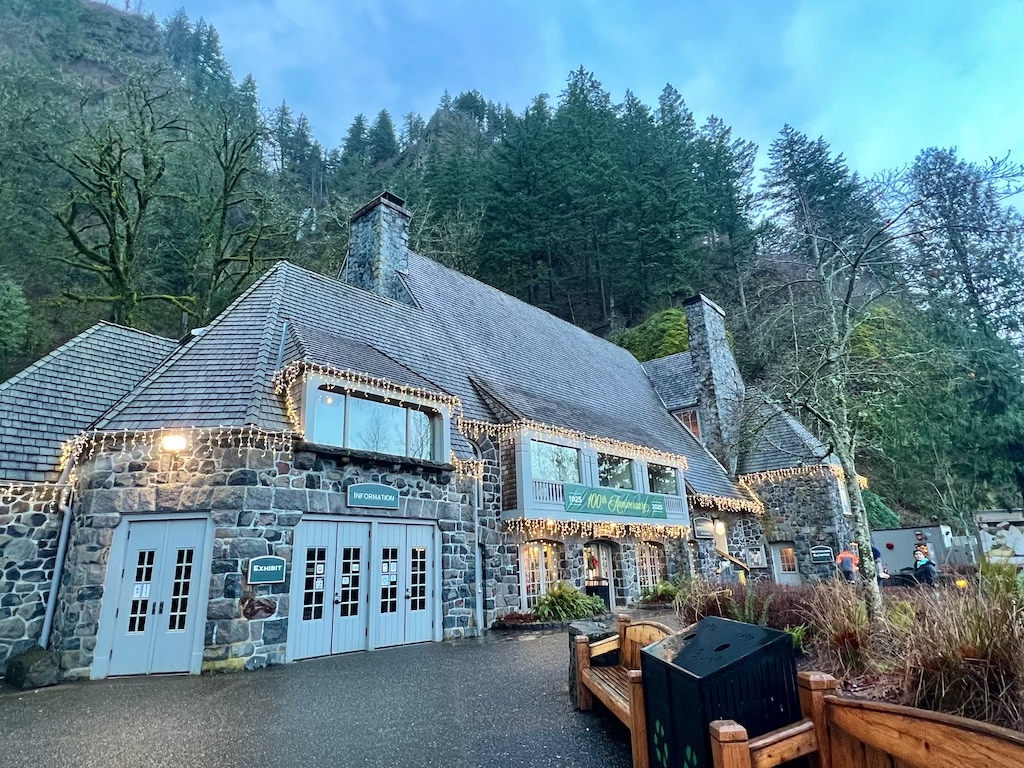
But I did have a very early (and much-needed) coffee at the coffee stand, and it was a touch of mercy at that temperature.
I admired the architecture of the Lodge, it has a sturdy, rustic appearance due to its stony exterior. The lodge was “built in a ‘Cascadian’ architectural style using native split fieldstone laid irregularly. The building features a steeply pitched cedar-shingled gable roof with dormers and large chimneys.” (Wikipedia) The stones that give the building a rustic vibe were all locally sourced.
Between the 1930s to the mid-20th century, the Lodge provided meals and lodging to travelers. To mark the special occasion of its centennial, the Lodge has rolled out their centennial lager and bourbon for their spirited supporters, the liquor was locally produced by Wood Family Spirits and features the Multnomah Falls and the Lodge on its label.
The Multnomah Creek Bridge
The Multnomah Creek Bridge was built in 1914 to bring what is now the Historic Columbia River Highway across Multnomah Creek below the falls. It is 67 feet (20 m) long and it is part of the highway’s listing on the National Register of Historic Places. Of couse, both the Benson Bridge and the Multnomah Falls Lodge are also listed on the National Register of Historic Places.
Best Time of the Day to Visit
I arrived at the falls perhaps too early. Oregon was raining quite a bit in the three days that I was there, and that morning was very misty with drizzles. The sun has come out then but it was still too dark to illuminate the falls to reveal the truest colors that make it beautiful. I noticed though that as the sun shined more brightly, the scenery came into better focus, the colors acquiring the distinctiveness that really highlighted the roaring water.
Therefore, I suggest that one visits the under the shines of broad daylight. Since the buses only go in three sessions during the day, perhaps then the noon hours would be the best.
Source
The Wikipedia on Multnomah Falls.
Eyewitness Travel Guides, USA (2006).
The website of Multnomah Falls Lodge.