Blog

Historic Macau — The Spanish Augustinians in Macau and the St. Augustine’s Church

Historic Macau — The Spanish Augustinians in Macau and the St. Augustine’s Church

Not far from the St. Joseph’s Seminary and Church is the St. Augustine’s Church and the St. Augustine’s Square. Following the footsteps of the first Catholic missionaries, the Jesuits, the Augustinians also made their way to Macau in the 1580s. Other Catholic missionaries that came 

Historic Macau — St. Joseph’s Seminary and Church

Historic Macau — St. Joseph’s Seminary and Church

Its name Igreja e Seminário de São José in Portuguese, St. Joseph’s Seminary and Church was a church of the Jesuits. The seminary was founded in 1728, while the construction of the church building completed in 1758. As with the St. Lawrence’s Church, St. Joseph’s 

Historic Macau — The History of the Jesuits in Macau and the St. Lawrence’s Church

Historic Macau — The History of the Jesuits in Macau and the St. Lawrence’s Church

A historic tour of Macau would not be complete without learning about the heritage of the Christian faith in this small city. Perhaps it is fortunate that with the ills of western colonialism also came the light of the Christian faith.

Different catholic orders have had a strong presence in Macau. The Jesuits, Dominicans, Franciscans and the Augustinians had notable influence in bringing the Christian faith into China via Macau. From cathedrals to schools, from charity to battles, the Catholic missionaries have been the spirit and sinew in Macau’s development.

The Jesuits in Macau

From amongst the different orders of missionaries, the Jesuits were the most prominent because of its earliest arrival in Macau. Fathers Luís Fróis and Giovanni Battista Del Monte arrived in Macau in 1562 as the first Jesuits to set up residence and ministry in Macau. When fathers Francisco Peres, Manuel Teixeira and André Pinto arrived in 1563, Fathers Fróis and Del Monte moved on to their posts in Japan.

At the end of 1565, the Jesuit began building their first permanent residence and chapel in Macau. The first bishop was the Portuguese Melchior Carneiro, who set up a sanatorium for leprosy. The first school in Macau was also started by the Jesuits in 1572.

In response to the emerging persecution of missionaries in Nagasaki, the Jesuits decided to set up a college at St. Paul’s to give home to Japanese students in the faith. The very first St. Paul’s cathedral (The Church of the Mother of God), was thus known conterminously as St. Paul’s college. The college was, properly considered, an institute of higher learning with didactics in theology as well as mathematics.

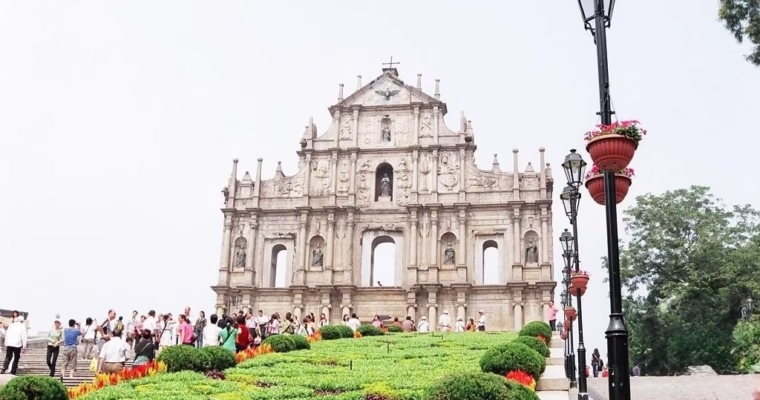
This cathedral would be destroyed by fire, and what has been rebuilt thereafter, between 1602 and 1634, would eventually be destroyed by fire as well. The façade of the 18th century structure would become the Ruins of St. Paul’s (Ruínas de São Paulo), to which all visitors to Macau pay homage.

Like the Japanese, the Chinese also persecuted the missionaries. In 1617, Peking acted on its historic ill will against Christianity. The missionaries that were expelled from China found refuge in Macau, especially in the College of St. Paul. Macau was the womb, the cradle and rite of passage for missions in China and Japan.

Historically, the most significant setback to the Jesuit Order was the suppression of the Society of Jesus in 1579 as ordered by the Marquis of Pombal. This development resulted in the expulsion of the Jesuits from western Europe and all the colonies in the world under the dominion of those European countries. This edict became effective in Macau in 1762, resulting in the closing of the College of St. Paul, as well as the Jesuit residency. At this point, 463 Jesuits had arrived in Macau, fulfilling the various purposes to which they were called.

The Jesuits would be restored in Macau in 1890 at the behest of the bishop of the diocese at that time. Yet in 1910, they were expulsed again from Macau due to the tension in the Holy See. They moved their base to Zhaoqing then. In 1913, the Portuguese authorities allowed them to return to Macau, but only on the condition that they worked in the Chinese part of the diocese in Macau.

The St. Lawrence’s Church

I wandered off from the Mandarin’s House and found my way through the uneven grids consisting of narrow streets that sprawled the hearts of the residential and the faithful in Macau. Soon, I arrived at the St. Lawrence’s Church.

Its name Igreja São Lourenço in Portuguese, the St. Lawrence’s Church is one of the earliest churches set up by the Portuguese in Macau. Its original building stood as early as 1560, as a simple wooden structure. This was certainly very soon upon the official founding of Macau in 1557.

The current structure is that of 1846, featuring neoclassical architecture in a light, heavenly yellow color that glows gently under the rays of late October. The nave is flanked by two bell towers. The St. Lawrence’s parish had existed as early as the times of the first Jesuit Bishop Melchior Carneiro, as one of the poor parishes in the neighborhood, with three poorly put together churches as the gravitational foci of faith and charity in the earliest beginning of Macau.

St. Lawrence is the patron saint for navigation. Before the establishment of the Nam Van Lake, this church overlooked the shore in this part of Macau. The family members of the Portuguese seamen would pray here for the safety of their beloved, as well as watching the approaching vessels moor to the safety of home.

Despite its humble beginning, the St. Lawrence’s Church, as rebuilt during the 19th century, is considered a significant church now. A local architect of Portuguese lineage designed this current church building, it is meant to be grand, as shown in its overall architecture, holy fixtures and interior attributes. Perhaps the photographs will speak volumes here:

Sources

Descriptions on site at the St. Lawrence’s Church.

Jesuits in Macau – 450 Years.

Macau Travel Hub, St. Lawrence’s Church.

Yves Camus, s.j., Macao Ricci Institute, Macao and the Jesuits: A Reading through the Prism of History.

Party Vibes at the Happy Valley Racecourse

Party Vibes at the Happy Valley Racecourse

Ask me if there is any kind of print that still widely circulates in Hong Kong, and I say it would be the horseracing newspapers, in Cantonese, literally “horseracing bibles,” which is the North Star for the loyal betters of the games. Party Time at 

Historic Macau — The Lilau Square and Mandarin’s House

Historic Macau — The Lilau Square and Mandarin’s House

Once you have drunk the water of Lilau Square, you would never be able to forget Macau. Throughout Macau, a main urban feature is the squares. Lying at every significant junction in the local neighborhoods are these squares that carves out a concentrated space, usually 

Historic Macau — The First Encounter with Macau at Penha Hill

Historic Macau — The First Encounter with Macau at Penha Hill

On this day I spent most of the day walking the heritage trail of UNESCO-designated historic Macau.


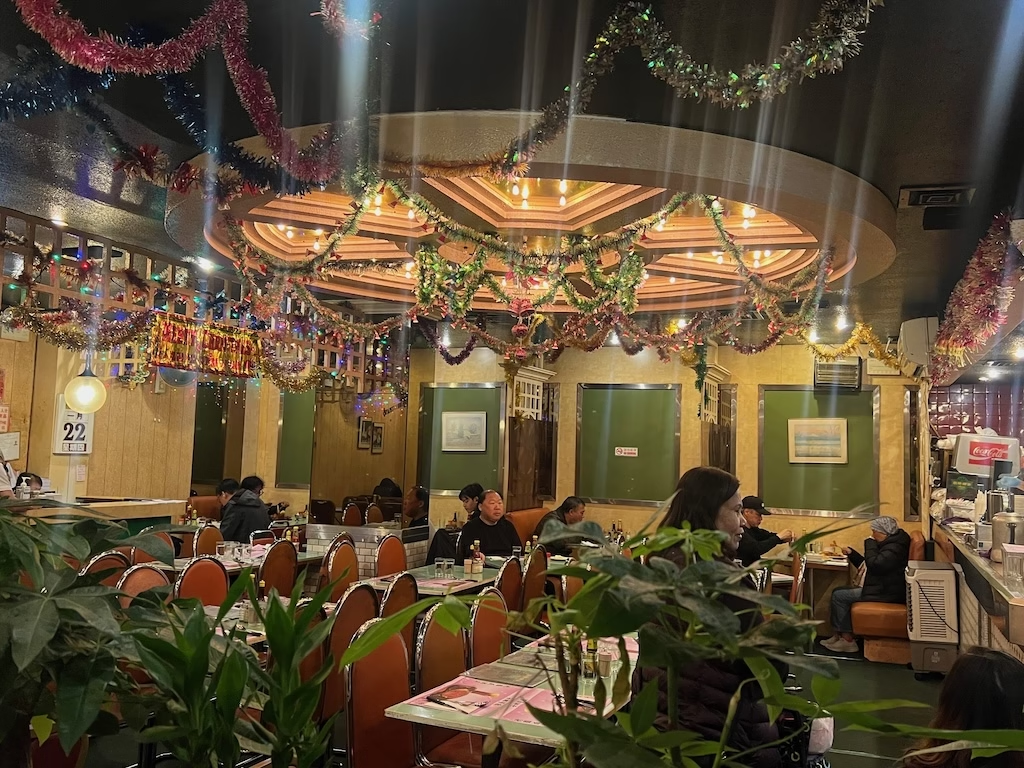
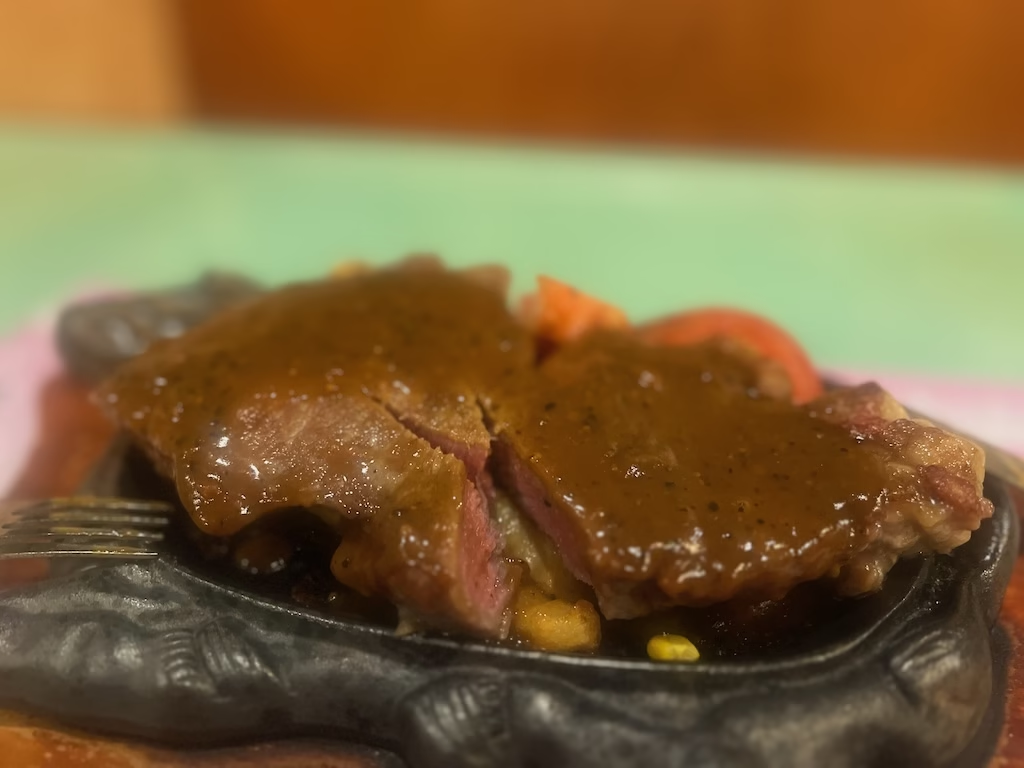
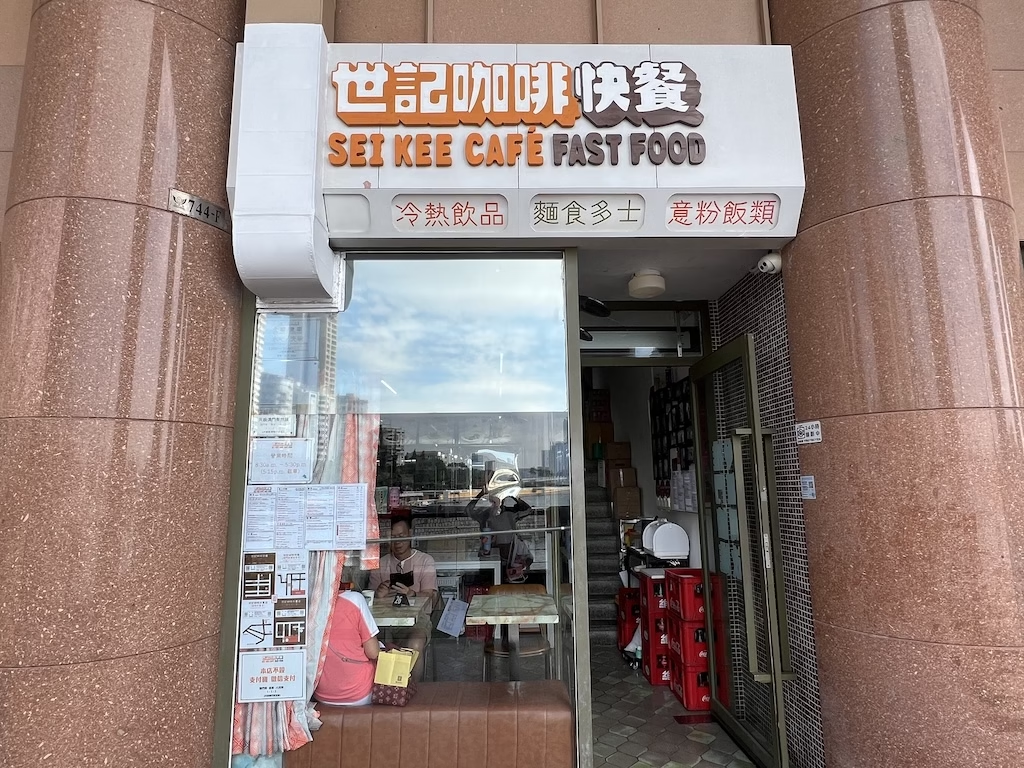
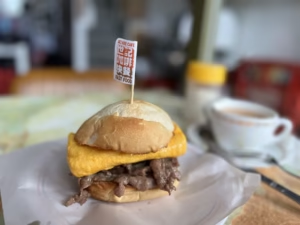
From the HZMB Macau Port, I arrived at Sei Kee Café, hoping to get the famous pork chop buns at the restaurant. However, I learned that this Sai Kee does not serve its famous pork chop buns. Instead, I ordered a beef and egg sando and it turned out to be fantastic.

The Sei Kee Café of Macau

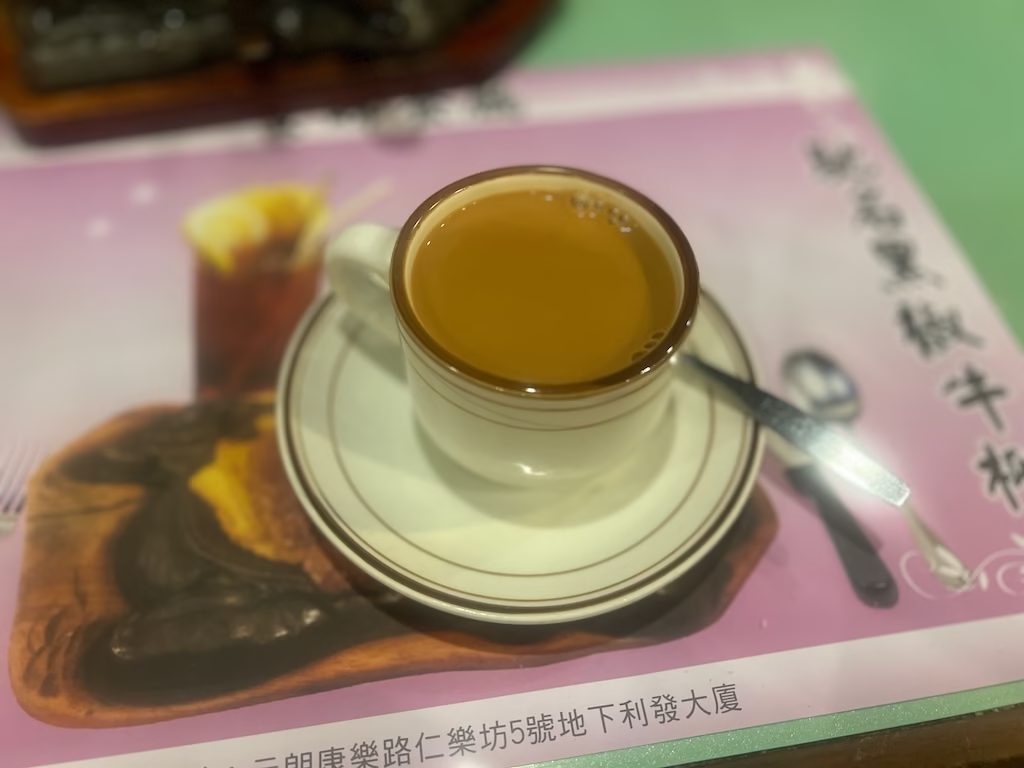
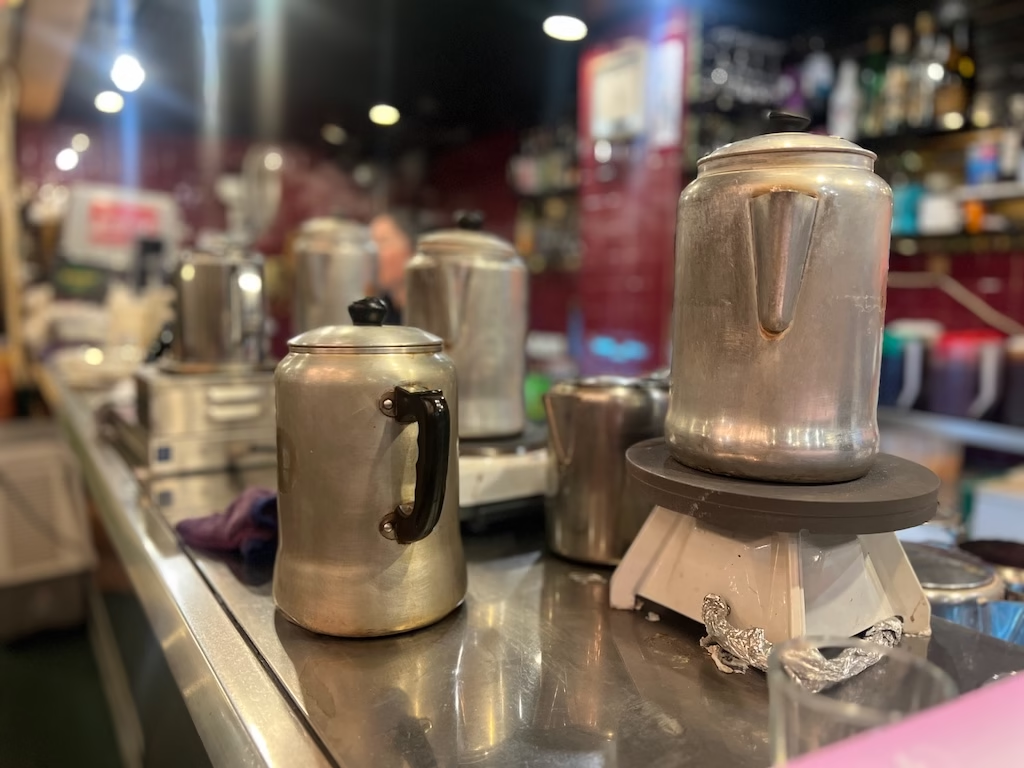
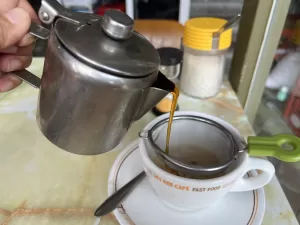
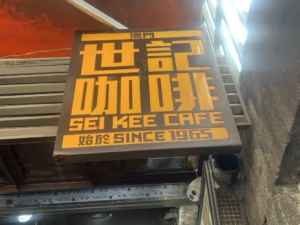
Since 1965, Sei Kee has been making its famed clay pot coffee, brewed over open charcoal fire, to the satiation of Macau’s commoner palate. This coffee making technique continues to this day. The owner sets up the coffee making at 5am each morning. As the coffee ground swims within the swirling motions of a claypot brew, the slowness of the charcoal fire engenders a full infusion of the coffee’s flavor and pungency.
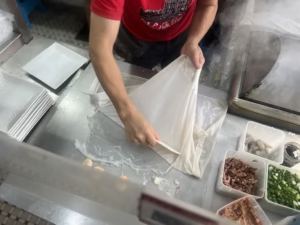
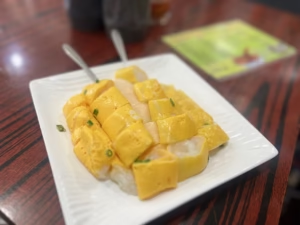
Sei Kee Café began as a simple shed on the streets of Macau. The current owners are the third-generation operators of the restaurant. Eventually, the business expanded. There are more shops, some as takeout only stands and some others having a proper dining space.

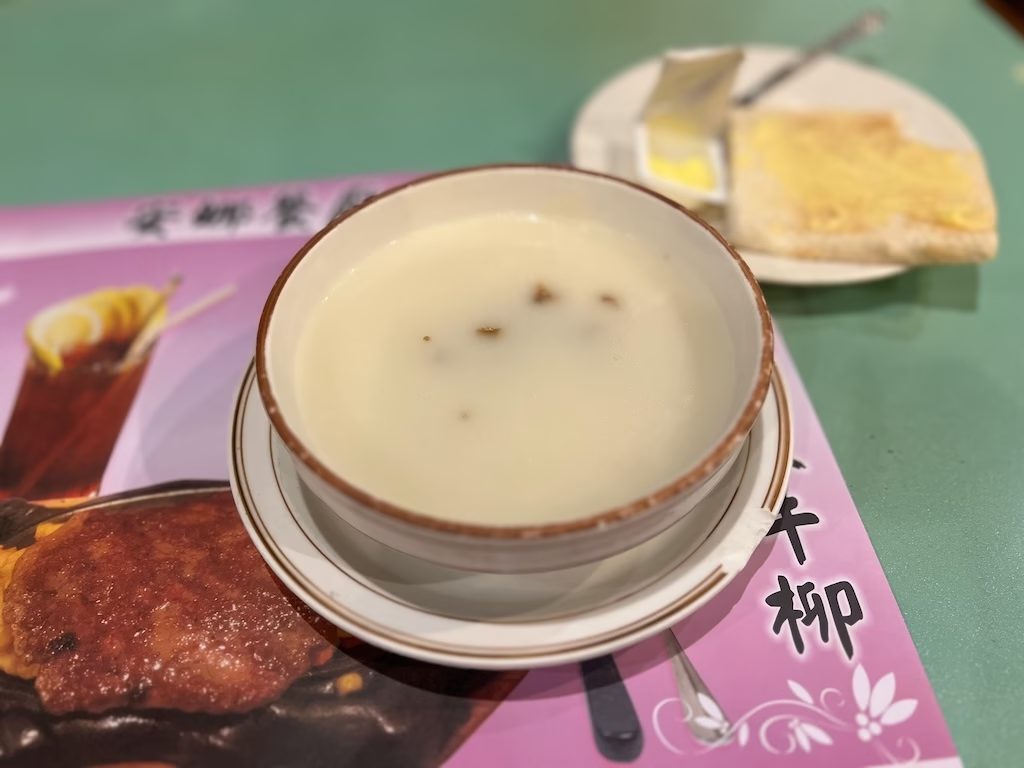
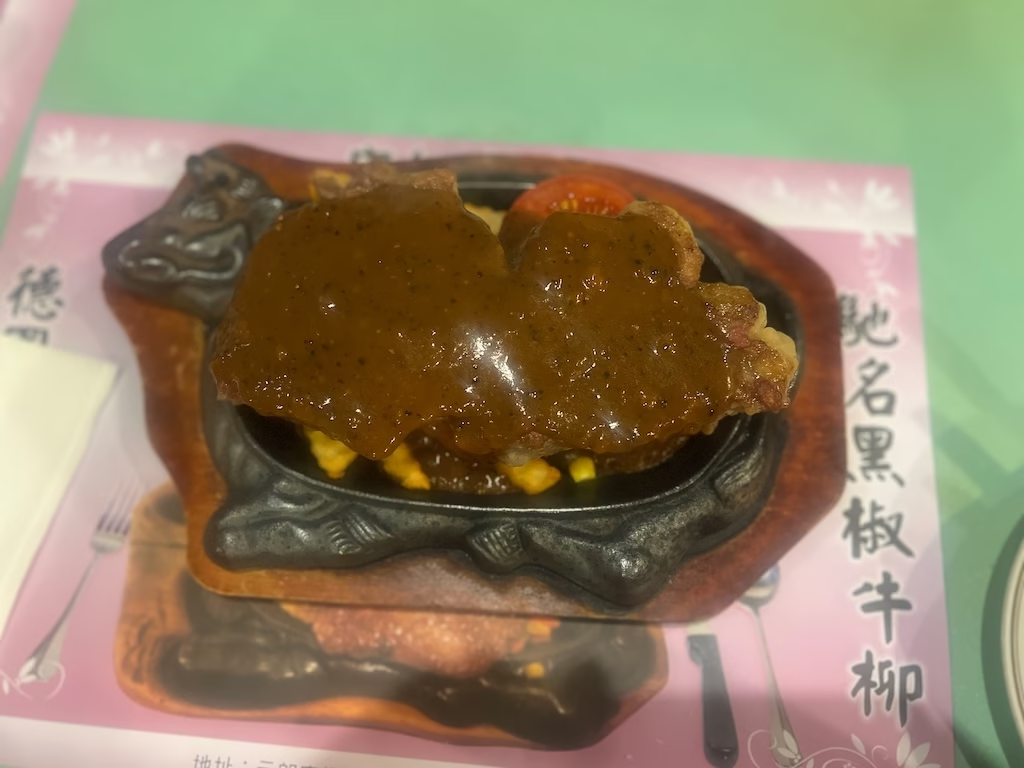
On this day I visited Sei Kee Café’s Nam Van shop. Besides its claypot brewed coffee, Sei Kee’s pork chop buns also top the charts for this distinctly Macau delicacy. However, at Nam Van Lake, the restaurant only serves the beef variation of the bun. It was, nonetheless, very delicious.

At this part of Nam Van Lake, the view of the Macau Tower lies afar by the waterfront. I became quite excited, as the steeping vibes of colonial history are well in sight at this part of Macau.

As I walked to the Riviera Hotel, I stopped occasionally to snap photos of the heritage buildings that I saw on the way.

Our Lady of Penha Chapel (Capela de Nossa Senhora da Penha)

The beginning point of my heritage walk is Our Lady of Penha Chapel at Colina de Penha. Also known as Penha Hill, Colina de Penha is the third highest elevation point in all of Macau at 62.7 meters above sea level. In Portuguese, Penha means “a cliff by the sea.” At this vantage point, the view of Nam Van Lake is open and beautiful.

Our Lady of Penha Chapel has an interesting history. Its first structure was established in 1622 by the Augustinian priests (although the Jesuits were traditionally the preeminent order that came to Portuguese Asia). The church originated from a crew of the ship São Bartholomeu, the sail of which was pursued by the Dutch when it was near Formosa, en route to Japan.

The crew decided that, if they were to make it back to Macau safely, they would certainly dedicate a church to the Virgin Mary. As such, it is the chapel of choice for the faithful seafaring followers, whose prayers were almost always about safe voyages.

At the time of 1622, having sensed that there would be impending aggression by the Dutch, the Macanese built a fortress here at Penha Hill. The fortress overlooked a strategic southern point of entry to Macau by sea. This fortress was built over by the later structures of the church.

The current structure standing at Colina de Penha is a building of 1935, when the building underwent reconstruction with the Bishop’s Residence. The Colina de Penha is therefore also known as Bishop Hill.

According to Patrimonio Cultural de Macau, “The built structure consists of a steeple, bell tower, a chapel in eclectic architectural style and the building of the former bishop’s residence.”

Sources

The Official Website of Sei Kee Café.

The Wikipedia on Penha Hill.

The Wikipedia on Pena Hill Fortress (Chin).

Patromonio Cultural de Macau on Chapel of Our Lady of Penha.

Descriptions on site at Penha Hill.

Historic Macau — Portuguese Asia (4)

Historic Macau — Portuguese Asia (4)

Since I would like to study the heritage of Macau, I figured that a good book on Macau’s history, which is probably not widely known, is in the order. I found an exceedingly pleasant book called A Macao Narrative by Austin Coates in the library. 

Historic Macau — Portuguese Asia (3)

Historic Macau — Portuguese Asia (3)

Since I would like to study the heritage of Macau, I figured that a good book on Macau’s history, which is probably not widely known, is in the order. I found an exceedingly pleasant book called A Macao Narrative by Austin Coates in the library. 

Historic Macau — Portuguese Asia (2)

Historic Macau — Portuguese Asia (2)

Since I would like to study the heritage of Macau, I figured that a good book on Macau’s history, which is probably not widely known, is in the order. I found an exceedingly pleasant book called A Macao Narrative by Austin Coates in the library. In the last, this and the next two entries, I summarize the key points that I took from his book as an overall introduction of Macau’s fascinating history.

The golden era of Macau would soon meet the challenge of both the British and the Dutch. The prelude to the rise of British and Dutch colonialism in Asia was the takeover of Portugal by the Spanish King Philip II. Soon after he took possession of Portugal, he banned all British presence in the Asian ports. Meanwhile, the unrest in Spanish Holland also resulted in Philip II closing all Portuguese and Spanish ports to Dutch presence.

New Player in the Game

In around the 1590s, the Dutch began its own exploration of colonial trade and settlement. In the matter of a few years, it managed to take over Java and established its footing in the Dutch East Indies. Like the Portuguese, the Dutch were eyeing the bounty of the Japanese trade route. It was only a matter of time that it would come upon Macau. The first Dutch fleet appeared in the Macau waters in 1601.

With the East India Company and the Netherlands East India Company established in 1601 and 1602 respectively, the British and the Dutch both entered the game of trade in Asia. Britain began its colonial presence in India. The Dutch, using their base in Java, developed an illicit trade route with Japan in the Island of Hirado, with Formosa (now Taiwan) as the sheltering point for Dutch vessels.

However, Formosa did not offer the massive supply of silk that the Japanese demanded in order for the Dutch to displace the Portuguese’s established position in the silk trade. The Dutch were only able to source their silk, in sporadic quantities, from the pirates in Formosa. Macau’s strategic importance in this trade, as it could source the silk from China, was clear as day.

There were some peaceful years after Truce of Antwerp of 1609, signed between Spain and the Netherlands. It applied also to Portuguese territories. However, Macau knew, after a few confrontations with the Dutch in the region, that they must fortify. Such actions caused misunderstanding with the Chinese authorities, as rumors started circulating that Portugal intended to invade the Chinese mainland and to take down the emperor. After this rumor was dispelled, it was determined that all Macau buildings must acquire a permit. Similarly, shipbuilding also required a license.

Eventually, the rise of the British and the Dutch as colonial powers in Asia would be the most significant cause for the decline of Portuguese influence in this part of the world.

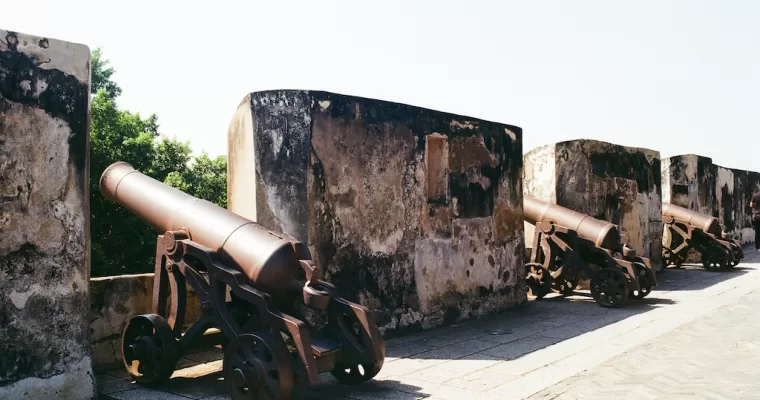
Photo: The Bom Barto Fortress was probably the first fortress built in Macao, and it was in existence at the time of the Dutch invasion of Macau in 1622.

The Dutch Invasion of Macau

On June 23rd, 1622, a Dutch fleet headed by Cornelis van Rijersen approached the harbor of Macau. The resistance against the Dutch launched by the heroic Macanese goes down the books as the most unified act of defense in Macau’s history.

At the time, a lot of the foreigners in Macau were out in different parts of China and the Far East, and perhaps only about 1,000 European men were left to defend Macau. After a nightlong bombardment of Macau’s fort, the Dutch lost one ship.

The Battle of Macau

The next morning, some of the men managed to approach the inland of Macau, which was not fortified. They soon met the fierce opposition from all men, from the slaves to the free, from the lay to the cleric — and the Jesuits quickly took their positions in the defensive seminary and launched their cannons, which, in “normal” circumstances, were meant as gifts to the Chinese emperor.

Two Jesuit missionaries were particularly critical in the Battle of Macau. Father Schall was himself the author of Huogong Qieyao (All Essential Matters of Firearms), the Ming dynasty ammunition playbook that the missionaries helped write to educate the imperial court. Fathers Rho and Schall certainly put their knowledge into practice in the Battle of Macau.

The Jesuits had few men or guns (just three guns) to fire those cannons, but as the Dutch forces approached the lower slope of the Monte, Father Rho fired a decisive shot. It having hit the Dutch powder magazine, the Dutch artillery blew up in an explosion. The Dutch were short on ammunition then, but they had planned on securing themselves between the hills of the Monte and the Guia. They had not known that there were simply not enough men to defend the city.

A sudden reinforcement of men arrived from the outer harbor forts. They made the battle cry of “St Iago!” and the whole city submerged in the roar of victory before it was won. The influx of Macanese forces engaged the Dutch in hand-to-hand battle. The Dutch were rightly confused as they had not known how strong the Macanese forces were. As the Dutch commander soon fell, the Dutch forces retreated messily back to their vessels. This was the moment where all engaged themselves in the battle by slaying the enemy. An African slave woman dressed as a man even killed two Dutchmen.

The slaves that engaged in this decisive battle were liberated as a result. Canton was pleased to hear about this heroic victory as well.

Finally, the Dutch launched its very last attack in 1627, but it was thwarted by the Portuguese naval forced led by local Portuguese Tomas Vieira. With this final defeat, the Dutch could only conduct its silk trade with the pirates off of Formosa.

But that was not to say that the Dutch had lost its influence in this part of the world. The truth was far from that. Without any reservation to exercise military power in its trade, the Dutch laid a stronghold in the Dutch Indies, and managed to control the waters around Singapore. This had the effect of making the route between Macau and Malacca very dangerous for the Portuguese. Without this particular leg of the journey, Macau’s own Japan trade came to a dwindle. “Malacca–Macao–Nagasaki… one of the most remarkable trading epochs in history. But the loss of just one if these cities, and the commercial existence of the other two would be fatally threatened.” ~Austin Coates at 72.

 Source

Austin Coates, A Macao Narrative (1978, 2009).

CUHK Library: Adam Schall and the Battle of Macau (1622 Attack by the Dutch).

Historic Macau — Portuguese Asia (1)

Historic Macau — Portuguese Asia (1)

Since I would like to study the heritage of Macau, I figured that a good book on Macau’s history, which is probably not widely known, is in the order. I found an exceedingly pleasant book called A Macao Narrative by Austin Coates in the library.