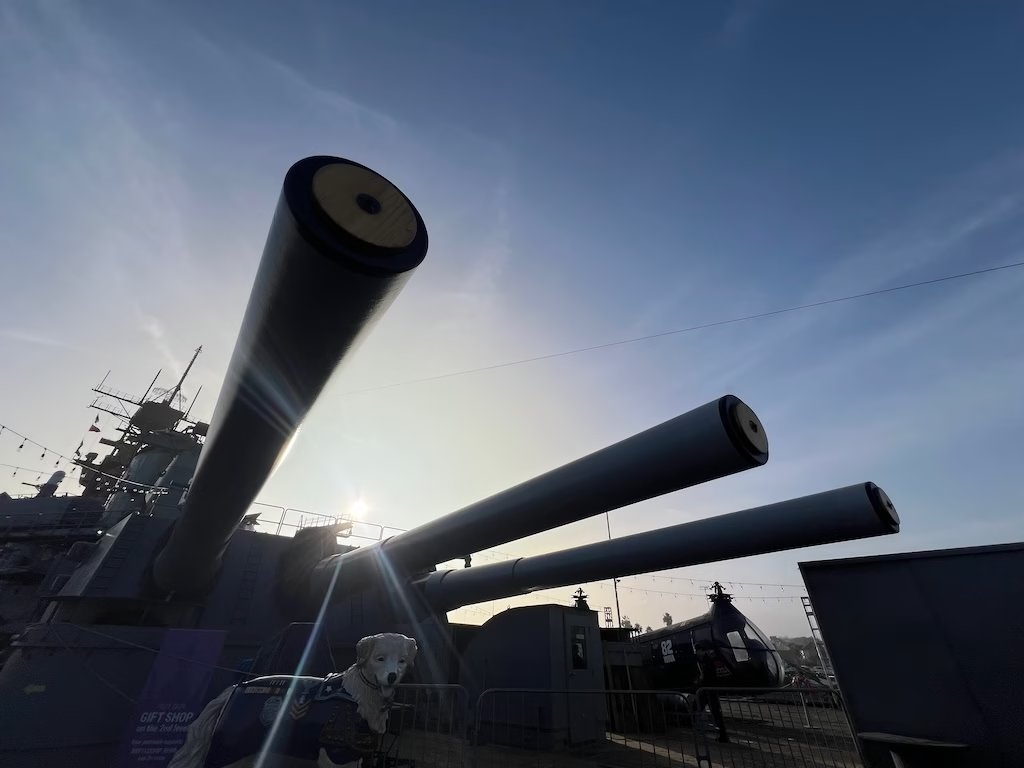
America on Foot — The USS Iowa in San Pedro
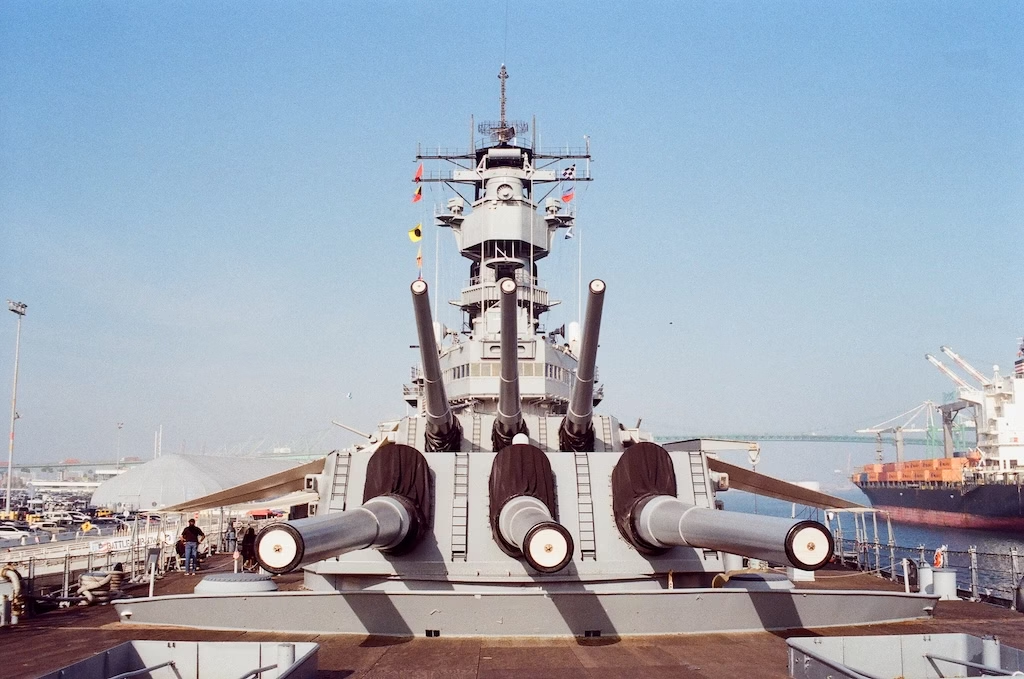
My heart skipped a beat when I came to a closeup view of the USS Iowa. It was stately, to say the least. Under generous sunlight the USS Iowa breathes an aged but assured glory. Its imposing image is immediately evocative of battle scenes. I could see how grand and fierce it must have been during the Pacific War. I would be spending an afternoon at the IOWA Battleship Museum to learn about its history.
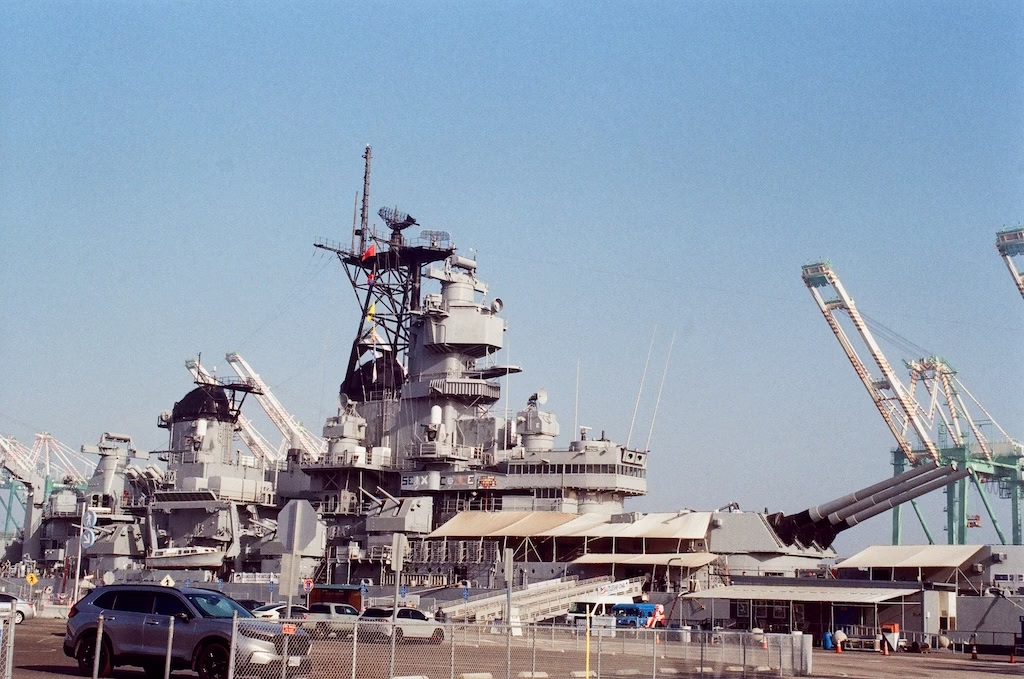
Some Basic Facts about the USS Iowa
The USS Iowa is a warship that served in the Pacific War. Known as “The Big Stick,” it prides a whopping 887 feet in length and 108 feet in width, and a height of 216 feet. At the time of construction, it was one of the six new state-of-the-art battleships that the United States Navy ordered in 1939. The USS Iowa would become one of the most powerful warships to have sailed the seas. It was always intended to be a monolith of an attacker in WWII battles, both in serving as the sea base to assert aerial domination against the enemy, and also as the originator of offensive against inland targets.
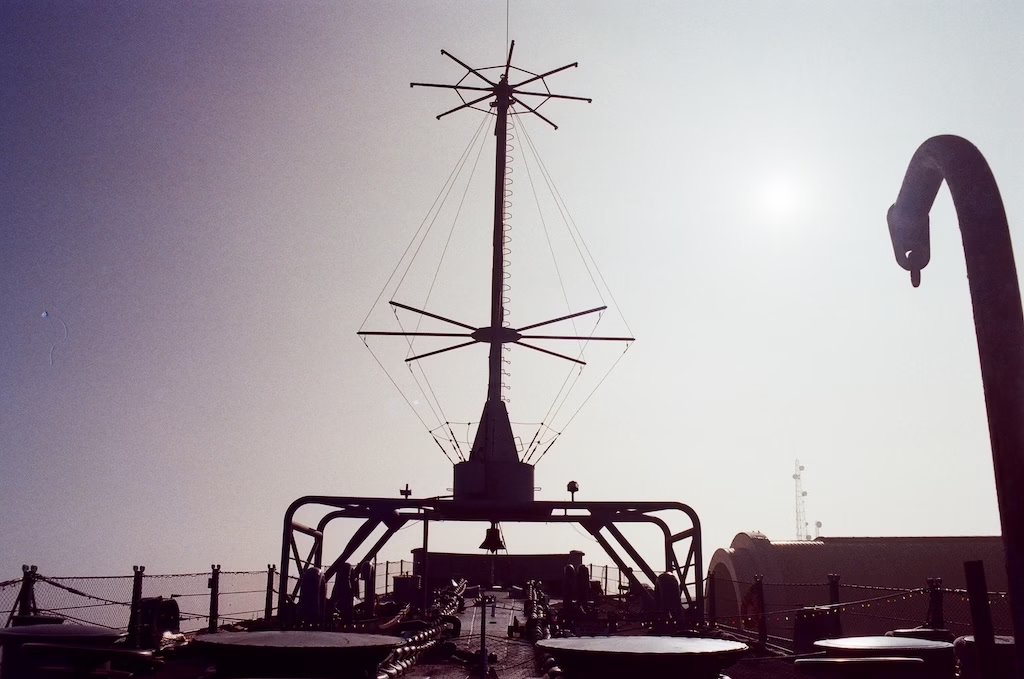
During WWII, it carried 2,788 crew members; 2,311 during the Korean War; and 1,568 during the 1980s. It was first commissioned in 1943, being battle-ready for the Pacific front. Then in 1951 it was commissioned for the second time to serve in the Korean War.
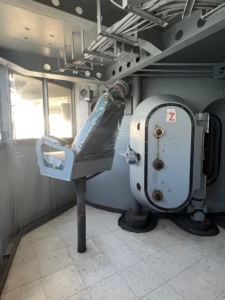
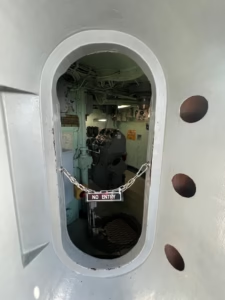
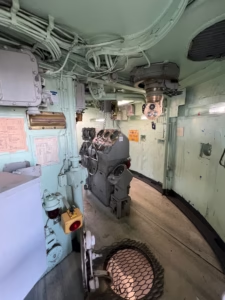
Such an enormous size necessitates huge anchors. Two anchors are fitted on the bow, each weighing 30,000 pounds.
In its storied past, the USS Iowa has been there for two hot wars (WWII and Korean War) and the Cold War, during which it participated in a mission in the Middle East. Five presidents have served official duties in the ship. The most notable is its escort of President Franklin D. Roosevelt to Algeria, en route to Tehran, for the President to meet with Britian and the Soviet Union in a critical summit during WWII.
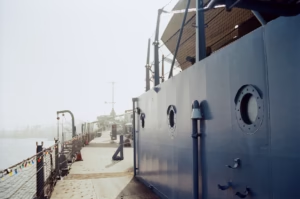
An Iowan Heritage
The USS Iowa had an inextricable relationship with the State of Iowa. It was not the only battleship that was named after the midwestern state. In fact, as of 2026, this USS Iowa is but one of the seven ships named after Iowa.
The first USS Iowa, also the first United States ship, was launched from the Boston Navy Yard in 1864. Thus began the naval heritage for the State of Iowa. Within this heritage, the USS Iowa was the sixth ship so named.
In the Thanksgiving of 1951, the President of University of Iowa, Virgil Hancher, and 13 other Iowans were invited onto the USS Iowa for a celebration. The USS Iowa was on a shakedown cruise from Long Beach to Pearl Harbor for this occasion.
It is hard to imagine that the landlocked state has a naval legacy, but the USS Iowa is certainly one of the best-known naval ships that bears the name of the state.
The Iowa Bell
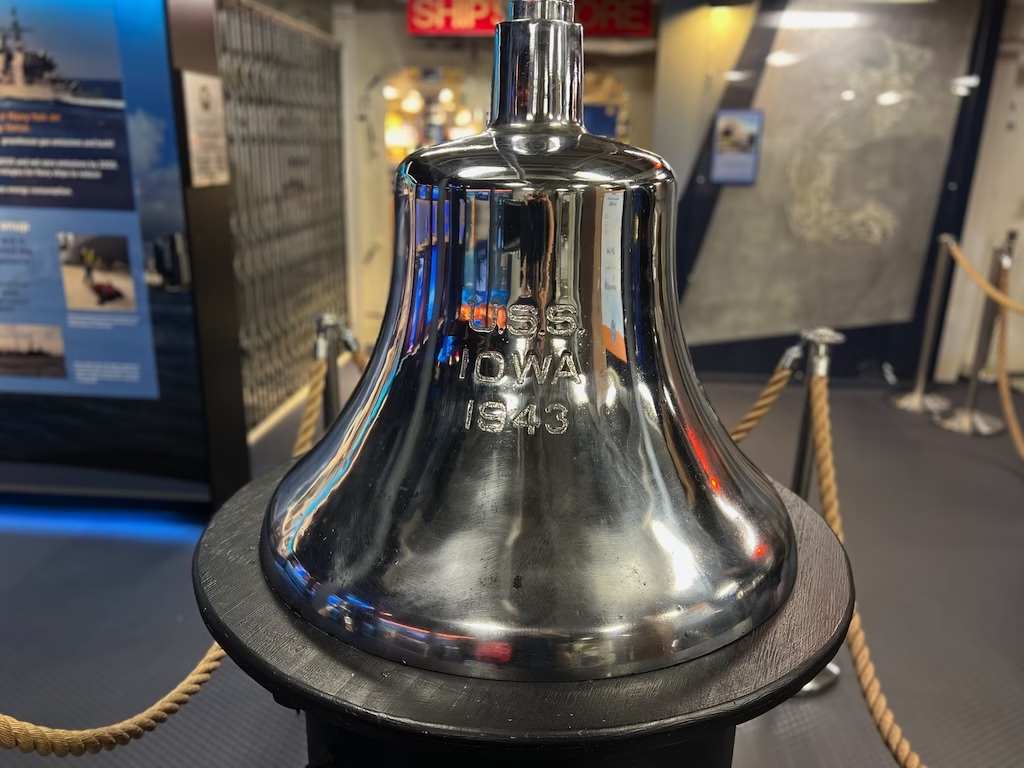
The ship’s bell is a critical piece of artefact that serves as the positive identity of the ship if it were sunk, scrapped or decommissioned. The IOWA Bell has returned to the USS Iowa after 25 years of display the State’s capital, Des Moines. It is made of cast iron and weighs 900 lbs.
Armament at the USS Iowa
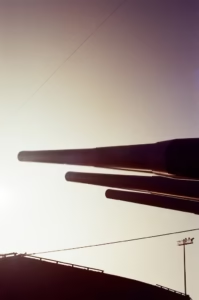
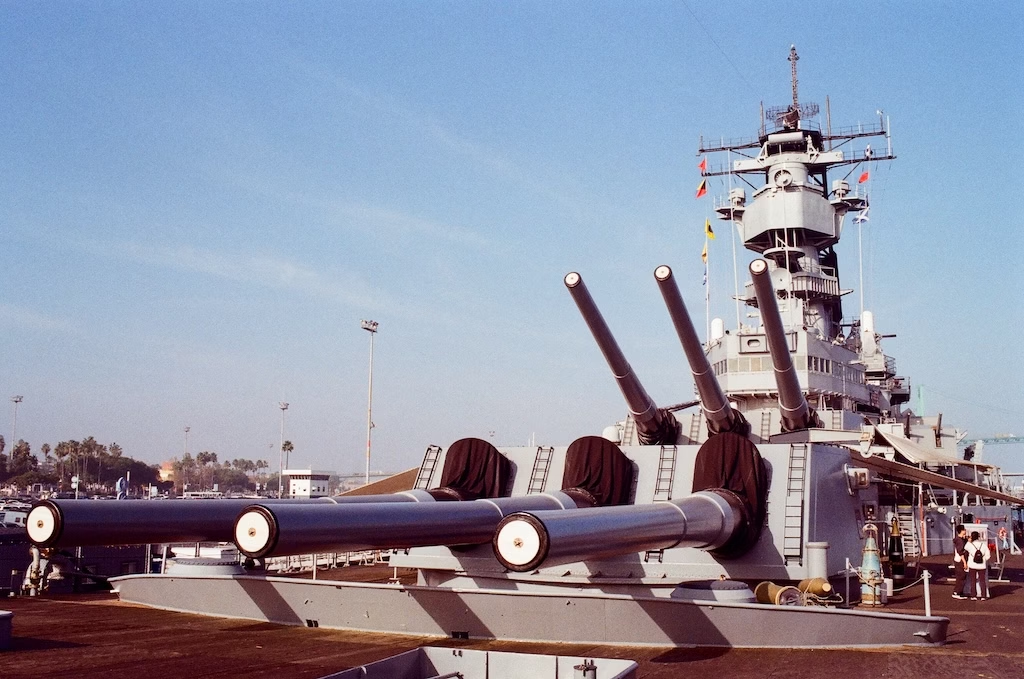
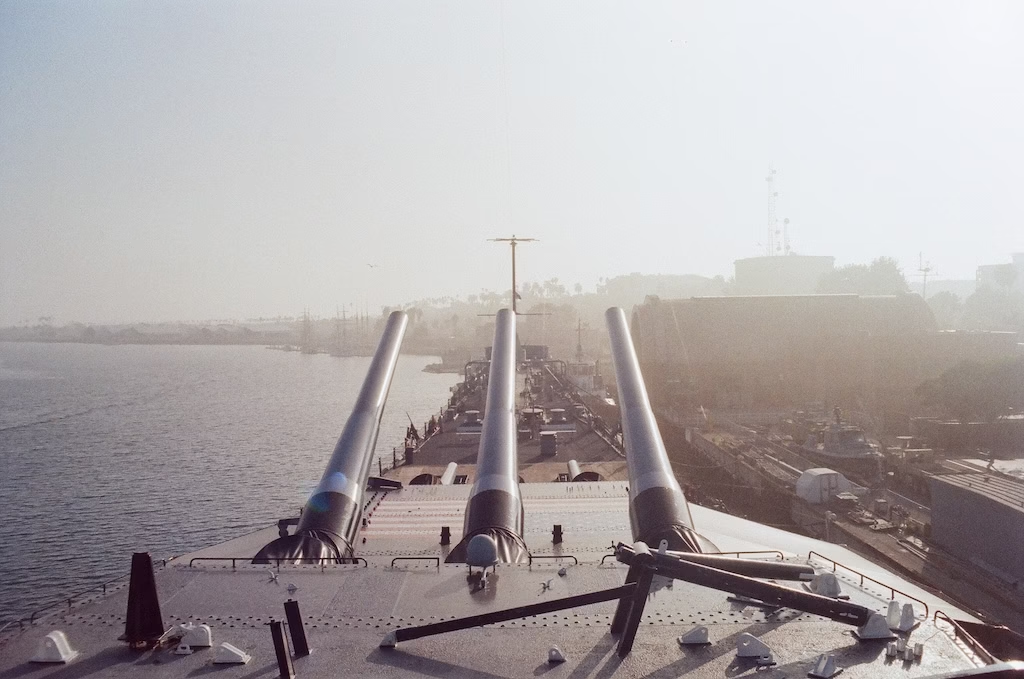
No one can miss the three great gun turrets that sit at the very forefront on the upper deck of the USS Iowa. At the museum, there are very detailed descriptions, along with a video, on how the turrets were operated and fared as instruments of war.
The gun turrets that stand prominently at the deck are 16-inch gun turrets that dispatches 2,000 tons of firepower. It was intended, and it did, to cause enormity at war. I found the descriptions on site to be thorough but perhaps too technical for the lay visitor. Suffice to say, it takes a full team of operators to fire these gun turrets.
The turrets come with six levels of operation platforms, laid out in two concentric sections. From the top, the Gun House, where the firing of the projectiles occur. “The loading, aiming, and firing of the three Mark 7 gun assemblies required 27 crew members, consisting of 3 Turret Officers, 6 Rangefinder/Computer Operators, 6 Sight Pointer and Trainers, 3 Powder Hoist Operators and 9 Gun Assembly Operators.” This is certainly a very busy level of operation.
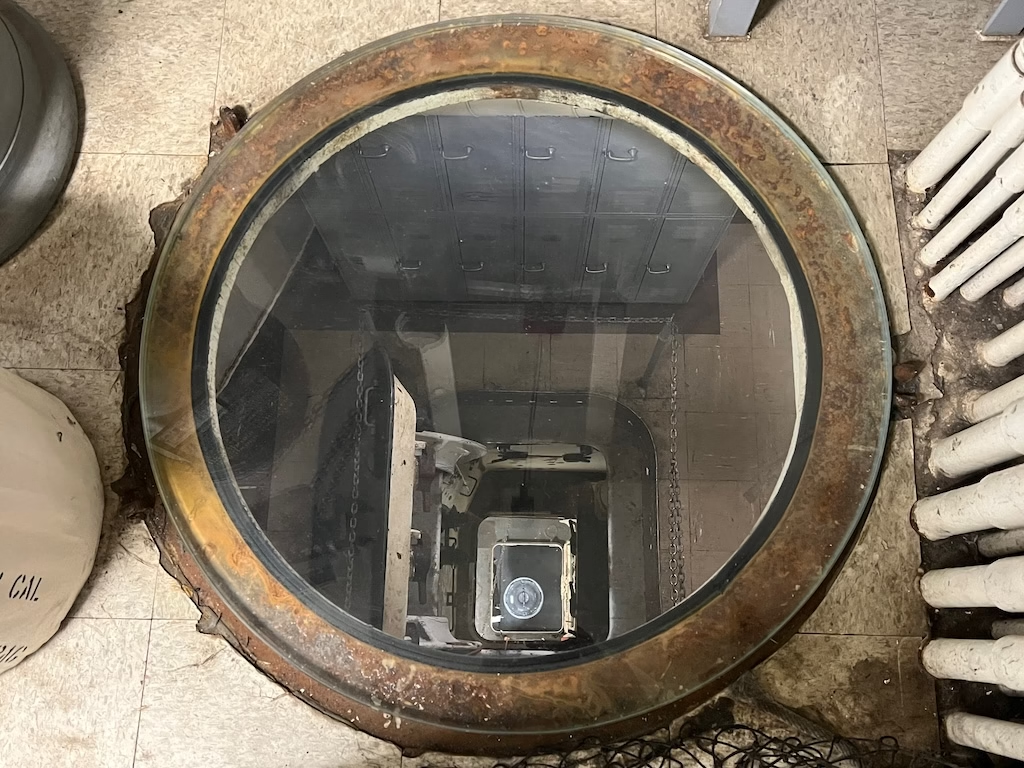
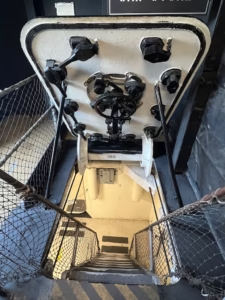
Photo: The shaft looking down a few levels.
The next level down is the Pan Floor, needing the help of 3 Primermen. Next level is the Electric Deck, which hosts the electric motors and hydraulic systems that rotate the turret. It takes 3 Gun Layers and 1 Train Operator to operate at this level. Then comes two similar levels down, the Upper and Lower Projectile Flat. This is where the transfer of 16-inch projectiles are stowed in a vertical position to the three projectile hoists. 30 crew members are required at this level. The lowest level is the Powder Handling Flat. This is where the gunpowder is transported to the powder hoisting elevators. The circular space is kept as a fire-resistant barrier by allowing only one side of the powder scuttles to be open at any one time. It takes a minimum of 13 crew to operate at this level.
The total number of men required to operate the three-gun platform is 79.
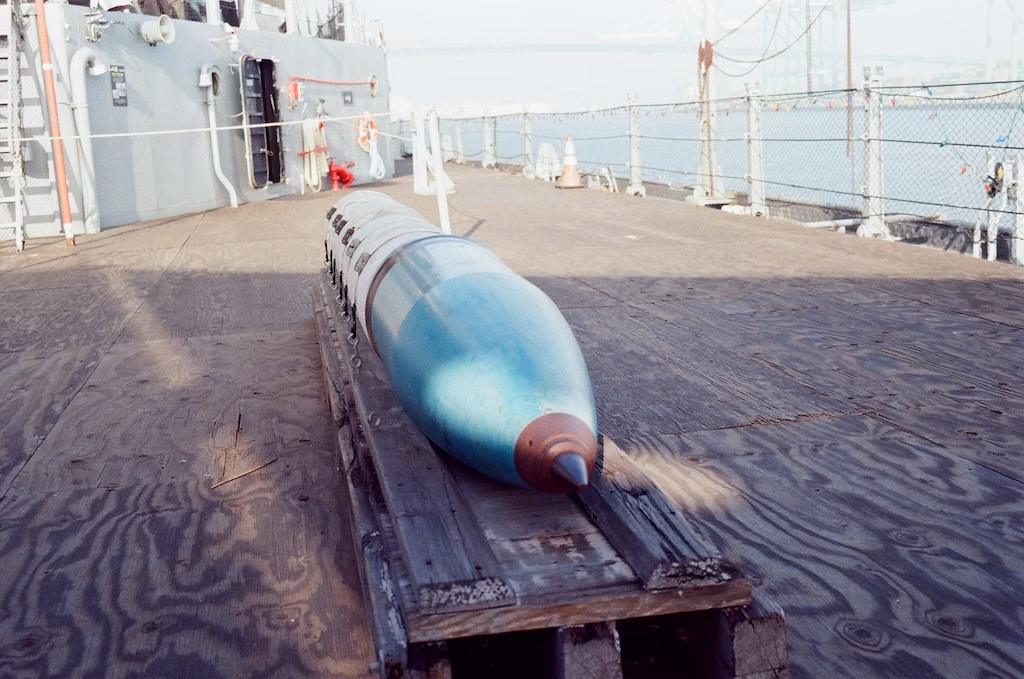
The 16-inch shell is taller than a man of regular height. The weapon itself weighs a jaw-dropping 2,700 pounds. The dummy projectiles are for training purposes only, then the long list of destructive missiles level up in destructiveness, from lighter missiles for shooting training to the absolute horrifying nuclear shell.
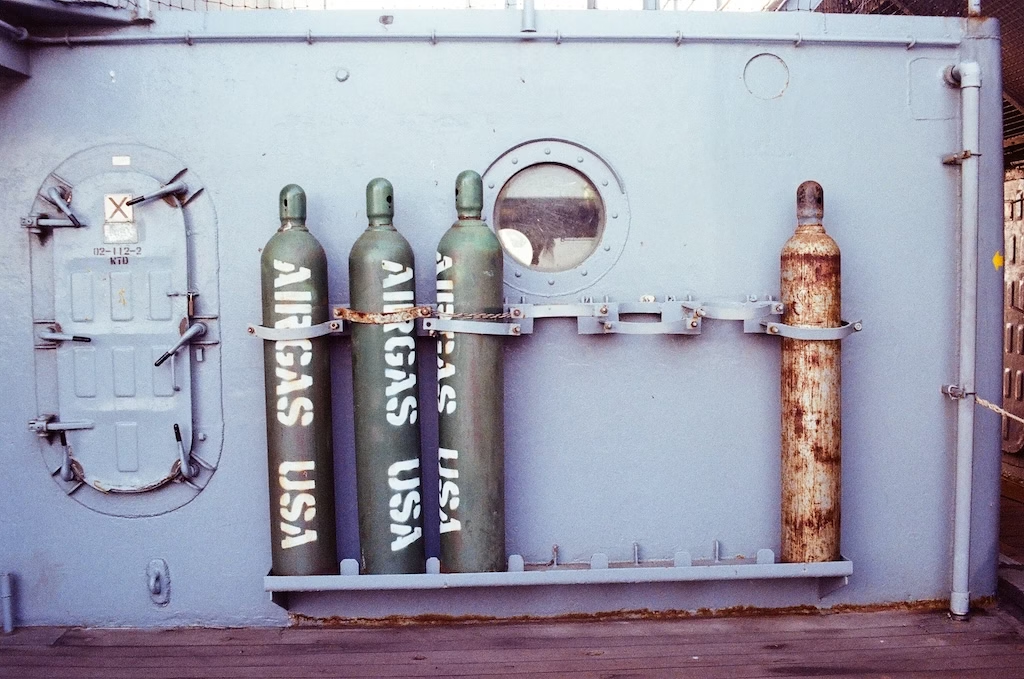
It is noted that the aiming and firing of 16-inch turrets were operated by “computers.” The computers being spoken of here are not the electronics that we are so accustomed to today. They are mechanical, based on Babbage mechanical cogs, gears and shaft design. From loading gunpowder to aiming, to the eventual firing, the turrets were hand operated. In one minute, each turret can fire 2 projectiles.
The USS Iowa is also fitted with 5-inch guns as anti-aircraft features. Throughout its service, there had been additions to its war chest to meet the ever-evolving needs of warfare, all the way into the 1980s.
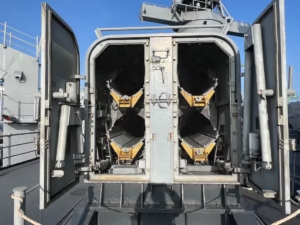
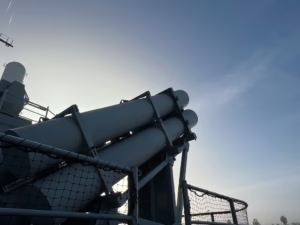
Photo: The Harpoon Cruise Missiles were an addition of the 1980s.
Does the Battleship Rock at the Missile Firing?
One wonders what happens to the stability of the ship during the firing of missiles. With such a significant firepower, the ship must necessarily be rocked at the time of battle? The museum explains this point as follows:
What looks like a side-ways wake is just the water being broiled up by the muzzle blasts. The ship doesn’t move an inch or even heel from a broadside. The guns have a recoil slide of up to 48 inches and the shock is distributed evenly through the turret foundation and the hull structure. The mass of a 57,000 ship is just too great for the recoil of the guns to move it… But because of the expansive range of the overpressure, a lot of the rapidly displaced air presses against the bulkheads… causing loose items to fly around.
Veterans that operated the turrets have said that the impact of each firing is enormous, even within the chambers that they were in.
Battles During WWII and Korean War
The role of the battleships in wars is to provide cover for troops at the shore. But an effective offensive from the battleship can score strategic advantage in the general narrative of war.
The Second World War
During WWII, the USS Iowa supported carrier air strikes. In 1944, it participated in the naval strike at Truk, Caroline Islands. It sank the Japanese light cruiser Katori. The Wikipedia has a very extensive account of the history of the USS Iowa’s role in the Pacific, specifically Caroline and Marshall Islands.
In 1945, the USS Iowa sailed for Okinawa for the attack on Japan itself. In its early campaigns against the Japanese homeland, the USS Iowa supported air strikes that covered the ground forces that were advancing inland. On July 14 and 15, it bombarded Muroran, Hokkaido, destroying steel mills and other targets. The city of Hitachi was shelled on July 17 and 18.
In September 1945, the USS Iowa and USS Missouri entered Tokyo Bay for the formal signing of Japanese surrender document.
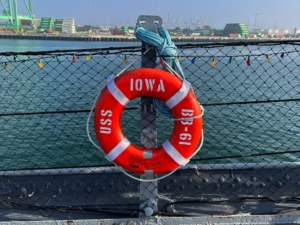
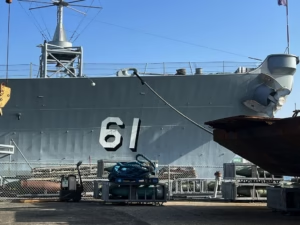
The Korean War
The USS Iowa sailed for Korea in 1952. “In her first combat operation of the Korean War, Iowa fired her main guns near Wonsan-Songjin in April 1952, with the goal of striking North Korean supply lines. In the company of other naval vessels Iowa again engaged North Korean forces the following day, this time against enemy troop concentrations, supply areas, and suspected gun positions in and around Suwon Dan and Kojo.” (Wikipedia). Throughout its service, the warship has engaged in critical attacks that helped secure strategic advantage in the war.
Having served in decades’ worth of battles and ceremonial functions, the USS Iowa headed from the Atlantic to the Pacific via the Panama Canal in 2001. In 2011, the Navy awarded the USS Iowa to Pacific Battleship Center, a nonprofit organization. Official ownership of the battleship was transferred to Pacific Battleship Center in 2012. It finally arrived at its permanent home at Port of Los Angeles, Berth 87, in June of the same year.
A Heartwarming Touch of Victory
A really heartwarming fact about the USS Iowa is the famous mascot named “Victory” (Vicky). Captain John McCrea, first commanding officer in 1943, kept his dog with him throughout the warship’s early missions. Vicky has been there through the thick and thin of the USS Iowa, until March 1949, when USS Iowa was decommissioned after WWII.
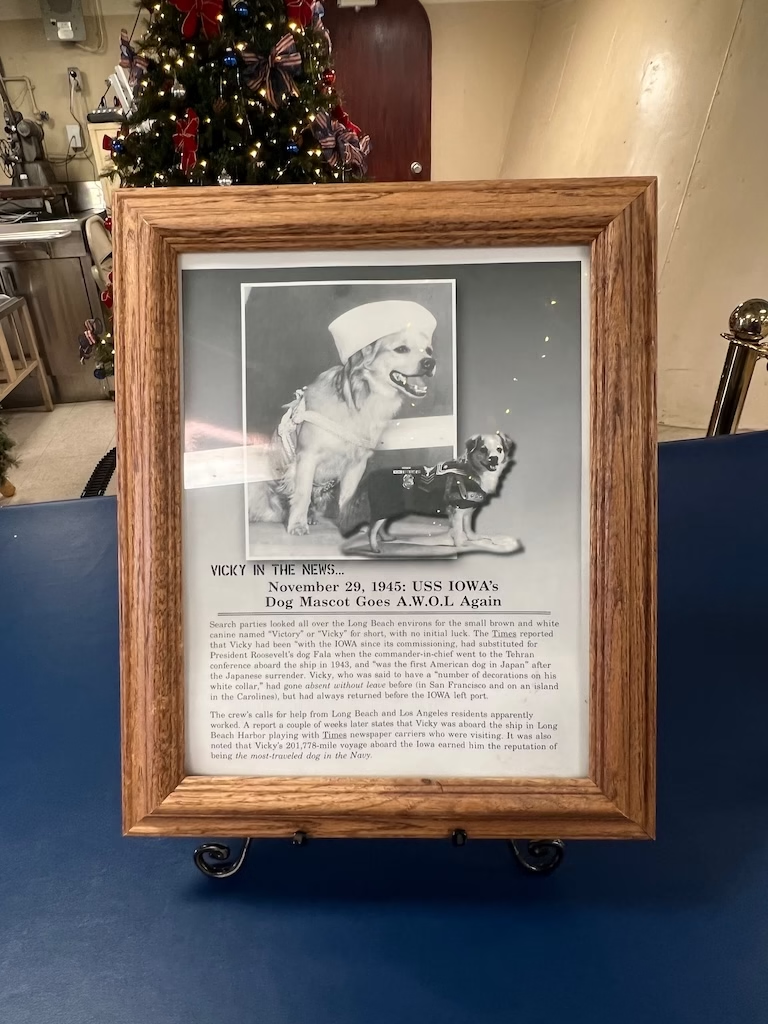
This adorable dog slept at the foot of President Roosevelt’s bunk bed during the ship’s escort of the President to the Tehran summit. Eventually, he earned the Philippine Campaign Ribbon with two bronze stars and in August 1945 received a commendation as a member of Task Force 31 and the Occupation of the Japanese Homeland.
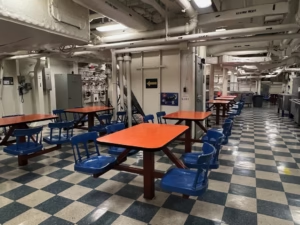
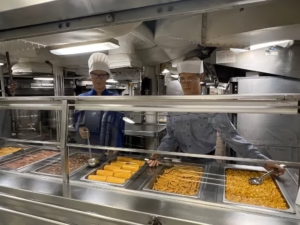
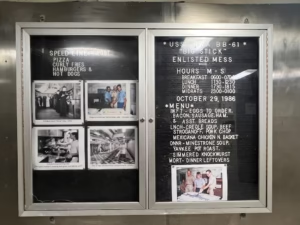
Allow plenty of time for a thorough tour at the Battleship IOWA Museum, perhaps 1.5-2 hours. The ship is enormous and even just a walk-through will take more than an hour. There are some stairs to climb as well. Follow the arrow on the floor and you will be taken through the ship. I think self-guided tours suffice, but having a private guide will certainly give you better technical explanations on the weaponry, especially.
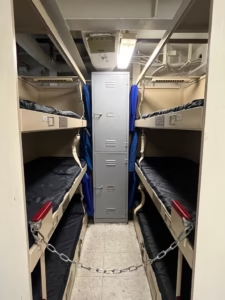
The address of the USS Iowa is 250 S. Habor Blvd, San Pedro, California 90731. The entrance fee for an adult ticket is $29.95, by credit card only.
Sources
Descriptions on site at the Battleship IOWA Museum.
IAGenWebProject, Saturday Postcard 222: Thanksgiving on the Battleship Iowa.
The website of Pacific Battleship Center.
The Wikipedia on the USS Iowa.
Our Iowa Heritage on the USS Iowa.