
America on Foot — Downtown Portland
I took the light rail from the Airport to Portland. On the way I saw the Willamette River on the bridge. That was when I realized what a magnificent river it is. It must have been fearsome, when it did flood, throughout the history of Portland. The fact that there are 12 bridges and crossings over this river serves one’s understanding of how significant it is to the City of Portland.
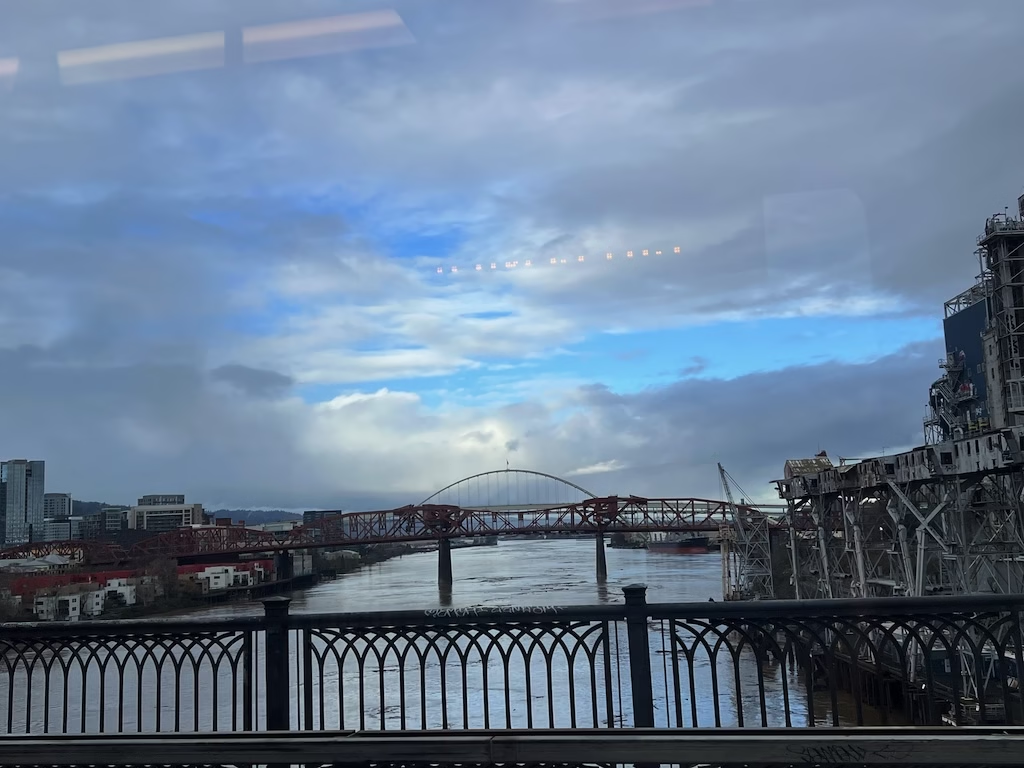
In the 2.5 days that I was there, it was raining hard. I saw flooding warnings throughout those days.
As the light rail pulled into the City, a sense of familiarity arose in my mind. It felt like Melbourne, Australia. There was a bit of foot traffic in this late afternoon. The light rail went through the buildings that hovered over the roads. A lot of these buildings appeared to be from the late 19th to early 20th century. The scene of light rail making its rounds in a city teeming with historic vibes is also the feature of Melbourne City that I like.
Dusk would befall soon, and I nestled in the very back row of the light rail, feeling the overwhelming cold around me. From Los Angeles to Portland, the temperature dropped 50 degrees (10 degrees Celsius).
The City of Roses
Portland is also known as the City of Roses. It acquired this beautiful name due to the Rose Festival that the city holds annually in June. The first Rose Festival took place in 1907, as an effort to bring together the positive impact of the Lewis and Clark Centennial Exposition, held in 1905, that significantly improved Portland’s image.
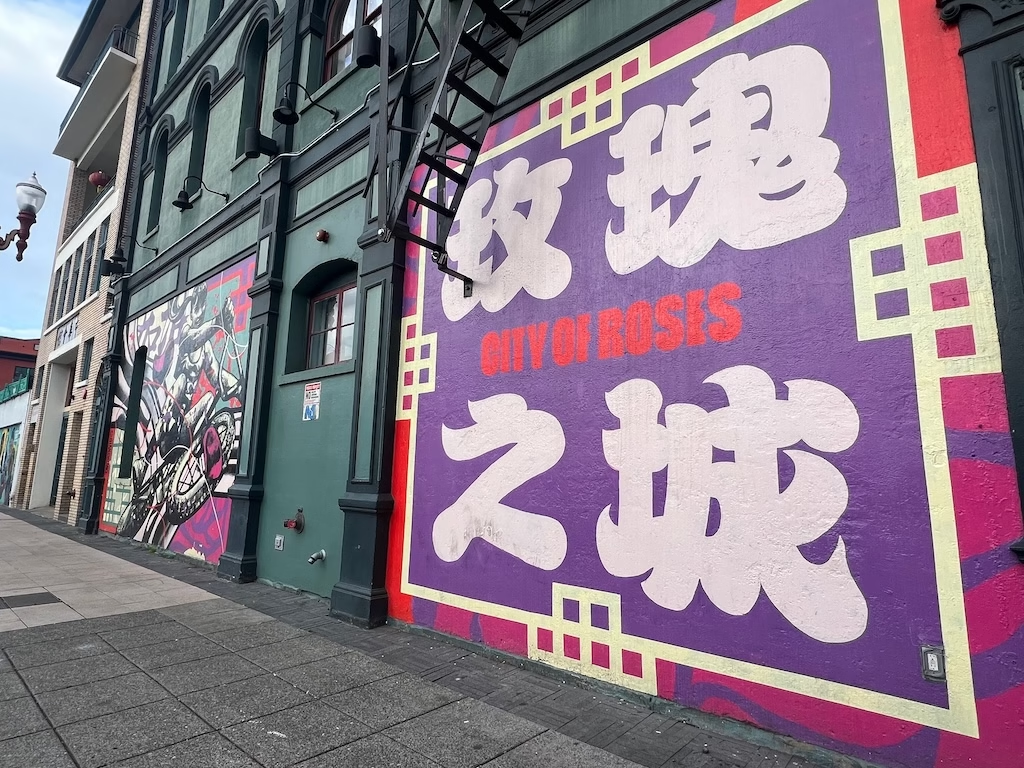
In fact, the Pittocks were instrumental in initiating this first Rose Festival in Portland. Georgiana Pittock held the first (unofficial) Rose Show in 1899. She held it in a large tent on a vacant corner in the Pittock Block. She charged 10 cents for local neighbors and offered free admission to “strangers.” Thereafter, she formed the Portland Rose Society in the same year. In 1905, the Society planted roses all along the pathways of the Lewis and Clark Centennial Fair. It also advocated for the Portland community to plant roses in their respective garden spaces.
The roses initiative was a success. The Mayor then suggested that a rose festival to be held. By now, the Rose Festival 118 years in the running.
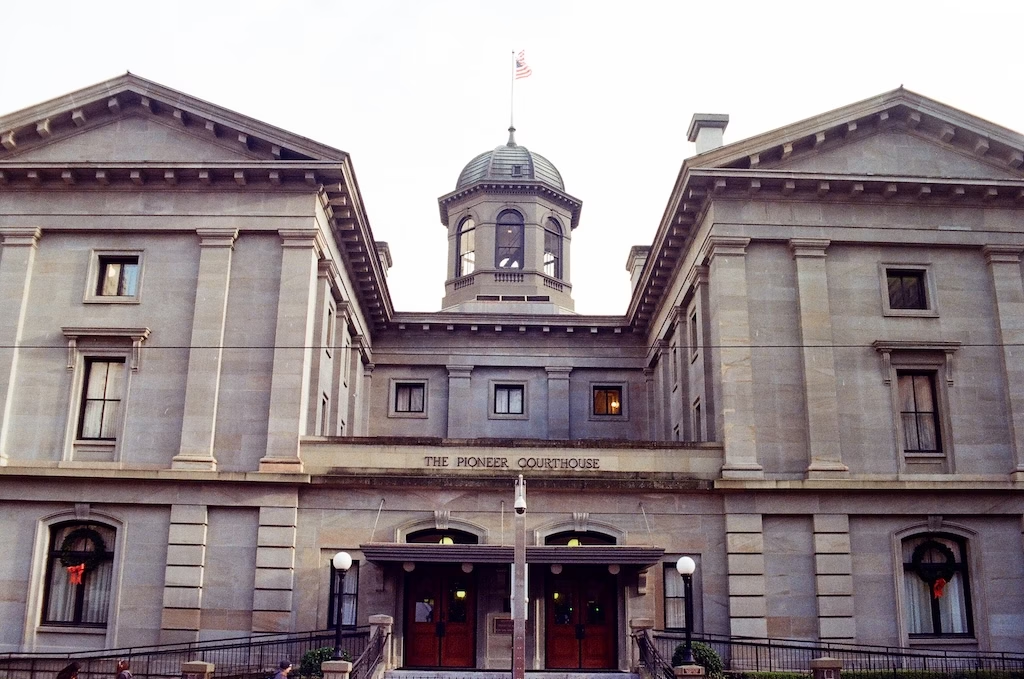
The Pioneer Courthouse Square
You can’t miss the Pioneer Courthouse if you stroll in Downtown Portland. It is the center of gravity driving foot and vehicular traffic. In fact, it is known as “Portland’s living room.”
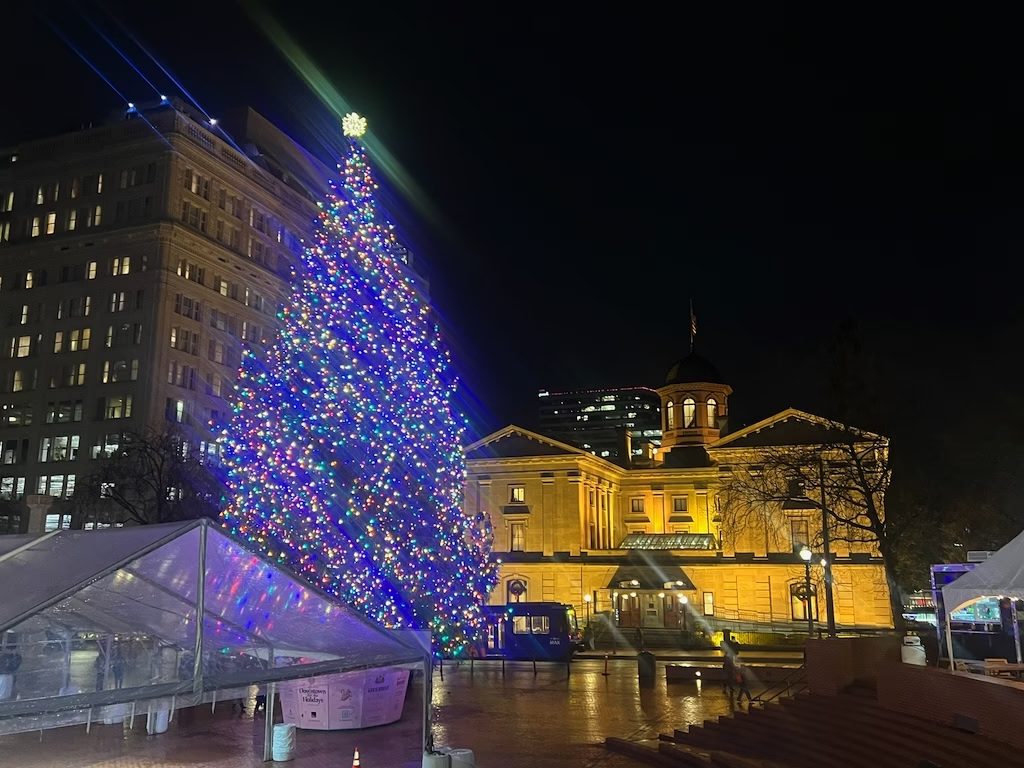
The Pioneer Courthouse is the first federal building to be built in the Pacific Northwest region, which includes the states of Oregon, Washington, and formerly part of Idaho. It now stands as the forum for the U.S. Court of Appeals.
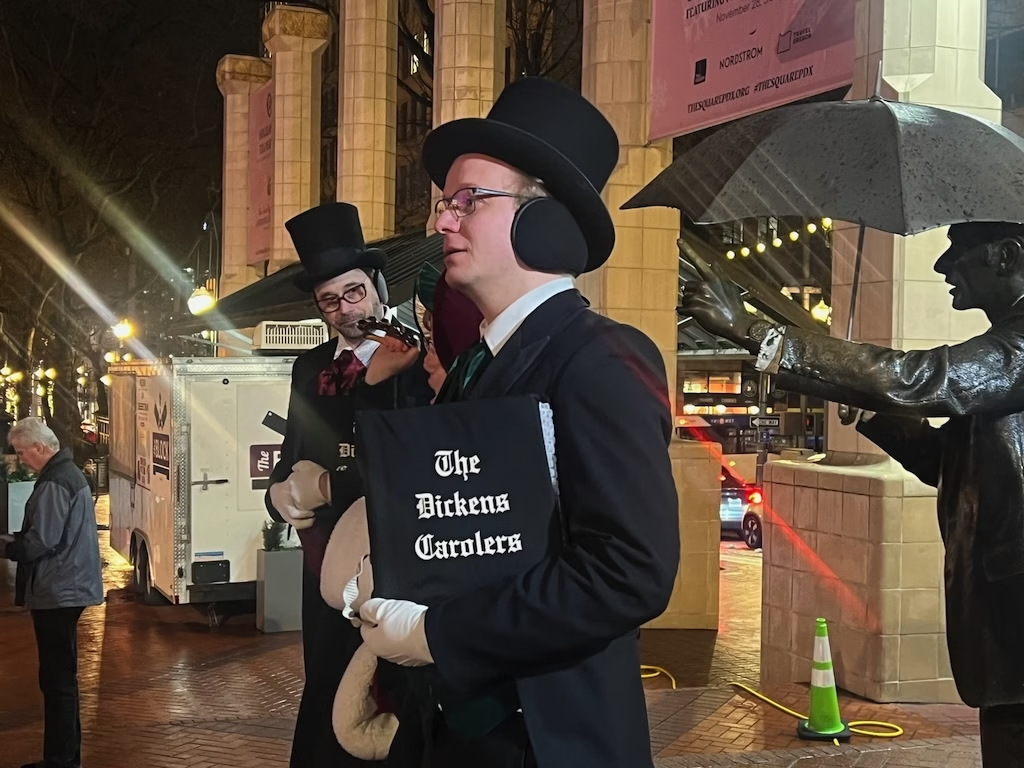
Of the few occasions that I passed by the Square, I enjoyed the nightly vibes the most. The enormous Christmas tree glitters and the atmosphere was festive. A group of singers sang Christmas carols. I hadn’t been back in the United States for 12 years. This was the expression of joy that is “uniquely western” (as in, the Dickens Carolers) – and that I missed dearly.
The First Presbyterian Church
The First Presbyterian Church is one of the oldest and largest churches in Portland. The Church’s sanctuary was a structure of 1890, its balcony was added in 1892. The pipe organ of the church was built in New York. As a protestant institution, the First Presbyterian Church has developed over 20 other congregations in the Portland area throughout its history.
The church remains active in the community and is one of the largest Presbyterian congregations in Portland today.
The Benson Bubblers
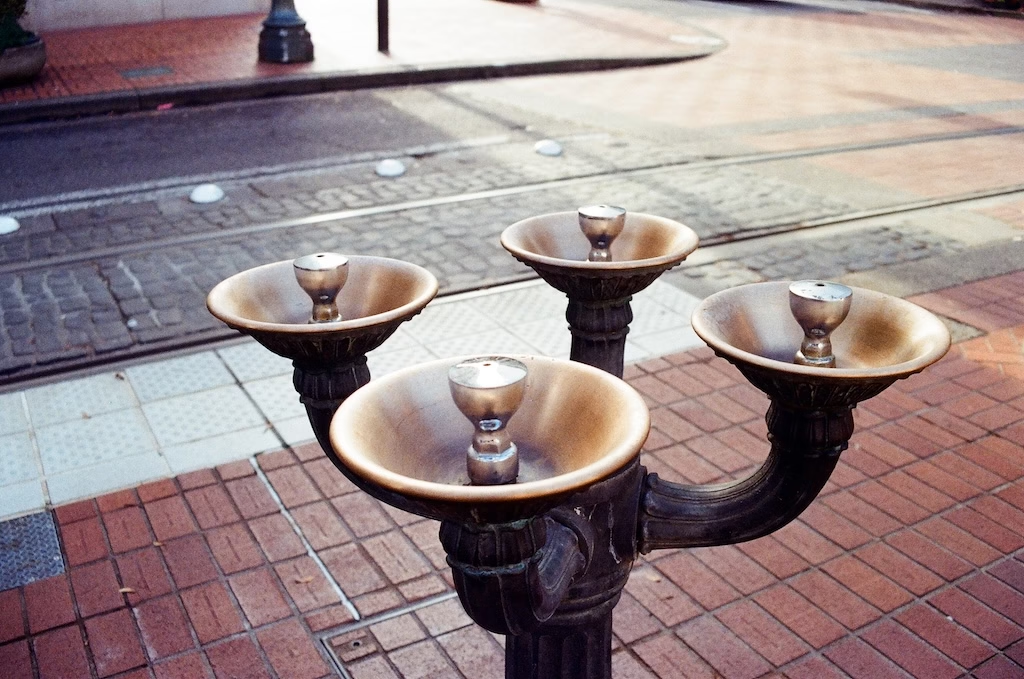
Be certain to look out for the Benson Bubblers at the Pioneer Courthouse Square, as you can see multiple there. The Benson Bubblers is an urban feature that makes Portland especially cute.
The Benson Bubblers are the bronze drinking fountains that provide water to anyone needing it in Downtown Portland. They celebrate the famous businessman and philanthropist Simon Benson, who was also the benefactor that enabled the construction of the Benson Bridge at the Multnomah Falls.
The installations were made throughout Portland in 1912 and they are still operating today. I only saw one with running water at the Pioneer Courthouse Square in the evening, when crowds gathered for the festive ambiance there.
Some Other Downtown Buildings to Note
Hotel Lucia
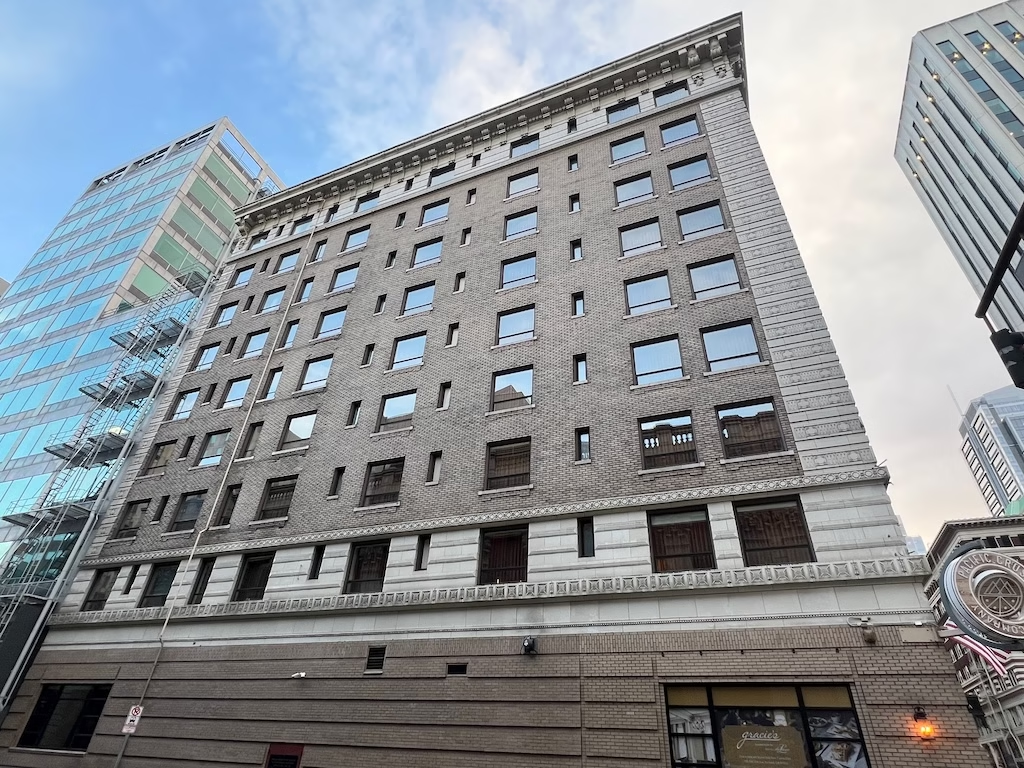
I stayed in Hotel Lucia for the simple fact that it is itself a heritage building and it was certainly value for money as a downtown option. Built in 1909, it was an extension of the adjacent, original Imperial Hotel.
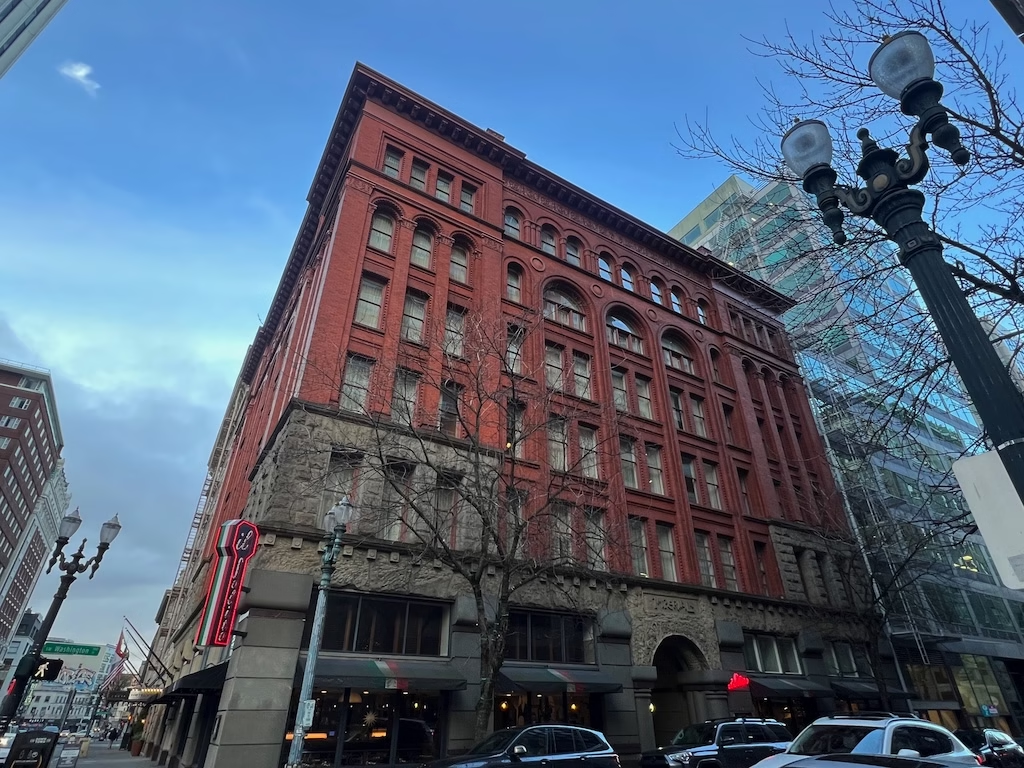
As such, the predecessor of Hotel Lucia was the Imperial Hotel. The building that houses Hotel Lucia has always been intended as a hospitality facility. It was fitted in a way that continues to accommodate the hardware features that provide top accommodation experience for its guests.
I am not “selling” the hotel here, it is an honest opinion of how well-run and well-functioned the hotel amenities were.
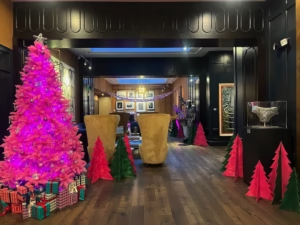
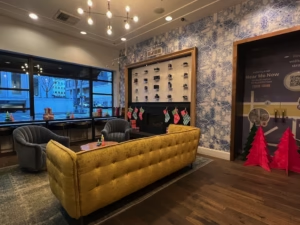
As with the Pioneer Courthouse Square, the hotel welcomed the December visitors with the illuminations of holiday décor. It is an enormous contrast to those homeless folks that loiter outside the hotel occasionally (see more below). I was fortunate that I was at this side of the aisle.
The United States National Bank Building and the Adjacent Wells Fargo Building
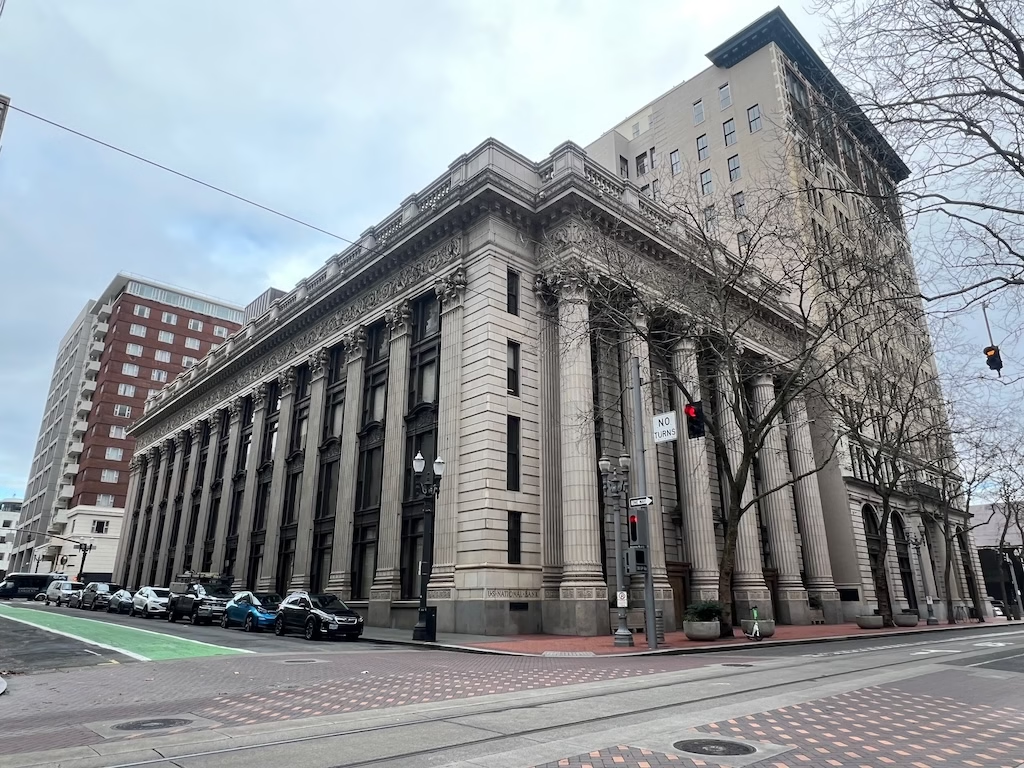
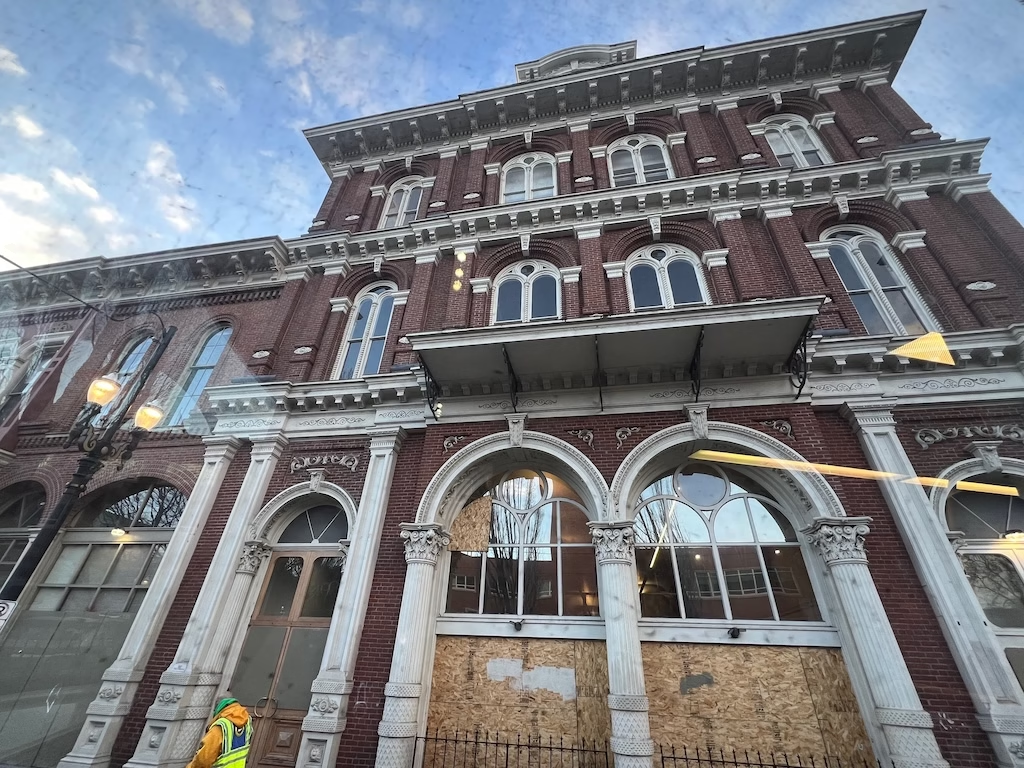
At its inception, the building was home to the United States National Bank of Portland, which eventually became U.S. Bancorp in 1968. The United States National Bank of Portland opened for business in 1891. With enormous business success, it purchased this quarter of a block in Portland downtown in 1916 to build a permanent place of business. The bank’s headquarters at this location opened in 1917, and it has been the site of its headquarters to the current day.
The Wikipedia has this to say about its architecture and preservation:
The building was designed by A.E. Doyle, a Portland architect, in a Roman classical style, and is listed on the National Register of Historic Places…. The building features a four-story Corinthian colonnade at its eastern end (originally the principal facade) and makes extensive use of glazed terracotta. The interior is also decorated extensively with highly textured materials.
The U.S. National Bank of Oregon (former entity before the bank is held by U.S. Bancorp) was honored by the Portland Historical Landmarks Commission in that year (1979) for its longstanding commitment to maintaining the building in nearly original condition.
Over a century-and-more of its existence, the bank had a sprawling business presence that spilled over to its physical occupation of key locations in Portland’s Downtown. Besides the Wells Fargo Building, which stands right next to the bank (and shown in the photograph above), that the bank purchased in 1946, in the same area there is at least another U.S. Bank building that the bank built in the 1970s.
A Homelessness Problem
Perhaps Portland’s homelessness problem has been a key concern for the city for years now. Having stayed in a hotel in Downtown Portland for a few nights, I could say that I gathered a pretty good idea of homelessness in the city.
I have heard the horror stories that came out of San Francisco. I must say that homelessness wasn’t so bad in Portland. There was certainly no foul smell on the streets. A number of homeless people would loiter around the higher end hotels seeking cigarettes or money. The didn’t do anything to me when I politely said no to them. Some would do their shopping in the trash bins, and I found that to be admirable because they would do what they could to make a few bucks. I did see a few that were talking to themselves nonstop, but overall, they did not seem to present any real chance of harm against others. When I did give a dollar or two, they were thankful. Some even chatted with me a little.
The point being that they are all human beings, all the same.
Sources
The Wikipedia on List of Crossings on the Willamette River.
The Wikipedia on Hotel Lucia.
The Wikipedia on Pioneer Courthouse Square.
The Wikipedia on United States National Bank Building.
Descriptions on site at the Pittock Mansion.