
America on Foot — Portland’s Old Town (Chinatown)
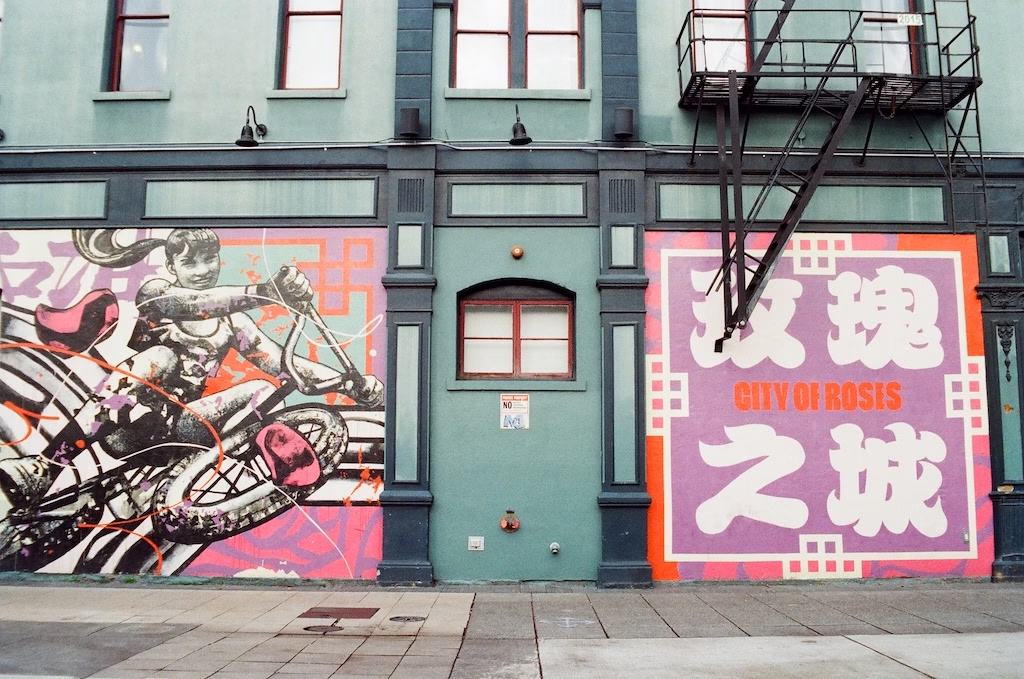
Portland was founded in 1843 and incorporated in 1851. The City of Portland grew out of the area west of the Willamette River. That fact meets the history of the city’s early beginning. Due to the convenience of the Willamette River as a waterway, the Portlanders relied on river trade for much of its economy. It was soon to be known as a major international Port. Beginning in the mid-1800s to early-1900s, the rise of the railway as a logistics alternative has dwindled the city’s reliance on river trade. The city then developed toward the inland area, also likely due to the constant flooding of the Willamette.
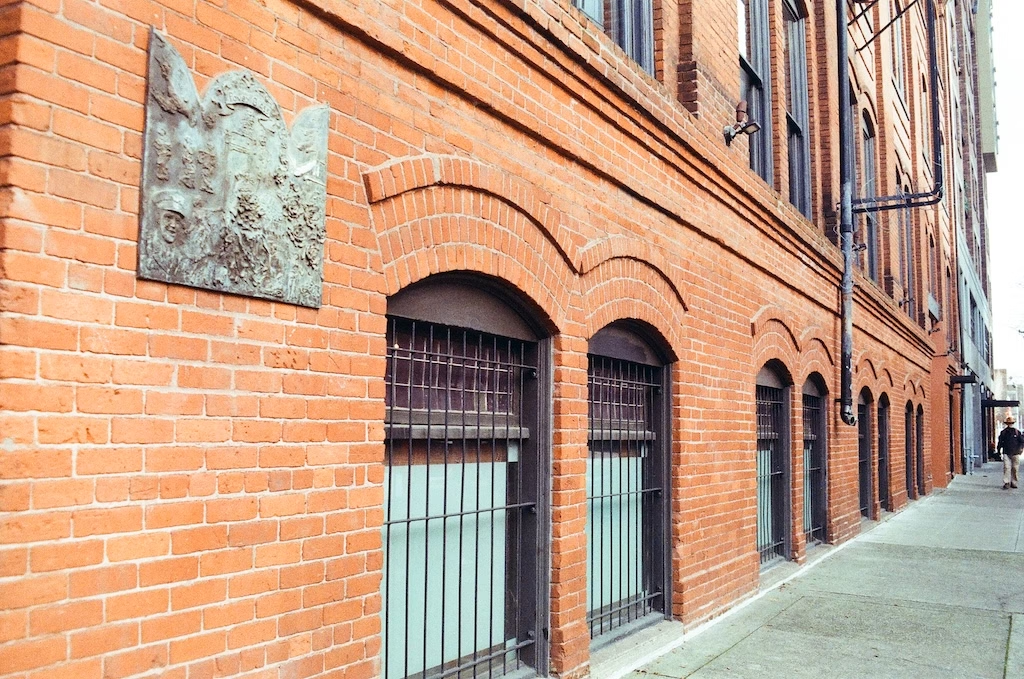
Now the Old Town of Portland, Portland’s original downtown area rose to meet the needs of the river trade. It stands at what was the former port and the riverfront quarter. It was an area that bustled with life, and a vibrant bar scene. People of all walks engaged in all sorts of trade and business there. It is against this historical backdrop that the infamous Shanghai tunnels came into being. The phenomenon continues to stoke and spook the imagination of future generations.
The Shanghai Tunnels of Old Town
The Shanghai Tunnels is an urban legend rife with mystery and interpreted history. TravelPortland has this to say about the clandestine catacombs that once sprawled the underground of the Old Town:
Local lore says that a labyrinth of interconnected basements, makeshift rooms and low-ceilinged tunnels reached the waterfront in the 1890s. Allegedly, this made it easy to sneak illegal goods, including opium and Prohibition-era alcohol — or kidnapped victims — onto waiting ships.
It is with a stretch of imagination that the word “Shanghai” came to be the name of the illegal criminal practice at the time. It is said that, during the 1890s, it was a common practice to kidnap men and sell them into slavery (“shanghaied”) as the crew of ships in Portland. The men were transported via these underground tunnels into an unknown, but certainly unfortunate, future.
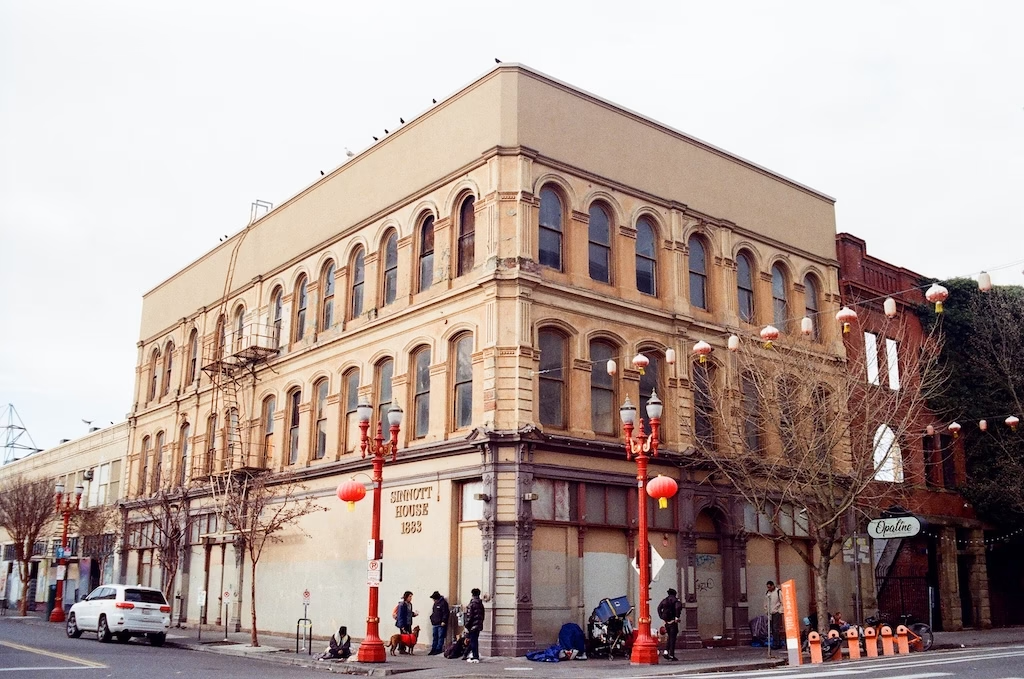
This network of throughway underground was used during the mid-19th century till World War II, when they were closed and sealed. Besides the slaves-to-be, goods were also transported through this network of connected basements toward the dock by the Willamette. It goes beyond saying that a lot of such goods were contrabands.
As a thing of the past, the Shanghai Tunnels remain more so in memory than in reality. Apparently, some trapdoors, through which people were purportedly dropped, are still accessible in some of the bars in Chinatown. It is possible to join a Haunted Shanghai Tunnel Tour under the Old Town Pizza & Brewing today.
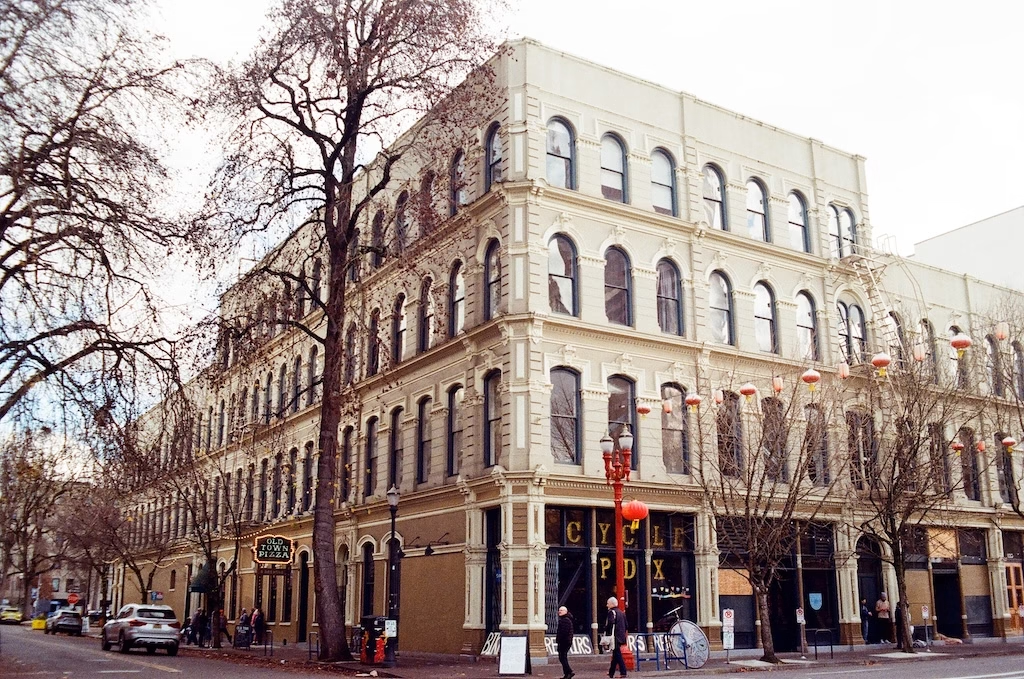
Photo: The Old Town Pizza & Brewery is at a heritage building in Old Town Portland.
The Chinese Americans in Old Town Portland
The Chinese immigrants started arriving in Portland around 1850s or so, from the gold mines of California or the southwestern fields of Oregon. Others arrived by sea directly from China. Portland’s Chinatown was once the second largest in America, after San Francisco. By the 1870s, the Chinese immigrants took up six blocks in this waterfront area for their businesses and community.
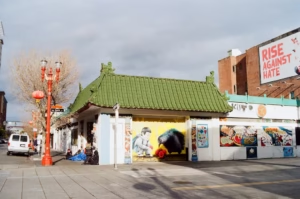
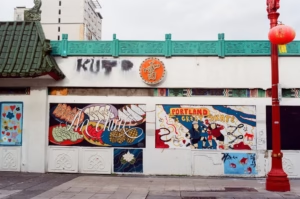
In this part of Portland, an ongoing issue was the flooding from the Willamette River. The flooding and a great fire of 1873 destroyed the original Chinatown. It started at a Chinese laundry. It burned 20 blocks before it was brought under control. Efforts to rebuild Chinatown was moving the center of development northward. By 1895, New Chinatown had a hospital, four churches, two joss houses, five herb shops and a theater. The 1890s was the period that coincided with the development of nihonmachi (Japantown) when the Japanese immigrants also came to America as laborers.
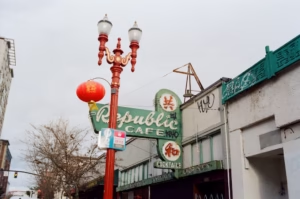
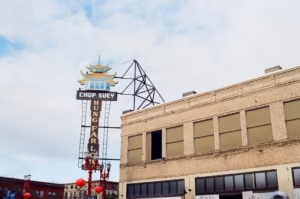
In terms of state-sanctioned racism, both the Chinese and Japanese immigrants have had their fair share. The Congress passed the first Chinese Exclusion Act in 1882. Thereafter, it passed more laws aiming to exclude the Chinese immigrants between 1888-1902.
These laws have the effect of first denying U.S. citizenship to the rightful citizens of Chinese descent. Secondly, they limited the number of Chinese people that could enter the United States in any capacity. The Chinese Exclusion Act was repealed in 1943, by the Chinese Exclusion Repeal Act. Finally, in 2011 the Senate passed a resolution (S.Res.201) expressing regret for the Chinese Exclusion Act.
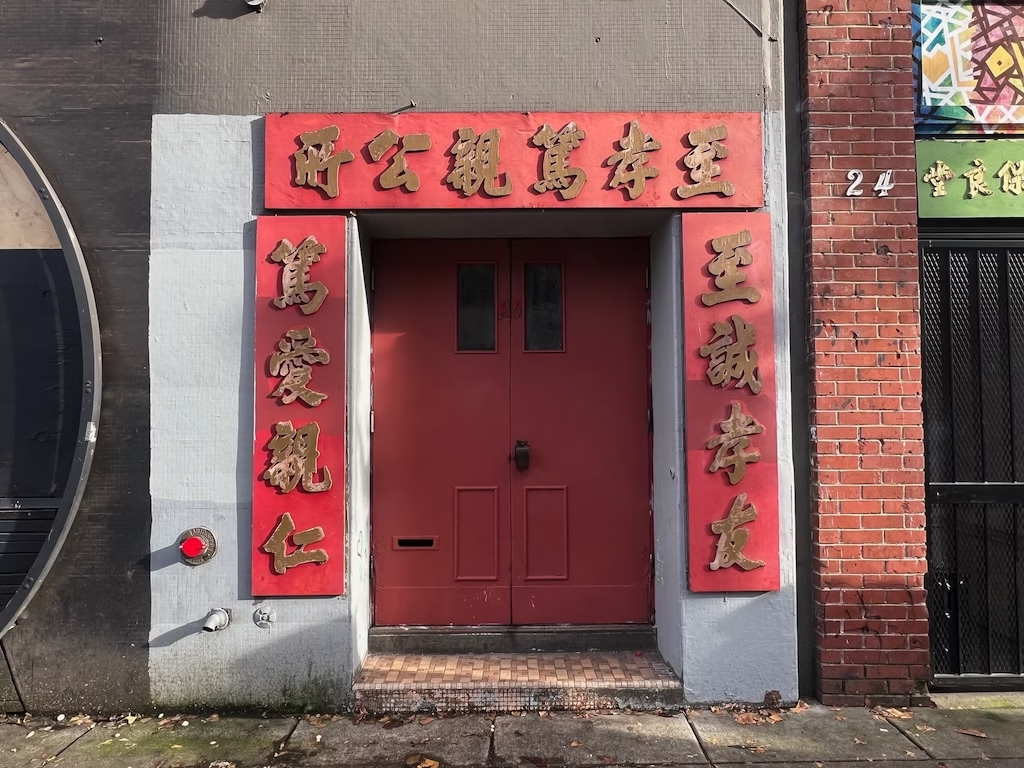
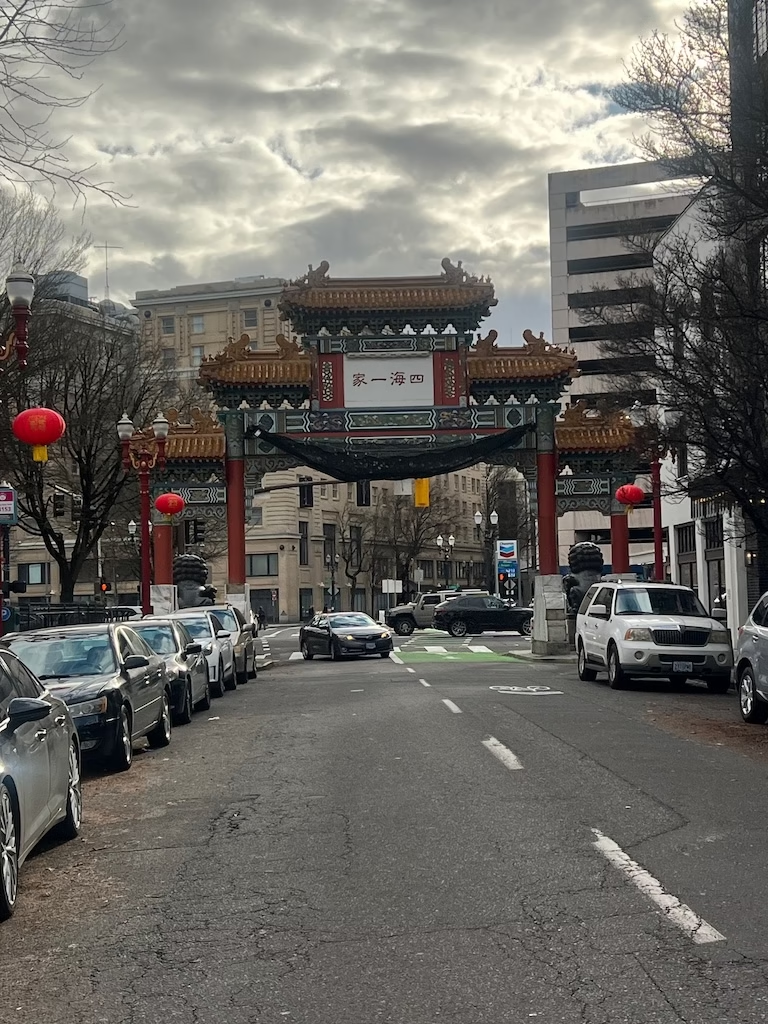
Today, however, visitors won’t see the Old Town bustling anymore. The area has more than declined — it is near-desolate as far as I could observe. The buildings of Chinatown show the Chinese American establishments of a bygone era. Its deserted streets breathe an air of hopelessness, feeling as if it has been eternally banished into the terra nullius of Portland’s memory.
The Japanese American History Museum in Naito Center
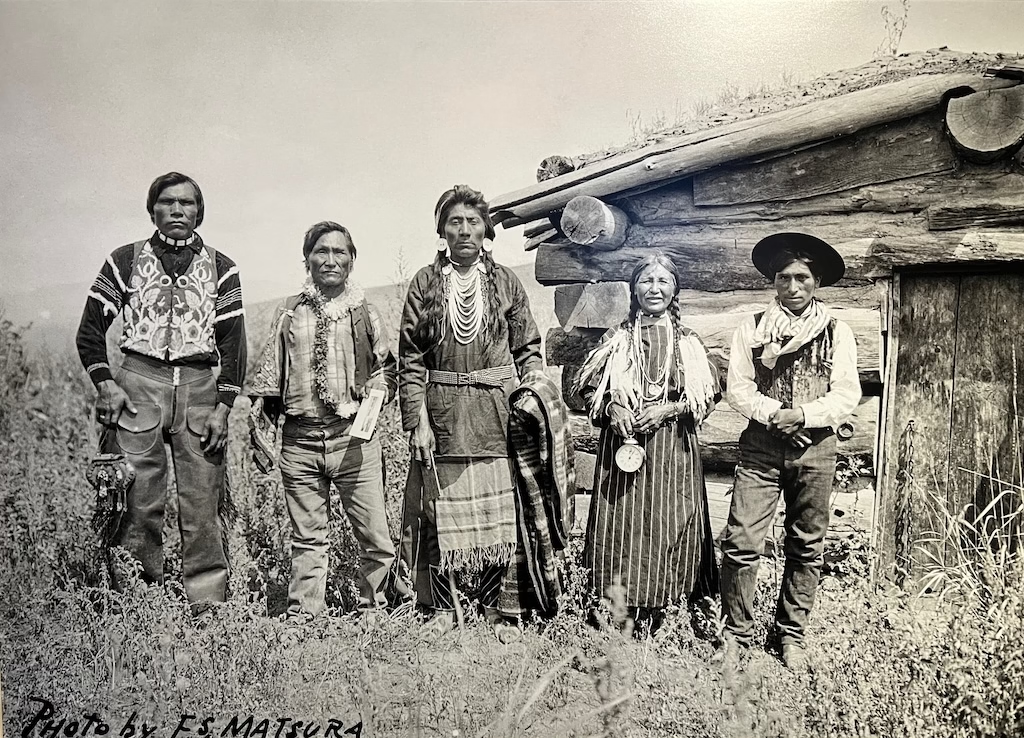
Frank Satae Matsura’s Photography
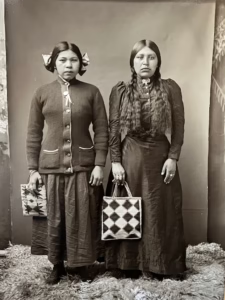
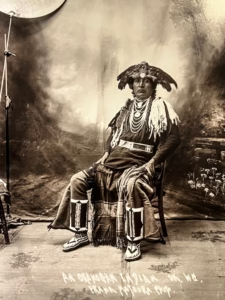
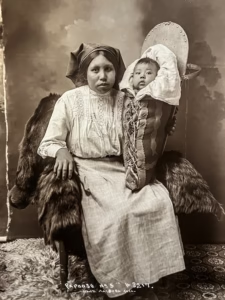
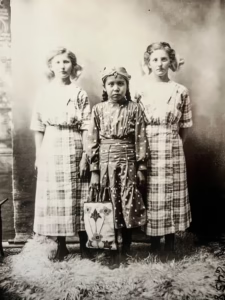
On the day of my visit, there was also a wonderful photography exhibition featuring the work of the (apparently) quixotic Frank Satae Matsura, who made it to Portland mysteriously and began shooting portraits of the Native Americans in his times. Upon arriving in Portland I 1903, he set up his own studio in Okanogan. His studio attracted all kinds of customers, including a large number of Plateau Indians.
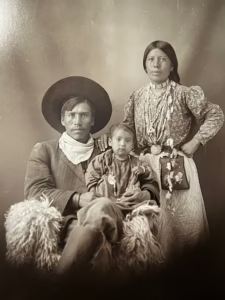
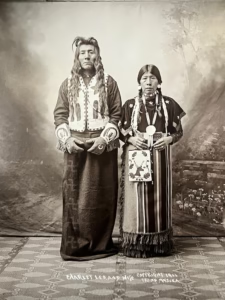
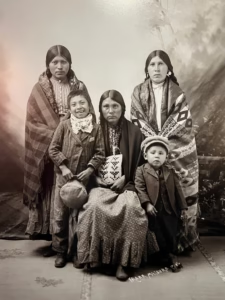
Matsura had a trove of portraits that depict the American Indians in a time of change. In the early 1900s, these communities underwent the irreversible trends of European influence due to (particularly the fur) trade. The items worn by the subjects of Matsura’s photography are telltale signs of the tribesmen’s adaptions to European-influenced lives.
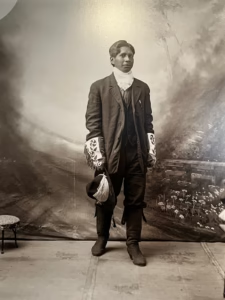
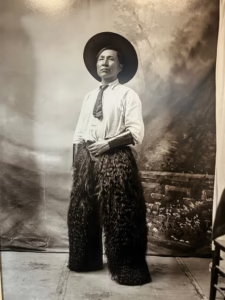
It is the curator’s view thus:
Matsura’s portraits show more conceptual sophistication than that was common in commercial “frontier” photography; rather, they contain stylistic choices that foreshadow contemporary art movements. For instance, Matsura trade closely-cropped backgrounds for wider frames, sometimes allowing furniture, lighting equipment, or the edge of the artificial backdrop to infiltrate a shot-perhaps reminding us not to take the environment at face value.
Many of these portraits also revel in playfulness and irony: feminist, interracial, and social themes contradict idealized life in the American west… far from portraying Indigenous participants as frozen in time or as propaganda, Matsura’s multifaceted and formally rigorous portraits reveal a living continuum.
And having seen those portraits, I agree with this lauded assessment of Frank Satae Matsura’s photography.
The Japanese American Experience in Oregon
The permanent exhibition features a well-told narrative of the lives of Japanese Americans in Oregon. Needless to say, their experience of being interned during WWII is a key message to take from the exhibition.
The early Japanese immigrants to the United States were the laborers in railroads, canneries, logging and farming. Known as Issei, first generation Japanese immigrant, the early immigrants came to the United States in the 1880s or so, when Chinese immigration was halted due to the Chinese Exclusion Act. As they settled down in America, the next generations were known, consecutively, as Nisei (second generation), Sansei (third generation), and Yonsei (fourth generation). The Shin Nikkei are the Japanese people and their descendants who immigrated from Japan after WWII.
In Japantown (nihonmachi), businessmen of Japanese descent supplied jobs, daily goods and information to newly-arrived immigrants. There was a vibrant Japanese community in Portland. In railroad, farming and lumber, the Japanese laborers made significant contribution to the industries of the Pacific Northwest. The immigration of Japanese women began in 1907. With their arrival came a growing community and the needs for school (both regular schools and Japanese schools), temples and other community provisions.
It was through generations of hard work and dedication to their duties that the Japanese people found their footing in Oregon. That would all come to naught as the Pearl Habor Attack of 1941 dragged America into the official conflicts of WWII.
The Japanese Internment in WWII
The roundup of Japanese Americans for internment began immediately after the Pearl Harbor Attack in December of 1941, when a group of prominent Issei were deemed to be spies. In February 1942, President Roosevelt signed Executive Order 9066 authorizing the removal of all people from military “as deemed necessary.” Public notices began appearing that required the Japanese Americans to be assembled at the Portland Assembly Center, a temporary camp.
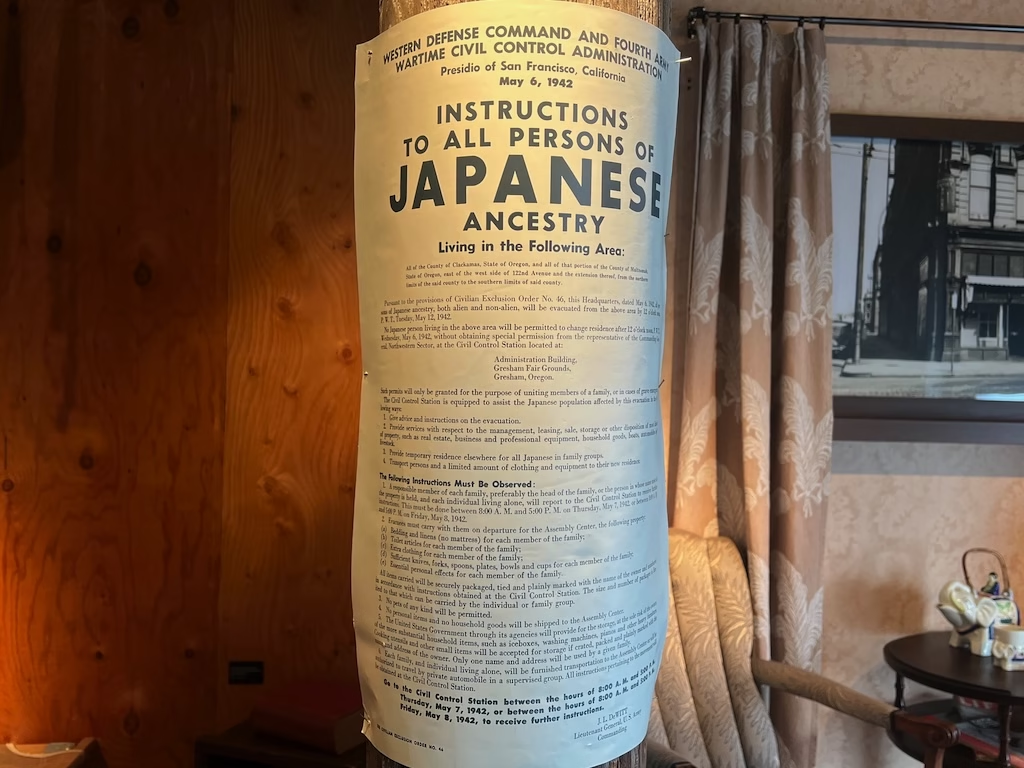
What followed was the years-long internment that would last well into October 1945, when WWII has finally ended. 110,000 Nikkei were, as a result, removed from the West Coast and relocated. 13,000 of them ended up in Mindoka, Idaho.
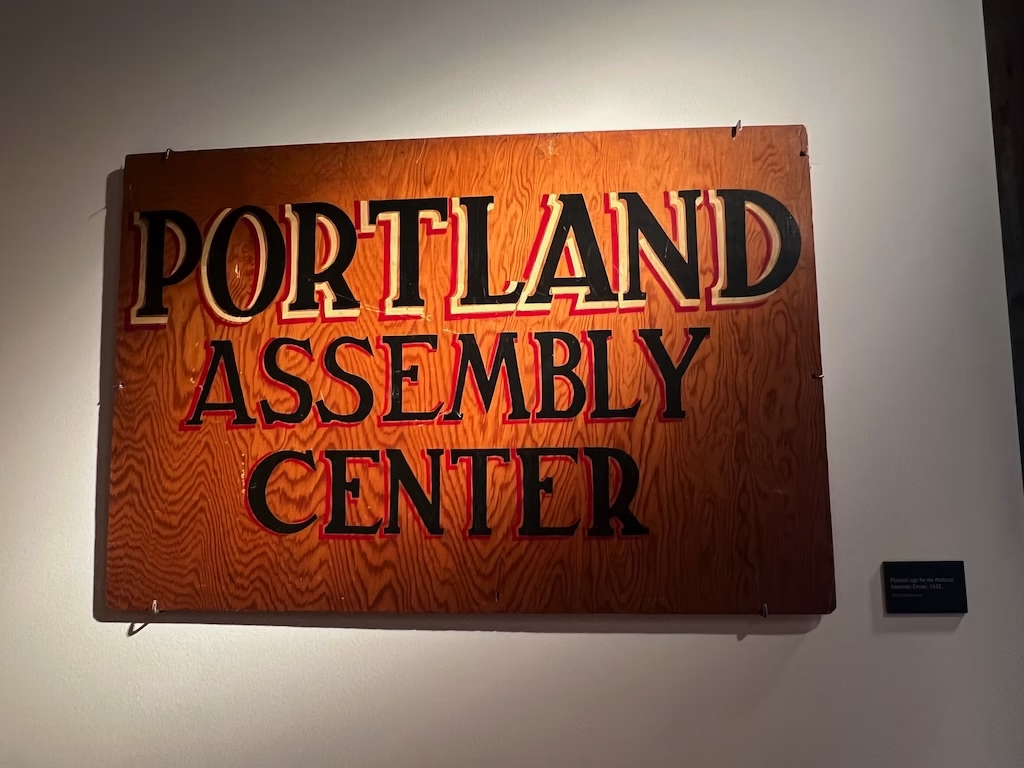
The conditions were terrible at these detention centers (the exhibition termed it “American concentration camps” and I prefer to call them internment camps, although it is a bureaucratic euphemism.) To say the least, the Portland Assembly Center was a makeshift camp out of the Pacific Northwest Livestock Exposition. The authorities literally assigned each family to an animal stall.
33,000 Japanese Americans did serve in the Army and participated in the European front of the war. A lot of them, with their language skills, were placed in the Military Information Service (MIS). The rest participated in battles, albeit segregated. Both the 100th Infantry Battalion and 442nd Regimental Combat Team were known for their valor—all the while, their family and friends were incarcerated back home.
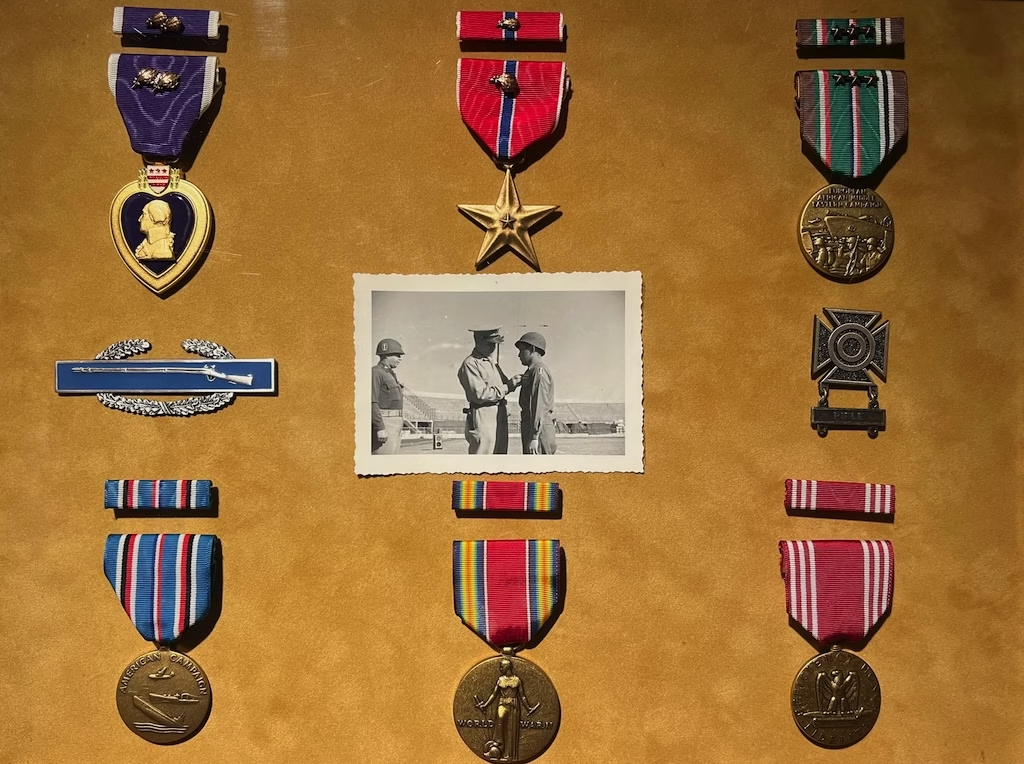
By the time that WWII ended, the Japanese Americans being incarcerated had lost everything. They had no home, no land, no jobs to return to. The incarcerees in Minidoka were given $25 and a one-way bus ticket. About 70% of Oregon’s Japanese Americans returned to the state.
Minoru Yasui
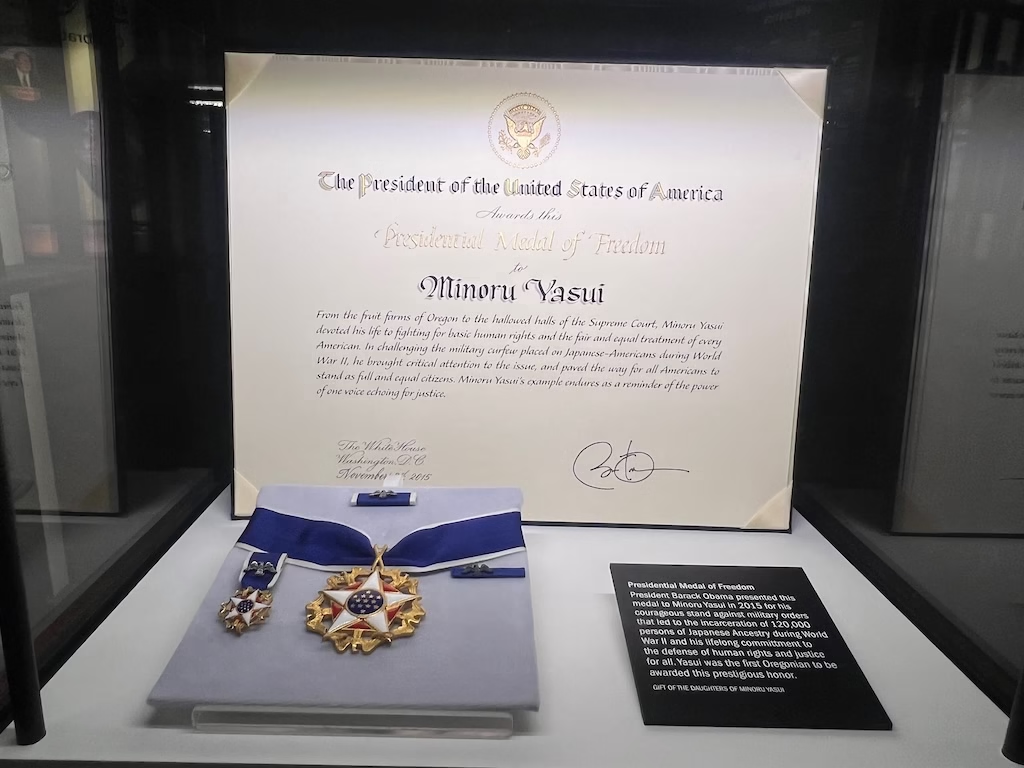
Worthy of mention is the story of Minoru Yasui. An Oregon native, he was the first Japanese American attorney to become a member of the Oregon State Bar. He was turned away from military service during WWII due to his ancestry. In March 28, 1942, he purposely violated a curfew imposed on Nikkei in the West Coast. For this offense, he spent nine months in solitary confinement as he appealed the case to the U.S. Supreme Court. This was the first case that challenged curfew against a stated minority group. At the time, the Supreme Court affirmed his conviction. He was also interned at a camp during most of WWII. His conviction was eventually vacated in 1986.
After the war, he settled down in Denver and continued to fight for civil rights and social justice. In 2015, President Obama awarded him with the Presidential Medal of Freedom posthumously. Now, March 28 is Minoru Yasui Day in Oregon.
The internment of Japanese Americans during WWII was a blatant violation of civil rights and it was not justified even during war times. There was no one single allegation that could be made against the Japanese Americans for espionage. The Japanese Americans sought justice in the courts after the war. To name just the well-known cases, there was Ex parte Mitsuye Endo, Yasui v. United States, and Korematsu v. United States.
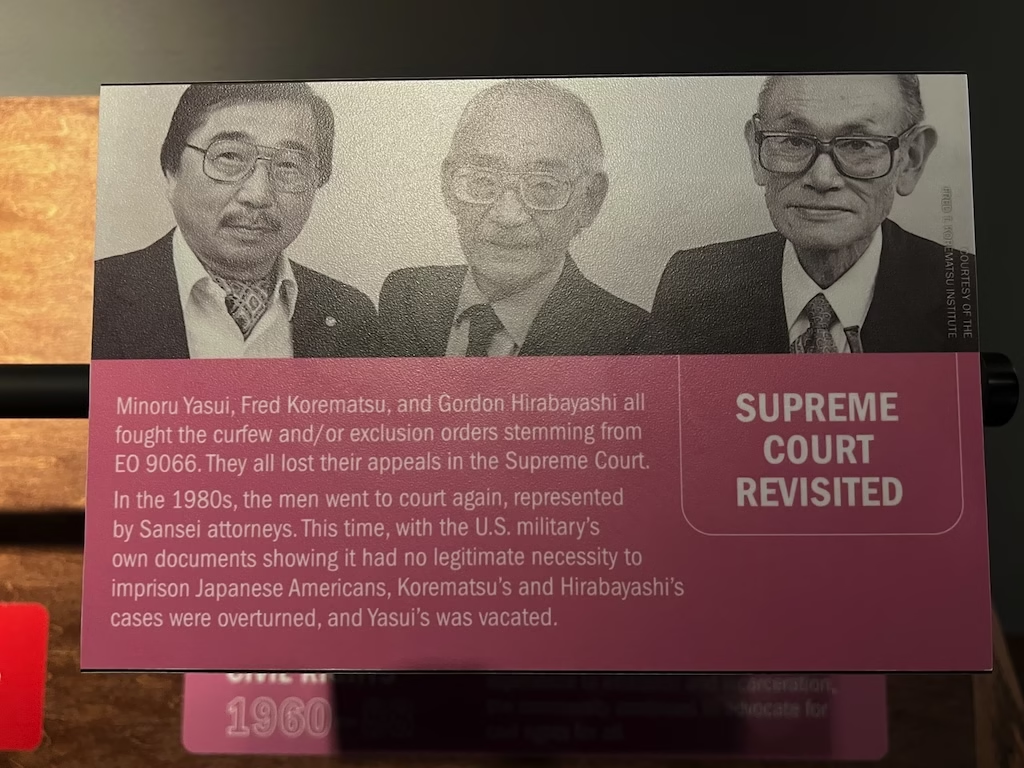
In the theater of justice, the Japanese Americans also approached the political process for redress and reparations. In 1980, the Commission on Wartime Relocation and Internment of Civilians published its report titled Personal Justice Denied. The conclusion of the report was that Executive Order 9066 was not justified by military necessity, but motivated by racial prejudice. In 1988, President Reagan signed the Civil Liberties Act. Amongst others, President Reagon acknowledged the injustice committed against the Japanese Americans, apologized publicly to those incarcerated, and a sum of $20,000 was paid to each surviving incarceree.
This was certainly one of the darkest chapters in United States history. But make no mistake, the Japanese Americans have shown themselves to be exceedingly perseverant, resilient with a strong sense of justice and solidarity. In postwar life, they rebuilt their livelihood and status as a driving force for the ever-evolving democratic spirit of the nation.
Sources
TravelPortland.com, Portland’s Shanghai Tunnels.
The Wikipedia on Shanghai Tunnels.
The Wikipedia on Minoru Yasui.
National Park Services, Portland New Chinatown / Japantown Historic District.
Descriptions on site at the Japanese American Museum at Naito Center.