
Historic Macau — Tak Seng On
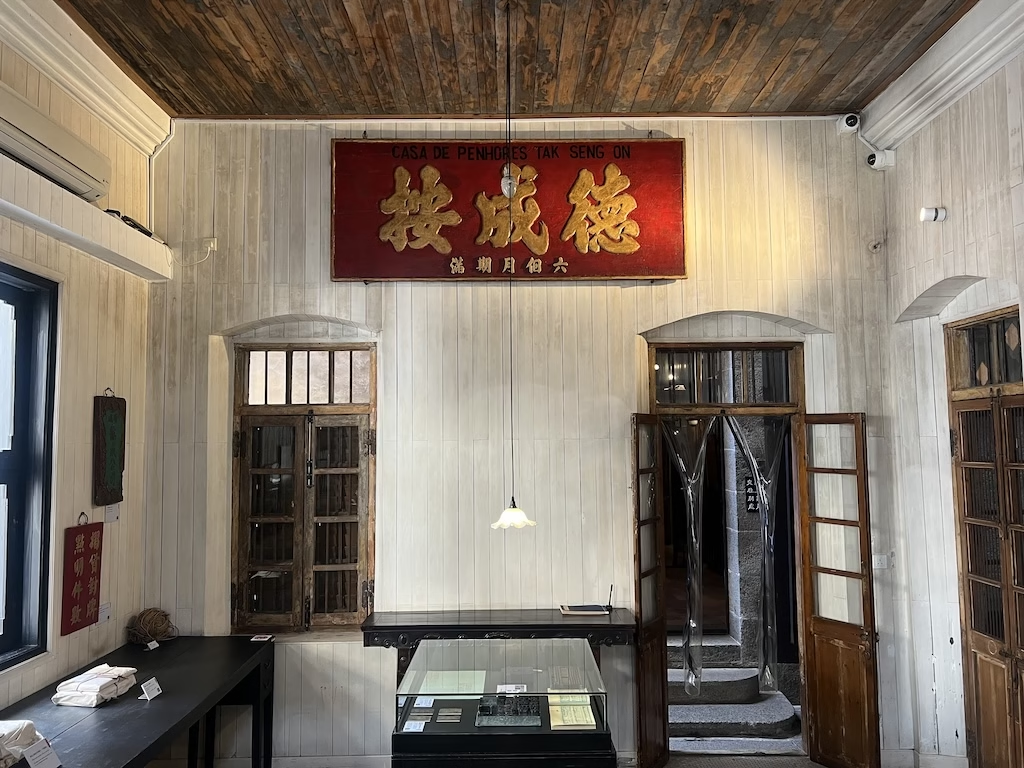
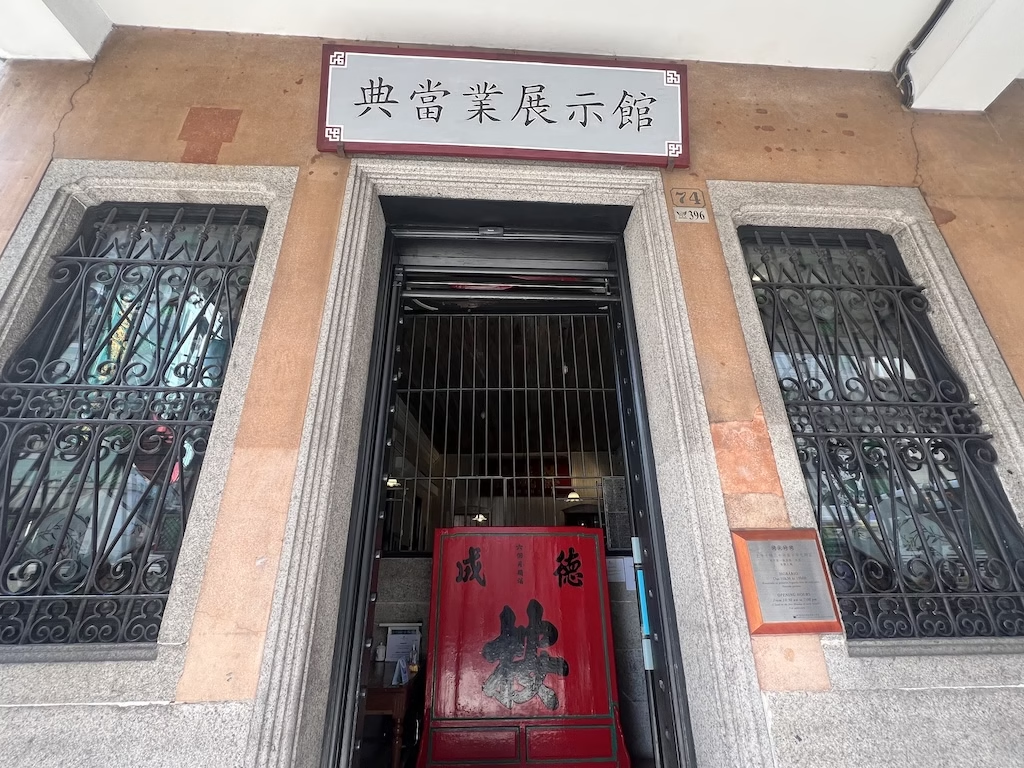
Before you head out on the Senado Square, perhaps it is worthwhile to visit the Tak Seng On on Avenida de Almeida Ribeiro. This was the street where many pawnshop businesses set foot during the late Qing dynasty in Macau. The streets of Rua de Camilo Pessanha, Travessa do Matadouro, and Rua de S. Domingos were also key areas of business for the pawnshops of the times.
The Pawn Shop Business
In its inception during the Qing dynasty, the pawnshops were important “monetary institutions” that provided the liquidity that the local economy needed. Even during the Qing dynasty, the pawn shops had a significant role in all types of money-lending and mortgage operations. Some pawn shops collected rents on properties as well.
The business in general operated in four main types of pawning pledges, namely, “din,” “tong,” “on,” and “ngat.”
“Tong,” “On,” and “Ngat” Pledges
The “din” pawn shops have long disappeared in the ties of history, as far back as at the Qing dynasty. In Macau, the pawn business operated in the “tong,” “on,” and “ngat” models.
The main difference between “tong,” “on,” and “ngat” pledges are in the scale of business and the difference in the terms of pawning that it entails. The “tong” business has the largest scale, and that means a given personal effect that has been pawned will give you a loan with the longest term of years, and likely a larger amount of loan as well. It can offer as long as a three-year loan. Each tael of silver required a monthly interest of 3 cents. During the three winter months, one month’s worth of interest was waived.
Next in the business scale is the “on,” of a smaller scale than “dong,” a shorter term of years (typically two years), and no waiver of interest during the winter.
The “ngat” is the business that has survived the times and this is the model for the current-day pawn shops. The term of loan was three months plus a one-month extension. For each tael of silver loaned came a monthly interest of the equivalent of 3.75 grams of silver. That means the monthly interest was 11%.
Both Macau and Hong Kong have relevant laws that regulate the running of the pawn business. As opposed to the practice of modern banking, those owing money to the pawn shops are only held to the value of the items that they pawned. As the lender lost the ownership of their pawned belonging to the pawn shops, the pawn shops may not seek the shortfall of the loan repayment from the patrons when they failed to redeem their pawn.
The History of the Pawn Shops in Macau
While pawn shops have existed in Macau during the Qing dynasty, the business reached its heyday during the Sino-Japanese Wars. Perhaps this comes as no surprise, since wars necessitate the need for cash and liquidity for the sake of survival. Another relevant factor was that the economy in Macau declined during those times. The people that frequented the gambling tables, brothels and opium dens had to resort to the pawn business to sustain their lifestyles. For the patrons of those times, the most usual items to pawn off were watches, jewelry and fountain pens. This is perhaps still true today.
Due to its neutrality during WWII, Macau took in an enormous population of refugees both from mainland China and Hong Kong. It is estimated that the influx of refugees caused the population in Macau to rise from 150,000 to 500,000. Supplies were always in shortage, and a lot of people had to pawn off their belongings to survive.
Till the 1970s, the economy of Macau improved significantly, which bought forth the development of modern banking, as well as modern pawn shops. A lot of the traditional pawn shops thus closed down, and Tak Seng On was no exception.
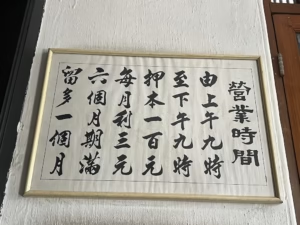
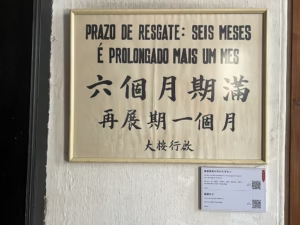
Photo: These photos show that the term of the “on” pledge to be six months with a one-month extension. The interest rate is three dollars per month.
The History of Tak Seng On
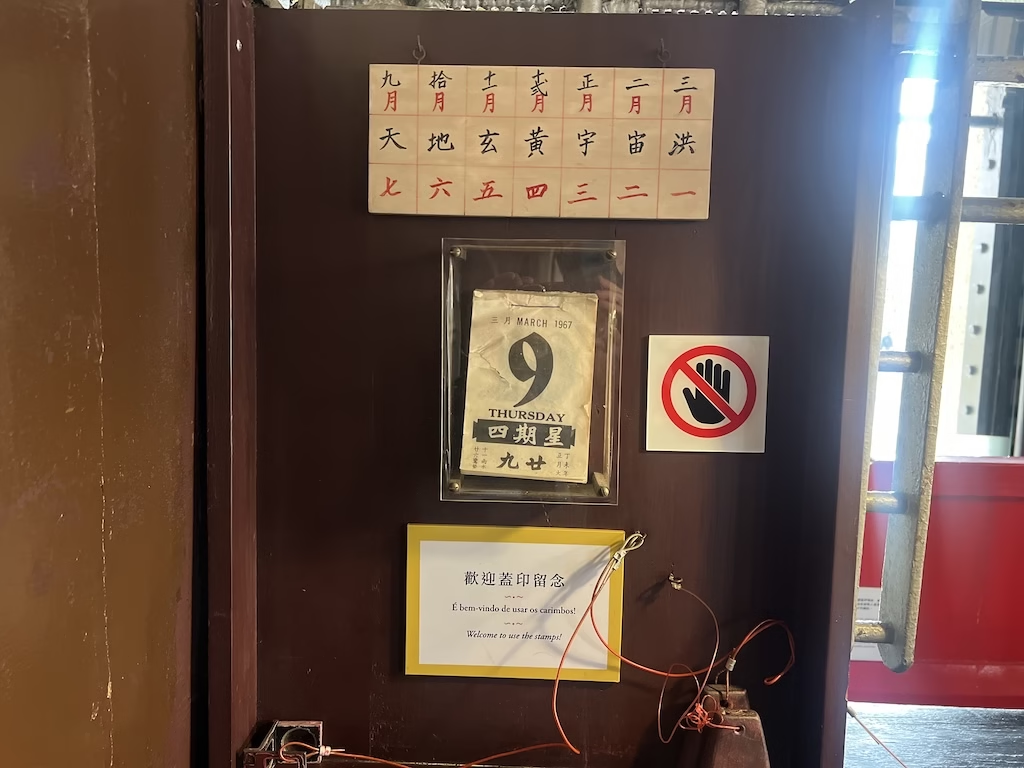
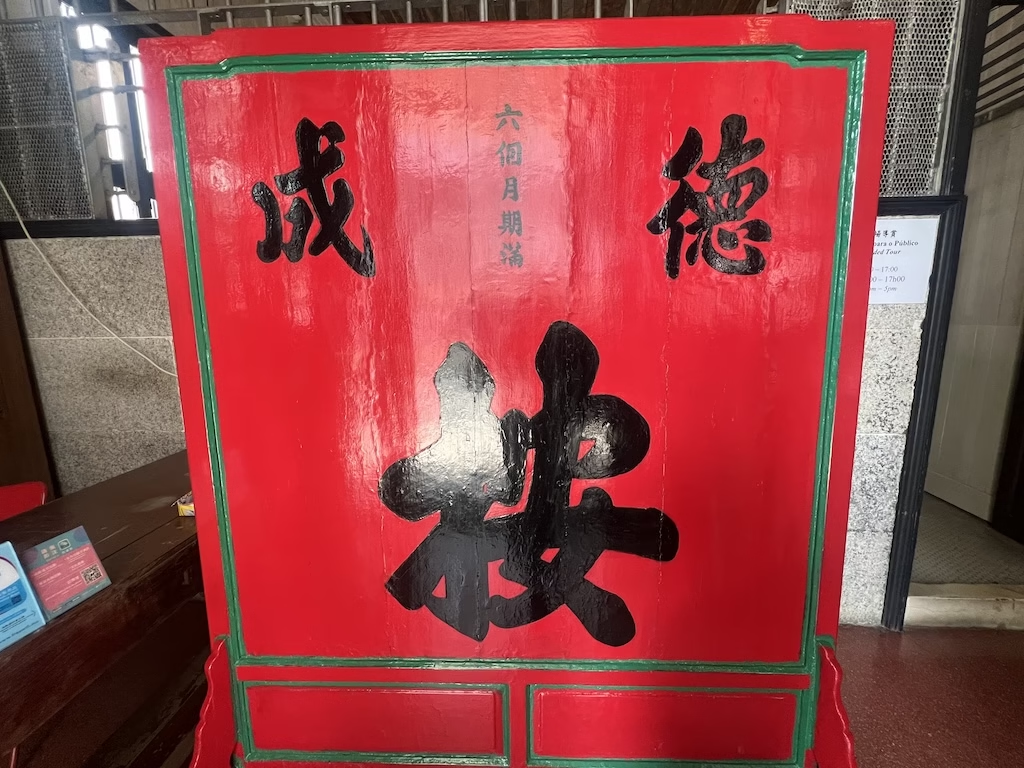
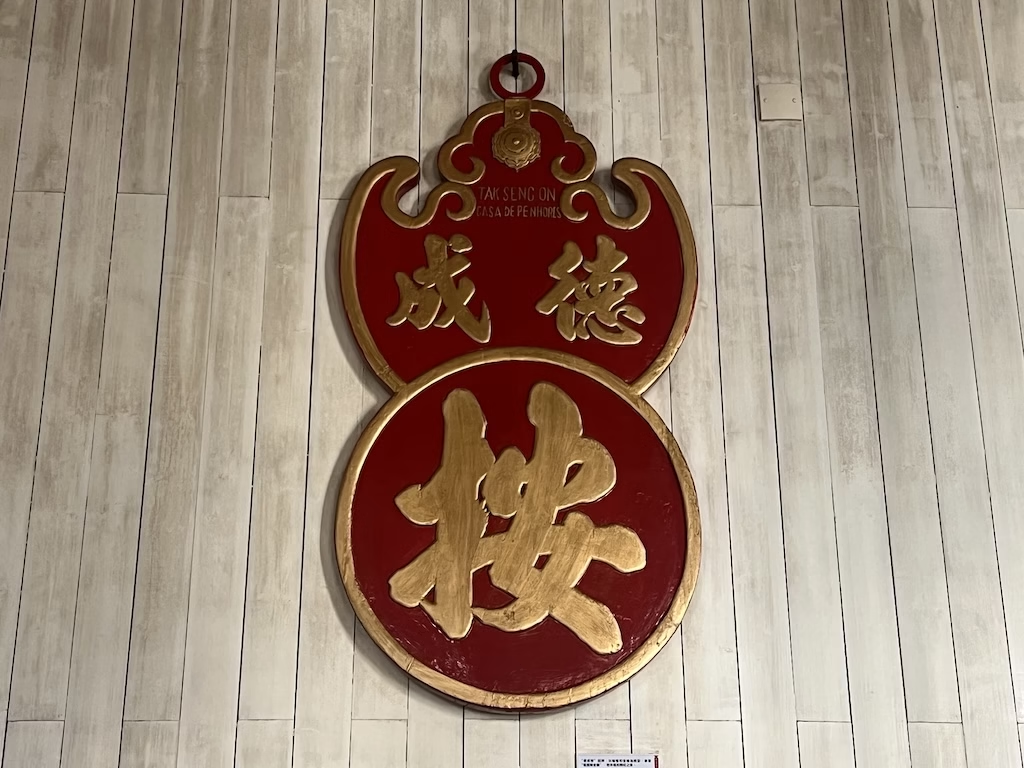
Tak Seng On was the property of wealth merchant Kou Hou Ning initially. Meaning “virtue and success,” the pawn shop established its business in 1917. From its internal setup to the way it conducted the business, Tak Seng On was an exemplary of a pawn shop of the Republican period in every perceivable way.
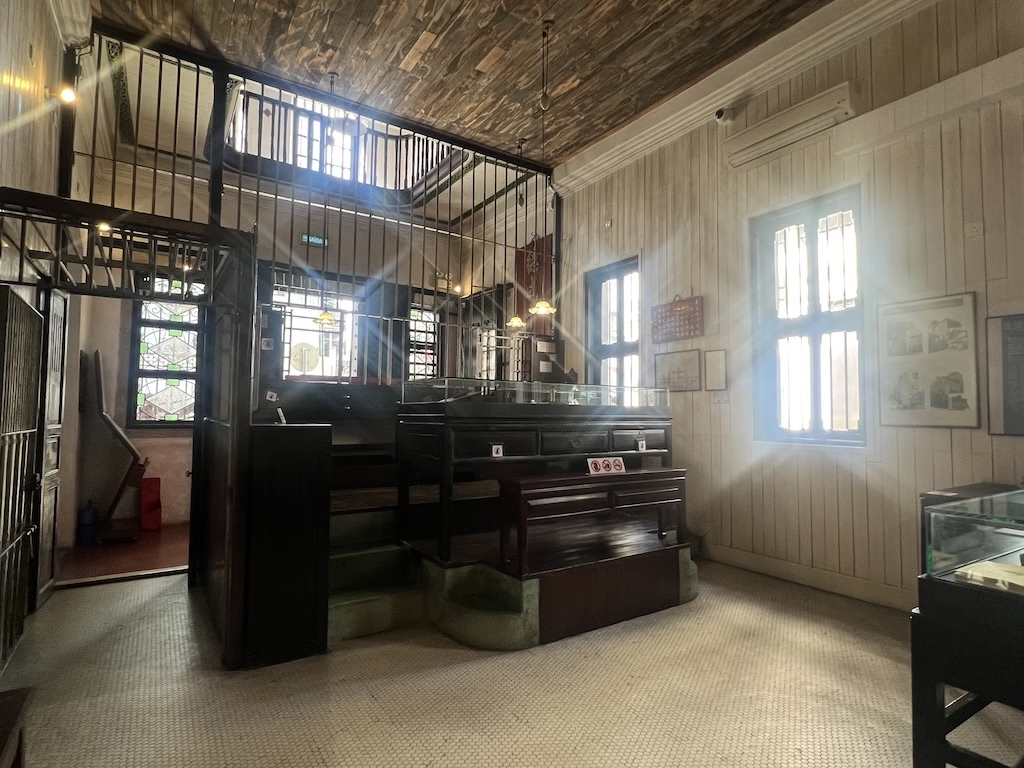
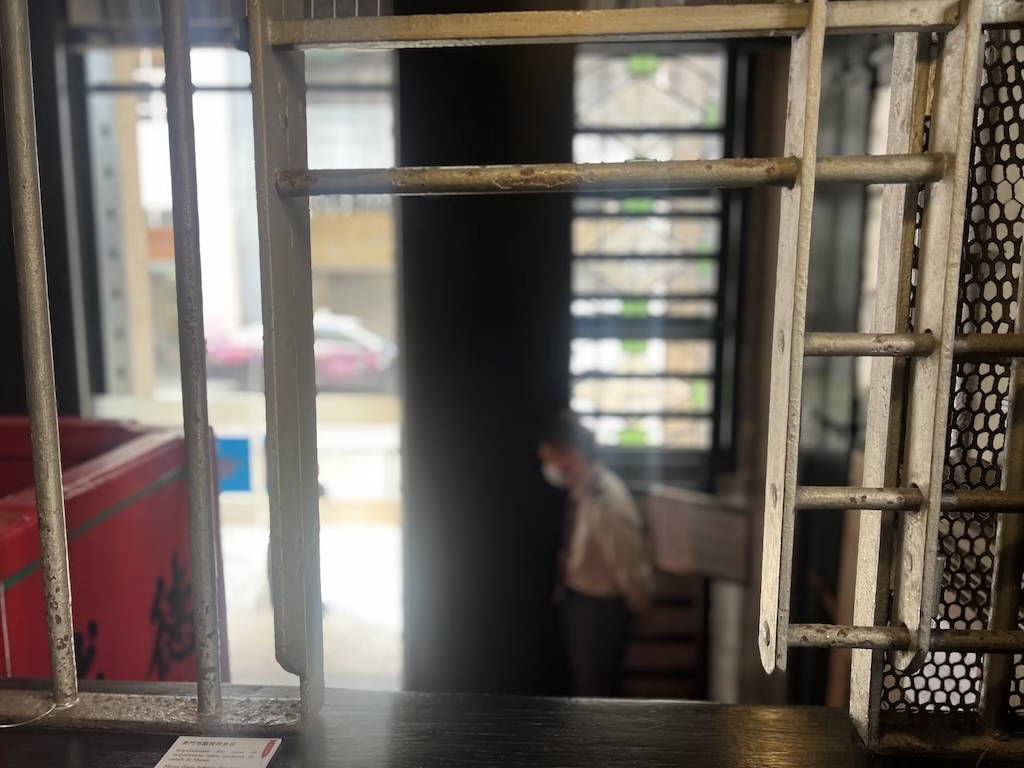
Perhaps one feature that was quite representative of Chinese culture was the entry space at the front counter that was screened off to protect the privacy of the patron. The Chinese people tend not to want others to know that they are in financial difficulty. Such layout of the pawn shops shielded them from feelings of shame.
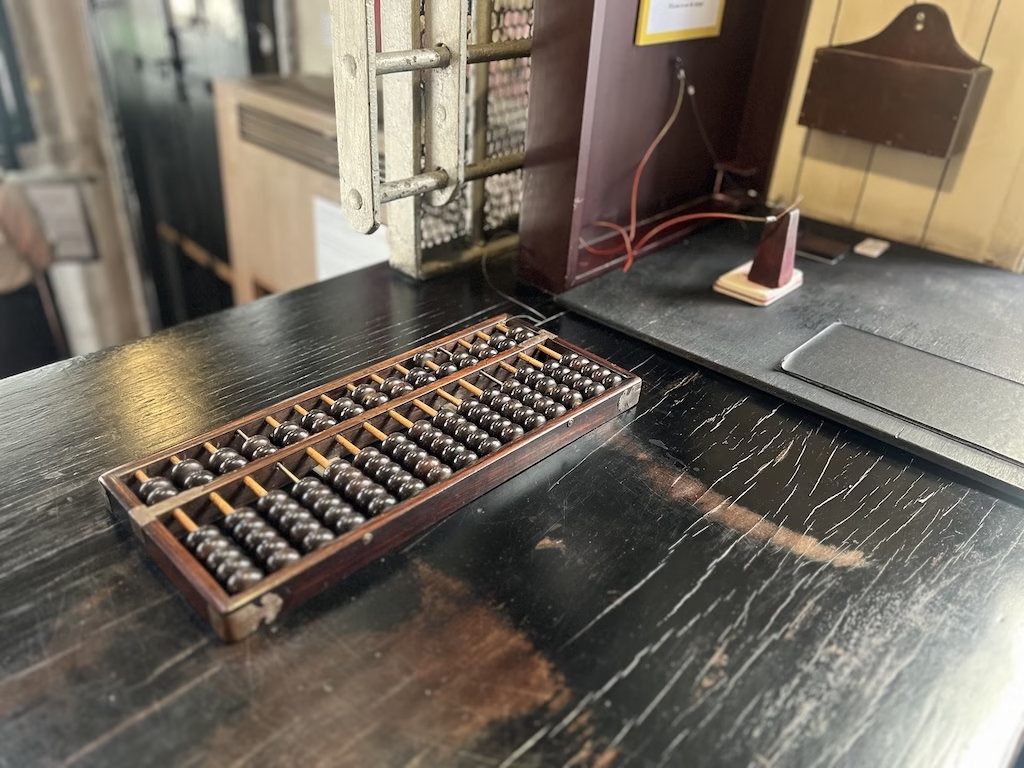
Furthermore, the front counter is intentionally raised onto a higher position. This served two purposes. The obvious one is that the teller would be able to observe anything out of the ordinary, if a robbery or theft was afoot. It is for the purpose of vigilance. Another more subtle purpose is so that the lender is being put in an “inferior” position, where they know they were essentially “asking for a favor,” and as such would be more receptive to whatever terms of pawning that was being offered.
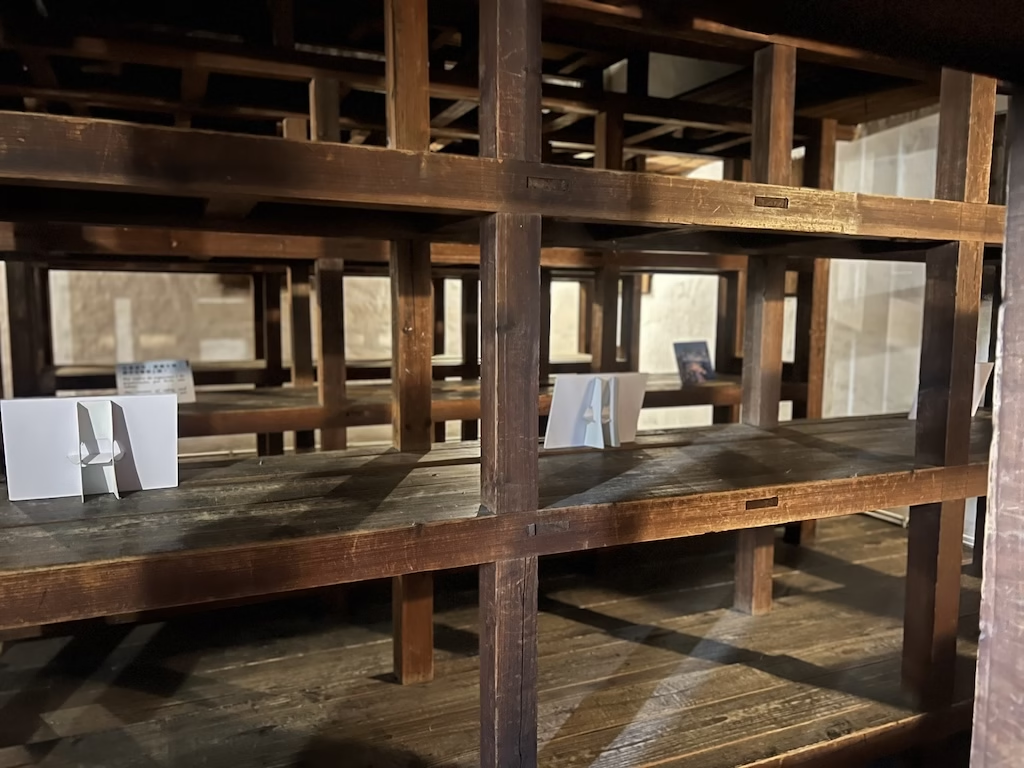
The back of the former pawn shop is also open for visits, and that was the storage space for the valuables.
In Macau, the pawnshops still operate on a small scale, mostly around the Hotel Lisboa area. In Hong Kong, modern pawnshops are seen in some of the aged communities.
Pawn Off the Baby!
Be sure that this does not mean that parents are pawning off the babies for the loan, but it was an interesting cultural practice in Hong Kong and Macau. The parents would do a “pawn ceremony” of their newborns in order to bring forth growth in the baby.
The parents choose an auspicious date for the ceremony. At the pawn shop, they hand over the baby on to the teller through the left window. The teller issues the pawn note for the parents, then takes the baby around the deity’s altar within the shop for a prayer of blessing. Auspicious words are both written and stamped onto the baby’s clothes, then the teller will hand the baby back to its parents on the right window. The parents tender a red packet to the teller as the “repayment” to “redeem” the baby.
The address of Tak Seng On Pawnshop Museum is 396 Av. de Almeda Ribeiro, Macao.
Sources
Descriptions on site at Tak Seng On.
Joint Publishing, The “Dong” and “Ngat” Industries in the Chinese Community (Chin).