Blog

Childhood memories in Sheung Shui

Childhood memories in Sheung Shui

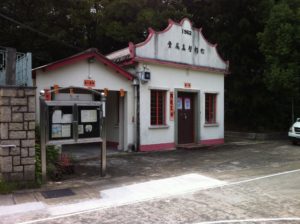
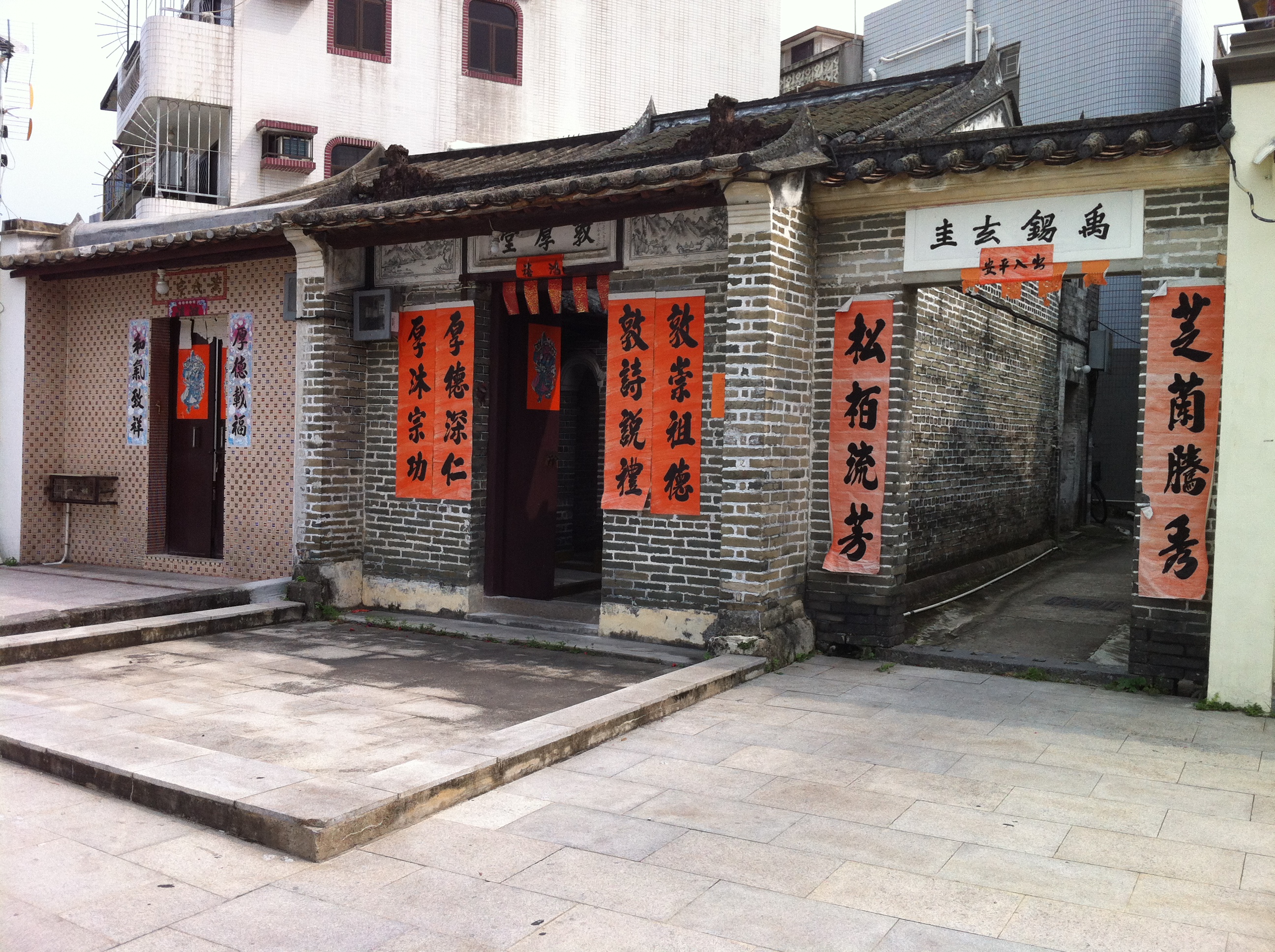
There was a time when Hong Kong was considered China’s window to the world.  In Chinese, it is said that Hong Kong faces the world with China at its back.  If we consider the geography, geopolitics, economy and cultures of Hong Kong, what really provides 

Finding Tibet – The Lovely Boy

Finding Tibet – The Lovely Boy

I am saving this entry to the last because this boy truly, truly moved me. This young ten-year-old worked at his family’s Uighur restaurant.  On one of our last days in Lhasa, a group of us went to this restaurant for dinner. When we sat 

Finding Tibet – A Second Look at Lhasa

Finding Tibet – A Second Look at Lhasa

Have you ever had the experience that, on the nth day of your trip, you have lost track of time?

That was Tibet to me.  It is an environment that constantly entices you away from the established routines and thoughts that structure your life in the outside world.  Everywhere in Tibet, the place draws you into its own reality, to a point of complete absorption.  The constant reminders of a distinctive native culture, the meeting of new people, and the view of exceptional scenery inspire myriad insights that take the mind away from what one temporarily leaves behind in the lowlands of the world.

I shall always remember the beautiful blue sky of Tibet, spread like a drawn curtain, peacefully hung from the unreachable rooftop of our mother earth. Perhaps it was a ceiling hand-painted by God’s loving fingers. Perhaps it was a sweet dream that enveloped me from the bothers of western civilization, an oasis made of ceramic, reflecting traces of a utopia, blue like china.

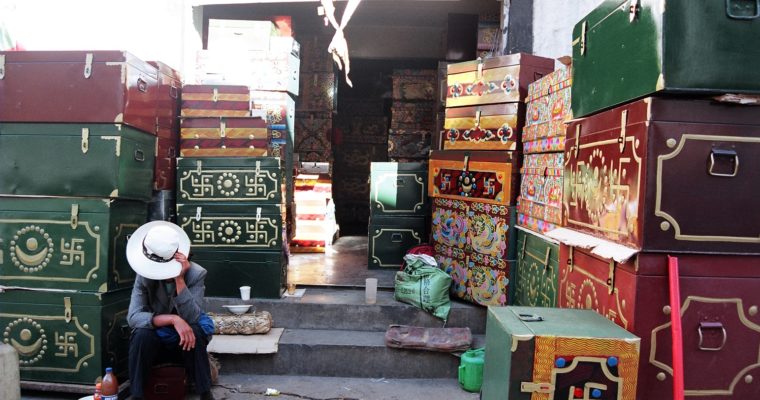
On the streets of Lhasa I observed many facets of Tibet, especially the fascinating interactions amongst the tourists, the Han Chinese, the Muslims and the Tibetans. Thanks to tourism, there were always one transaction or other on the streets, people haggling for better deals animatedly.  Besides sights of raw beef sold exposed in the open, and yak butter blocks that smelled of grease, there were things happening in each corner and intersection, so much that my camera would not suffice in recording all that late-afternoon liveliness.

People looked at my photography gear with wonderment, “what is this,” some asked. I showed a child how the tripod worked.  As I lowered the camera, “look, you can see through this and what lies within the four corners of the lens will come out in the photo.” “Really?” “Here, press this here and you will take a picture.” Click–picture taken! I saw that smile on her face, innocent and satisfied.

If only, as I approached my thirties then, I could still smile satisfied, innocently, over seeing the world through the single eye of a camera!

Well, I still smile when I look at my Tibet pictures. Tibet, capable of modern life and yet still deeply rooted in a premodern culture.  Tibet, the embodiment of an established society, fiercely protective of its own faith and customs, yet squarely within the forced influence of China.  It is a world of its own.

I saw many monks sitting at the hidden-corners of the alleys, some of them as young as six or seven years old, citing their scriptures monotonically. They were begging. A picture of these young monks asking for money in their Buddhist attire was in order, but of course, I took care to give them some money afterwards. A question arose: how was it that the Buddhist temples in Lhasa were so well-attended and taken care of, and yet the monks had to be begging for money under broad daylight? It was not like people were in love with them either. Some seemed to shun their presence.

After a few more rounds of walking, I talked to a monk that *really* begged me for money, and asked him, how it was that he ended up on the street for a dollar or two just to eat – didn’t the monastery take care of him?

He told me that he left his family in Sichuan to become a monk in Tibet. He wasn’t quite the same as the chosen, promising career monks in big temples like the Potala or the Jokhang. He left poverty in Sichuan to find poverty in Lhasa. The temple he was at did not take care of him.

“Please, the kind-hearted miss, please just give me some money.”

“If you stand right here and let me take a picture of you, I will give you a dollar.”

“No, I don’t want a picture taken of me.”

“Well then you don’t get my money.” (I wondered where I got this capitalistic fierceness in me.  Maybe it has been too many years living in America)

He stood there, in utmost reluctance, and allowed me to take a picture of him. When I was done, I gave him 1.5 RMB. I assuaged myself for taking advantage of his poverty, by thinking that I rewarded him with half a dollar more. Boy, that sounds even more capitalistic.

I decided to take a pedi-rickshaw ride. Strolling along that Beijing Road, sunbathed, relaxed, and breezed, I felt the ends of my hair flying all across my face. In that moment of solitude, I seemed to hear me mumbling to myself saying that life is just so great. I was spirited away.

Back in the hotel, the nightly news on the local network often showed the current state of the economy in Tibet.  I was delighted to see the latest quotes of the futures market showing the prices of yak, pork and hulless barley, which is the Tibetans’ staple food.  The futures market there was one where delivery of the actual goods was expected, instead of allowing endless speculation by traders.  After watching TV I rested, knowing that the next day shall be just as carefree as the last.


Finding Tibet – Nyingchi

Finding Tibet – Nyingchi

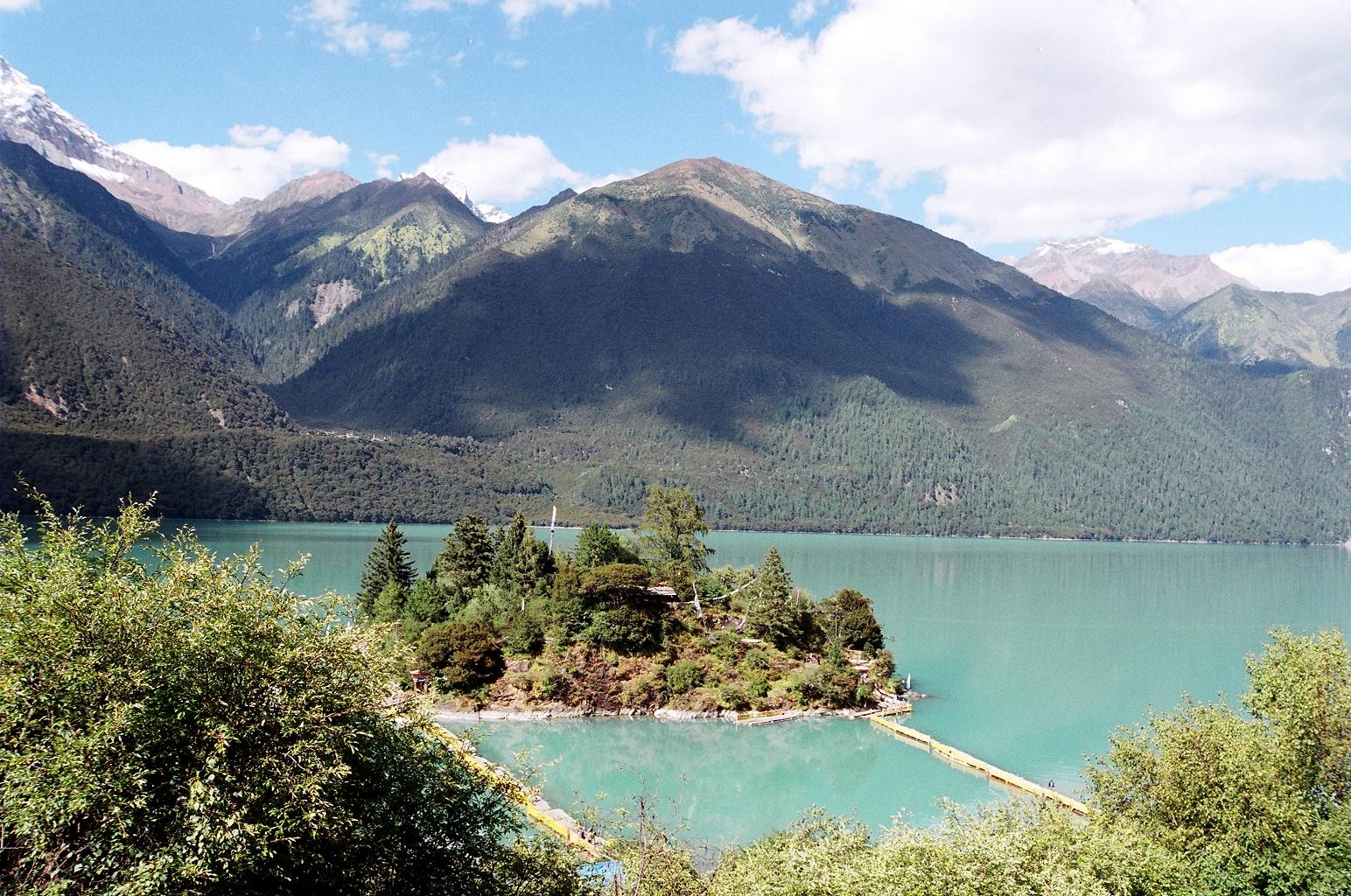
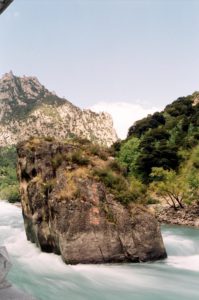
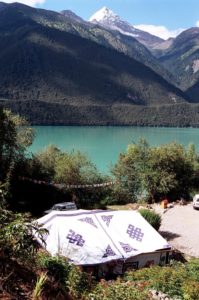
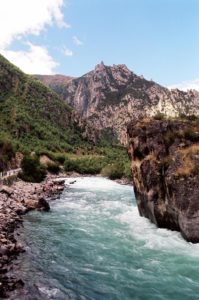
Photographs can say a thousand words.          

Finding Tibet – Namtso and the Yak

Finding Tibet – Namtso and the Yak

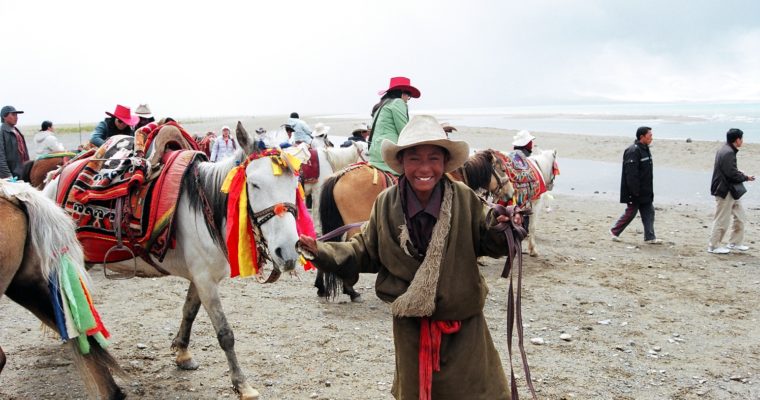
Unlike Lhasa, Namtso is forever frozen in time. If there is one piece of advice I have for travelers going to Tibet, it is that they must bring some warm clothing with them, at least a sturdy, layered windbreaker and a scarf. It was frigid 

Finding Tibet – The Sky Burial

Finding Tibet – The Sky Burial

No one has ever seen the dead body of a vulture.

The sky burial might be one of the most fascinating and unique aspects of Tibetan culture. When I talk about the sky burial with people outside of Tibet, they often tell me, “that is to feed vultures with human meat right?” Most have an idea of what it is, but the learning of the specifics of this practice has enriched my Tibetan experience with an added veil of mysteriousness, as I had it on my mind to a point of obsession.

I want to see a sky burial!

I exclaimed in some innocent excitement as if this was something cool.

I was soon told by many that the sky burials are not open to observers anymore, and there is a story behind it. Back in the days when it was open to outsiders, there was a Japanese tourist who secretly taped the proceeding. The Tibetans found out that he was taping, and beat him to death. Ever since then, no one outside the burial troupe was ever allowed to see a sky burial.

How do I write about the sky burial with facts and objectively, it being quite horrifying to an outsider, and not to be sensational?

There is a theory behind it. There is a world view that is valid to the Tibetan people.

In Tibet I came closest to a sky burial when the tour bus passed by a sky burial site. The tour guide took note and told us about sky burials. I gathered the basics from the tour guide and for the rest of my trip I seized any opportunity to talk to people who knew something about this practice, and here’s a composite of the information that I gathered.

There are a few reasons why the Tibetans developed this idea of feeding corpses to vultures as a burial. The most religious comes from a story of one of the living Buddha’s, back in the ancient days, who cut off his arm to feed vultures. The Tibetans have always revered the vultures as the godly birds.

With centuries of observation, no one has ever seen the dead body of vultures.  As it was told to me, it felt as if a half-folkloric, half scientific explanation was given, that when vultures are about to die they fly toward the sun. They fly higher and higher, and die.  During their fall from the above, the atmosphere burns their bodies before they reach the ground. In that sense anything they ever eat is consumed by the atmosphere and is exhumed by nature.

Sure enough, other forms of burial are practiced in Tibet, including water burial and cremation, but with the Buddhist theories of death and nature on their minds the Tibetans have adopted the sky burial as the predominant way to bury loved ones who have left the present life.  There are other pragmatic reasons, though. The Tibetans were originally nomads who were not tied to the land, as such land burial was not quite a natural choice for them. The geography of Tibet did not allow the convenience of other forms of burial either.

Needless to say, there are special procedures for the preparation of the body and other pre-burial formalities in the home of the dead. I will omit them for now, as they get a bit complicated.

On the day of the burial, the sky burial master (it’s a profession) bears the body in a large basket, the body crouched and well-prepared in a sitting posture, and starts out either from an intersection in the village or from the home of the deceased. Along with him go the friends and distant relatives of the dead. The close relatives never go to the sky burial site with the sky burial master, the reason being that they do not want the spirit to linger on to his or her past life with loved ones attending at the burial site. The sky burial master never turns his back, such that the spirit can go peacefully, by leaving behind all memories of the home so that it can be set free.

Once at the burial site, the body is placed onto the altar. A fire is set, turning up white smoke by the mulberry leafs, to call the vultures. The vultures have good eyes, and they can see the smoke from very far away. With centuries of practice this has become a customary signal to the vultures–they know that there is food to be had at the hill.

Just imagine the scene of vultures gathering, circling the sky at dawn, anxious for food, starved in their staunch stomachs. Sometimes, there are as many as a hundred of them. And not just vultures, but all kinds of other meat-loving birds, like crows.

The birds gather around the altar. They wait for the first take by the strongest and oldest leader in the pack. Only after the initiation by the leader will the rest follow.

The sky burial master cooperates. Three parts to the ceremony. Let the blood out from the neck. Cut up the body parts for easy digestion. Birds finish the meat and the bones. Then comes the intestines. The last one to be served is the head and the brain. Birds love the brain, and if they get to it in the first round they lose appetite for the rest of the body.

The theory is, the cleaner the body is eaten, the better it is for that person’s reincarnation. If the body was not finished, the family would have to hold additional ceremonies to help the soul get to the next better life. One can only hope for a clean burial, with cooperation by the birds.

The next day, the sky burial master goes back to the altar to pick up what remains for the final cremation.

The spirit has been freed.

Buried.

And no one has ever seen the dead body of a vulture.

Finding Tibet – The Panchen Lama

Finding Tibet – The Panchen Lama

The trip to Shigatse was the highlight of this trip, if not the highlight of my life.  Shigatse’s status in Tibet is next to Lhasa. Our experience in Shigatse was second to none though, because we saw him. The Panchen Lama! What I thought to 

Finding Tibet – the Potala Palace, Lhasa

Finding Tibet – the Potala Palace, Lhasa

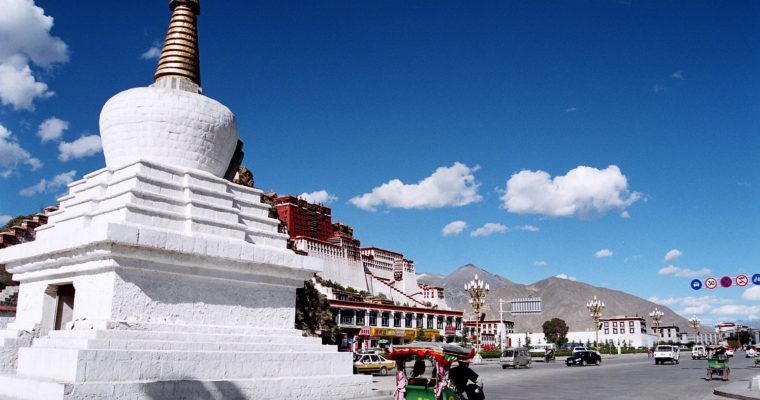
We visited the Potala Palace on our first full day in Lhasa. In the morning we went there to see the building from ground up. We were pleasantly surprised to find ourselves walking amongst an avid morning worship by the Tibetan people. They walked the 

Finding Tibet – First Impressions, Lhasa

Finding Tibet – First Impressions, Lhasa

When we arrived at Lhasa, we were told not to shower or exercise on our first day. We did both, as who could pass up the first chance of showering after two days without it on the train? The walk up four floors to our hotel rooms was enough of a hike for all of us, and we rested half-way on second floor before we made it onto the fourth. We panted our way up that staircase.

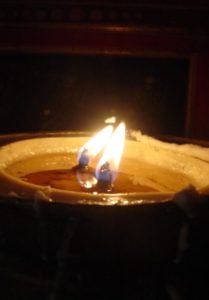
Modernization has swept through Lhasa, undressing much of its mystery and prehistoric beauty. Yet much of what I imagined Lhasa to be still remains, its people being deeply religious. The forever-crowded temples speak to a vibrant culture of Buddha worship. Yak buttered candles are lit and re-lit throughout the day in these temples, filling the already-stuffy inner chamers of the temples with a pungent mixture of moist and raw, gamey smell. Monks stroll along the streets of Lhasa, walking in a pace of grace and authority.

The outskirts of the city spells a delicious range of high mountains surrounding a petite layer of buildings, styled just like any other Chinese city built in the 1980s.  Yet the many people dressed in traditional Tibetan attire opens one’s heart to a culture distinctive in many ways from the rest of China. Their facial features bear resemblance to the Indians and the Nepalese, rather than the Han Chinese. They are called “Zang min,” the Tibetan people.

On the streets of Lhasa I was absorbed in this culture of eastern religion and appreciate the dotted modernity along Beijing Road. I remember Lhasa, the soul of Tibet, for its exceptional spiritual respite. It is a place of intrigue–picturesque, lively, yet also content.

If only I can record the smell of Lhasa too, of cheap gasoline, car exhaust, Indian incense and raw beef.


Finding Tibet – The Qinghai Tibet Railway

Finding Tibet – The Qinghai Tibet Railway

The Qinghai-Tibet Railway was newly opened when my friends and I decided to visit Tibet.  We joined a tour so that we could be arriving in Tibet on the train. The ride was nice as the train was new and equipped with individual oxygen supply.