
Shenzhen Shorts — Modern Grill at Wo Piang Lau Wuk
There are two kinds of heritage dining. Proper heritage dining is to eat at a restaurant that comes with a long history. Its food, its story and its business are all part of the heritage, its value lies in the intangible qualities of the dining experience. The other kind of heritage dining is to eat at a restaurant that runs in a heritage site. The heritage is in the physical structure and the ambience of the restaurant. Either manner of heritage dining can be interesting.
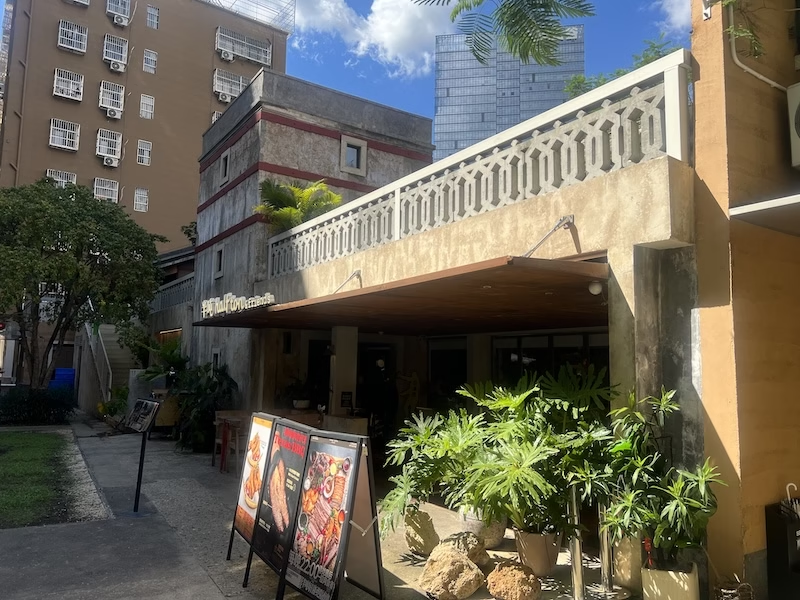
Halfton (半噸) is a specialist in grilled meats in Shenzhen. I first learned about Halfton as a restaurant chain, and then I learned that one of its branches is located in the Heping Old House heritage site (禾坪老屋, the official English name is Wo Piang Lau Wuk). Along with my bestie I spent a sunny afternoon there and enjoyed the vibes of a recently revived heritage.
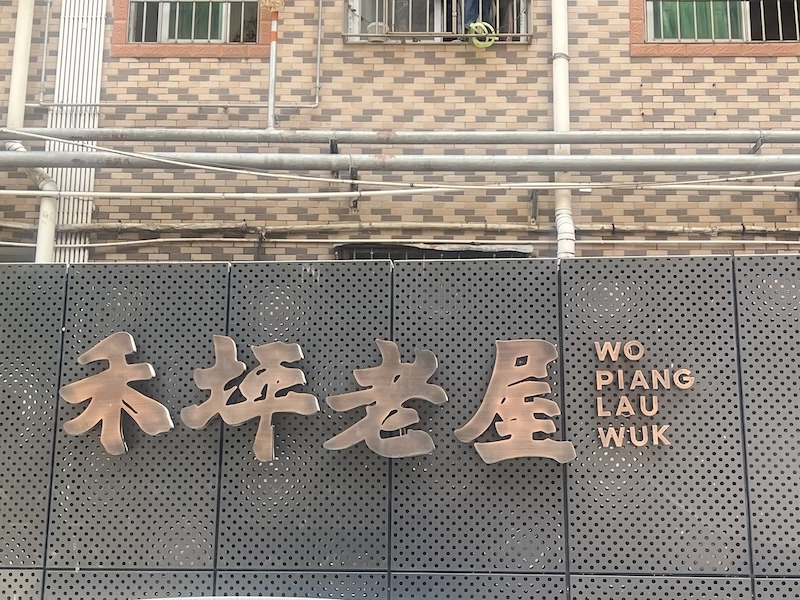
The Wo Piang Lau Wuk (Heping Old House) Heritage Area
Wo Piang (pinyin: Heping), meaning “grains in a platform” in Chinese, acquired its name due to a stretch of grain-drying patch on a small hill in the neighborhood.
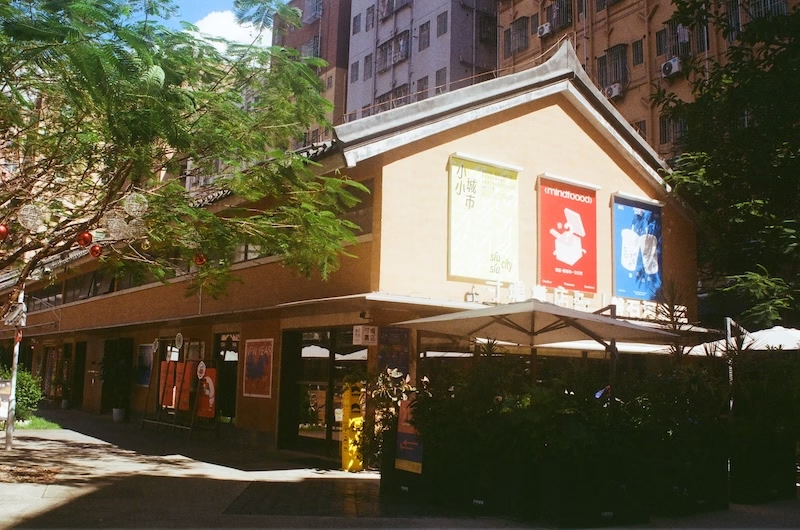
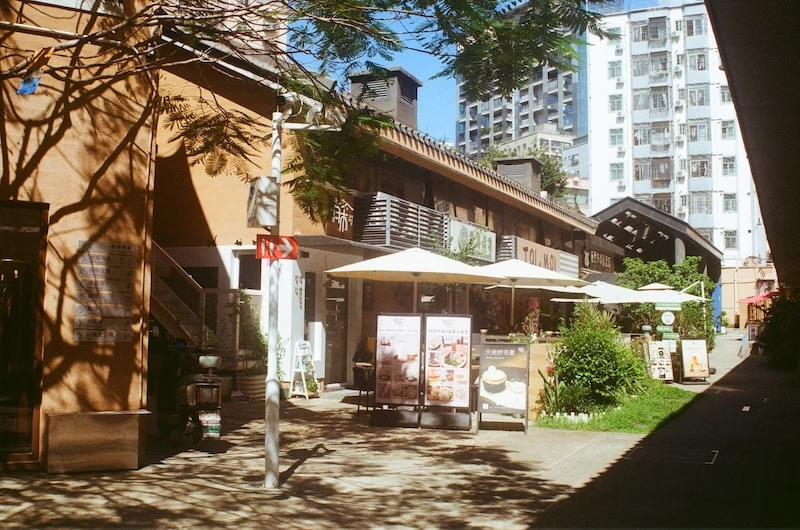
Originally, the Heping Old House (禾坪老屋) area consisted of 154 Qing-dynasty houses laid out in rows, the home for a Hakka community. It is believed that the village was built more than two hundred years ago. The total area spanned 10,000 square meters.
A special feature of the Heping Old Houses is the Dialou, commonly seen in South China (see the entries on Kaiping), or otherwise also in traditional Hakka villages (see the entry on the Guanlan Old Market). They are the tall towers that stand beside the rows of low-rise residencies and served defensive purposes.
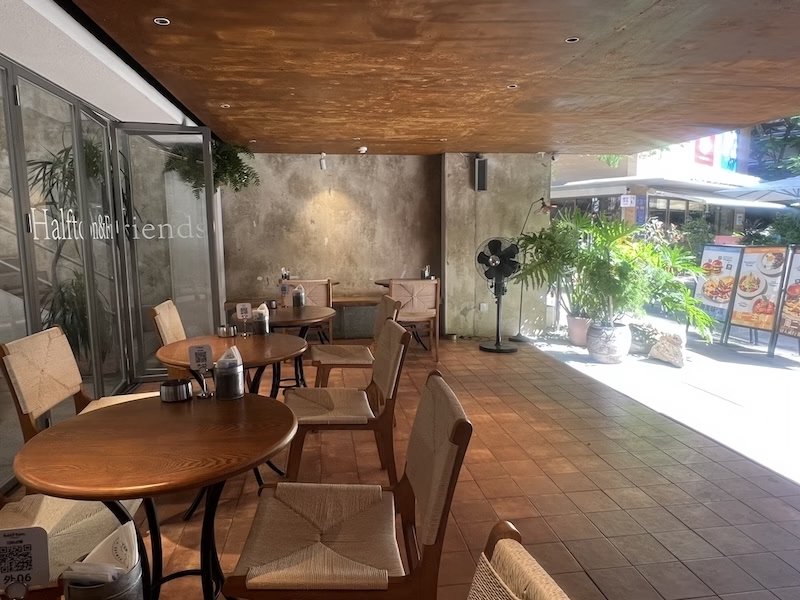
The houses exhibit the standard feature for the old houses in South China: gabled roofs laid with glazed tiles. That feature has been preserved in the revitalization effort. Furthermore, the Hakka culture of the community is still celebrated today, as the villagers (who do not live in these old houses anymore) still gather yearly to have a traditional Hakka Pun Choi feast. Suffice it is to note that the original owners of the old houses have all left the village for opportunities elsewhere (mostly abroad) by now.
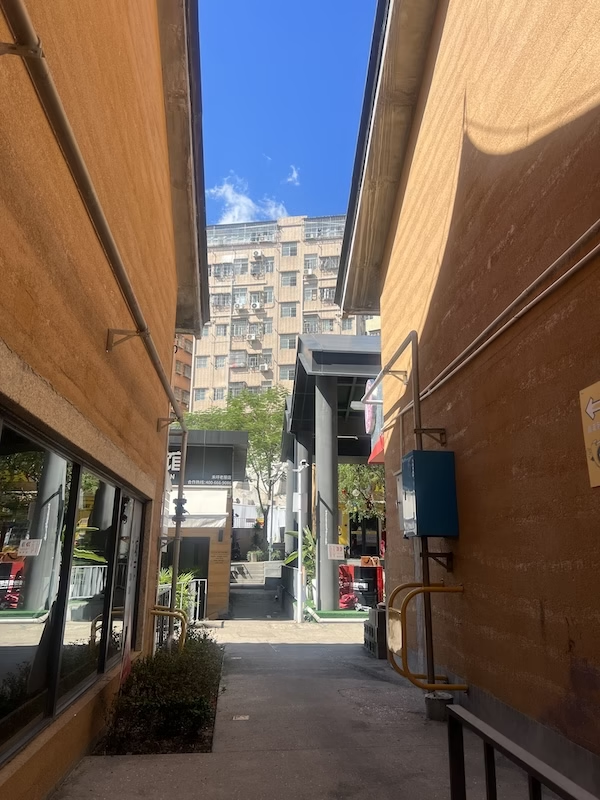
Before the revitalization, the houses of Wo Piang Lau Wuk were dilapidated. Significant efforts were extended to restore the houses, with particular attention to the preservation of their aged vibes, but reconstructed in renewed and safe conditions. Having visited the revitalized heritage area (since 2025), I must say that the effort is notable. It is quite a bit less cinematic than the Guanlan Old Market, as such it felt more natural and down to earth. The really good bookstore is a perfect place for the “new literati” to live up to its name.
As a heritage site now, Wo Piang Lau Wuk has gathered the presence of a number of restaurants offering a selection of both Chinese and international cuisines. There is a theater area and I suppose that is still the community gathering place.
Grilled Meats at Halfton
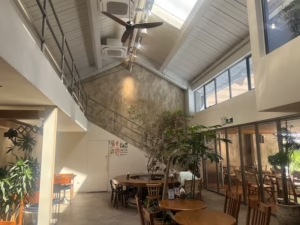
We were slightly disappointed that the beef brisket is only available during the dinner session. Without that option, the “set lunch for two” coupon did not present the choices that we wanted. We decided to order from the a la carte menu, and opted for the boneless slow-grilled pig trotter and the signature green sichuan peppercorn chicken. Both were good, but we thought the chicken really was the highlight. The restaurant is also known for its locally crafted beer, one of which is a fruity flavored Wampee beer.
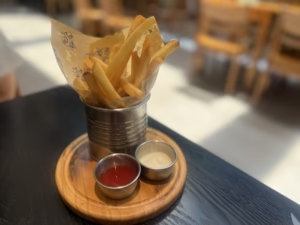
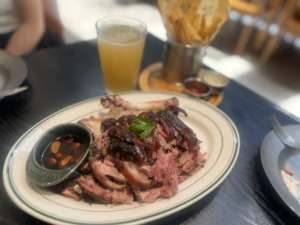
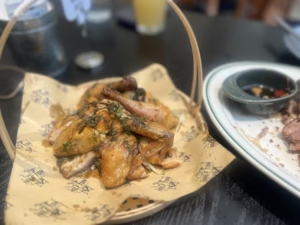
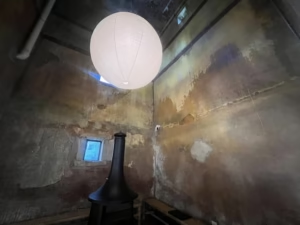
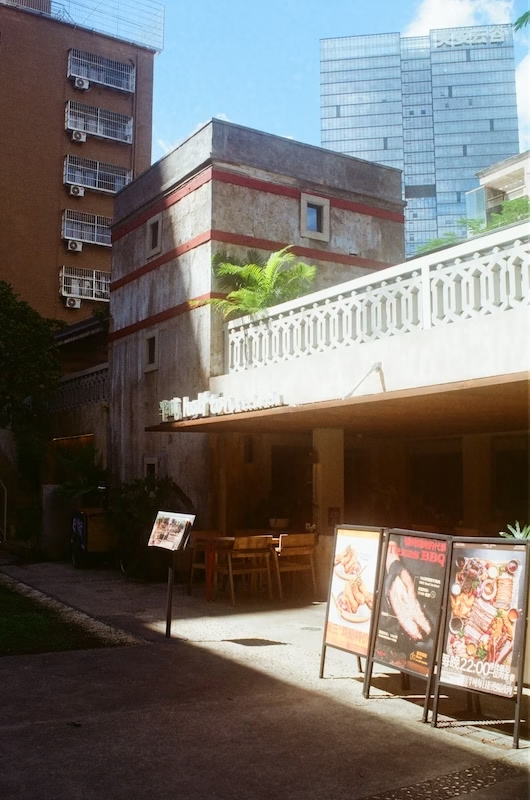
The Halfton is located inside an old house with a Diaolou. In the original Diaolou area (it appeared to have been a watchtower), the restaurant only places a woodfire oven now. The staff did not really know the history of this building, but the dining ambience is very modern and sophisticated now. My bestie and I had a wonderful afternoon in the restaurant.
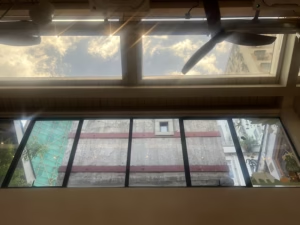
It is recommended that one makes a reservation for weekend dining in the evening.
Sources
Baidu Baike, Wo Piang Lau Wuk Cultural Street District (Chin).