On my last full day in South Korea, I booked a 1st class room at a hotel in Incheon, as I was hoping to see the MacArthur Landing. Once I checked in the hotel, however, I realized that I would be going backward on my journey. I thus decided to check out the islands instead. There was no taxi at the hotel, and that was the first sign that I would owe it to pure luck if I eventually made it to Muuido.
At the bus stop I knew only one word, Jamjindo, the pronunciation of which I picked up from the hotel concierge. I tried my luck with the bus. The line 233 came by and I asked the driver. He told me, “no jamjindo!” Then out of nowhere a Korean man chimed in, “Jamjindo, go to airport and change.” So I took 223 at the other direction and changed at the airport. At the airport, bus 306 and the driver dropped me off on a main road. It was not a populated area, seeming like there were just many huge warehouses around. There was hardly ever any water to be seen, moreover. People were pointing me to different directions, and I wasted much time trying to find the island, or any sights of water.
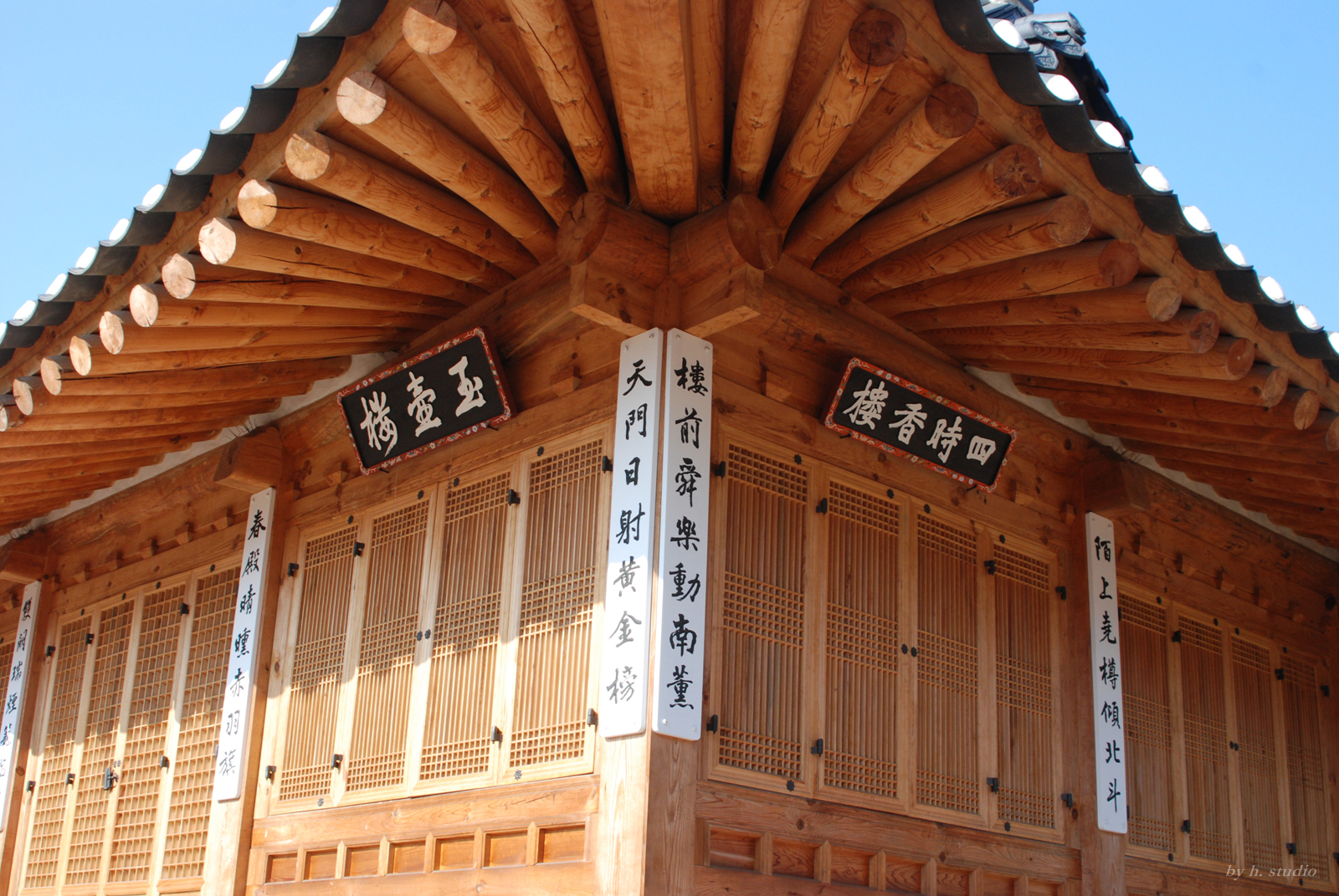
Only upon arrival and seeing the sign in Hanja did I learn that Muuido meant the Island of the Dancing Dress. The beautiful name strengthened my resolve. I must see it. Eventually, I found the tourist information center. I was told that, first of all, I was already at Jamjindo, and secondly the last ferry would leave Muiido at 6pm. It was already 4:15pm then. I hopped on the ferry at 4:45pm, there was little time but I was assured that I would certainly see Muuido.
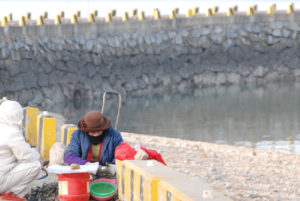
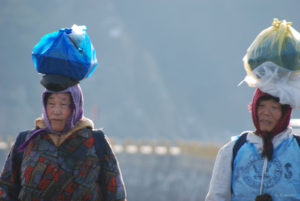
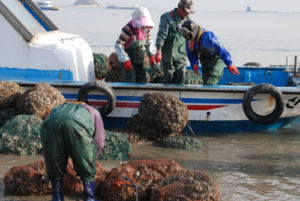
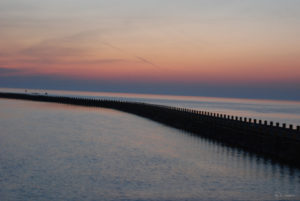
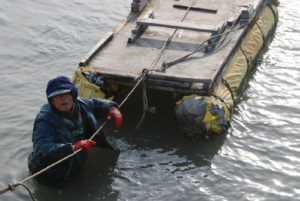
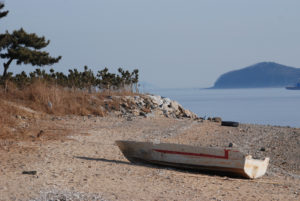
The long bridge to the Muiido wharf was very picturesque. There were many pleasing sights of a rural South Korea that gave me peace, sceneries that one would have to make a special effort to see in South Korea. It was a rustic and menial life that was tied to the ocean. I saw people working with their own hands with sea catch. They immersed half their body in that bitter cold water to dock their fishing boats, unloading the rewards of their hard work, of fish and harvested oysters. Women carried goods on top of their heads, slowly walking through that mile-long bridge.
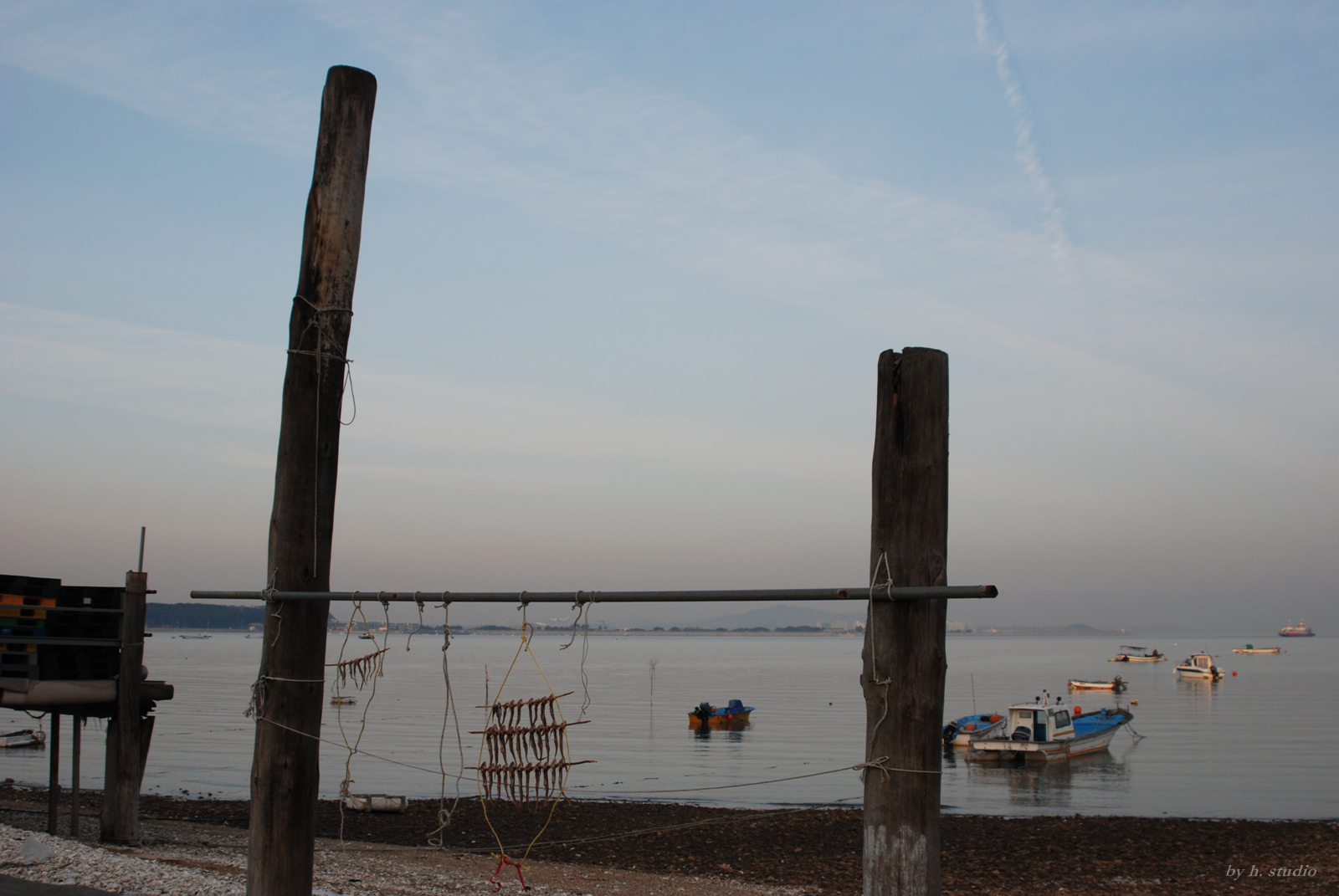
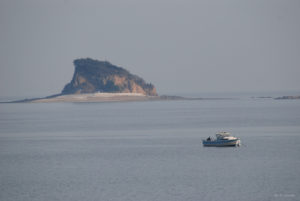
Once at Muuido, I rushed through the paths hoping to see the main attraction: the Silmido Islet, off of the beach. Although I saw few souls on my way, signs of the seafaring life were readily felt. There were many fish hung on wooden poles, salted and dried for preservation. I breathed in the fresh air freely, taking in the distinctive smell of seafood. It was tranquil despite the pain in both of my strained knees. I was hungry and I went into a restaurant wanting octopus pancakes. The owner did not understand me and so I left without eating.
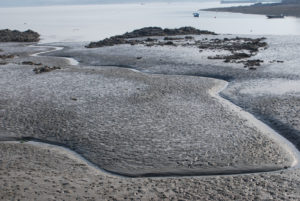
I continued to rush through the island, but after a rigorous hike up to Silmido Resort I was told that it was high tide so I would not be able to walk to the Islet. Nor would I make it in time to see the sunset at the beach. The advice was to make the journey back right away, otherwise I would miss the last ferry altogether.
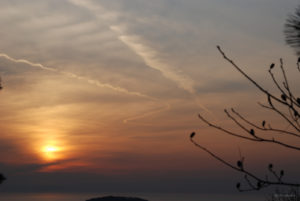
On my way back I noticed a small path, and I decided to check it out. There I saw the sunset and the islet on a vista point. I spent exactly four minutes at the spot and hurried down the hill, limping on my way. It seemed like in every turn I took there was no end. Finally, I saw the ferry docked at the wharf and I made it back to civilization.
In the second day of my journal I said that I wanted to spa on my last day in South Korea. Instead I went to Muuido with my bad knees acting up and limping. No regrets though, who could pass up the rare opportunity to see a different aspect of Asia’s soul?
I had dinner close to the airport at a strip with many restaurants to choose from. At that time I had enough money for a pork bulgogi. As I was dining alone, the owner invited me over to join them for their meal. I declined food, but accepted the soju. I heard the waitress say “one thousand dollars” in Mandarin, and we started a conversation. She was from Changchun, Dongbei in China. Just two years working in South Korea and she could speak Korean. Although I did not understand what they were saying at the table, it was a big, happy, warm family.
I left the cold of South Korea the next day with the warmth of its people lingering in my heart.