
The Fabulous Philippines – The Sisiman Cove’s Role in the Pacific War
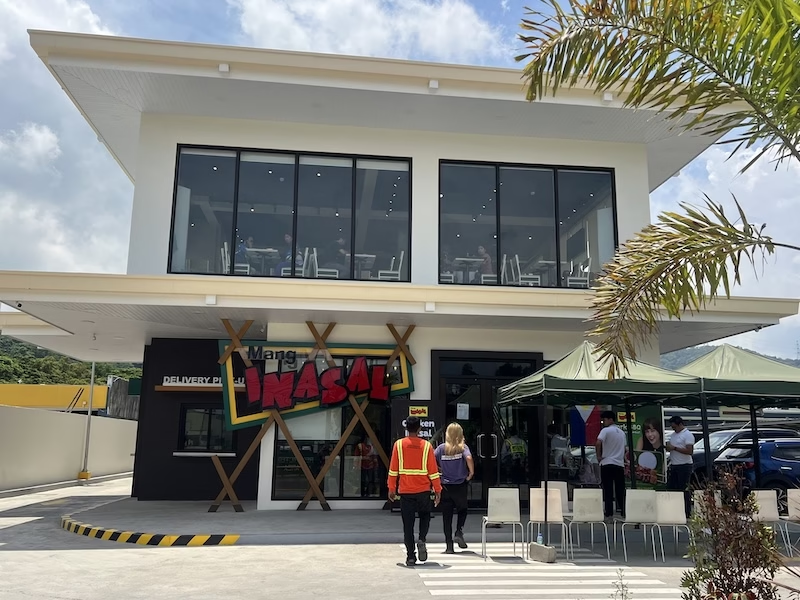
One thing that I have learned about the Philippines is that the information online is not always so reliable. I arrived at Mariveles finally and settled down in my hotel. I had lunch at Mang Inasal, which is a fast food chain. I had my first Filipino food there, and it was really quite good. This was also my first meal since I arrived in the Philippines the day before. I went all in and ordered the max combo for one, and topped it up with Halo Halo, which is also a favorite dessert for the locals.


The town was not too busy and the weather was good. I learned from the front desk that, to get to the Villa Carmen Resort tomorrow for the Corregidor tour, I should take the bus. She told me to avoid the tricycles because they might overcharge me. I also learned that there was simply no GRAB in this part of the Philippines.
By then, I already had the impression that I would get overcharged by the tricycles, and I didn’t know what to do about my plans to visit the Sisiman Cove. I was wary of the tricycles already. But since it was only a 15-minute ride to the Sisiman Cove, at 4pm I decided to head out there by calling a tricycle.
The Disappointment at the “Sisiman Beach”
When I looked up Mariveles, I thought the Sisiman Beach was the only spot that I would like to visit. According to online sources and Google Reviews, the Sisiman Beach is supposed to be a proper beach where people can hang out at the shore with soft sand. I was dressed in full swimming gear.
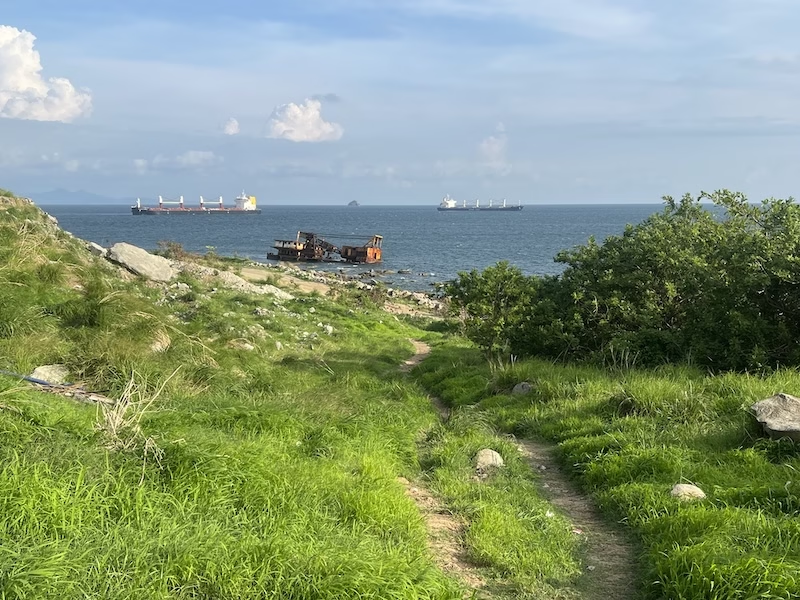
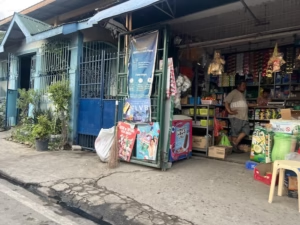
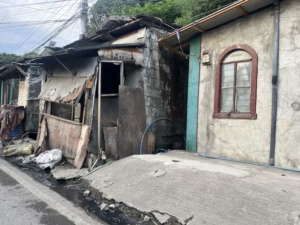
The first tricycle driver refused to take me there, and I didn’t know why at the time. He helped me haul another tricycle, and that driver took me there. We passed by a Filipino village that had very lively vibes. At the end of the village lied the entrance to the Sisiman Beach. As he was dropping me off, he said to me, “it’s closed.”
At that moment, I was nearly shocked, “huh?”
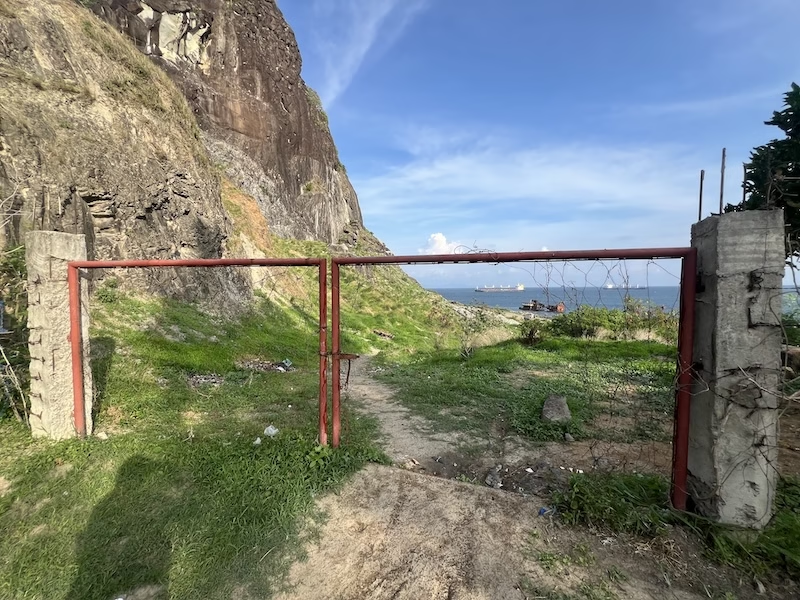
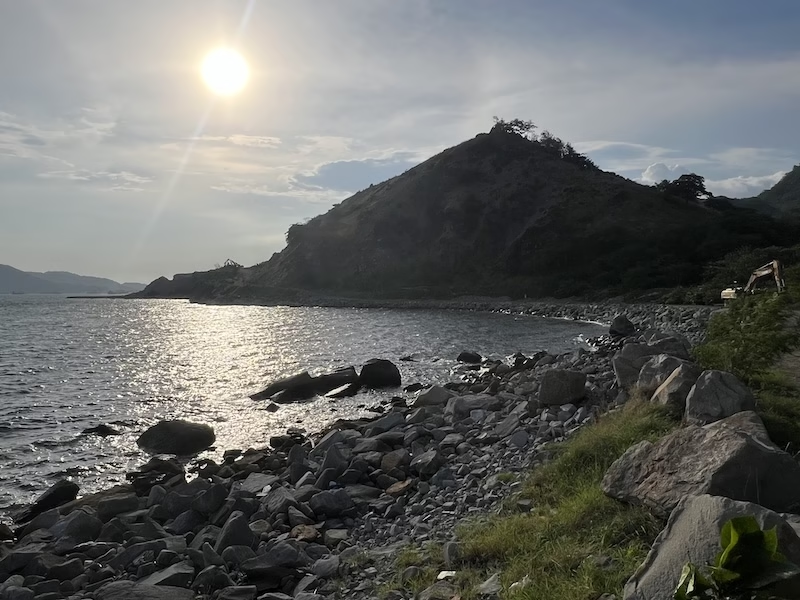
Let’s just say that the beach is no longer there. I went through the broken inner netting of a closed gate to get into the Sisiman seaside area. When I was walking around, I saw a tractor working on the ground. By all measures, the leisurely beach was no longer available. I was the only soul there in an early summer afternoon.
The Sisiman Cove during WWII
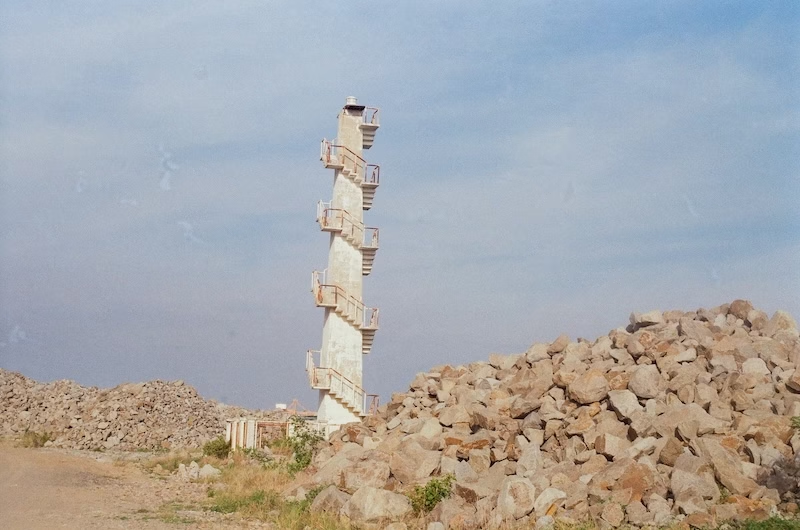
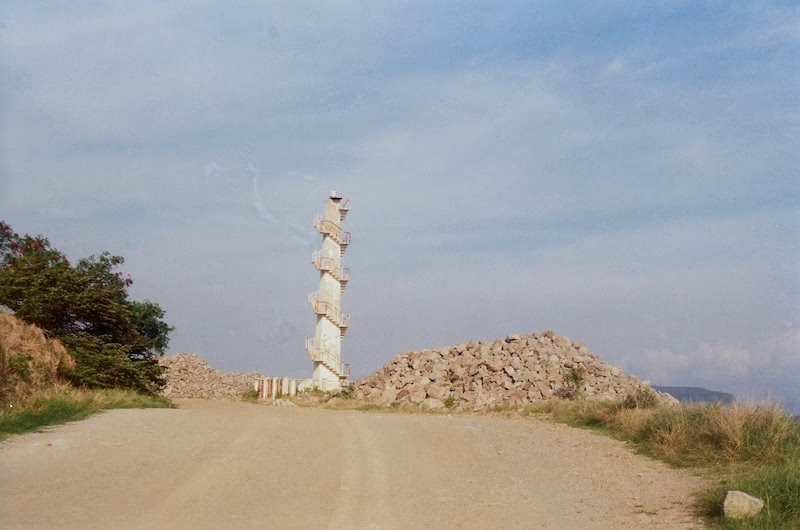
I took a slow walk in the area and soaked in some interesting views there. I came upon the lighthouse, and it was picturesque. I could not locate the relevant sources that explain the history of the lighthouse. But most sources say that this current lighthouse was an iteration of the original one, which was destroyed by a severe typhoon in 2011. That much is known about the lighthouse.
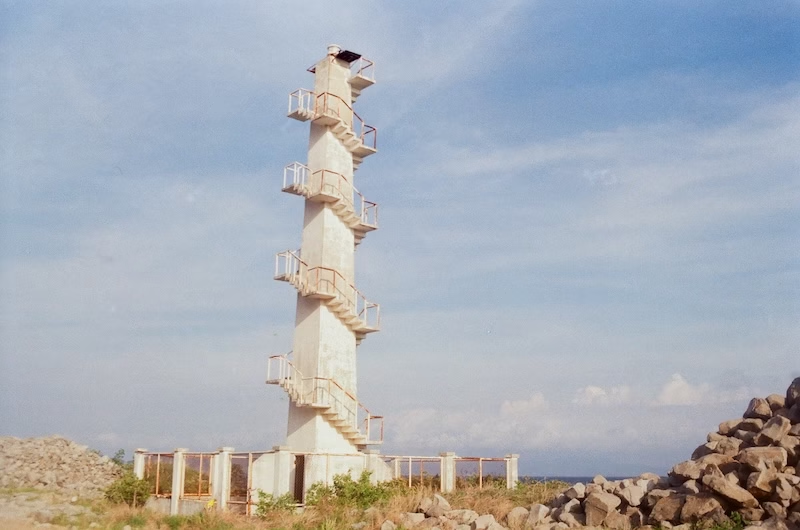
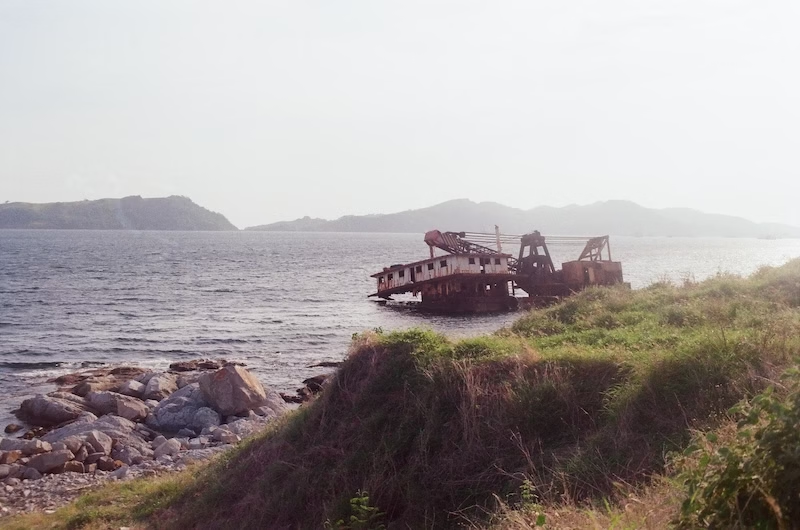
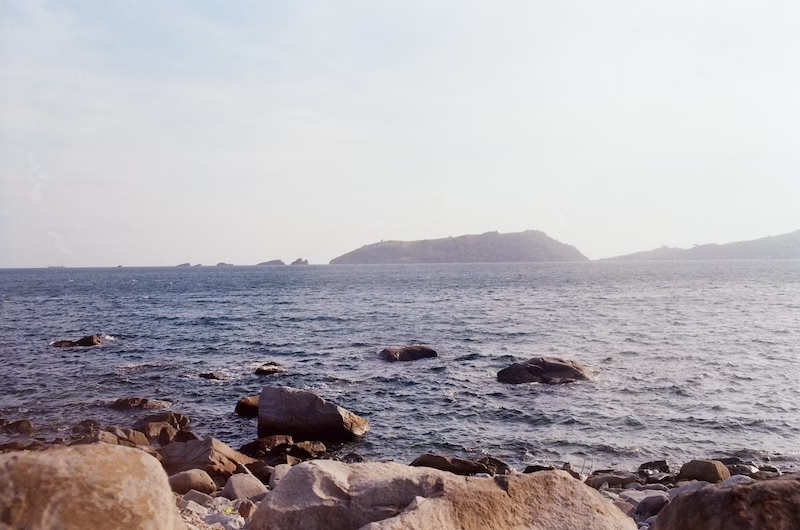
All around me there were just some really rough rocky beaches, where one certainly would not entertain the idea of swimming. I then began to appreciate this spot as the docking and launching area for the PT boats during the Pacific War. That its historical significance was still there for me to ponder.
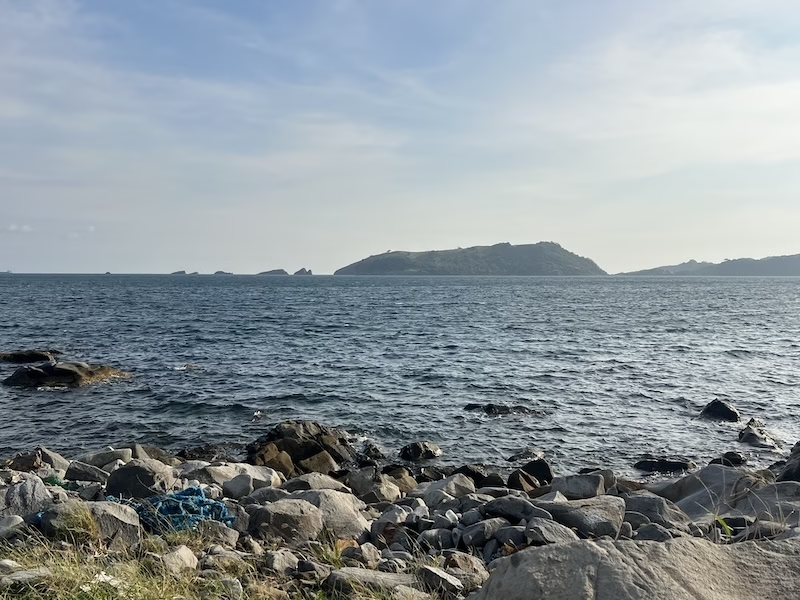
The Sisiman Cove lies at the western entry of Manila Bay in the West Philippines Sea (otherwise known as the South China Sea). At the Sisiman Cove, it is close enough to see, though a bit afar, Corregidor and its group of five relevant islands that made up the harbor defense of Manila Bay. Its geographical location made it, as well as all of the Bataan Peninsula, the major warfront against the invading Japanese forces in 1941 – when Manila’s defense position had to be abandoned.
The Defense of Manila by the PT Boats
Meaning Patrol Torpedo Boats, the PT boats served a critical role in the Philippines’ war of resistance against early Japanese advances on the country during WWII (as well as playing a similar critical role in the home warfront in Pearl Harbor). The PT boats were used as attackers at sea mostly for their agility, ease of maneuver and inexpensive costs of construction. They were built of wood. At its conception in 1938, the PT Boats were motor torpedo boats used by the Navy. In the beginning of WWII, “they were hampered by ineffective torpedo and limited armament.” The PT boats’ “hull design borrowed from offshore powerboat racing, and by using multiple lightweight but more powerful marine aircraft-derived V-12 engines, which were able to grow in both size and speed.” (PT Boats Inc)
The first Philippines confrontation involving the PT boats took place in Manila Bay on December 10, 1941. The team of PT boats consisted of 31, 32, 33, 34, 35 and 41. Although consisting only a half squadron (some of the PT boats didn’t make it to the Philippines due to the Pearl Harbor attack), these six PT boats maximized their intended effectiveness against monolith war instruments. This first confrontation was against a group of five twin-engine bombers of the Imperial Japanese Navy. It was claimed that three Japanese attackers were shot down at Cavite in this confrontation, 2 by PT 31, and 1 by PT 35.
At the time, Cavite, being a historical naval base as early as the Spanish colonial times, was the site of the U.S. Navy, especially its naval shipyard. The Japanese air force engaged in a sustained campaign against this key naval infrastructure. The Japanese forces had landed Luzon. As they made their way through to Manila, the American defense of Manila failed. As a result, the PT boats that were patrolling the Manila Bay had to find a new base. They found Sisiman Cove, off of a then-abandoned (but long since re-populated after the War) village.

At this juncture, the PT boats had the directive to “ serve as fast messenger and passenger couriers between the various command posts at Corregidor Island; Mariveles, just east of Sisiman Cove; and Manila, and patrol along the Bataan coast north of Manila Bay and in waters south of Manila along the Batangas Peninsula and as far as Verde Island.” (Earning Glory in a Forlorn Defense) Bataan Province and the Corregidor Island were the very last warfronts standing between the U.S. forces and the Imperial Japanese forces in the Pacific War.
The PT Boats were confined to night patrol only in their mission. In one instance, they were called out to rescue the USS Corregidor, a Filipino ship that was taking evacuees from Manila to Mindanao. The USS Corregidor touched a mine and it was sinking. “PTs 32, 34, and 35 rescued 282 survivors, 196 of them by PT-32.” (Earning Glory in a Forlorn Defense)
War Stories of the PT Boats
The PT Boats were agile but they did frequently encounter unfortunate problems. There were occasions where the torpedoes were stuck. Due to the poor quality of fuel, sometimes even the engines refused to start during critical operations.
On 19th January 1942, the PT Boats made a heroic night raid against a Japanese vessel at Binanga Bay. The intelligence received concerned four Japanese vessels, including a destroyer and a large transport. The command was to launch an attack with two PT Boats. PT 31 and PT 34 headed out to Subic Bay from Sisiman Cove. With PT 31 at the point of rendezvous at Subic Bay after a patrol in the area, eventually the commander John D. Bulkeley decided that only PT 34, on which he was aboard, would launch the attack. Only one Japanese vessel, a freighter, was spotted there. With careful maneuver, PT 34 readied itself for aiming the two torpedoes. At this critical moment, the Japanese ship illuminated PT 34 at the bay. Two torpedoes were fired at the vessel right away (and it turned out that one was stuck in its tube), then the PT Boat spun the wheel to the hard right and at maximum throttle sped away. The Japanese vessel was blown up and set in fire.
PT 31 had the task of patrolling the eastern entrance of Subic Bay. Soon enough, its central engine failed to start. As it was caught by the coral reefs, the crew had to abandon it. Ten members of the crew that swam to the shore made it to safety. Three crew men that remained on the evacuation craft were captured by the Japanese and they would not survive the war.
The Evacuation of General MacArthur
“I came through and I shall return.”
General MacArthur’s declaration after he safely landed in Australia, upon his evacuation from Corregidor, is likely his most famous saying.
The PT Boats were widely praised for escorting General MacArthur and his family on their first leg of the evacuation to Australia, a journey that lasted for two days in the open seas. In the Philippines, the American forces had abandoned Luzon and Manila by March 1942. The American defense of the Philippines was confined to the Province of Bataan, with Corregidor as the base of command for General MacArthur. The plan was to hold out against the Japanese for 60 days.
The attack on Corregidor was inevitable. General MacArthur was a star general in the United States military. The higher level of command (essentially, President Roosevelt) determined that he would be of no use if Corregidor fell and he ends up being kept as a prisoner of war. After Singapore fell into Japanese hands, the President himself ordered General MacArthur to leave the Philippines— although the General had prepared for the (best case scenario) surrender to the Japanese in Corregidor.
On March 11, 1942, General MacArthur and his family were evacuated from the North Dock of Corregidor. Between a submarine and PT Boats, General MacArthur opted to take the PT Boats (which belonged to the navy, while General MacArthur was an Army General – this point had political significance). On board PT Boat 41 were General MacArthur, his wife and his young son. PT Boat 41 was overseen by none other than John D. Bulkeley himself. Three other PT Boats would travel along, as the cover and protection operators.
The PT Boats’ role in this evacuation was movie-grade dramatic (the PT Boat film to watch is They Were Expendable (1945)). The Japanese fleets and air force were patrolling in the seas in the Philippines and beyond. There was one instance during this first leg of evacuation that PT Boat 41 spotted a Japanese vessel. PT 41 made a sharp turn at full speed and, for whatever reason it was, it managed to flee undetected and unscathed.
Two days later, PT Boat 41 made it to Mindanao. Even in Mindanao there were Japanese forces. A pair of Boeing B-17 Flying Fortresses flew the parties to safety to Darwin in Australia. From Darwin, they flew to Alice Springs, then took the railway, eventually making it to Melbourne. General MacArthur was handed the command of the Southwest Pacific when he would take the helm for the American defense in Asia in Australia.
Back in the Philippines, the Battle of Bataan raged on, the Death of March would soon to take place after General MacArthur’s evacuation. Then the Battle of Corregidor would seal the fate of the Philippines, as Japan assumed dominion over all of the Philippines.
Annoyances
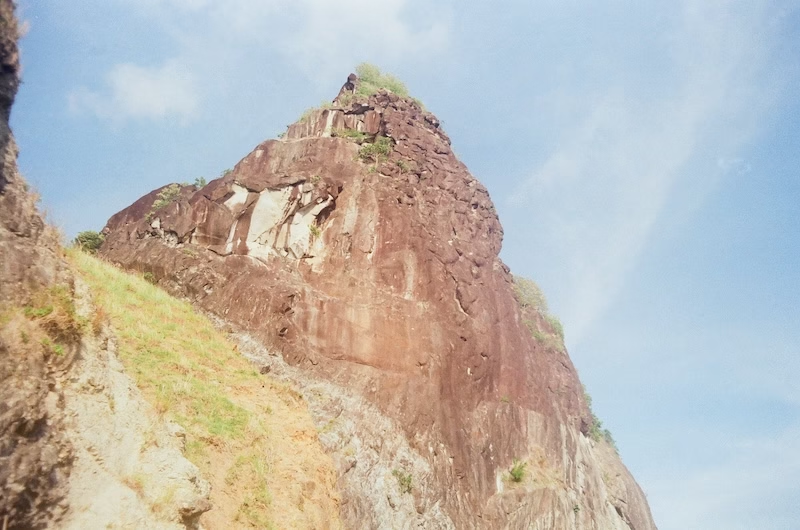
I took in the history lesson at the Sisiman Cove and debated whether I should make the trip worthwhile by staying a little while longer for sunset viewing. I thought climbing the Grotto Hill right by the village would enable a nice panoramic view of the cove from a vantage point. As I headed back toward the village, I came across village dogs.
Really, not a good idea. They were aware of me being a stranger and they were barking nonstop. I could hear them in a five-minute walk away. Some already started running in my direction. I waited for the whole pack of dogs to drop out, until just one lone dog remained in the watching position. I then stealthily went through the broken gate and made it to the village safely.
Perhaps the Sisiman Beach should not be visited at all. I have learned from online sources that it now belongs to a private property developer, and it is, indeed, officially closed to the public.
Sources
Colonel Richard D. Camp (Retired), Earning Glory in a Forlorn Defense, United State Naval Institute.
The Wikipedia on Douglas MacArthur’s Escape from the Philippines.