Blog

Spring Songs in Xinhui — Dining Options in Xinhui

Spring Songs in Xinhui — Dining Options in Xinhui

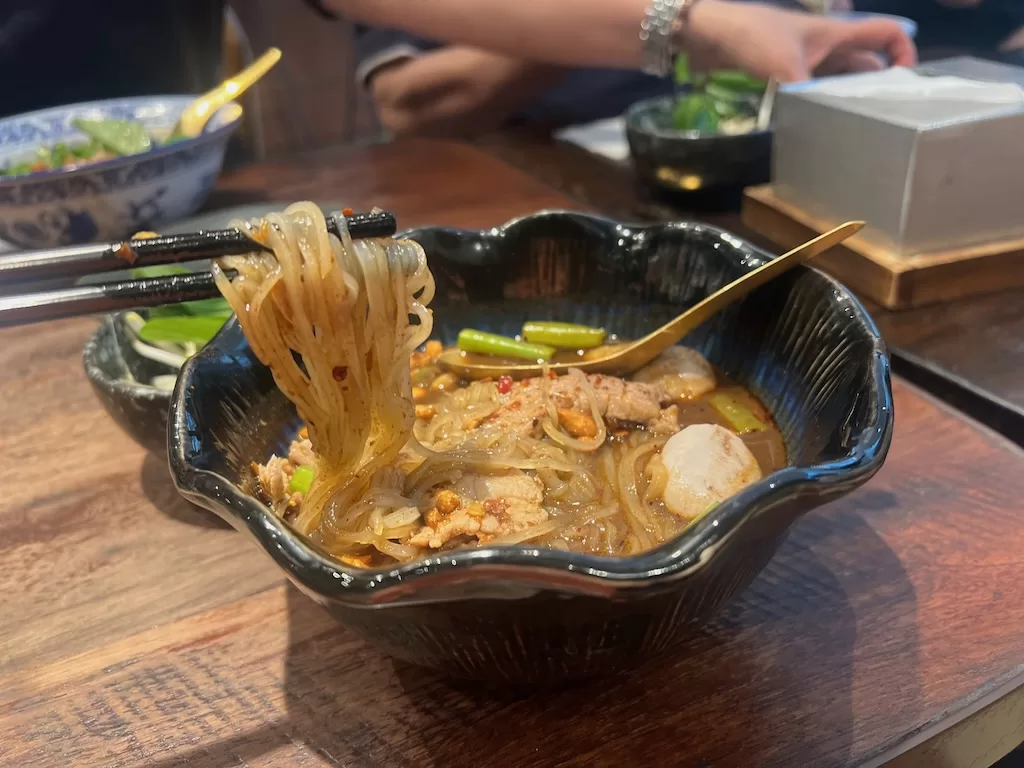
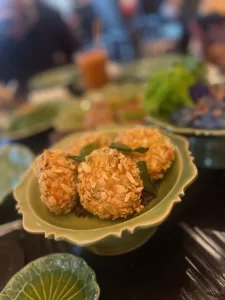
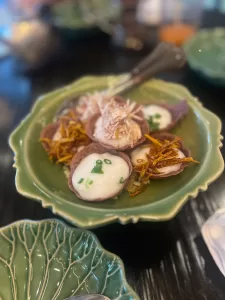
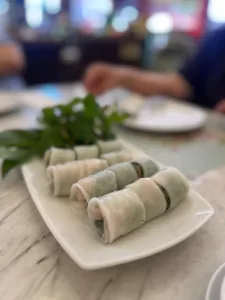
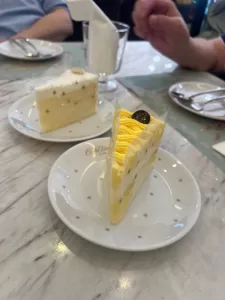
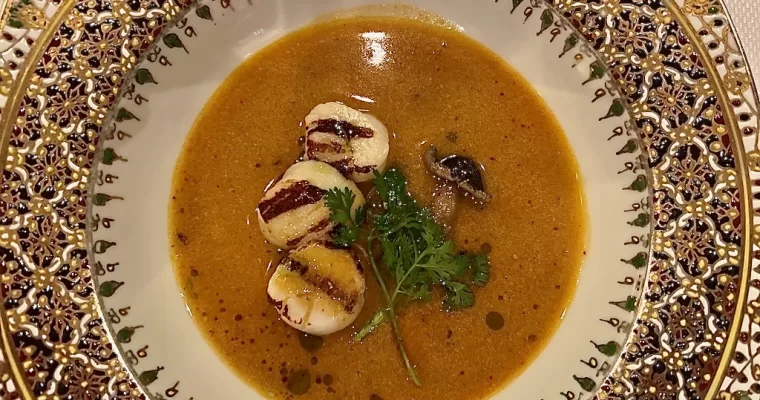
In this three-day, two-night trip, I tried three restaurants. After the heaviest day of sightseeing on Day 2, I decided to treat myself at Daxia Tanbao Restaurant. It serves Malaysian cuisine and offers a few significant strengths in its dining experience. Daxia Tanbao (Daxia Charcoal 

Spring Songs in Xinhui — The Yamen Fort of Qing Dynasty and the Historic Yamen Sea Battle

Spring Songs in Xinhui — The Yamen Fort of Qing Dynasty and the Historic Yamen Sea Battle

After seeing the Lvmei Ecological Park and the Shijian Park, I was geared up for some historic sightseeing. The Yamen Fort came into mind. The Qing dynasty era old fort stands beautifully restored at the mouth of the Pearl River. It has a proud history 

Spring Songs in Xinhui — Catching the End of the Red Foliage Season at Shijian Park

Spring Songs in Xinhui — Catching the End of the Red Foliage Season at Shijian Park

I had to leave and return to Xinhui in order to have a proper meal. I checked the Gaode Map App and realized that I could in fact walk from Lvmei Ecological Park to Shijian Park, which was what I intended to see next. The walk would have taken about 45 minutes. However, I must have food before I do this kind of walk. The final decision was to call a driver to take me back to Xinhui.

The Lvmei Ecological Park, despite being a hot tourist destination, was not a kind of location for which drivers were readily available. I had to wait about half an hour before being picked up.

It took about 20 minutes of a drive from Xinhui to Shijian Park. I was really hoping that I got to see the very last bit of red foliage by the reservoir. It turned out to be a good decision.

The day of the visit was January 24, 2025. There was no admissions fee to enter the reservoir.

The Shijian Reservoir

There does not seem to be much information about the Shijian Reservoir, except that it cost 20 million yuan to build, and that a scenic area was established to make it a beautiful site for leisure.

I think the best thing to do at Shijian Park is to do the around-the-reservoir loop walk. The instructions say it takes 50 minutes. However, given the beautiful scenery, allow for about a little less than two hours for both photography and a leisurely stop to have chenpi tea at the tea house.

An Around-the-Reservoir Loop Walk

About 10 minutes after you start the walk at the entrance to the Shijian Park, you will come across the river boardwalk. The sign calls it “Woodon Path.” This is the scenic walking route that takes you to along the reservoir’s bank, the grassy open area, with some river views and the tea house by the reservoir.

The tea house is surrounded by bald cypress, the foliage of which remained red when I went. I was exceedingly lucky to have come at the crossover moment between winter and spring. In this trip I managed to see a sea of purple tabebuia flowers and red foliage.


The bald cypress views are usually exceedingly beautiful because this type of tree can grow submerged in the water. As such, a lot of the bald cypress views are also waterfront views.

After visiting the tea house, go on further and the path will take you to the dam. Walk across and you will be back to the entrance of the Shijian Park.
Next Stop — Yamen Fort

As said in the last entry, if you plan on calling Didi car, be prepared that you have to wait a little before a driver is nearby to pick up your order.

The day was becoming a little bit chilly as dusk will befall in two hours. I hadn’t decided on this when I planned my itinerary, but I wanted to see the Yamen Fort in the southern part of Xinhui. In my last trip to Jiangmen last year, I had not had the chance to visit this old fort. I finally get to do so.

Spring Songs in Xinhui — The Flourish of Purple Tabebuia Flowers

Spring Songs in Xinhui — The Flourish of Purple Tabebuia Flowers

At Lvmei Ecological Park (Green Beauty Ecological Park—in Mandarin Chinese, “lv” is pronounced in l as the consonant combined with the French vowel “u”) in Shantouping, Xinhui, a flourish of purple tabebuia flowers has drawn the curtain for the spring season with a colorful song 

Spring Songs in Xinhui — Preliminaries for a Trip to Xinhui in Jiangmen

Spring Songs in Xinhui — Preliminaries for a Trip to Xinhui in Jiangmen

In January of 2025 we welcome spring with open arms. The floral season has begun, and I have been seeing some really beautiful photographs of purple tabebuia on travel and photography blogs. Striking the iron while it’s hot, I packed my bags for a quick 

A Symphony of Colors – The Otagi Nenbutsu-ji Temple and A Thousand Rakan Statues

A Symphony of Colors – The Otagi Nenbutsu-ji Temple and A Thousand Rakan Statues

More than a thousand stone rakan statues populate the temple ground at the Otagi Nenbutsu-ji Temple. Being moss-covered, the stone statues create an ambience that is faintly eerie, but the unique facial expressions on the statues convey a quirky sense of comical cheerfulness at once.

The admissions fee to the Otagi Nenbutsu-ji Temple is JPY ¥300.

A Brief History of Otagi Nenbutsu-ji Temple

The very original of the Otagi Nenbutsu-ji Temple was established near the Gion District in the Higashiyama area by the order of Emperor Shotoku in 766 A.D. That temple was destroyed by the flood of the Kamogawa River during the early Heian period. Thus began the seemingly “bad luck” that struck this temple throughout its history.

The temple underwent reconstruction with leadership by chief monk Senkan Naigu, who carved the Yalu-yoke Senju Kannon that was the resident deity around the 10th century or so. During the 13th century, the civil war destroyed the temple again.

By the 20th century, the temple has come to stand for resilience. In those long years past, the temple fell victim to fires and neglect. There were only three structures still standing in the temple, namely the main hall, the Jizo Hall, and the temple gate. In 1922, there was effort to move these structures to the current site in Arashiyama, and the temple started anew. Yet again, in the 1950s, a typhoon damaged the temple.

Finally, in 1981, the temple underwent a major restoration led by Kocho Nishimura. He was a craftsman for Buddhist statues before becoming a monk himself. The restoration effort took a good ten years, during which time structures were taken apart, rebuilt, renovated and restored. This was also the time needed for the temple to offer sculpting pilgrimage for the followers. The army of 1,200 rakan statuettes was the work of many followers over this decade of time in the 1980s. Kocho Nishimura’s innovative initiative to combine art and religion was very much reflective of his own journey of faith.

Rakans are the followers of Buddha. The statuettes in the temple were created by the common people. In this creative process, the followers of Buddha essentially invested in their artwork some of their own humanity. Surely, there were many statuettes wearing somber expressions, but some were reading, some were marveling, and some were laughing as well. In the back of these statuettes the sculptor carved his or her own names.

The Otagi Nenbutsu-ji Temple had roots in Tendai Buddhism.

Touring the Otagi Nenbutus-ji Temple

After seeing the Ryoan-ji Temple and the Kinkaku-ji Temple, I was momentarily troubled by the fact that I really did not have a plan for the afternoon. I had wanted to do some hiking, from Mt. Takao to Arashiyama, but my schedule did not allow that. Outside of Kinkaku-ji Temple, I decided to look for temples that are somewhat lesser known.

In many travel websites, the Otagi Nenbutsu-ji Temple is described as a hidden gem. It is certainly one of the lesser-visited temples in the Arashiyama area. I was very much drawn to the army of rakan statues there, and it turned out to be a wonderful visit.

As you enter the main gate of the temple, you start seeing these statues along the inclined slope leading you to the main hall. At first glance there were more eerie than interesting, because moss has grown its spell on their faces. But behold, because you will come to face with some really humorous artwork throughout the temple grounds.

As I looked closely at these rakan statuettes, I noticed a lot of eccentricities. They brightened up my mood immediately, and I started looking for faces that reminded me of my friends as well.

The Otagi Nenbutsu-ji Temple is truly unique in this aspect. All over the hillside on which this temple stands, there are testaments of faith as expressed by the commoner Buddhist believers that sculpted these statues. Surely, time has done its work on these statues, as they are overgrown with moss, but the timelessness of these individual testaments brought forth an incredible sense of wonder. It was as if I came into an ancient choir singing a silent song of faith.

I left the Otagi Nenbutsu-ji Temple inebriated by the tickles of joy that these statues gave me.

Sources

Descriptions on site at te Otagi Nenbutsu-ji Temple.

Japan Experience, Otagi Nenbutsu Temple: A Hidden Gem of Whimsical Buddhist Art in Kyoto.

The Wikipedia on Otagi Nenbutsu-ji.

A Symphony of Colors – The Golden Glow of the Kinkaku-ji Temple

A Symphony of Colors – The Golden Glow of the Kinkaku-ji Temple

The golden glow of the Kinkaku-ji Temple comes from actual gold leaves plated on the exterior walls of its upper levels. My heart leapt as I saw it luminesce in glory and grace. The Kinkaku-ji Temple is a ten-minute bus ride from the Ryoan-ji Temple. 

A Symphony of Colors – The Ryoan-ji Temple

A Symphony of Colors – The Ryoan-ji Temple

I finally managed to wake up early enough for the morning sightseeing. The most anticipated temple of the day is the famous Kinkaku-ji Temple, also known as the Golden Pavilion. I planned on getting there when it opened at 9am. I wanted to see more, 

The Jamia Mosque

The Jamia Mosque

The Jamia Mosque is the very first official place of worship for the Muslims in Hong Kong. Built in 1890, it signifies the beginning of Islam in Hong Kong. Also known as Jamia Masjid, the name of the mosque means the “mosque of congregation” in Arabic.

The address of the Jamia Mosque of Hong Kong is 30 Shelley Street, Central, Hong Kong.

A Brief Early History of Muslims in Hong Kong

In understanding the Jamia Mosque’s significance, one must first know how the Muslims from various places of the world came to Hong Kong. In the early colonial times during the mid to late 19th century, the Muslims that came to Hong Kong were sailors and merchants of South Asian origins. By the 1850s, the British government had recognized the community of Muslims in the new colony. These early Muslims established the first Islamic organization, the Incorporated Trustees of the Islamic Community Fund, which remains a dominant representative organization for the Muslims in Hong Kong today.

In 1850, the government allocated a piece of land to the Trustees on Shelley Street, and this would become the site of the Jamia Mosque. By 1890, the original mosque was completed, and then it was enlarged in 1905. Eventually, the old mosque was pulled down and a new mosque was built. The foundation stone of the rebuilt Jamia Mosque was laid in 1915, with funds contributed by Indian businessman H.M.H Essack Elias of Bombay. This development had enabled the Indian Muslims to worship and enjoy a community life in Hong Kong.

The Jamia Mosque can host 400 prayers at a time. In its earliest beginning, the mosque called for prayers five times a day, and it was crowded on Fridays, traditionally the day of prayers for Muslims.

The neighboring streets also acquired their names from the Jamia Mosque, as in Mosque Street and Mosque Junction. This indicates the significance of the mosque in contemporary Hong Kong. The Chinese name of Mosque Street makes a reference to “mo lo,” a somewhat derogatory local term referring to the Indians in Hong Kong.

The Islamic mosque of the greatest scale and prominence in Hong Kong is the Kowloon Mosque in Tsim Sha Tsui. In 1884, the Hong Kong Government allocated this land to the Incorporated Trustees of the Islamic Community Fund. Originally, the Kowloon Mosque served the religious needs of the Punjabi who were stationed as soldiers in the Whitfield Barracks. In the decades after, this site eventually became the Kowloon Mosque today.

As times went by, the origins and makeup of the Muslim population in Hong Kong changed. The demographics of Muslims shifted in accordance with the rising needs for South Asian workers (Pakistani’s) in the police force during the colonial times, then to the need for Indonesian domestic workers currently. In between, there were Muslims coming to Hong Kong as the Hui people (Chinese Muslims) that settled down here as immigrants, there were African Muslims that did business in Chungking Mansions, and some others were refugees that intend themselves to be transient in Hong Kong.

Besides the mosques, the Hong Kong Government also gave the Muslims land for a cemetery in Happy Valley in 1870.

The Architectural Features of the Jamia Mosque

The elegance of the architecture of the Jamia Mosque lies in the very simplicity of its features. The architect of the rebuilt mosque in 1915 was Abdoolhoosen Abdoolrahim.

The Jamia Mosque is a rectangular building themed in the color green with white as the color for decorative lining. Although the color green has specific meaning in Islam, namely the color associated with heavens, the mosque had not always been green throughout its history.

A small minaret stands above the prayer hall to project the call to prayers. In Islamic architecture, the dome is a symbol for paradise, as the vault of heaven. To Muslims, it represents oneness with God. On top of the minaret, there is a rounded, small finial pointing to heaven, with a star and a crescent as the highest point of the mosque. Even amongst the various mosques in Hong Kong, the existence of a minaret is one of its kind.

In the front, an entrance leading into the prayer hall is a portico open on three sides. Four granite pillars support the minaret.

The sides of the Jamia Mosque are lined with arched windows, which are also typical in Islamic religious structures. A set of small spiral staircase is painted in white, leading to the upper balcony on the minaret.

Besides the Jamia Mosque, there is also the Residence of Muslims at Jamia Mosque next door. This building provides free housing to followers. The building itself is also a historic structure. It is believed to be an early 20th century building.

The Jamia Mosque is a Grade 1 Historic Building. The Residence of Muslims at Jamia Mosque is a Grade 2 Historic Building.

Sources

Paul O’Connor, Islam in Hong Kong (2012).

The Wikipedia on the Jamia Mosque (Hong Kong).

The Antiquities and Monuments Office, Heritage Appraisal of Jamia Mosque.

africame.factsanddetals.com, Mosque Architecture: Elements, Features, Parts.

A Symphony of Colors – The Nonomiya Shrine

A Symphony of Colors – The Nonomiya Shrine

The very last sightseeing on my first day in Arashiyama was the Nonomiya Shrine. The Nonomiya-jinja Shrine is a Shinto shrine. Because of its nature as a native faith in Japan, it differs quite significantly from the elaborate temples of Arashiyama, both in terms of