Blog

A Symphony of Colors — The Nishiki Market of Kyoto

A Symphony of Colors — The Nishiki Market of Kyoto

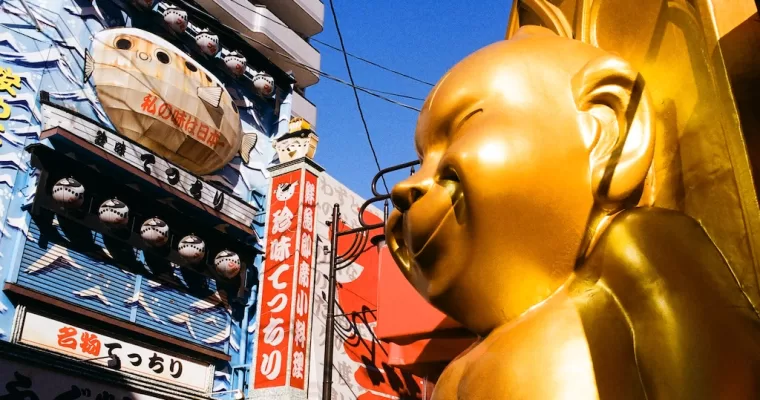
I went to Nishiki Market twice on this trip to Kyoto. The irony is that I went the second time because the first time was not good enough, and I would not rest until I found something fantastic there. Having gone twice and confirmed that 

A Symphony of Colors — Surprising Delights at the Nanzen-ji Temple

A Symphony of Colors — Surprising Delights at the Nanzen-ji Temple

Nanzen-ji Temple is one of the most important Zen temples in Japan. Nestled in the foothill of the Higashiyama mountains, Nanzen-ji Temple has an enormous temple ground that accommodates many sub-temples, as well as a 19th century aqueduct. This presents tourists the opportunity for a 

Lan Fong Yuen — From Common Local Food to Tourists’ Haven

Lan Fong Yuen — From Common Local Food to Tourists’ Haven

Take a walk in Central during non-office hours and you find two hot spots that brim with tourist energy. The Tsim Chai Kee wonton noodles and Lan Fong Yuen together take over the little walking space there is in the Central Mid-levels escalator area as throngs of people queue for a spot to eat common local food.

What’s all the hype there at Lan Fong Yuen? It was my second try to visit the restaurant today and it proved itself to be another long queuing experience. Last time, I simply didn’t bother to line up. But I was determined today.

The History of Lan Fong Yuen

Lan Fong Yuen began its first chapter in 1952 as one of the oldest cha chaan teng’s in Hong Kong. Its original founder was named Lam Muk Ho. It has since stood in the current location at Gage Street, unfazed by the sea change that swept over all of Central in the decades past. It is currently run by the second-generation Lam owners.

In the local community, Lan Fong Yuen has always been somewhat popular with its signature dishes, which really do stand out even amongst the thousands of cha chaan teng’s in Hong Kong. Today, however, Lan Fong Yuen is perhaps more popular with the tourists than with the Hong Kong diners. As a result, its staff operates in a few languages at the same time within the small restaurant space. I swear I heard a waiter spoke “milk tea” in Korean to the Korean lady right next to me.

Distinctly Hong Kong—The Cha Chaan Teng Culture

I have previously written about the cha chaan teng’s of Hong Kong. The cha chaan teng is a little bit difficult to dub an English name over. In European terms, the cha chaan teng is somewhat equivalent to the café’s of France in the way that they are prevalent in all corners of Hong Kong. The commonality of the food served in the cha chaan teng is like the fish n’ chips in Britain, as classic food that is humble but representative of the local dining culture. In American terms, the cha chaan teng is like the millions of fast food stores in America, each restaurant or brand serving a variety of, essentially, the same type of food, meant to be consumed in an easy, quick and casual manner.

There is no argument that the cha chaang teng’s are distinctly Hong Kong, as its food clearly expresses Hong Kong’s historical character as a predominantly Chinese society with heavy foreign (British and otherwise) influences. The omnipresence of cha chaan teng’s in Hong Kong is also the very testament of a working class culture. Most of them serve up comforting food in one plate, ultimately meant for just one person to order, eat, finish, have a milk tea, then move right along the day’s rhythm.

Simply put, the cha chaan teng’s of Hong Kong are run of the mill restaurants that populate ubiquitously throughout Hong Kong’s dining map. But some cha chaan teng’s are better than others. In Lan Fong Yuen, I came to see why the good ones really stand out.

The Food of Lan Fong Yuen

The menu of Lan Fong Yuen features a limited number of choices as compared to other cha chaan teng’s in Hong Kong. I saw why this was so, for it focuses on doing the things that it does very well, particularly the dishes that it rightly takes credit for creating.

The spring onion chicken over dry ramen noodles is a signature dish at Lan Fong Yuen. In fact, I think it is the only Cha Chaan Teng in Hong Kong that serves this dish now (as Hoi An Café has closed down). Traditionally, spring onion dip goes very well with steamed chicken in Cantonese cuisine. Lan Fong Yuen gave it a twist and puts a spoonful of spring onion dip on pan-fried chicken thigh. The ramen is served without a broth, with just a symbolic dash of soy sauce to keep it moist. If you do not like pan fried chicken thigh, then you may consider the pan-fried pork chop as the protein of choice.

Other famed items at Lan Fong Yuen are its pork chop buns and buttered French toast. These are the food that earned the good name of Lan Fong Yuen throughout its history.


On the day that I visited, I saw people ordering the spring onion chicken ramen and French toast left and right. They must have been the items promoted by the popular “Chinese Instagram” app Red Note.

Silky-Smooth Milk Tea

A cha chaan teng experience would not be complete without a cup of silky-smooth milk tea. The tea base is key to a good cup of milk tea. The tea is very dark and quite bitter on its own. Lan Fong Yuen makes its tea from a mixture of tea leaves from Colombo in Ceylon, and with milk from Malaysia.

In Cantonese, the silky-smooth milk tea is known as “the stocking milk tea.” It acquired this name because typically the tea is brewed and then filtered through a large tea bag before being poured into the cup to mix with evaporated milk. The large tea bag acquired the color of the tea over the years — as they are not very often replaced — thus looking like the stocking of women. The milk tea is not in fact filtered through stocking.

After this filtering process, done repeatedly, is the tea silky-smooth. I prefer my milk tea a little sweet, so I usually add one full paper sleeve of sugar in my hot milk tea. If you order iced milk tea, then you can ask for no sugar, little sugar, regular sugar or more sugar.

I do think that the milk tea of Lan Fong Yuen is smoother than the usual milk tea we get at the cha chaan teng’s. That said, perhaps the long lines there are not worth me waiting like this more than once in a blue moon.

Queuing for Lan Fong Yuen

Beware for the queuing at Lan Fong Yuen. There are two lines: one is for takeout, the other one is for dine in. I made the mistake of lining up for takeout, and wasted 15 minutes at the wrong line.

Photo: The queue on Cochroane Street is for getting takeout.

The line for dine in forms right outside the drinks making station of the restaurant and extends on Gage Street. The line for takeout forms across the restaurant and extends along Cochrane Street, beneath the Central Mid-level escalator.

Photo: The queue on Gage Street is for dine in.

Lan Fong Yuen closes on Sundays.

Sources

The Wikipedia on Lan Fong Yuen (Chin).

Lantau Longing — Open Views of HZMB at a Short Hike in Fu Shan

Lantau Longing — Open Views of HZMB at a Short Hike in Fu Shan

Tai O of Lantau Island is known for many wonderful things. A thorough exploration of the treasures of Tai O is a whole-day affair. I have previously covered the Tai O Heritage Hotel, formerly Old Tai O Police Station. On this slightly cloudy spring day 

St. Paul’s Church

St. Paul’s Church

Founded in 1911, St. Paul’s Church stands beautifully on Glenealy in Neo-Gothic, Classical Revival and Dutch styles of architecture. The church belongs to a group of heritage buildings that stand on an area named Tit Kong, the Iron Mound. This group of heritage buildings include 

From Sheung Shui to Fanling – Easy Hike at Wah Shan

From Sheung Shui to Fanling – Easy Hike at Wah Shan

There are not too many options for proper hiking in Sheung Shui. I have covered Tai Shek Mo previously, and today I made it to the Wah Shan hike from Sheung Shui to Fanling.

Be prepared to roll on the rolling ridges that fasten themselves upon the northern backyard of Hong Kong from Sheung Shui to Fanling. You will be hiking the tops of six mounts on this trail with aerial views of both the northern New Territories and the skyline of Shenzhen afar. In this two-hour hike you will have a very pleasant and easy walk up and down paved slopes only. There are literally no stairs to climb.

Wah Shan

This path is also known as the Wah Shan Military Path. On this hike you will pass by the San Wai Firing Range (more below) and the San Wai Camp and San Wai Barracks. These are military facilities that continue to operate by the People’s Liberation Army in Hong Kong.

On this hike through Wah Shan, you will come across six mounts in the range of between 100 to 165 meter in altitude. From the Sheung Shui entrance to the trail at Fu Tei Au, you will first go through Cheung Po Tau, then Cham Shan, Wah Shan, High Hill, Ma Tau Leng, and Tsung Shan.

The two-hour hike will span across these six mountains, as such the Wah Shan Hike is also known locally as the “Hong Kong version of the Great Wall.”

In terms of views, you will see wide open aerial views of Sheung Shui, Fanling and Shenzhen on this trail.

The section between Cheung Po Tau and Wah Shan are quite picturesque. I particularly enjoyed the tall fir tree woods on the way.

There was not much view between the Wah Shan and the High Hill segment of the trail. However, closer to Tsung Shan, in the last leg of the journey, you will see a swathe of miscanthus on the way.

In terms of difficulty, the segment between Cheung Po Tau and Wah Shan had some difficult slopes up and down. Once you climb over High Hill, the walk is very easy.

Perhaps because of its former nature as a military path (apparently, cars still go on this path nowadays), there are many resting facilities along the way. I stopped quite a few times to rest and still made it back to Ping Che in Fanling in two hours.

Go Either Way

This path is suitable for starting in Sheung Shui or in Ping Che, Fanling. My recommendation is to start from Sheung Shui. Some of the slopes that require climbing are exceedingly difficult when walking downhill. If you depart from Fanling, you will come across difficult downward slopes. And indeed, if you do go the direction from Fanling to Sheung Shui, I suggest that you bring a hiking cane with you to assist with those downward slopes.

Photo above: Some slopes are quite tough on this trail.

The hiking path is relatively straightforward. You simply stay on the paved way and do not veer off course, especially close to the San Wai / Tai Ling Firing Range (see below). Finally, if you end in Fanling, consider visiting the Murals of Ping Yeung New Village. Ping Che is also a popular spot for viewing miscanthus during the fall season. Suffice to say, that there is a section of miscanthus on the Wah Shan hiking path itself.

If you go from Fanling to Sheung Shui and end up in Fu Tei Au, consider visiting Fu Tei Au Tsuen Village for some sightseeing as well.

Caution on the San Wai / Tai Ling Firing Range

On this path you will come across the San Wai / Tai Ling Firing Range. The proper advice is to never go during the days that firing practices take place. However, the firing range is on the ground level – quite a distance from the mountainous path that you will be hiking. An honest assessment is that you will not be harmed if you stay on the hiking trail.

That said, you must not go down the way of the firing range when there is firing practice. At Wah Shan, where you can overlook the whole firing range, there are pathways that will lead you there. When red flags are raised, do not go down that pathway. Actually, do not go down that way at all. Stay on course for the hiking.

During firing practice, red flags will be raised in the area. You will also hear the firing when you get close to Wah Shan. It is up to you whether to go on hiking. Most hikers do not turn back, but some do, and I did, on my first hike on Wah Shan. Perhaps a good indicator is to hike on Sundays, when there are usually no firing practices.

With due and reasonable care, the thing to do is to look up the firing practice schedule before you hike this path. The brief schedule for March 2025 is accessible on the Hong Kong Government website.

How to Get There

From the Sheung Shui MTR station, take Bus Route 73K from the Bus Terminus below Landmark North. Get off at the Fu Tei Au bus stop. The entrance to the Wah Shan hiking trail is across the street from the bus stop.

Photos: Left photo shows the Fu Tei Au bus stop. Middle photo shows that you head back a little on Man Kam Road toward the Sheug Shui direction, then cross the street at the traffic light, you will be right at the entrance of the trail. Right photo shows the entrance to the trail.

The distance between the Sheung Shui MTR station and the hiking trail is walkable, but perhaps allow for 40-45 minutes.

Photo above: After beginning for about five minutes of the walk, you will come across this intersection. Take the path to your left to go on to the mountain hike.

Finally, be mindful that if you arrive in Sheung Shui during the morning school hours, some 73K buses will stop only at the Fung Kai Secondary School stop and not go forward to Man Kam Road. If you happen to catch such a bus and get dropped off at the Fung Kai Secondary School stop, simply walk about 10 minutes further to arrive at the entrance to the hiking trail, which is across the street from the Fu Tei Au bus stop (the direction of Man Kam To).

Once you finish the hike at Ping Che, Fanling, you will see this intersection. Go on the path on your right.

Photos above: Left photo shows that you have finished this hiking trail. Middle photo shows your location when you exit the trail. Right photo shows you what lies immediately before you at the end of the trail, and please take the path to the right for heading back to Ping Che, Fanling.

Keep on walking, and this path will take you to Ping Che Road.


Then cross the street and wave for the next green top mini bus Route 52K to take you back to the Fanling MTR Station.

The Man Mo Temple of Sheung Wan

The Man Mo Temple of Sheung Wan

The Man Mo Temple is one of the earliest temples established in Hong Kong Island. Two wealthy Chinese merchants came up with the funds to build it between 1847 and 1862. Standing on Hollywood Road in Sheung Wan, Man Mo Temple bears witness to the 

A Symphony of Colors – My First Take on Japanese Food in Japan

A Symphony of Colors – My First Take on Japanese Food in Japan

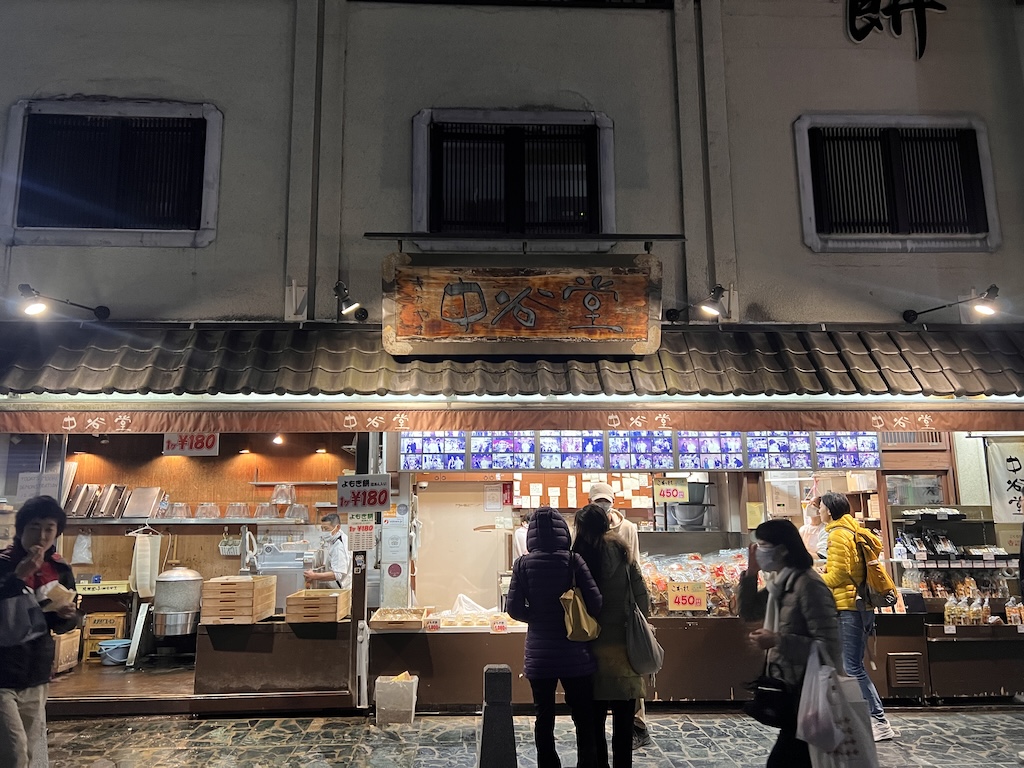
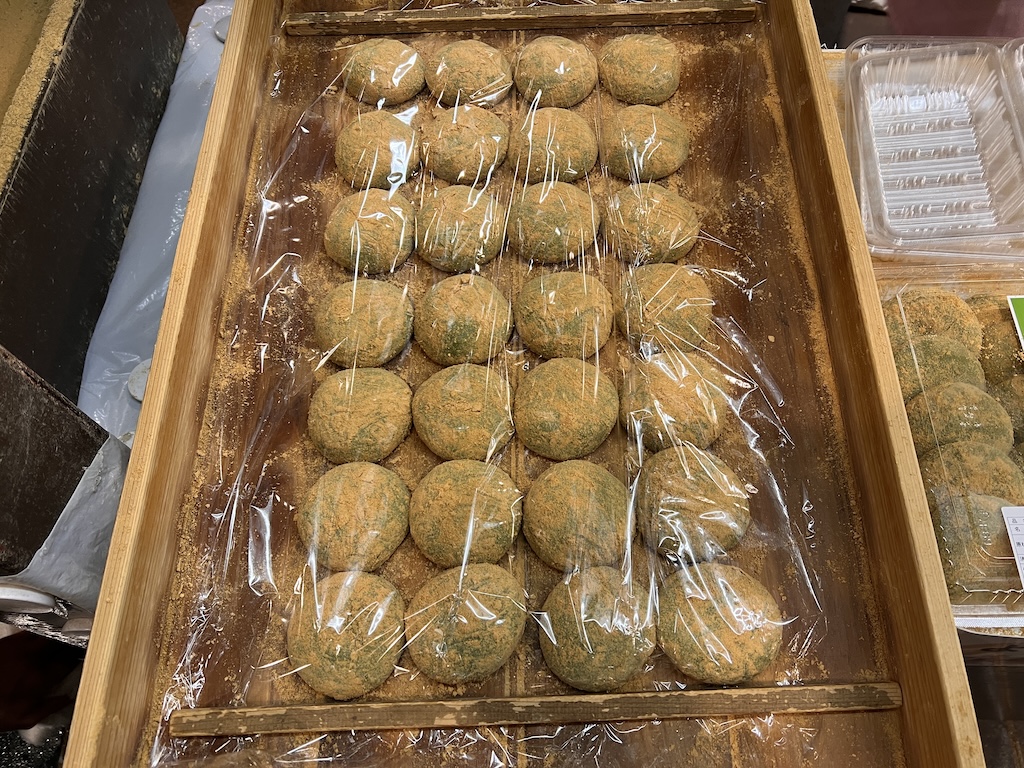
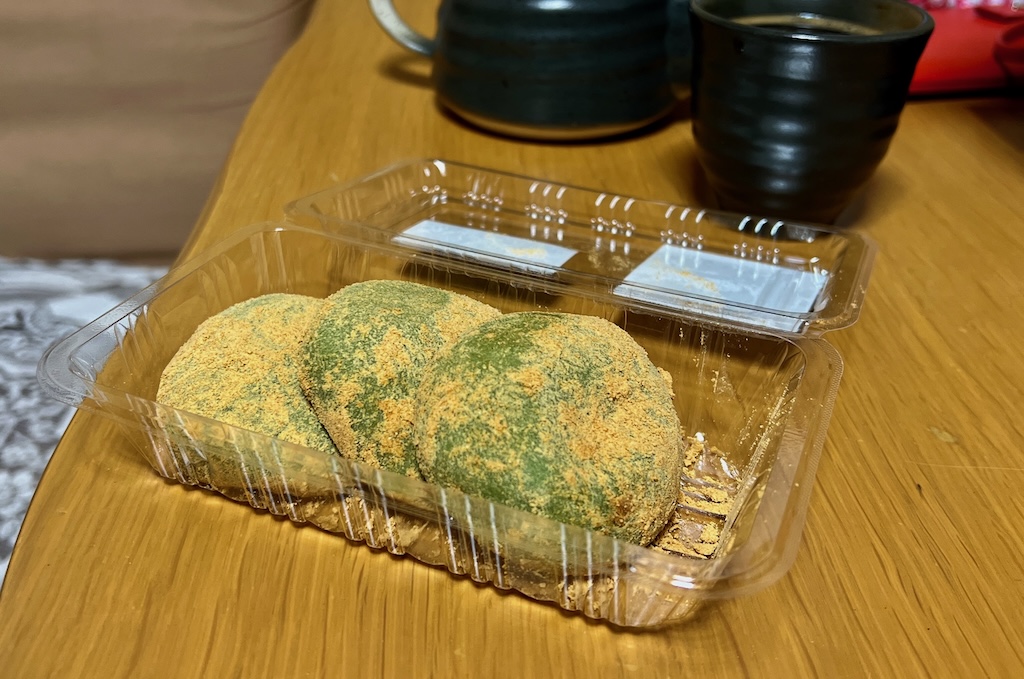
Once you’ve had Japanese food in Japan, you can never go back to Japanese food elsewhere. This has been the comment I have heard from many, many people. As this was my first trip ever to Japan, I naturally had high expectations for its food. 

A Symphony of Colors – The Gio-ji Temple in Arashiyama

A Symphony of Colors – The Gio-ji Temple in Arashiyama

The Gio-ji Temple lies in the quiet of Arashiyama’s back quarters, its petite garden covered in moss. Its humility is deceiving. Unlike the bigger temples, such as Tenryu-ji, Jojakko-ji or the Nison-in Temple, Gio-ji appears, at first glance, to pale significantly in terms of the heritage that other temples rightly take pride in. Yet Gio-ji Temple has a history that moves one to tears. Its story illuminates the weight of Buddhism as a personal faith, in the ways that it lifts human beings from dramatic times of emotional suffering.

Speaking of moss, the Saiho-ji Temple is known as the “moss temple.” It requires advanced reservations to visit. If you did not get to see the moss temple, you may consider the Gio-ji Temple to have presented a scenery along the same theme.

A Sanctuary for the Heartbroken Souls at the Gio-ji Temple

The Nonomiya Shrine of Arashiyama was the site where imperial priestesses went through their purification ritual before being sent off to the Ise shrine as the representative from the imperial court. It also comes within the literary tradition of Japan as the setting of an exceedingly beautiful, bittersweet love story.

In Gio-ji Temple, the role of women once again comes into the spotlight. The history was a legend retold. During the Heian period, Shirabyoshi was a popular form of entertainment. The female performer sang and danced in a simple rhythm, and they dressed in men’s attire as they performed. The women that did Shirabyoshi were very talented in singing, dancing and poetry. Although some might call them courtesans, they were, first and foremost, entertainers.

Our protagonist is the beautiful woman Gio, who performed before the nobility in Kyoto during the late 12th century. Her performances captivated the powerful military leader Taira no Kiyomori. He took her in as his favored consort, but this was no happy ending for Gio. Taira no Kiyomori then fell for another dancer named Hotoke Gozen. Gio fell out of favor, and in the pain of unrequited love and humiliation, she made a critical decision to leave her former life behind.

Gio decided that she would retire from her life as a performer. Along with her mother and sister, Gio arrived at Gio-ji Temple, which was to be named after her, to live a life of reclusion as a Buddhist nun.

As fate goes, Hotoke Gozen would eventually join Gio in the Gio-ij Temple herself, seeking forgiveness and a redeemed, quiet life of Buddhist asceticism as well. A recurrent theme in this tale is the idea of karma. As these women’s former lives were entangled in webs of jealousy and rivalry, Buddhism came to them as the final answer for spiritual resolution. Buddhism presented a higher calling that enabled them to rise above the common desires for love, material pursuits, power and fame.

Let me just conclude this story with a final word about Taira no Kiyomori. In the Tale of the Heike, which tells also the story between Taira no Kiyomori and Gio, Taira no Kiyomori is portrayed as a man of evil. As a military leader his actions against rebellions have caused the destruction of a key temple in Nara and its Buddhist texts. He eventually met an unfortunate fate of a severe disease and died in pain. Karma certainly did its work on Taira no Kiyomori.

A Tour of the Gio-ji Temple

Allow for just a little less than a half hour to walk through this temple.

The Gio-ji Temple has the unique ambience that fully expresses the bittersweetness of its history. Thick thickets of moss-covered ground spread out before visitors in its small garden.

There was a certain sense of heaviness in the air. This part of Arashiyama has very dense shades that trapped humidity. In this time of the year, the autumnal colors had brighten up the whole space. Fallen red leaves laid a crimson blanket upon the thick moss.

Certain sections of bamboo lined parts of the small garden, standing tall. Seeing its height reaching far into the sky above, one seems to reckon the extensiveness of hope as the source of life’s resilience.

The Gio-ji Temple is the perfect example of how learning about the history and legends of a heritage site is key to the appreciation of its physical beauty. In this small enclosure of a simple thatched roof temple and a small garden space, I could feel the spirits of the women that found sanctuary and closure here.

Before visiting the Gio-ji Temple, I had seen the Ryoan-ji Temple, the Kinkaku-ji Temple, the Otagi Nenbutsu-ji Temple, and the Adashino Nenbutsu-ji Temple. I was running out of steam. It was somewhat late for lunch. I sat down at a café for a pasta that was not really worth a mention. But I did have the food that I needed.

After lunch, I had no plans and in fact I wanted to go back to the hotel to rest. Then I saw a sign pointing to yet another temple. I could not resist, and I was glad to have visited Gio-ji Temple.

Sources

The Wikipedia on Shirabyoshi.

www.japan-experience.com, Gioji Temple: a Hidden Gem with a Tragic Love Story in Kyoto’s Arashiyama District.

A Symphony of Colors – The Lonely Souls in the Adashino Nenbutsu-ji Temple

A Symphony of Colors – The Lonely Souls in the Adashino Nenbutsu-ji Temple

If the 1,200 rakan statues that stand at the Otagi Nenbutsu-ji Temple represent the Buddhist followers’ celebration of their faith in life, then the 8,000 stone markers at the Adashino Nenbutsu-ji Temple are the proper tribute to death. The sky opened up at this hour