
To the Outback and Back — Alice Springs and its Frontier Heritage
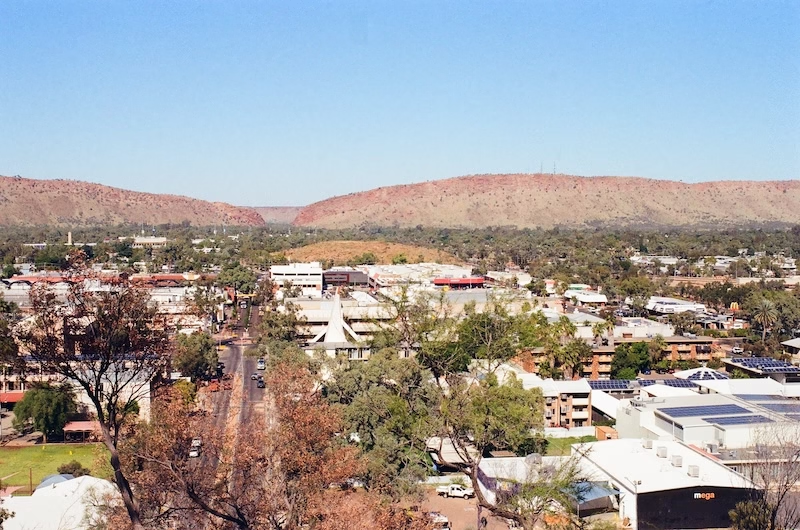
In the beginning, Alice Springs (Mparntwe in Eastern Arrernte) was home to the Arrernte Aboriginals for 20,000 years, long before the arrival of the European settlers during the 1860s.
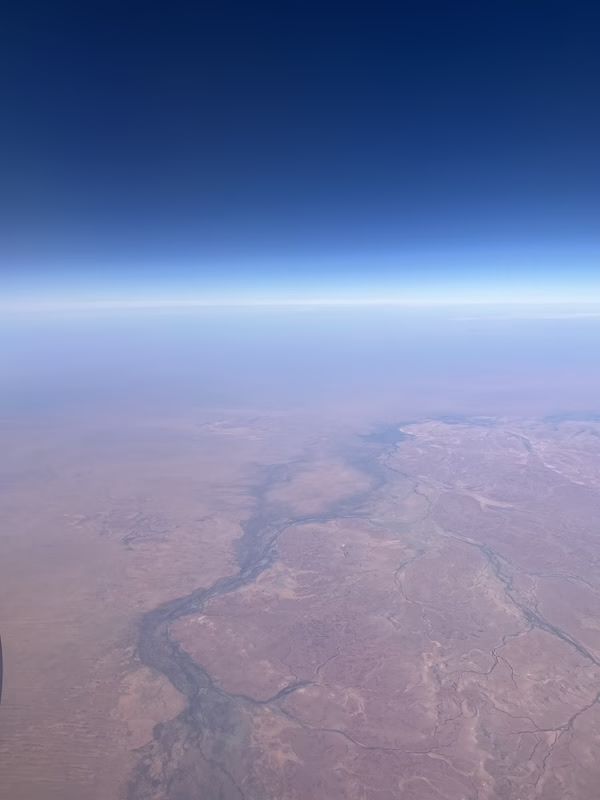
The Arrernte Aboriginals hunted and gathered food in this area. The Lhere Mparntwe (Todd River) determined the course of the sojourns in their nomadic life. The Todd River is, by and large, a sandy creek. The permanent and semipermanent waterholes of the Todd River supplied fresh water to the Aboriginals.
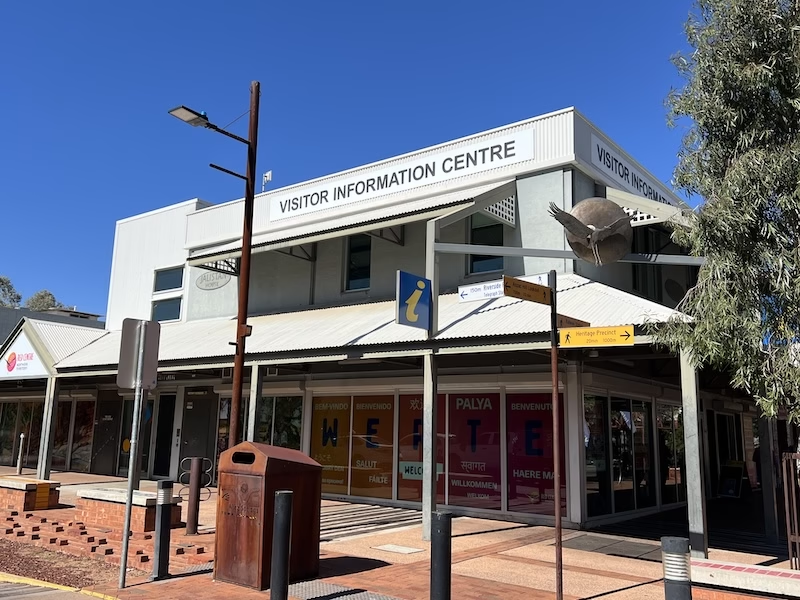
What was originally the town of Stuart sprang up due to the permanent waterhole of the Todd River in now-Alice Springs that provides a source of water in the desert, as the Europeans saw the same necessity as the Aboriginals did.
John Stuart, an inland explorer of Scottish descent, took on a few trips to trek the path between Adelaide and Darwin at the behest of the South Australia parliament. Even on his first attempt in 1860, he had reached the Alice Springs area from Adelaide. The town of Stuart, proclaimed in 1888, was about half way between Adelaide and Darwin.
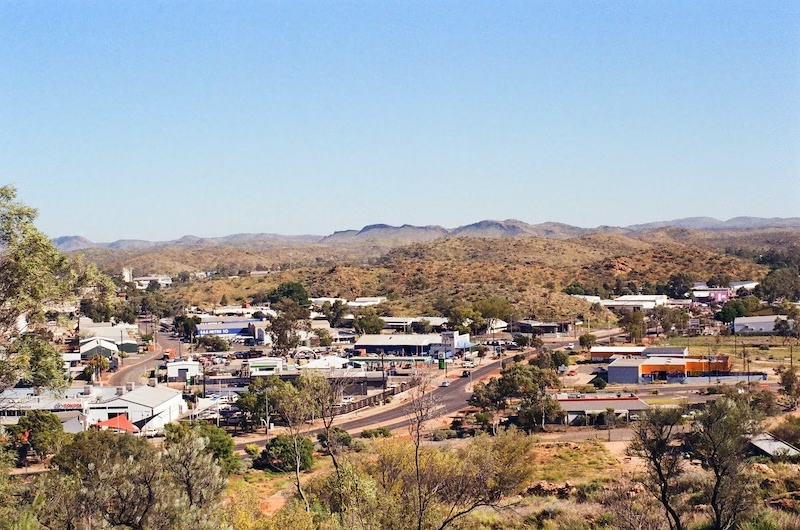
In his third attempt, he made it from South Australia to Darwin, traversing the full distance in the north-south axis of the middle region of the continent. This successful expedition paved the way for the establishment of telegraph lines and stations along this route later by Sir Charles Todd, soon in 1871.
The City as Alice Springs
Alice Springs is thereafter named after Lady Alice Todd in 1933. Lady Alice Todd is the wife of Charles Todd, who, as the Government Astronomer and the Superintendent of Telegraph, successfully completed the journey to set up telegraph lines between Adelaide and Darwin in 1877. He is celebrated as a hero in Australia.
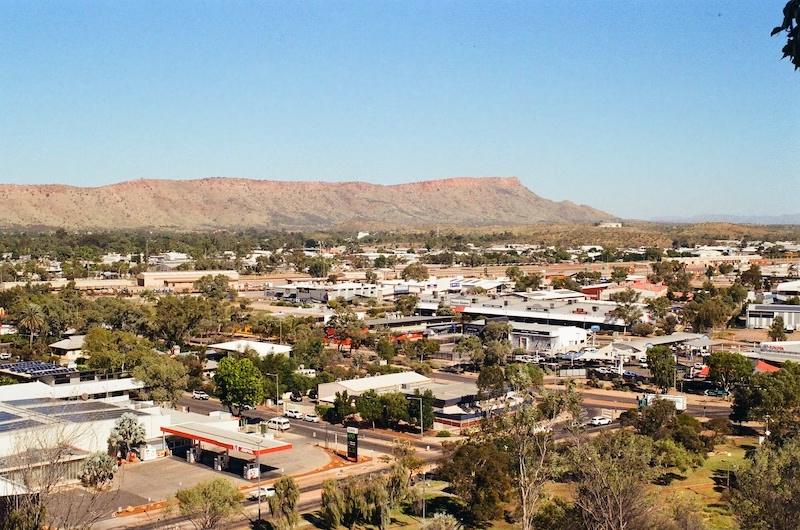
Being the only city in the midst of a vast expanse of red earth, Alice Springs stands at the crossroads in many facets of historical and cultural significance. Historically, Alice Springs was the original settlement area for the European settlers looking for opportunities in a pastoral economy. The Undoolya Station (a cattle station) was set up in 1873 following the establishment of the first telegraph station.
The town would see quite a lot of traffic during the Gold Rush of the late 1800s. The miners eventually set up their operations in Arltunga in 1887, off of East Macdonell. Another round of gold rushers entered the scene in 1902, when gold was discovered at Winnecke’s Depot, north of Stuart.
In the late 1800s, another significant development was the arrival of the Lutheran missionaries, who established a mission for the Aboriginals. Albert Namatjira, the first Aboriginal painter of Outback sceneries that earned national acclaim in Australia, was born and raised in the Lutheran mission. Interactions between the European settlers and the Aboriginals were ongoing, wavering between benevolent and tensely contested over land occupation and water sources.
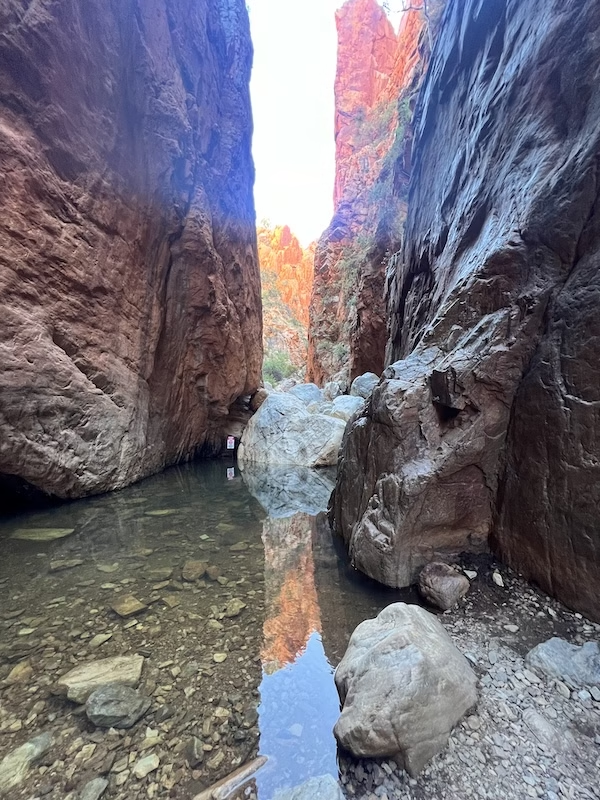
Worthy of mention is the effort of Mrs. Ida Standley. She established the Bungalow, which was a welfare institution for Aboriginal children. Her contribution to Alice Springs, in educating both the early settlers’ children and Aboriginal children, was recognized as the Standley Chasm in West Mac was named after her.
Before WWII, an event of significance is the Coniston Massacre of 1928, the year in which a four-year drought drove both the frontier settlers and the Aboriginals to desperation. At the time, the European settlers thought that the Aboriginals’ contesting demands for water and food for survival were at odds with their interests in maintaining the cattle stations. Tensions flared between the station operators and the Aboriginals. In the confrontation that was precipitated by the killing of the dingo hunter Fred Brooks by the Aboriginals, the police investigating the murder killed a significant number of Aboriginals in a series of pursuits. The murder of Fred Brooks was tried in court, followed by an inquiry later.
The Coniston Massacre is considered the last known officially sanctioned massacre of Indigenous Australians and one of the last events of the Australian frontier wars.
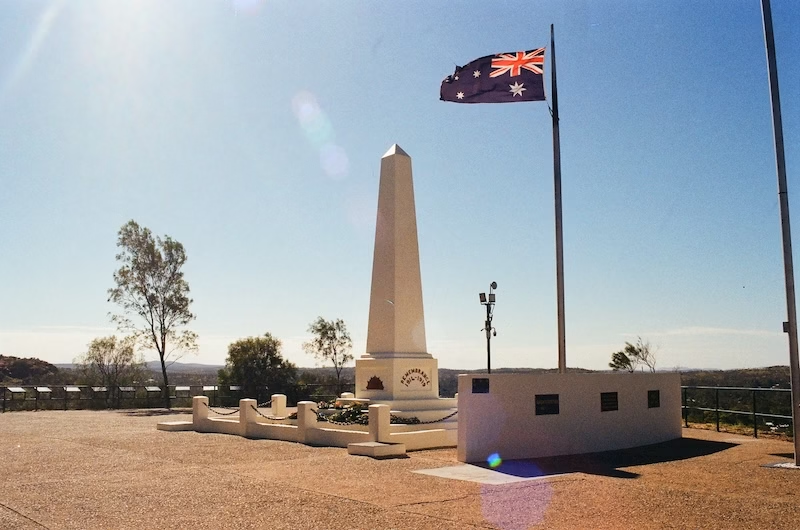
During WWII, Alice Springs was a major military camp that served as the arsenal and staging point for supplies to Darwin, which was Australia’s warfront in the Pacific War. More on this in the next entry on ANZAC Hill.
Alice Springs Today
Today, the population of Alice Springs numbers 35,000. About 6,000 identify as Aboriginals. The community continues to adapt to the rising trends in immigration and integration. There are immigrant communities as well, mainly from India and Africa.
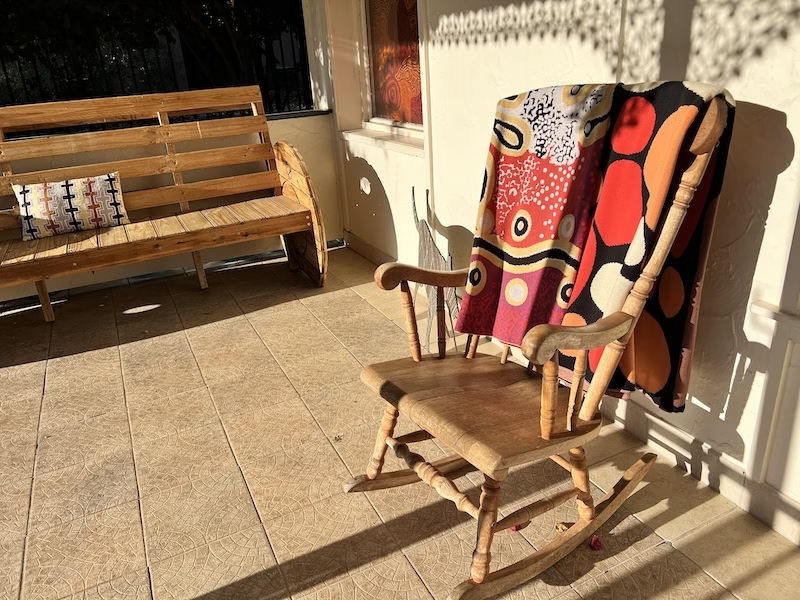
The dynamics in Alice Springs can be troublesome at times. As I said in a previous entry, a month before my trip, I learned that the rival gangs (consisting of descendants of different Aboriginal tribes) got into a huge fight. The story was that they were at a funeral and fights broke out, resulting in multi-day violence rising to the level of a riot. There was a prolonged youth curfew as a result. I got the sense from Kirsty of Red Earth Roaming that this was quite exclusively within the aboriginal community. But it does go to show that deep-seated animosity amongst different groups can disturb the peace of a small city in this vast region of peaceful nature.
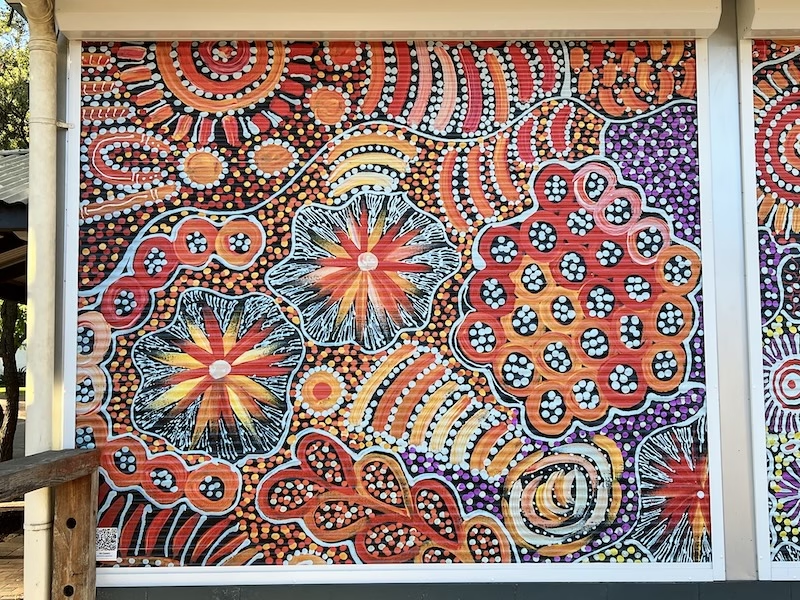
There are half-day tours that take tourists around the historical, cultural and natural sites in Alice Springs. I opted to keep things simple after three days of intense tours in the Outback. In the morning of my day of departure, I walked from my hotel to ANZAC Hill, where you can see the city in a 360 panoramic view. Coupled with the Aboriginal art gallery that I saw a couple days ago, this served all my purposes in learning about Alice Springs.
Sources
Descriptions on site at ANZAC Hill, Alice Springs.
The Wikipedia on Alice Springs.
The Wikipedia on Albert Namatjira.
The Wikipedia on the Coniston Massacre.