
To the Outback and Back — Preliminaries
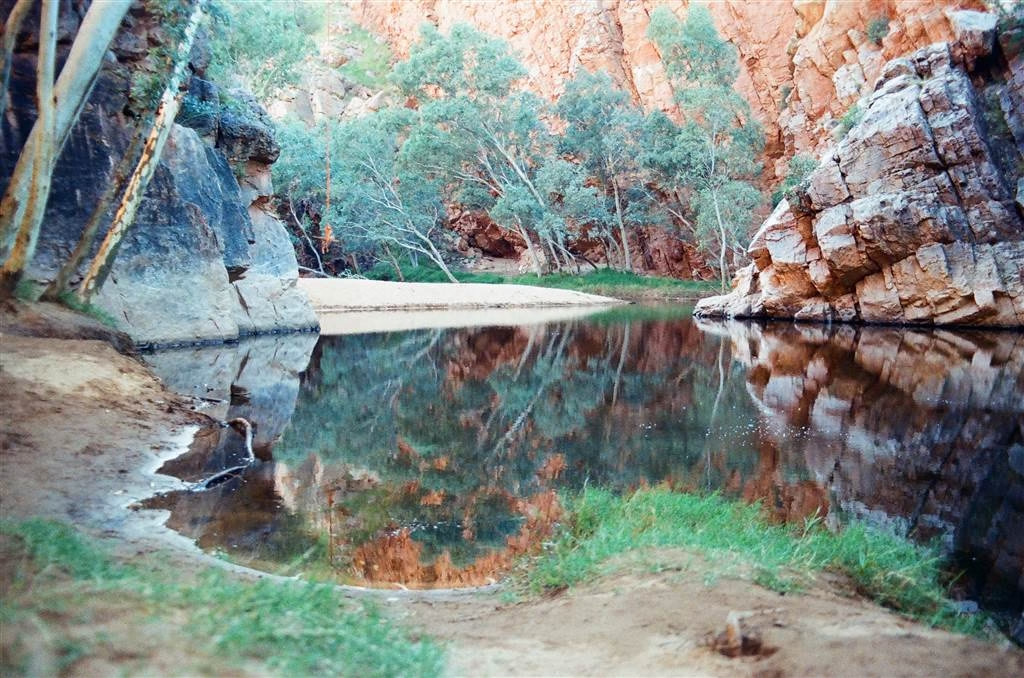
The Australian Outback has captured my imagination for as long as I remember. Although I have been to a number of the eastern coastal cities in Australia, the Outback remained a place of mystery to me. I had thought of that vast desert region to be a world of its own, even when I was living in Melbourne thirty years ago.
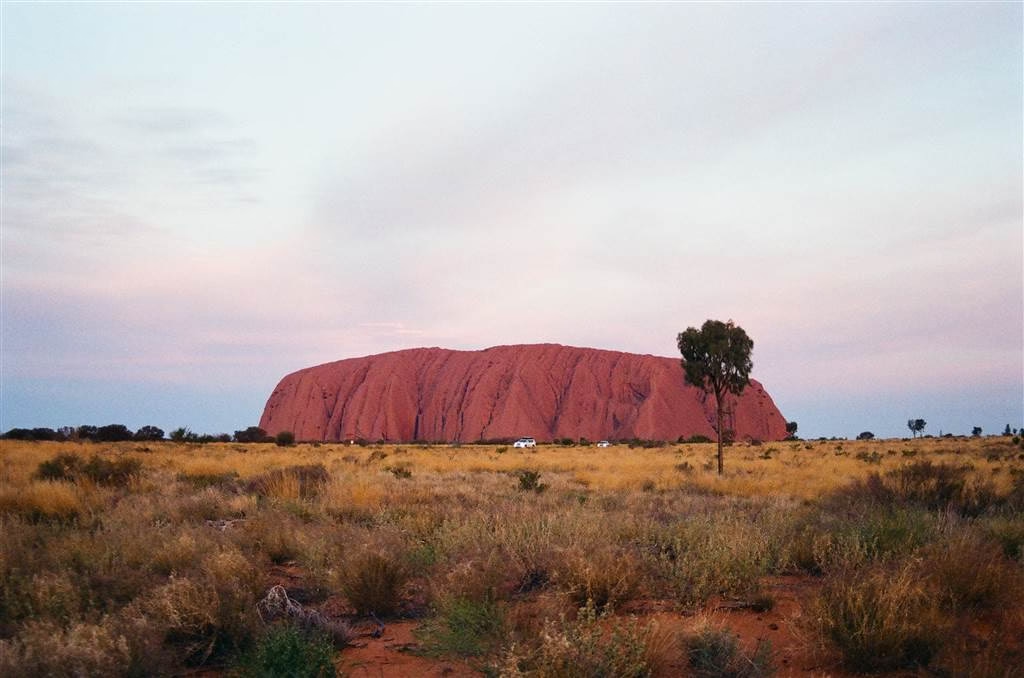
I finally had the opportunity to visit the Outback in Australia in 2024. It is now about two years after my trip, but I decided to write this series anyway, because it is off the beaten track for most world tourists. I also don’t imagine that things change all that much in that part of Australia, and I will take care to fact check the advisory sections of the entries.
What fascinated me about the Outback is the Uluru Rock, which is the sacred site for a number of Aboriginal Peoples. Until 2019, tourists could scale the rock and climb to its top. But that practice has ceased now, due to the objections raised by the Aboriginals. Along with that practice, all the pictures of the summit of the rock on Google image were also removed for the same reason. The Aboriginals consider the rock sacred, and Parks Australia raised the objection with Google on behalf of the traditional owners of the land. Google honored the request right away.
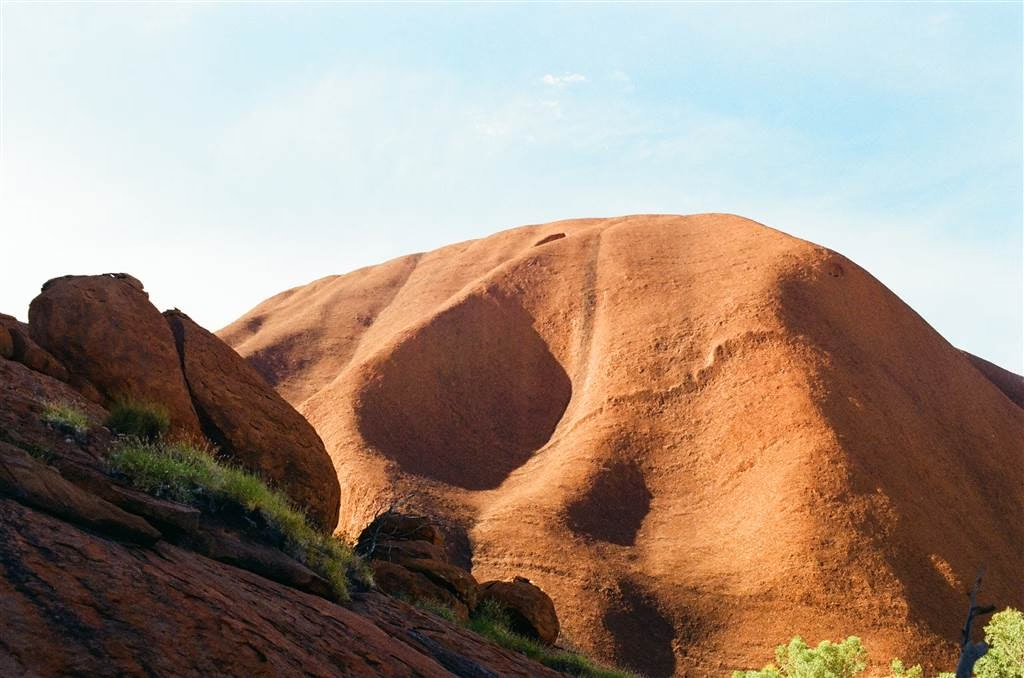
Besides the Uluru, the Outback is known for its amazing natural landscape. Its nature is what has sustained the Aboriginals for centuries before the Europeans came and destroyed their livelihood. As such, a fair appreciation of the Outback must entail in-depth understanding on the interplay between human settlements, the animals as well as the forces of nature.
Needless to say, cultures emerged from the Aboriginal’s societies in the Outback, but they are distinguished forerunners of environmental preservation in today’s terms, particularly in the way they handled nature, taking for their survival what were necessities and preserving balanced practices that protected their environs. This aspect of Australian culture is front and center in the Outback, and perhaps not so in other parts of Australia.
Trip Planning is Key
It was an exceedingly difficult process to plan for a trip to the Outback. I landed in Melbourne, and the airplane tickets from Melbourne to Alice Springs were exorbitantly expensive. When I looked first time, it costed almost the same as my ticket from Hong Kong to Australia. I then considered the budget tour operators, and bought a package.
Only after booking did I realize that the dates of the package did not cover the only two times that the Uluru tour operators run their tours in a given week. I then had to forfeit the return ticket and extend my stay one more night so that I could join a tour to the Uluru. For what is a trip to the Outback without seeing the sacred rock?
Long story short, I managed to book a five-day trip to the Outback. The city that most tourists stay in is Alice Springs, but a gentle reminder that a day trip from Alice Springs to the Uluru is an 18-hour fanfare, for it takes six hours one way to the Uluru.
There were three full days in Alice Springs, so I arranged tours to West Macdonnell (West Mac, 8 hours), East Macdonnell (East Mac, 5-6 hours) and Uluru (18+ hours). That left me with just a half a day to explore Alice Springs itself, and I did find it important to also understand Alice Springs as a city.
All was set, and I was incredibly relieved when I sorted out how to minimize the extra costs incurred from my mistake. Be very sure to check the tour dates to Uluru when you plan. The most common tour operator (White Emu Run) does not run daily tours to the Uluru.
Climate and Weather at the Outback
The Outback is a vast region of desert. As expected, the weather is that of the desert. Temperature difference is the distance between heavens and earth as night and day alternate. Therefore, to make sure that you enjoy a trip to the Outback, be prepared for layers in the morning hours (a scarf and a light jacket would be handy) and tank tops in the noon to afternoon hours.
It also helps for one to bring plenty of water in order to stay hydrated throughout the day. Sunscreen and moisturizers are also necessary. The hotel that I stayed in provided the very basic, meaning that even toothbrush and toothpaste had to be purchased, but you could pick up any necessities from the Alice Springs downtown area conveniently.
I joined this tour in late April and that is a pretty good window to visit the Outback. The weather is cool generally. The best season, in terms of weather, is the winter times (June to August).
Major Annoyance — Flies
That is because during the winter the region’s most annoying menace is vastly reduced in numbers. The flies of the Outback are the greatest annoyance. Even in April, which is mid autumn in Australia, the prevalence of flies requires the purchase of fly nets (they are sold at the tourist kiosks and coffee shops). It is the very worst time to visit the Outback during the summer months. They are so everywhere that you won’t be able to eat without chewing up a few of those protein-packed insects. Yes, gross. So don’t go during the spring and summer months.
That said, the flies are not the dirty, iridescent, wet, slimy, sewage-infesting ones you see in the city swamps. They are dry, small and perhaps “cleaner” — but gross nonetheless and you don’t want to swallow any of those with your food.
An Unexpected Occurrence
The tense relationships in Alice Springs presented an occurrence that was completely out of the blue to me. About a month before my trip, I learned that the rival gangs (descendants of different Aboriginal tribes) got into a huge fight, rising to the level of a riot in Alice Springs. There was a youth curfew as a result.
I inquired with the tourist office there and I was assured that my tours would not be affected. But when I was checking in the hotel, I was told not to head out alone during the nighttime. That is a precaution that I always take wherever I go, but to be told so by the hotel staff was an indicator of the tensions and the hidden dangers of Alice Springs.
Having gone there for quite a few days, I found it to be a safe place. You would always avoid the night hours out if you travel as a solo female.
Sources
Alex Chapman, Google Street view of Uluru summit removed after request from traditional owners, 7 News, September 24, 2020.