To the Outback and Back — The Wonders of West Macdonnell at Simpsons Gap
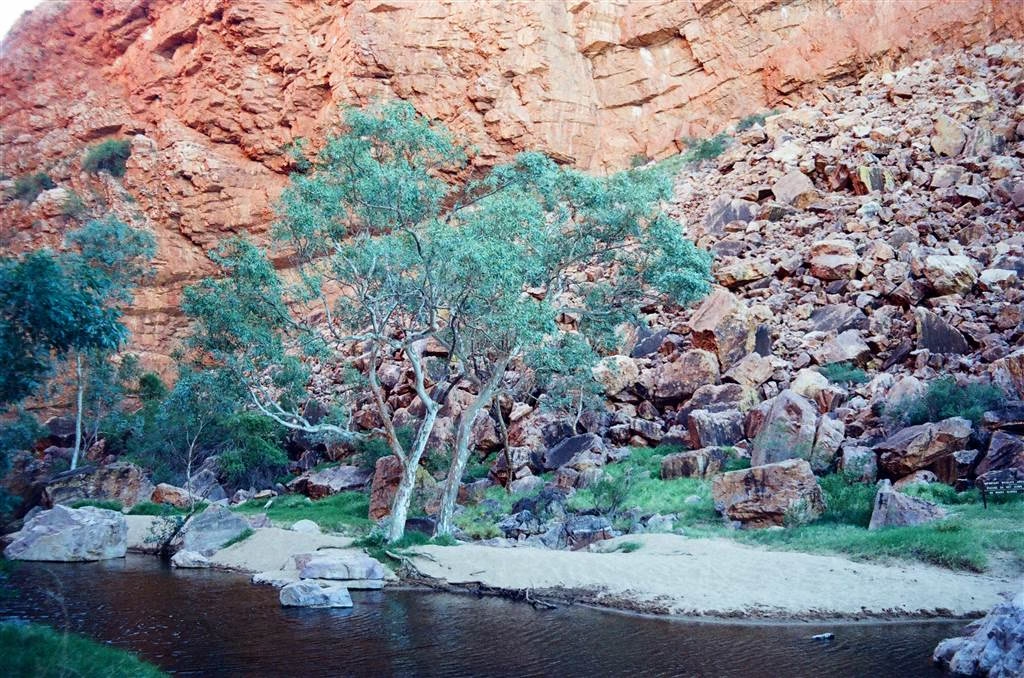
I refer to the Outback as a colloquial reference to the part of Australian hinterland that comes with a vast expanse of desert and an enormous diversity in natural endowment. If one must put a finger on the proper names, the Outback is located in the state called Northern Territory, smack in the top middle part of Australia.
The morning rays ushered in the most beautiful of the Outback’s views. The West Macdonnell National Park is a very popular site for nature enthusiasts, as opposed to the relatively quieter East Macdonnell. In my opinion, both West and East Macdonnell are must-visit sites in the Outback, as their sceneries differ from the Uluru (and as between each other) in exceptional ways.
In some respects, both West Mac and East Mac present geographical, scenic and cultural features that are significantly more interesting than the Uluru.
There are many different ways to appreciate West Macdonnell, and for common tourists a one-day, 8-hour trip would suffice. For the hiking experts out there, consider doing a weeks-long trip to hike the West Macdonnell trail of 223 kilometers – it’s called the Larapinta trail.
But if you were to take on such adventure, be sure to engage a local tour operator, whose guide will prepare all the necessary supplies and directions (one must not do this without a local guide, for one thing, the desert’s climate conditions call for expert advice and provisions).
The Itinerary
I highly recommend a full-day trip to see West Mac. We went through a long list of sightseeing attractions. Each site was unique, presenting a wide variety in near-unreal sceneries and fun activities, including short hikes, swimming, photography and cultural lessons.
On this day we were making stops at the Simpsons Gap, Standley Chasm, Ellery Creek, the Ochre Pits, Mount Sonder and the Finke River, finally ending the day at the Ormiston Gorge.
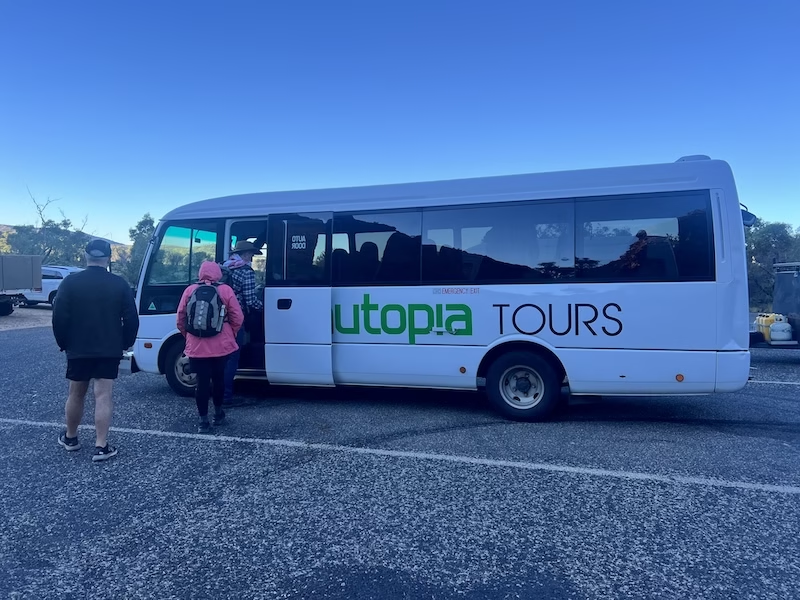
I joined this day tour with Autopia and I tip my hat in salute to the tour operator’s professionalism. The tour guide, Brent, was knowledgeable, passionate, and gave clear directions that took care of everybody in the most hospitable ways.
West Macdonnell (Tjoritja)
Tjoritja (pronounced “choor-it-cha”) is the native name for West Macdonnell. The Arrernte (Aranda in English) Aboriginals, who have inhabited in this land for more than 3,500 years, are the ones attributed as the “traditional owners of the land” at West Macdonnell. In Australia’s political parlance, when they assert their claims over native lands, the Aboriginals are called “traditional owners of the land.”
This idea of “traditional owners of the land” is somewhat interchangeable with the idea of “traditional custodians of the land.” The emergence and use of these terms indicate Australia’s continuous efforts to reconcile its colonial past with the horrors that were committed against the native peoples (they are called Aboriginals in Australia).
The Aboriginals have inhabited 65,000 years on the coast of Australia. They pride in 250 different languages and 700 different dialects. Each Aboriginal tribes understand themselves as a “country.” Collectively, they are called “First Nations.”
The fact that the Aboriginals are being designated “traditional owners (custodians) of the land” expresses a willingness, as a matter of national policy, to recognize their first claim to Australia’s lands, long before its nationhood came into existence.
Central in the word “custodianship” is the idea that the Aboriginals, despite being incredibly diverse as different peoples, all share a concerned approach in their relationship with their land and their native environments. In their way of life they appreciate that their survival is closely tied to the condition of the natural environment. They have a responsibility to preserve and protect the land.
The Journey
We started early in the morning from Alice Springs. I knew that the day would be awesome. Even at 5:30 am, when I woke up, the skies were clear and the birds chirped on the roof of my hotel room. The ride took maybe more than an hour or so, and on the way I already saw the beautiful low ranges afar, laid like a belt on the desert.
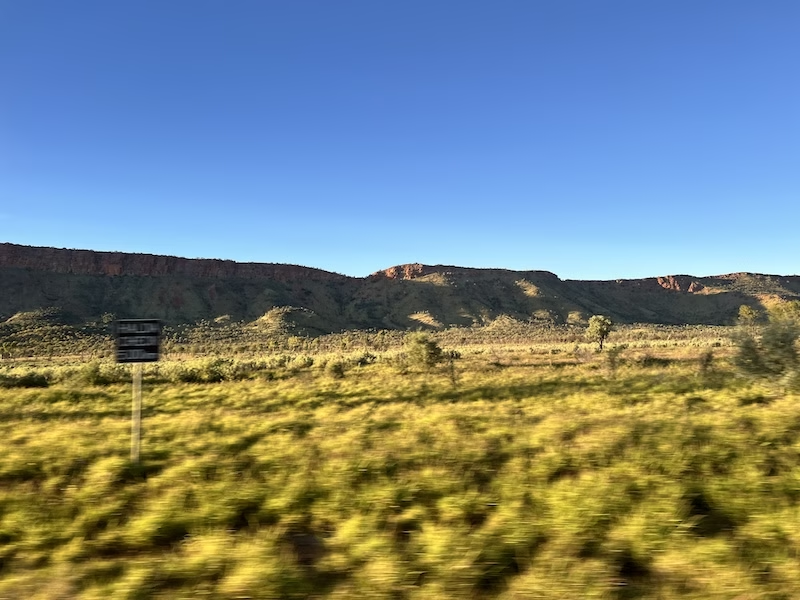
There was an abundance of green shrubs. Brent told us that this greenery is unusual for this time of the year, as it is autumn time. Just a month ago, there was torrential rain in the area. It flooded the area so badly that the water rose to the level of the height of a bus. Because the soil is clay-based and it retained the water, it blessed the plants with an unusual appearance of spring verdant. In a normal autumn, the scenery should be brown themed.
The joyful desolation in this endless stretch of emptiness is apparent. This land was, by and large, untouched by human beings’ tendency to waste what they perceive to be owned by no one.
Simpsons Gap
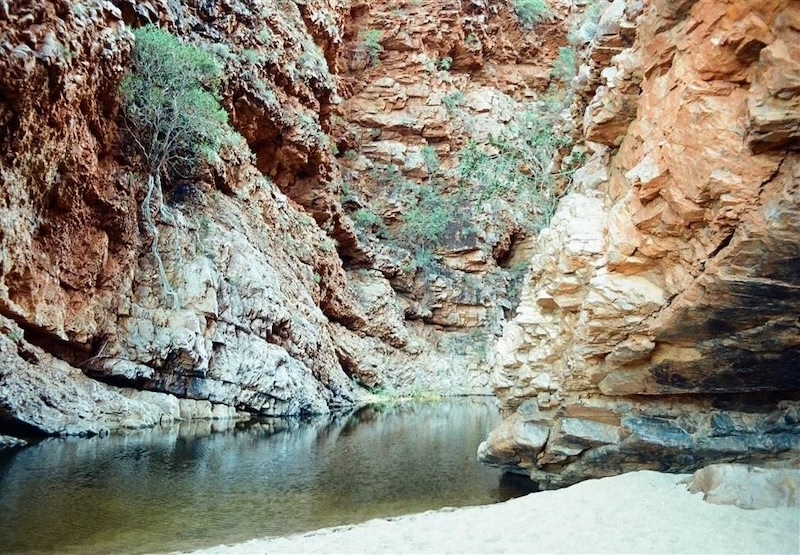
Our first stop was Simpsons Gap. Since we arrived before 8am, we had the whole spot to ourselves as a tour group. As we headed toward the gap on a 15-minute walk, we entered into the embrace of the two plateaued mounts on the side.
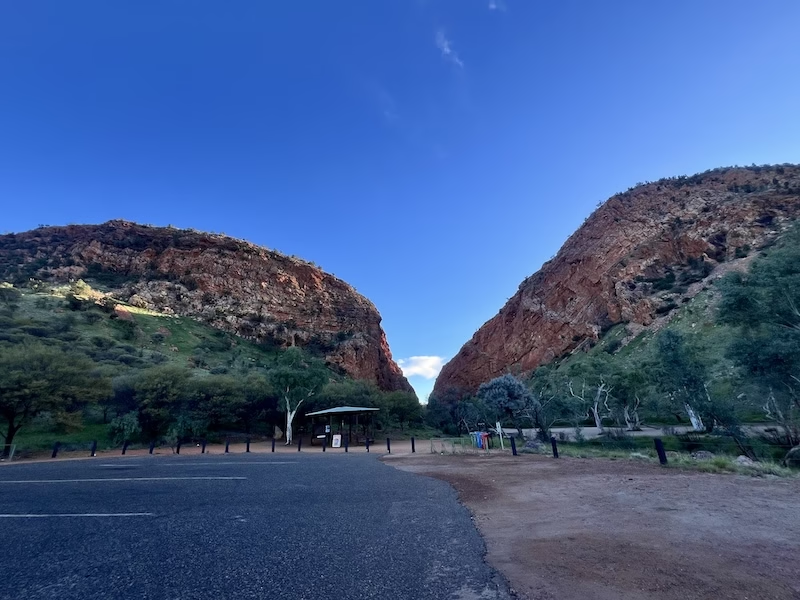
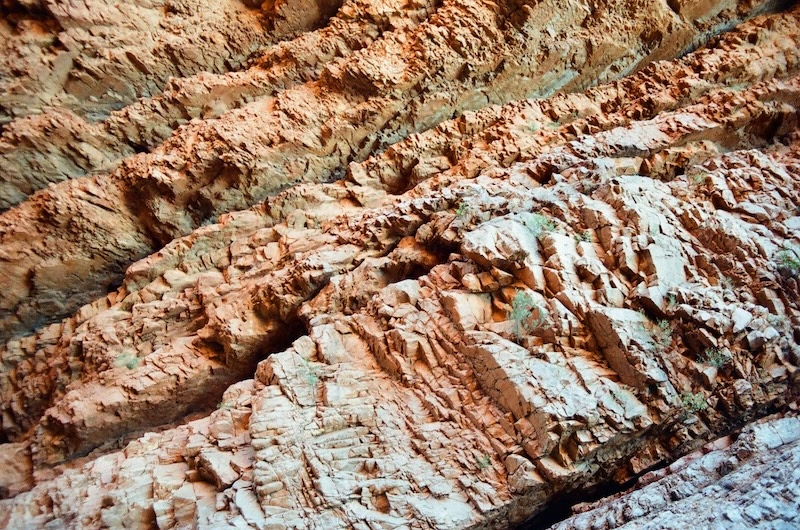
The sensations changed as we walked toward the gap. From afar, as the mounts on the side are set against the source of sunlight, I thought the scenery was gray-and-blue-themed. As I proceeded, the colors changed into the warm hue of its red earth. The rocks are rusted at Simpsons Gap.
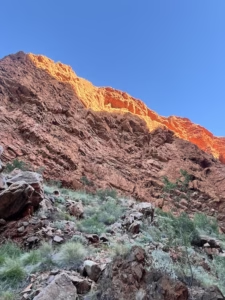
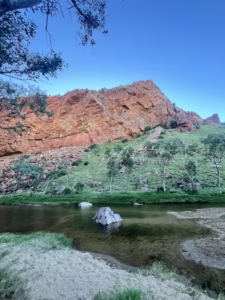
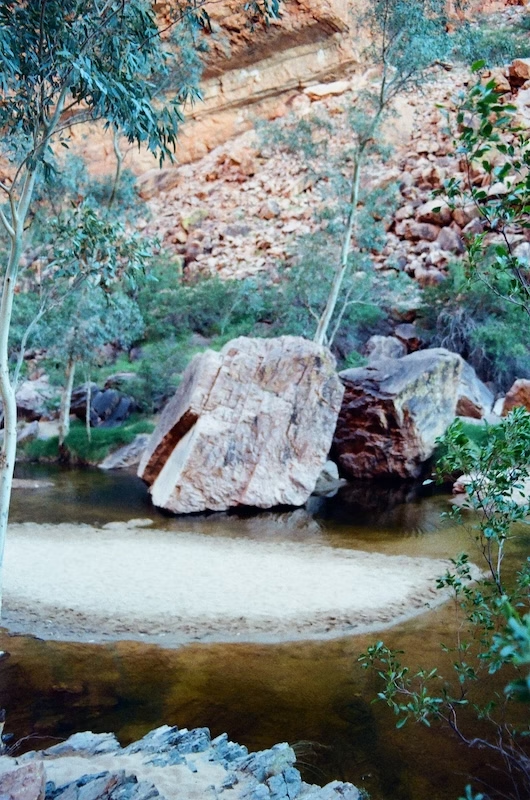
We were entering into the narrows of the gap itself — at the end of which we came upon a body of water that lied pristine and still beneath the thick, moist and chilly morning air. Brent said that we weren’t supposed to find this much water. It was a natural wonder caused by the severe flood last month.
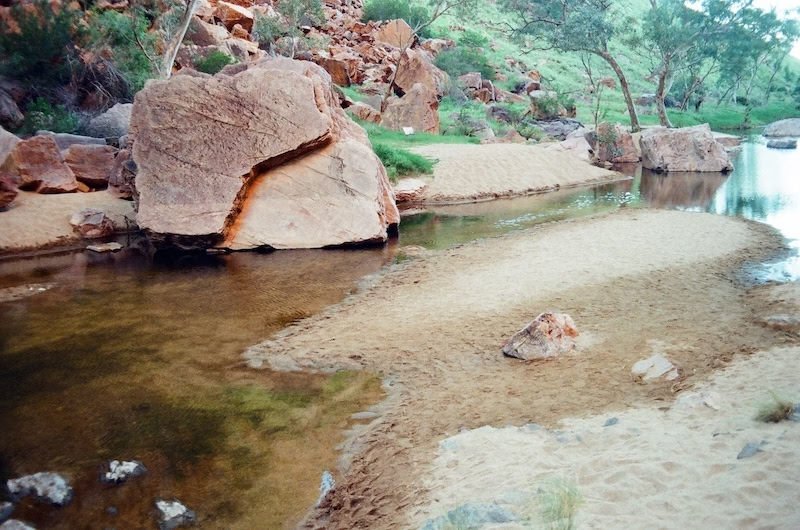
The Roe Creek flows through the gap as part of the spiritual ambience. I was awed by its serenity. Known as the Rungutjirpa to the Arrernte Aboriginals, the Simpsons Gap is the mythological home of a group of giant goanna ancestors.
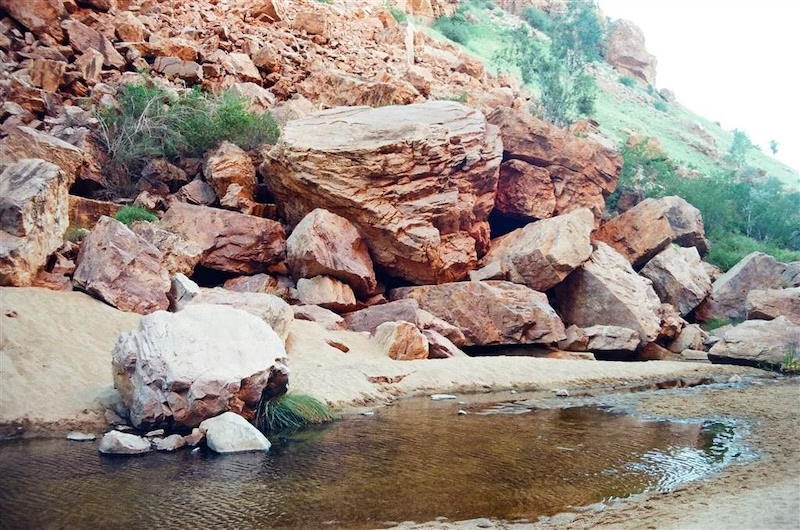
There are a few trails for hiking at the Simpsons Gap, and biking is also a popular activity here.
Brent told us about the Black-footed Rock wallaby that is declining in numbers. As a species they are native in Simpsons Gap. A wallaby is similar to a kangaroo, they are mammalian and marsupial, but they are smaller than a kangaroo. They usually appear at dawn or at dusk.
Also in focus is the Mulga tree. As a desert species, “its dark, fissured bark protects against extreme temperatures, while its needle-like phyllodes — functioning as modified leaves — reduce moisture loss.” The wood of its branches is hard and brittle. As such, the Aboriginals turned these good qualities into spears.
Our next stop is Standley Chasm.
Sources
Autopia’s One-day Tour of the West Macdonnell National Park.
The Wikipedia on First Nations Australian Traditional Custodianship.
Australiawoodwork.com, Mulga (Acacia aneura): The Resilient Heart of Australia’s Arid Landscapes.
Red Centre North Territory, A Guide to Simpsons Gap.