To the Outback and Back — Embrace East Macdonnell at the Ghost Gum Tree and the Salt Bush
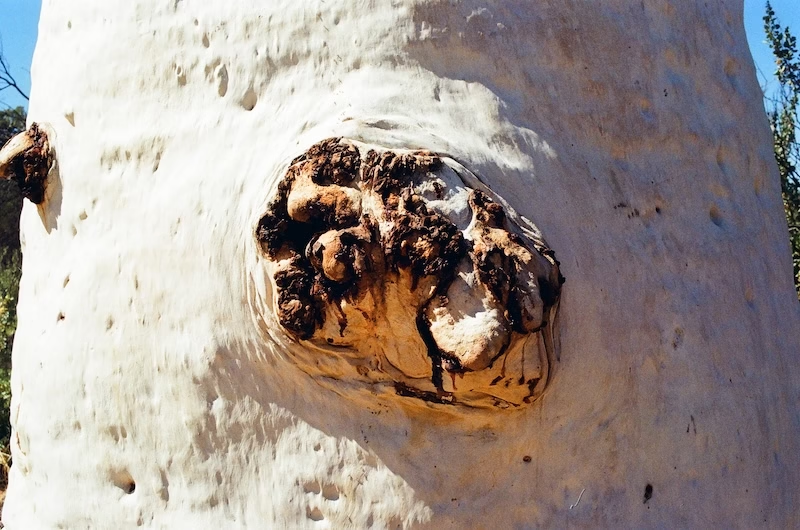
At the Trephina Gorge, I pressed my ear against a Red River Gum Tree and heard the sound of flowing water. What happens inside the hollow tree bark is that the bad wood is eaten up by the termites, then the water begins to fill the space inside the bark.
The Oldest and Largest Ghost Gum Tree in Australia
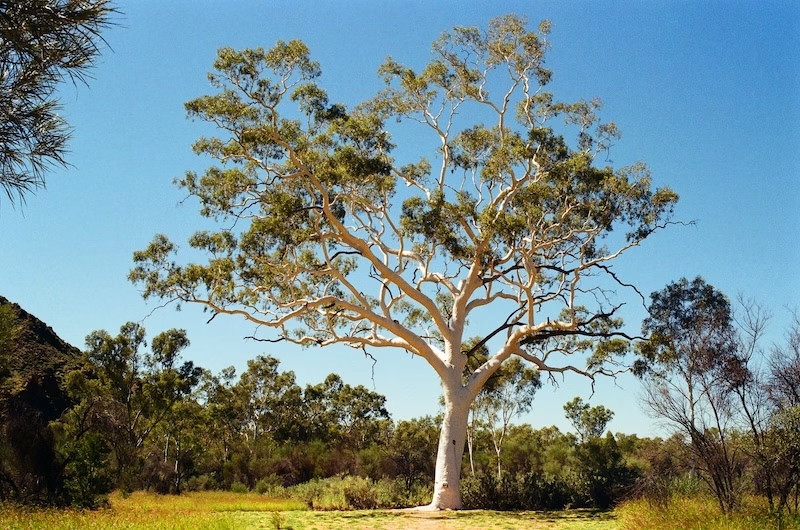
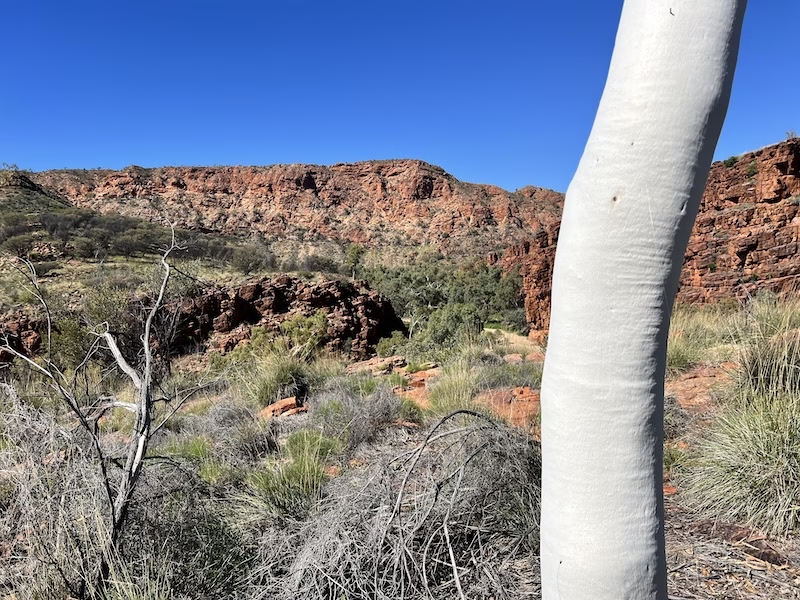
We went to see what is believed to be the largest Ghost Gum Tree in Australia. When I arrived, I understood why this tree is considered a must-see attraction in East Mac. It wasn’t because the tree was apparently of the most advanced age (it is said to be 300 hundred years old), or that it was particularly prominent in its leafy crown.
As I looked up to see the entirety of its being, the Ghost Gum Tree did seem to bear a spirit that speaks poetry through the arid winds of the desert. Its sturdy bark and branches in snowy white, the tree stood tall and proud against the azure of the sky, its leaves ruffling gently.
Where you observe black branches on the Ghost Gum, they are the tree’s “least favorite branches.” When the tree is in shortage of water, it cuts off the circulation to its least favorite branches, that is why some branches appear in black. Even within one organism, the survival of the fittest is the rule of the game.
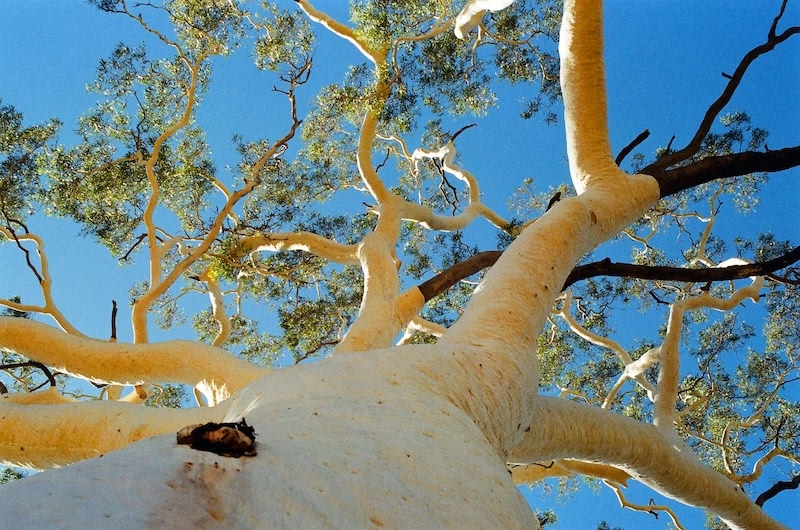
Known as ilwempe in the Western Arrernte language, the Ghost Gum Tree is where the spirits reside. In moonlit evenings their barks glow, reflecting the only source of light in the pitch darkness of the desert. Perhaps their lance shaped leaves also whisper amidst the chill of the night.
The abundant white powder is like the sunscreen in the desert for the tree. For the Aboriginals, the white powder is widely used as face paint. They use this chalk-like substance to paint their faces during ceremonies. Needless to say, the Aboriginals also find practical and medicinal uses for other parts of the tree. To them, the barks of the Ghost Gum Tree is an assured source of fire making, as they are lit even against rainwater. The gum is used for tool protection and as a balm.
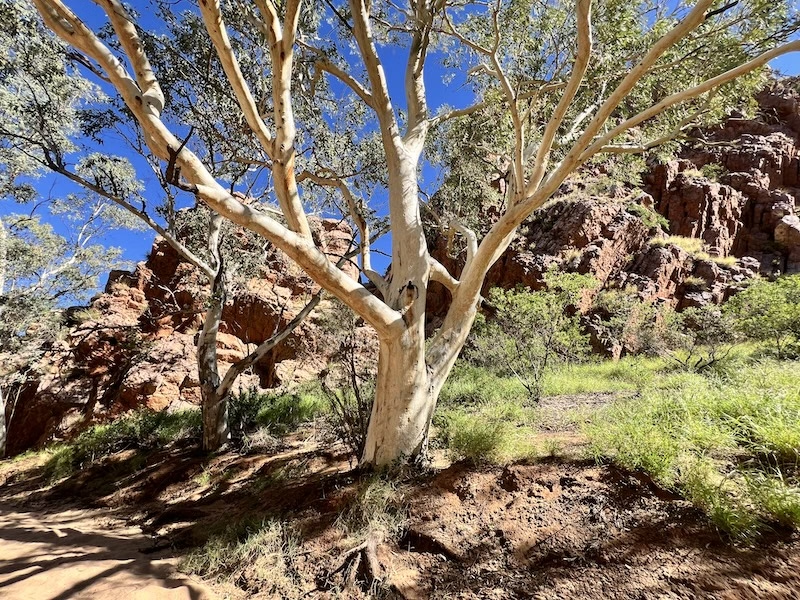
The Red River Gum v. the Ghost Gum Tree
As opposed to the Red River Gum tree, the Ghost Gum does not grow near water sources. Instead, the Ghost Gum Trees grow on rocky slopes, red sand flats and dry creek beds. In the Arrernte language, the Ghost Gum Tree is also known as aparrerinja, meaning “found around river red gums.” This word is part of the Latin name for Ghost Gum Tree, Eucalyptus / Corymbia aparrerinja.
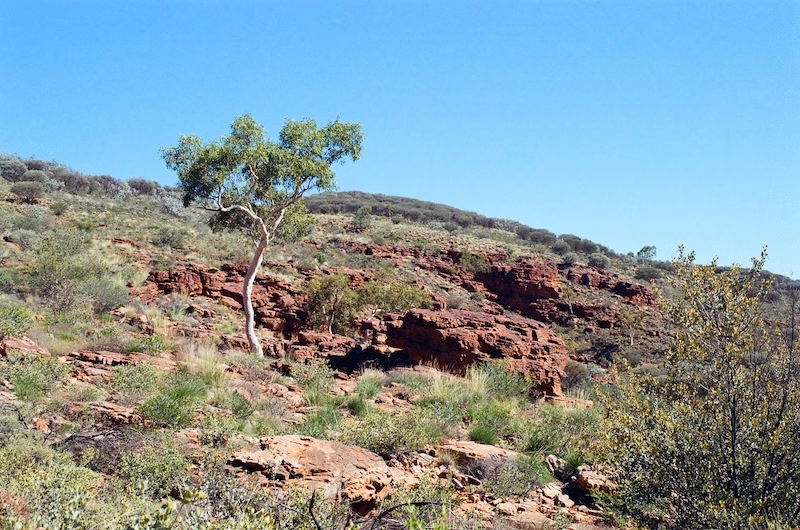
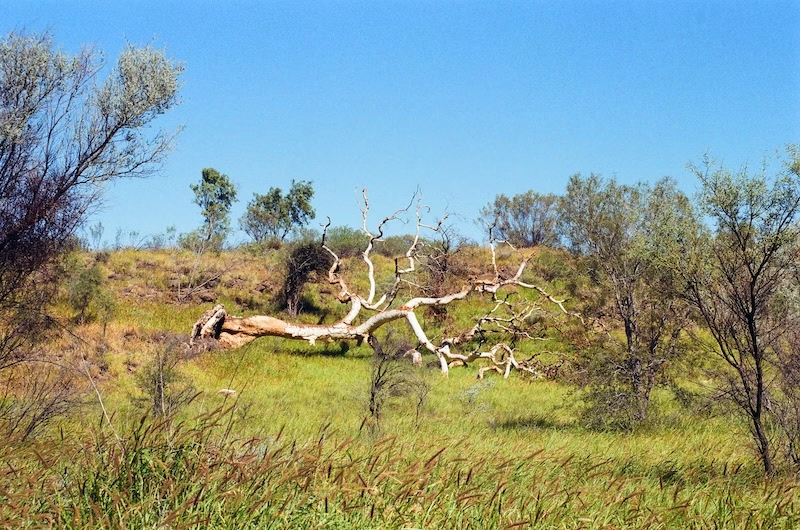
Some of them grow in the most unlikely place, emerging strong and sturdy from the crevices of the Trephina Gorge’s rusty step surface. What it stands for is indeed the spirit of the Outback, of survival — human beings or otherwise.
An Eternal Love for the Ghost Gum
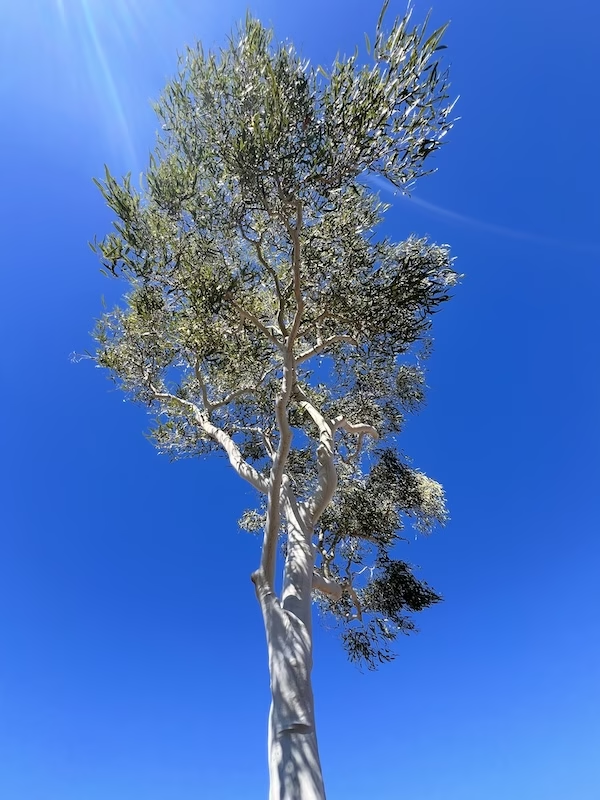
To the Australians, the Ghost Gum is a central figure in their appreciation of the native species that grace the heartland of their continent. One way that the Ghost Gum enters into the national consciousness of the Australian identity is through the paintings by Albert Namatjira, himself a descendant of the Western Arrernte Aboriginals.
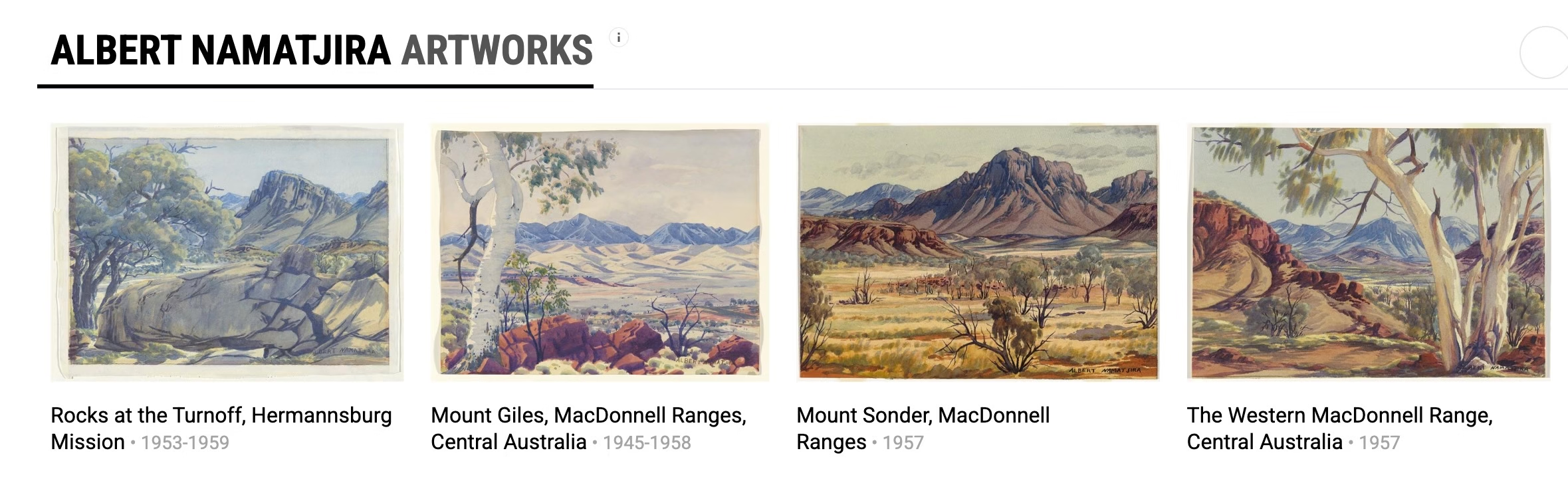
In his paintings Albert Namatjira conveys the landscape of the Macdonnell Range in watercolor. His use of light hues and mostly neutral colors impress upon the viewers a calmness that is somewhat at odds with the vibes I got at the live viewing of similar sceneries at the Macdonnell Range.
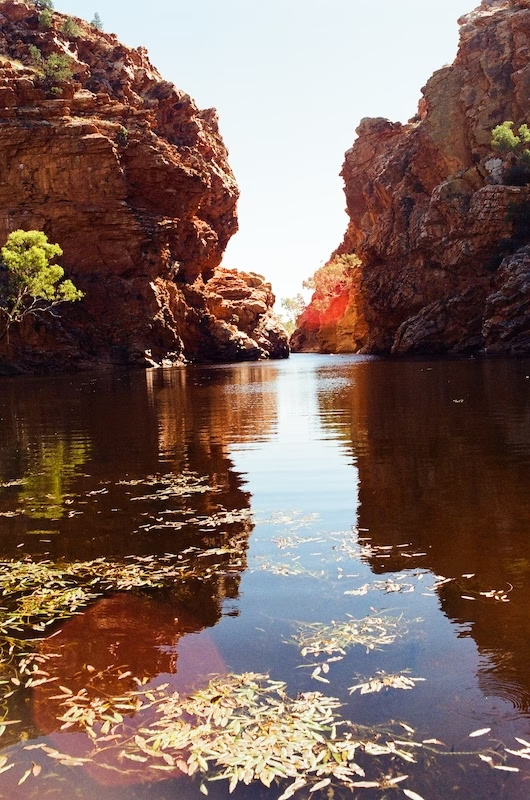
In real-time viewing, the desert colors of the Outback come together feeling like an unwilling compromise. The rusted crimson of the rock surfaces clamors for attention at the Outback. The savanna green of the desert’s vegetation is subsumed into the rugged heat of the rusted rocks. Even at the actually cold waterholes, the water surface reflects the different shades of red earth.
The Ghost Gum is prominently featured in Albert Namatjira’s paintings on the Macdonnell Range. By that I mean that, where the Ghost Gum Tree appears, it becomes the most eye-catching detail in the painting, although for most times the tree is not placed in the center.
The Ghost Gum Tree in Albert Namatjira’s painting is mind-bogglingly explicit in its presence, the snowiness of its bark seizing the viewer’s attention at first sight—even against the generally light colored themes of his painting. Then the leaves appear to ruffle even within the paintings, their greenness being quite realistic, but the edges smudged, indicating motion. As to that clamoring rustiness that is ubiquitous in the Outback, Albert Namatjira represents so in a rustic brownness, in the typical hues of a common autumn anywhere.
Like in real life, the Ghost Gum Tree is spirited in Albert Namatjira’s work, but the watercolor renders it somewhat more subdued than what I felt at the sight of the real tree. Perhaps it does take an Aboriginal painter to be able to recreate images of their homes in such a transformative manner. He had grown up within this nature distilling the essence of its beings. I came here for a two-day love affair, carrying with me all the fascination and romanticization that typify a common tourist’s perspectives.
The Old Man Salt Bush
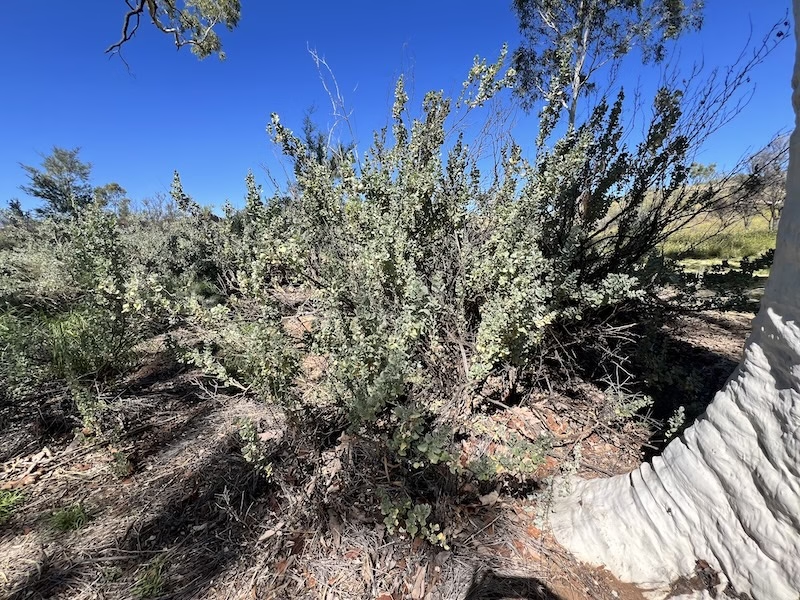
Kirsty took me around to the small bushes and showed me some tiny, colorful seeds. She told me to taste them. “They are called the salt bush,” and true to her word, the fruits were salty.
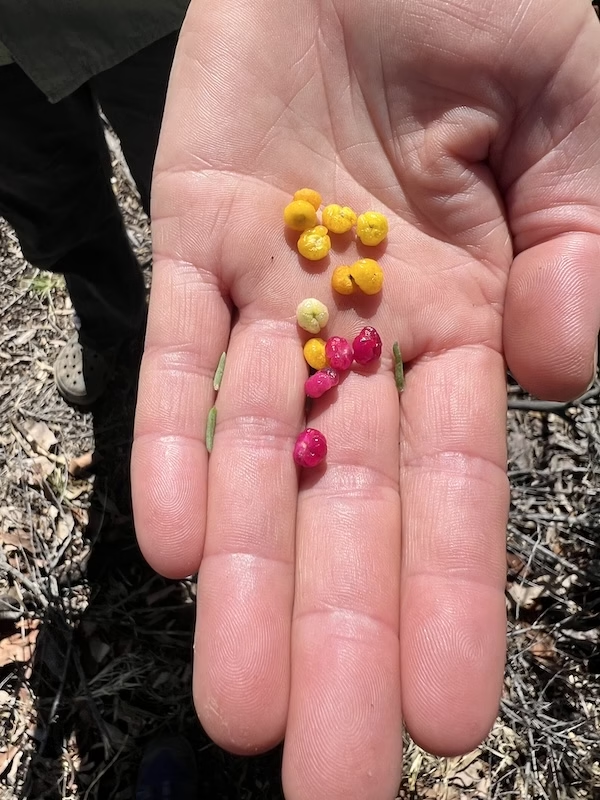
At this moment, I realized that all of my senses had been engaged at East Mac. I even tasted its nature — but thank God the live bush coconut was not on the menu.
Sources
The Wikipedia on Corymbia aparrerinja at https://en.wikipedia.org/wiki/Corymbia_aparrerinja
Nature Bound Australia, The Ghost Gum — Symbol of the Australian Bush and Spirit.
Vatu Sanctuary, The Twin Ghost Gums.
Botanical Realm, Ghost Gum (Corymbia Aparrerinja).
Pastures Australia, Old man saltbush.