
The Fabulous Philippines – First Impressions of Manila
In my first evening in the Peninsula, I learned that my phone was not equipped to install an eSIM, so I ran to the mall nearby to get a physical SIM set up. I had to catch an early bus to Bataan Province next morning and the phone had to be ready.
The Glorietta Mall was bling all around. Its vibes certainly rival any major American mall. In the early evening on a Sunday, crowds of people gathered at the mall, wiggling their way between the competitive aromas of food and the half-filled walkways amongst the well-lit storefronts.
When I was done getting my phone set up, I walked into what would be the most severe thunderstorm I experienced in this trip. I was amazed. Within less than half hour, the rain flooded the streets. Despite having an umbrella, I was soaked to the skin by simply walking on the well-paved streets of Makati District. This was the Philippines’ weather in its true colors.
A Realistic Look at Manila as a City
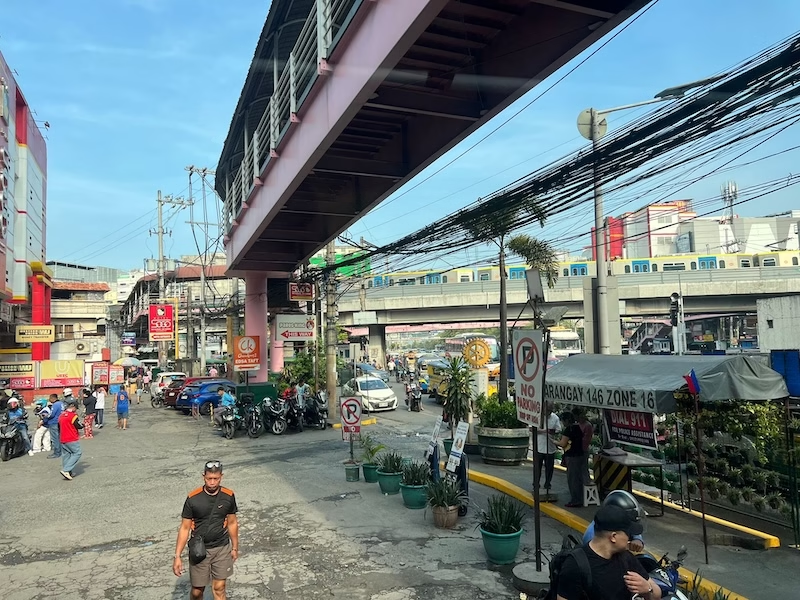
I headed to the Pasay district for the bus terminus in the next morning, my first full day in the Philippines. The bus terminus in Pasay is the transportation hub where locals take intra-provincial buses. The City of Pasay lies south of Manila, and it is now mostly known for the Ninoy International Airport of Manila.
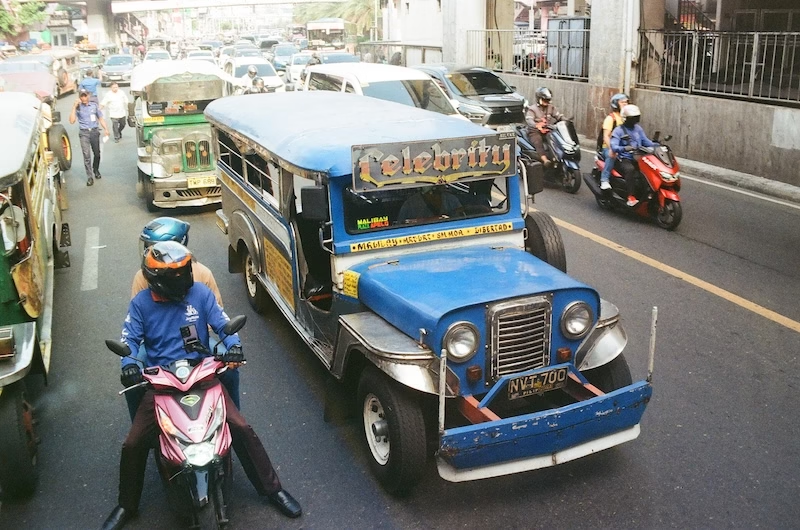
Perhaps it is no surprise that Pasay, which is nearby Makati, would be worlds apart from Makati in every perceivable way. A casual passerby would notice the working-class character of the city. In Pasay I saw the first jeepney in my life.
The Jeepney Story
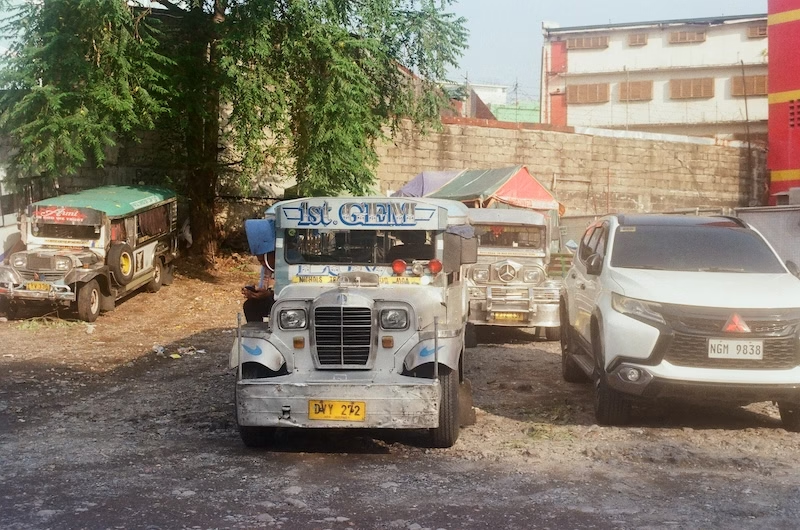
There is something strangely heartwarming and comical about the jeepney. It is no exaggeration to call it a “community rider” in the streets of Manila, where traffic jams are the fact of daily life. The jeepneys are built to just about the height of an adult sitting down. People are packed like sardines into the car to take up two full rows of cheap plastic-covered cushioned seats. When the passengers are all squished, one jeepney can easily take up 20-25 commuters at full capacity.
There is typically no closing door at the back, people hop on and hop off as the jeepneys make their rounds amidst the chaos of Manila life. The common jeepney now is two unlikely features in one. Its structure is like a long and hard steel box. It roars on the streets of Manila in a masculine fashion. But most jeepneys also come with bright colors — some have graffiti-like decorations. When you see them on the streets, they do not necessarily strike you as a “cheap” mode of transportation, but rather a hip mode of transportation, bold in character.
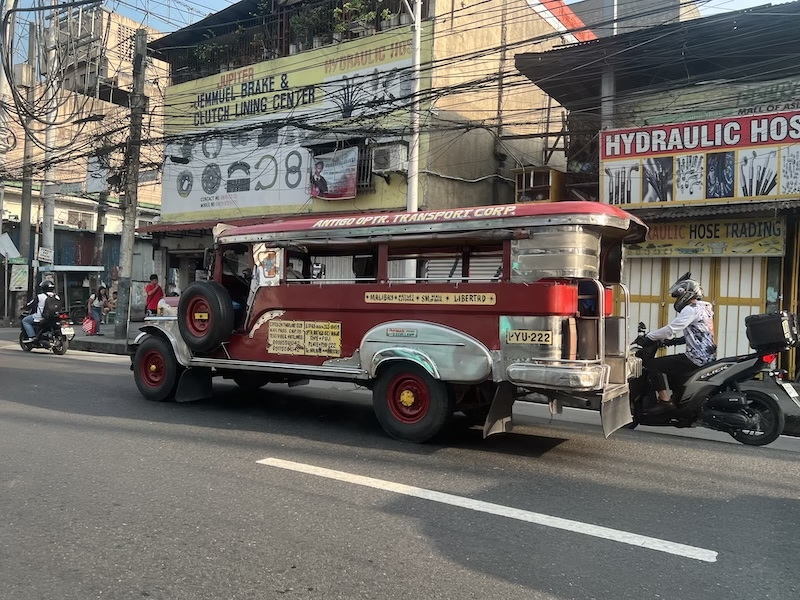
The jeepney is the national cultural and urban icon of the Philippines for a good reason. They used to be American-made military vehicles called the “Willy Jeep.” In the Philippines, nothing goes to waste. After the Second World War, the Filipino company Sarao Motors took over the maintenance and repair of the jeeps. They fulfilled the urgent needs of public transportation in the Philippines in the post war years.
As the jeepney became a popular mode of transportation, the same company lengthened the original Willy Jeep to become the jeepney that we see now. This modification sealed the jeepney’s place as a more agile mode of transport than the regular bus. Sarao Motors remains the key company that produces the jeepneys today.
As it turned out, I never had a chance to get on the jeepney in this trip, due to safety concern as one reason, but more so because it would have taken too much time and effort to learn how to do it (the fares, the schedules, the uncertainty of my routes, everything).
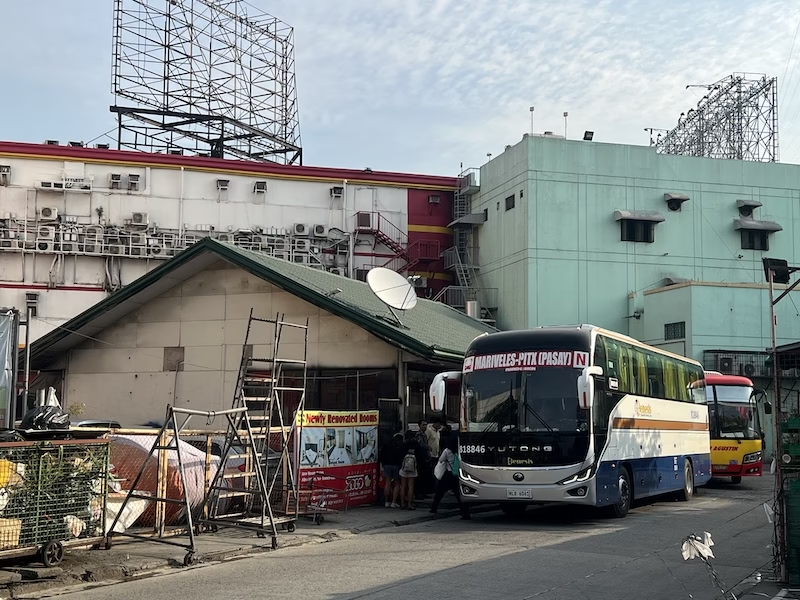
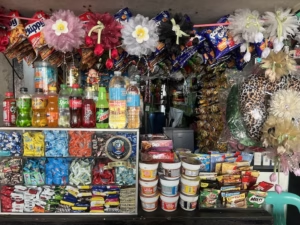
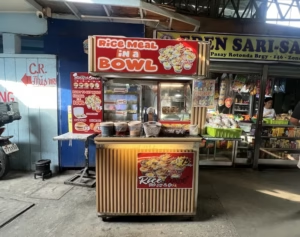
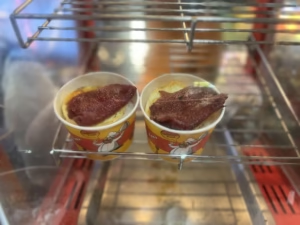
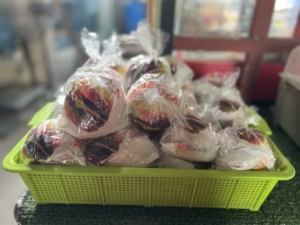
At the bus terminus I learned that the next bus to Mariveles would depart in an hour. I took a look around. A few humble establishments offered snacks and bottled drinks. Then there are some vendors selling some commoners’ food that I couldn’t name. Some looked like burgers with patties of unknown meat. Others were so novel to me that I could not tell if it was sweet or savory. Funny enough, it was the food hawkers there that told me the time of departure of the next bus. I was told that I would pay on the bus.
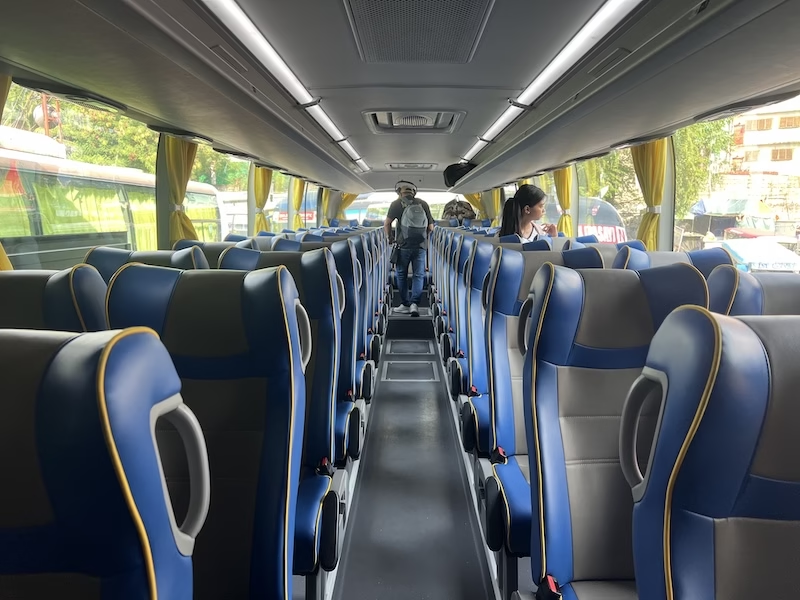
When I got on the bus, I was pleasantly surprised. It was a spacious coach that meets any proper tourist coach standard. It was clean, air conditioned, and the windows were lined with curtains.
A Bus Conductor Punching Holes
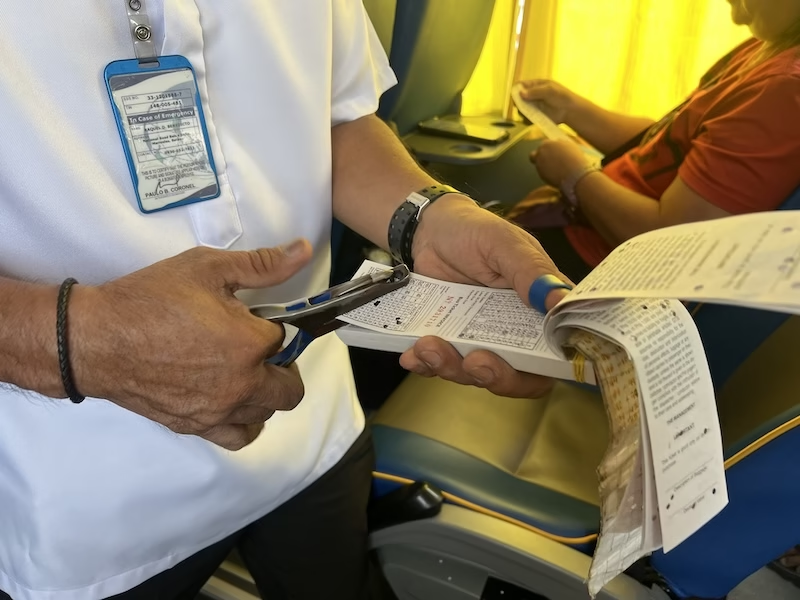
The bus ride from Pasay to Mariveles turned out to take more than four hours because there were many stops on the way. On the bus I came across a phenomenon so long-lost in the memory lane that it was a familiar novelty — a bus conductor. He did his work the 20th century way as well, by punching holes and giving away paper bus ticket stubs.
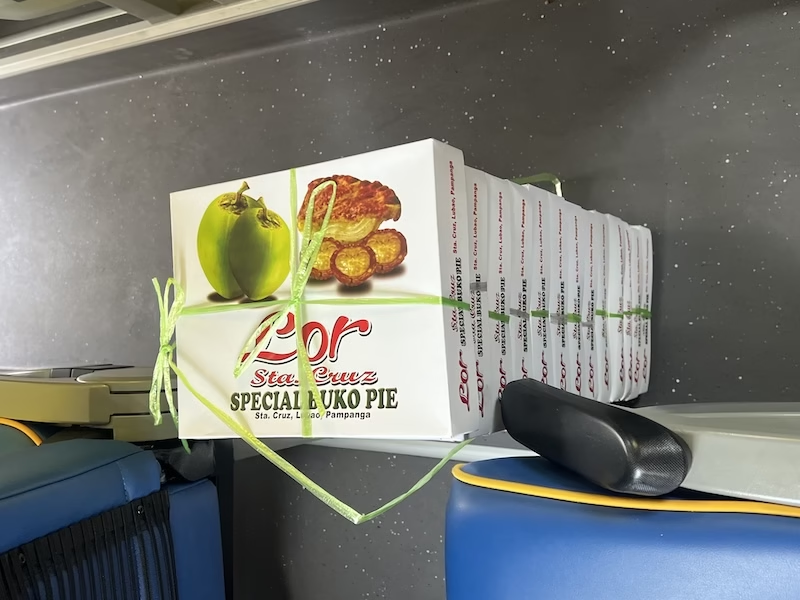
In so many stops along the way, food vendors made their rounds on the coach to sell their food. They hopped on and off every so often. I was curious about these Filipino delicacies, but I dared not try.
Within half an hour I started seeing countryside scenery. I had left the urban reality of Manila. The countryside views were pleasant, and no different from the countryside views that I have seen in other Southeast Asian countries. I did not know what Mariveles would be like. I had some loose plans, but a lot had to be played by the ear because provincial Philippines was completely new to me, and information was not so readily available. “What an adventure,” I thought, and it turned out to be so as well.