To the Outback and Back — the Macdonnell Range as One and the Bush Coconut
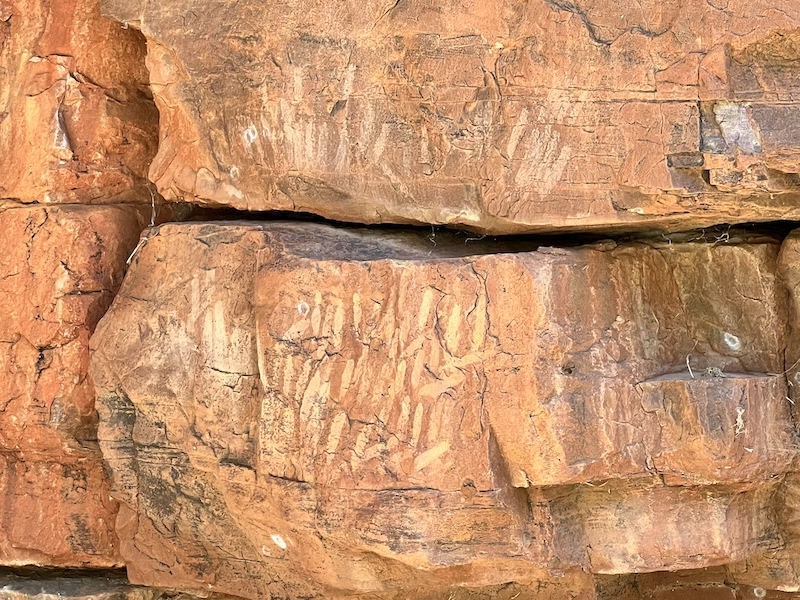
At this point of the tour in the East Mac, I could not miss the obvious – that the East Mac is significantly less preferred as a tourist attraction than the West Mac. When we did meet a few souls there, they were local tourists (as in, Australians).
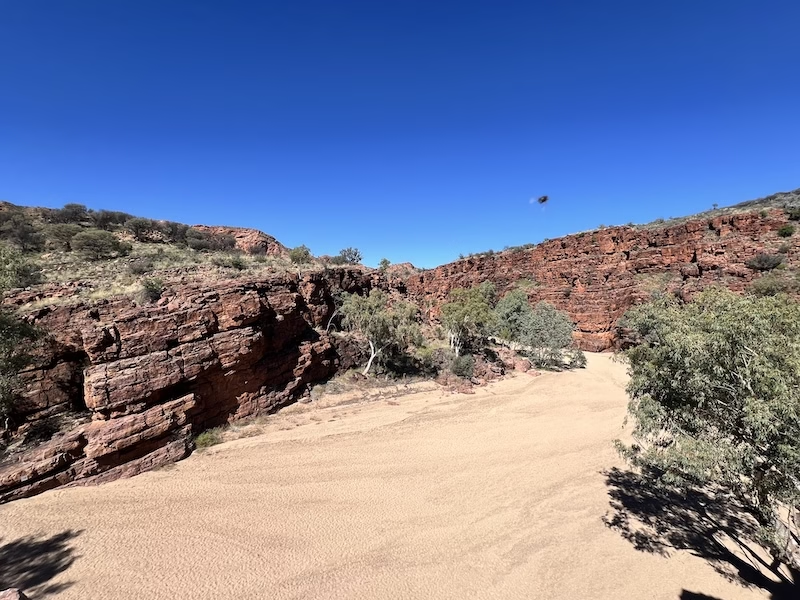
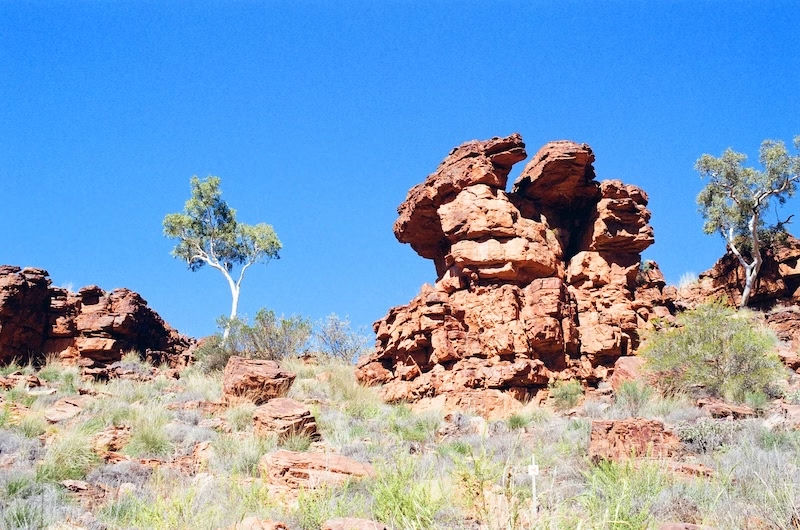
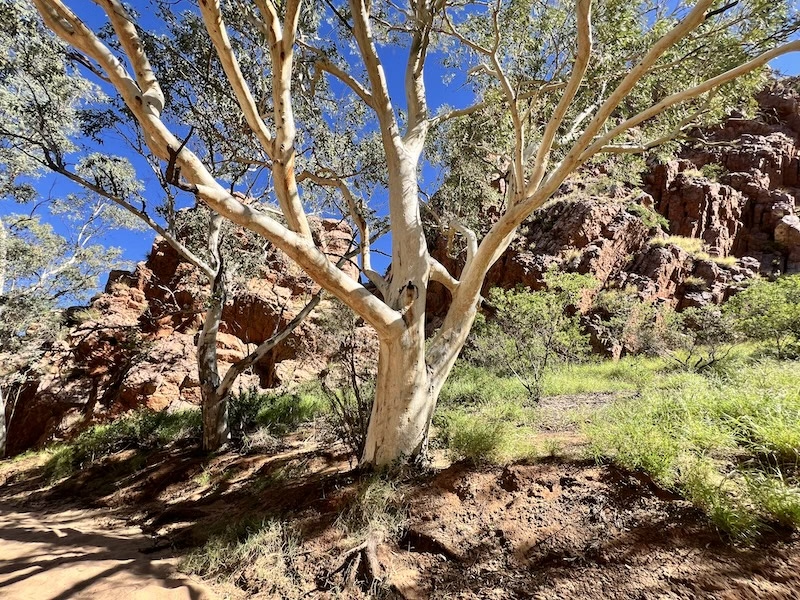
There are ways with which I agree the perceived preference for West Mac. The East Mac has fewer sites of interests. The area is a bit smaller, and the terrains appeared more “rugged,” “less refined,” and with less facilities for tourists (there were not even trash cans). It feels like a difference between a refined woman of the cities and a rustic, wholesome country girl.
One obvious reason to explain this disparity is the fact that West Macdonnell is a designated national park that is given specific state protection. East Maconnell has not been petitioned for the same status.
At East Mac, the learning goes back to the fundamentals. How the rocks are formed beneath their rusted crimson surface; how the birds woo their mates; what the Aboriginals ate. If I say there is that veil of mysticism to the West Mac narrative, then the learning at East Mac serves to undo some of the mystery by filling in the necessary details to understand the nitty-gritty of human existence.
There was a certain “rawness” in the narratives I heard in East Mac, like the bush coconut (insect eating) and the kangaroo tail eating by the Aboriginals, and the culling of camels and the exploitative logging by the Europeans. These stories were shocking to me, certainly in different ways, but they were presented as they were, no dressing up, or dressing down, was necessary.
Yet there is a way that the two sides of the Macdonnell ranges are united, and that is in its very geological origination.
The Macdonnell Range’s Beginning
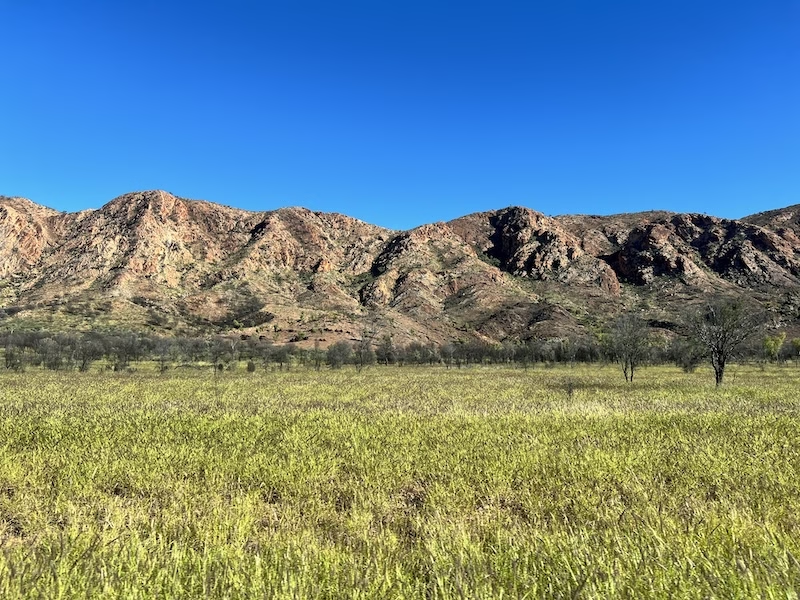
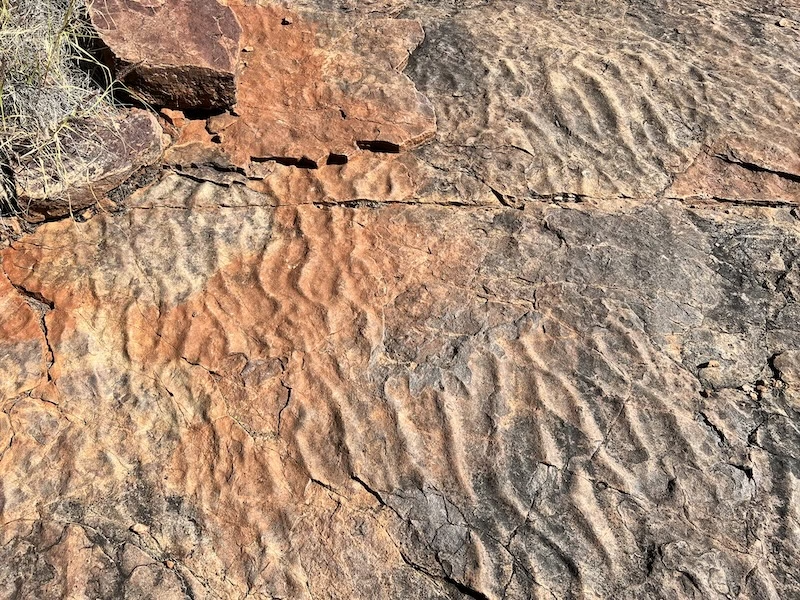
The Outback sits on a tectonic plate. There is no actual fault line, and things are always shifting around. In around 350 million years ago, there was a pressure against the sedimentary rocks. They were pushed together in an orogeny. Right across the centre of Australia, the horizontal layers pushed up through the Alice Springs Orogeny, resulting in the formation of the mountain ranges in the former ocean seabed. That explains the abundance of sand in the East Mac sandy creek beds.
This was a major geological episode in the continent’s history. Across central Australia, a mountain range was formed, 10 km high. And then it kept breaking down due to erosion. All the lines on the rocks, as sedimentary layers pushed up in the air, used to be horizontal. They were then pushed up in diagonals.
The Aboriginal Way of Life
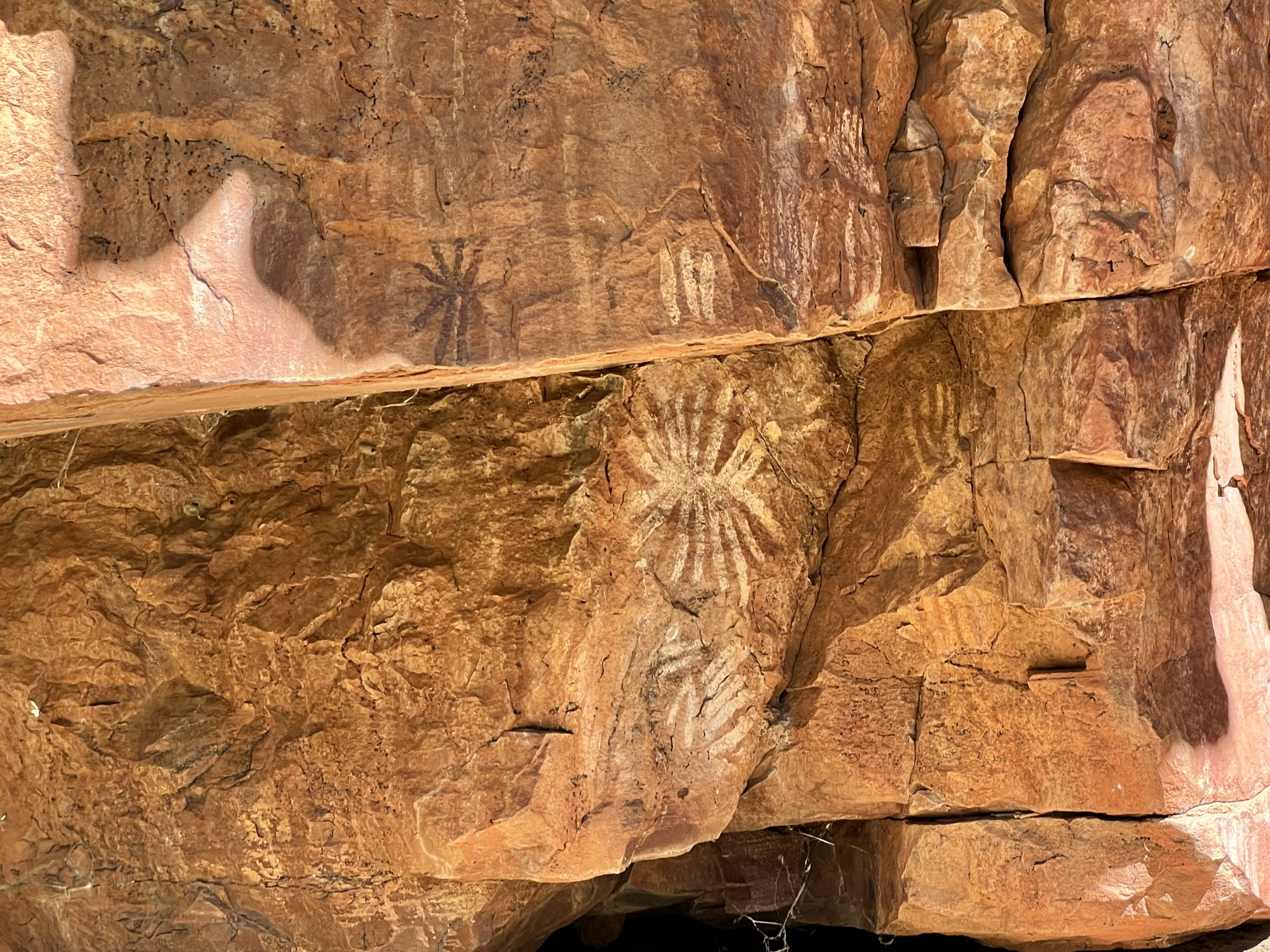
At West Mac I learned about the idea of the Dreaming, as a glimpse into the Aboriginals’ ancient worldviews. By storytelling, the Aboriginals impart knowledge in survival, life skills and laws upon their children. Not very much was explained as to how they lived their lives as nomadic peoples in the wild. I got my lesson in East Mac.
Bush Tucker
Kirsty picked up a seemingly random something from the ground and said, “this is a bush coconut.” “A bush coconut?” I stared at this dried “fruit” and wondered how the palm-sized glob of a thing could be food. Being peoples of the wild, the Aboriginals rely on bush foods as the staples of their diet, and the word for it is “bush tucker.”
I was simply unprepared for what I was about to hear as Kirsty explained the eating of bush coconut to me.
Bush coconuts are bush food. It begins when a little insect stings the bark blob, and inject chemicals. The tree grows a bowl around it and she lives within it. Because the trees are called Bloodwood tree, they are also called bloodwood apples.
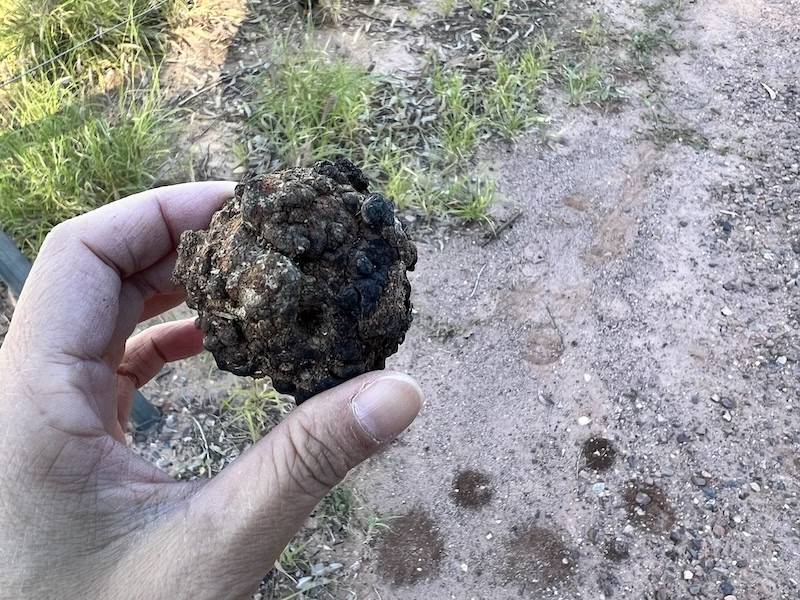
A male insect flies into the air hole to mate with her, she then has larvae. The population inside the bush coconut is equal in the number of male and female larvae. When the larvae grew, the male brother takes a sister with him to fly out. She then lands on another bloodwood apple tree. Only the gray tree coconuts are alive (the one she picked up from the ground was black, hard and dried). The Aboriginals open up the bush coconuts to eat the female, the larvae and the white sap, which has water content. It can last as a food in a desert.
Now, insect eating is not new, as the Chinese people eat insects too. I do not get appalled out of a disparaging attitude against the Aboriginals. It simply sounded gross to me, in whatever culture that does so.
But it does make sense for the Aboriginals because the female insect and the larvae are great sources of protein. The water content inside the bush coconut would have been critical for survival as well. I looked online and a non Aboriginal person said that the witchetty grub, which is a similar idea, tastes like the fats of a chicken. When roasted, the skin of the female is crispy.
“Oh dear, no more,” I must have looked so appalled that Kirsty laughed. I thought to myself, “the Dreaming was all dreamy and romantic and mystical, but the actual survival of this environment will call upon human beings to try all things.” These manners of survival maybe “gross” in our terms, but like the Dreaming, they are time-tested cultural practice for the Aboriginals. I can’t take the Dreaming as a fascinating other-worldly culture and then deny the validity of what the Aboriginals eat.
The Kangaroo Tail as a Delicacy
The ways that human beings develop their diet throughout times are instinctive and cultural at the same time. Without naming the modern buzz words of protein, fats or fiber, every civilization understands what are essential to them in terms of sustenance. Now, the kangaroo tail is yet another marvel that I learned in the Outback.
It might still be true that there are more kangaroos in Australia than its human population, and the Australians eat them. I have no problem eating kangaroo meat, and I have. For the lack of a better word, it is a tougher version of beef. But the kangaroo tails are a thing that non-Aboriginal Australians do not necessarily entertain. They are a BBQ delicacy for the Aboriginals.
Well, we met a gentleman from Coober Pedy, which itself is a wonder to behold as the traditional opal mining town in South Australia. People live underground in caves there. He told us about the dense, sickening fattiness of the kangaroo tail, roasted on open fire as a feast for the Aboriginals. “Oh, how it smells!” But in a desert climate, that is what keeps the Aboriginals fed, satisfied and warm.
At that point of the tour, I started developing realistic views about the Aboriginal ways of life, beyond their beautiful storytelling art and the learned use of herbs and natural elements. All of their ways of life must be appreciated in the context of desert survival. The foods that they eat and don’t eat are equally valid expressions of ageless wisdom.
As to the culling of one million camels by the European-descent Australians, that’s the story for the Ross River Resort.
It is my view that a realistic understanding of the Outback, especially in its cultural and historical significance, must consist of both trips to the West Mac and the East Mac.
Sources
Tour with Red Earth Roaming.