
The Din of To Kwa Wan — The Sacred Hill and Sung Wong Toi
The tour of the day is the very old district of To Kwa Wan in eastern Kowloon. In a previous entry, I have introduced the Cattle Depot Artist Village, the predecessor of which is the century-old Cattle Depot.
To Kwa Wan intrigues me in the most personal way because this was where I spent the earliest of my childhood. My family lived just across from the then-functioning Gas Drums when I was young.
The Din of To Kwa Wan
A walk in this area evokes a nostalgia that stirs my soul. To Kwa Wan doesn’t feel like what it felt like anymore (indeed, it has been more than 40 years since I last lived here). I remember vividly the blue-collar crowds rushing about in their usual business in the rumbustious streets. My mother warned me to watch my steps because the kids’ sandals I was wearing were not made for the rough character of the neighborhood — an occasional metal swarf or debris from the industries could injure my feet.
But what worried me the most then were the puddles of water that I felt the urge to dodge constantly while holding tightly onto my mother. They could be the natural extension of the fresh seafood stalls by the streets, or they could be the occasional spill from the blacksmiths, whose hammering and wheel-cutting stayed in my mind as the din that looped in the background of my school day memories. I was always drawn to the sights of wheeling metal cutters spewing sparkles, which were the only moments that I caught the sight of the blacksmith’s silhouette in a dim workspace. We would soon pass by rows of street vendors, who haggled over quality, quantity and the prices of produce endlessly.
In so many respects, To Kwa Wan was representative of the happy struggles of Hong Kong during the 1970s and 1980s, when most had to make ends meet — a lot of people found home in Hong Kong after fleeing from the historical events that were bleeding in China during the earlier turbulent decades. They did, eventually, land their livelihoods in Hong Kong.
To Kwa Wan is my soft spot, where I grew up in an early life that was simple, humble but also hopeful. It is by looking back now that I realized the “din of To Kwa Wan” was the ordinary embodiment and expression of the Hong Kong spirit then, that hard work will bring its rewards.
For this two-hour tour, I began at Sung Wong Toi MTR station.
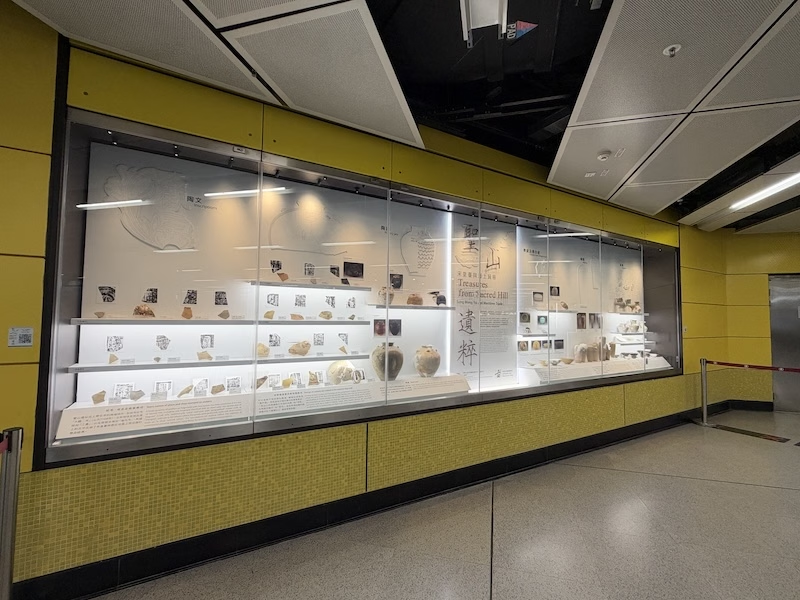
Treasures of Sacred Hill — An Exhibition Inside the Sung Wong Toi MTR Station
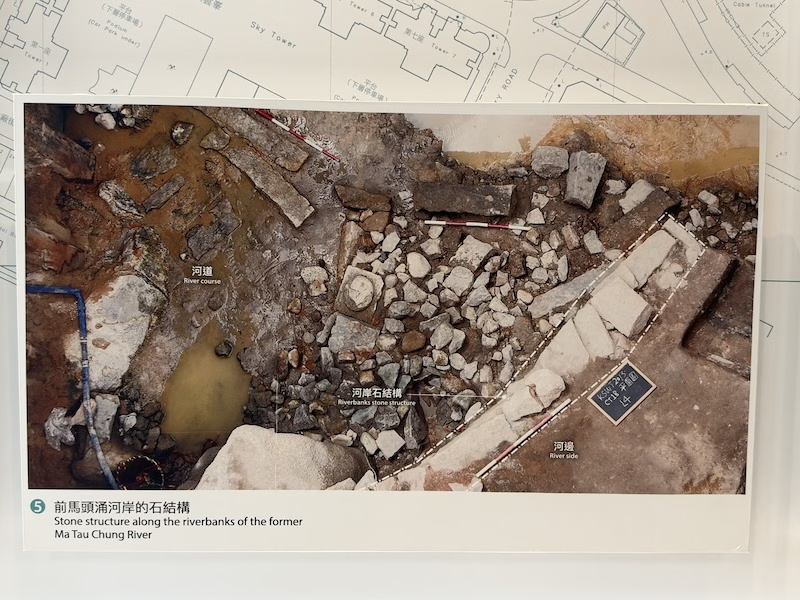
During the construction of the To Kwa Wan Station on the Tuen Ma Line, workmen discovered a large trove of artifacts. The MTR Corporation commissioned archaeologists to do a proper excavation on the site.
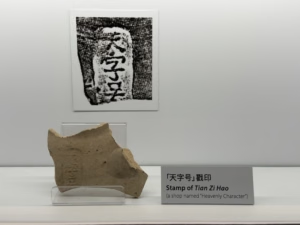
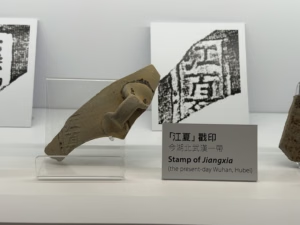
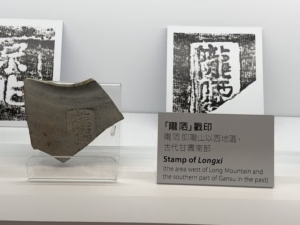
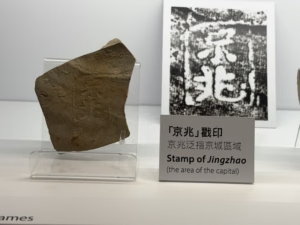
The artifacts that were excavated in To Kwa Wan came from the Song and the Yuan dynasties. Perhaps a brief introduction will suffice for the purpose of this entry.
The artifacts were the very window into the material lives of the villagers in To Kwa Wan. Most pieces were of a pragmatic nature: tea ware, copper coins, porcelain containers and pottery. The abundance of marked pottery indicating place of production, the producing merchant and the year of production suggested a vibrant trade route, of which this part of Hong Kong must have been a point of transit.
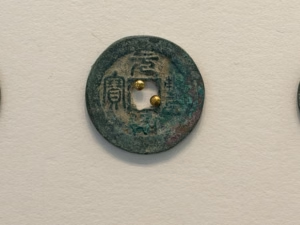
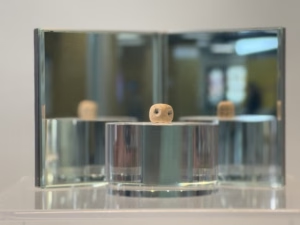
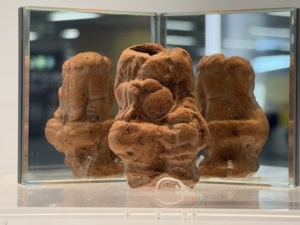
Sung Wong Toi Garden
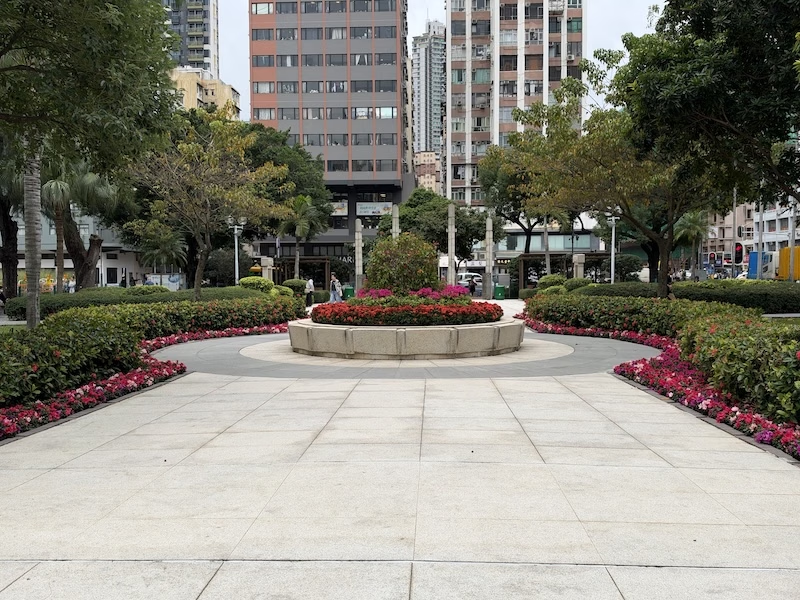
From Exit D of Sung Wong Toi Station, I headed over to the Sung Wong Toi Park just across the street.
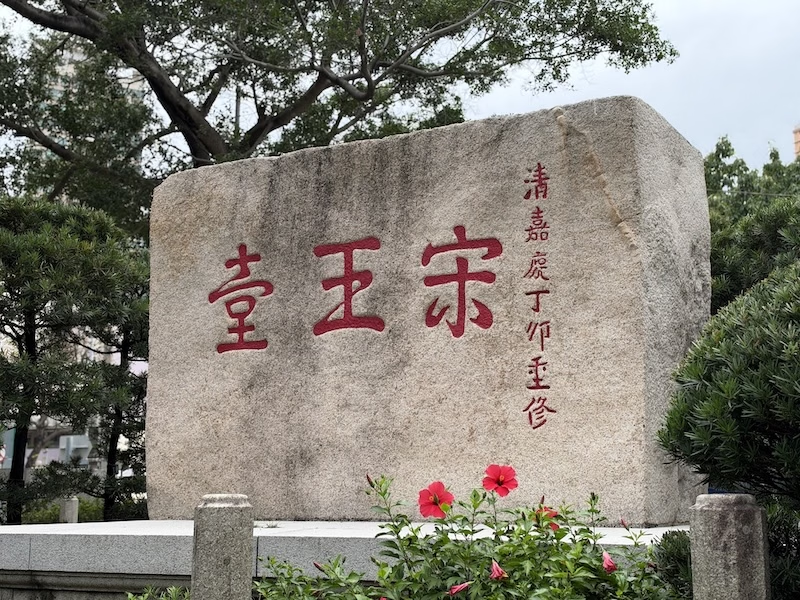
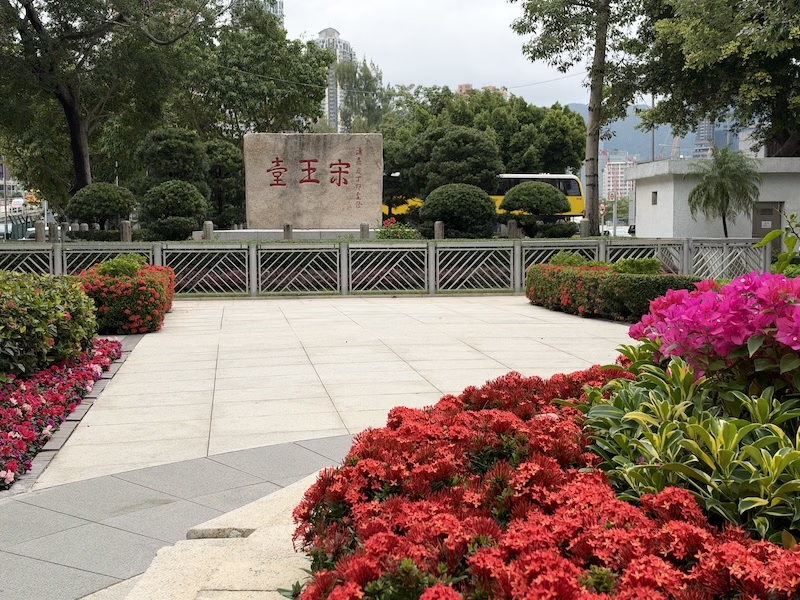
Meaning the “Terrace of the Song Emperor,” Sung Wong Toi was where the last Emperors of the Southern Song dynasty had set up an “interim palace.” It was located at the now-demolished Sacred Hill in To Kwa Wan. Emperor Duan Zong (the second last Song dynasty emperor) sat beneath a boulder as his throne in Sacred Hill. In the time after, the people of Kowloon City memorialized the Southern Song dynasty history in Hong Kong with the wording “Sung Wong Toi” engraved in the said big boulder.
The story of the last emperors of the Southern Song dynasty in Hong Kong is tragic. The last two emperors of the Southern Song dynasty, Emperor Duan Zong and Zhao Bing, had to retreat south as the Yuan forces closed in on them. They lost their territory all the way to Guangdong Province.
In their last act of survival, the Southern Song imperial advisors to the king decided to maintain the authority of the throne at sea. They managed to find temporary landing points for their fleets and Hong Kong was one, where Emperor Duan Zong had stopped over back and forth. Emperor Duan Zong did not live very long. After surviving a drowning incident in Guangdong, Duan Zong never recovered and he died of illness in Lantau Island at the age of 7.
Then Zhao Bing, the last emperor of the Southern Song dynasty, acceded the throne. After the Song forces’ crushing defeat at the Battle of Yamen, Guangdong, the Song dynasty lost all chances for revival. Eventually, the chief imperial advisor held Zhao Bing, then 7 years old and only three hundred days as the emperor, and drowned together as an act of martyrdom in the waters of Hong Kong, officially ending the Song dynasty.
The Story of the Sung Wong Toi Memorial Slab
Gwun Fu Cheong was the name for this part of Kowloon during the Song Dynasty, and the area spanned what is now Kowloon City and To Kwa Wan. It was a salt mining field set up by the Northern Song government in Hong Kong.
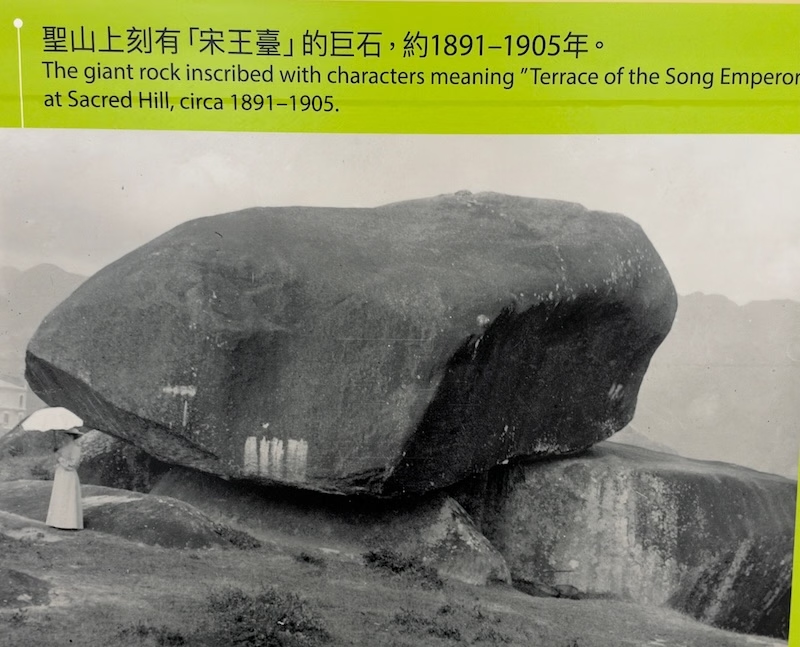
The original Sung Wong Toi inscribed boulder sat on the Sacred Hill. During WWII, the Japanese were mining stones in Sacred Hill. It was with quite a bit of luck that the part of the boulder that contained the inscription was preserved through the Japanese occupation, and that it also survived the levelling of the Sacred Hill for the sake of expanding the Kai Tak Airport in 1955. In 1956, the part of the rock with the inscription was cut into a stone slab and preserved officially. Since then, this memorial stone slab has been on display in the Sung Wong Toi Garden.
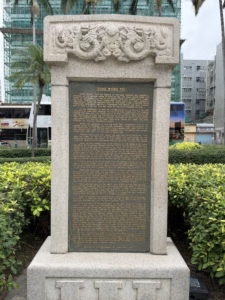
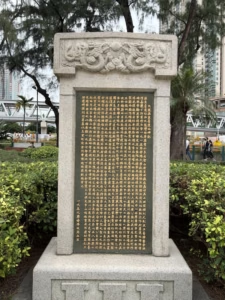
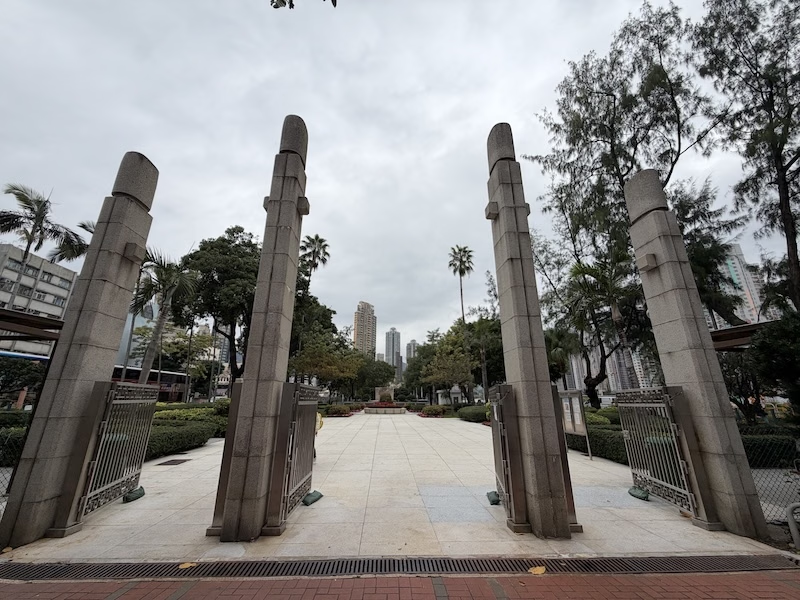
Photos above: stone pillars at the Sung Wong Toi Garden introduce the history of the Sung Wong Toi boulder.
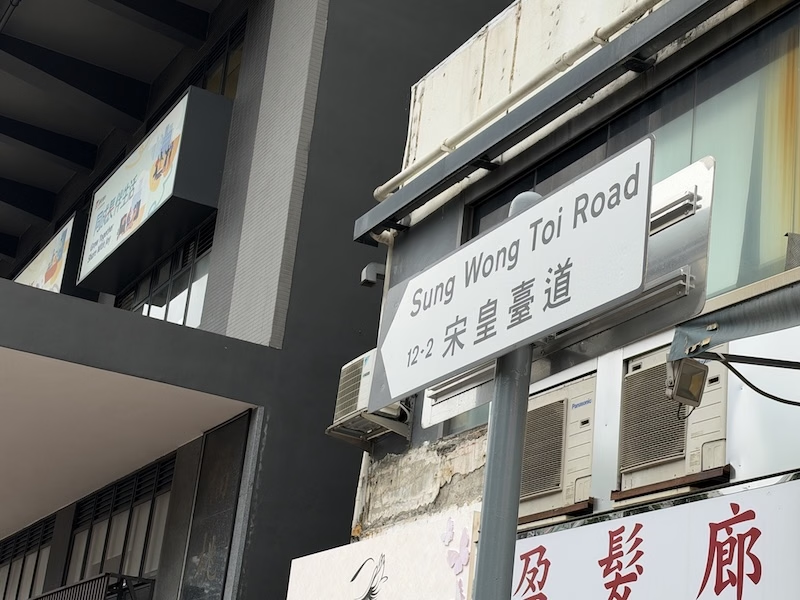
Having grown up on Sung Wong Toi Road, I have fond memories of the Sung Wong Toi Garden. It was the garden space closest to my home, and my brother used to do laps and laps there as our weekend “outing.” Sung Wong Toi Garden is the only place in To Kwa Wan that has not changed in the 40 years that I have grown out of my childhood.
Sources
Captions of the Treasures of Sacred Hill Exhibition.
Descriptions on site at the Sung Wong Toi Garden.
The Wikipedia on Sung Wong Toi.