
The Cattle Depot Artist Village of To Kwa Wan
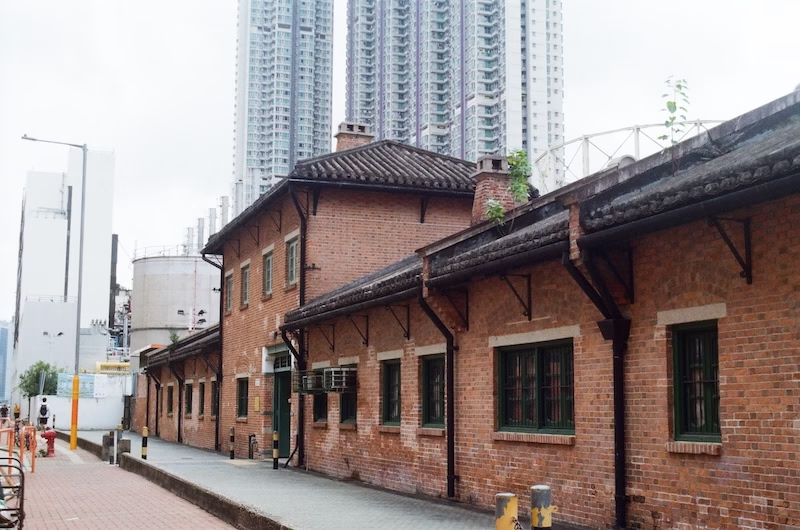
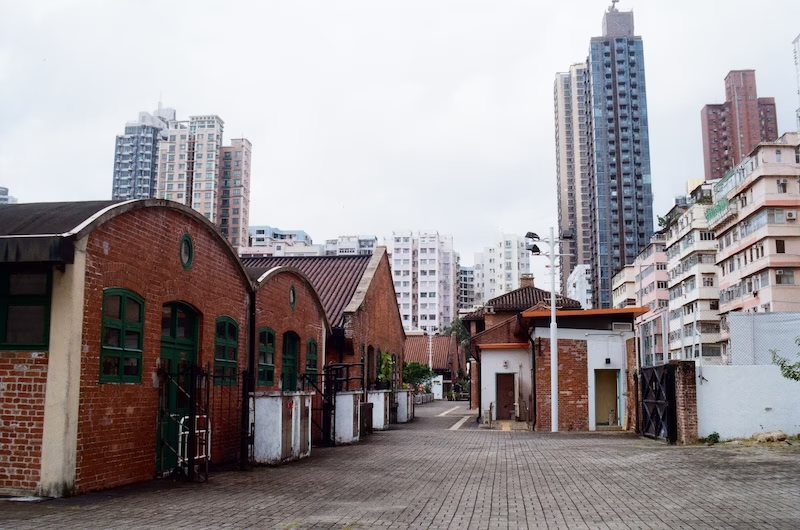
At the fringe of the old district of To Kwa Wan, there is an ensemble of red brick buildings, exuding and atypical colonial nostalgia in this part of eastern Kowloon. Known as the Cattle Depot of To Kwa Wan, this site was, for as long as a century, the place of slaughter and quarantine for cattle and other livestock. It has now been revived as a heritage site, giving home to independent artists in Hong Kong with respectable studio spaces for artistic creation.
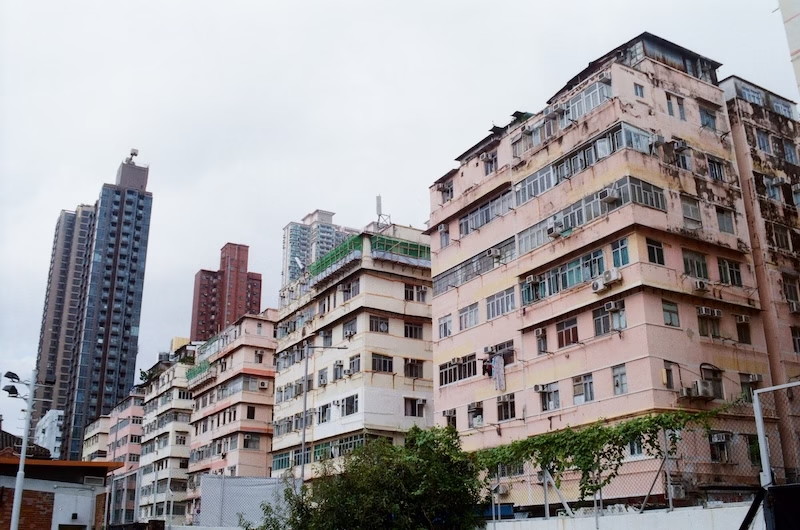
To Kwa Wan was where I grew up decades ago. My family lived in a small flat across from the “gas drums” of the Hong Kong and China Gas Company (the gas drums are energy reservation plants). The gas drums were but one of the indicators of To Kwa Wan’s industrial and urban nature in this part of Kowloon during most of the 20th century.
To Kwa Wan’s Long History of Settlement and Song Dynasty Lineage
In Cantonese, “to kwa” is the name for yam. One potential explanation of the name To Kwa Wan is that the villagers used to plant a lot of yams.
To Kwa Wan is a very old district in Kowloon. When the Sung Wong Toi MTR station was being built, a large number of Song dynasty artifacts were found. They are on display at the station.
Another significance of To Kwa Wan is the large piece of rock with the carvings “Sung Wong Toi” in the Sung Wong Toi Park, not too far from the Cattle Depot. It was a piece of rock that commemorated the last emperors of the Southern Song dynasty that were on exile and took refuge in Hong Kong from the Yuan dynasty forces. Eventually, the Yuan forces did pursue them in Hong Kong and the last Emperor of Southern Song, Emperor Bing, drowned himself in the seas of Hong Kong, ending the Southern Song dynasty.
The district was also on the San On County Gazetteer of the Qing dynasty of 1819, showing that there were a few villages in this area during those times.
The Cattle Depot of To Kwa Wan
I was still in primary school when we lived in To Kwa Wan. After school, my mother would take me home. On our way, she often picked up beef from the shop, then she simply minced the beef and steamed it in the rice cooker with small pieces of ginger. The ground beef was so fresh that we would mix the juice with rice and it was a fantastic meal.
When I toured the Cattle Depot, I finally came to understand why that beef dish was so good, and that I never had such good ground beef after we moved. The beef at the shop were slaughtered right across the street at the Cattle Depot.
A Brief History
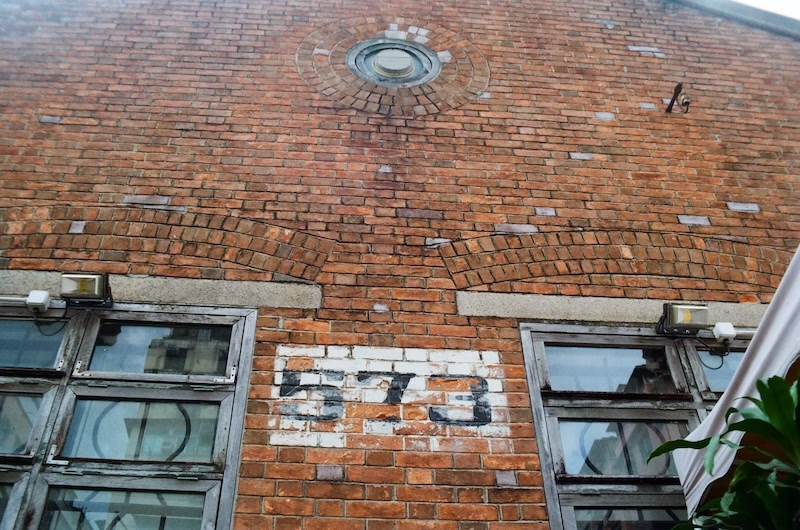
Imagine the year 1908. In this part of Kowloon, life moved along a slow process of modernization. The villages of To Kwa Wan were demolished during the 1920s.
Over much of the 20th century, industries flourished here to give To Kwa Wan a remake from its agrarian past. Being in existence since 1908, the Cattle Depot fit the character of such an urban setup perfectly, especially with the gas drums right behind it. The slaughterhouse was a place for livestock slaughter and quarantine until mid-1999, when a central slaughterhouse was set up in Sheung Shui.
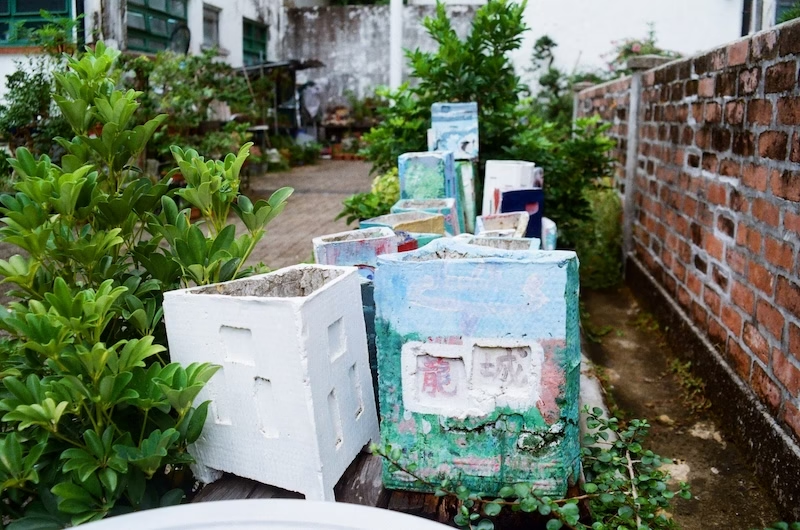
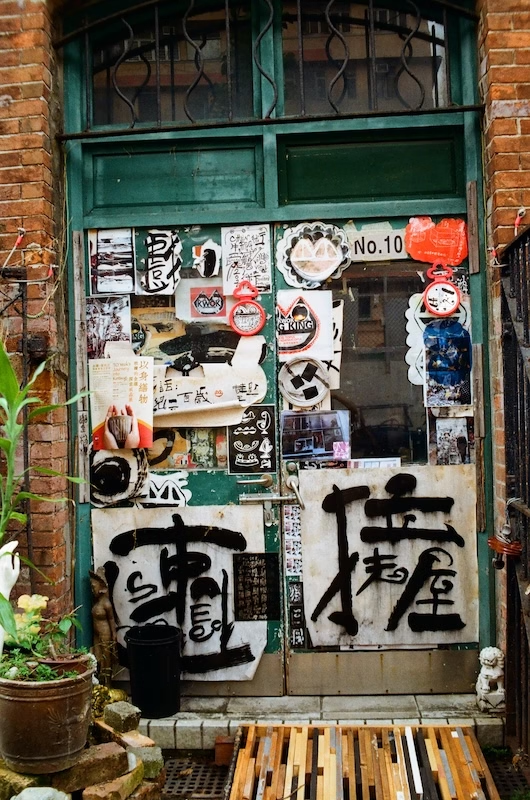
In 2001, the Cattle Depot of To Kwa Wan became a studio space for local artists. It stands as one of the earliest initiatives to repurpose heritage sites into artistic venues. It holds events occasionally, but during most days the venue (the actual art studios) is closed to the public. One is free to take a walk inside the area now, and that alone served my purpose for the day.
The Architecture of the Cattle Depot
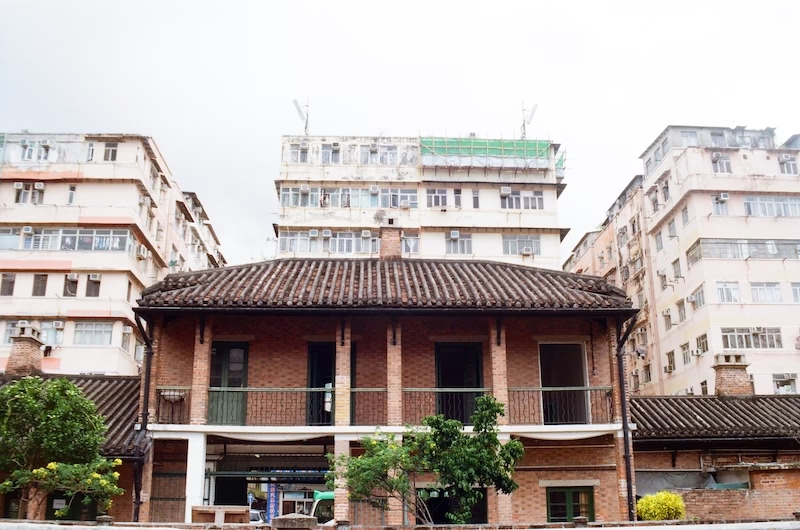
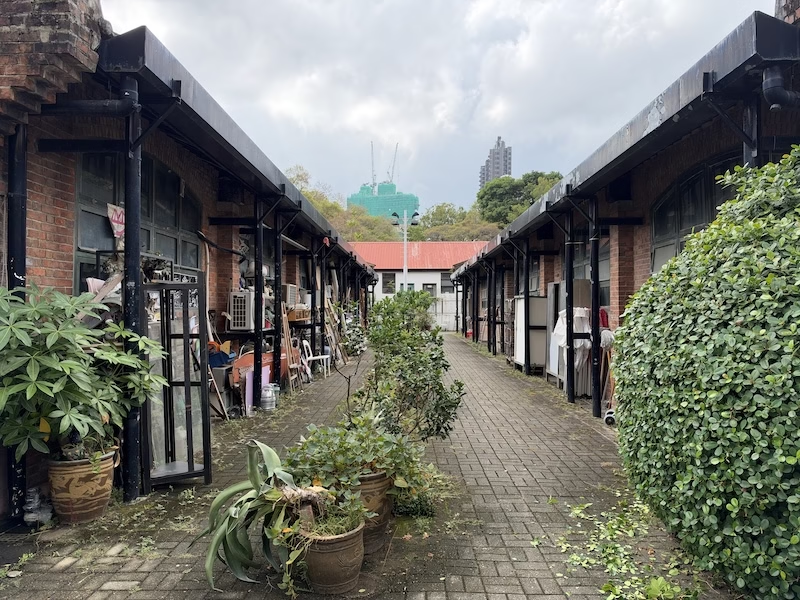
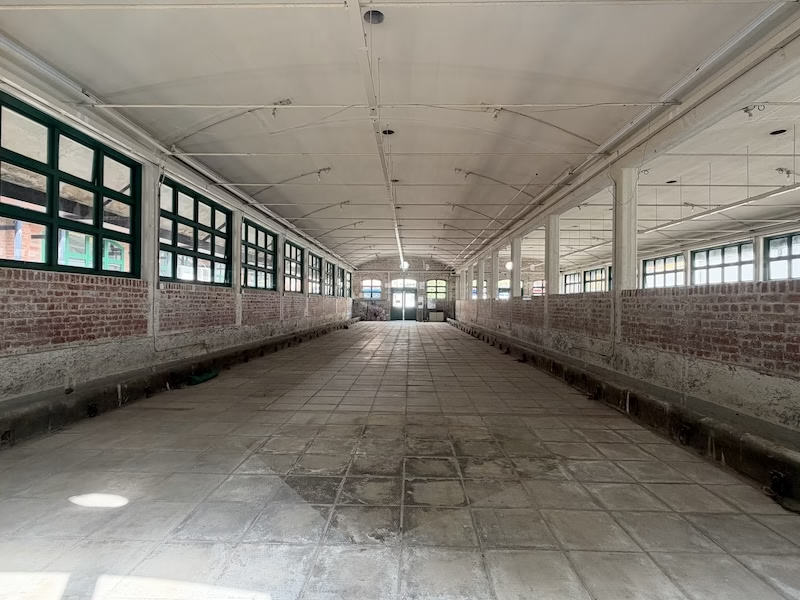
The ensemble of buildings consists of six individual structures in an original area spanning 17,000 square meters. There was a general slaughterhouse, a room for Indians, a fodder store, offices and quarters as well as three sheds with capacity of 120 cattle, 200 sheep and 400 pigs.
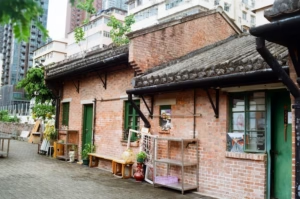
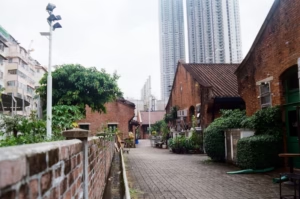
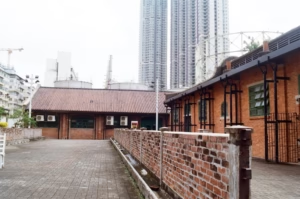
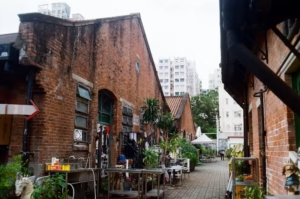
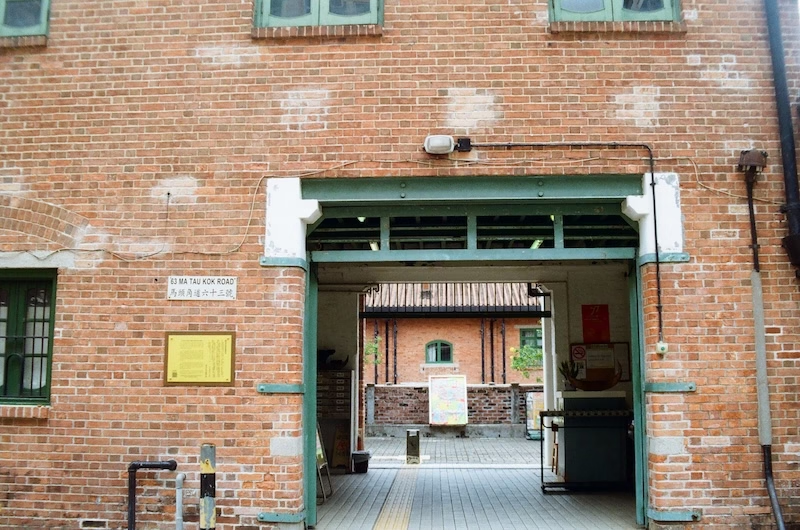
The overall style is that of the Victorian era farmhouse. There is a two-story portal entrance to the venue, with a long extended gabled roof and a colonnaded veranda in the back.
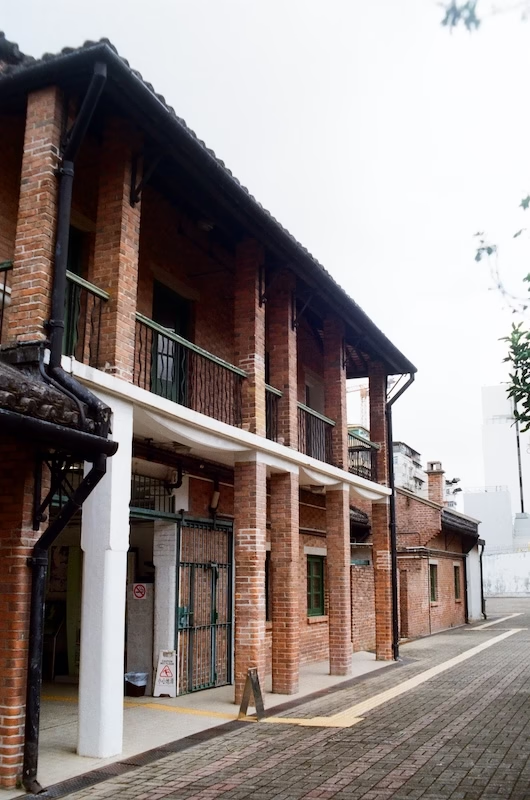
According to the Historic Appraisal of the Cattle Depot by the Antique Advisory Board, the red brick structures are built in the “vernacular Arts and Crafts architectural style featuring red-brick walls, Chinese tiled roofs, corbelled gables, Dutch gables and three-ring rough brick segmental arches over window openings.”
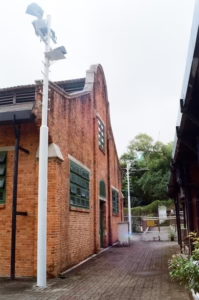
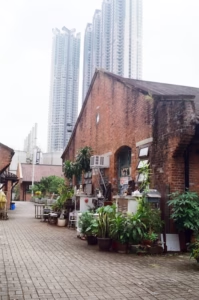
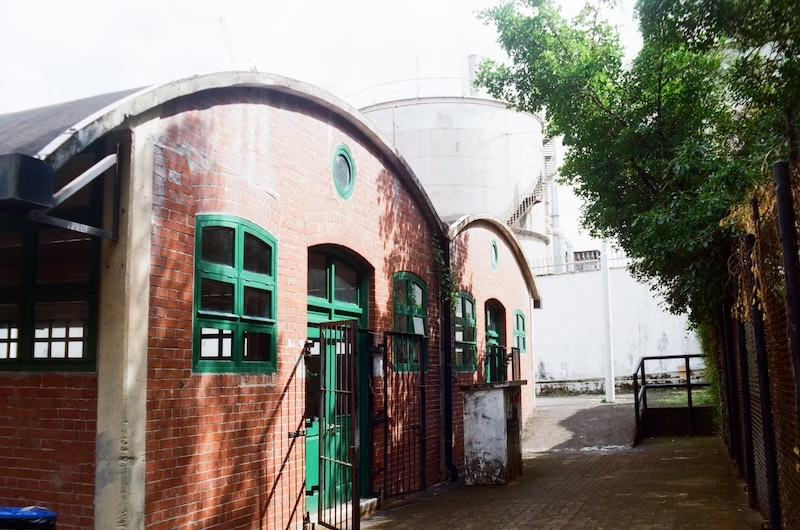
Photo above: The brick-and-concrete sheds have barrel vaulted roofs.
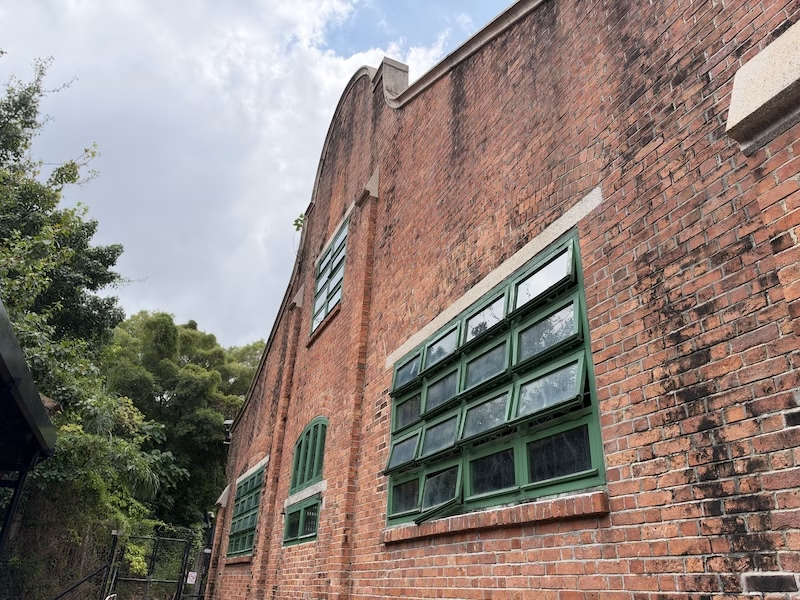
Photo above: The “wok-handled top” gabled roof is a common feature in Chinese vernacular architecture.
The Cattle Depot of To Kwa Wan is the only surviving slaughterhouse from the pre-war era in Hong Kong and it is a Grade 2 Historic Building.
A Brief Word on the Gas Drums
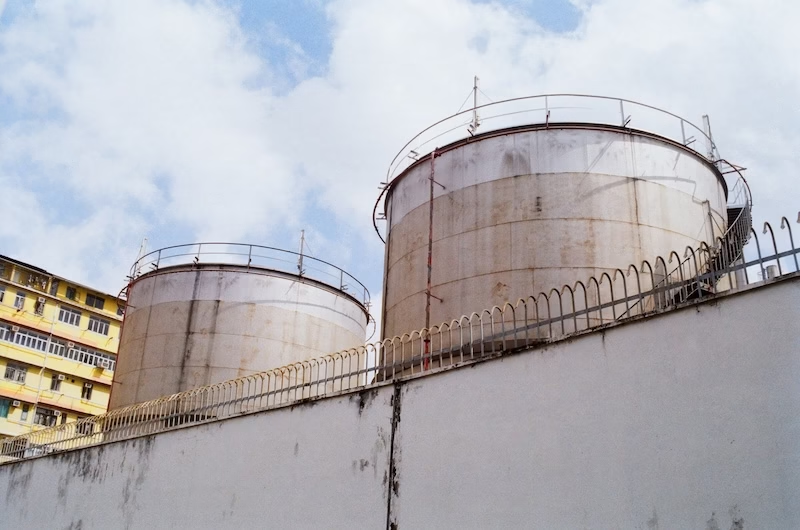
The To Kwa Wan gas drums of the Hong Kong and China Gas Company supplied gas to Kowloon since 1956. By 1986, the company has set up gas supply facilities in Tai Po. Since then, the gas drums of To Kwa Wan were a secondary reserve for gas supply. By now, however, the gas drums are mere skeletons. They are no longer in service.
On this overcast day in To Kwa Wan, I revisited a part of my early life that was long forgotten. The iconic views of To Kwa Wan’s industrial past reminded me of a childhood of humility. As much as I hated the sordid streets of To Kwa Wan then, I take comfort in the fact that time does its wonders on life, as it has for the district of To Kwa Wan, and so it has for myself.
Sources
The Wikipedia on To Kwa Wan (Chin).
The Hong Kong Tourism Board on The Cattle Depot Artist Village and Art Park of To Kwa Wan.
Baidu Baike on Sung Wong Toi (Chin).
Hong Kong D on the Cattle Depot Artist Village (Chin).
Chan Mei Sze, Are the Gas Drums Still Operating? (Chin), Kowloon Post.
Antiquities Advisory Board, Historic Building Appraisal No. 230 on Ex-Ma Tau Kok Animal Quarantine Depot.