
The Fabulous Philippines – Corregidor’s Beginning
During the Spanish colonial times (1565 to 1898), Corregidor was already a location of choice as the Spanish site of maritime administration. Any ship that was to pass through to Manila Bay had to show their papers at Corregidor and have their goods inspected. The Spaniards fitted 17 guns in Corregidor during the colonial times. Some tunnels were also built during the Spanish period.
When the American colonial period began in the Philippines in 1898, Corregidor was already envisioned to be the stronghold of America’s military presence in the country. The budget allocated for Corregidor in 1902 was 150 million.
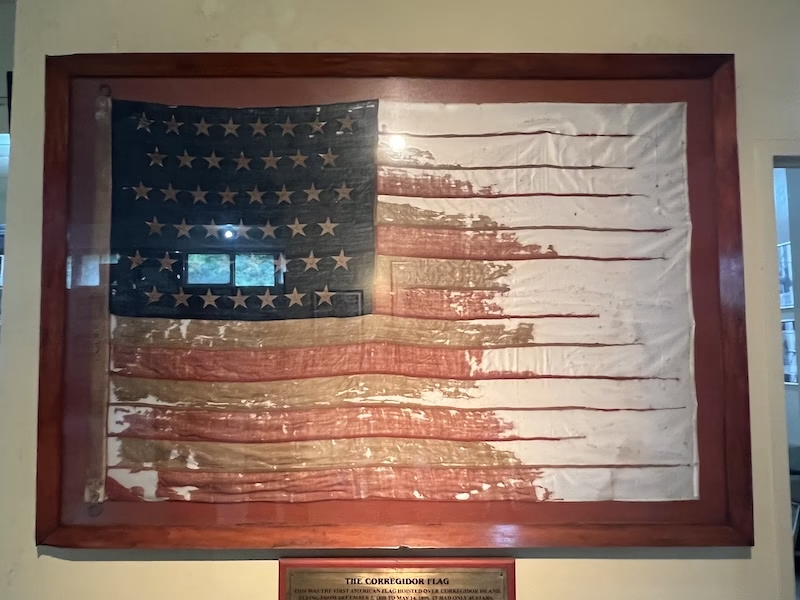
Photo: This was the very original United States National Flag flown in Corregidor, hoisted between 1898 to 1899.
Note that, at that time, there were only 45 stars on the flag.
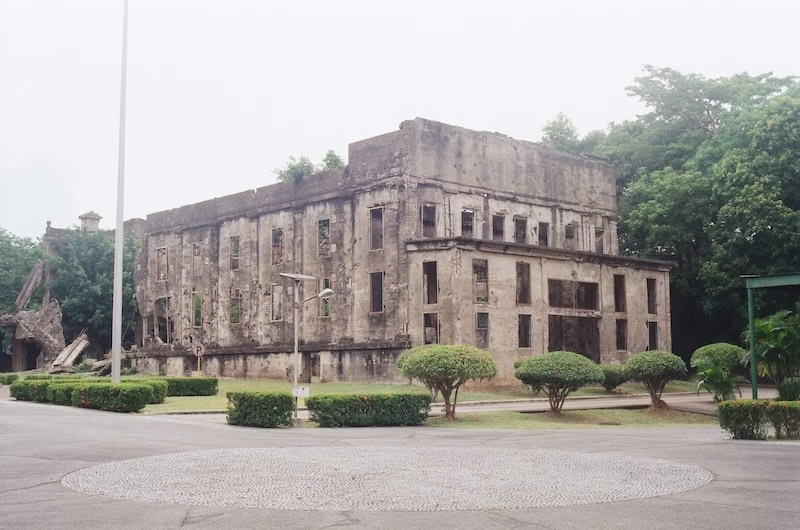
To the U.S. servicemen of those times, a post at Corregidor was a “post in paradise.” This sort of budget for the island has enabled the construction of military facilities of all natures, from enormous guns to helicopter pad, from indoor Olympic-sized saltwater swimming pool to full-serviced theater, from command headquarters in and outside of the tunnels to a 9-hole golf course. Corregidor was a military base for a community of its own.
Photo: This should have been the theater at Topside.
War Plan 43
But war was the reality of the day, and the Americans have long anticipated imperial Japan to rise as the aggressor in an upcoming conflict of great scale. The Philippines was not part of World War I. However, after the first great war of the 20th century, the Americans have forseen conflicts in Asia to materialize. In America’s War Plan 43, it was thought that the Philippines army would not be able to withstand an invasion by Japan. That view turned out to be visionary – as history has proven it right.
Plan Orange
Plan Orange was the American answer to the possibility of Japanese aggression in Asia. Conceived by Rear Admiral Raymond P. Rodgers in 1911, Plan Orange was a series of war plans and they were eventually adopted in 1924. Its visions reflected the contemporary, official imagination of war against an enemy never-before-fought. But its existence did indicate that America has expected that such a conflict necessitated a high level of preparedness.
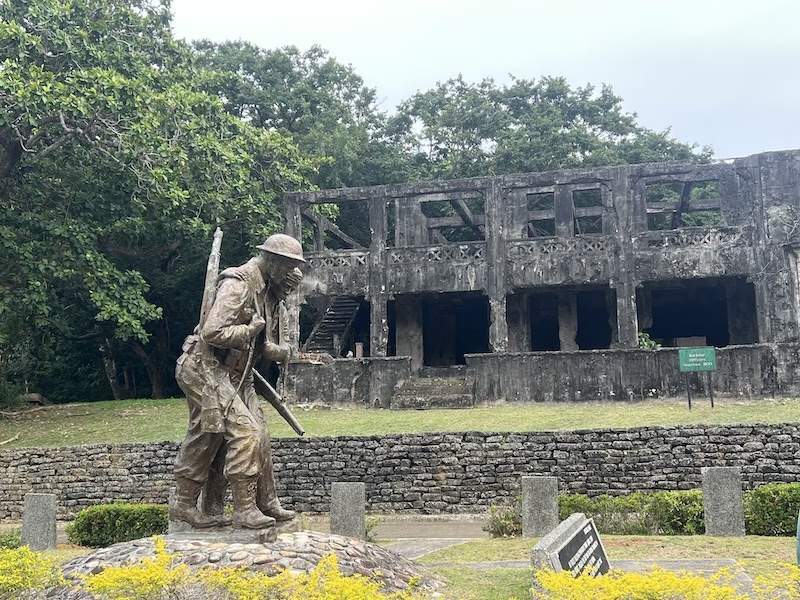
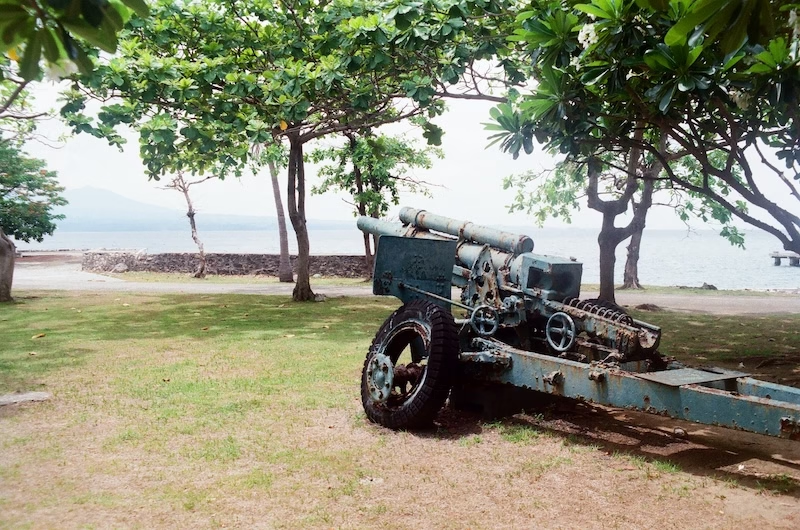
I understand that the flaws of Plan Orange were that it did not anticipate aerial warfare, at least initially. But World War I was the grand theater that demonstrated the power of aerial campaigns and naval wars assisted by the airforce. Battery Way, as well as a number of the batteries built pre-WWI at Corregidor, was not designed with aerial warfares in mind. They were, first and foremost, instruments of naval warfares.
Without having the benefit of reviewing the details of Plan Orange, I can only say, perhaps, that the general idea in Plan Orange was to equip America’s defensive positions in Asia with enough budget and provision—but when war does advance, and blockades of the U.S. defensive positions in Asia did happen, the U.S. and Filipino troops in the Philippines would be on their own. In this event, they were supposed to hold out against Japanese invasion.
What the original Plan Orange failed to anticipate was the fact that, besides Japan, there were the European aggressors of Germany and Italy. The Pearl Harbor attack was also not foreseen in the plan. These did call for a full-on involvement of the United States in World War II at large, which was the approach in Rainbow War Plan 5.
War Plan Orange 3
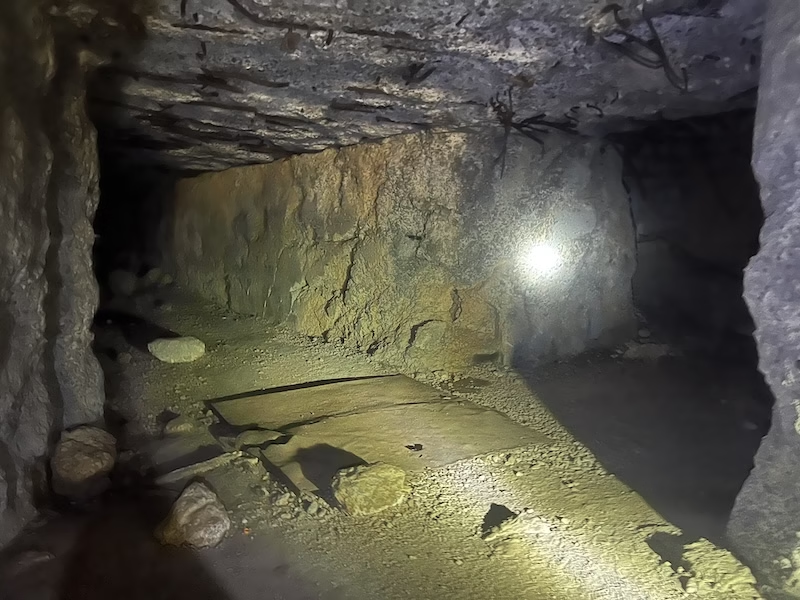
The Americans implemented War Plan Orange 3 when Japan arrived in the Philippines. War Plan Orange 3 was a strategy of “tactical withdrawal.” Manila was declared an open city, so to prevent it from being bombed. As a result, General Homma found a sweet surprise when his troops encountered no military resistance in Manila. Furthermore, the Americans also abandoned the Clark Airbase and the Subic Naval Base.
The tactics in this strategy was that, through the defensive positions in Luzon (Bataan, Corregidor and the fortified islands), the Americans would deny Japanese forces the use of Manila Bay as Bataan and Corregidor held out for 6 months. Then help would arrive. With all the unanticipated events (the American involvement with the European warfront and the defense of Hawaii as part of Rainbow Plan 5), this help never arrived in the Philippines.
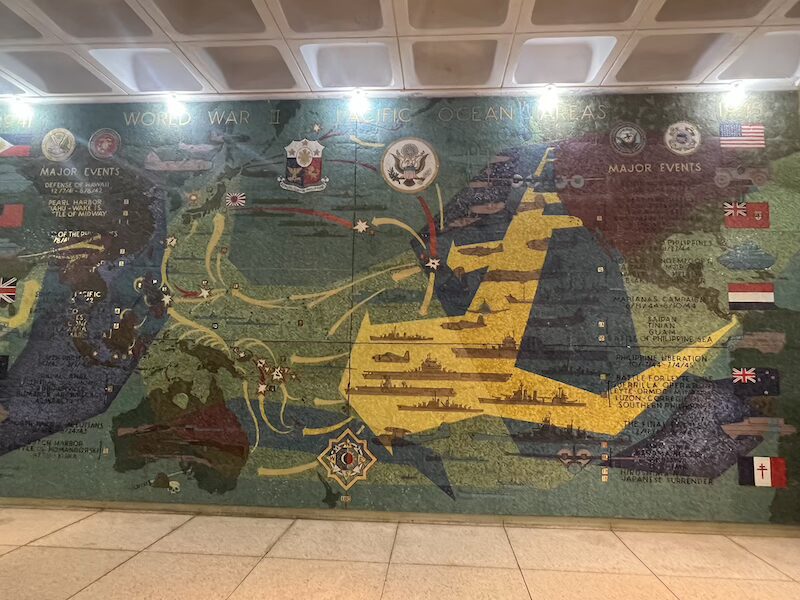
“World War II in Pacific Ocean Area”
Armando understood this situation with great insight. Corregidor held out for 5 months instead of 6. Although this did not meet the objective of War Plan Orange 3, it did succeed in the sense that Japan’s timetable of aggression was greatly disrupted. At that point, Japan had already taken the rest of the Asia (all the Euroepan colonies) in 3 weeks. They had expected to take the Philippines in a further 50 days. The fights in Bataan and Corregidor dragged on for 5 months.
Only in the Philippines was Japan somewhat delayed in its tracks. It did not result in the Philippines’ successful defense against Japan at that moment, and surely that Japanese occupation followed as soon as America surrendered, but the tactical advantage was secured against the aggressor in the overall narrative of the Pacific War.
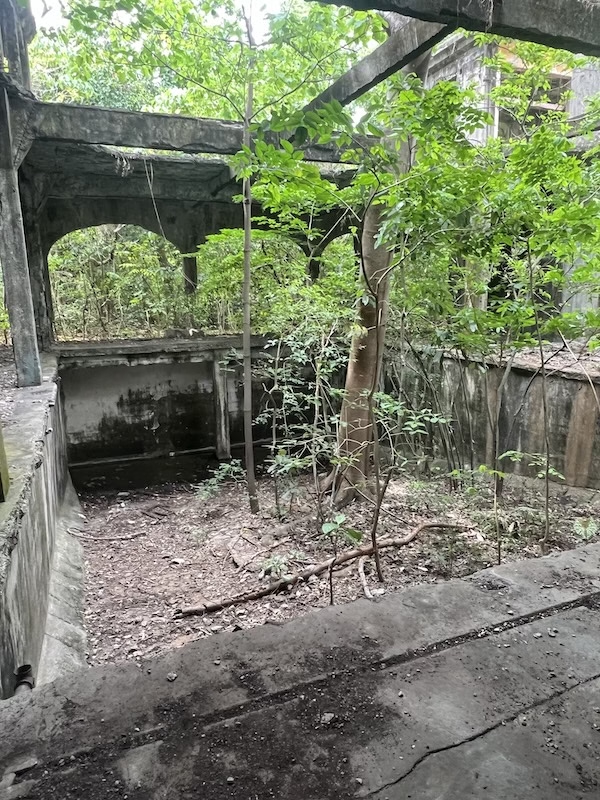
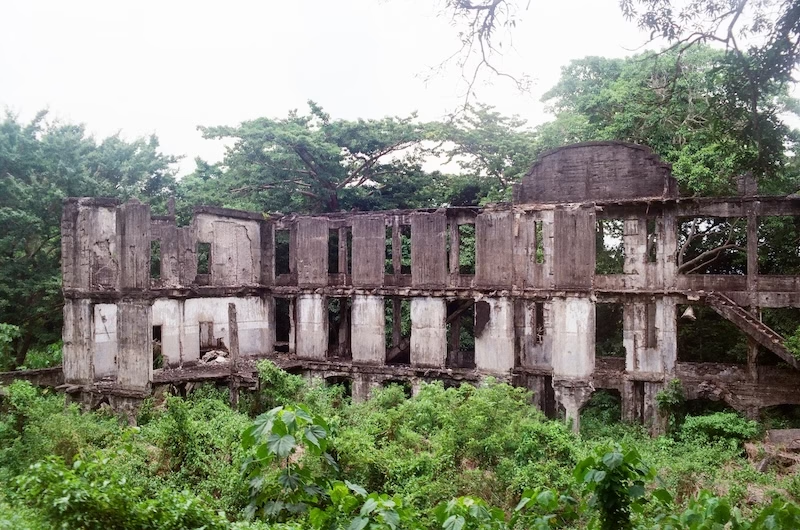
Photo: This should have been the indoor salt water pool inside the Topside Barracks.
And surely, the resistance movement against Japan in the Philippines also began immediately in 1942, through a combination of official and guerilla efforts.
Perhaps one (somewhat obvious) point should be noted about the battles that raged against Corregidor. As opposed to the Battle of Bataan, there were no civilians at the crossfires in Corregidor. Corregidor was a military-only engagement.
Sources
Tour of the Corregidor by Villa Carmen Resort
Descriptions on site at Battery Way, Corregidor.
Corregidor Historic Society.
Corregidor Historic Society, Corregidor, Middleside Barracks,
The Wikipedia on War Plan Orange.
The Wikipedia on Battery Way.
Mtncorg, Artillery of Corregidor – Big Guns on an Island, Meandering Through the Prologue.