A Yacht Tour of the Hong Kong UNESCO Global Geopark
The geology of Hong Kong is an open book, but it takes some effort to study it in nature. In the lull of late spring this year, I took a yacht tour to see the Hong Kong Geopark (its official name is Hong Kong UNESCO Global Geopark) with Splitdyboat. I learned valuable lessons of geology amid the outlying islands in northeastern Hong Kong and enjoyed fantastic views on the way.
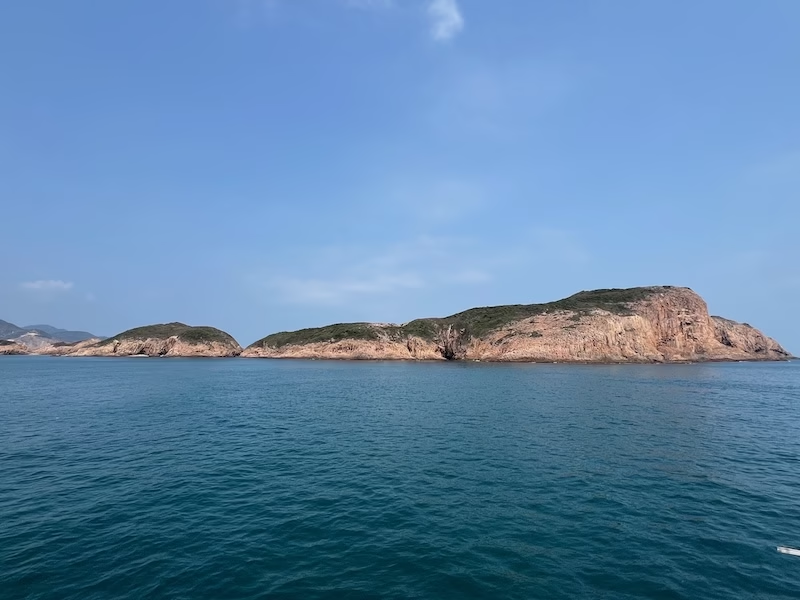
The Hong Kong Geopark has been part of the UNESCO Global Geopark network since 2011. It refers to the area consisting of various outlying islands and their geological formations in the northeastern seas of Hong Kong, including the Sai Kung Volcanic Rock Region and the Northeast New Territories Sedimentary Rock Region.
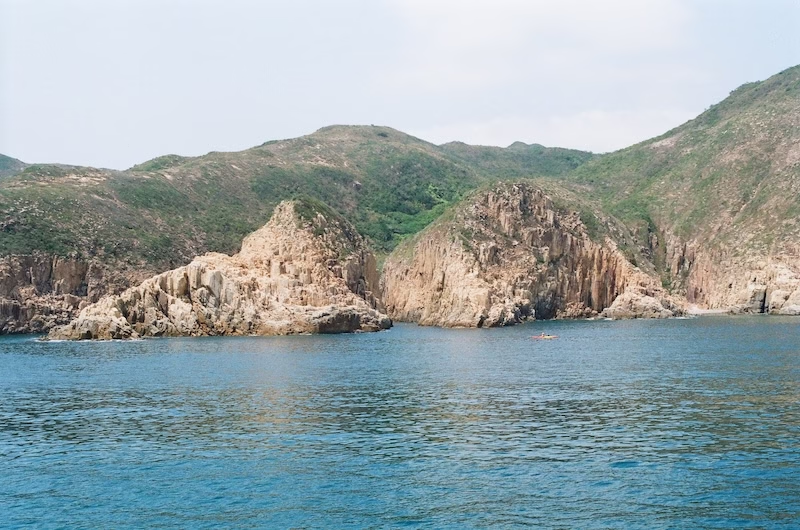
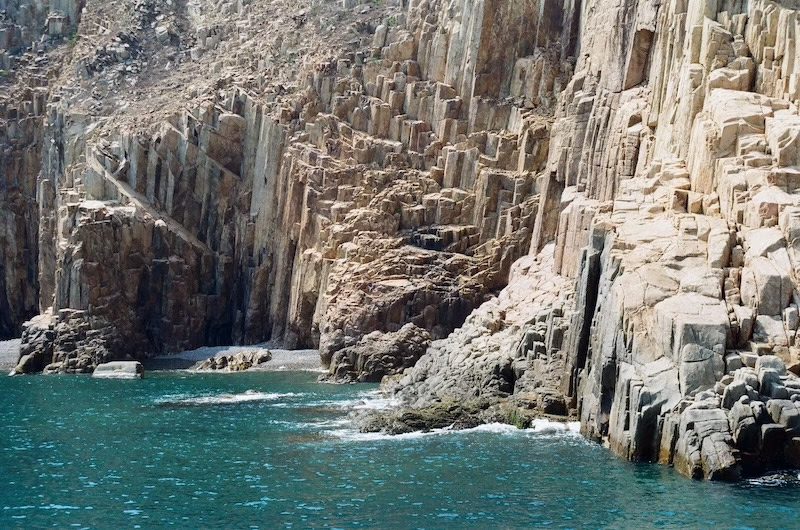
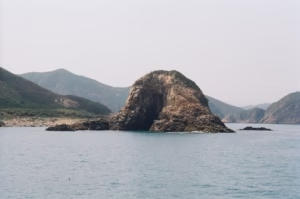
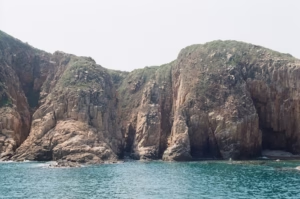
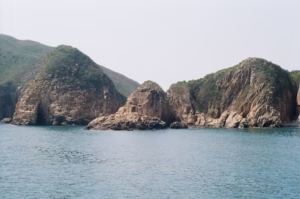
This tour offers vantages of the spectacular columnar rock formations in this part of Hong Kong. Most of the islands in this region were formed following an intense period of volcanic activities. We also saw some of the significant sea arches, which were the results of water and wind erosion that continued for millions of years.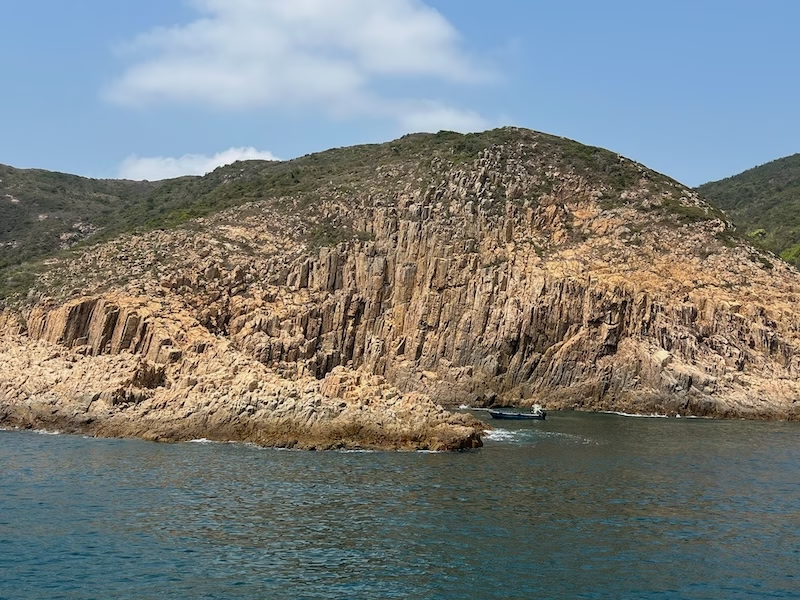
Volcanic Activities — The Story of Island Forming in Hong Kong
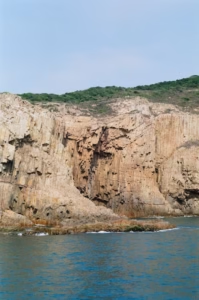
The volcano that erupted in this part of Hong Kong about 140 million years ago was a super volcano of Level 8 on the VEI (Volcanic Explosivity Index) scale. For reference, Mount Fuji is a Level 3 volcano. Our guide Circle explained the scale of such an eruption in a way that is readily understood in our times, “the ashes from that eruption can fill 400 million Olympic sized swimming pools.” After this volcanic event, the volcano itself gave way. Although it is collapsed into the vast depths of the ocean, the caldera that remained was 20km long, in the High Island area under the water.
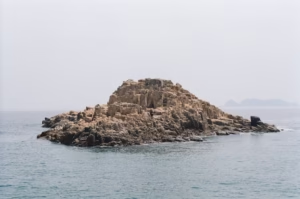
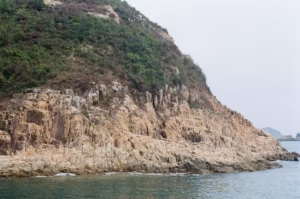
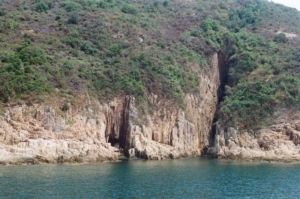
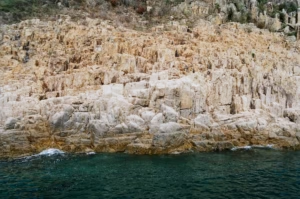
From this volcanic activity came the various islands that now make up the Hong Kong Geopark, including High Island, Sharp Island, Kau Sai Chau and actually, as far as Lantau Island.
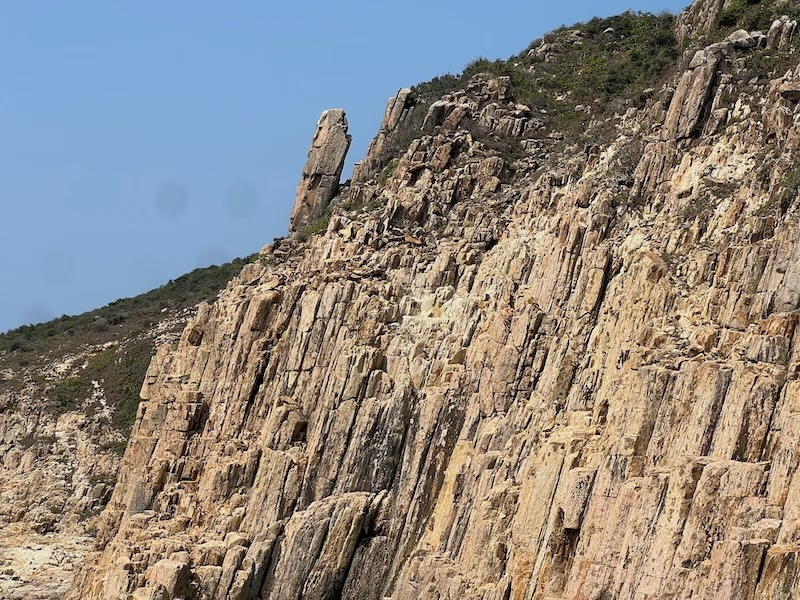
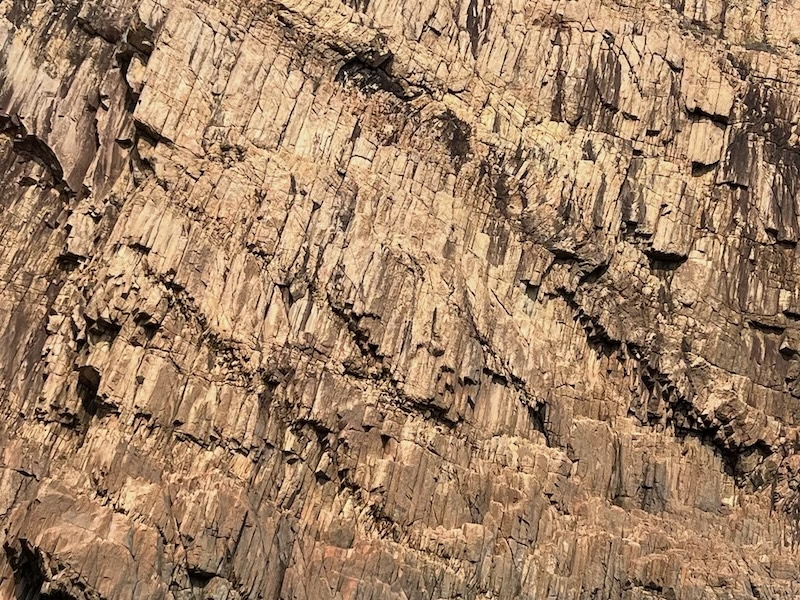
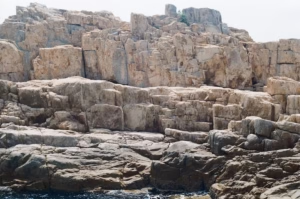
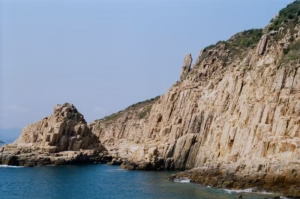
The scenic hexagonal columnal joints in abundance in the Hong Kong Geopark is the largest stretch of such geological formation in the world. According to the Wikipedia, “The total number of hexagonal columns in Hong Kong is estimated to be around 200,000, covering 100 square kilometers. Diameters of the columns ranges from 1 to 3 meters where most of the columns are tilted and dip northwest at about 80 degrees.” Similar columnal joints are also found in Iceland, but the ones in Hong Kong are larger and lighter in color.
Itinerary
The day was bright and just a little hot. Our guide Circle spoke fluent English, Cantonese and Mandarin. She presented the tour with quite a bit of humor. We met at the Sai Kung Pier for the yacht.
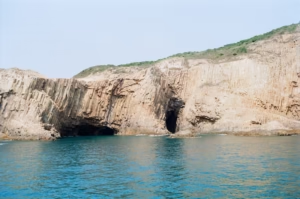
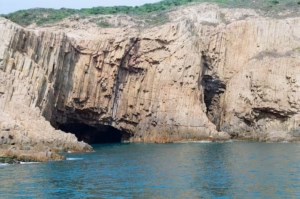
The itinerary of the day was a stop at Sharp Island, which lies just about 15 minutes from Sai Kung. We took a walk at the shore. Then being back on the yacht, we rode by coastal rock formations and sea arches at Jin Island, Bluff Island, Basalt Island, Wang Chau and Kau Sai Chau.
Sharp Island
Our first stop was Sharp Island for the pineapple bun rock. I have written on Sharp Island before and please visit here to learn about the basic geology there.
A new thing about Sharp Island that I have learned from this tour is that Sharp Island is known to be abundant in hard corals. As the “Maldives of Hong Kong,” Sharp Island is where divers train, and they enjoy the views of hard coral in relatively shallow waters — because hard corals need sunlight.
The Bell Cave of Jin Island
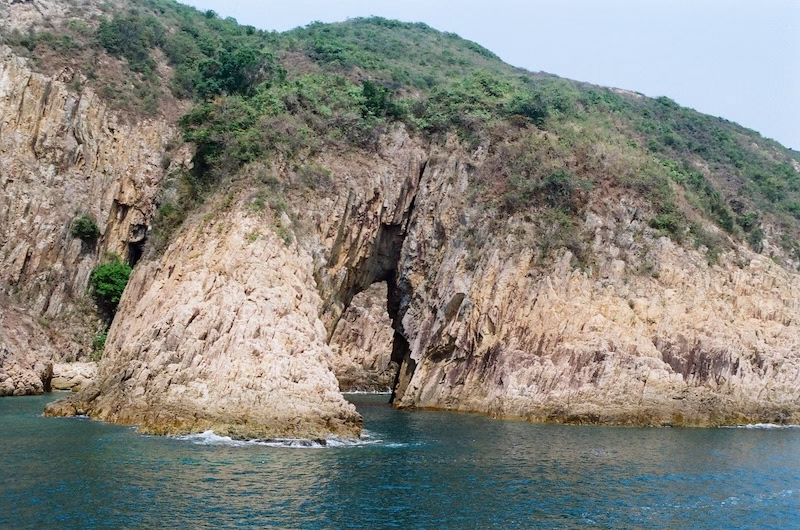
I find the Bell Cave of Jin Island to be the most impressive of all that I have seen on this yacht tour. The shape of the Bell Cave is similar to a Christmas bell, and thus its name.
Photo: Due to the high content of silicon in the hexagonal columns, they are of lighter colors than usual.
The Little Taiwan Cave and the Sea Palace at Wang Chau
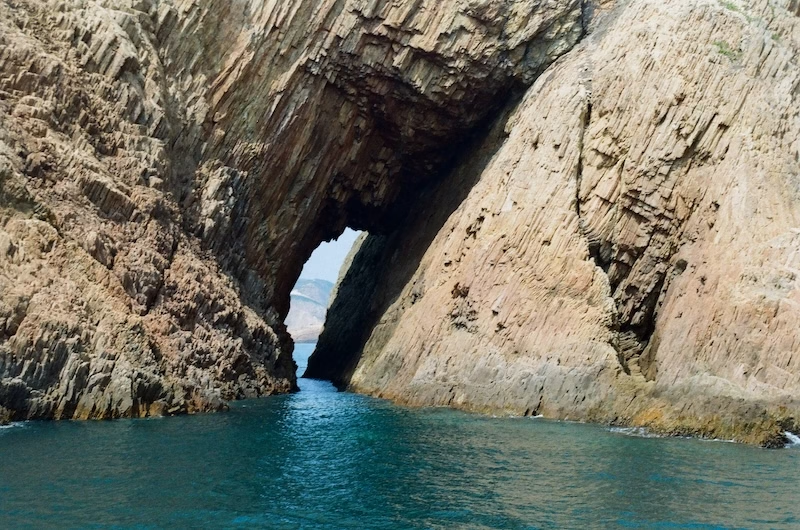
The Little Taiwan Cave at Wang Chau was originally the hexagonal columnal joint formation. Due to sea erosion for millions of years, this sea arch was formed. This cave is one of the “four great caves” in the area.
It is certainly possible that, given enough time, the continuous forces of nature will render the cave into some shape other than the shape of Taiwan. But I probably won’t live long enough to see that.
The Sea Palace at Wang Chau was yet another fantastic view of the hexagonal columns. Sea Palace refers to a 300-meter long wall cliff on the shoreline of Wang Chau, consisting wholly of hexagonal columnar formations.
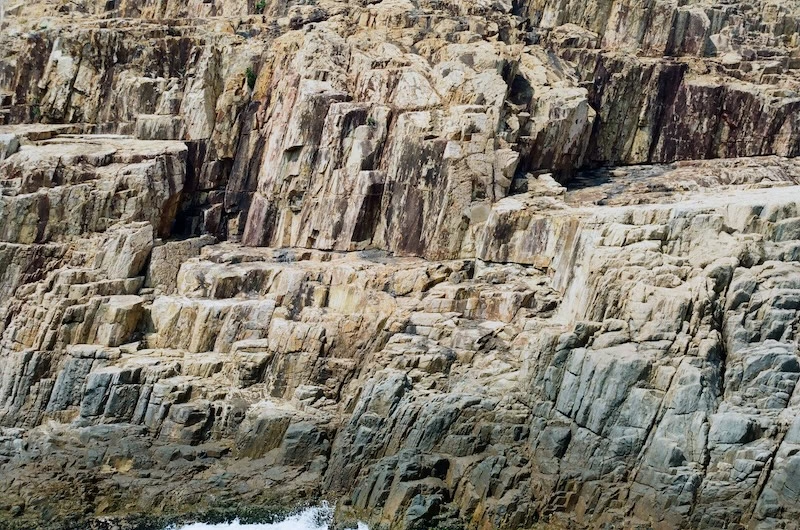
These geological sightings are nothing less than spectacular.
The Bluff Island Tunnel Cave
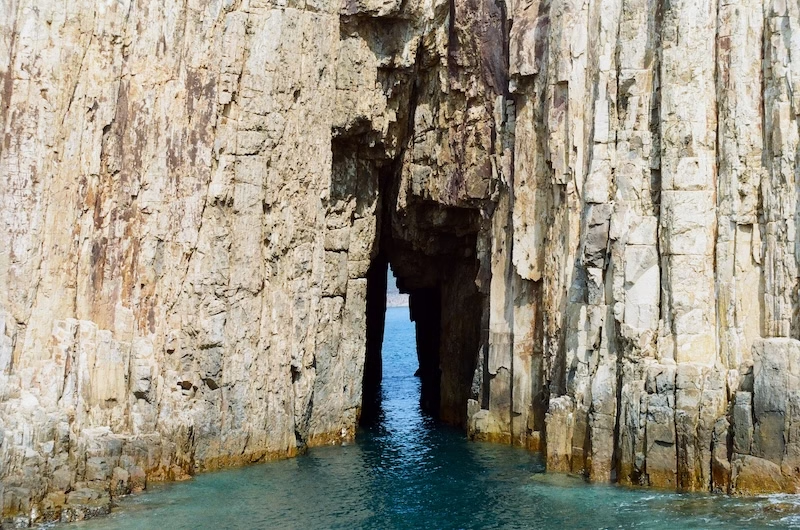
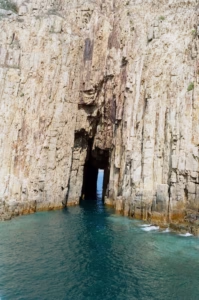
At Bluff Island, we saw the Bluff Island Tunnel Cave. This cave is also the masterful work of ocean waves eroding the columnar geological formations at Bluff Island. The tunnel is a narrow 30-meter long throughway, wholly a result of waves erosion. In the summer, boats can pass through the tunnel.
The Bluff Island Tunnel Cave is also where the British army used to do shooting practice. The test is passed if you manage to shoot through the passageway. As a result of this practice, there are many bullet cases in the seas here.
The Guan Dao Cave of Basalt Island and the Memorial for Famous Passengers in a Plane Crash
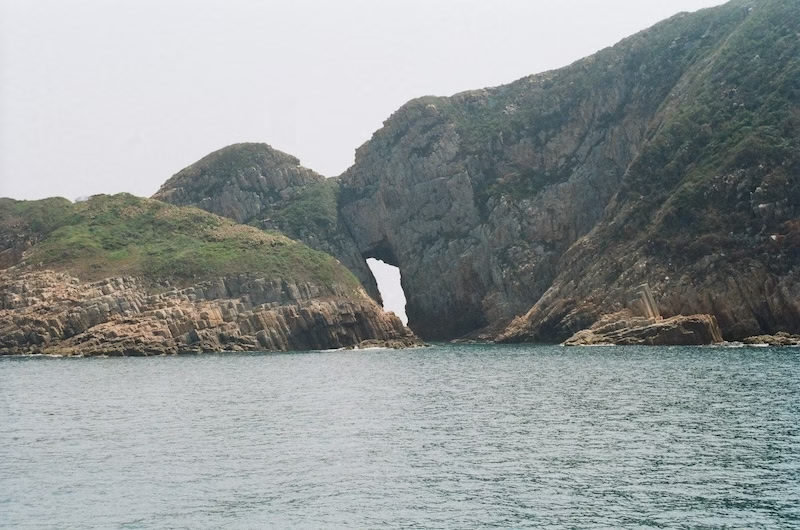
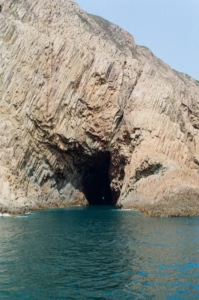
The Guan Dao Cave of Basalt Island is also one of the four great caves in the area. It is shaped like a Guan Dao, which is the polearm blade carried by the deity Guan Gong (Guan Yu), who was the God of War. This sea arch is indeed shaped exactly like the big blade that is traditionally associated with the God of War.
In Basalt Island, there is also a memorial for the passengers of a flight from Shanghai that crashed near Basalt Island in 1948. Two famous passengers were on board the flight, including Quentin Roosevelt II, the grandson of U.S. President Theodore Roosevelt, and a Shanghainese textile tycoon named Rong Yiren.
Kau Sai Chau
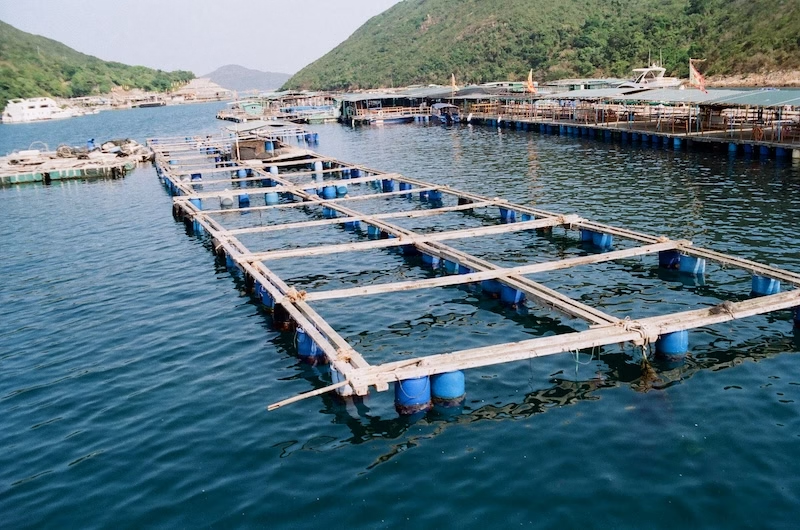
Perhaps Kau Sai Chau is best known for the only public golf course in Hong Kong. Yet, as an inhabited island, it also comes with some settled villages, and so there are some heritage as well.
Kau Sai Chau was the second occasion where we disembarked from our yacht and took a walk. We visited the Hung Shing Temple of Kau Sai Chau.
The Hung Shing Temple of Kau Sai Chau
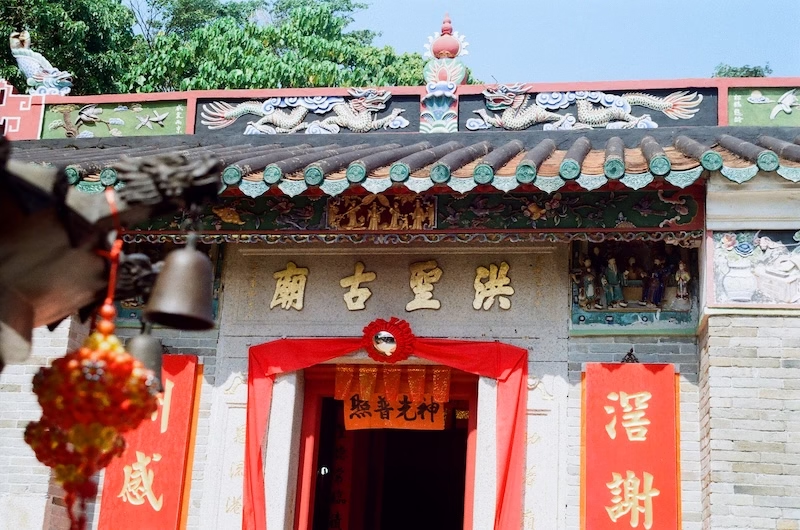
As widely revered as the god of protection of the sea, Hung Shing is a resident deity for the fishermen of Kau Sai Chau. At the time of building, this temple sat beneath a large rock covered by small plants. The temple has existed since 1889.
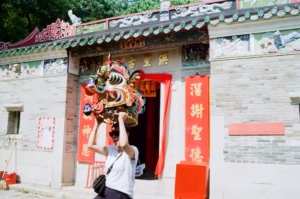
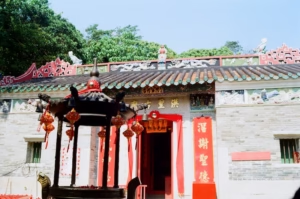
The temple is of a two-hall, three-bay layout. The restoration of the temple in 1999 earned a UNESCO Outstanding Project Award of UNESCO Asia-Pacific Awards for Cultural Heritage Conservation in 2000. Hung Shing’s birthday is still celebrated every year here.
The Hung Shing Temple of Kau Sai Chau is a Declared Monument.
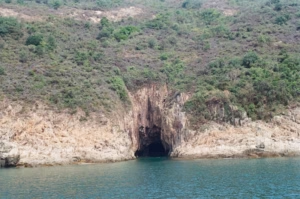
The Geopark Tour by Yacht with Splitdyboat for four sea arches costed HK $480 and took four to five hours. You must make reservations and please sign up here.
Sources
The Hong Kong Geopark Tour with Splitdyboat.
The Wikipedia on the Geology of Hong Kong.
SYMediaLab, The Guandao Cave and Memorial at Basalt Island (Chin).
Descriptions on site at the Hung Shing Temple of Kau Sai Chau.
The Wikipedia on the Hung Shing Temple of Kau Sai Chau.