Blog

The Sunflowers of Shun Sum Yuen Farm

The Sunflowers of Shun Sum Yuen Farm

You can’t miss it, spring is here in Hong Kong.  It is time to see flowers.  The local press has been reporting on the Shun Sum Yuen Farm in San Tin, Yuen Long.  My friend and I took a trip out there this past Sunday. 

Coastal Views at the Lung Ha Wan Country Trail

Coastal Views at the Lung Ha Wan Country Trail

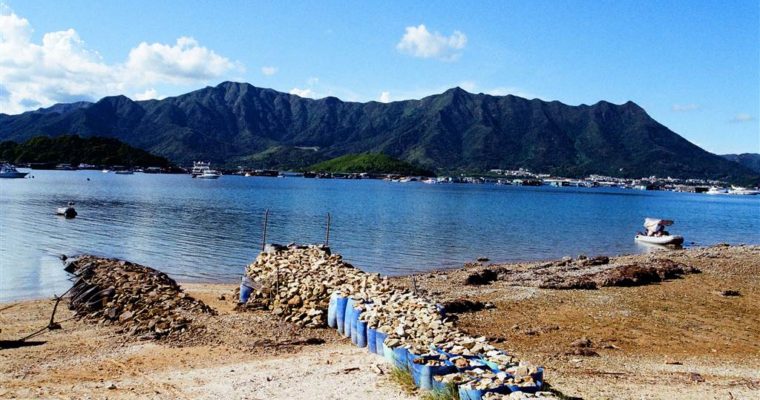
The Lung Ha Wan (also known as Lobster Bay) Country Trail shows exceptional aerial views of the outlaying islands and Kowloon’s eastern coastline at Clear Water Bay.  I was hiking this day with a group.  Someone would be leading and I could enjoy the views 

The 69-Year-Old Hoi An Café (NOW CLOSED)

The 69-Year-Old Hoi An Café (NOW CLOSED)

It is with sadness that Hoi An Cafe, with 69 years of history behind it, has now permanently closed, as of October 2021. Reports suggest that the owner had to close it because nobody was going to take over the operation of the restaurant. Farewell Hoi An!

Hoi An Café has been in business since 1952.  As such it has been 69 years of serving wonderful local food.  Located in what used to be the very waterfront of Sheung Wan, Hoi An Café began as a hangout spot for the sailors that frequented the piers.

Due to land reclamation, the Sheung Wan waterfront has extended much farther out into the Victoria Harbour.  An antique picture at the restaurant portrays the old buildings that used to line on the inland side of Connaught Road.  Surely, many of these buildings have been revamped into high rise, but much of the character of this part of Sheung Wan remains.  It is aged, yet ever so authentic in its commoners’ roots.  Hoi An Café stands “ten years like one day,” as the Chinese saying goes.  Its very existence is testament to Hong Kong’s brightest and darkest days.

During the pandemic, Hoi An Café closed for a good few months.  As it recently reopened, I seized the opportunity to pay a visit.

I arrived at the restaurant at 1pm.  As it was the peak hour for lunch, diners lined up at the door.  The restaurant looks nondescript on its outside, or actually it would be fair to say that it is a bit run-down.  It certainly wears the front of a neighborhood restaurant.  However, the queue is living witness to its good name.

Mr. Auyueng, the current owner, told me some brief history of the café.  The first owner of Hoi An Café was an old man named Wong Kim.  Mr. Auyeung’s father was a loyal staff at the restaurant.  Therefore when Old Uncle Wong Kim retired, he gifted the restaurant to Mr. Auyeung’s father.  I asked him if his father paid anything, he said “no, Old Uncle Wong Kim just gave the restaurant to us.  In those days, this was a common practice.”

Hoi An Café remains a family business now.  “We are at generation 2.5 now.”  I think he means that a person of a generation after him is also working at the restaurant now, but I did not ask further.

I sat at a table in the middle of the restaurant on wooden stools.  Sharing the table with me was another lady, who ordered the roast pork dry rice noodle, and she topped it off with fried egg and spam.  I was nearly drooling as I watched her eat.

I then distracted myself by observing the décor of the restaurant.  The facilities certainly are very old, and that includes the kitchen area that I was able to observe.  Like many of the historical tea cafes in Hong Kong, Hoi An retains a classic ambiance.  You could call it hole-in-the-wall, but there was no sacrifice on efficiency and cleanliness.  If it prides itself in its old name, then the old-school presentation is just what diners would expect.

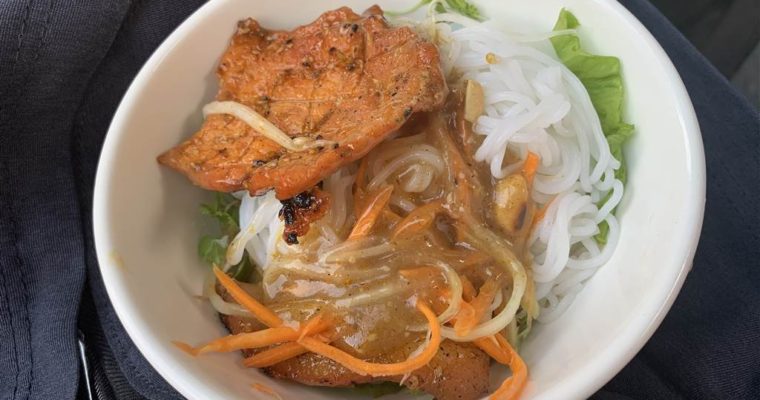
There are a few things that Hoi An Café is known for and I tried two dishes on this first visit.  The food reviews show the roast pork lo-mein (dry noodles) earning the most likes.  So I ordered that as my main course.  Do note, however, that the roast pork runs out quickly.  Around 1:30pm, the staff closed all orders on the roast pork noodles.

In terms of roast pork (char siu), perhaps Hong Kong people’s favorite is the half-fat, half-meat cut.  My roast pork noodle came with exactly that.  I would say it came up to the top few best char siu that I ever had.

After working through a very satisfying plate of roast pork noodles, I decided to try another signature dish.  The thick toast with corned beef in scrambled egg was very good as well.  The egg came out still slightly runny, with plenty of spring onions, bringing with it a mouth-watering aroma.  The toast came in just the way I liked.
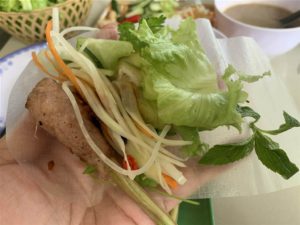
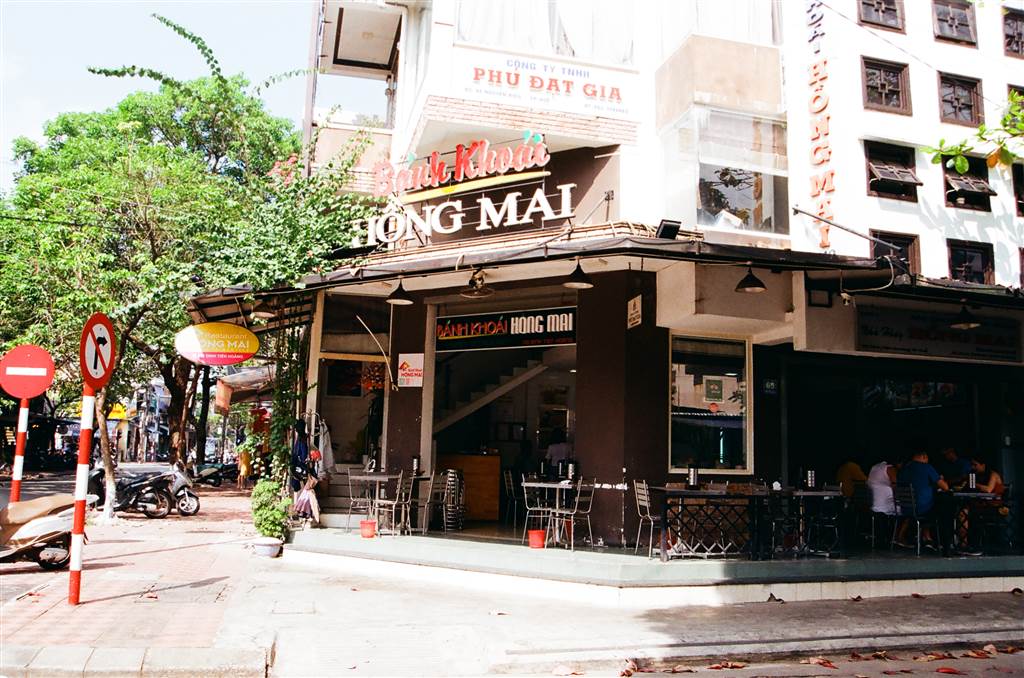
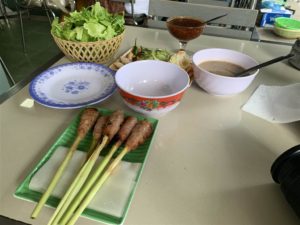
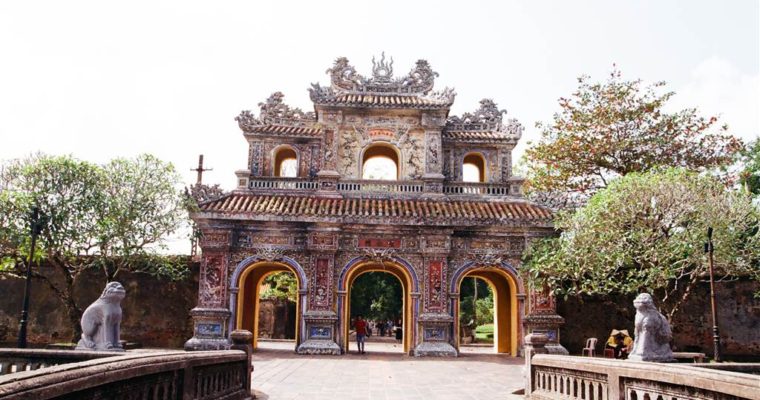
I finished this scrumptious meal with the red bean milk tea, served hot.  The red beans were sweet and therefore I did not need sugar.  I did take a full hour to finish eating these few things.  And I was simply too full after.

I am already looking forward to my next visit at Hoi An Café.

A Follow-Up

I am very sad to report that, as of October 30, 2021, the Hoi An Cafe is permanently closed.  There goes another beautiful memory of old Hong Kong.

From Pokfield Road to the Peak

From Pokfield Road to the Peak

I have long heard that there is a path going up the Peak from Pokfield Road.  On this sunny day I finally had the opportunity to try this route. At the Pokfield Road Bus Terminus, look for a long flight of stairs up next to 

Wat Mekthumvanaram

Wat Mekthumvanaram

According to its Facebook page, Wat Mekthumvanaram is one of the three Thai temples in Hong Kong that the King of Thailand recognizes.  The temple is simply known as the Thai Temple of Tai Wo in Hong Kong. Behind the temple ground there is a 

War Relics at the Devil’s Peak

War Relics at the Devil’s Peak

The Devil’s Peak has been on the top of my bucket list in terms of wartime relics.  I finally had the opportunity to head out on a bright afternoon.

At a depth of 22 metres, the Lei Yue Mun Pass is very narrow and is the only maritime approach into the Victoria Harbour on the east.  The Devil’s Peak, as it overlooks all of the eastern seaway into the Lei Yue Mun Pass, thus became a site of strategic importance for the British.  Together with the Lei Yue Mun Fort at the highlands of Shau Kei Wan (now the Museum of Coastal Defense), the Devil’s Peak was one of the twin command centres guarding eastern Kowloon and Hong Kong on north and south of the Lei Yue Mun Pass.

The Devil’s Peak – A Brief Pre-British History

During the 19th and early 20th centuries, the British built these military installations intending these structures to protect Hong Kong against potential attacks by then Britain’s European rivalries, namely France and Russia.  Yet long before the British took over Hong Kong, the military significance of the Devil’s Peak was apparent to and exploited by different entities.

In early Qing Dynasty, the remnants of the Ming Dynasty took over this part of Hong Kong.  The Ming loyalist forces, who were based in Taiwan and known for their sea-faring nature, occupied the Devil’s Peak.  General Zheng Chenggong, the Ming loyalist warrior, led a garrison here.  He extracted tolls from the commercial vessels that sailed by the Lei Yue Mun Pass.  As such, the Devil’s Peak was part of the Ming Dynasty resistance against Qing rule.

Well into the Qing Dynasty, however, the Devil’s Peak was occupied by many pirates.  The operators of commercial vessels often sailed through the Lei Yue Mun Pass with trepidation.  For this reason, although this area was formerly named Kai Po Shan, it was known as Devil’s Peak since.  There are also rumours that antique Qing treasures remain hidden in this area.

The Devil’s Peak under British Use

The British had long eyed the Devil’s Peak as a strategic military stronghold.  The plan might have formed as early as 1899, or perhaps even before they officially leased the New Territories from the Qing Government.  At the time, Lei Yue Mun belonged to the New Territories.  The British built the Devil’s Peak Redoubt between 1900-1914.

There are four clusters of military installation.  Lying at the summit, at 222 metres, is the Devil’s Peak Redoubt.  At 196 metres is the Observation Post.  At 160 metres lies the Gough Battery.  Then finally at 80 metres lies the Pottinger Battery.  We visited the Devil’s Peak Redoubt and the Gough Battery on this occasion.

On our ascent we first arrived at the Gough Battery.  The major structures are two gun emplacements, one for a six-inch quick-firing gun and another for a 9.2-inch cannon.  Although the gun emplacements remain intact throughout the years, the actual 9.2-inch gun was relocated to Stanley in 1936.

Photos: on the left is the 9.2-inch gun emplacement at the Gough Battery.  On the right is the 6-inch emplacement.

The ruins of the Gough Battery are very photogenic.  It is a pity that I visited the site before first doing my historical research.  As such my pictures convey more of the aesthetics of the ruins rather than the military functions that these structures served.  Do watch out for a metal ring that is pinned to the ground.  Although there is no historical description, it must have served some important function perhaps for the fixation of equipment.

Photos: Views at the Gough Battery

A walk around the structures there takes about half an hour.

We then headed on over to the Devil’s Peak Redoubt.  It occupies a very large area.  Some of the structures were made of stones, but most of them were of cement.

As the Fire Command East, the Devil’s Peak Redoubt was fitted with five machine gun emplacements.  They guarded the key corners of its firing wall.  Furthermore, the external wall of the Redoubt has 100 loopholes providing an all-around coverage of the eastern approach to Victoria Harbour.

It was quite an experience peeping through the loopholes.  I was looking on to the same view as those soldiers that guarded this stronghold at one of Hong Kong’s most critical historic moments.

As a defense structure, the Devil’s Peak Redoubt had critical facilities, including pillboxes, a communication center, a circular defense structure, and a kitchen as well.  There is also a bunker on the northern cliff face of the Redoubt.

Photos: views at the Devil’s Peak Redoubt

A walk around the Devil’s Peak Redoubt can easily take an hour, especially if you go on the weekend when there are many, many tourists there competing for picture taking.  This is also where all of Victoria Harbour on the west exhibits itself in a wonderful panorama.  Therefore certainly allow for more time here.

Although we did not see the Pottinger Battery, I think it is worth a brief introduction.  There are two gun emplacements at the Pottinger Battery, both of 9.20-inch guns.  These guns relocated to the Bokhara Battery at Cape D’Aguilar.  By the 1930s, all guns were removed from this battery.  In the 1970s, ground filling buried one of the gun emplacements, and therefore only one remains now.

The intended plan of defense with the Devil’s Peak fortifications was complicated.  These sites were connected with cement paths with pillboxes, costal search light positions and trenches.  The original pathways were mostly destroyed, however.  In fact, some of the communication channels became part of the Wilson Trail today.

The fortifications at Devil’s Peak, particularly the loopholes on the Devil’s Peak Redoubt, provided a 360 all-around coverage to all of the Devil’s Peak area.  While the British built these fortifications during the early 1900s with their European rivalries in mind, the Devil’s Peak would only see the day of battle during World War II. Japan rose as the aggressor in Asia Pacific.

At War with Japan – British Misconceptions of Warfare during WWII

The Gin Drinkers’ line is a stretch of military defence from the western end of Kwai Chung to the eastern end of Lei Yue Mun.  The Shing Mun Redoubt was another notable fortification that was intended to guard Kowloon against aggression via the land route from the north.  On the eastern end, the Devil’s Peak Redoubt was part of this so-called “the Maginot Line of the East.”

The defence of Hong Kong, despite the British military’s proven prowess during the 19th century, failed miserably when the Japanese launched their invasion on Hong Kong on December 8, 1941.  The Japanese forces reached the Shing Mun Redoubt on December 9, 1941.  It fell into Japanese hands after just a couple days of fighting.

Similarly, the Devil’s Peak also saw some of the most ferocious battles against the Japanese.

Perhaps the Japanese caught the British by surprise in two significant ways.  Firstly, the British did not fully understand that aircraft battles replaced naval battleship as the most decisive naval weapons.  Secondly, the Japanese did not make a landing via the sea route, the defence of which was what the Devil’s Peak Redoubt might have been good for.  Having taken down the Shing Mun Redoubt, the Japanese moved south to Kowloon.  They then went eastward and approached the Devil’s Peak on land on December 13 at 4am.

At the time, the 5/7 Rajputs and the First Mountain Battery of the Hong Kong Singapore Artillery guarded the Devil’s Peak.  There was heavy fighting for about twenty-four hours.  The last defenders evacuated by sea to the Hong Kong Island via the Lei Yue Mun Pass.

The Japanese then took over the Devil’s Peak as the base to attack Hong Kong Island.  As we all know, Hong Kong eventually surrendered to the Japanese on Christmas Day, 1941.

The View

All along the way, we saw fantastic views of the Victoria Harbour, looking westward from the eastern-most point in Kowloon.  Needless the say, the higher we walked, the better the views became.

At the Devil’s Peak Redoubt, we saw panoramic views of the Lei Yue Mun Pass on the east, including the former runway of Kai Tak Airport.

It was about dusk and we enjoyed beautiful views of the Victoria Harbor.  Many photographers have already reserved their spots for taking sunset pictures.

How to Get There

From the Yau Tong MTR Station exit A2, head on toward Ko Chiu Road.  It is the same way up the Junk Bay Chinese Permanent Cemetery.

A gentle reminder that the walk up Ko Chiu Road is steep.  Although it is only about a 20-minute walk on a paved slope, do take breaks in the pavilions on the way.

At this point, follow the sign for Wilson Trail.  The stairs up the Gough Battery is on your left.

Once on the Wilson Trail, follow the signs for Devil’s Peak throughout.  We headed back on the same way back to Yau Tong Station, but there is a way to leave toward Lam Tin as well.

Finally, do wear long pants.  The overgrown vegetation in the area has made it hospitable for mosquitoes.  Therefore also bring some mosquito repellent with you.

Sources

The majority of the historical descriptions about the Devil’s Peak in this entry came from Devil’s Peak Ruins: A Glimpse of a British Stronghold.  It is a VCD made by Hong Kong University and commissioned by the Lord Wilson Heritage Trust, 2002.

See also Follow Me, Devil’s Peak.

See also Hong Kong Museum of Coastal Defence, Leisure and Cultural Services Department, History.

Finally, see also the work of Professor Lawrence Lai, as referenced on the Wikipedia’s entry on the Devil’s Peak.

For Further Reading

This entry is part of the series on Hong Kong’s World War II history.  Please visit the following links for:

The Pinewood Battery

The Shing Mun Redoubt

Japanese Fortifications in Luk Keng

Murmurs of the Hollow at Mount Davis

Hike of the Year: From Nam Fung Sun Tsuen to Jardine’s Lookout and Back

From Bowen Drive to Aberdeen Country Park and the Peak

From Bowen Drive to Aberdeen Country Park and the Peak

The weather has been fine for most of the past few weeks.  There are signs of summer and yet it has not been too hot.  We seize the opportunity to do different kinds of walks. The walk of the day was from Bowen Drive to 

From Siu Lam to Ho Pui Reservoir (via the Siu Lam Mountain Bike Trail)

From Siu Lam to Ho Pui Reservoir (via the Siu Lam Mountain Bike Trail)

The day began with a slight overcast and a pleasant coolness.  We planned a hike of about four hours from Siu Lam to Ho Pui Reservoir. The journey began at Palatial Coast in Siu Lam.  I got off at the minibus stop (information below) and 

The Wong Nai Tun Reservoir

The Wong Nai Tun Reservoir

The short hiking trail today begins at So Kwun Wat Village.  It takes a little over an hour one way to reach Wong Nai Tun Reservoir.

The Wong Nai Tun Reservoir is an irrigation reservoir that was built in the 1960s to serve the irrigation needs for the fields of Yuen Long.  To aggrandize the reserves of the Tai Lam Chung Reservoir (popularly known as Reservoir Islands), the Hong Kong Government cut off some of the streams that supplied water to the villages.  As a result, the government built four other irrigation reservoirs to meet water demand.

The Wong Nai Tun Reservoir is located within the Tai Lam Chung Country Park.  The trail is not so popular.  However, it is a nice easy walk with views of the Reservoir Islands that are quite different from what we see at the Reservoir Islands View Point.

Photos above and below: Different Views of the Reservoir Islands on the Way to Wong Nai Tun Reservoir

The day was bright and we first had dim sum at the nearby Gold Coast.  Then we drove over to So Kwun Wat Tsuen (Village).  On So Kwun Wat Tsuen Road, we went all the way to the very end and parked at the unmarked spaces there.  This following is the signpost pointing to the various routes in the area.  Follow the sign for Wong Nai Tun Reservoir all along this path.

Very soon we came upon the Tai Lam Chung Reservoir Small Dam.  We could find a path to explore the shore here.  Although these are no grand views, the site is hidden away and perfect for a relaxing afternoon with a book by the water.  Someone has already taken up an old tree branch for a nap.  Freshwater fishing is also possible if you manage to get a license from the government.

We also passed by the pathway to the Reservoir Islands View Point.  But our destination was Wong Nai Tun Reservoir, so we kept on going on the original path.

The trail is a gradual incline for about 2.5km on a paved driveway.  After a little over an hour, we arrived at the southern tip of the Wong Nai Tun Reservoir.  We could see the stream that supplies the water to this reservoir.  The area was distinctively breezy.

These are views of the main dam of the Wong Nai Tun Reservoir, as we walked further north.

We walked through the dam and arrived at a small diverging path to reach the shore for another view.


At many of Hong Kong’s hiking sites, one usually comes across just one particular animal that roam around freely.  In this part of the tai Lam Chung Country Park, goats are the resident animal.

How To Get There:

Again, we went by private car.  Drive on So Kwun Wat Tsuen Road, enter the So Kwun Wat Village all the way till the end.  If you get there early enough, there should be some unmarked parking spaces at the road signs.

By minibus, take Route 43 from San Hui in Tuen Mun, and get off at the final stop at So Kwun Wat Village.  After that, enter the village and there is about a 20-minute walk to reach the road signs.

Source:

The Wikipedia on the Wong Nai Tun Reservoir.

Beautiful Sha Tau Kok – the Bull Fight in Kuk Po

Beautiful Sha Tau Kok – the Bull Fight in Kuk Po

On my way to So Lo Pun, I witnessed a bull fight in Kuk Po.  It is a novelty to me.  The bulls locked horns and wrestled back and forth to gain grounds.  The fight went on for just a few minutes. I had to