Blog

Old-Time Vietnam – Banh Khoai, a Hue Delight

Old-Time Vietnam – Banh Khoai, a Hue Delight

“Like its elegantly designed streets and architecture, most Vietnamese generally regard the food from Hue to be the most refined in all of the country.”           Songs of Sapa at 78. Luke Nguyen on Vietnamese Food For anyone interested in the food of Vietnam, I recommend 

Old-Time Vietnam – The Imperial Enclosure and Its Beautiful Gates

Old-Time Vietnam – The Imperial Enclosure and Its Beautiful Gates

Perhaps throughout this tour I was most impressed by every gate that marked the entrances to the structures of the Imperial Enclosure.  It seemed to me that protective walls surrounded every quarter and there would be a gate in the northern and southern entrances.  This 

Old-Time Vietnam – The Co Ha Gardens and Dynastic Urns

Old-Time Vietnam – The Co Ha Gardens and Dynastic Urns

The Co Ha Gardens 

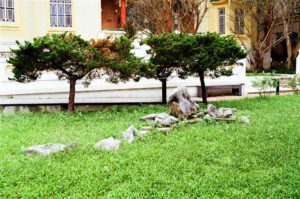
After asking for some directions, I found the Co Ha Gardens.  These gardens were developed by the first four Emperors of the Nguyen Dynasty.  Although, at some point in history, they fell into disrepair, the Vietnamese have restored most of them.  Supposedly, there used to be some buildings for the princes to study in, but none of that remains now.  The garden space, however, stands beautifully with carefully landscaped plants, ponds and pagodas.

This environment was most pleasant for a momentary rest.  The touring of the first part of the morning was quite a bit of work.  I picked a pagoda, and since there was a café there, I ordered coffee.  Despite my best efforts, I could not convey the “little milk” that I wanted.  The coffee turned up too sweet.

I savored the garden space before me for perhaps only a moment.  Then I had to come up with next steps.  From the Co Ha Gardens, it would have been a perfect departure via the Palace’s eastern exit to the restaurant that I wanted to try.  That meant I would conclude my time at the Imperial Enclosure at that point.  The ticket of đ530,000 gave me access to the royal tombs of Tu Duc, Minh Mang and Khai Dinh, but only within the same day.  Therefore I must allow time for all of them in the afternoon.

After some debate, I decided to head south again, back into the Palace.  I had yet to visit the Royal Theatre and the Dynastic Urns.  Even with most of the buildings in the Imperial Enclosure destroyed, it took a long time to tour what remained standing and to learn some lessons about the Nguyen Dynasty of Vietnam.

The Royal Theatre (Duyet Thi Dhong)

I knew the Royal Theatre by the din and gongs of the occasion.  I did not think it was any kind of performance, but rather a procession with religious purpose.  The Vietnamese music was new to me.

The Royal Theatre was constructed during Minh Mang’s reign in 1826.  The people of Vietnam revered Minh Mang as an open-minded, people-caring and learned emperor (more later, as I visited his royal tomb).  The theatre served the Emperor, the royal family and the convoys with Tuong performances, which were classical dramas.  At some point during the mid 20th century, this site was used for the training of cultural performances.
There are still traditional Vietnamese performances there today, as with in the past.  Watch out for performance times and there is an additional fee for watching them.

The Nine Dynastic Urns of the Nguyen Dynasty (Cuu Dinh Thrieu Nguyen)

Emperor Minh Mang ordered the casting of these nine majestic bronze urns to commemorate the first nine emperors of the Nguyen Dynasty.  They were then cast between the years 1835 and 1837.

The one in the middle of the nine is the most ornate, as it commemorates the Founding Emperor of Nguyen Dynasty, Gia Long.  Each of the urn bears the posthumous title for the respective Emperor.  The Cao urn  of 1835 commemorating Gia Long has the name “Cao” meaning height.  It weighs 2,604kg as the most prominent urn out of the nine.

Photo: the Cao Urn commemorates Founding Emperor Gia Long.

Notes of the carving: The top row: dragon, jackfruit tree; non-glutinous rice; onion; crepe myrtle; pheasant.  The middle row: Cao urn; East sea; Vinh Te canal; the sun; Ben Nghe river; Thien Ton mountain.  The bottom row: eruthrophleum fordii Oliver; tiger; sailboat; cannon; Aquilaria crassna pierre; soft-shelled turtle.

Standing at 6 feet high and weighing tonnes, these urns reflect the best craftsmanship of Vietnam at the time.

Each of them features intricately engraved details (mostly landscape scenes), eulogizing the beauty and uniqueness of Vietnam.  Traces of bullet impact can still be seen on some of them.”      Lonely Planet on Vietnam p. 307.

As with many other features of the Imperial Enclosure, these nine urns are also testament to the Vietnamese royalties’ respect of ancient China.  The existence of the nine urns certainly echoes the nine urns of the Xia, Shang and Zhou dynasties, which were the earliest Chinese dynasties (during the Bronze Age) in history.  During this time in the 19th Century, bronze was a particularly precious metal in Vietnam.

The three-storied structure right at the courtyard of the Nine Dynastic Urns is the Famous Soul Porch, (Hien Lam Cac), built in 1821.  At three stories this building is the tallest one within the Imperial Enclosure.  There was also an imperial order that it remains the tallest building in the Palace.

The The Mieu and Hung Mieu Compound

Opposite the urns is the The Mieu (The Temple of Generations).  Again, Emperor Minh Mang ordered the construction of this temple for the purpose of dynastic ancestral worship.  The altars enshrining the Nguyen Dynasty Emperors stand within this temple.

However, during the French Occupation of 1884-1954, only seven emperors were enshrined here.  The French did not allow anti-French Nguyen Emperors.  Emperors Ham Nghi, Thanh Thai and Duy Tan, who were known to be patriotic, were added here only in 1959.

I have also stopped by the Hung Mieu (one of the Temples of the Ancestors), which originally enshrines the father of the Founding Emperor Gia Long, Nguyen Phuc Luan and his lady.  The War of Independence between the French and the Vietnamese destroyed the original structure in 1947.  In 1951, the mother of the last Emperor Bao Dai paid for the reconstruction of this temple.

During the death anniversaries of the Nguyen Emperors, the Nguyen Court would hold procession here to commemorate the ancestors.  An interesting fact is that attendance by women were forbidden in these temples, the Empress herself was no exception.

After visiting the Dynastic Urns and the ancestral temples, I felt that I have seen enough of the Imperial Palace of Hue.  I hurried over to a much-needed lunch at Banh Khoai Hong Mai.

Sources

Historical descriptions on site.

The Lonely Planet on Vietnam.

Duyet Thi Duong: The Oldest Theatre of Vietnam in Hue Imperial Citadel, Vina.com.

The Hue Citadel: Inside the Walls of a Lost Imperial City, Sailing Stone Travel

The Lonely Planet online on the Co Ha Gardens.

The Nine Dynastic Urns of the Nguyen Dynasty, Baidu.com.

Vietnam’s Imperial City of Hue (II) (Chin).

The Wikipedia on the Famous Soul Porch (Chin).

The Wikipedia on Hung Mieu (Chin).

Old-Time Vietnam – The Dien Tho Residence and The Royal Reading Room

Old-Time Vietnam – The Dien Tho Residence and The Royal Reading Room

The Dien Tho Residence The Dien Tho Residence was where the Queen Mother of Vietnam’s Emperor lived.  The lives of women have always interested me, and so I chose to go westward for a walk.  Indeed, in this morning hour there were few tourists there.  

Old-Time Vietnam – The Citadel and the Imperial Palace

Old-Time Vietnam – The Citadel and the Imperial Palace

I woke at 7:30 and had breakfast at the hostel.  Breakfast was an egg pancake (they called it an omelet), a bread roll, some fruits and coffee with milk.  At that point in my trip I still wondered, at every Vietnamese meal, why it was 

Ho Sheung Heung

Ho Sheung Heung

Ho Sheung Heung is an established village with a long history in Sheung Shui.  Its beginning can be traced back to 800 years ago, as far back as the Yuan Dynasty.

Four villages together make up the larger area known as Ho Sheung Heung.  They are Nam Bin Wai, Pak Bin Wai, Chung Sum Tsuen and Chong Yuen San Tsuen.

The Hau Ku Shek Ancestral Hall

There are two historic sites of significance in Ho Sheung Heung.  Of primary importance is the Hau Ku Shek Ancestral Hall.

The Hau’s are perhaps the most prominent clan in Ho Sheung Heung, due to their long history and notable presence in the area.  The genealogy of the Hau’s goes back to the earliest settlement in the now-Hebei area of China.  During the Song Dynasty, the Hau’s moved southward to Guangdong.  Onwards to the Ming Dynasty, Hau Cheuk-Fung, an 11th generation descendant, learned about this fertile farmland area and settled down in Ho Sheung Heung.  It has been 600 years since the Hau’s found their home here.

The Hau’s built the Hau Ku Shek Ancestral Hall during the late Ming Dynasty to memorialise the 17th generation ancestor Hau Ku-shek.  The wooden plaque above the main facade is dated to the 27th year of the Qianlong Reign of the Qing Dynasty.  This indicates that the ancestral hall was renovated that year.

As an ancestral hall, the main purpose that it serves is the commemoration of ancestors.  The altar in the middle hall remains the site of ancestral reverence.  Of the three halls in the Hau Ku Shek Ancestral Hall, and the rear hall, of two storeys, once served as the village school.  The lower level served as the teachers’ accommodation, and the upper level was the site for instruction.  The school closed during WWII.  The rear hall was once the venue for the Ho Kai Kindergarten until the 1970s.

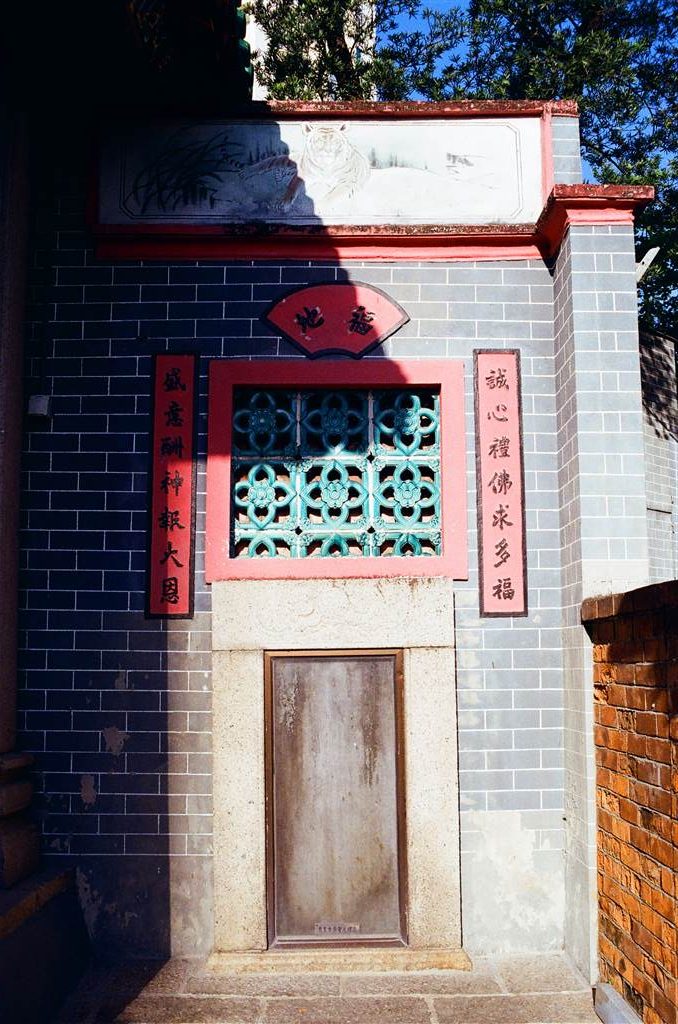
There are some notable architectural features at the Hau Ku Shek Ancestral Hall.  The beams feature carefully carved figurines, usually in auspicious patterns or depict a scene of famous Chinese folklores.

The Hung Shing and Pai Fung Temples

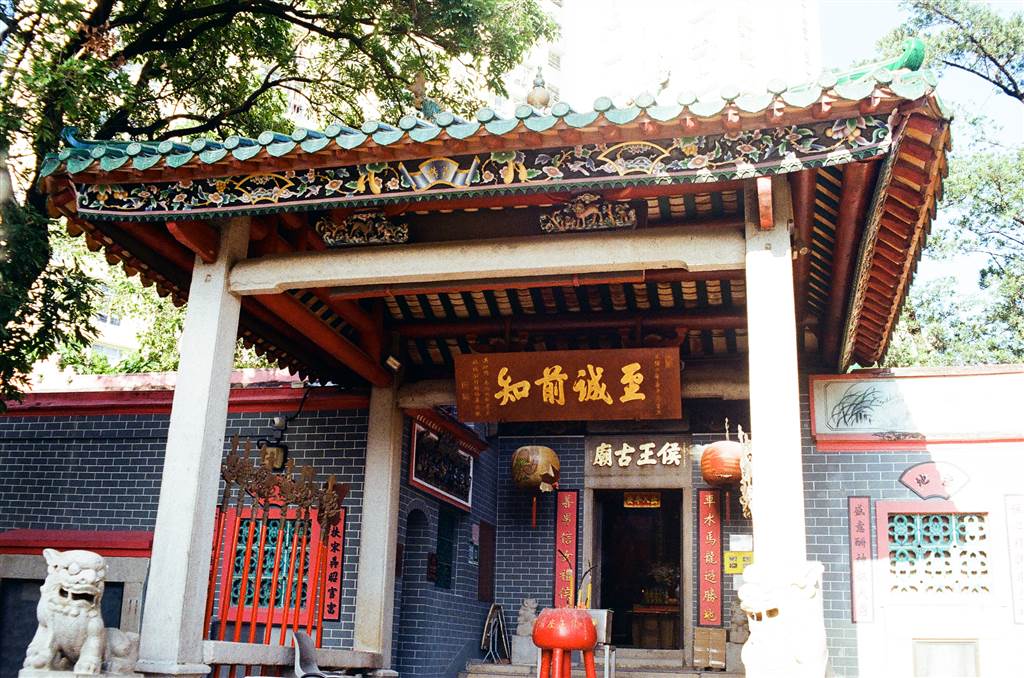
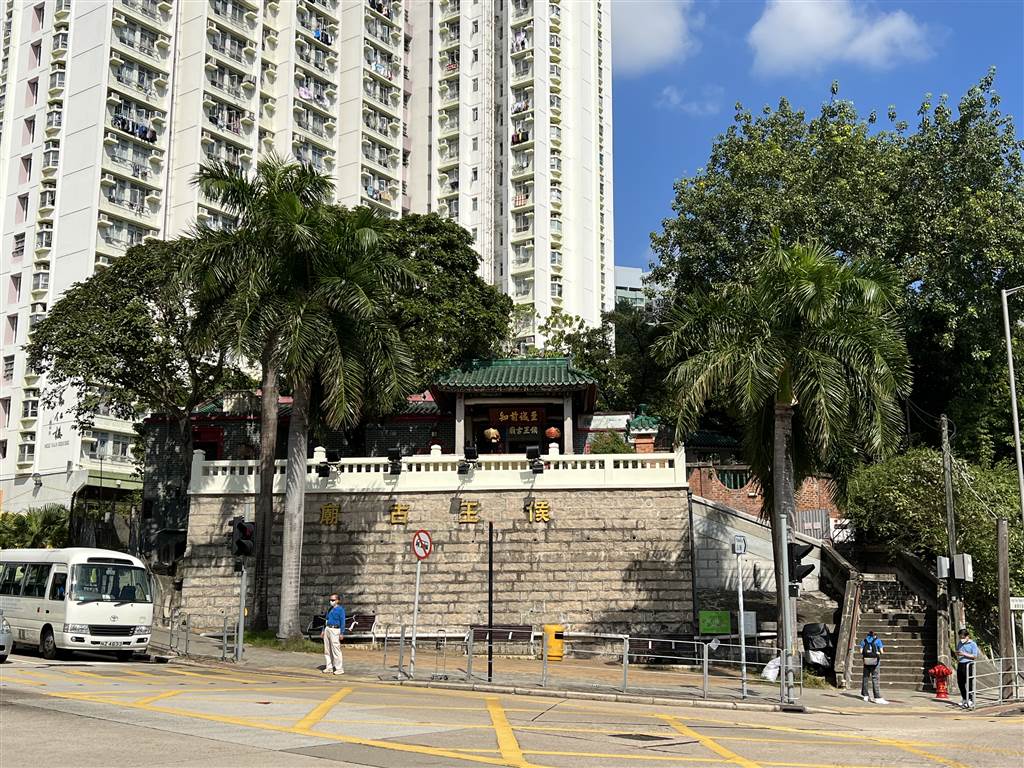
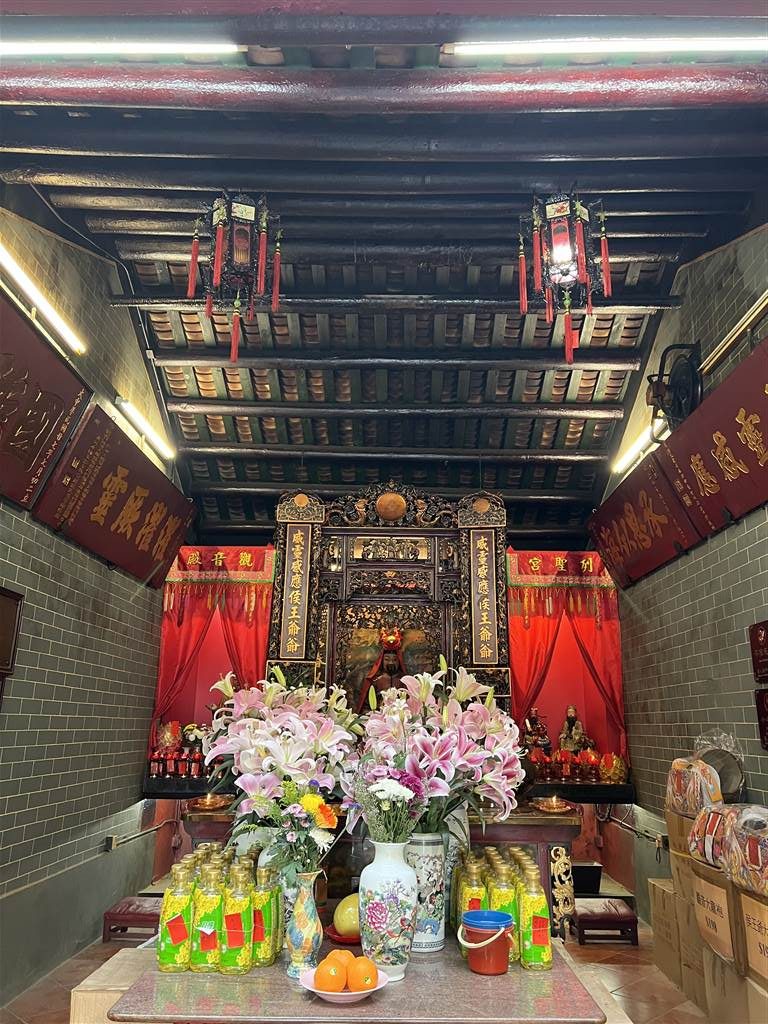
Besides the Hau Ku Shek Ancestral Hall, the Hung Shing Temple, and the Pai Fung Temple next to it, are Grade 3 historic buildings.  While the exact date of construction for the Hung Shing Temple is unknown, it must have existed since the Qianlong reign of the Qing Dynasty.  The Pai Fung Temple, on the other hand, had an original location close to Pai Fung Leng in the northern side of the village.  Due to the construction of the Lo Wu Barracks by the Hong Kong Government, the temple moved to its current location in 1937.

The villagers celebrate the birthday of Hung Shing on the 13th day of the second month of the Lunar New Year every year (before the pandemic).  This period of festivities lasted four days typically.  A traditional village feast of Poon Choi (treasures in a tub) would serve hundreds of villagers at one time.  Then there were the Cantonese opera shows including the operas offered to the deities.  In one year, the villagers held a parade as well.

One unique feature of the Hung Shing birthday celebrations of Ho Sheung Heung was the grabbing contest for fa pao (paper floral tributes).  The grabbing of the paper floral tributes is believed to bring auspiciousness for the year.  Unlike the peace bun contest in the Cheung Chau celebrations of Buddha’s Birthday, the grabbing of the paper floral tributes are more “orderly.”  Whoever first grabs the paper floral tribute would raise his hand, and wins the auspiciousness of the occasion.

Hung Shing was originally named Hung Hei.  He lived during the Tang Dynasty and served as the district magistrate of Kwong Lee.  He had an exceptional knowledge in geography and astronomy.  With this skill he helped predict the weather in order to protect the fishermen who were out fishing in the seas.  Although a caring and dedicated official, he died, unfortunately, prematurely because of overwork.  The Emperor commemorated him by conferring the title of “King Hing Shing of Kwong Lee.”  Since then, the people revered him as the god of protection.

There is a folkloric tale that goes around in the Hau clan.  Before the Hau’s settled down in Ho Sheung Heung, there were the Lam, Poon, Wan and Chiu clans in this area.  A villager stole the golden brass drum of the Emperor.  Enraged, the Emperor ordered the whole village killed.  The imperial guards traced the footsteps of Hung Shing here.  While they were at it, a flock of ducks ran out and obliterated the footprints of Hung Shing.  As such, the imperial guards could not find him.  The Haus settled down here after this incident and thrived as the main clan of the village.  Therefore when they sacrificed livestock for the deities, they would not kill ducks.

In 2012, the two temples underwent significant renovations.  In 2013, the renovations completed and the Antiquities and Monuments Office declared them to be Grade 3 Historic Buildings in 2014.

Besides its rich heritage, Ho Sheung Heung has great natural endowment.  On its north sits the Pai Fung Leng, and the Sheung Yue River flowing on its eastern border.  Further east is the Long Valley, where fields still line its fertile farmland today.  Indeed, this large swathe of low plains was the main attraction to the Hau ancestors.  For centuries, agriculture was the main means of livelihood for the villagers.

Tofu Bash at Ho Sheung Heung

Today, the village remains a vibrant community.  In fact, the village is as much known for its commerce as its history and people.  The soy products of Mei Mei Tofu and Mrs. Lo’s Tofu are very popular.  In the pre-pandemic days, the restaurants offered all-you-can-eat silky tofu dessert and soy milk.  As such, the area drew significant crowds coming in large tour coaches.  Some pretty special items are availabe here, including fermented rose tofu paste and silky tofu in black soy.

Soy tasting aside, the rustic environment itself is also a business opportunity.  The Anytime, Anywhere Café offers a beautiful space for a lazy afternoon by the pond.  The whole venue is available for hosting large parties, including barbeque.

When visiting the village, a tour of the residential areas can take an hour or so.  There are some old houses still standing, but most of the houses in the village are now modern homes.  Do take a walk at the Sheung Yue River right next to the village.

How to Get There

At the minibus station of Sheung Shui Station, take green top Minibus 51K.  The minibus has the final stop at the Hau Ku Shek Ancestral Hall.

Sources

The Wikipedia on Ho Sheung Heung.

The historical descriptions of the Ho Ku Shek Ancestral Hall pamphlet by the Antiquities and Monuments Office.

Legislative Council Brief, Antiquities and Monuments Ordinance (Cap 53), Antiquities and Monuments (Declaration of Historic Buildings) Notice 2014.

The Traditions of Ho Sheung Heung’s Hung Shing Birthday Celebrations, Epoch Times, May 2, 2018.

The Red Earth of Chek Chau (Port Island)

The Red Earth of Chek Chau (Port Island)

It was a rainy and stormy weekend but we managed to visit the Port Island for a good stretch of eight hours, and the sun shined upon us throughout. The Port Island is a small island in the middle-to-western side of Mirs Bay (Tai Pang 

The Heart-Shaped Kwu Tung Reservoir

The Heart-Shaped Kwu Tung Reservoir

The first walk at the Kwu Tung Reservoir turned out to be a spooky experience.  My grandfather was buried in the hillside graveyard across from the reservoir.  When I got there, I was saying in my heart, “hi Grandpa, I am here.”  The hillside graveyard 

Farewell, Kwu Tung Village

Farewell, Kwu Tung Village

The time has come and Kwu Tung Village is scheduled to be demolished in 2023 to make way for the Kwu Tung North New Development Area.

Kwu Tung—A New Development Area

As part of the Hong Kong Government’s initiative to provide housing for an expected population growth of 1.4 million in the next thirty years, the North East New Territories New Development Areas Plan proceeded in 2013 after a few rounds of public engagements.

The protests against this plan turned violent, especially with the clash at the Legislative Council building in 2014.  Members of the Save Kwu Tung Group and other activist organizations took radical actions.  Eventually, they received jail time for the clash at the Legislative Council.  As such, the North East New Territories New Development Areas Plan could be considered one of the many early signs of serious discontent against the Hong Kong Government that eventually led to the mass protests of 2019.

Kwu Tung’s Past

My maternal grandparents settled down in Kwu Tung during the 1950s.  When I was young, my mother would take me to stay at their village house in Kwu Tung South during the summer holidays.

Kwu Tung was once one village, and for a long time there was no such division between Kwu Tung North and Kwu Tung South.  Over its history, the village has experienced a few times of land resumption and redevelopment.  The construction of Route 9 has caused many villagers to move to Choi Yuen Estate in Sheung Shui.  A major private land development resumed Kwu Tung South during the 1990s.  What used to be my family’s village home has since become luxurious housing.  Finally, in the early 2000s, the MTR’s plan to build the Lok Ma Chau line ended up with more of Kwu Tung village being demolished.  By now, what is left of Kwu Tung is near to nothing.

As compared to Kwu Tung South, this Kwu Tung North New Development Area Plan has, ostensibly, a much more “modern” vision of what Kwu Tung North might become.  The Hong Kong Government aims to remake the whole rustic area of Kwu Tung North into a community and transportation hub.  There are grand plans to link the location with an MTR stop and a motor link to alleviate the traffic of the North District.  Equally grand, though perhaps rather incredulously, the famous farmlands, wetlands and the ecosystems in this part of Hong Kong would be conserved, and turned into some sort of an eco-park.

All good and well, except that the existing Kwu Tung Village will be demolished, and gone forever.  Due to the auction of farmland for development, many residents have moved out of the village by now.  What remains are some of the old businesses that have operated in this part of the New Territories for decades.  And they shall close as well.  In the interest of preserving this memory of old Kwu Tung, I went for a walk in the village on a bright and sunny day.

The Tour

We parked at the Kwu Tung Village Committee, where Kam Yick Restaurant is.  The Kwu Tung Village Committee is comprised of members from ten small areas within Kwu Tung, as you can see from the respective mailboxes that are no longer in use now.  The Kwu Tung Village Committee remains active today.  It still plays a critical role in fighting for the rights of the villagers of Kwu Tung, including the coordination of legal action in the process of land resumption by the Hong Kong Government.

The Kam Yick Restaurant, since 1961, remains in good business today, serving chiefly the Kwu Tung community, and the local communities of Sheung Shui with Hakka and Shunde  cuisines.  Because the villagers of Kwu Tung have mostly left the village, the restaurant now serve mostly the construction workers who are working in the preliminary phase of re-development in this area.  Since Ben Sir introduced Kwu Tung on a television segment, there have also been some tourist interests recently.

Besides common items like braised pork in preserved vegetables in soy sauce, there are some rarer dishes here.  The “look goose” and the fried boneless stuffed fish are the signature dishes of this restaurant.

Kam Yick Restaurant lies at the center of community life in Kwu Tung.  Besides the fact that the current owner was once the village head of Kwu Tung, the villagers of Kwu Tung also congregated here daily.  Friends met here, and even foes attempted to resolve their disputes here too.

Established in 1949, the Kwu Tung Vegetable Cooperative was once the largest produce exchange station in the New Territories.  The Vegetable Cooperative stands testament to the once-rural, agriculture-based lifestyle of Kwu Tung.

Those villagers who settled down in Kwu Tung lived in the squatter houses of the 1950s and 1960s.  They have been generations in Kwu Tung.  According to New Territories historian Patrick Hase, the triads of those times built these houses for many of the immigrants from China.  Quite a few of the immigrants were members of the Kuomintang fleeing Communist China.  Once they settled down in the village, many earned a living by farming. In fact, Kwu Tung was known to be a non-indigenous village in Sheung Shui.

The Yan Wah Lo Private Study was once the village school.  It provided free education for the village children.  There is a short couplet on the two sides of its gate.  On the right, the motif refers to the four virtues of Chinese culture.  On the left, the motif wishes the Emperor of Qing Dynasty the three blessings of life.  It has acquired the status of an antique monument, therefore it should stand as such even as the area undergoes massive demolition for redevelopment.


There are two businesses still operating that make sauces.  The Yuet Wo and Kui Lee Sauce Companies are very much in production today.  The Yuet Wo Sauce Company has been producing its sauces in Kwu Tung since the 1970s.  It has its own wine distillation facility on site.

The Kui Lee Sauce and Preserved Fruit Company has been producing its sauces in Kwu Tung since the 1960s.  The raw materials, such as soy beans, are sun-dried on-site in Kwu Tung.

Having passed the two sauce companies, we came upon the Living Water Lutheran Church of Kwu Tung.  A villager donated this site to the church in 1955.  It is a living testament to the work of Lutheran missionaries in the Sheung Shui area during the last century.  They came from the Lutheran seminary in Hubei to Sheung Shui in Hong Kong on Christian mission.  The Lutherans have also built the squatter village of Shun Yee San Tsuen in Ma Tso Lung around the 1960s.

The church now has a ministry for the elderly who struggle to live a lonely life in poverty.  It no longer congregates in the Kwu Tung location, however, as the church has established its presence in Choi Yuen Estate instead.  The site in Kwu Tung now serves this elderly ministry.  It hosts community gathering for the elderly still.

Finally, the Chee Kee Sawmill and Timber Company will also have to close the family business, and it has been in Kwu Tung since 1983.  Of all the remaining businesses in Kwu Tung, this sawmill company prides the largest square footage in its operation (10,000 Sq. Ft).  The owner has a true passion for hand-crafted timber products.  They work with raw timber, and they also recycle timber that has been cast out from other redevelopment projects in the city.  Finally, they are passionate in their crafts and care about the community.  They organize workshops for wood crafting.  It is a sunset industry, but it will be remembered and sorely missed.

May the Story Live On

The villagers of Ping Yeung and Kwu Tung have put up a good fight in order to defend their homeland.  In the days to come, the memories of a once-vibrant community will only remain in their hearts.  The pictures here are but a snapshot of Kwu Tung before it will be demolished and dressed in new clothes.  May the story live on.

Sources

Kwu Tung North / Fanling North New Development Area, Government of the Hong Kong Special Administrative Region.

It would be Difficult to Clear Out Hundreds of Squatter Huts in Kwu Tung North, February 6 2020, Topick, HKET.

Kwu Tung Village Committee’s Facebook Page.

Ben Sir on Local Hong Kong Tour: Kwu Tung and Ma Tso Lung.

Kwu Tung Stories, kwutung.wordpress.com.

Yuet Wo Sauce Company website.

Kui Lee Sauce and Preserved Fruit Company website.

Tour Kwu Tung for a Taste of the Northeast.

Evangelical Lutheran Church Social Service – Hong Kong.

A Miracle in Kwu Tung’s Church, Volunteers Help an Old Man to Find Long Lost Family, hk.on.cc., December 10, 2016.

Chee Kee Sawmill and Timber’s Facebook Page.

The Redevelopment and Resumption of Land in Northeast Costs the Last Sawmill in Hong Kong, Ming Pao Weekly.

The Southern District Coastal Trail (The Waterfall Bay and Sandy Bay Road)

The Southern District Coastal Trail (The Waterfall Bay and Sandy Bay Road)

I have been very eager to visit the Waterfall Bay at Wah Fu Estate for a while.  After a stretch of rainy days last week, the water flow must be voluminous there.  Therefore on the first sunny morning I headed out to the Southern District