Blog

The Murmur of Nature in Cambodia

The Murmur of Nature in Cambodia

In Siem Reap I wake up to astounding cacophonies of insects. Their singsongs accompany my journey throughout the day, from my waking at dawn to my resting at dusk. Thousands and thousands of them, each releasing its own distinctive sounds, perhaps by stridulating. There must 

The Aberdeen Battery of Ap Lei Chau

The Aberdeen Battery of Ap Lei Chau

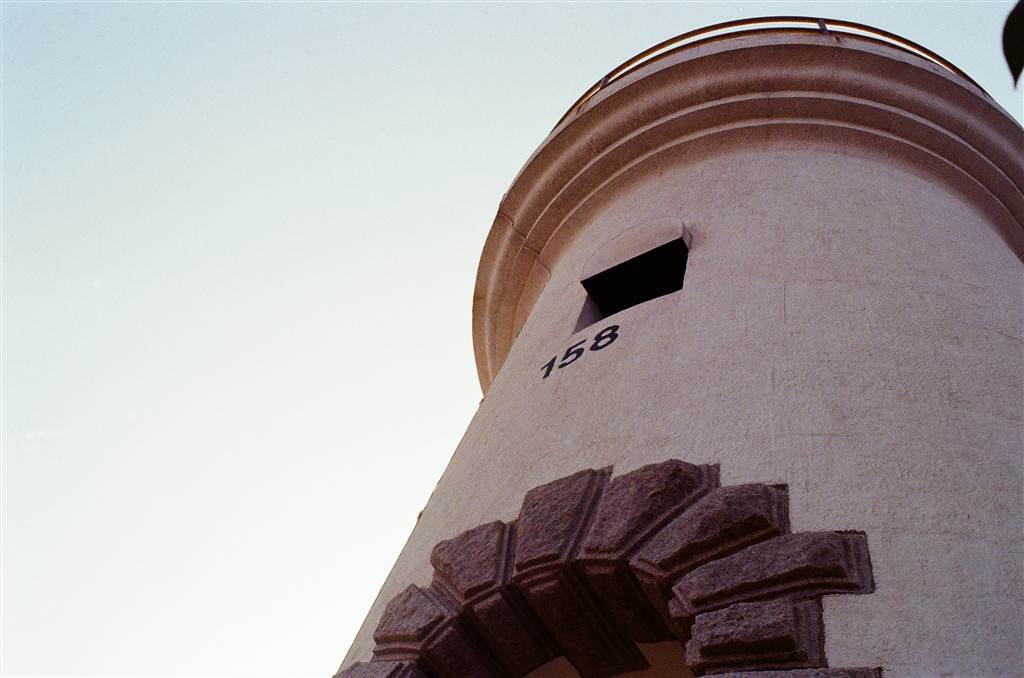
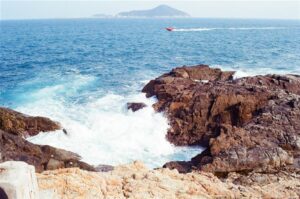
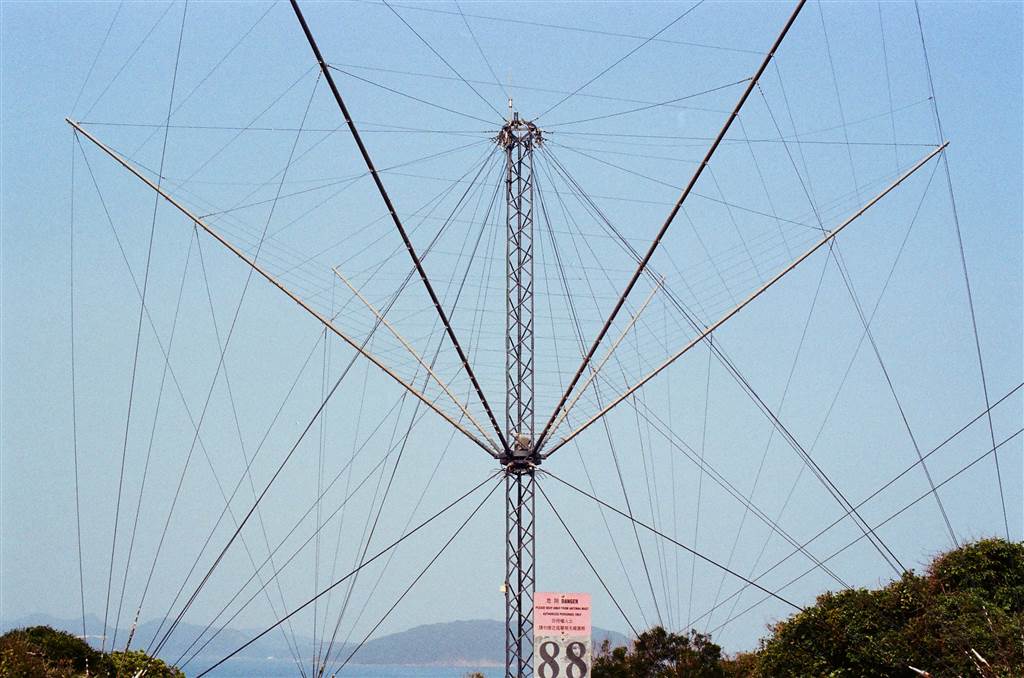
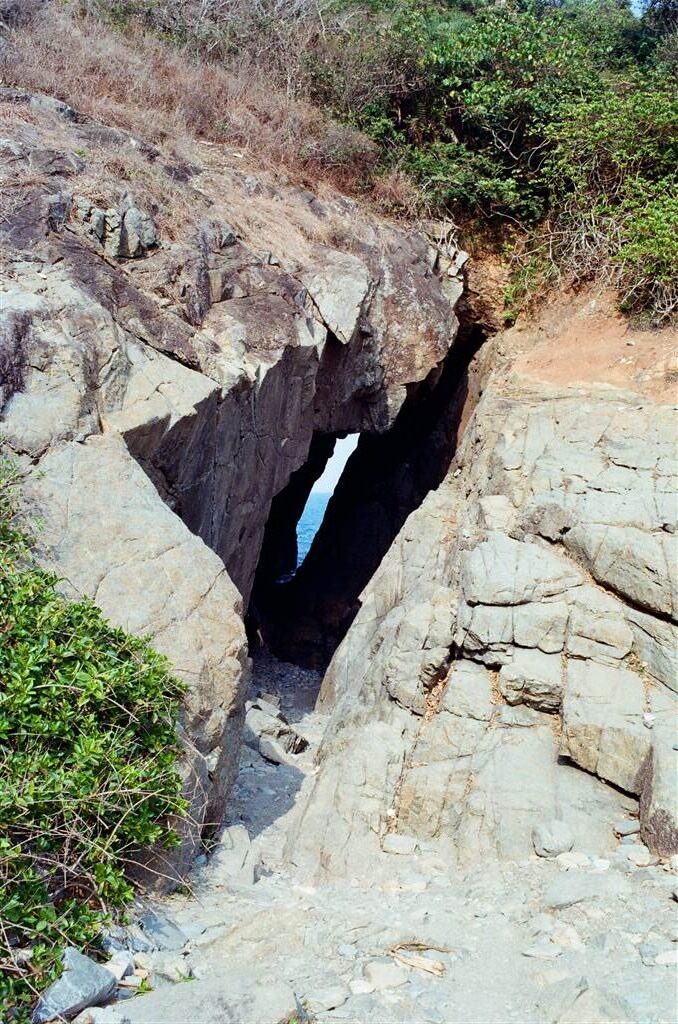
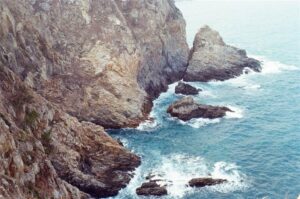
The Aberdeen Battery has been on my bucket list for a while and I finally got the courage and motivation to go. It was not going to be easy to find it, and I did have an adventure there. Please see below on the details 

Ka Lai Yuen Chiu Chow Noodles (REOPENED AFTER A DISGRACEFUL CLOSURE)

Ka Lai Yuen Chiu Chow Noodles (REOPENED AFTER A DISGRACEFUL CLOSURE)

Update as of February 2024

I have recently passed by the former site of Ka Lai Yuen and with some complicated feelings discovered that the restaurant has now reopened its doors since its disgraceful and abrupt closure in April 2023. I have not had a chance to ask about any potential change of ownership, but it is likely that I will have a bowl there to find out what is really happening. Chances are, however, that the staff there will be tight-lipped about ownership issues.

The ownership issue is important for responsible diners I think, because if the owner remains a murder suspect I would not spend money to support such a business. Please come back later and see if I manage to uncover some news in this respect.

Suffice to say, that the restaurant has retained its name and the operation seems in line with its established practices. The storefront has been simplified, and I also noticed that the distinct beefy flavor that used to pervade the restaurant’s surroundings was no longer so strong.

A Disgraceful Closure

It is with sadness that I report an unhappy news. Ka Lai Yuen, with a history of 47 years of operation, has closed as of 30th April, 2023. And the reason for its closure is disgraceful as well. Its owner Mr. Hui was arrested for suspected conspiracy to murder and murder. Because the investigations are ongoing, there is only so much that we know now. A man named Chan, who is a member of the home owners’ committee of the building that the restaurant runs its business, made complaints about the hygiene and noise issues that the restaurant has caused. Not long after, someone chased him down and knived him to death on the street. Ka Lai Yuen’s owner Mr. Hui was suspected to be behind the murder. 

This is shocking news to the whole community in Yuen Long, and really, given this development, it is for the best that the restaurant closes its doors. 

Like beef? Then Ka Lai Yuen Chiu Chow Noodles is for you. Located in a central location in Yuen Long Town, this noodle place is known for its unusually wide variety of cattle parts on the menu and a traditional Chiu Chow’s take on them. In my humble opinion, this is the best beef brisket noodle in all of Hong Kong.

The Food at Ka Lai Yuen

Hong King Street lies behind Castle Peak Road, which is the main thoroughfare of Yuen Long. Once you head over to the vicinity, you will not miss Ka Lai Yuen. There are two things about the restaurant that really stand out. First, it has a distinctive appearance. The whole ambience of the restaurant is themed in bright, Lunar-New-Year-red. The restaurant’s name is in gold and a classic Chinese font.

Classic winged fans swirl throughout the day, fanning the mouthwatering flavors of its food.

Secondly, long before you even reach its interior you will smell the beef. It is a very strong, flavorful smell that is perhaps enhanced by the herbs they use in their food, especially the black pepper. Even before entering the restaurant, I salivate in anticipation.

In terms of its menu, this “variety of cattle parts” that I mention above is a very unusual and serious affair at Ka Lai Yuen. In Hong Kong, most beef brisket noodle restaurants will offer beef briskets, tendons, stomach, tongue, heart, lungs, intestines and other standard organs. Here at Ka Lai Yuen, however, there is a special provision of both the male and female cows’ reproductive organs.

The Cantonese have a saying of “eating the part to nourish that part of you.” If you have issues with your tendon, then the way to go is to eat more beef tendons. So this is how that special menu of reproductive organs appeal to the diner. According to the videos on show at the restaurant, however, the special market for these reproductive parts are the Chinese tourists, and mainly those from Guangdong. Culturally speaking, the practice of eating reproductive organs is less prevalent in Hong Kong now, especially with the younger generation. Needless to say, however, these special items are not common and therefore it does take some luck to be able to try them even at Ka Lai Yuen.

For me, however, I do not eat organs, so I am always happy with just a beef brisket noodle there. A bowl of regular beef brisket noodles is about $46 now. You may also up the choice to premium parts and fresh beef, those would be in the range of $60 to $70 a bowl. Even the regular bowl comes in a generous portion.

The soup base of the beef brisket noodles is full of complex flavors. It is certainly thicker, with a much fuller body, than the clear soup in other brisket noodle restaurants. The richness is a result of many kinds of Chinese herbs, perhaps with a heavy emphasis on black pepper as well. What is special about this beef soup base is that the flavors are well-blended, and therefore you do not get the sense that it comes from an herbal base. Instead, it gives the impression of a Chinese style satay.  When I eat beef noodles at Ka Lai Yuen, I always eat the soup as well. Surely, its flavor comes from natural ingredients (herbs aside, the cattle bones as well). Therefore, there is no concern of added MSG, as I never feel thirsty after a meal there.

Another special item is the beef meatball. The beef is hand-beaten repeatedly to a consistency of creaminess. This ensures that the texture is chewy with the natural flavors fully blended. I like the beef meatballs at Ka Lai Yuen, but they are perhaps not as exceptional as the beef soup base and the beef brisket.

Finally, the homemade chili oil is another must-do at Ka Lai Yuen. It is very spicy but the spiciness blends well with the crunchy bits and the abundance of red oil. Along with the satay flavor of the beef brisket, it adds a perfect kick to the noodles. The whole experience is heavenly. And yes, I eat the soup with the chili oil in it. A jar of this chili oil costs around $75 now. Pack it home!
The Story of Ka Lai Yuen

Mr. Hui is the second owner of Ka Lai Yuen. Coming from Chiu Chow’s culinary tradition, Mr. Hui does hold on to some old-fashioned methods in his approach to food. Take the meatballs as an example. Mr. Hui starts blending the meat at midnight and the beating process will go on until 9 in the morning. In fact, the work was so strenuous that he has broken his fingers before. Besides beef meatballs, the restaurant also offers hand-beaten pork meatballs and cuttlefish meatballs.

The first owner of Ka Lai Yuen opened its first chapter in Yuen Long in 1976. This restaurant has since been 46 years in business. The restaurant moved to the current address in the 1990s. Mr. Hui was an illegal immigrant that made his way to Hong Kong in the earlier days. He learned from the last owner how to make Chiu Chow noodles. With a $40,000 payment, he took over this restaurant and remains actively involved with its operation today.

A Fun Initiative with the Bowl Noodles

Back in the older days, and way before the Covid pandemic hit, Ka Lai Yuen was also known for its noodle slurping competition. The rules were simple. The contestant can choose any flavor of beef noodles and he or she will be served 10 bowls on the table. He or she must finish eating all ten bowls in one hour and the prize would be $3,000. If someone is able to finish 30 bowls, the prize would be $50,000!

Now, if the contestant is not able to finish all 10 bowls, however, he or she would have to pay the price for all ten bowls served. There is no specific rule about the soup, but Mr. Hui said that, by the time you eat the third of fourth bowl, the noodles would have soaked up all the soup anyway.

This was a fun initiative, and Mr. Hui got the idea from his Chiu Chao staff, who could gobble up ten bowls of rice easily. He also kept a running balance that was dedicated to the prize money of this initiative.

Mr. Hui said that he himself has tried eating so much noodles, and he could do eight or nine of them in one go.

How to Get There

The address of Ka Lai Yuen is No. 5, Li King House, Hong King Street, Yuen Long. There are many buses that stop on Castle Peak Road, and the light rail stop to get off at is Hong Lok Road. The closest landmark would be the HSBC on Castle Peak Road.

Sources

Promotional videos on-site at Ka Lai Yuen.

Ka Lai Yuen Chiu Chow Noodles: A Chiu Chao Man’s Perseverance, etnet.com.

The Noodle Master Meets Big-Appetite Contestants, On.CC.

The Pink Dolphins of Hong Kong

The Pink Dolphins of Hong Kong

Photo credit: All close-up photographs of the pink dolphins on this entry are the work of Thomas Tue, aka Mr. Dolphin, of the Eco Association Limited. The Dolphin-Sighting Tour On this bright late summer morning I got up at 6:30 and headed over to Tung 

The Former Fanling Magistracy

The Former Fanling Magistracy

The story of the Fanling Magistracy Post WWII Hong Kong was a place of booming industry and commerce.  With that also came the problem of crime. The New Territories then was not unlike the wild, wild west, where hooligans and drug lords ran rampant. It was 
From Pokfield Road to Pok Fu Lam Reservoir

From Pokfield Road to Pok Fu Lam Reservoir

The trail of the day is to hike from the Pokfield Road stairs to the Pok Fu Lam Reservoir.  I have headed up the trails from the Pokfield Road stairs a few times. This time is no different. Next to the gas station of Pokfield Road bus stop, head up these long stairs.
When you reach the top, follow the signs for Hatton Road for another section of gentle climb on both stairs and a gentle slope.

At this crossroads, go straight to head to the Pok Fu Lam Reservoir direction.

At this point, head up the stairs on your left.  The sign to Pok Fu Lam Reservoir is on the stairs.  This is the Hong Kong Trail No. 1 section.

The Hong Kong Trail No.1 section comes with some pretty good views of western Hong Kong.

When you reach this point, go downstairs on your right to reach the Pok Fu Lam Reservoir.

Views at the Pok Fu Lam Reservoir

Compared to a number of other well-known reservoirs in Hong Kong, such as the Kowloon Reservoir Group, the Shing Mun Reservoir and the Tai Lam Chung Reservoir, the Pok Fu Lam Reservoir clearly pales in the view that it offers. However, it has much historical significance as the first public reservoir in Hong Kong.

I simply walked along the Pok Fu Lam Reservoir Road for a look.  However, I did not seem to see the antique monuments of the reservoir (see below) along this way.

To exit, walk along the Pok Fu Lam Reservoir Road on the other direction, toward Pok Fu Lam Road, and there are many buses and minibuses that will take you back to the urban areas in Hong Kong Island.

About the Pok Fu Lam Reservoir

The Pok Fu Lam Reservoir is the first public reservoir in Hong Kong. Its construction completed in 1863. Before this point in history, the people of Hong Kong relied on natural and primitive water sources. Due to the growth in population, the needs for fresh water resulted in the construction of Hong Kong’s first reservoir.

There are a few waterworks facility of the Pok Fu Lam Reservoir that have gained the status of declared monuments. This includes the Pok Fu Lam Reservoir Former Watchman’s Cottage, the Pok Fu Lam Reservoir Gauge Basin, and the Pok Fu Lam Reservoir Masonry Bridges. The following have been given the Grade 2 and Grade 3 Historic Building status: the Pok Fu Lam Reservoir Box Culvert, the Pok Fu Lam Reservoir Air Vents at the Service Reservoir, the Pok Fu Lam Reservoir Embankment, and the Pok Fu Lam Reservoir Old Masonry Dam.

Reminder

This trail is generously shaded but be sure to bring plenty of water with you on the way if you are going in the summer. I brought 1 litre water with me that day and almost finished it.

How to Get There

Bus Routes 3X, 4, 4X, 30X, 91, 94, 970, 970X stop at the Pokfield Road bus stop.

Source

Historic descriptions on-site.

From Tsiu Hang to Ma Lam Wat

From Tsiu Hang to Ma Lam Wat

The trail of today is a two-looped walk from the Lions Nature Education Centre in Tsiu Hang, then Ma Lam Wat Village, and return via Tai Ngam Hau, then back to Tsiu Hang. I have previously written on the Lions Nature Education Centre. Because I 

Yixin Restaurant

Yixin Restaurant

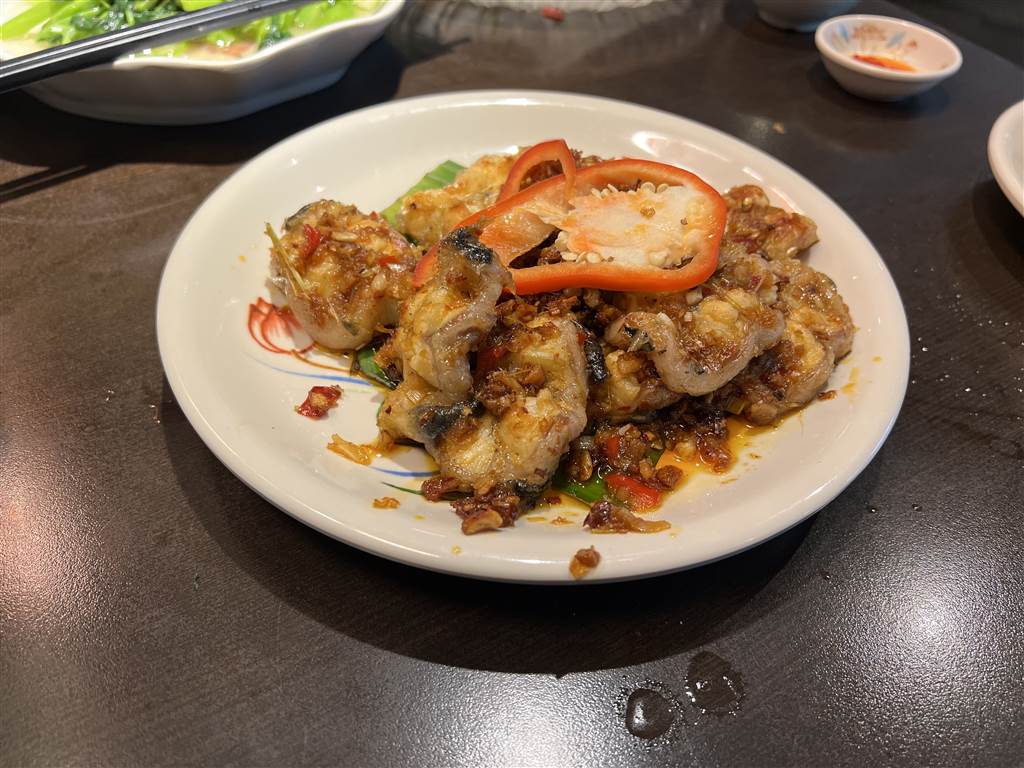
The fish intestines! You know the cost of the water that goes into cleaning them would end up more than that of the intestines themselves! The owner of Yixin Restaurant jested about this traditional Cantonese dish on the radio food show, The Golden Plaque. A 

Old-Time Vietnam – A Final Walk in Hue

Old-Time Vietnam – A Final Walk in Hue

On this final day in Hue, I decided to take a look at some special sites in the city.  An easy stroll around the city would do for me.

The An Dinh Palace

You can’t miss the luxury and the preoccupation with all things western at the An Dinh Palace, for Emperor Khai Dinh had his hand on it.

The complex was first built in 1902 at the present location. Originally it was a wooden structure with three compartments, two wings and auxiliary buildings.  It served as the private residence of Khai Dinh, the oldest son of Emperor Dong Khanh. An Dinh Palace was then known also as the Mansion of the Eldest Prince.

In 1917, Khai Dinh ascended to the throne.  He rebuilt and expanded An Dinh Palace into a more spacious European style.  Construction completed in 1918. An Dinh was Khai Dinh’s palace away from the imperial palace. In 1919, Khai Dinh granted the mansion to his son Prince Vinh Thuy, who later became Emperor Bao Dai, and also the very last of both the Nguyen Dynasty and Vietnam.  During both of Khai Dinh and Bao Dai’s reigns, the An Dinh Palace hosted banquets and events to entertain foreign guests.

Eventually, Emperor Bao Dai and his royal family lived in An Ding Palace after his abdication in 1945, until later they settled down abroad.

A quick walk outside the building reveals the ample glory that once adorned this mansion.  The Trung Lap Pavilion, golden with eclectic architecture, stands in the front yard. Inside the pavilion a bronze statue bearing the image of Khai Dinh poses with flair.

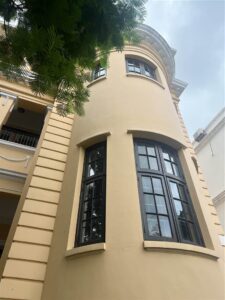
The golden facades of the building with their embossed stucco are in the Vietnamese neoclassical style, with Romanesque columns on the sides of the wooden windows, which adds a classy touch and texture to the mansion. The painted interior shows a fusion of European and Vietnamese motifs, consistent with Khai Dinh’s penchant for all things western.  For the small exhibition that it hosted, the An Dinh Palace did tell the story of the last emperor of Vietnam.

Although the building does look in need of restoration at the time that I visited, it still gleamed an aged glory under the generous sunshine of the day. Lying on the main axis to the mansion’s front and the Trung Lap Pavilion is the main gate to An Dinh Palace. Its elaborate sculptures of dragons and phoenixes, and the porcelain embossment of all things auspicious, represent the very best of Vietnam’s traditions and craftsmanship. The main gate was built in the same vein as the beautiful and elaborate gates of the Imperial Enclosure.

I was quite curious to learn about what happened to Vietnam’s disfavored royalty. After a tumultuous, disruptive reign, Bao Dai settled down abroad.  I thought the last queen, Marie-Thérèse Nguyễn Hữu Thị Lan, was beautiful.  Emperor Bao Dai died in 1997 in France.

For some time the An Dinh Palace was the premise of a restaurant.  It then closed until 2008 when the German Conservation Restoration and Education Project began to restore the complex. In 2012, it reopened its doors with antique furniture and restored interiors.

Our Lady of Perpetual Help Church (the Redemptorist Church)

Our lady of Perpetual Help Church was in the vicinity.  It was designed by Vietnamese architect Nguyen My Loc, who received his education in France. Construction began in 1959 and completed in 1962.

The architecture is a fusion of Vietnamese and western styles. Made of concrete and stones, the entire cathedral is in the shape of a cross. The tiled roofs are in a bright orange colour, perhaps along with the curviness they soften the sharpness of the steeple and the protruding spires of the stained glass throughout the structure. There is a three-storey bell tower. Like the frontal façade that leads to the nave, the bell tower has assumed the shape of a pagoda.

Outside of the cathedral, there is a notable statue of Jesus Christ, perhaps it is a much smaller version of the Jesus the Redeemer statue in Rio de Janeiro of Brazil. There is a grotto with Santa Maria as well.

Despite its grand posture, this cathedral was perhaps representative of a history of great religious strife in Vietnam. It was constructed at the behest of the Archbishop of Hue, Ngo Dinh Thuc, who was the brother of President Diem. As such, it does speak to the influence of religion in Vietnam’s national politics. Needless to say, Catholicism came to Vietnam via French colonialism. After the final removal of Bao Dai from power in the 1950s, President Ngo Dinh Diem, originally with backing from the United States as a catholic statesman, served as the President of the Republic of Vietnam. His discriminatory policies against the Buddhists in particular have caused great animosities that were religion-based. The Buddhists responded with extreme acts of protests. One of the most infamous incident of which was monk Thic Quang Duc’s self-immolation in 1963.

The Cao Dai Temple

I then realized that the Banh Beo Ba Cu was right across the street, but it closed on the day that I visited.  That was too bad.  The Banh Beo is a gluey rice cake wrapped in lotus leaves and dipped in fish sauce.  It is a very popular street food in Hue.

I decided to visit the Vinh Loi Cao Dai Temple as the last site to see in Hue.  That was closed too, so I say “I been there” with a picture.

As compared to Cao Dai’s Holy See in Tay Ninh, where the religion was born and rose to a national scale, the Vinh Loi Cao Dai Temple in Hue was of a much smaller scale. When I visited the Cao Dai Temple in Tay Ninh, I observed a session of worship there and it was eye-opening. Let me try to explain this (in my opinion, odd) religion here.

I guess from the standard Christian point of view Caodaism is a new age cult. It is a fusion of all sorts, including Christianity, Buddhism, Islam, Hinduism, Taoism, Confucianism and ancestral worship. It was born in the 1920s, after three principal members of the religion (mediums) claimed to have received visions from God. New-age as it is, Caodaism has exited for a century now. In this time the followers of Cao Dai have made their mark in Vietnamese history. Perhaps I can quote the Wikipedia here for a brief introduction:

Officially called the “Great Way of the Third Time of Redemption” (Đi Đo Tam Kỳ Ph Đ), it became popular in its first few decades, gathering over a million members and converting a fifth to a fourth of the population of Cochinchina by 1940.

During the First and Second Indochina Wars, members of Cao Đài were active in political and military struggles against both French colonial forces and South Vietnamese Prime Minister Ngô Đình Dim.

Their criticism of the communist forces until 1975 was a factor in their repression after the fall of Saigon in 1975, when the incoming communist government banned the practice of Caodaism. In 1997, Caodaism was granted legal recognition and unrestricted practice once again.  (Wikipedia)

The Indochine Palace next door could have stolen the shine with its grand, modern style, but the colors of the Cao Dai Temple easily drew the first attention of the tourist.  I was happy that Hue left me with a memory of colors, the sight of this temple brought me back to the memories of Tay Ninh and southern Vietnam.

The Worldview of a Grab Driver

After an uneventful train ride, I found my way back to Danang. I did some shopping in the morning before my afternoon flight. I had an interesting conversation with the grab driver.

Even by just riding in the back of his motorbike I could sense the bright and cheerful spirit in this man. He asked me where I was from, and I said, Hong Kong, China.

No, no, Hong Kong no China! Hong Kong friend, China no friend.

Why don’t you like China?

China “cong can” Vietnam, China “cong san” Vietnam!

Judging from the context of this conversation, the way that he used “cong san” in his sentence, and the way it sounded, I suspected that what he literally said was China “communism” Vietnam. When I went home, I searched for the Vietnamese word for communism.  That confirmed my suspicion, the Vietnamese word for communism was “cong san.” I think he meant that China wants to take over Vietnam. In Chinese, “communism” is composed of the two words together meaning “communal property.”

Before I left, he showed me a photo of his young son, while smiling ear to ear. He places all his hope in his son. Before I left, I shoved all my small change into his hands.

Sources

The Rough Guide to Vietnam, Rough Guides (2015)

Vietnam, Marco Polo (2019)

The Wikipedia on Caodaism.

Erin R. McCoy, A War Tour of Viet Nam: A Cultural History (2022) at 56.

The Wikipedia on Bao Dai.

In a Hue Palace, European Style Meets Asian Traditions, Nhandan online.

Our Lady of Perpetual Help Church (Redemptorist Church), Thua Thien Hue Portal.

Half a Day in Tsiu Hang

Half a Day in Tsiu Hang

Orchards, farming fields, outdoor education areas, air-conditioned exhibition centres, a lotus pad, short hiking trails and a nice café – what location offers better summer outing options than Tsiu Hang? The 24-acre Tsiu Hang Special Area is a designated area of environmental conservation. It received