Blog

Ubiquitously Uzbekistan – The Gur-I-Amir of Samarkand

Ubiquitously Uzbekistan – The Gur-I-Amir of Samarkand

There is speed rail in Uzbekistan. We made it to our 7am train to Samarkand. About two hours later, we arrived in Samarkand. From the train station we took a taxi to Bahodir B&B, where we would stay for two nights until we headed out 

Ubiquitously Uzbekistan – The Amir Timur Square and Hotel Uzbekistan

Ubiquitously Uzbekistan – The Amir Timur Square and Hotel Uzbekistan

After visiting metro art, we exited the Amir Timur station and arrived at the vicinity of the Amir Timur Square. When we saw Hotel Uzbekistan, we decided that we could take a break and have coffee there. Our coffee session turned out to be an 

An Easy Half-Day Trip in Sharp Island

An Easy Half-Day Trip in Sharp Island


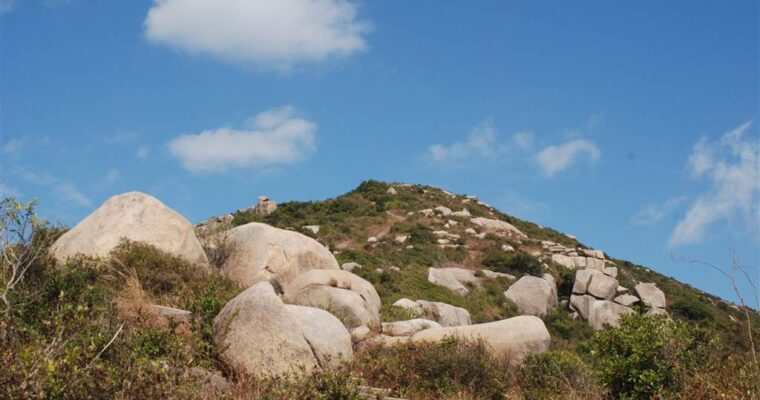
A visit to Sharp Island will fulfill a few wishes for nature lovers. There is the fun walk out to the Kiu Tau Islet on the tombolo at low tides, close to the Sharp Island Pier. At the Sharp Island beach area you will observe some interesting rock formations.

Then one can head over to a short hiking trail with a reasonable altitude. Along the trail you will see wonderful sea views of Sai Kung’s eastern waters. If you want to swim, the waters of Hap Moon Bay (Halfmoon Bay) is pristine. On a sunny day, the Sharp Island offers an exceptional selection of outdoor activities. Its proximity to Sai Kung also makes it an easy outing.

Sharp Island was the first short hike that I did since the summer months. I thought the weather was cooler, but when I went there, it was scorching hot. As a result, I did not bring enough water with me for just a gentle climb up the high points of the island. All else was easy though, so this is a brief introduction to a good afternoon spent at the island.

The Sharp Island Beach

As soon as you get off the Sharp Island Pier, you will be at the Sharp Island Beach. The water is pristine and the sand is white.

I headed right over to the tombolo, hoping to reach Kiu Tau Islet. However, the tides were a little high at around 1:15pm, and I stopped half way at the Tombolo, by then my socks were already soaked. Therefore do watch out for the times of the low tide on the Hong Kong Observatory website. If the tidal information is too difficult to digest, I have also learned the rule of thumb to catch the low tide to the Kiu Tau Islet. Please see this entry.

On your way to the tombolo, look for the Pineapple Bun Rock. You will know it when you see it, because it really does remind one of the sweet crust on a pineapple bun.

The Kiu Tau Islet has a high point of a 30 meter altitude and you may climb it.

The Sharp Island Geo Trail

The entrance to the trail is near the beach, there is no need to head back to the pier area.

Photos: The Sharp Island Geo Trail is behind the Sharp Island Beach

The highest altitude on this trail is only a little over 90 meters, therefore the climb is suitable also for young children. However, if you go in the summer, do prepare enough water. A good section in the latter half of the trail has no shades.

Photos: A Panorama of the Islands East of Sharp Island

The walk provides excellent aerial views of the eastern waters of Sai Kung. Looking west, the Kiu Tau Islet is seen multiple times throughout the hike. Looking east, you will see many of the outlying islands.

Allow for about 2 to 3 hours if you want to do a full tour of the Kiu Tau Islet, followed by a hike up this trail. At the end of the trail, you will reach the Half Moon Bay.

Hap Mun Bay (Halfmoon Bay)

The Hap Mun Bay, also known as Halfmoon Bay, is a wonderful small public beach. I think the facilities here are better than at Sharp Island Beach, as there is a store that provides beach umbrellas. However, there is a large area with natural shades at Sharp Island Beach.

The water and the sand are both wonderful at Half Moon Bay. But there is absolutely no shade, therefore if you go, expect to rent umbrellas from the store.

Water sports is also possible, I see many people doing kayaking there.

The shower there provides sea water only.

The Geology of Sharp Island

As a Geopark, Sharp Island features many interesting rock formations. When you head on to the tombolo toward the Kiu Tau Islet, you will see the famous pineapple rocks. The island does offer more, although it probably requires a trained professional to find them and explain them. I certainly did not notice interesting rock formations on the Sharp Island Geo Trail.
Photo: From the descriptions on site, “These granite boulders got their unique reticulation from multiple weathering processes and sea water erosion. The name is a nod to Hong Kong’s famous local delicacy: the pineapple bun.”


Therefore I will keep the introduction here brief. The rocks that form the land mass of Sharp Island are volcanic. This is certainly the case for most of Hong Kong. However, the volcanic rocks of Sharp Island are special in that there was lava exposure, which is less common for the volcanic rocks of other parts of Hong Kong.

A caldera is a collapsed volcano due to major eruptions. The Sai Kung caldera produced the rocks of the Mang Kung Uk Formation. The Mang Kung Uk formation consists mostly of ash and an abundance of crystals. The rocks that underlie the Kiu Tau Islet are fine-ash tuffs of the Mang Kung Uk Formation, formed during the Cretaceous period.

About 141-140 million years ago, the High Island Caldera formed close to the now Sharp Island area. The heaps of volcanic ash resulted in thick layers of tuffs, and this caldera did also spew lava. In the earlier phase of this formation, the Clear Water Bay Formation resulted. Then later the magma intrusions produced the Tei Tong Tsui Quartz Monzonite. As the name suggests, the Tei Tong Tsui Quartz Monzonite consists of large, well-developed crystals.

These are older rock formations even as compared to the hexagonal columns in other parts of Sai Kung. The volcanic activities that took place after the High Island Caldera eruptions are what resulted in the hexagonal columns surrounding the High Island Reservoir.

How to Get There

Of all of Hong Kong’s Geoparks, Sharp Island is perhaps the most accessible. A boat ride from the Sai Kung Pier only takes about 15 minutes to reach Sharp Island Pier. It is a good first course for the outlying islands of Sai Kung.

At the Sai Kung Pier, you will see many ferry carrier booths. Inquire with one that goes to Sharp Island. On this day, I took Kitty’s Boat. The cost was $30 return, but because I boarded the ferry at Half Moon Bay instead of Sharp Island Pier, I had to top up $10 for my return trip.

Your boat ticket will tell you the times that the boat returns from Sharp Island. However, you likely will leave at Half Moon Bay, unless you do a return trip hike back to the Sharp Island pier. You can either call the carrier, or inquire early the departure times at Half Moon Bay.

Sources

Hong Kong Geo Park, Sharp Island: Half Day Tour.

Bernie Owen & Raynor Shaw, Hong Kong Geopark All in One (2011).

Ubiquitously Uzbekistan – The Metro Art of Tashkent

Ubiquitously Uzbekistan – The Metro Art of Tashkent

Time stopped at 5:23am, April 26th 1966 in Uzbekistan. An earthquake with a magnitude of 7.5 on the Richter scale and a depth of 3-8 kilometers shook the nation and shattered the infrastructures of Tashkent. The damage was so extensive that it rendered 300,000 homeless. 

Hang Heung Cake Shop and its White Lotus Paste

Hang Heung Cake Shop and its White Lotus Paste

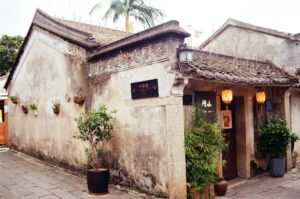
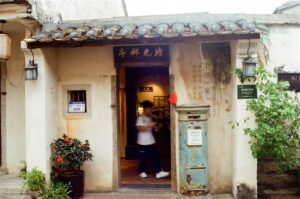
Yuen Long is easily one of Hong Kong’s best food havens. Castle Peak Road, known to locals as “the big road” in Yuen Long, itself presents myriad choices for street food, proper restaurants, historic dining, grocer establishments and tea shops. Be guided by the aroma 

Shun Tak Kui and the Time Tunnel of Yuen Long

Shun Tak Kui and the Time Tunnel of Yuen Long

We are at the tail end of the summer in Hong Kong, but the days are still hot. A short trip into the villages of Yuen Long would be a good idea. As I was doing the research, I came across this lesser-known heritage site called Shun Tak Kui. It is located in Shung Ching San Tsuen of Shap Pat Heung in Yuen Long and a Grade 1 Historic Building. Because the Green Tunnel is in the vicinity, I decided to do one stone two birds on this trip.


The Green Tunnel of Yuen Long

The Green Tunnel of Yuen Long acquired its reputation as the photo-taking spot for the “literary youth” circle mostly due to Cantopop singer Sammi Cheng’s MV. I made my way from Yuen Long town proper to the tunnel. Although very excited at first, I found the tunnel looking nothing like what I had imagined.

Only when I took photographs with my phone did I see how it appeared to be very much Avant Garde. Therefore I say it is really photogenic, but the experience of walking through the short tunnel was nothing out of the ordinary. The green color comes from the metal sheets that line the interior of the tunnel. It felt more like walking through a cargo container than travelling through time, although the locals like to call it the Time Tunnel.

All was good, and I took the Avant Garde photographs as I should.

Shun Tak Kui

I headed over to the direction of the river. Soon I found my way into the Shung Ching San Tsuen Village of Shap Pat Heung.

Shun Tak Kui is a Grade 1 Historic Building. Also known as Leung Uk, Shun Tak Kui was built by the Indonesian Chinese family of the Leung’s, who came from Meizhou of Guangdong, in 1936. The ancestor Gon-shun Leung went to Indonesia and worked first at a shop. He gradually became a very wealthy man. When Shun Tak Kui was built, the Leung’s lived there for a short while. The building also served as the community space for meetings, village school education and other ceremonial events.

Gon-shun Leung bought the land in Shung Tak San Tsuen in 1930. Construction began in 1934 and it completed in 1936, taking a total of two years and HK$20,000 to build this house. Like Kwan-min Pun of Pun Uk, Leung was also Hakka in origin. Both came from the hometown of the Mei County, where many overseas Chinese came from.

Architectural Features of Shun Tak Kui

I was amazed when Shun Tak Kui came into full view. The building was beautiful with elegant Chinese motifs on the sides of the front entrance. The significant area of open space in the courtyard does suggest that it was once a place of village gatherings. There used to be a pond there, but it was filled.

Although there is not a precise symmetry between the three sections of the house (as opposed to Pun Uk), each shows a somewhat different style. The motifs on each of these three sections also express different principles of virtue. Shun Tak, in Chinese, means “being cautious and mindful of your conduct.” The top motif on the southern wing is particularly poetic, meaning the fragrance of sweet osmanthus and magnolia.

There are three distinct areas in the building, the main section consists of a front porch and an entrance bay. Then there are the wings on the side, each with its own porch. There are two columns at the façade with Chinese motifs on the sides of the door entrance. The central structure has two stories. The two wings are single story, intended for use as kitchens. The overall space of the structure accommodates a total of 32 rooms inside.

According to the Historic Buildings Appraisal of the Antiquities Advisory Board, “Western influence is also apparent in the design of the single storey wings at either end of the building which have matching entrance porches with columns supporting bow-shaped pediments at the flat roof parapet level.” The fact that the owners of the building being overseas Chinese is shown through the fusion of Chinese and western elements in the architecture. This feature is apparent also in Fat Tat Tong of Ha Wong Hang Village, whose owner Li was also of Hakka origin.

Again I quote the Antiquities Advisory Board, “The building is of interest for the skilful blending of local traditional and western architectural features and displays characteristics common to both Chinese and Western classical styles/ characters of symmetry, balance, formality, functional simplicity, and special effect.”

As with most of the old, unrestored heritage houses in the New Territory villages, entrance into the house is not safe, nor is it permitted. There is a CCTV camera on site, so please respect the wish of the owners and tour only the front areas of the house.

How to Get There

A walk from Yuen Long town proper to Shung Ching San Tsuen Village, with a stop at the Green Tunnel, will take something like a little more than half an hour. From Yuen Long Town, head southward toward Shap Pat Heung on Tai Tong Road. When you come across Tai Shu Ha Road East, make a left and continue heading south. Once you see Tai Kei Leng Road, make a left as well.

Photo: Make a Left onto Tai Kei Leng Road Here

The Green Tunnel is located on Tai Kei Leng Road, just south of the Tai Kei Leng Tsuen Village. Reach first Tai Kei Leng Road on Google Map. Facing east, you will see these businesses on your left.

The entrance to the Green Tunnel is right across the street at this point. The indication is a large outgrowth of bamboo at the entrance of the tunnel. There is a pedestrian crosswalk there, and you will arrive after crossing Tai Kei Leng Road.

Take all the photographs you want and keep going on the tunnel. Upon exit, you will be coming upon the river on Long Ho Road. When you exit the tunnel, turn right onto Long Ho Road.

You will come to the first intersection with Tai Shu Hang Road West.

Then cross the river on Tai Shu Ha Road West (go left). Keep going for about five minutes or so, and you will see some auto repair shops. Walk through the auto repair shops. That is the way in to Shung Ching San Tsuen Village.

Once you are in the village, keep going.

At the first crossroads, take the path to your right.

Keep on going.

At this intersection, again go straight.

At this intersection, go straight.

And soon enough you will be at this point. You can already see on this picture that Shun Tak Kui is on your left (see the old rooftops on the left of the photograph).

Sources

Antiquities Advisory Board, Historic Buildings Appraisal, Shun Tak Kui.

A View of Tremendous Changes in the New Territories From Shung Ching San Tsuen, Skyline Monthly (Chin).

Where to Go for Mid-Autumn Festival in 2023

Where to Go for Mid-Autumn Festival in 2023

Time flies and we are at Mid-Autumn season in Hong Kong this year. In this entry, I will share some information and photographs of the places to go to celebrate Mid-Autumn this weekend. Since the pandemic, the lifestyle and spending habits of Hong Kong people 

Ubiquitously Uzbekistan – The Hazrati Imam Complex in Tashkent

Ubiquitously Uzbekistan – The Hazrati Imam Complex in Tashkent

As we walked from the Chorsu Bazaar to the Hazrati Imam Complex, we were going through the Old City area in Tashkent. However, I did not seem to get the impression that the sights on the way were particularly “old” in any ordinary sense of 

The Elephant in the Room – A Hong Kong Musical

The Elephant in the Room – A Hong Kong Musical

We went to see the locally-produced musical The Elephant in the Room. The show has long garnered popular acclaim since its first show in 2019. With boy band Mirror’s Frankie Chan as the lead character, this round of showing was guaranteed to be a hit. It was, in so many ways, exceedingly good.

The Plot

I don’t want to spoil it for anyone here, so I will be brief. The scene opens at the “interchange,” where someone who dies will come and confess the regrets of their lives. Once they decide that they will let go of these regrets, then they will head on to the next leg of the journey beyond their death.

When the main character Lily comes, the two overseers of the interchange realize that she has no memory. If she does not remember her life, then she is not able to make the decision of whether she is letting go of the regrets. As such, she would not be able to go on to the next journey.

As she waits in the interchange for the next person, someone calls out her name. In comes Long, who recognises her. The story then unfolds as he tries to revive the memories of her life.

The Theme

There is really only one original idea that runs through the musical, and it is the idea of regret. For a show of one hour and fifty minutes, one unifying idea that engages the audience on the thinking level certainly suffices. In fact, I thought the simplicity of the theme was a notable strength of the musical. The theme was well developed, both in terms of the storyline, characterization and the dialogues.

There were also some very good and witty insights into the somewhat nuanced distinction between regret and remorse. The play has conveyed this idea well, and certainly neither in Cantonese nor in English have I thought very hard about this distinction. Therefore there was some food for thought, and this was what added depth to the musical.

The Stage

The show was held at the Xiqu Center, and it was a good choice. Xiqu Center has a large capacity for the throng of Mirror fans out there. The stage design was beautifully done, and the main scenes take place in a cosy setup that shows a typical Hong Kong home. The scenes transitioned seamlessly, and the stage crew did an amazing job.

The only reminder to audience is that the Xiqu Center is nearly unbearably cold. Do bring a windbreaker or wear long sleeves.

Character Development

There are two main characters and two supporting characters. I really liked the performance by lead actress Wong Ching-ching. She is also the originator of the story. She has portrayed her character effectively, just like any girl next door and it was very likeable. All the four actors have drawn out the essences of the character that they played. They have also conveyed that sense of yearning for “what if,” in the characters’ lives.

There were also quite a few moments of humor, particularly good wordplays that Cantonese speakers are very accustomed to.

The Music

Finally, the music was a nice touch of creativity in the show. My only problem is that, although the marketing materials suggest that these are “Cantopop classics,” none of the songs, absolutely none of them, sounded familiar to me. It dawned on me that the Cantopop that I considered as classic belongs to an era that must have been prehistoric to the creators of this musical.

Granted that none of these songs were actually written specifically for the musical, I wanted to listen to the lyrics to understand whether the music was also chosen to accentuate some aspects of the musical. Soon, however, I realized that it served to distract me from the dialogue instead, because I could not really hear the lyrics. I then just enjoyed the music as it sounded. They all had a mellowness that fit the mood of the musical.

Finally, there was a live band on site to play the music. The actors sang the lyrics, and delivered the show very well.

The cast and the creators are indeed young. This production appears to be reflective of the sentiments of next-generation Hong Kong. Its success lies in the fact that there is an authenticity to the ideas of love, regret, yearning, misfortune, and death that were held together in a simple plot and a well-developed theme. The creators and producers of the musical have all had significant exposure with arts and theater abroad, but I sensed no pretence in the musical. There was no effort to represent it anything more than what it really was, unlike some of the local art that I have seen. The simplicity of the musical was what made it down to earth, moving and memorable.

Ubiquitously Uzbekistan – First Impressions of Tashkent at the Chorsu Bazaar

Ubiquitously Uzbekistan – First Impressions of Tashkent at the Chorsu Bazaar

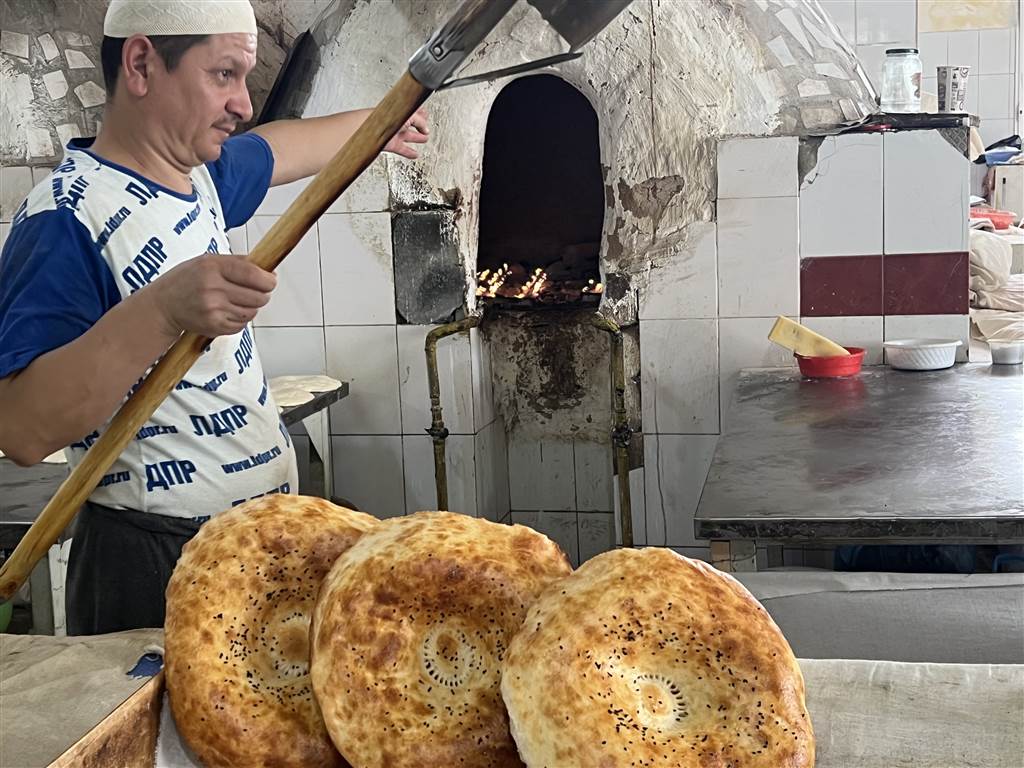
The bazaars are as much for the locals as they are for the tourists. The Chorsu Bazaar features a few distinct areas of a marketplace. There are stalls for dried goods and clothes, there are open-area stalls for knick-knacks and fresh fruits. And then there