
To the Outback and Back — Uluru Preliminaries
In the preliminaries entry on the Outback, I have given a brief overview on a tour to Uluru. I will say a few more things here.
A trip to the Outback comes with many options. Experienced travelers can consider self-guided, self-driven tours that involve camping and hiking in West Mac and East Mac, or otherwise accommodation close to the Uluru. Some Australians do drive north from Adelaide. If you plan on camping, you likely will need a 4WD, which is necessary for the unsealed paths in the area.
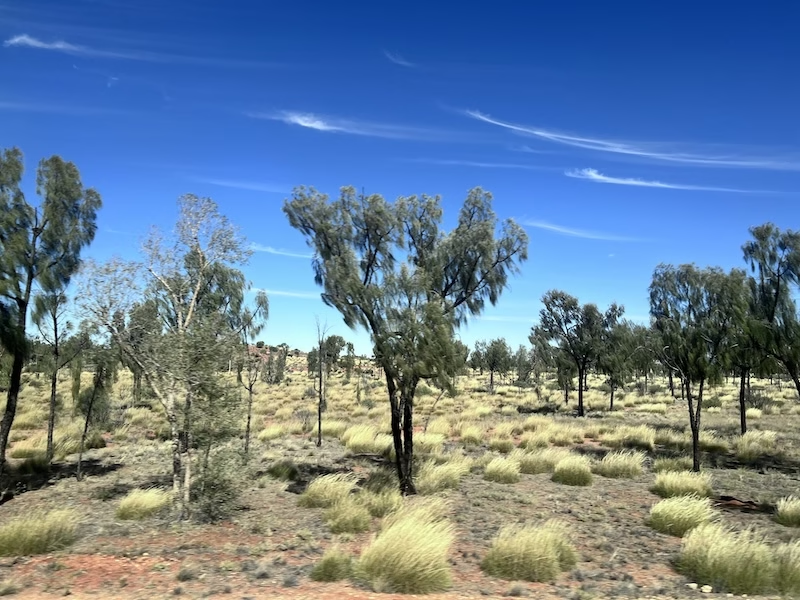
For first time visitors who are non-locals, self-guided tours would entail a whole lot more planning than if you just joined local tours with Alice Springs as your base. I could not have planned a self-driven trip on my own without first visiting the area on a first trip. I would say, however, that between spending days camping in West Mac or East Mac and staying close to Uluru, I would find camping in the nature to be much more worthwhile.
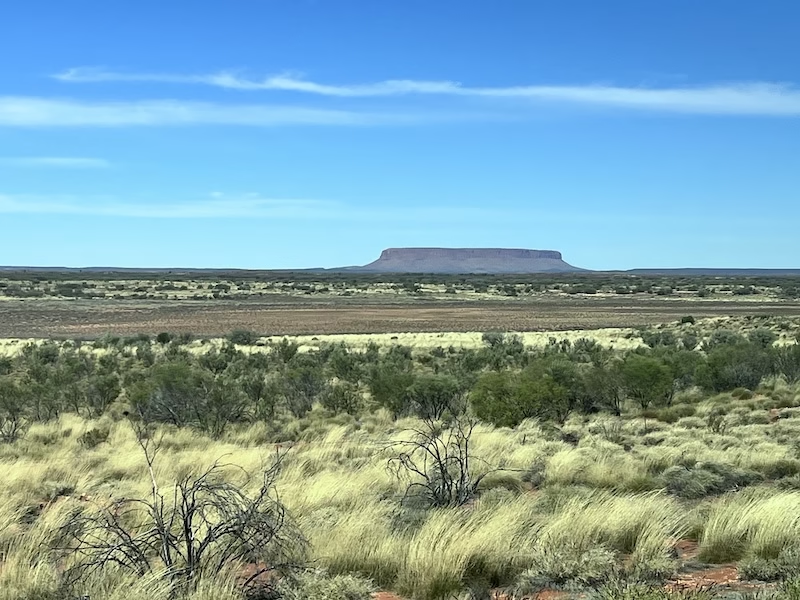
The reason being that I think the Uluru as a national park is not as interesting in its natural endowment as East Mac or West Mac. It was one wondrous monolith and perhaps not much more. Tourists can no longer scale the summit of the rock. A one-day trip to Uluru would serve all purposes, both for nature enthusiasts and culturalists.
That is not to say that the Uluru isn’t worth a trip, it must be a highlight of a first trip in the Northern Territory. If you do stay close to Uluru, another must-visit spot is the Kata Tjuta rock domes. Otherwise, at Uluru itself, you can do a bit of hiking (the base stretches 10 km all around), view the top of the rock from a helicopter or do camel rides.
Another lesser-explored option is to visit the Watarrka National Park (Kings Canyon) as well. I highly recommend Kirsty at Red Earth Roaming for planning such a trip.
For a road trip that will cover the most interesting aspects of the Outback, search for Red Centre Way, and you will find many websites showing you how to navigate the area by self driving.
The Iconic Uluru Within Reach
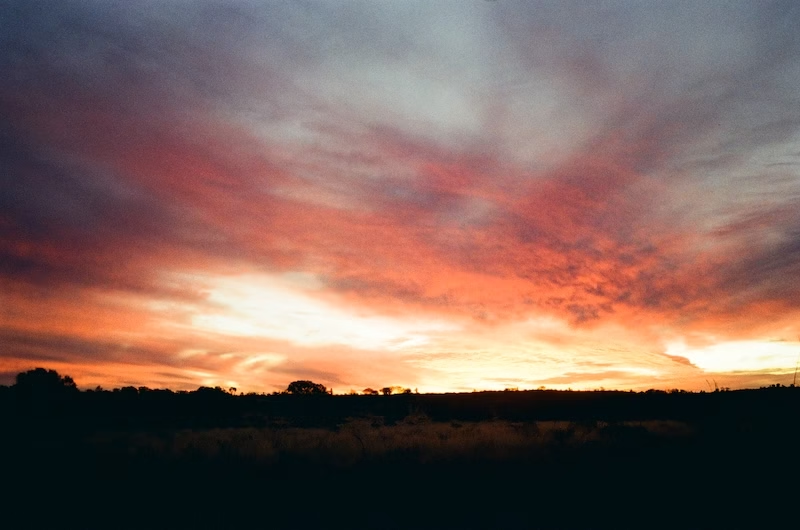
Bright and early before 8am I boarded the big coach organized by White Emu Run. The journey would take 6 hours of a drive from Alice Springs to Uluru. On our way to the Uluru, we would stop briefly to see a salt lake. At Uluru we would spend a few hours learning about the natural and cultural significance of the rock, and then we would end the day with a wonderful BBQ, viewing Uluru afar at sunset hours. Given that the drive takes 6 hours one way, this was plenty for an itinerary.
The Uluru — What’s In Its Name?
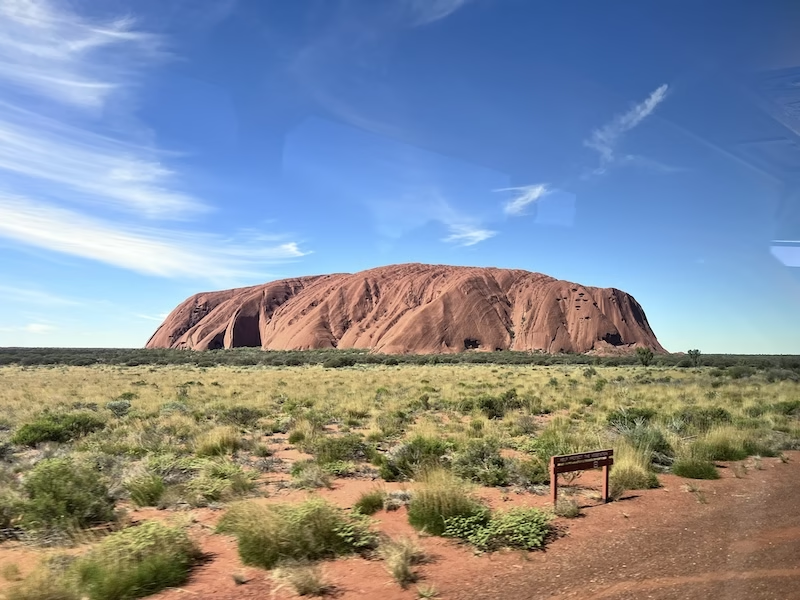
The Uluru is the first feature in the Northern Territory that is given a dual name. The word Uluru comes from the Pitjantjatjara language (pronounced “pitch-un-jurrah”), but there is no apparent meaning to the word.
In 1873, William Gosse was the first European to have seen the Uluru. Apparently, he succeeded because he used camels instead of horses. He named the rock after Sir Henry Ayers, the Chief Secretary of South Australia at the time. In 1993, the rock was officially recognized as both the Ayers Rock and the Uluru, the first such initiative for any site in the Northern Territory. The national park that encloses the Uluru Rock is only named Uluru-Kata Tjuta National Park, however.
The Aboriginals that inhabited this part of Australia are the Pitjantjatjara and the Yankunytjatjara (pronounced “young-kun-jarrah”) and they are the traditional owners of the land. Central to their cultural identity is the Tjukurpa (pronounced “chook-orr-pa”), which is considered a religion-based philosophy encompassing the initial world views, laws and mores for these two Aboriginal peoples.
Before we got to Uluru, however, there was a long drive and I must say that it was a pleasant journey. We stopped briefly at some spots of significance.
The Salt Lake
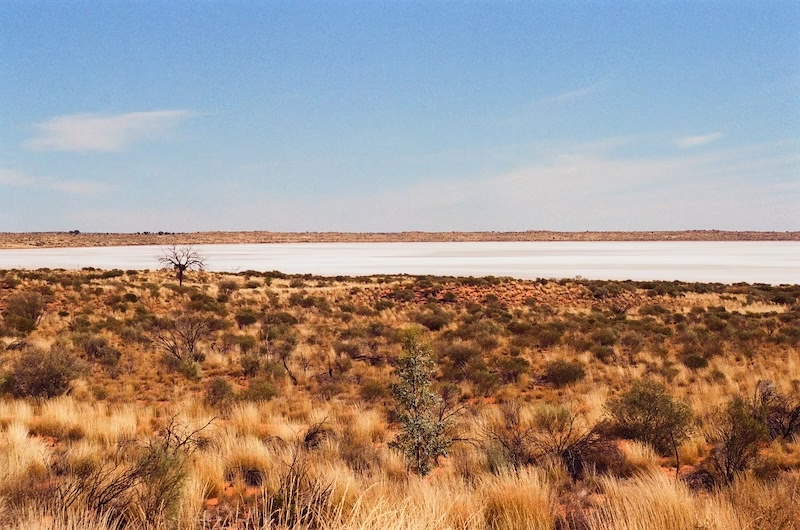
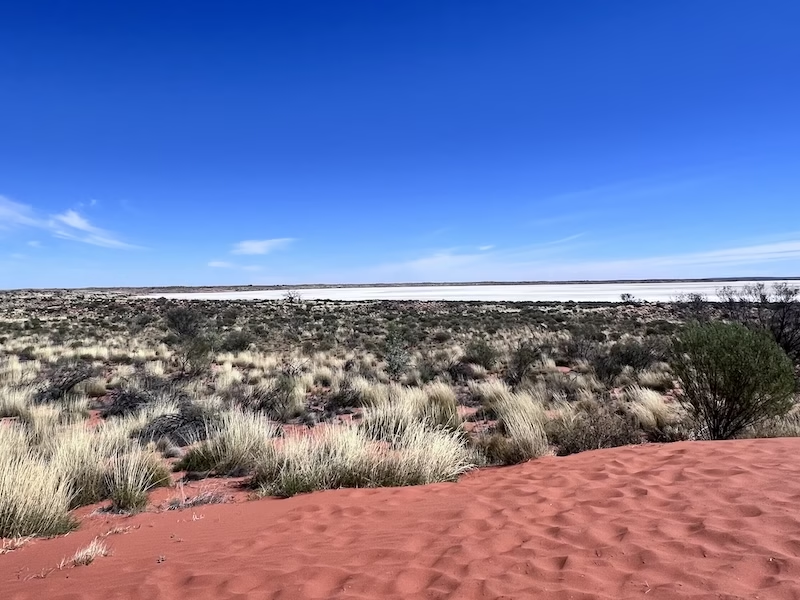
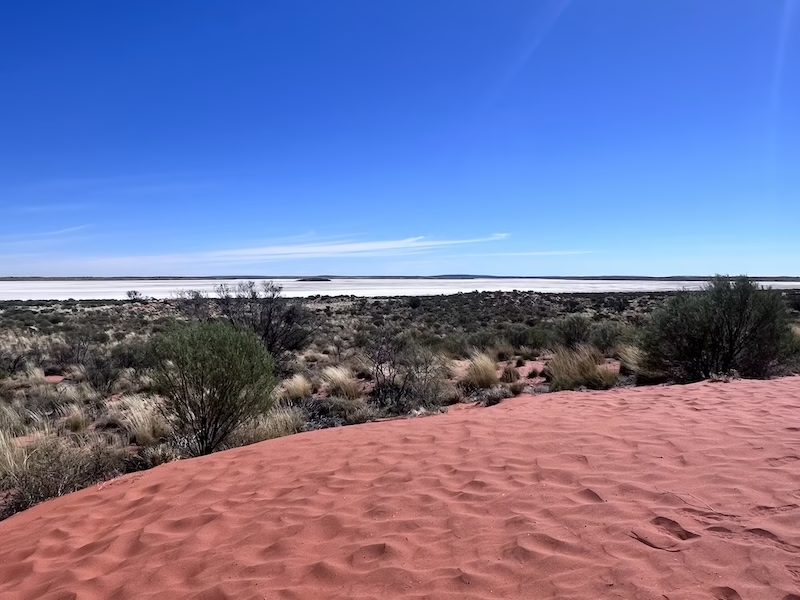
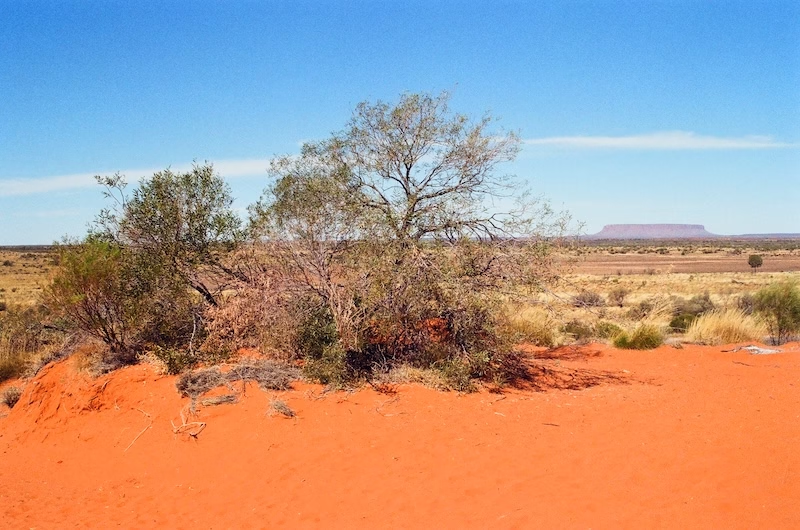
On our way from Alice Springs to Uluru, we stopped at a spot full of rusty red earth and viewed a salt lake afar, the name of which I didn’t catch. It could have been Lake Amadeus, which is the only such natural phenomenon of significance in the area.
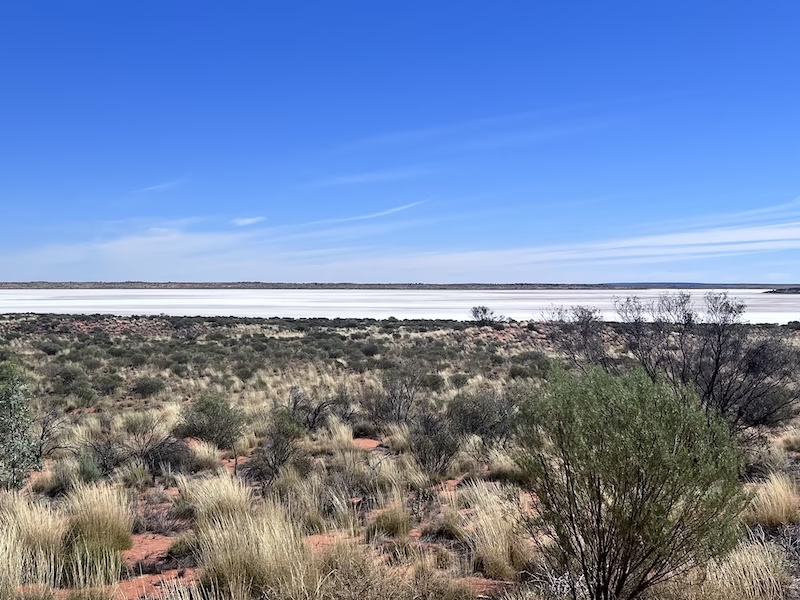
Lake Amadeus is a salty mud basin that was the leftover of the inland seabed at the time of the formation of the Macdonnell Ranges by tectonic plate pushing 350 million years ago. At this shallow trough lies the the sediments that are washed off of the Macdonell Ranges.
An abundance of red dust is present because of iron-rich contents that rusted over time. These red dusts were eventually embedded into the rock, forming the signature red color.
The views of the snowy white salt lake against a vast sea of red earth was simply amazing. My Texan friend and I rushed to the site as the wind kicked up troves of red sand. We covered our faces with whatever cloth that we managed to take with us, and marveled at the wonder before us. The joy in seeing such a vast contrast of colors in nature is beyond words.
The Emu Outpost at the Erldunda Roadhouse
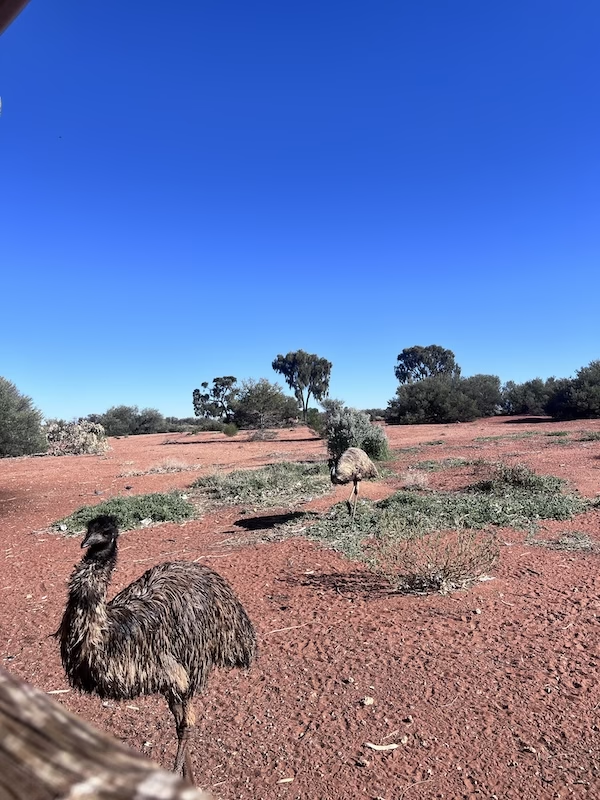
The emu at the Erldunda Roadhouse was a cheeky moment. It was meant to be a mere bathroom stop but the emus presented a sight to behold. They appeared to like human beings, perhaps due to the potential of getting food from us. Almost all of them was of human size, and without the fence they would be somewhat intimidating as creatures.
We went back on the coach, and the scheduling was not delivered perfectly. The coach dropped us off at a restaurant in a resort, but we did not have time to sit down for a proper lunch. I therefore rushed a takeout order and ate my lunch on the bus instead. Uluru, however, was in sight. I was very much hyped.
Sources
Tour with White Emu Run.
The Britannica on Lake Amadeus.
The Official Website of the Uluru Kata Tjuṯa National Park.