To the Outback and Back — Embrace East Macdonnell at the Corroboree Rock
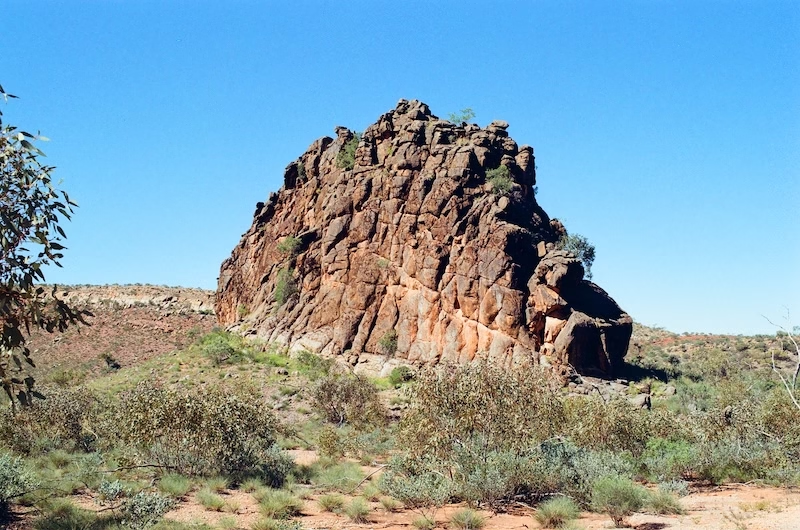
We were in the afternoon and the tour in East Mac was soon to end. On our way back home we stopped by the Corroboree Rock.
The Meaning of Corroboree
The corroboree is a nocturnal dance ritual for the Aboriginals. The Aboriginals gathered with face and body paints to perform what may be “sacred ceremony, a festive celebration or of a warlike character.” (Wikipedia on Corroboree) Mythology and spirituality are central to the corroboree dances.
As a cultural event, the corroboree “‘provided the venue for gossip, trade and cultural interchange’ necessary amongst Aboriginals.” (Wikipedia, Id). This event is viewed to be distinct from the traditional communal events where the elders sit at the forefront as the origin of didactics. Instead, it is described as ‘diffusion of ideas took place most propitiously in quiet moments punctuating the large, dramatic ceremonies, while little knots of men and women were resting under the trees or around campfires at night and the songs were chanted, “the myths retold, the dances rehearsed, the little technological tricks explained.’ (Wikipedia, Id).
The description on site uses the word “church” when speaking of the sacredness of the site. This indicates to the tourists that the Corroboree rock has immense cultural and spiritual significance to the Eastern Arrernte Aboriginals.
The word was named as such by the British settlers that had experience with the Dharug language, as spoken by the Yuin-Kuric group of people. It is an endangered language.
Please do not climb or touch the rock as it is still a sacred site for the Aboriginals. Photographs are welcome there, however.
The Geology of the Corroboree Rock
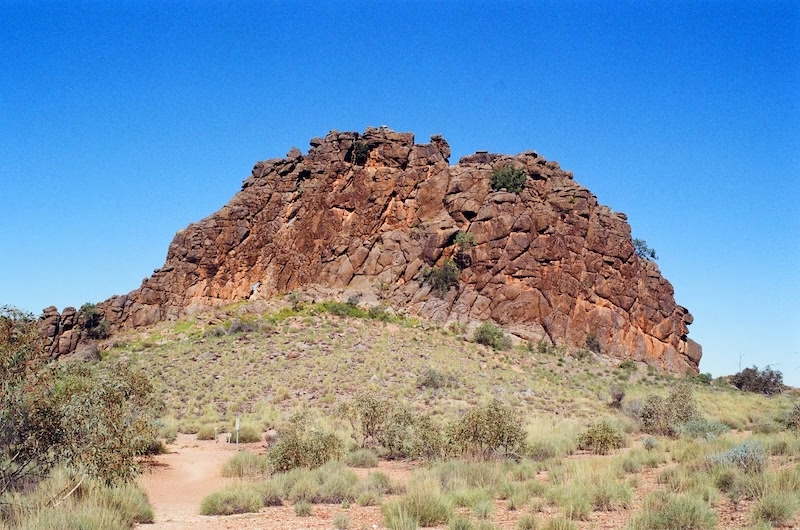
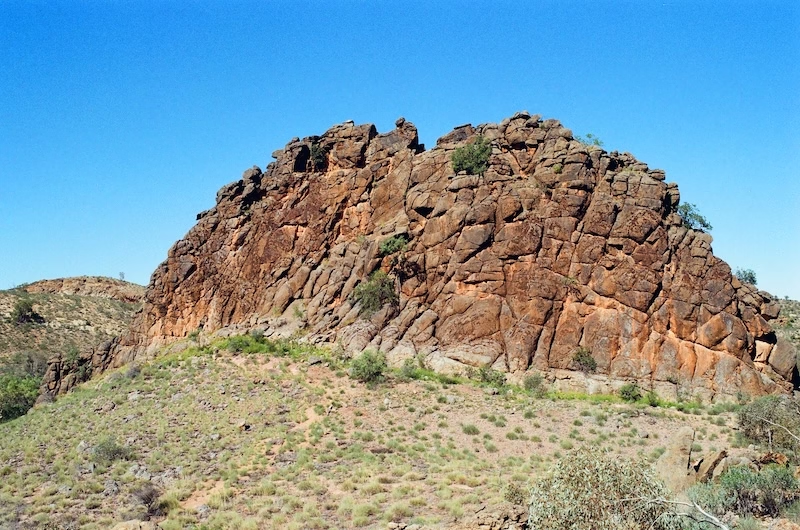
The Corroboree Rock is an outcrop of dolomite that was formed 800 million years ago, long before a major geological event pushed up the folds of the land to form the Macdonnell Range. The outcrop that we see today is the remnant of an erosion of what was known as the Bitter Springs formation, an ancient rock strata.
At the most fundamental level, the dolomite is composed of the mineral called dolomite, very similar to limestones. Dolomites are formed in the postdepositional alteration of lime mud and limestone by magnesium-rich groundwater.
Considering the fact that this part of the Australian continent used to be the ocean between tectonic plates, it is not hard to understand why there is this significant dolomite outcrop in what is essentially inland Australia now. Dolomite originates in the sedimentary environments that are “warm, shallow, marine environments where calcium carbonate mud accumulates in the form of shell debris, fecal material, coral fragments and carbonate precipitates.” The abundance of magnesium in sea water was what converts a limestone into dolomite here, and the process is called “dolomitization.”
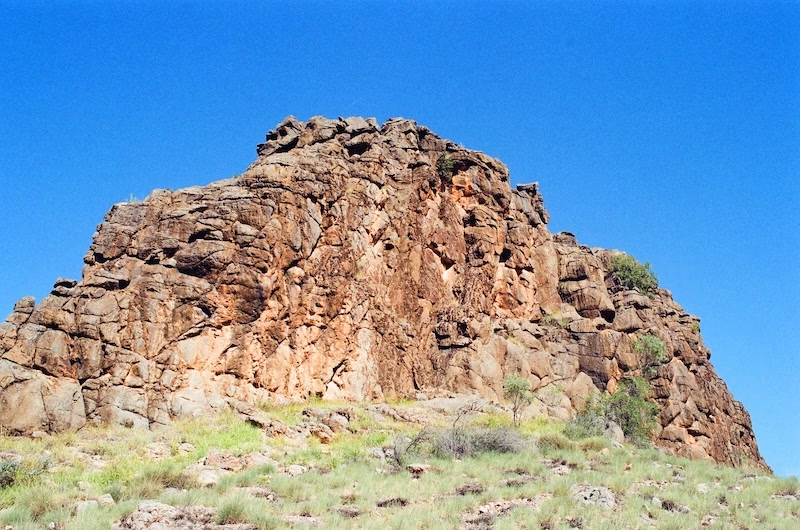
The Corroboree stone has a mottled dark color that is perhaps somewhat atypical in the rusty crimson tones of the Outback. Naturally occurring dolomites adopt the color range of a limestone, meaning that they tend to be in white, gray or white-to-light-brown. The patches of orange color on the Corroboree rock is a result of weathering that occurred 60 million years ago.
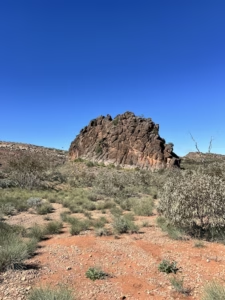
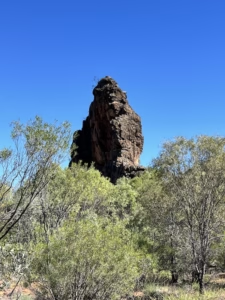
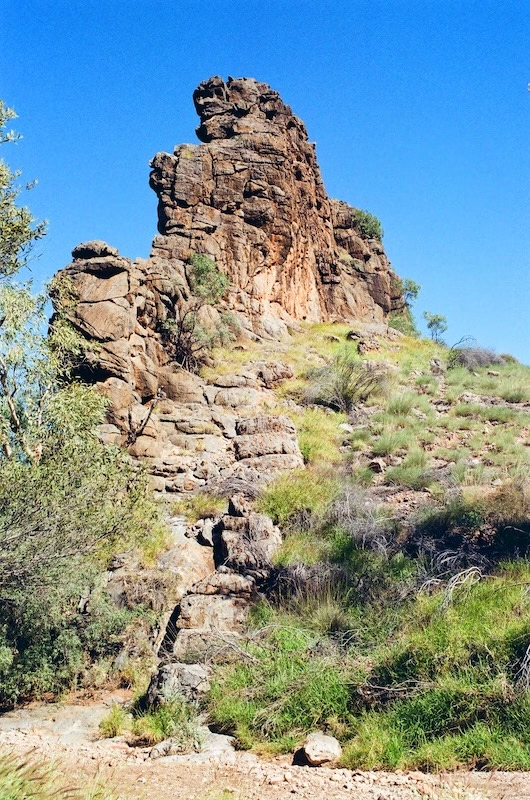
It was quite an interesting experience when I walked around and took photographs of the Corroboree Rock. On the lateral plane, I observed it to shape like a blade at the back of a Spinosaurus. When I went around the side, on a longitudinal view, it is like a narrow, erecting spike with a pointed top.
The Dreaming of the Perentie at the Corroboree Rock
Many kinds of lizards inhabit East Macdonnell. The Perentie is the largest kind of lizard in Australia. It can grow to a maximum of 2 meters in length. It is known by the distinctive patterns of dark-edged yellow spots on its body.
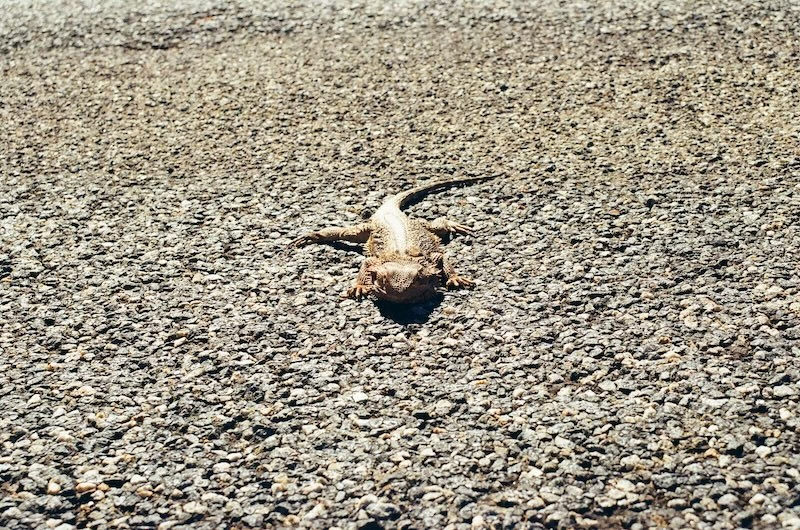
Photo: This is not a Perentie, but certainly a common resident in East Macdonnell as a lizard.
At the Corroboree Rock, the Perentie is featured prominently. The descriptions on site do not explain the Perentie Dreaming at the Corroboree Rock. Although I could not find a Perentie Dreaming specific to the Eastern Arrernte Aboriginals, the Ngintaka songline is a creation story that is held to be representative of Aboriginal culture.
The word Ngintaka is known as the Perentie Man in the Aboriginal songline, called Inma Ngiṉṯaka. The stanzas of the songline render a Dreamtime in musical notes. This story is told to generations of the Anangu Aboriginals in Central Australia, a story of stealth, pursuit, vengeance and creation.
The Ngintaka comes from Western Australia to the center in search for a grindstone. He finds and steals the grindstone of the Anangu Aboriginals, attempting to bring it home. The Anangu Aboriginals start a pursuit. Ngintaka hides the grindstone in his tail. In this process Ngintaka digs up bush onions and creates large boulders. He also makes a few of the waterholes in the Outback and vomits grass seeds and vegetation. Many landforms in the Musgrave and Mann Ranges are attributed to Ngintaka’s creativity while he flees.
Eventually, the Anangu Aboriginals kills Ngintaka. Ngintaka looks back at the country and there he morphs into one of the mountain ranges, Ngarutjaranya, the highest mountain in South Australia. Perhaps the moral lesson to the Aboriginal children is that there is no crime that goes unpunished?
Coincidentally, the Corroboree Rock area is also known to the Eastern Arrernte Aboriginals to yield many of the plants and animals that are their favorites on the bush tucker menu. Maybe Ngintaka himself has had a hand or a foot in this part of Central Australia as well.
This version of the Perentie Dreamtime is now the “standard” version told to Aboriginals and non-Aboriginals. The tribes’ elders encouraged this songline to be front and center at their efforts to promote Aboriginal art and culture at Ananguku Arts in Adelaide, South Australia, established in 2015 or so. The arts exhibition does include the paintings of the Perentie by Aboriginal artists.
Sources
Descriptions on site at the Corroboree Rock.
Geology.com on Dolomites.
SBS News, APY elders share sacred songline with the world, February 27, 2014.
Walkatjiara, Wati Ngintaka (Perentie Lizard Man) — Reggie Uluru.
The Wikipedia on Corroboree.
The Wikipedia on the Dharug language.
The Wikipedia on Ngiṉṯaka.