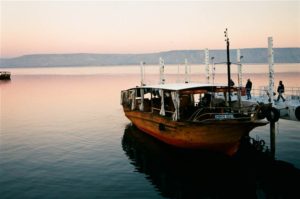
I was sad to leave Tiberia. Yet the journey must go on, for the tour was making its way to Jerusalem, the ultimate destination of our pilgrimage.
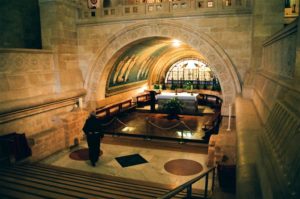
Mount Tabor was believed to be the site of Jesus’ transfiguration (Matthew 17; Mark 9; Luke 9). The Church of Transfiguration commemorated this event. The day was bright with gentle morning breeze that stroked us like a warm mother’s gentle hand. I enjoyed the tour very much, it being sun-soaked and bearing such religious significance.
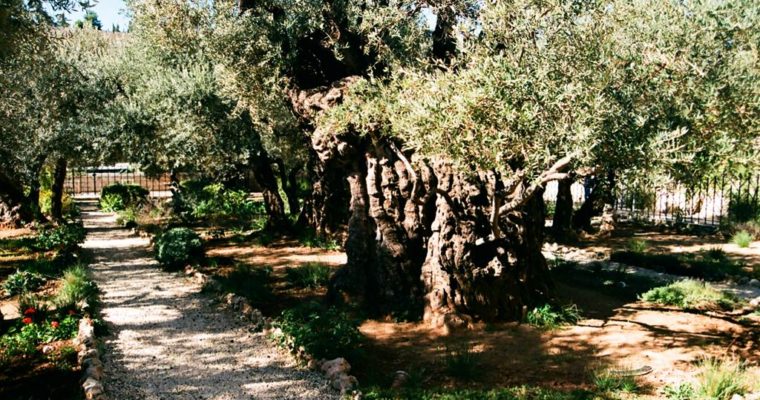
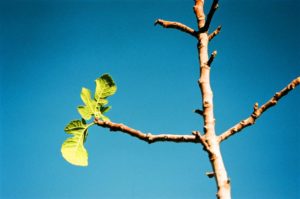
My father spotted a fig tree and asked if he could pick a branch to take home. Our tour guide Nahzee gladly did the “honor” for him. He then learned that for olives, one would have to pick a branch that grew near the roots, otherwise it would not transplant in new soil.
Cana would be very familiar to Christians as it was where Jesus performed his first miracle of turning water into wine (John 2). We made our first stop at the Catholic Church. I learned that there were two stone barrels that used to contain wine. I also remembered quite distinctly that it was suggested that those were the actual ones with which Jesus performed his miracle. They surely looked aged and antique to me. At the chapel, married couples could walk the aisle and renew their lifelong commitment to each other.
The souvenir store sold all kinds of red wine. I picked the pomegranate red, a dessert wine. By then, I have gone completely crazy about the pom, which was a produce common in Israel but not in Asia. The pom is also a Biblical fruit as one of the critical pieces that hang on the priestly ephod of High Priest Aaron (Exodus 28).
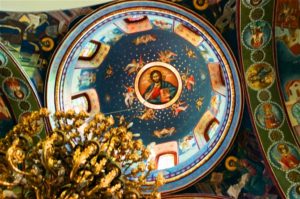
The next visit at the Orthodox Church was interesting. I questioned the church’s seemingly limitless ornateness. The over-adornment reminded me of the ambiance of elaborate Buddhist temples. The ornate items on display conveyed a sense of superstition, with those lifeless objects held out as holy or as projections of faith. Although I did not like the interior very much, the yard and the outward appearance of the church were tranquil.
Perhaps it should not be surprising, but there were on display two more of those stone barrels at the Orthodox Church. With that I realized a certain facet of truth. All the stone barrels’ authenticity, with their claims as the actual instruments of the miracle, came into question. Most possibly, none of these barrels was what they claimed to be. At best, they were artifacts that dated to Jesus’ time, for show here to satisfy the human desire to witness miracles or any manifestation of them.
On the other hand, I thought about the situation of having churches of different denominations in any one site of religious significance. Which branch of Christianity presented the truth, or the practice, that was closest to the historical truth? How much should seekers of faith embrace the arguments that divide followers of Jesus Christ into different camps?
This question was becoming quite unsettling to me. I pushed it aside thinking that the newly-christened should not become yet so critical of the institutions that embrace, endorse, and expound on the faith. Yet this thought would become quite dominant in my mind as I visited Jerusalem.
Nazareth is the largest Arab-Israeli city in Israel. Out of a population of 8.5 million in Israel, 1.5 million are Arabs, 75,000 of whom live in Nazareth. 30% of the Arabs there are Christians. The Arabs that live in Israel, who hold Israeli ID without the passport, are known as Palestinian Arabs.
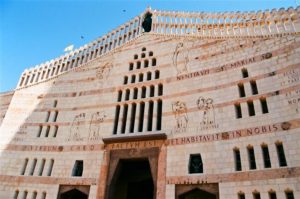
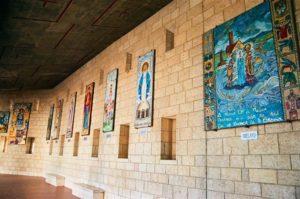
Nazareth’s sweet name comforted me greatly as this was where Jesus grew up. We visited the Basilica of Annunciation, which housed the ruins of Joseph and Mary’s marital home. Paintings of St. Mary and the child lined the walls on the long corridor. These paintings came from many countries. They portrayed St. Mary and the holy child in the donor nation’s traditional painting styles.
The view of these paintings inspired some thoughts. If each nation could have vastly different ways of painting St. Mary and the holy child, then the ways with which each individual believer understood the Christian faith must be far and few in between, as we all understood Jesus’ teaching within our own frame of reference. What these paintings exhibited were the different interpretations of the same faith. Together they seem to bespeak the universality of the Christian truth, although at the same time it was capable of adapting itself in different cultures.
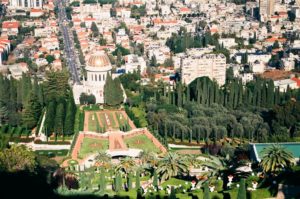
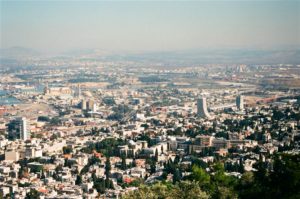
Haifa is Israel’s third largest city. The Bahaii hanging garden there was indeed magnificent, and I wondered where a relatively young faith finds the means to construct such a base. It was a wondrous view in a carefully groomed landscape but I could hardly raise enough interest in it. I found this faith to stand on rather shallow principles of universalism.
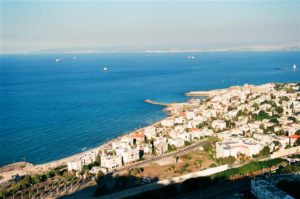
One thing to note about Haifa was its advanced development. At the vista point I was able to observe many types of infrastructure along the coast. Looking onto the Mediterranean, however, the image that haunted me was the hordes of immigrants struggling through this body of water in search of the possibility of a better life. Many end up dying. No, that face of the Mediterranean was not shown in Israel. It presented only its most charming self that day, basked in the golden rays of the winter sun.
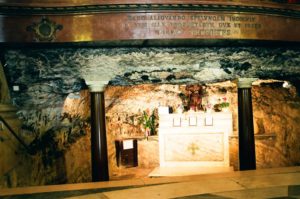
The Cave of Elijah soon opened for visits, and the tour guide explained its significance to us (1 Kings 19). This was believed to be Mount Horeb in the Old Testament. Prophet Elijah ran and hid from his enemies. He ended up here having wandered in the wilderness. God also spoke to him here.
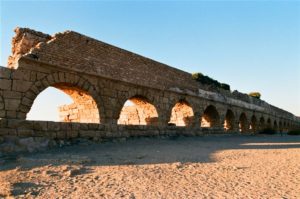
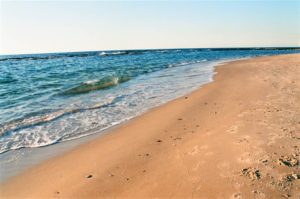
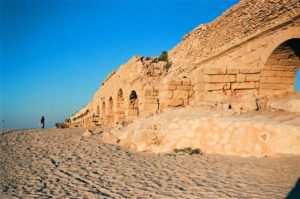
The Caesarea Aqueduct was a pleasant site. It was the water way that supplied fresh water to the booming city of Caesarea since King Herod’s time. This was my closest view of the Mediterranean. The ruins were right by the shore, and I marveled at the human genius that made the best of nature and artifact combined. The area used to be a busy entrepôt. Now that the city has receded from history, the aqueduct stands as a proud witness to the prosperous life once lived here.