Blog

South Korea – A Second Look at Seoul

South Korea – A Second Look at Seoul

Yun-hak, the young man that I met on the plane, rather insisted that I saw the Gyeongbokgung Palace.  Although that was not what the Lonely Planet recommended, I went because a Korean native told me to. Once I was there, however, I began to understand 

South Korea – Gugak at the Lunar New Year

South Korea – Gugak at the Lunar New Year

On the first day of the Lunar New Year I spent much of the day celebrating the occasion with many other South Koreans at the Namsangol Hanok Village.  I heard the word “gugak” spoken, and eventually figured that it was referring to the traditional dance 

South Korea – Suwon

South Korea – Suwon

Once outside of Seoul, the non-Korean-speaking tourists would be left to their own devices as to how they communicate with the Koreans and find their way around.  That was Suwon to me.

In Hanja, Suwon means “the origin of water.”  Suwon is the provincial capital of Gyeonggi-do, 48 km south of Seoul.  There were really only two things to see there: the Korean Folk Village and a “faithfully restored fortress of Hwaseong” as described in the Lonely Planet.  Regardless, it was a day trip worthwhile to make, as I had an adventure in learning the regional railway system of South Korea.

I had a bit of a trouble finding Suwon on the metro map.  I learned that I had to change at Guro, and waited for at least 20 minutes for the train to Suwon.  The whole ride took 1.5 hours and by the time I was there the last bus to the Folk Village has departed.  I hopped on a taxi instead.

The Folk Village was nice in the sense that it was carefully landscaped and the winter scenery in the background gave it a wonderful appearance.  On the edges of the roof were formed ice hanging down like stalactites.  The houses showing the ancient village life of South Korea were cool, and I was thankful that many were heated, but after all they were constructed for tourism.  I was pleased with some good pictures that I took, mainly of the winter scenery.

It was dusk hour when I finished at the folk village and I decided that I must eat before seeing the fortress.  The driver finally found the restaurant that the Lonely Planet recommended but it was closed.  I then went for a short walk at the fortress, and as said in the Lonely Planet, the 5.7km-long fortress was very nicely restored.

The fortress of Hwaseong was built between 1794 and 1796 during the reign of King Jeongjo of the famous Joseon Dynasty that I kept hearing about in the palaces of Seoul.  It was also an effort to make Suwon the second capital city.  There are four main gates, of which the Paldalmun was the most famous and a designated national treasure.[1]  It almost felt like seeing the fortress of Xi’an, an ancient capital in China.  The similarities notwithstanding, the fortress of Hwaseong was built with the best technology existing, “encompassing the strong points of both Asian and western elements.”[2]

Dusk has befallen and the cold was becoming unbearable.  I was not quite able to communicate with anyone there, and indeed few were around at the eve of the Lunar New Year.  I saw a restaurant open right across from the fortress.  The easiest way to order was to point at what the other patrons were eating.  I spent an hour savoring galbi, a full rack of grilled beef ribs.  I was greeted with incredulous looks of the owner as I paid.  I did eat a lot for a small-built Asian woman.

I took one last look at the Paldalmun as I was about to leave.  It had a stately appearance at night hour as it glimmered under the floodlights.

I no longer remember how I made it back to Seoul that evening, as pretty much all of Asia was preparing for the Lunar New Year.  Yet I did, in one piece and satisfied with the day’s excursion.

[1] Introduction of the fortress of Hwaseong, Joinusworld.org.

[2] Id.


Of the Man’s – The Qing Dynasty Mansion of Tai Fu Tai

Of the Man’s – The Qing Dynasty Mansion of Tai Fu Tai

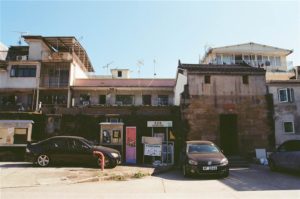
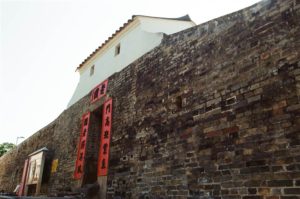
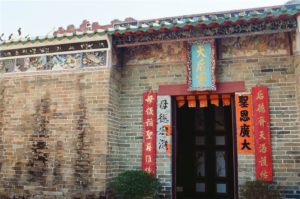
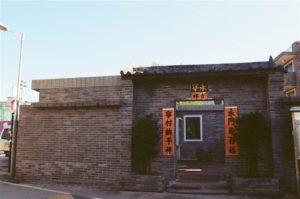
The Qing Dynasty mansion known as Tai Fu Tai is a site that speaks to the local history in Hong Kong before the colonial times.  Originally constructed as home to Man Chung-luen, the brick mansion showcases the honor bestowed on a senior Qing official.  A 

South Korea – Seoul, the Soul of Asia

South Korea – Seoul, the Soul of Asia

“Seoul, the Soul of Asia” is quite a catchy characterization of Seoul.  It is not my phrase, but it did inspire some curiosity in me.  How was the soul of Asia like? To the extent possible, I explored Seoul on foot and by public transport.  

South Korea – The Golden Pond

South Korea – The Golden Pond

I met a young man on the plane to Korea.  He told me that he has already completed his mandatory service in the military.  “Mind the border,” he said, “it might be dangerous.”

Korea was the first solo trip I made abroad.  Although this young man by the name of Yun-hak gave me his contact information, I was really quite determined to explore this new destination on my own.  I booked a hostel close to the Sungkungkwan University.   After I landed, bus 6011 took me to the station in an hour.  I arrived at the Golden Pond Hostel with much anticipation.

I was in and out of slumber throughout the plane ride.  This trip to Korea was an escape from the stress and fatigue from work.  As soon as I landed, the piercing cold woke me up.  My mind became immediately aware.  The sights were somewhat familiar: neon-lit streets busy with pedestrians, with myriad storefronts competing for the shoppers’ attention.

The Golden Pond Hostel was run by an English speaking Korean family.  I walked in and heard people speaking American English.  I was shown my bedroom, it was a very small single, enough only for a single bed and a writing desk.  It felt like sleeping in a third class cabin in a ship.  I was very pleased however.  I walked barefooted on the heated floor, as the small room allowing just a few paces back and forth, I felt fully its warmth, symbolically and literally.   The living quarter had a big kitchen, and that was assuring as I would have to mind a few meals on my own during the first couple days of the Lunar New Year celebration, when many restaurants would close.

Came dinner time and I was ready to explore the vicinity.  Even my wool pants would not do in this cold, so I changed into my ski pants.  I went into a family-run restaurant, and could not read anything on the menu.  It was then that I realized that my years of spending lots of money on the Korean restaurants in America has taught me some survival skills.  I said, “soon-du-bu” and voila, my favorite tofu stew magically appeared.  I then noticed other patrons eating some steamed dumplings.  I pointed and the waitress said, “pan-du!”  She was fierce, and I knew why.  She thought I was Korean American who did not speak Korean, and that was hardly blameless in Korea.

I knew little of the dining etiquette in Korean culture, but I knew that they had metal bowls because they consider holding the rice bowl with hands impolite, and this is quite unlike the custom in China.  I kept mine on the table at all times, so not to offend the fierce waitress further.

I thought a piece of warm clothing was in order.  Amongst a scarf, a knitted beanie and ear muffs, I went for the ear muffs.  Good choice.

The Lost Executioner

The Lost Executioner

By Nic Dunlop   Tuol Svay Prey, the district in Phnom Penh where the prison is located, roughly translates as “The Hill of the Poison Fruit Tree” Tuol means hillock. Sleng is also the name of a tree with extremely poisonous fruit.[i]   In this 

Childhood memories in Sheung Shui

Childhood memories in Sheung Shui

There was a time when Hong Kong was considered China’s window to the world.  In Chinese, it is said that Hong Kong faces the world with China at its back.  If we consider the geography, geopolitics, economy and cultures of Hong Kong, what really provides 

Finding Tibet – The Lovely Boy

Finding Tibet – The Lovely Boy

I am saving this entry to the last because this boy truly, truly moved me. This young ten-year-old worked at his family’s Uighur restaurant.  On one of our last days in Lhasa, a group of us went to this restaurant for dinner. When we sat down, he served us tea. One cup by the other, he poured the tea with incredible poise – as he himself was not that much taller than the dining table.

We were already impressed, and being the “kid-nnibal” that I am, I asked him some personal questions, such as how old he was, and if I could take a picture with him. He did not want to take a picture, and asked us to go ahead and order.

The “big pot chicken” is a popular dish at the Uighur restaurants in China.  It comes in a sweet tomato base with chicken and Uighur hand-pressed noodles, wok-friend. One of us asked, “how big is this small-sized ‘big pot chicken’?” The waiter (an older child) gestured a plate to show us how big this small sized dish was. We thought that was not helpful.

After five minutes of indecision, we decided to go for the small size. That was when the young ten-year-old brought an empty plate up two staircases. “Miss, this is the plate for the small sized big pot chicken.”

I was touched, and tears swelled.

The next day, I brought candies, some chocolates, and some drawing paper and crayons to the restaurant. The two children recognized me.  The older child was happy to see me, and thanked me for the gift. But the ten-year-old was a bit shy.  He walked away from me when I tried to talk to him. So I told them, make sure you find some time to draw and paint, and enjoy the candies. Before I left, I turned around to look at the ten year old. There was this smile on his face, truly happy, truly sweet.

The last night in Tibet, I lied in bed sleepless and crying. I knew that there were many more children less fortunate than this ten year old. I knew also that there were many more children far more fortunate. He was precocious, and I felt like by giving him candies and crayons I could remind him that somebody thought he was entitled to simple childhood pleasures, of liking sweets, of finding joy in creative talents. I wish he did not have to serve me dinner that night, but that he did, also made me realize how fortunate I was growing up.

It has been over a decade since our visit to Tibet.  The boy will have become a young man by now.  He would not remember me, for sure, and neither would I recognize him if given the chance to see him again.  Yet, as Anthony Bourdain has said, “it is the small acts of kindness that matters.”  I shall always remember that both he and I were touched on our chanced meeting in Tibet.


Finding Tibet – A Second Look at Lhasa

Finding Tibet – A Second Look at Lhasa

Have you ever had the experience that, on the nth day of your trip, you have lost track of time? That was Tibet to me.  It is an environment that constantly entices you away from the established routines and thoughts that structure your life in