Blog

Briefly, Nanjing – At the Rooster’s Crow

Briefly, Nanjing – At the Rooster’s Crow

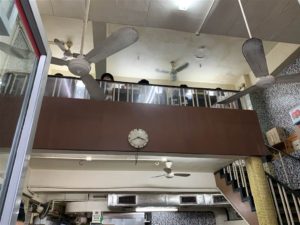
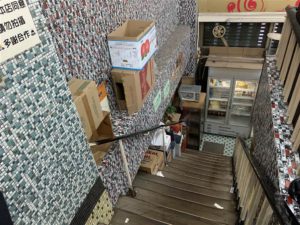
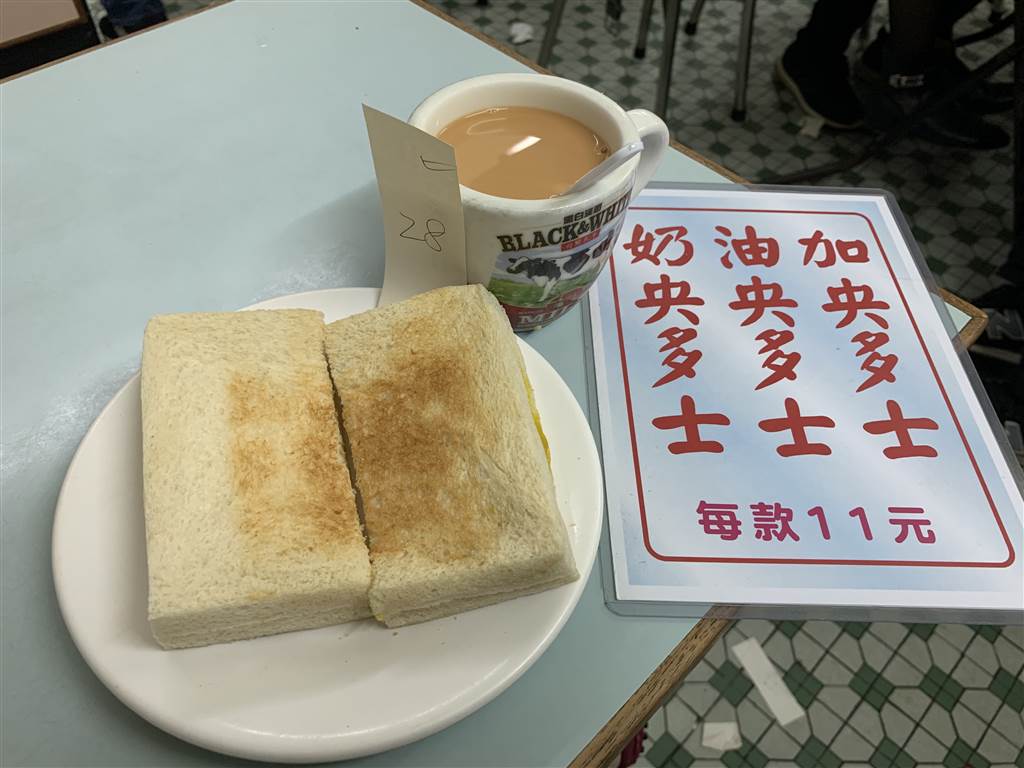
I booked this trip to Nanjing in April 2019 for a brief three-and-a-half days, originally hoping to relax.  If not for this blog, I would not have pushed myself over the limit on this trip.  I walked so much that my feet swelled.  On my 

Briefly, Nanjing – The Lessons of Old Nanjing

Briefly, Nanjing – The Lessons of Old Nanjing

It was only in the Xuanwuhu Tunnel that I noticed flashlights about once every ten seconds or so.  I asked the driver what those were. “Those are cameras.  They capture the cars that pass by, thereby tracing the movement and direction of every car in 

Nanjing Requiem

Nanjing Requiem

By Ha Jin

It was an emotional experience reading this book.  Told from the perspective of Anling, a foreman at Jinling Women’s College in Nanjing, the narrative pries open one of the most painful chapters in modern Chinese history—the Rape of Nanking.

The story begins at the eve of Nanjing’s fall in 1937.  At Jinling Women’s College, Anling assisted American missionary Minnie Vautrin in the preparations for a refugee camp.  At the time, they meant to give shelter to about seven thousand women and children.  By the time the puppet government was established in Nanjing, Jinling Women’s College housed ten thousand homeless women and children.

In heartbreaking lucidity, the book details the atrocities committed against the countless innocent victims during the Japanese occupation of Nanjing.  The chanced survival, the brutalities of war crimes, the sense of helplessness and hopelessness being in the thrusts of history, the dilemmas and difficult choices made under duress—all elicited complicated emotions.   The descriptions of violence against women are as graphic as tolerable under civilized discourse.  At times I was tempted to put down the book, being sickened to the heart.

Although the book is a work of fiction, the author Ha Jin, a recipient of the National Book Award, has based his writing on a vast amount of historical sources.  Chief amongst these primary sources were the correspondences and diaries of Minnie Vautrin and John Rabe.  Along with the foreigner members of the Safety Zone Committee and the Red Cross, they were critical figures in protecting the Chinese people during the Japanese occupation of Nanjing.

Perhaps what kept me reading was the admirable courage of the foreigners and missionaries who served as protectors of the people.  Despite their lifelong devotion to Christianity, the missionaries had their doubts about God.  They questioned God’s justice as they witnessed senseless, heinous brutalities.  Yet they showed their faith to be the source of spiritual renewal.  Together they stood firmly against senseless killings and tortures.  They risked their own lives in documenting the war atrocities that they witnessed for months after the fall of Nanjing.

When I visited the Memorial Hall of the Victims in Nanjing Massacre by Japanese Invaders in Nanjing, the exhibits on the foreigners in Nanjing running the Safety Zone Committee touched me the most.  This book stands as a living tribute to the personal sacrifices that these foreigners have made for China and all humanity.


A Whirlwind Tour Through the Middle East – Some Remaining Observations

A Whirlwind Tour Through the Middle East – Some Remaining Observations

In the mall at Abu Dhabi, I saw a lady completely covered in black, from head to toe.  She was very tall.  Her towering figure allowed no exposure of her features except for her height.  That was the most conservative expression of Islam that I 

A Whirlwind Tour Through the Middle East – The Soul of Dubai

A Whirlwind Tour Through the Middle East – The Soul of Dubai

“I have never seen a place with such little soul.” This was a comment of a friend who visited Dubai last year.  It was a provocative statement.  When I heard it, I took a step back and probed my memory of Dubai.  Was it a 

A Whirlwind Tour Through the Middle East – Abu Dhabi

A Whirlwind Tour Through the Middle East – Abu Dhabi

It came time to say goodbye finally.  The tour group boarded the plane to fly back to Dubai.  Yang, a fellow tour member, invited me to her home in Abu Dhabi.  We arrived late night after an hour and a half of driving from Dubai.  Her house was enormous.  She had three daughters and the daughters’ room itself was larger than an average flat in Hong Kong.

Abu Dhabi is the capital city of the UAE.  Being Chinese, we drew comparisons with the Chinese cities.  Abu Dhabi is like Beijing, which is the political center of the country.  Dubai is more like Shanghai, which is more commercially-oriented.  The rivalry between these cities are similar as well.

The next day, we went to the Palace Hotel.  As a six-star hotel, it stood lavishly with glistening gold under the sun.  We sat down at the café and sipped coffee sprinkled with real gold flakes.  That would be the most luxurious coffee I have ever had in my life.  A group of black women sang a chorus outside the hotel.  They looked like an American sorority to me.

The skyline of Abu Dhabi, like that of Dubai, stood proudly as architectural innovations.  The most outstanding building was the Great Mosque of Seikh Zayed.  It is the heart of religious worship within the UAE.  It was really too bad that I went on a Friday and did not get to visit the Great Mosque because it was closed to tourists during the prayer day.

The afternoon was a markedly different experience from a view of the Great Mosque.  We headed to the Ferrari Theme Park for the fastest roller coaster in the world.  At 220 km/h, this ride was so thrilling that I was too overwhelmed to even scream before it all ended within two minutes.  I then realized that perhaps I was a bit too old for this type of excitement.

At the evening we had a great dinner together at the mall.  The mall at the Ferrari Theme Park easily emulates any significant mall in the United States.  Stores like Victoria’s Secret and Starbucks stood proudly as the testament to UAE’s effort to welcome western and local consumers alike.

It was perhaps the competitive spirit of the Middle Easterners that drove what looked to me a contradiction, the way that western culture was rejected and yet embraced at the same time.   The mall was so glamorous I thought it was grander than the Bloomingdale’s in Los Angeles.

A Whirlwind Tour Through the Middle East – The Dead Sea

A Whirlwind Tour Through the Middle East – The Dead Sea

Perhaps photographs would better convey the Dead Sea and its wonders. The tour finally made it out of Israel (there were some glitches at the border), and arrived at the Dead Sea’s Jordanian shore.  Some of the tour members changed into swimsuits and bathed on 

The Leaping Dragon of Fanling

The Leaping Dragon of Fanling

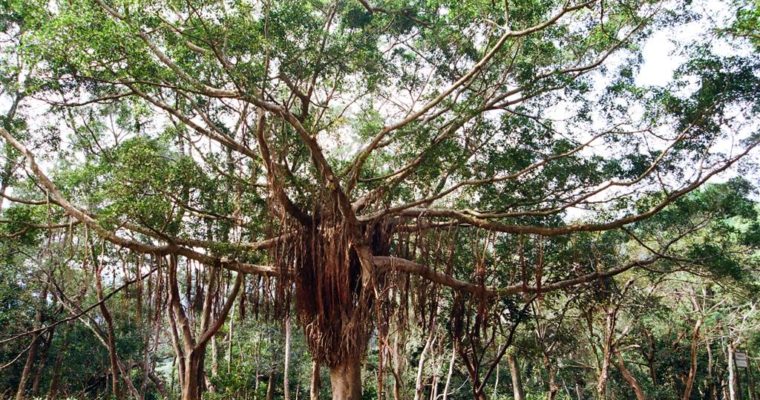
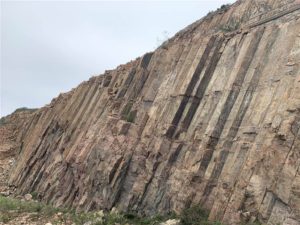
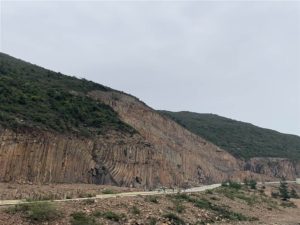
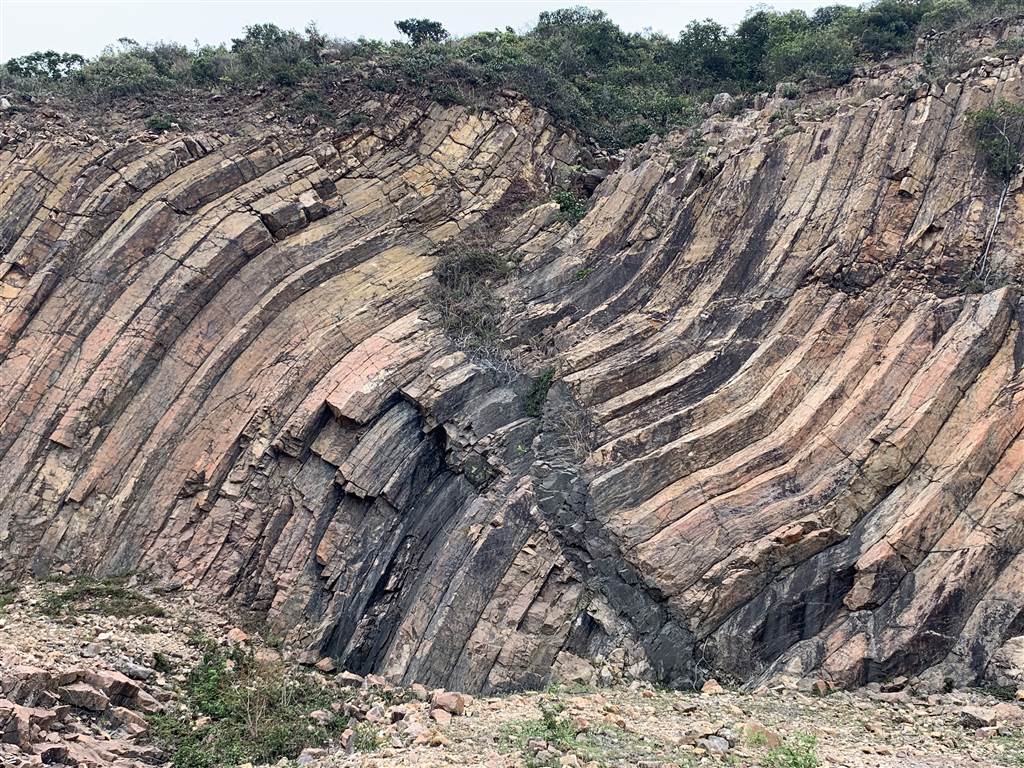
Literally meaning “the dragon leaps over the mountain,” Lung Yeuk Tau spans a large area in Fanling in the Northern District.  It was the second heritage trail in the New Territories that the Antiquities and Monuments Office proposed and promoted.  The 2.6km walk takes visitors 

A Whirlwind Tour Through the Middle East – The Western Wall, Bethlehem and the Wall at West Bank

A Whirlwind Tour Through the Middle East – The Western Wall, Bethlehem and the Wall at West Bank

What is known in the West as the Wailing Wall is known to the Jewish people as the Western Wall.  It is the famous remains of the Second Temple.  Built during King Herod’s time, the remains was part of the wall intended to serve as the supporting structure for an extended temple compound for the Jewish people.  Although the Romans destroyed the Second Temple in 70 A.D. during the invasion of Jerusalem, the Western Wall stood, to this very day.  Jesus Christ has prophesied the destruction of the Second Temple (Matthew 24:2). 

Being connected to the Temple Mount, the Western Wall is a holy site where Jewish people come to pray.[1]  The Westerners like to refer to the “Wailing Wall” because as the Jewish people pray here, many wail.  The Jewish people may be weeping for the history of oppression and the many invasions of Jerusalem that they experienced.[2]  They may be weeping specifically about the destruction of their holy temple and the timing of the Third Temple yet-to-materialize.  For centuries, the Jewish people come to Jerusalem, and they shed countless tears at the Western Wall.      

As soon as we arrived, we split into the men’s group and the ladies’ group.  Indeed, I saw many praying in tears with the Talmud in their hands.  I figured that I would not be able to share the same sentiment with which the Jewish people felt about the wall.  Yet it was with the same yearning for God’s holy presence that I touched the wall (1 Kings 8:41-43).  In my little prayer slip, I wrote, “may I be of God’s use in this world.” 

What a wonderful experience it was to visit the Western Wall as the conclusion to our tour in Jerusalem.  At lunch we savored many delicious roast meat with naan bread at an Arabic restaurant.  Bethlehem was in view. 

Bethlehem is in Palestine, and only when we checked our phones upon arrival did we realize that we were in Palestinian territory.  There were other clues, such as the proud displays of Yasser Arafat at many spots.  The last stop of our tour in Palestine was actually the birth place of Jesus Christ, who began his life on earth here in Bethlehem. 

Despite the initial excitement, I was a bit disappointed in Bethlehem.  The line was very long, perhaps not so surprisingly.  Again, the church was overly ornate.  People worshipped kneeling down and kissing what was supposed to be the staple where Jesus was born.  I felt as if it was superstition that I was witnessing. 

Back in the town of Bethlehem our tour guide hurried us to finish the souvenir shopping.  He said that parking was prohibitively expensive at Bethlehem.  The coach would have to pay $60 USD for an hour of parking there. 

We exited Palestinian territory and I had in my mind the beauty of Jerusalem, lingering as I cherished the sights and sounds there.  I wondered to myself: would New Jerusalem (Revelation 3:12; 21:2) really be that much better than what we see on earth here?  Isn’t Jerusalem as it is now already heavens on earth?

Soon enough, we passed by the wall.  This is the 708km-long wall that Israel built in 2000 within the occupied Palestinian territory along the Green Line in West Bank.[3]  This act of Israel has caused incredible animosity from Palestine.  While the Israeli government claimed that it built the wall to counter terrorist threats, the Palestinians viewed it as a wall of segregation.  The controversy has risen to the attention of the international community.  In 2004, in what was known as the “wall case,” the International Court of Justice determined that Israel has acted contrary to principles of international law when it constructed this wall.[4]       

The wall was made of tall, gray metal planks.  Graffiti lined the wall as far as we could see.  There was an image of an Arabic woman, wearing a headscarf and carrying a gun.  This powerful imagery of the tension brought to mind the reality of Israel today.  It was not heavens on earth, despite all those creamy glimmer I saw in Jerusalem.   The tension that I felt when I saw armed police marching in Old City came to mind vividly, reminding me that peace is not to be had here, nor there, anytime soon.

The people of Palestine, including the Jewish people, are living this complex reality day by day.  Although signs of prosperity, the promise of milk and honey, are seen everywhere, the century-old strife between the Jewish people and their Arab neighbors also casts a shadow over their futures.  As much as this was a pilgrimage for me, there was no missing of the discomforting political reality that was also religious and historical in nature.  Did Jesus not also confront the same complex reality of Palestine?  With this insight, I concluded that there was, indeed, a real hope invested in the idea of New Jerusalem, the holy city of peace that shall descend when the time comes.     


[1] Wikipedia on the Western Wall.

[2] For the Jewish perspective on the Western Wall, see Six Reasons Why the Wall is Holy at aish.


[3] See Wikipedia entry on the Israeli West Bank Barrier.

[4] See United Nations Press Release on the wall case.

A Whirlwind Tour Through the Middle East – The Via Dolorosa

A Whirlwind Tour Through the Middle East – The Via Dolorosa

The Old City charmed visitors with its crisscross streets.  Bazaars selling all kinds of oddities along the roads form an air of festiveness.  The goods and fruits shine incredible colors upon the Old City’s characteristic sandstone buildings. The street signs in Old City displayed English,