Blog

A Whirlwind Tour Through the Middle East – The Tensions of Faith

A Whirlwind Tour Through the Middle East – The Tensions of Faith

“We think this is where World War III will begin.” Alla____hu Akbar!  Alla_____hu Akbar! At the Dome of the Rock, groups of men shouted this repeatedly.  Meaning “God Allah is Greatest,” this phrase often preceded terrorist attacks in the West.  Located on the Temple Mount 

The Six-Day War of 1899

The Six-Day War of 1899

By Patrick H. Hase “The leased area [the New Territories] was not seen as an economic advantage to the City (indeed, it was initially assumed that it would be a drain on the Colony’s finances), but it was seen as greatly strengthening the City’s security 

A Whirlwind Tour Through the Middle East – A Conversation in History

A Whirlwind Tour Through the Middle East – A Conversation in History

“It is not important where Jesus died but why he died.” 

I rose in excitement on my first morning in Jerusalem.  There would be a full day of sightseeing, and the Hortus Gethsemane (Lat. The Garden of Gethsemane) was to which I most looked forward.

In the morning we first visited a few vista points on the mounts, where we could view the Old City of Jerusalem.  The scenery was beautiful, with the golden city glistening under the morning rays.  There was the Mount of Olives (Zechariah 14:4; Matthew 24; see also Acts 1:9-12) right outside the city walls.  It was one of the three mounts that that surrounded Jerusalem: the other two being the Mount of Zion and the Mount of Moriah.

We saw rows of tombstones in the outlay of the city.  Apparently, the Jews and the Arabs had tombstones that distinguished their identities.  The Jews had its signature creamed-colored slabs.  The Arabs had dark gray slabs.  The bright morning rays enlivened the Golden Dome (Temple Mount) afar.  It was the most prominent architecture in the city.  A whole day would go before I came close to this most significant site to various faiths, including Christianity.

I had no idea what the Garden Tomb was, until the tour guide pointed us to view the cliff.  “Do you see a skull?”

Immediately, I realized that we were at Golgotha (Matthew 27, Mark 15, Luke 23, John 19).  The tour guide then explained that, contrary to centuries of established and accepted interpretation, Jesus was not crucified inside the city of Jerusalem (Hebrews 13:12; see also Matthew 27:39 and Mark 15:29).  The execution ground was outside the city.  We looked at the cliff before us.  Surely, the image of a skull was readily recognizable.  Furthermore, historians  discovered this site with tombs nearby.  Therefore the Anglican reading was this was where Jesus died on the cross.
This view of the site of Jesus’ crucifixion was clearly in contravention to the traditional site, which since the time of Roman Emperor Constantine has been the Church of the Holy Sepulchre.  The Church of the Holy Sepulchre was located inside the Old City.  Adherents to this view argued that the old city of Jesus’ time was much smaller than the walled city that gives the current Old City its shape and boundary.  Therefore the location of the Church of the Holy Sepulchre could well be outside the old city then.

The Garden Tomb as a whole was well-kept.  Groomed gardens and carefully landscaped botany conveyed its serenity.  Yet the arguments were also there, and quite visible too.  The tour guide wrapped up his speech, “at the end of the day, it is not important where Jesus died but why he died.”  That was a very nice way to conclude the historical arguments, arguments that costed millions to maintain.  The Garden Tomb was now managed by a British foundation.

At the conclusion of the tour, we had communion at the vault.

We walked from another vista point down to Hortus Gethsemane.  On our way we passed by a cemetery.  The Orthodox Church of Mary Magdalene had a beautiful golden dome as well.  At another church, someone showed me the thorny plant with which Jesus’ “crown” was made at his crucifixion.  Seeing Jesus’ suffering in its physical manifestation did make a cringe of the heart.  As with so many sites and artifacts of religious significance on this tour, it put Jesus’ life, ministry and suffering in a context that made the conversation in history live and relevant, perhaps much more so than in the middle class church houses that most Christians attended these days.  It occurred to me that the sight of a cross would be quite unbearable to me.

We soon arrived at the Hortus Gethsemane.  This was my second-most favorite site in Israel.  I still remembered the illustrated book that I read when I was a child, which showed a picture of the garden, and Jesus prayed in that picture with “sweat became like great drops of blood” (Luke 22:44).  At the very site (the authenticity of which I refused to question) of Jesus’ prayers, I admired the century-old olive trees that must have been the very witness of Jesus’ agony.  The garden confirmed the impression I gathered from the illustrated book that I read.

“Let me be clear, dad, you are not to take any of these thousand-year olive branches for transplantation.”  I was fierce with my father, who said, “of course not.”

At the Tomb of David, many Jewish people paid respects to the great king with avid prayers and the Talmud in their hands.  The reverence of David from the Old Testament time remained well alive in Israel.  Many dressed in Orthodox attire.

At the Dominus Flevit Church (Lat. The Lord Wept) (Luke 19:41-44), one of the older tour members slipped and fell in the marked-off area.  He then got up, and just a step or two later, fell again.  Although I was not so childish as to laugh at him, at the same time I was not sympathetic.  In the past few evenings, he was one of the few members in the tour that complained to the tour manager.  He said he was seeing “too much of Jesus.”  I thought, “God surely had a way with those who were hard in their hearts” (John 12:40).

“This is the Field of Blood.”

Sara, our translator, pointed me to the Field of Blood outside of the Dominus Flevit Church. After Judas hanged himself, the priests used his blood money of thirty silver pieces to buy the potter’s field to bury strangers (Matthew 27; see also Zechariah 11:12-13).  The field of blood laid before us, and really it seemed like a piece of abandoned land, in direct contrast to the golden glimmer of other parts of Jerusalem.  It was a point of sadness for me on this tour.  Judas’ betrayal of Jesus was unforgivable, and that was why he ended his own life.  Yet was he not also part of the plan that God had for the human beings’ redemption?

At the evening I sat with my few servings of hummus, thankful that I have seen so much of Jesus that day.

A Whirlwind Tour Through the Middle East – the Diamonds of the Crown Jewel

A Whirlwind Tour Through the Middle East – the Diamonds of the Crown Jewel

“Reverend, don’t you want to buy some of these, maybe for your wife?” “No, thank you.  There are many in Heavens,” my father said. I witnessed my father’s first act in Jerusalem and it was brilliant.  He found a perfect way to bring forth the 

A Whirlwind Tour Through the Middle East –  Onwards to Jerusalem

A Whirlwind Tour Through the Middle East –  Onwards to Jerusalem

I was sad to leave Tiberia.  Yet the journey must go on, for the tour was making its way to Jerusalem, the ultimate destination of our pilgrimage. Mount Tabor was believed to be the site of Jesus’ transfiguration (Matthew 17; Mark 9; Luke 9).  The 

The Plover Cove Reservoir at Tai Mei Tuk

The Plover Cove Reservoir at Tai Mei Tuk

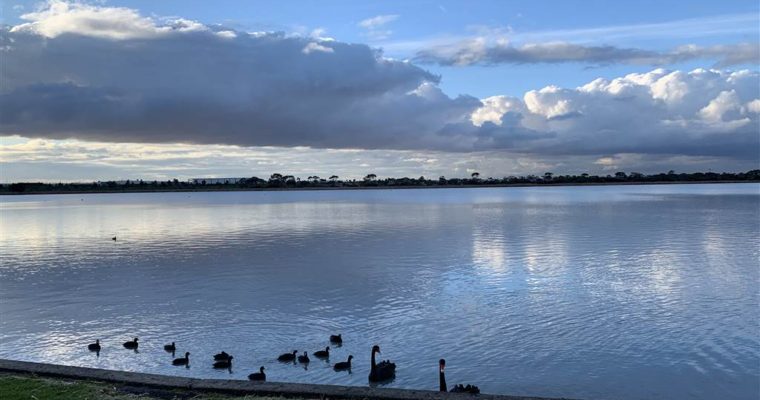
Nestled in the deeps of Hong Kong’s countryside, the Plover Cove Reservoir in Tai Po is the first stop along the scenic route leading to the general area of Luk Keng in Fanling.  The Plover Cove Reservoir is the largest reservoir in Hong Kong by area, and second largest in volume.[i]  Construction completed in 1968.


The dam cut off a section of the sea at the coast of the Plover Cove, then sea water was drained to make way for a fresh water lake.  When one takes a stroll on the dam, there is the lake on the left and the ocean on the right.  Together the two bodies of water make a very pleasing scene.[ii]  The natural environ and man-made lake allow for myriad activities on both sides of the dam.

Over the years, the fresh water lake has enabled a biosphere of its own.  With a permit, people can leisurely fish for fresh water catch on the lake.   On the other hand, many boats sail on the ocean and wake boarders slide along in high speed.  Its length at 2.2km, the dam offers a walk of one hour at a normal walking pace back and forth.  Many people bring along their pets for a stroll.  Others fly kites on windy days.  Children and adults alike bike and jog.  The dam is a perfect venue for activities of all ages.

Looking onto the north, the Ridge of the Eight Immortals (Pat Sin Leng) hovers over the fresh water lake, its range exhibiting the eight peaks that figuratively represent the eight immortals.  The ridge has a hiker trail which is quite rigorous.

As a bonus, the restaurants in Tai Mei Tuk feature a wide selection of good food.  The Thai restaurants are well known, but there is also very good Chinese food.  A nice meal after hours of outdoor activities is always a nice top-up for a good day.

To go to the Plover Cover Reservoir, take Bus 75K or Minibus 20C at the Tai Po Market terminus.  The dam is admissions-free.  There is a barbecue area, also free of admissions, but it would take early arrival to secure a stove and a table in the fall and winter.  Finally, there are many bicycle and boat rental stores there that are reasonably-priced.  Be sure to bring a hat, sunglasses and sun block on sunny days as there are few shades in the area.


[i] Wikipedia on Plover Cove Reservoir.

[ii] For an excellent photo-journal of the Tai Mei Tuk area in Tai Po, see Drone & DSLR.

A Whirlwind Tour Through the Middle East – A Heartfelt Sharing by Pastor D

A Whirlwind Tour Through the Middle East – A Heartfelt Sharing by Pastor D

From what I gathered, the broad religious orientations within the Jewish communities in Israel are orthodox, reformed, messianic, and secular.   Jews aside, other people of Palestinian and Arab descents also live in Israel with their own religious affiliations.  Our tour guide in Israel was an 

A Whirlwind Tour Through the Middle East – The Water of Life for Me

A Whirlwind Tour Through the Middle East – The Water of Life for Me

The last stop before Jordan River was St. Peter’s home, and we also saw the ruins of a synagogue adjacent to it.  The statue of Apostle Peter holds a key and a live fish swims at his feet.  The key symbolizes St. Peter’s office as 

A Whirlwind Tour Through the Middle East – The Water of Life in Israel

A Whirlwind Tour Through the Middle East – The Water of Life in Israel

Due to the historic influence by the Romans and the Greeks in this area, my Latin learning in Ovid has prepared me for this trip in unexpected ways.  The Temple of Pan was one such example.  Like other ruins, the Temple of Pan (Banias as the Arabs had no “p” in their pronunciation) used to be a thriving civilization.  The grotto was a site of pagan worship as Pan is the half-human, half-goat rustic god that plays the reed pipe in Greek mythology.  Now there is a hiker trail in the area that, given another visit, I would very much love to do.

Mount Hermon would be the coldest site we visited on this trip.  Being the highest mountain in Israel, Mount Hermon has streams flowing from the depths of its height throughout the land of milk and honey.  The three springs at the foot of the mountain form the Dan, Hermon (Banias) and Senir tributaries, which are the headwaters of the Jordan River.[1]  The river then flows throughout Israel to end at the Dead Sea.

The lift up the mountain was, strictly speaking, for the skiers.  It should not be called a cable car.  The ride to the mountaintop took ten minutes.  I watched as we ascended with my feet dangling in the air.  There was no cover on the lift and I was glad I brought my ear muffs.

Once at the top we saw a sign denoting that we had entered a military zone.  There was a military vehicle coming out from the ranges.  I wondered what military zone it was.

We first gathered to read the memorial tablet describing the six-day war in 1973 between the Israelis and the Syrians over the Golan Heights.  The Israeli won and seized this part of Mount Hermon, which bore high strategic value.  This would be the part that hovers over the Sea of Galilee, which is a main source of fresh water in Israel even now.  It goes without saying that, because water from Hermon form the three original streams that flow to Jordan River, there is need to safeguard this strategic locale as well.

The tour guide then told us that this “military zone” means the border with Syria.  That excited me more so than Mount Hermon’s Biblical significance (Psalm 133).  It would be the closest I get to Syria in this life.

Lunch at Peter’s Fish brought me an experience that harkened back to the New Testament times and remained well alive in Israel today.  The Bible records only one instance where Jesus cooked.  He grilled fish for the disciples after his resurrection (John 21).  There were a few choices available at the restaurant and I opted for the barbecued fish.  I ate happily and at the same time savored the view of Galilee and its shore.

The Galilee and its town Tiberia was my favorite place in Israel.  Both stood witness to Jesus’ miracles and ministry.  Their authenticity is not being questioned, unlike many of the other religious sites in the area.  The Galilee lived up to its name as a fresh water lake.  There was a certain quality of calm and quiet.  Being surrounded by the Golan Heights, the Galilee seemed bound and tamed.  It was almost unimaginable that once there were storms, which Jesus calmed (Matthew 8; Mark 4; Luke 8).

As a lifeline for Israel, the Galilee supplied 40% of the fresh water that the Israelis consumed.  Upon hearing that, an image appeared in my mind, of Galilee turned into a dry, fissure land.  A drought withered life away from the water that was standing pristine and content before me.  It would be a nightmare, I thought then.  At a later time, our translator told me that the Muslims had a prophecy, “the day that the Galilee runs dry, it would be the beginning of the end of time.”

[1] See the Wikipedia entry on the area known as Caesaria Philippi and mentioned as such in the New Testament.

A Whirlwind Tour Through the Middle East – Shalom, Israel!

A Whirlwind Tour Through the Middle East – Shalom, Israel!

“Shalom!” I witnessed my father’s first act in Israel, and it was brilliant. We entered Israel via a land route from Jordan.  As we crossed the border over to Israel, two Israeli soldiers came on board to check the bus.  The two men carried a