Blog

Beautiful Sha Tau Kok – The Cheung Shan Monastery

Beautiful Sha Tau Kok – The Cheung Shan Monastery

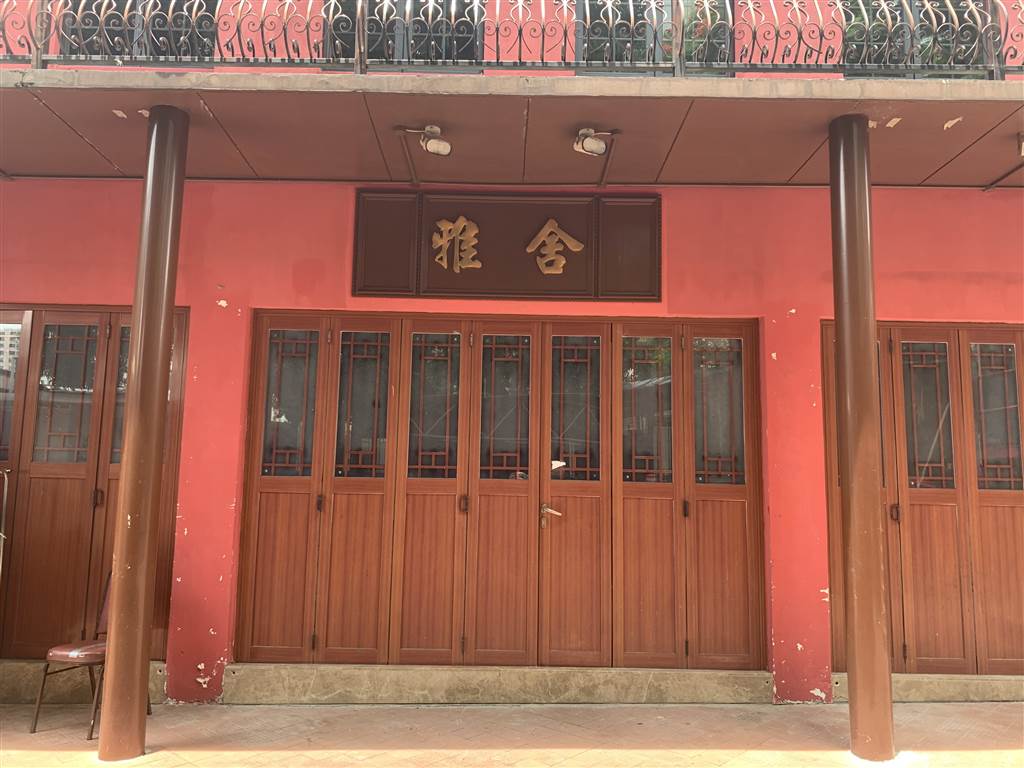
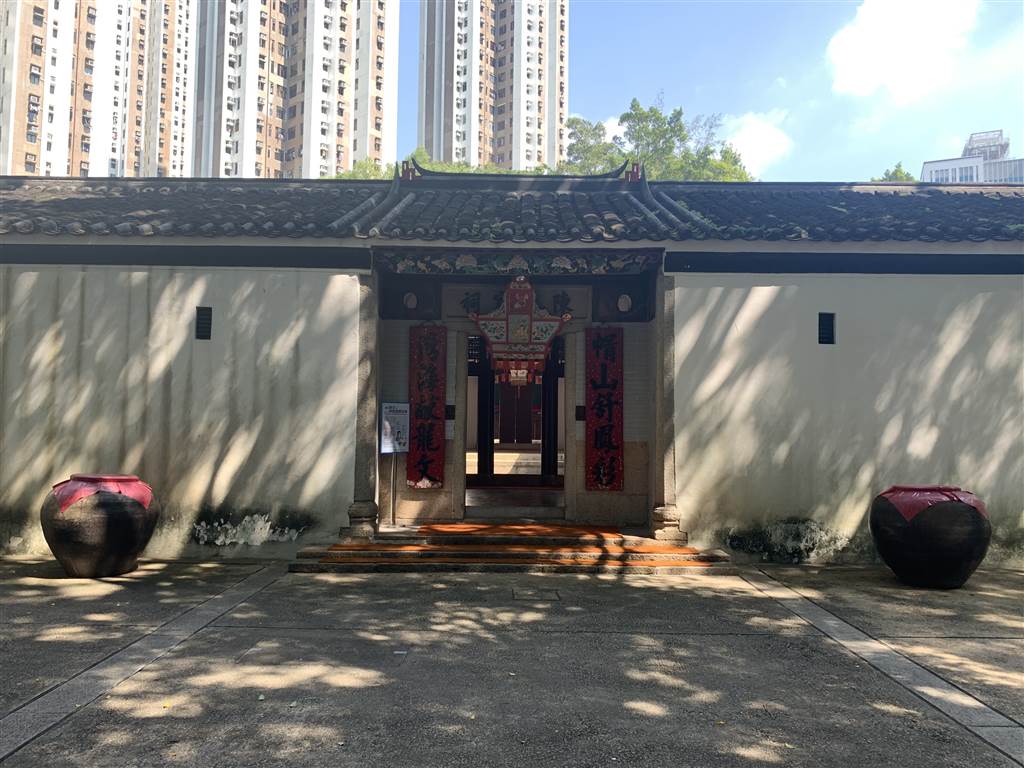
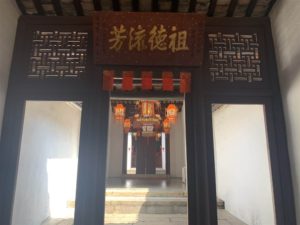
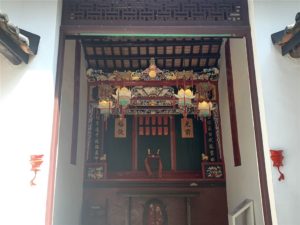
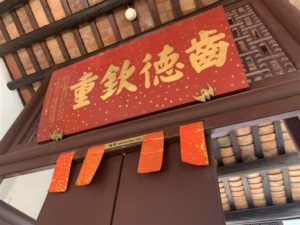
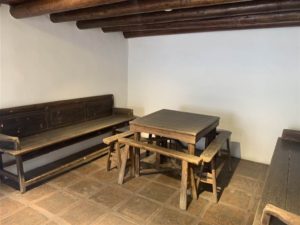
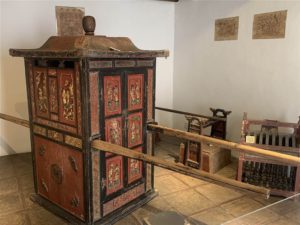
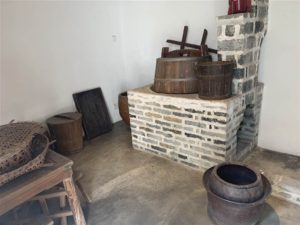
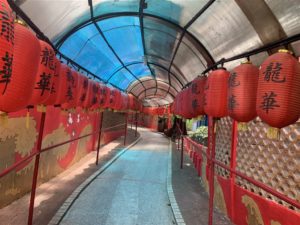
The Cheung Shan Monastery, formerly the Cheung Sang Nunnery, was believed to have been constructed in 1789. Seven villages in the neighborhood pulled the funds to build this temple in order to improve Feng Shui for the villages.  Located on Wo Keng Shan Road, it 

The Hindu Temple of Queen’s Hill Military Camp

The Hindu Temple of Queen’s Hill Military Camp

Some of the places in Hong Kong are never heard of, and out of this world.  The Hindu Temple of Queen’s Hill is such a place. According to the introduction on site, the “Hindu Temple at Burma Lines (formerly known as Queen’s Hill Camp) in 

The Hok Tau Reservoir (via Lau Shui Heung)

The Hok Tau Reservoir (via Lau Shui Heung)

The day was bright.  I looked for a straightforward trail that does not require research, but comes with some climbing.  I decided to visit the Hok Tau Reservoir via the Lau Shui Heung Country Trail.

The last time that I visited the Lau Shui Heung Reservoir, it was dried up and the scenery was disappointing.  I therefore had no expectation on the Hok Tau Reservoir.  Being in the vicinity of Lau Shui Heung, the Hok Tau must have been dried up too, I thought.  I told myself that the point is the hiking, not so much the scenery.

Like the Lau Shui Heung Reservoir, the Hok Tau Reservoir serves as an irrigation reservoir for the fields in that part of the New Territories.

The Itinerary

The itinerary is straightforward.  At the Lau Shui Heung Country Trail loop, go on the first opening on the left.  It is the one that shows some serious stairs up.  Yes, it seems like hard work but that was my intention.

The upward stairs took about 15 minutes, then the trail eased into a nice stroll.  I went on for another 15 minutes to arrive at the sign post for Hok Tau Reservoir.

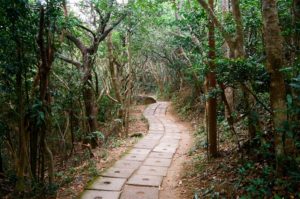
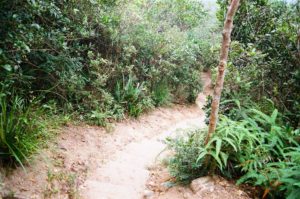
From this point on, it was all downhill until I reached the reservoir.  But I did not miss the scenery in between.  As I walked, I felt a clear sense that I was descending into a valley from a high ground.  Gentle breezes whirled around me.  About five, ten minutes further I felt a fresh humidity.  I even smelled water.  The sensory pleasure was distinctive.  I did wonder how I would make it back up on the same trail, however, as I would have to climb back up.

Left: The descent down to Hok Tau Reservoir.  Right: The view opens up with scenery of water.

Other hikers told me that the reservoir would be in sight in a few minutes.  I had high expectations.  The smell of water showed that there would be water at the reservoir.  The scenery should be good.

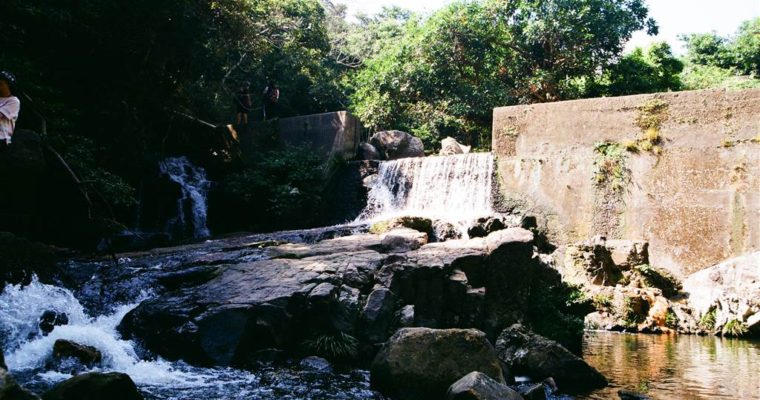
The views of the reservoir opened up as I continued the descent.  Surely, the reservoir was welled with water, plenty of water, true to its form.

I saw the ridges afar that envelop the reservoir.  The rolling summit reminds me of Pat Sin Leng (the Ridge of the Eight Immortals).  The view was beautiful.

From the Lau Shui Heung Country Trail to Hok Tau, it would take one hour, of which 15 minutes are stairs up.  To go back to Lau Shui Heung, it takes an hour, and again, about 15 to 20 minutes of climb up on a somewhat steep incline.

Hue 1968

Hue 1968

Book Review: Hue 1968 (2017) By Mark Bowden By tradition, your first encounter on the morning of Tet was supposed to be a harbinger for the entire year.  If that were true, then Hue’s fate in the New Year would have been sealed.  Its first 

From Eagle’s Nest to Beacon Hill

From Eagle’s Nest to Beacon Hill

Having done the Eagle’s Nest Nature Trail in the previous week, we decided to vary our itinerary this time for just a little.  The day was overcast, and in fact the weather forecast predicted squally thunderstorms.  We tried our luck. The Eagle’s Nest Trail connects 

The Eagle’s Nest Nature Trail

The Eagle’s Nest Nature Trail

The Eagle’s Nest Nature Trail is an easy walk around Eagle’s Nest Hill (also known locally as Tsim Shan).  The Eagle’s Nest Hill is also where the Eagle’s Nest Tunnel is.  The 1.5-hour loop is a pleasant stroll, without rigorous uphill climbing but rapid steps on the trail will result in a good exercise.

We parked on Tai Po Road and headed up the overpass toward the Eagle’s Nest direction.  On the west is the Kam Shan Country Park, which I have visited on a previous occasion.  At the entrance of the trail, we went on the route on the left.  The trail is a loop and therefore you will exit at the same location.

The views on the trail are not exceptional, but they are pleasant.  There were quite a number of sections where we saw the tracks for streams, but all was dried up.  If there were water, it would have made much better scenery.  But then without the streams, the route was safer.

Most of the trail is covered with generous shades.  Therefore even though we went on a rather hot day, the heat was tempered throughout.

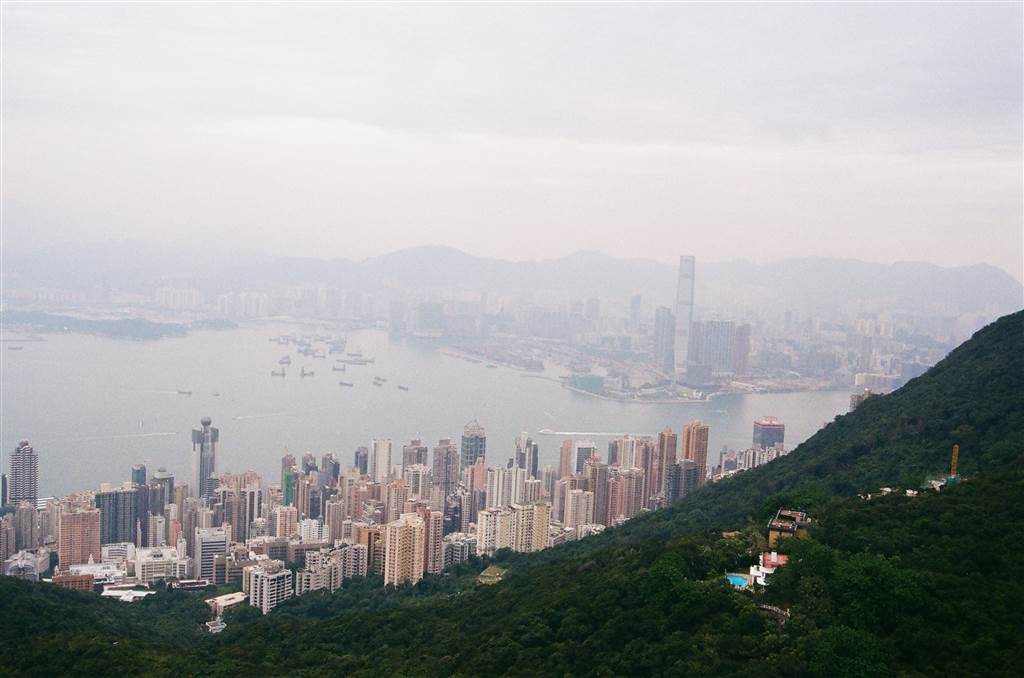
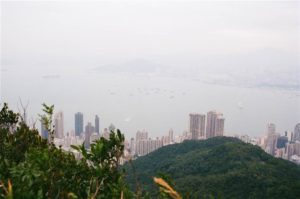
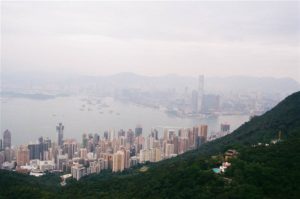
Along the latter part of the route, there are panoramic views of Kowloon (featured above).

Directions: we went by private car and parked on Tai Po Road.  If you go by public transport, take Bus 72 or 81 and get off at the Kowloon Reservoir stop.

Annoyances: monkeys!

Dangers: in terms of difficulty, this is a type of route suitable for solitude walks.  However, during the 2000’s, there were incidents of robbery on this route committed by illegal immigrants.  Therefore, perhaps it is better to go with someone.

Beyond Pho – Goodbye, Danang

Beyond Pho – Goodbye, Danang

Since the 19th century, Danang has replaced Hoi An as the preeminent trading port in central Vietnam.  It remains as such today.  In terms of the American War in Vietnam, Danang was the first location in South Vietnam that received the U.S. Marines.  Apparently, this 

Beyond Pho – Boating to the Full Moon in Hoi An

Beyond Pho – Boating to the Full Moon in Hoi An

In the evening, we came back to Hoi An and found it bustling with festivities.  The night market has opened.  Music filled the air, food stalls lined the streets, and the colorful lanterns decorated the sky with the full moon above us. We had a 

Beyond Pho – Biking Between Heaven and Earth

Beyond Pho – Biking Between Heaven and Earth

We joined a biking tour on this sunny day.


The Nu Eatery

Lunch was at the Nu Eatery.  The restaurant was known for its fusion touch on traditional Vietnamese cuisine.  We had to try our luck as we did not make a reservation, and luck we had.  At late morning we arrived at Nu, which was tucked away in a residential neighborhood.  There was a table.  We sat down with their famous pork bun, a watercress salad, and a rice paper roll.  As with every meal, we finished with a cup of ca-phe sua da (iced coffee with milk).  In terms of volume, there was not a lot of food.  And yet each dish was so tasty that we were fully satisfied.


Heaven and Earth Biking Tour

We joined Heaven and Earth Biking Tour for this afternoon.  The traditional countryside bicycle tour took us on a 45-minute boat ride to an island across the Song Thu River Delta.  As we loaded our bicycles on the boat, I was incredibly excited to be able to see the village life of Vietnam up close.

On the boat ride an older man was at the helm.  We tried to have a friendly conversation, although we did not speak a common language.  He said, “Vietnam, Vietnam” to me.  I knew then he was giving a word of praise.  Over the years, especially having traveled in Southeast Asia, I came to understand that the locals were paying a compliment when they thought of you as their own.  He showed me a picture of him in a crisp military uniform.  He had served in the military before.

At our first stop in the villages of this unnamed island (I never found out what island it was), we came to see the art of weaving.  A couple was weaving a beautiful tapestry.  Our two very colorful young guides asked us questions. “If you get any of our questions right, you will get the ticket to the boat ride back to Hoi An!”


Tapestry-Weaving 

The couple was weaving a beautiful sleeping mat.  I thought the material could have been rattan.  It is a common material in Asia that adds a nice, cool touch to the surface.  It is perfect for sleeping mats in the hot and humid nights of Vietnam.  “How long does it take for this man to weave a mat?”  I had no clue how long it would take on this traditional hand-operated loom.  Someone guessed right, “three to four hours!”  Indeed, it takes one afternoon to make the product from start to finish.


Vietnamese Homes and Their Three Doorways

The four seasons of Vietnam are hot, hotter; wet, and wetter.  At the traditional Vietnamese home the tour guides first showed us the high beams that give the roof its support.  During the rainy season, Hoi An would come under the danger of serious flooding.  When it floods, the villagers would have to take those beams as their last resort.  The first thing to stuff at that level is the television, which for most families would be the most valuable piece of household appliance.  Then they put all other furniture, sofa, chairs, tables, up there to the best they can.  Yes, the flood can level as high as the ceiling of the houses.

A typical traditional home of Vietnam has three doorways.  The men take the left, and the women take the right.  “So who has the middle doorway?”  Our lovely tour guides said to us.  “The ancestors!”  Everybody turned to look at me when I shouted the answer.  I knew because this traditional home had an ancestral altar in the middle of the living room.  And the middle doorway would be the direct through way to the altar.  “You got your ticket back in Hoi An!”  The tour guide Quic said cheerfully.


Scenery of Tranquility

We saw wonderful scenery in this large island as we biked.  It was an intimate view of rural Vietnam.  Fresh waterways crisscrossed everywhere within that island.  As the sun began setting, we biked through a floating bridge.  It scared me at first.  But as we biked on, I realized that the bridge was very sturdy despite its looks.

Green shoots of grain waved gently at us in the wind.  The growth of the rice paddies signaled a good second harvest for the year.  The view of lush rice paddies comforted me.  A good harvest might just be the only humble wish for farmers.  They are tied to the land.

The interactions with the villagers revealed a life in tranquility.  They did what their families did for generations.  While the means of production may seem primitive to us, it was, in many instances, in harmony with nature.  They fully appreciated the resourcefulness of the environment, and practiced sustainable farming.

For example, at the winemaker family home, the villagers reared pigs alongside their wine business.  They had a way of collecting the methane from the manure, to power the lights in their home.

Basket Boats

The water is also a lifeline to the villages on this island.  We visited the family that produced basket boats.  The people of this island frequently ventured out on its waterways on the basket boats, which comfortably sit one or two persons.  The boats are giant baskets.  It was like the rattan baskets that villagers used for drying preserved veggies and seafood, except that it could sit a whole person.  After hand-weaving the boats, the villagers applied a thick layer of cow manure.  They then let the coating dry.  The coating would keep the baskets water-proof.

The really interesting demonstration was how the villagers motioned the oars in order to move the boat forward.  There were two ways to move the oars.  Either drawing in the water the shape of infinity in front of the boat, or in the shape of the number “eight” as written in Chinese.  That means doing short strokes on the two sides interchangeably.  When some volunteers went on the basket boats, we could tell that either way was easier said than done.  The tourists simply could not move the boat at all.

The price of these basket boats was 100 USD.  Clearly, they were valuable as a means of livelihood.

Finally, the tour guides explained to us why the villagers painted fierce-looking eyes on the front of the standard village boats.  They said that the most convincing theory was these eyes stared down at the river monsters.  Thus the villagers were protected from the havoc raised by these monsters.

We began our tour after lunch, and the tour ended around 5pm or so.  We shopped for some souvenirs and boarded the boat to ride back to Hoi An.  The man at the helm changed his clothes, with a shiny white shirt and a suit jacket.  He was looking more like the smart military officer on the picture he showed me.

We tipped generously for our two lovely tour guides on this bike tour.  They were clever, sweet, and passionate about their job.  I highly, highly recommend this bike tour for anyone visiting Hoi An.


Ho Pui Reservoir and its Bamboo-Lined Trail

Ho Pui Reservoir and its Bamboo-Lined Trail

The hike of the day was the Ho Pui Reservoir in Kam Tin. The Trail to Lui Kung Tin At the Ho Pui Village we passed through the store and the village to enter the route up the hill.  The hike up the hill was