Blog

The Red Leaves of Tai Tong

The Red Leaves of Tai Tong

For all of December it is red leaves season in Hong Kong.  One of the most popular sites for viewing sweet gum trees is Tai Tong in Yuen Long.  In fact, the red leaves are so popular that there is a special route called the 

The Cheung Sok Island of Sunny Bay

The Cheung Sok Island of Sunny Bay

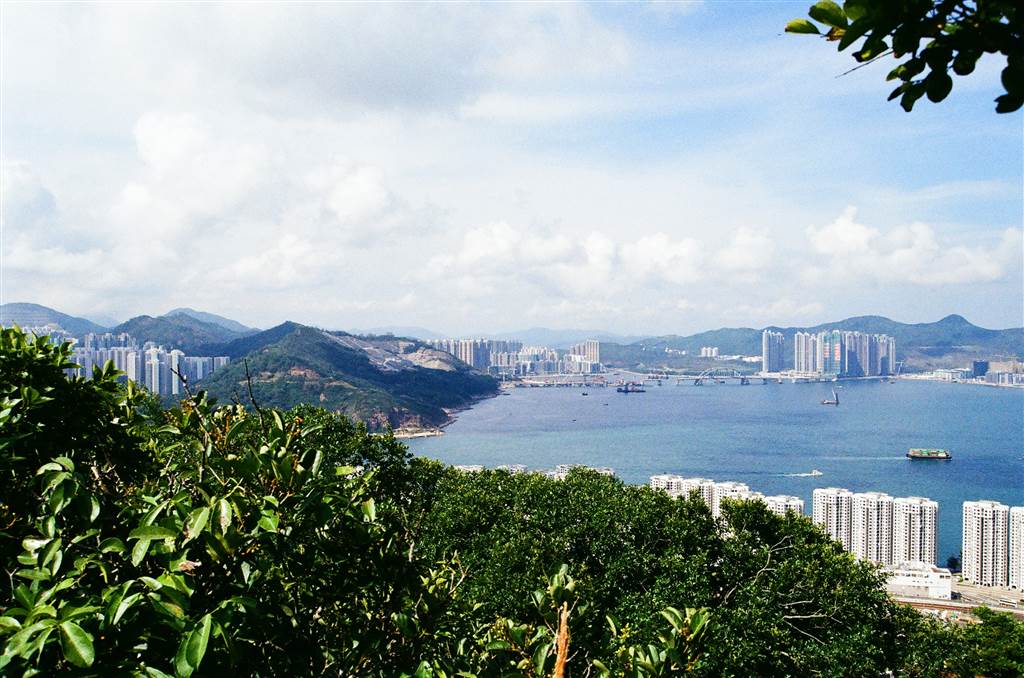
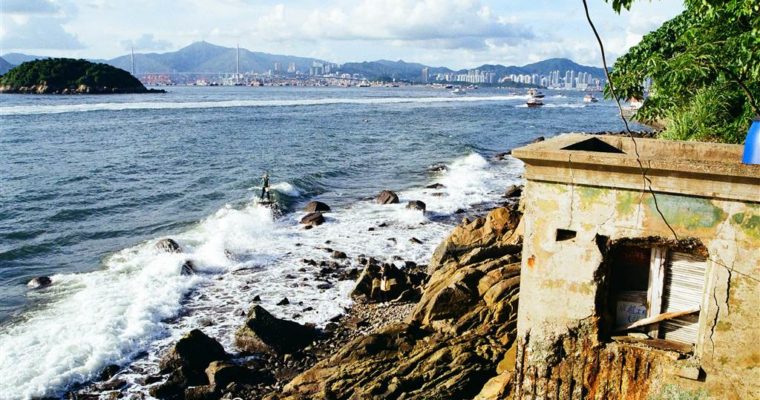
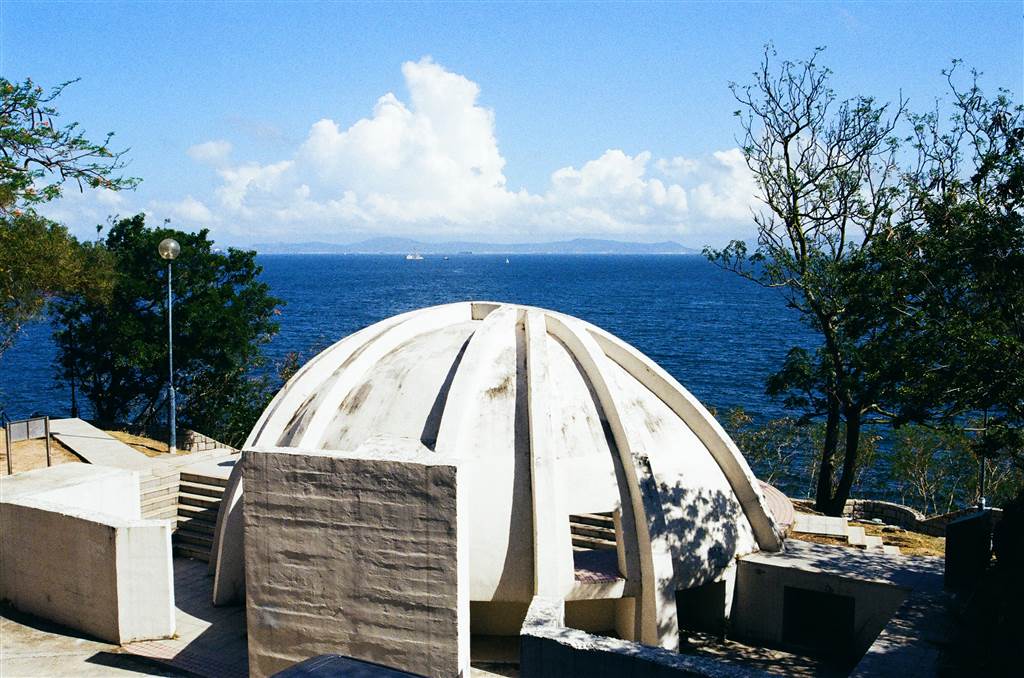
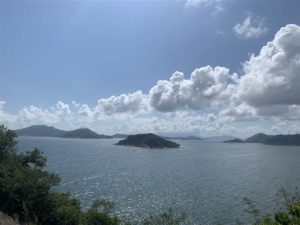
With no car this day we decided to visit the outlaying islands.  I opted for an easy trail in Lantau Island, a stroll on the seaside of Sunny Bay.  The trail ends at the Cheung Sok Island. The Cheung Sok Island is an uninhabited island 

Little Hawaii

Little Hawaii

This late autumn day blessed us with generous sunshine.  We had a family outing with a group of young children.  There is plenty of water to play with in this area of eastern New Territories.

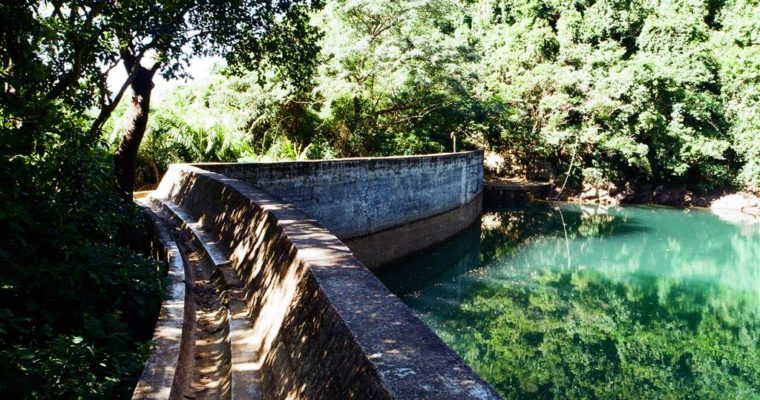
The Little Hawaii of Tseung Kwan O used to be a private pool for rich tycoons, perhaps a few decades ago.  There are three significant points of interests on this trail.  The first one is the Lin Yuen Terrace Falls, and I would say this is where you see a rather pleasing water scene.  Then there is the Little Hawaii Dam, and it is more a stream than a waterfall.  Then finally the farthest end of the trail is Tai Ngau Wu, which we did not visit this time.

Apparently, Little Hawaii was a very popular destination for the annual primary school outings, again perhaps a few decades ago.  Yet this was the first time I have even heard of this place.  It did not disappoint, however, and I had a wonderful time with the children.

The Little Hawaii Trail

On Wing Lai Road, we entered the Little Hawaii Trail.  At the crossroad we took to our left and visited the first waterfall, the Lin Yuen Terrace Falls.  The path was a gentle incline.

We were on this part of the trail for perhaps some fifteen minutes, when we felt the distinct presence of water.  We heard the stream singing.  It became cool, breezy, and a fresh humidity tapered the heat of this sunny day.

The children could not have had enough of this downstream pool.  Not just our children, everybody else searched for a spot to set down.  There were quite a lot of people indeed.  To me, taking off the shoes for a cool wash was about enough.  The children changed into their swimsuits and played.

Soon enough they had their attention on the living things in the stream.  There were some really small fishies.  The fathers showed them tadpoles, with the nets that other tourists left behind.

We left the Lin Yuen Terrace Falls and upward to the Little Hawaii Dam.  Back at the crossroads again we turned left, and took on a gentle incline for another 20 minutes or so.  We came across the stream.  As compared to the Lin Yuen Terrace Falls, this area is much more open.  There was plenty of sunshine.

Then we walked up to the Little Hawaii Dam just to take a look.  For activities, the downstream area was safer.

The lesson for this day is, don’t get the children excited over tadpoles.  They continued to play with what tadpoles they saw at the Little Hawaii Dam area.  They did not want to leave, and as a result we had our lunch really late in the afternoon.

Dangers and Annoyances

At the Lin Yuen Terrace Falls it is possible for one to tread the waters upstream.  As always, I do not recommend any risk-taking, particularly when it comes down to water trails.  I am certainly not experienced enough to do that, so I only went up about ten meters to take my photographs.   I then stayed at the downstream pool with the children.

Another annoyance is the mosquitoes.  The Lin Yuen Terrace Falls area are well-shaded.  This is the kind of habitat that grows fierce mosquitoes.  Therefore bring your mosquito repellent!

How to Get There

We went by private car and parked at Wing Lai Road.  Parking was not so easy and we had to park illegally on the roadside.  The closest MTR station is Po Lam and from it a 20-minute walk to the entrance of the Little Hawaii Trail on Wing Lai Road.  There are many road signs pointing the way to Little Hawaii in the Tsung Kwan O Village area.

The Good Man of Nam Long Shan

The Good Man of Nam Long Shan

On this first visit at Nam Long Shan, we ran into heavy rain when we were half-way through the hike.  We ran back for cover and sat at the pavilion at the Nam Long Shan Road Rest Garden.  A mid-aged man was also taking cover 

From the Hatton Road Morning Trail to Mount High West

From the Hatton Road Morning Trail to Mount High West

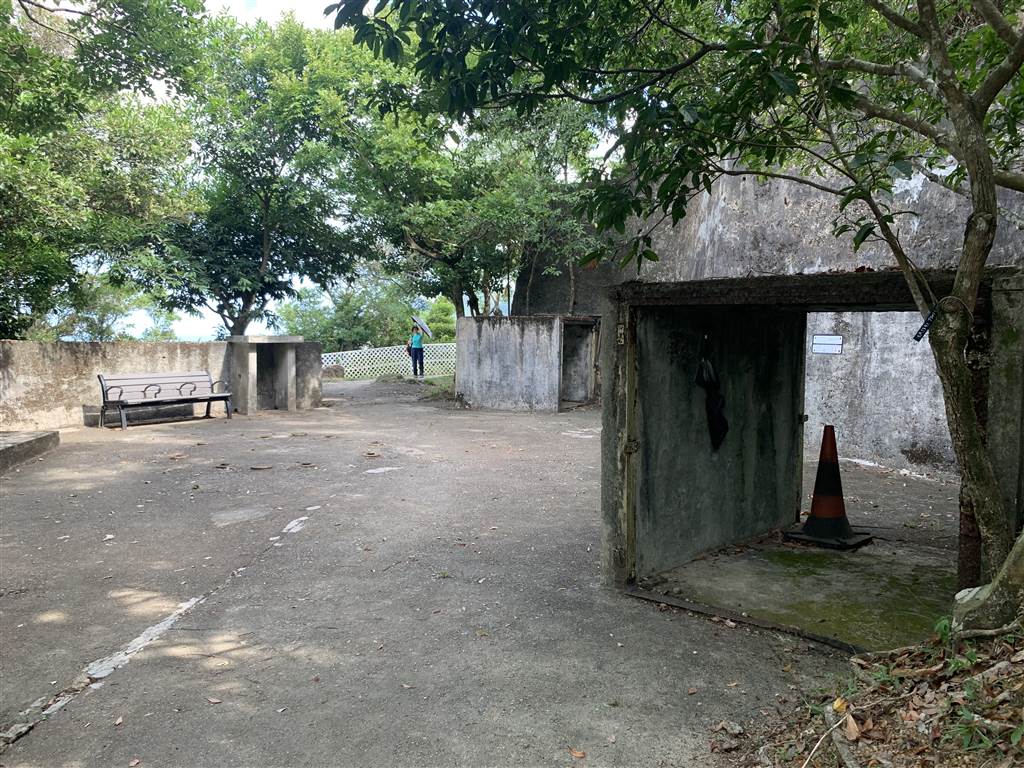
We walked up the Peak via the Hatton Road Morning Trail and then ascended even higher to Mount High West. The Hatton Road Morning Trail We have done the Hatton Road Morning Trail before in order to see the Pinewood Battery, which lies about half-way 

The Reservoir Islands at Tai Lam Chung Reservoir

The Reservoir Islands at Tai Lam Chung Reservoir

The Tai Lam Chung Reservoir was the first reservoir in Hong Kong built after WWII.  Construction began in 1952 and completed in 1957.  It is also the largest reservoir in the New Territories, with a capacity of 21 million cubic meters.  The main dam of Tam Lam Chung Valley enabled the water to well.  Although the valley was flooded, what used to be the hilly tops remain exposed above the reservoir.  As such, the spectacular view of many islands form.  The locals thus call the reservoir “Thousand Island Lake,” or with “Reservoir Islands,” as its official name.

The trail that leads up to the Reservoir Islands Viewpoint was once known only to experienced hikers.  Then the Hong Kong Government constructed a paved walkway so that everyone can enjoy the views safely.

Photos: a panoramic view of the Reservoir Islands

The hike on this trail is very easy.  From the Tai Tong Shan Road Parking Lot we followed signs for the Tai Lam Chung Reservoir.  At the crossroads watch out for the signs pointing to the Reservoir Islands Viewpoint.  The whole trail, including picture-taking time, took us about 2 hours.  On the way you will pass by maple tree groves, which turn red around early December.  That is also the time when waves of tourists will visit this trail.  There are also two temples, one below the stone bridge, and another closer to the entrance way to the Viewpoint.

At this point, it is only 200 meters on gentle upward steps, and you will arrive at the viewpoint in no time.

Exceptional views like this certainly draw many visitors throughout the year.  Therefore expect crowds there.  People are generally civilized though, so be sure to take turns at the viewpoint to take your photographs.

How to Get There

We went by private car and parked at the Tai Tong Shan Road Parking Lot.  There are meter spaces there.  Bus K66 runs from the Long Ping West Rail Station.  Get off at the Tai Tong Bus Stop.  However, the walk between the bus and minibus stops and the beginning of the trail would take some 30 to 45 minutes.  Therefore I think a better arrangement is to take a taxi from Yuen Long and get off at the Tai Tong Shan Road Parking Lot.

Source:

The Wikipedia on Tai Lam Chung Reservoir.

The Tai Po Waterfront Park

The Tai Po Waterfront Park

From picnicking to jogging, from playing street music to bicycling, there is something for everyone at the Tai Po Waterfront Park.  Wedged between the Tai Po Industrial Estate and Fu Shin Estate, the park prides in its open space of twenty-acres with thirty points of 

The Sam Tung Uk of Tsuen Wan

The Sam Tung Uk of Tsuen Wan

The Sam Tung Uk in Tsuen Wan is formerly the Hakka Wai Village (Hakka walled village) of the Chan’s.  In Chinese, “tung” means the upper beams of the houses, which support the roof.  Because this village had three main halls, the name Sam Tung Uk 
Hong Kong Internment, 1942-1945

Hong Kong Internment, 1942-1945

Book Review: Hong Kong Internment, 1942-1945 by Geoffrey Charles Emerson

This is a great introduction to Hong Kong’s World War II history.  Originally written as a master’s thesis for history, this work approaches the subject matter with sympathy and life-breathing details.

One of the main conclusions to come from this thesis is that the Japanese, in their meticulous planning for establishing their Empire, neglected to formulate plans for dealing with enemy civilians.  Their treatment varied so greatly from place to place and was so inconsistent even within one place, that there must have been no general guidelines laid down by Tokyo.  Stanley Camp is a good example of this, particularly of the inconsistency, as will be shown by an examination of the three and one-half years of internment.     Preface

The story begins on January 4, 1942.  The English language wartime mouthpiece The Hongkong News published an announcement calling for a “registration” of all enemy civilians in Hong Kong.  Enemy civilians, in the Hong Kong context, refers to the non-Axis, non-Chinese civilians in the Colony.  Unbeknownst to most, this would be the beginning of three years of internment under the Japanese occupation of Hong Kong.

Stanley was chosen as the site of internment mostly due to its physical attributes.  The Stanley peninsula was isolated from the rest of Hong Kong, with land and sea access over which the Japanese could easily exercise control.  The Stanley prison grounds and St Stephen’s College provided readily available housing to the initial internees, which numbered something close to 3,000 men, women and children.

The book amply conveys a spirit of survival.  In face of severe shortage of food and supplies and all the ensuing problems, the internees showed ingenuity, perseverance and the strength of community.  What meagre food that the Japanese provided, they were also in poor quality.  As a result, quite a lot of the internees suffered from nutrition deficiency-related illnesses.  The population was constantly starving.  Despite plea after plea raised by the internees, the Japanese did very little to improve the situation.  Thus came the raising of chickens for eggs and garden and terrace farming in the mostly infertile soil of Stanley.

A type of mental problem for almost everyone was what one internee called “barbed wire sickness’, the long hoped for, long awaited release.  In spite of keeping busy, ‘no pursuits, no determined ambitions can change that counting of the days, that inner question of “how long, how long?”’  at 106

The internees’ determination to provide education and entertainment in the camp was particularly heartwarming.  Not surprisingly, there were many intellectuals in this group of internees.  The professors and teachers provided education for all levels of learning, from kindergarten to post-university.  The entertainment, including concerts, drama, musicals, and exhibitions were what gave the internees relief from the horrors of confinement.  Original scores of plays and music were composed in the Stanley Camp.

In discussing various critical aspects of camp life, the author shows what lied in heart of the internees’ nature.  In times of adversity, the internees did not give up hope.  They sought to govern themselves under the nose of the Japanese military.  They had to learn farming, when most had their food served by servants before the War.  By engaging in cultural activities, they connected to their roots when morale was low.  Surely, there were fights, thefts, blame, and all sorts of human failures, but the internees appreciated the necessity of community.

When victory came in August 1945, the internees could finally move beyond matters of life and death.  “And so we read and hardly dared believe.  The sorrows and suffering were over at last; the burden of the years was lifted.  Yesterday our chances of survival were few.  Today we lived.”    At 169. 

War and internment are heavy subjects.  Yet this book leaves readers with a message of hope by presenting candid portrayals of individuals, community initiatives and many instances of humor.  The internment of enemy civilians in the Stanley Camp was but one small piece in Hong Kong’s WWII history, but it certainly shall not be forgotten.

From Farm to Table — Oysters

From Farm to Table — Oysters

Hong Kong’s local oysters mostly come from Lau Fau Shan in western Yuen Long.  The second generation owner of oyster farm Chan Cheung Kee decided to satisfy the palate of oyster lovers by opening the Best Oyster Noodle restaurant in Prince Edward.  The oysters served