Blog

The District Office (North) in Tai Po

The District Office (North) in Tai Po

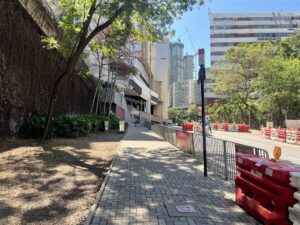
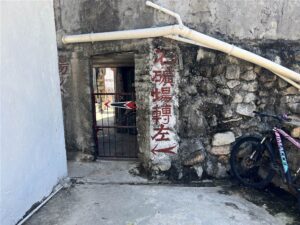
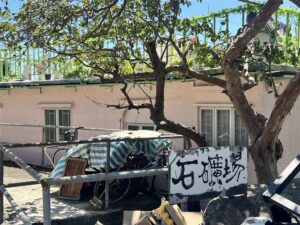
The District Office (North) is just a stone’s throw away from the Old Tai Po Police Station as both are located on the former Flagstaff Hill on Wan Tau Kok Lane. Both are also declared monuments. Now the Law Ting Pong Scout Center, the District 

Ubiquitously Uzbekistan – The Lyab-I Hauz Square and the Jewish Old House

Ubiquitously Uzbekistan – The Lyab-I Hauz Square and the Jewish Old House

The Lyab-I Hauz Square is the gathering place for the people of Bukhara and even in our first night there we had a preliminary view of the jovial atmosphere there. Locals and tourists alike sit at all the restaurants at the Lyab-I Hauz Pool for 

Ubiquitously Uzbekistan – The Celebrated Bukharan Documentary Photographer Shavkat Boltayev

Ubiquitously Uzbekistan – The Celebrated Bukharan Documentary Photographer Shavkat Boltayev

There was no mistake that Bukhara’s climate is that of the desert. On our second full day in Bukhara, we woke up to what seemed to be a sandstorm. We had already left the Oasis Boutique for the adventures of the day, but decided to return to our room to get our face masks.

We were amazed by how the sandstorm changed the character of Bukhara. We walked through the same streets in Bukhara for our sightseeing of the day, and only then realized what a great blessing it was that we had the sunshine of the previous day. The warmth, the charm, the brilliance of the golden shades of the desert—turned suddenly into a haziness. Strong winds greeted us by sweeping up dusts that seemed to have come from nowhere. The streets were deserted and clothed in a menacing veil of grayness. It was not just gloomy. On that day the nature of Uzbekistan spoke a language of calamities, through the droning rustles of swirling dusts.

We pressed on, as we had no time to lose for our sightseeing program of the day. Soon enough we made our way through the sandstorm to the photography gallery of Shavkat Boltayev.

An activity indoors was perfect for this weather. We found our calm again amidst the beautiful images of Uzbekistan taken by the native Bukharan photographer.

About Shavkat Boltayev

Shavkat Boltayev has Persian roots going back to generations, but his family has long settled down in Uzbekistan, specifically in Bukhara.

As an artist, Shavkat Boltayev is committed first to his hometown Bukhara and then to Uzbekistan, by taking wonderful photographs of all aspects of Uzbek life. Chiefly, he takes beautiful portraits of the Uzbek commoners, for decades documenting both the changing and static aspects of Uzbek culture.


Between tradition and modernity his lens lends a realistic angle to the truth and beauty that made Uzbekistan, and sometimes placing his camera at the crossroads of the country’s shifting socio-economic landscape.

From wedding to family portraits, from cooking to eating, from crafts-making to worshipping, Shavkat Boltayev’s photographs depict the most fundamental experiences of living and livelihood. Oftentimes the photographs are set against the iconic sceneries of Bukhara, and that shows how history comes alive and finds continuous relevance to this day.

During the mid-1980s, Shavkat Boltayev founded the first photo gallery in Bukhara, and the gallery continues to engage in the development of art and artists in Bukhara today.

A Tour of Shavkat Boltayev’s Photo Gallery

The photo gallery is not very big but it showcases many facets of Uzbek life that I would have never gotten around to see on my own (let alone shooting those similar photographs myself).

There is that calming quality to Shavkat Boltayev’s photographs, perhaps because they are down to earth and realist. The photographs cover a wide variety of subject matters, but at the forefront and in the center of these photographs, the awareness of history, the appreciation of minority cultures, the interaction between humans and nature, and the passion for his subjects come through.

My friend and I spent perhaps more time there than we originally intended. Toward the end, we had to struggle with which prints and postcards to buy. There were many interesting photos there.

In the Adamdar website Shavkat Boltayev documented his journey as an artist and photographer. It is a very engaging read, please visit the website here.

I’m not the biggest techie. When I give master classes, I tell my students, don’t ask me any technical questions. I don’t even use many of the functions on my camera. For me, the most important things are the process, the situation that I’m capturing, and its framing. – Shavkat Boltayev

The address of Shavkat Boltayev’s Photo Gallery is B.Naqshband #70, Bukhara, Uzbekistan.

Sources

Descriptions on site at the Photo Gallery of Shavkat Boltayev.

The Adamdar Website, A Man from Bukhara.

Ubiquitously Uzbekistan – The Ark of Bukhara

Ubiquitously Uzbekistan – The Ark of Bukhara

The Ark of Bukhara is namely the most significant historical relic in the heritage-rich city of Bukhara. I enjoyed the walk there very much because it clearly is a unique structure. The mosque there is beautiful. It was built in a style that, at that 

Ubiquitously Uzbekistan – The Kalon Mosque, Kalon Minar and the Mir-I Arab Madrassa

Ubiquitously Uzbekistan – The Kalon Mosque, Kalon Minar and the Mir-I Arab Madrassa

The Kalon ensemble of architecture is a key site to visit in Bukhara. In this part of Old Bukhara you will come across the Kalon Mosque, the Kalon Minar and the Mir-I Arab Madrassa. The Sights and Smells of the Bukhara Marketplace On our way 

The Old Tai Po Police Station

The Old Tai Po Police Station

The Old Tai Po Police Station is a Declared Monument in Tai Po. I joined a guided tour in order to learn its history. Green Hub is the NGO that runs the operation and maintenance at the Old Tai Po Police Station now and it offers guided tour of the site.

I came across many pleasant surprises during this guided tour. Although the venue is open to public visit, I highly recommend joining the guided tour because the tour guides provide interesting narratives of the New Territories that only serious students of Hong Kong history would know about.

The History of the Old Tai Po Police Station

The history of the Old Tai Po Police Station began after the Six-Day War of 1899. The confrontations between the indigenous villagers of the New Territories and the British officers that sought to exercise the act of sovereignty in 1899 occurred at the flagstaff established at a temporary police station in Tai Po.

Photo: Flagstaff at the Old Tai Po Police Station, but NOT the flagstaff where the British exercised their sovereignty in 1899.

In 1898, the British signed the Convention for the Extension of Hong Kong Territory (also known as the Second Convention of Peking) with the Qing Government to lease the New Territories for 99 years. This Convention was a result of negotiation, and not a direct consequence of the two Opium Wars, which gave rise to the Treaty of Nanking in 1842 (the ceding of Hong Kong Island to Great Britain) and the Treaty of Peking in 1860 (the ceding of Kowloon up to the Boundary Street).

Rumors about the British exercise of sovereignty in the New Territories were circulating in 1899 when police superintendent Henry May established matsheds for the purpose of flag raising. The villagers were very worried that British arrival would result in coerced changes in the customs being practiced then, both in terms of land relationships and cultural practices.

When the British officers were attacked at the matsheds and the site was burned down by the villagers in April 1899, the Six-Day War of 1899 drew its curtains. The British retreated after the matsheds were burned down. They soon came back with more troops and engaged in six days of fighting throughout the New Territories, first from Tai Po in the east all the way westward throughout Yuen Long. Many villages were involved in this war. This history was previously discussed in my review of Professor Patric Hase’s book.

After the British claimed victory in the Six-Day War of 1899, they imposed a number of policies both to pacify the villagers and to solidify the British administration of the New Territories. The Old Tai Po Police Station was established as one such initiative.

When it was established, the Old Tai Po Police Station accommodated five British, high-ranking officers, and 32 Indian and Chinese constables. It was the very first permanent police station in the New Territories. It was also the Police Headquarters for the New Territories until the new Tai Po Police Station began its service in 1987. During the Japanese Occupation years (1941-1945), the Old Tai Po Police Station was turned into a military encampment by the Japanese forces.

Together with the Old District Office building also on this same hill, the Old Tai Po Police Station sits on an area that used to be called “Government Hill.”

The above history of the Six-Day War of 1899 was well-documented in Professor Patrick Hase’s fascinating book, The Six-Day War of 1899.

A Tour of the Old Tai Po Police Station

This site in Tai Po was selected for both the flag raising and the location of the permanent police station for two reasons. First of all, this location was easily accessible both by land and by sea. Secondly, the small hill of Wan Tau Kok (formerly known as the Flagstaff Hill) provides the vantage point to look out to what used to be the Tai Po Sea (now we call it Tolo Harbour). As such both patrol of land and the sea was possible at this location.

I found the small museum at the back of the Main Building to be the most interesting part of the Old Tai Po Police Station. You would first enter the former reporting room of the police station.

Next door is the ammunition bunker, and the ledger blackboard of the weaponry hanging on the wall there is the actual original.

Going further is the police detention room. There are interesting descriptions there about taking mugshots for suspects. Another interesting feature there is that the toilet is flushed outside of the detention room, meaning that the practice was for the detainee to request toilet flushing by the police officer. This was done so to prevent the detainee access to any kind of rope that could enable a suicide.

Although the Old Tai Po Police Station is open for public visits, the guided tour will lead you to one area that is off-bounds for public visitors. Within the main structure there is a former staff quarters, which surround a courtyard. That section is now reserved for people who rent the rooms for short stays at the Old Tai Po Police Station. The courtyard is well-restored with a small pond in beautiful landscaping. If you are interested in renting rooms at the Eco Guesthouse, inquire with Green Hub. Do note that the rooms do not come with air conditioning (in line with the practice of a sustainable lifestyle that Green Hub advocates), and the bathrooms are shared.

The Architecture of the Old Tai Po Police Station

The Old Tai Po Police Station consists of three main structures: the Main Building, the Staff Quarters Block and the Canteen Block. It was built as a typical colonial building, a one-story structure in the Utilitarian style. A key feature of the colonial building is the veranda. In all colonial buildings the verandas serve the primary function of keeping the heat and dampness away from the building during the summers. In my opinion, I think the verandas are what give the colonial buildings their classy, stately appearance.

Besides the beautifully restored veranda, there are a number of other architectural features from the colonial era. For example, the arched windows and the adornment above, the window sills and the classic fireplaces and chimneys that may or may not have served practical heating purposes.

One particularly interesting point to note is that, while the structures are mostly built in the colonial style, the roof of all the structures are distinctly “Chinese,” in the sense that they are tiled roofs. Even as tiled roofs, however, they are quite different from the common tiled roofs of, let’s say, old temples. The roofs of the Old Tai Po Police Station are “double roofs.” The two layers of tiles serve additional water and heat proofing functions. The roofs of both the Main Building and the Staff Quarters are double roofs. The Canteen Block does not carry this feature, perhaps because it was built in a much later time period.

At the lawn, you will see the brick incinerator. It used to be the fire “shredder” for police documents, of course, by burning them.

The Staff Quarters Block next to the lawn and the Canteen Block are believed to have given home to the lower-level staff members of the police. This fact is observed by noticing that this block is built to a lower height, with much less elaborate European architectural features, as compared to the staff quarters for the highest officer in the Main Building. The Staff Quarters Block is now the workshop area for Green Hub.

Where possible, the original red bricks of the Staff Quarters Block were preserved. If there were broken bricks that must be replaced, the red bricks were sourced as much as possible from the United Kingdom, before considering local sources. If the bricks do not match the profile of the original bricks well, then in some cases the bricks would simply not be replaced.

One very interesting history I learned about the restoration of the Old Tai Po Police Station is the main color of the painted walls of the Main Building. The current color of the paint is a light and creamy yellow. I was told that when the restoration began, layers and layers of paint were scraped off the walls and some of that sample was tested in the lab to determine the original color of the walls. The old photographs of the Old Tai Po Police Station, although in black and white, clearly do indicate that the original paint was a shade darker than pearly white. Having reference also to the other typical colonial government buildings in Hong Kong, the restorers of the Old Tai Po Police Station determined that the current color was likely the closest to the original.

I do think that the heritage restoration was well done. The Old Tai Po Police Station received an Honourable Mention from the UNESCO Asia-Pacific Awards for Cultural Heritage Conservation, and it is well-deserved.

The Old Tai Po Police Station Today

Needless to say, the Old Tai Po Police Station has fully retired from its historic role by now, but the collaboration with Green Hub has breathed new life into the venue, beyond its nature as a heritage site.

Green Hub is an NGO that advocates environmental conservation, sustainability and healthy living. It is associated with the Kadoorie Farm and Botanic Garden, which is also located in Tai Po and advocates awareness of environmental and animal issues. As a winning applicant in the Hong Kong Government’s Revitalising Historic Buildings Through Partnership Scheme, Green Hub has had its hand in both restoring the heritage at the Old Tai Po and reshaping the site into a community-friendly venue for healthy lifestyle and positive culture.

One very special ecological feature on site is the egret garden. Behind the Canteen Block, an area on the hillside was blocked off as the nestling area for different kinds of egrets. All the original trees there were preserved as the primary habitat for the egrets, and the area is off bounds to humans most of the times. When this initiative began, there were 50 egret nests. The year before, there was another count and there were 250 egret nests then.

The Eat Well Café

Given that Green Hub advocates sustainable living, the restaurant on site, Eat Well Café, is the very practice of the philosophy that Green Hub seeks to promote to the community. Eat Well Café only serves vegetarian food, and it is so well made that the food itself is the advocacy –showing amply that vegetarian food is satisfying and tasty.

The Eat Well Café is located in the former Canteen Block of the Old Tai Po Police Station. The former Canteen Block became part of the old police station in a much later time than the police station itself, only in 1961. The police officers that stationed there induced the demand for a proper dining space.

There is a garden next to the canteen area and there is some practice of “from farm to table.” Of course, the produce there does not sustain the demand of the kitchen, but the restaurant also sources from other organic producers, including the Kadoorie Farm and other trusted organic food suppliers.

I would like to give a special note of thanks to Mr. Kaiser Ng, who was the volunteer tour guide that took me through the Old Tai Po Police Station on this guided tour. It was a pleasant conversation throughout and he really told me a whole lot more about the heritage and Green Hub’s ecological initiatives than what I could have observed on my own. Please sign up on Green Hub’s website for a guided tour.

Sources

Guided Tour of the Old Tai Po Police Station.

Descriptions on site at the Old Tai Po Police Station.

Patrick H. Hase, The Six-Day War of 1899 (2008).

Ubiquitously Uzbekistan – The Ulug Bek Madrassa and the Abdul Aziz Khan Madrassa

Ubiquitously Uzbekistan – The Ulug Bek Madrassa and the Abdul Aziz Khan Madrassa

On our first full day in Bukhara we first visited the Ulug Bek Madrassa and the Abdul Aziz Khan Madrassa. They stand tall and proud right across from each other. As we took our leisurely stroll through the city’s ancient sites, we noticed a certain 

Ubiquitously Uzbekistan – Puppetry as a National Craft of Uzbekistan in Bukhara

Ubiquitously Uzbekistan – Puppetry as a National Craft of Uzbekistan in Bukhara

The day blessed us with generous sunshine and we had a good half day of touring in the main tourist sites of Bukhara. I will discuss those sites in later entries but first, the Puppet Museum of Bukhara. The Uzbeks consider the puppet show to 

The Wong Tai Sin Temple

The Wong Tai Sin Temple

There are myriad temples in Hong Kong and Wong Tai Sin is namely the most-visited temple in all of Hong Kong. I have been there once during January, a time when many of the faithful worshippers would visit the temple to seek fortune reading and pray for health, prosperity and happiness for the year, and it is quite a scene at that time of the year.

The Legend of Wong Tai Sin

Wong Tai Sin, named Huang Chuping (Mandarin pinyin) was a real person that lived during the ancient times circa 328 or so. He was a shepherd but reached the ultimate enlightenment and became immortalized.

In 1897, the 23rd year of the Guangxu Reign, the spirit of Wong Tai Sin manifested itself in a spirit writing session (like Ouija), and the people began to recognize how accurate the fortune readings were and how much this deity would grant legitimate prayers. The first Wong Tai Sin Temple was built in Guangzhou in 1899. Soon enough, the Wing Tai Sin Temple in Guangzhou became a sacred religious site, with many followers visiting its grounds.

The political unrests that soon followed in China necessitated a move of Wong Tai Sin to Hong Kong. A disciple of Wong Tai Sin received the sign that Wong Tai Sin must be moved southward. He brought with him the portrait of Wong Tai Sin and set up the new temple ground in Chuk Yuen in Hong Kong, the area now known as Wong Tai Sin.

The History of the Sik Sik Yuen Wong Tai Sin Temple in Hong Kong

The Sik Sik Yuen Wong Tai Sin Temple was built in 1921. At first, the temple was the home for proper monks and it was only open to the monks and their families. For a few decades the temple grounds were open to followers only on the very first day of the year. Only in 1956 did the temple finally open its doors for public service and worship. In 1969, the Hong Kong Government named the area of Chuk Yuen, where the temple stands, into Wong Tai Sin.

In terms of layout, the temple grounds consists of the patterns of the Five Elements: metal, wood, water, fire and earth. This philosophy was shown in the various different sections of the temple that were designed to express the element forms.  This was an instruction that the monks received after another spirit writing session.

The Sik Sik Yuen Wong Tai Sin Temple is a Grade 1 Historic Building.

The Reasons for Wong Tai Sin’s Popularity

Wong Tai Sin has always been exceedingly popular in Hong Kong, first and foremost because of its reputation of answering all of its followers’ legitimate wishes, as well as telling fortunes accurately.

Furthermore, one unique feature of the Sik Sik Yuen Wong Tai Sin Temple is that there are different chambers there serving the deities of Taoism, Confucianism and Buddhism and more. This is unusual even in Hong Kong. Wong Tai Sin himself is a deity of Taoism. For Confucianism, Confucius is revered. For Buddhism, there is a Kwun Yam statue in the respective temple space. This feature likely serves all purposes for the many Hong Kong people that abide by the different schools of traditional Chinese and folk religions.

The Ritual of Thanking the Taisui

I grew up Christian and therefore the practices of folk religions and Buddhism in Hong Kong always baffled me. I have a whole lot of friends who practices this as their faith, so I will briefly discuss this idea of “thanking the Taisui” as I have learned from them. The Taisui is a deity that originated from a fictious star in Chinese astrology. If during the year a follower has solicited favors from Taisui, he or she is obligated to “thank the taisui” at the beginning of the following year.

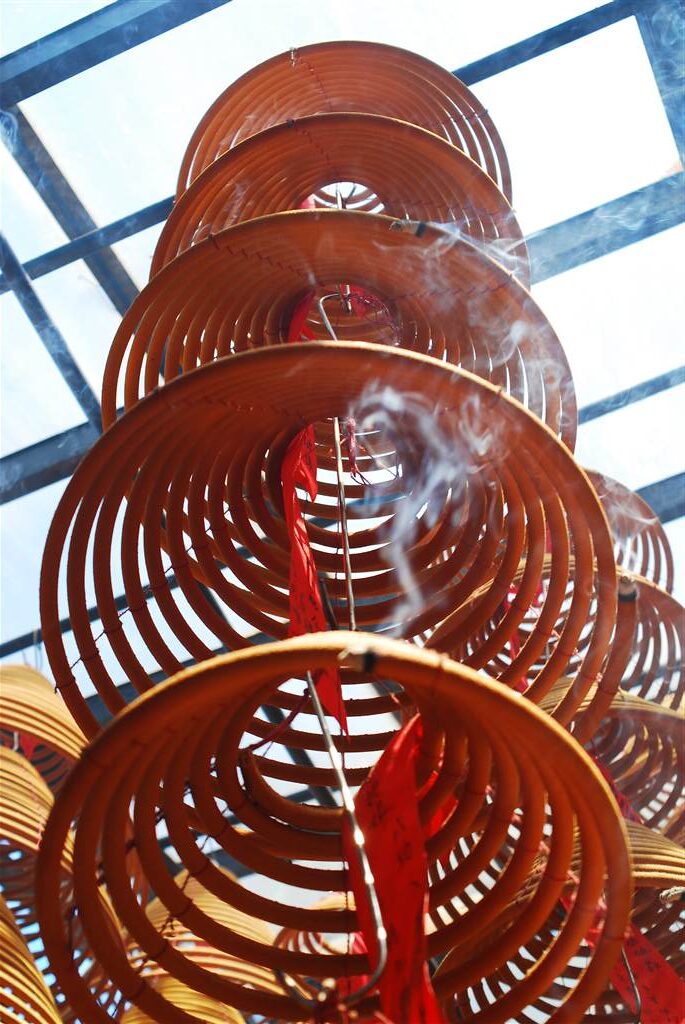
The ritual for thanking the Taisui involves sacrificial goods and paper rites. On certain dates and at certain times (there is a way of finding the date), the followers would go to the temple, write their names on the paper rites, burn joss sticks and then say a prayer before the deity. They will thank the deity for a good year lived.

My Thoughts on the Wong Tai Sin Temple

I had a fun day with my friend touring the Wong Tai Sin Temple. There were many people there and a whole lot of interesting rituals taking place at every corner of the temple grounds. I thought it was alright to experience the cultural aspect there, but I would not go again because I found the kind of superstition being practiced there distasteful. The place did not convey a sense of calm and peace that, even as a Christian, I enjoyed and did usually find in most other temples in Hong Kong.

How to Get There

The Sik Sik Yuen Wong Tai Sin Temple can be reached by getting off at the Wong Tai Sin MTR Station.


Sources

The Wikipedia on Huang Chuping (Chin).
The Wikipedia on the Wong Tai Sin Temple (Chin).
The Historical Significance of the Kowloon Park

The Historical Significance of the Kowloon Park

For Hong Kong locals, the Kowloon Park is a good venue for a nice afternoon reading session, a place for sitting-down after shopping at the nearby Park Lane, or otherwise swimming at its swimming pool. We take its leisure purpose for granted and few people