Blog

Magnificent Guilin — First Impressions of Xingping

Magnificent Guilin — First Impressions of Xingping

In the morning I inquired with the hotel staff the possibility of maybe joining a half-day tour to see the Silver Caves. To my surprise, (and this really is very surprising to me), the hotel staff advised me not to join those tours. They said 

Magnificent Guilin — The Beer Fish of Guilin and Yangshuo At Night

Magnificent Guilin — The Beer Fish of Guilin and Yangshuo At Night

I did not get to try the beer fish in Huangyao and so I was very keen to try it in Yangshuo. Indeed, when I just arrived in Yangshuo, I saw all these restaurants claiming to be beer fish specialists. That would be my dinner 

Magnificent Guilin — Fantastic Views at Lijiang (Li River)

Magnificent Guilin — Fantastic Views at Lijiang (Li River)

I was only spending one day in Yangshuo and by the afternoon I had decided to take it easy. The boat tour of Lijiang River would be departing soon at 3pm on Binjiang Road, so I hurried to the pier. This 1.5-hour boat ride will feature iconic views that are memorable, these views are what give Guilin its fame for natural landscapes. For a 1.5 hour ride the ferry would take us between Yangshuo and a town called Fuli and back, going the southern downstream direction. The boat ride cost 120 yuan. It is possible to take a ferry all the way from Guiling to Yangshuo. The whole scenic route on Lijiang would span a good 67 km, known as the “living gallery.”
In Chinese, we say Guilin’s landscape is best of the world. When I arrived in Yangshuo, people were saying that Yangshuo’s landscape is best of Guilin. And there was no doubt in my mind that I would be seeing the best of the best scenery there. The day was blessed with plenty of sunshine.
The Boat Tour of Lijiang 

Photograph: In Yangshuo, by the pier of the boat tour

At 2:50 I boarded the ferry. We were seated as directed (selection of the window seats was not available, everybody had to be directed in the seating). There was some introduction and we were handed a menu. I ordered the Changshou fish, which is a river catch from the Li River itself. It’s a fried fishies dish and it was not too bad.

There is a standard way of appreciating Guilin scenery. The imagery is often compared to some common ideas, and usually the names are either fun or poetic. Naturally, a tourist would try very hard to see the scenery in the light that its supposed name suggests, but very soon you would find that to be a very tiring exercise. Some of the peaks clearly match their names, but others would quickly be lost on an untrained eye.  On this part of Lijiang River, I was supposed to have seen the White Crane Drinking Water, The Thumb Peak, The Straw Hat Peak, The Saddle Hill, and the Incense Burner Hill. No, I did not manage to take any photographs to illustrate how the Chinese people associated these peaks with their poetic imagination; it was hard enough to catch the Chinese name, let alone understanding the tour guide’s quick pointing at these hills for the descriptions. There were tens and tens of these peaks exhibiting their own individual grandeur on that sunny afternoon.

About 20 minutes after the boat departed from the pier, we were able to go up to the deck and feel the embrace of the peak clusters all around us, rolling on endlessly above the meandering river. Surely, the natural beauty of Lijiang was an incredibly pleasing sight, but I found the occasional human footprint to add an interesting touch to the natural scenery. We saw some fishing boats, some town establishments afar, and some interesting structures by the shore as well.

Lijiang

The Li River is part of a river waterway that spans all of Guanxi Province. With its origin at the Maoer Mountain, which is the “first peak of South China” at an altitude of 2141.5 meters, Lijiang refers to “the upper reaches of the Gui River in northeastern Guangxi, China. It is part of the Xijiang River system in the Pearl River basin, flowing 164 kilometres (102 mi) from Xing’an County to Pingle County.” Furthermore, the ‘upper course of the Li River is connected by an ancient Lingqu canal with the Xiang River, which flows north into the Yangtze; this in the past made the Li and Gui Rivers part of a highly important waterway connecting the Yangtze valley with the Pearl delta.”

Afternoon Tea at the Mingyuan Café

A few doors away from the Riverview Hotel there was a very nice and classy coffee shop called Ming Yuan. I could not resist and went in for a pistachio basque cheesecake and a coffee with litsea, a kind of ginger-like root that comes with a very special fragrance. The litsea is common in China, but perhaps not in Hong Kong. I had my first litsea coffee and it was such a pleasant surprise. It has a hint of spiciness but the flavor felt balanced and “rounded,” as in not having the sharpness of ginger. I like to compare it with ginger because in Chinese the name of litsea is “wooden ginger.”

This was a perfectly relaxed day for me. For those who would not mind rushing through some more sights in Yangshuo, there are the Moon Hill, the Silver Cave (Yinzi Cave), and the Yulong river boat rides. Because these sights will involve renting a car (or booking a tour), I had not made arrangements to see them.

Sources

Descriptions on site in Yangshuo.

The Wikipedia on Li River.

Magnificent Guilin — First Impressions of Yangshuo

Magnificent Guilin — First Impressions of Yangshuo

My first impression of Yangshuo was that it was a vast expanse of a no-man’s land. From the Edge of Yangshuo County to Yangshuo City Proper Bright and early at 8:20 am I was at the Qianxing Square of Huangyao Ancient Town and ready to 

Magnificent Guilin — Huangyao Ancient Town and Its Food

Magnificent Guilin — Huangyao Ancient Town and Its Food

I arrived at Huangyao in the late afternoon and I had not had any food since a very early breakfast. I decided to have a bowl of Guilin Mifen (rice noodles) before I did more touring of the ancient town. Photo: The West Gate of 

Magnificent Guilin — The History of Huangyao Ancient Town

Magnificent Guilin — The History of Huangyao Ancient Town

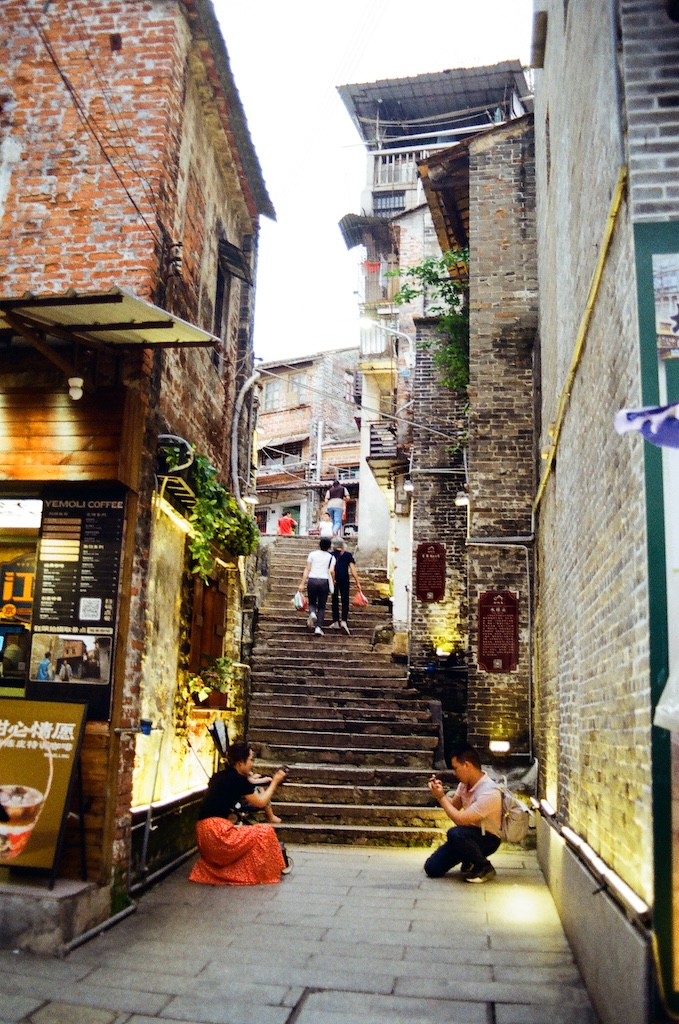
A leisurely walk within the ancient town of Huangyao will take some three hours or so. I began walking into the ancient town from Qianxing Square and came across the main street with all kinds of vendors and restaurants. The storefronts were all well-kept and the walk was pleasant with many photogenic spots.

Huangyao has had a history of over one thousand years. The town came into being during the Kaibao Period of the Song Dynasty. The ancient town went through a period of expansion during the Ming Dynasty, and it thrived during the Qing Dynasty. Most of the old buildings that make up the antique face of Huangyao were of the Ming and Qing dynasty era.

Because the villagers that live there mostly had the surname of Huang and Yao, this ancient town became known as Huangyao.

Some Salient Scenic Features of Ancient Town

Even though Huangyao is relatively low key as a tourist destination, it is well-known for a few things. In the following I will go through some of the scenic sites in Huangyao. Its scenery by the creek has been featured on a postage stamp series, China Ancient Town II Special Stamp.

The Cobblestoned Main Street

There were not very many tourists on this warm winter afternoon, but the main street of Huangyao was lively. There were many vendors selling all sorts of curios, some featured the specialty products of Huangyao. Needless to say, there are restaurants after restaurants standing in this part of town. However, it did not occur to me that too many of those eateries were actually open for business.

This cobblestoned part of the town is very picturesque and I was just-so-happy that I made it there, even though there would not be much time left before dusk sets in.

All over Huangyao it breathed antiquity, along with a sense of self-assuredness over its own historic beauty. The people there were very relaxed. They did not plead customers to buy their products, nor did they even call out to me to take a look.

The walk offered plenty of sensory pleasures. The ancient brick buildings, humble as they were, seemed to stack one against the other endlessly. You turn a corner and there were more of those blue brick buildings, plastered in different shades of earthy mud. Its structures having endured some of the most significant crossroads in China’s history, the ancient city exhibits its humble beauty crafted by the very hands of time.

Occasionally you would come across some traces of communist propaganda, as Chairman Mao seemed to be revered still in Huangyao—but even that hallmark of modernity appeared to be dated in 21st century China.

The Ancient Well of Immortals

The Ancient Well of Immortals belongs to a relatively older era of the ancient town’s history. Build in the Wanli reign of the Ming Dynasty, the well comes with the legend that this was where the seven immortals came and play. There are five sections of the well. The “inner ponds” are for drinking water and washing vegetables, and the “outer ponds” are for washing clothes. Every year on the 7th day of the 7th month of the lunar calendar, the town celebrates the “Water-taking Festival.” The well is still being used for its intended purpose today.

The Dailong Bridge

The Dailong Bridge is namely the most-photographed scene in the ancient city of Huangyao. This scenery, along with the beautiful creek, Yaojiang, and the mud-plastered buildings behind, is what has been featured on a postage stamp issued in 2016.

The Dailong Bridge was built during the Wanli reign of the Ming dynasty. It was restored during the Qianlong reign of the Qing dynasty. It is believed that this bridge is what channels the “dragon’s breath” from the nearby Zhenwu Mountain, therefore it was named “dailong,” meaning “bringing forth the dragon.” There are two arches, one large, one small, beneath the stone throughway that provides pedestrian access between the shores of the narrow creek of Yaojiang.

The Dragon Gate Ficus

At the advanced age of 800 years, the Dragon Gate Ficus stands tall and vibrant at the mouth of Yaojiang creek, guarding the waterway that would nurture the eastern shores of the Huangyao Ancient City. Its aerial roots entwined within itself in a “circle of life,” the tree shows a teardrop hollow and then extends its roots further with a straight arm, the woven fabric of century-old roots propping a luscious crown of evergreen leaves above. In the cool of the tree’s umbra one would feel inclined to sit for a while, right by the droning murmurs of the creek Yaojiang.

Yikongzhigu

The Yikongzhigu is an important gatehouse in the ancient city. Its name came from The Book of Poetry, meaning that “because heavens blesses the stability of this place, it stands steady and strong.” Built during the early Qing Dynasty, the gatehouse comes with two stories. The upper story is for guards as a watchtower, the lower story is for passage inside and outside of the ancient city.

The Guo Family Courtyard

The Guo Family Courtyard was built during the reign of the Daoguang regin in the Qing dynasty. According to descriptions on site, the Guo Family Courtyard has a layout of the “flat-ground courtyard building” typical in the Huangyao Ancient Town, composed of the front hall, courtyard, main halls and the wing rooms. This structure would be considered a grand mansion in the ancient town. The courtyard is open for visitation and it comes with some really beautiful, perfectly aligned round entrance archways.

The Lake

The lake is also where the most iconic photographs are taken of Huangyao, especially with the typical peak clusters of Guilin as its backdrop. It was nearing dusk and so the colors made the scenery especially poignant with a touch of poetry.

Sources

Descriptions on site at the Huangyao Ancient Town.

Magnificent Guilin — First Impressions of the Huangyao Ancient Town

Magnificent Guilin — First Impressions of the Huangyao Ancient Town

At the Qianxing Square drop-off point I first came across the Ancient Stage. Built in the third year of the Jiaqing reign in Ming dynasty (1524), the Ancient Stage was the only building in Huangyao that served the purpose of cultural performances. When it was 

The Liu Man Shek Tong Ancestral Hall in Sheung Shui

The Liu Man Shek Tong Ancestral Hall in Sheung Shui

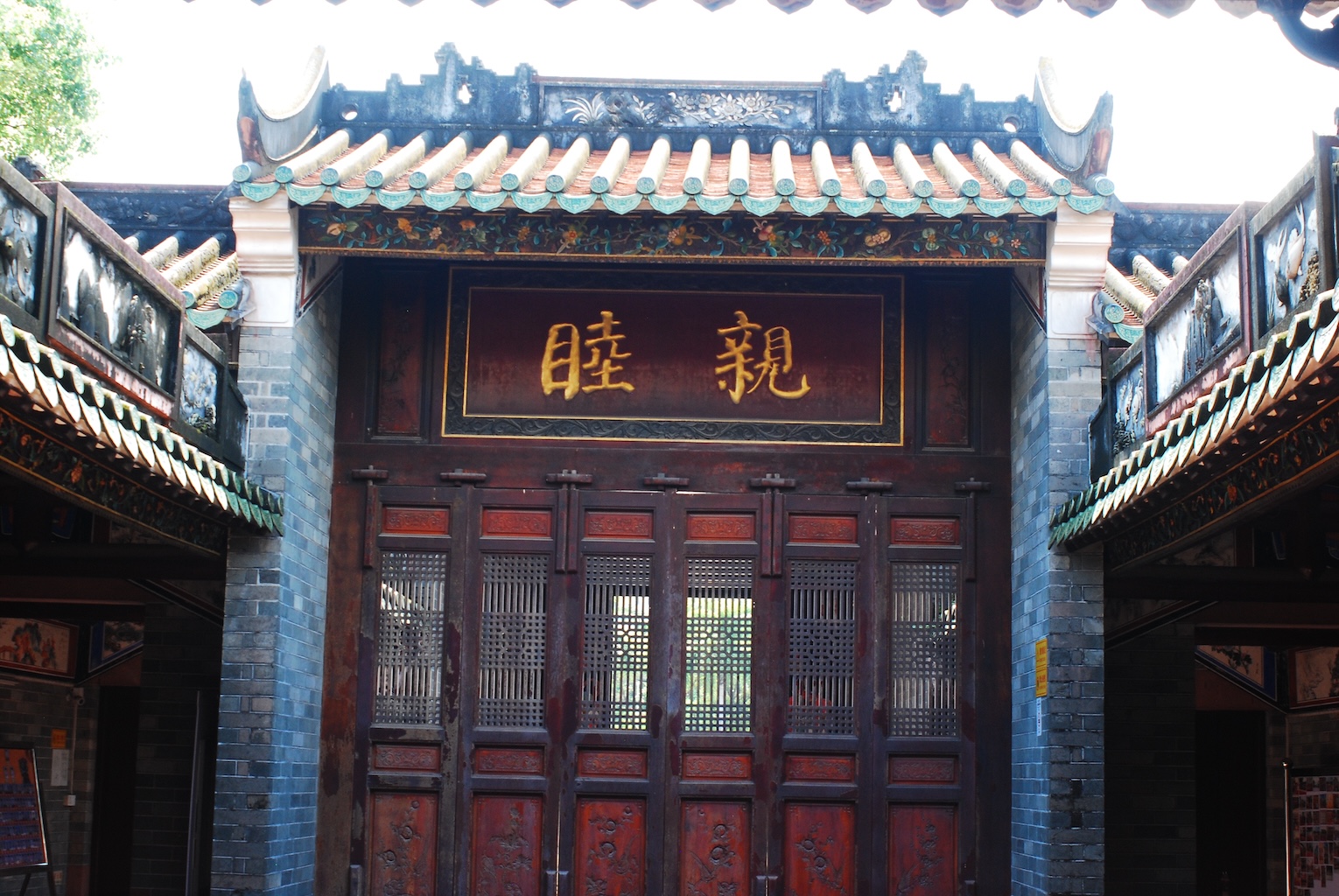
I have long wanted to visit the Liu Man Shek Tong Ancestral Hall in Sheung Shui because it is quite close to home. On this sunny spring day I finally went to learn about the Lius and their history at the beautiful, near-majestic Liu Man 

The Old Quarry of Lei Yue Mun

The Old Quarry of Lei Yue Mun

The day was bright with a perfect azure sky. I wanted to do an interesting but easy walk so I visited the Old Quarry of Lei Yue Mun.

The History of Lei Yue Mun as a Strategic Location

Photo: A Panorama of the Lei Yue Mun Pass

Lei Yue Mun, in Chinese, means “The Carp Gate.” Situated on the eastern channel that leads into Victoria Harbour, the Lei Yue Mun Pass is wedged between Kowloon and Hong Kong Island. Lei Yue Mun has thus long been recognized for its strategic importance throughout history.

During the turn of the Qing dynasty, the famous Ming dynasty naval general Zheng Chenggong found his stronghold here in Lei Yue Mun and attempted to wage resistance campaign against the Qing court. The fact that Zheng Chenggong made it to this part of Hong Kong has touched some nerves in the Qing court.

It was with this background that the Qing court issued the imperial edict to evacuate the coastal areas of southern China. This imperial edict would dislocate many of the native villagers in Hong Kong, mostly in the New Territories, as they all had to move inland and abandon their original homes on the coastal areas.

Zheng Chenggong eventually settled down in Taiwan instead, but his general Zheng Jian stayed after in Hong Kong. Zheng Jian’s son Zheng Lianchang was passed the baton. He garnered forces in this part of Hong Kong. Eventually his troops would become pirates based in Lei Yue Mun. These pirates menaced the ships and commercial vessels that sailed here, collecting tolls systematically. The rampancy of the pirates was also the reason why the Devil’s Peak was named as such. There had long been rumors about hidden treasures in Lei Yue Mun belonging to these pirates.

The famous Hong Kong pirate Cheung Po Tsai, who rose to prominence from his roots in Cheung Chau, would eventually take over the pirate stronghold of the Zhengs in Lei Yue Mun.

Fast forward to the 20th century, the British also found strategic importance in this part of Kowloon. They built the Devil’s Peak batteries, including the Devil’s Peak Redoubt, the Observation Post, the Gough Battery and the Pottinger Battery. Together these military structures constituted the Fire Command East during WWII.

The History of the Old Quarry of Lei Yue Mun

The four villages in the area were once engaged in the quarry business. Together, these villages were known as “the Four Hills.” The quarry business thrived during the late Qing dynasty. At its heyday, the rocks turned up from the quarry would ship to Shunde in China, and some even made their way to Europe.

There is some relevance here with a previous entry I have recently written. Tsang Koon Man, the ancestor of the Tsangs that founded the Tsang Tai Uk Village in Shatin, began his career at Lei Yue Mun’s quarry business as an apprentice. He would eventually set up his own quarry and masonry businesses in Sai Wan Ho and Shau Kei Wan, and made the fortune that enabled him to found the village of Tsang Tai Uk.

The industry became obsolete in the 1980s. By the 1980s or so, the Hong Kong Government would develop Lei Yue Mun into a haven for seafood dining as well as an industrial area. The ruins of the Old Quarry thus becomes the quiet and forgotten witness to the industrial past of Hong Kong at the easternmost coast of the Lei Yue Mun Pass.

The History of the Tin Hau Temple

The Tin Hau Temple of Lei Yue Mun was built in 1745 during the 18th year of the Qianlong Reign of the Qing dynasty. Legend has it that the temple was originally built by Zheng Lianchang, the son of Zheng Jian, a subordinate of the famous naval general Zheng Chenggong of the Ming dynasty.

The Tin Hau Temple of Lei Yue Mun is still very popular today and it draws worshippers from all over Hong Kong and from overseas as well. The bronze urn, where worshippers serve their burned incenses, is a new addition. One day, an old lady dreamed of this temple. She sent her secretary over from the mainland, and said that she would make a donation. She made this bronze urn in China and shipped it over to the temple. She had a terminal illness and as a result of her donation, she lived three times longer than expected.

The Tin Hau Temple of Lei Yue Mun is a Grade 3 Historic Building.

Picturesque Villages

Photos: A Panorama of the Harbour Views

Besides the Tin Hau Temple, there are some other interesting sights on the way to the Old Quarry. Needless to say, all along the way there are wonderful sea views.

And of course, as Lei Yue Mun was developed by the Hong Kong Government into a seafood dining hub, there are countless seafood restaurants on the way.

The green lighthouse is on the way to the Tin Hau Temple.

The century-old tree is believed to be very spiritual and has blessed faithful worshippers.

Finally, like so many revitalized villages in Hong Kong, there are many colorful wall murals at the villages. They really bring forth vibrancy and a celebratory spirit to the rural life of Hong Kong.

How to Get There

The closest MTR station is Yau Tong and it takes about 45 minutes to walk from the MTR to the Old Quarry of Lei Yue Mun.

Photo: Great View from the MTR Station

From the Yau Tong MTR Station, take Exit A2 and follow the stairs down to Cha Kwo Ling Road.

Go all the way on Cha Kwo Ling Road.

You will reach Shung Shun Street, and then watch out for the signs for Lei Yue Mun.

On Shung Shun Street you will walk just about a minute until you reach the general area of Lei Yue Mun. It should be familiar to most as that is the way to the seafood restaurants in Lei Yue Mun. You will come across the façade of Lei Yue Mun. Enter the village, follow the signs for Tin Hau Temple.

The Tin Hau Temple had interesting stories and some photogenic spots so I spent a bit of time there.

Exit the Tin Hau Temple and keep walking. Then you will see signs in the village pointing you to the Quarry.

The ruins of the Old Quarry is less than ten minute by walk from the Tin Hau Temple by the seaside.

Sources

The Wikipedia on The Tin Hau Temple of Lei Yue Mun (Chin).

Descriptions on site at the Tin Hau Temple of Lei Yue Mun.

Hillmanblog.com, Stone Quarry in Lei Yue Mun (Chin).

Weekendhk.com, The Route to the Stone Quarry in Lei Yue Mun of Yau Tong (Chin).

Magnificent Guilin — Views of Hezhou

Magnificent Guilin — Views of Hezhou

I love visiting ancient towns in China. In this blog I have covered the Gankeng Ancient Hakka Townlet and the Dapeng Fortress in Shenzhen. Apparently, many tourists find ancient towns to be very attractive tourist sites, and China’s local governments and cultural heritage developers have