
The Fabulous Philippines – Preliminaries for the Corregidor Tour
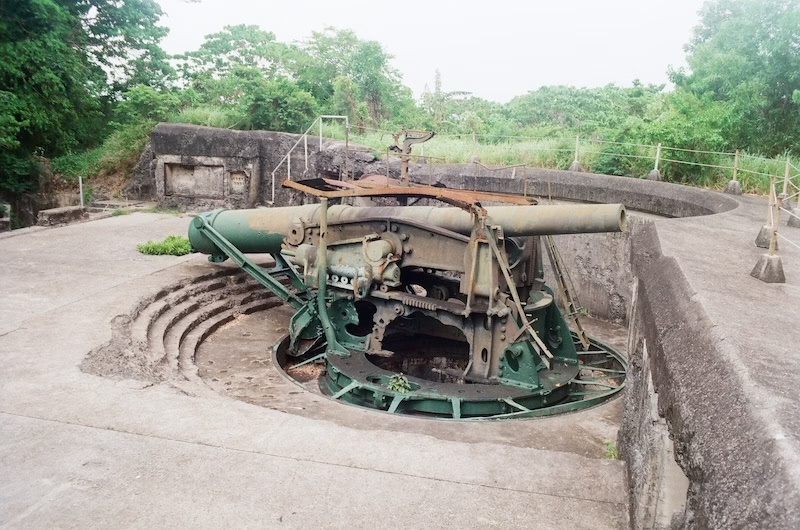
The date of my visit at Corregidor is June 23, 2026.
Corregidor, as derived from the Spanish word “corregimiento,” means “corrector” or “magistrate.” It is pronounced “cor-RE-idor”, where the “g” is silent.
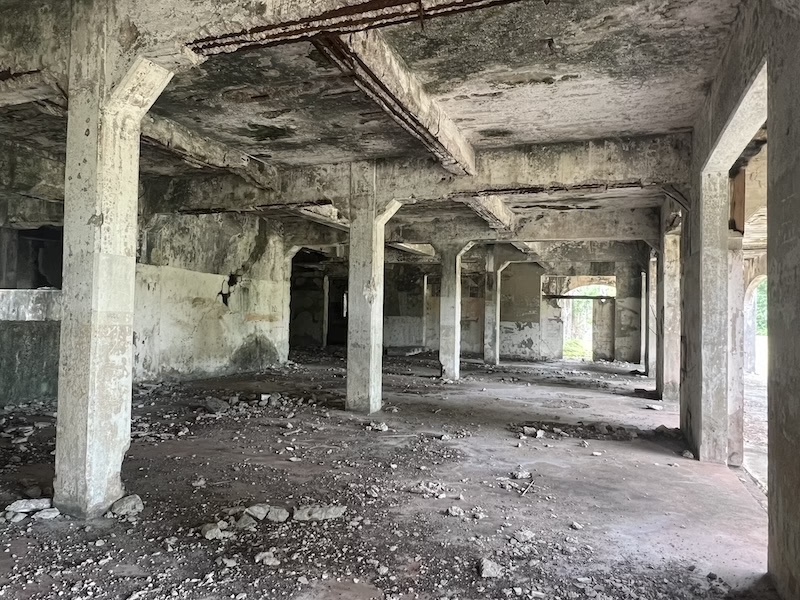
At the cusp of Japan’s successful occupation of the Philippines during the early stages of the Pacific War, there was never any doubt that surrender in Corregidor was the best possible outcome for the island and the stationing forces — although not before a brutal battle was fought at the island.
Corregidor is one of the four islands that constituted the collective harbor defense of Manila Bay at Cavite. Corregidor, being the largest of the four, was a fortified island since the Spanish colonial times. The four islands of Corregidor (For Mills), El Fraile Island (Fort Drum), Caballo Island (Fort Hughes), and Carabao Island (Fort Frank) served defensive functions throughout the American colonial times. When the Americans took over the Philippines after the Spanish-American War, they fortified further the smaller islands close to Corregidor. Fort Drum became known as the “Concrete Battleship” because it was completely built into the shape and form of a battleship in 1909 and fitted with turrets.
At the fall of the Bataan Peninsula, Corregidor was the “last man standing” in terms of the United States’ presence in the Asia Pacific. The original plan was to hold out for 60 days, as a way to delay Japan’s rapid succession of its attacks in Asia. The troops held on for five months and that has resulted in a tactical advantage in the eventual trajectory of the Pacific War.
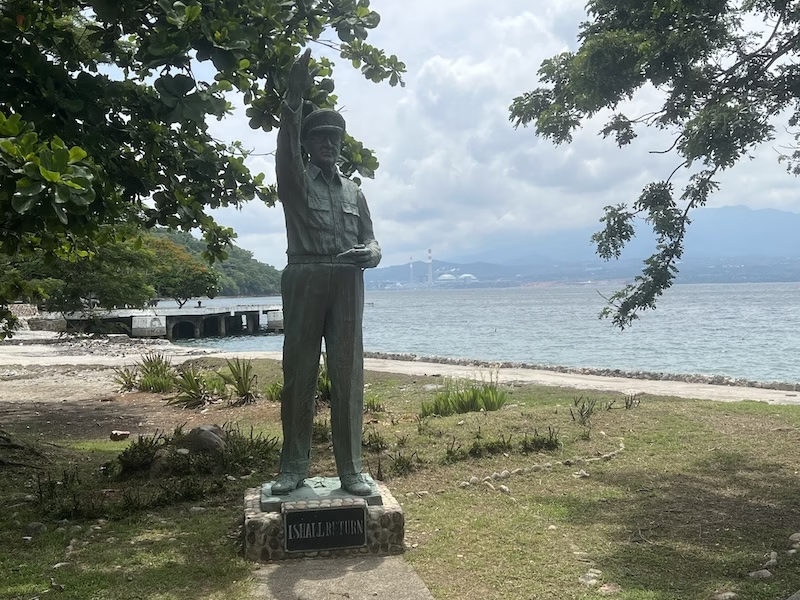
General Macarthur: I shall return.
When General MacArthur left Corregidor in March 1942, the island was left in the command of Major General Jonathan M. Wainwright. The longstanding rivalry between the army and the navy was so significant that General MacArthur, being a general of the United States Army, had to leave the island in its northern dock (he was heading south to Australia) because the Navy had the southern part of Corregidor.
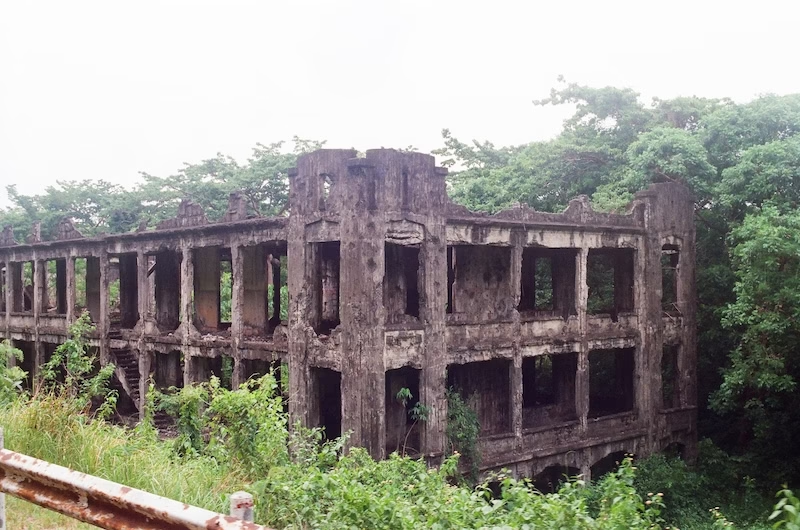
An Introduction of Corregidor as an American Army and Naval Base
Corregidor is shaped like a tadpole, with a pointy tail on its eastern end. The island has a total area of about 2,200 acres (5.5 square kilometers). As it had a long history serving as the military bases for both the Spanish and the Americans, there are an enormous number of military facilities there.
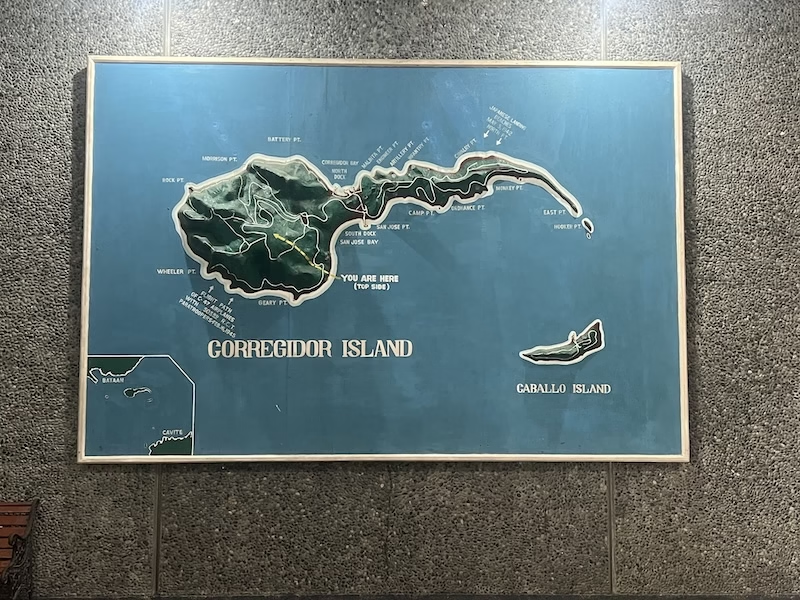
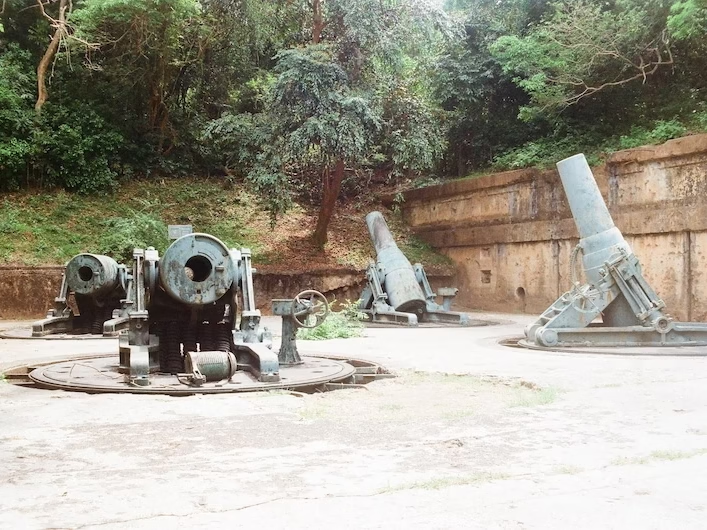
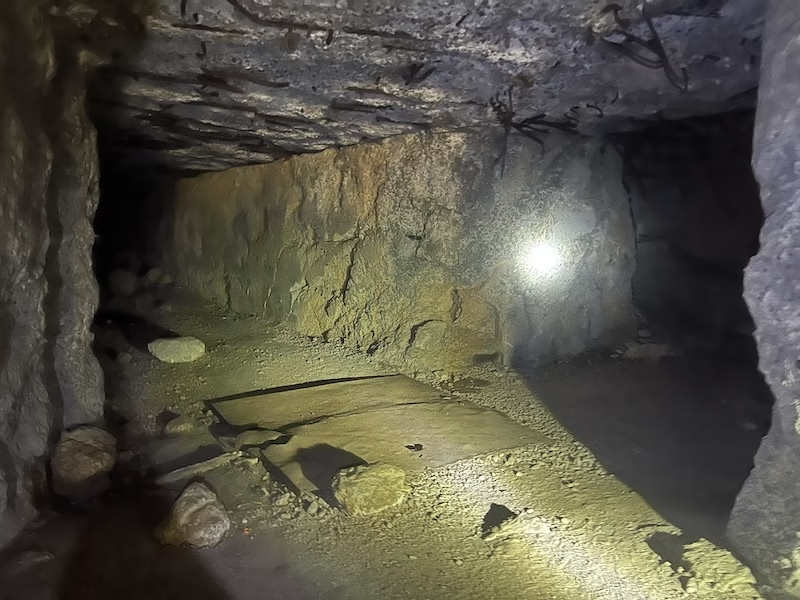
To name a few, there are three large barracks (Bottomside, Middleside and Topside) that came with full-serviced venues for culture and recreation (indoor swimming pool, theater, church), more than 20 batteries with 56 guns and mortars installed, and the famous Malinta Tunnel. Half a day was a rush for one to tour just some of the key infrastructures on the island.
Preliminaries for a Tour to Corregidor
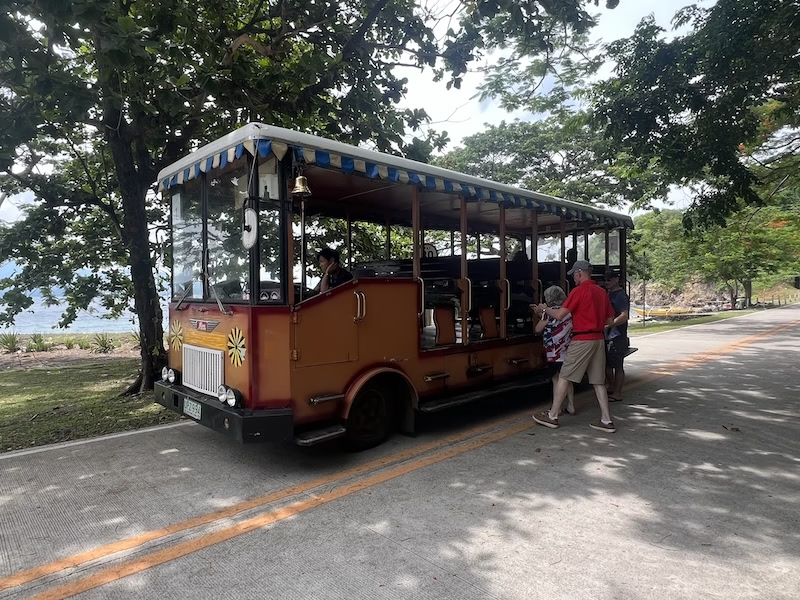
It does take some luck for one to be able to visit Corregidor these days. Before the COVID 19 pandemic, tours would run throughout the day in the island. At its heyday, the Corregidor Tour would operate in ten tourist buses throughout any day of the week. Tourism boomed to a point of a proper hotel being run on the island to accommodate overnight stay. Needless to say, that all tours stopped during the pandemic. It is a great pity that tourism in Corregidor has never revived since (and we learned about the possible reasons during the tour too). All but one tour bus is now serving the sparsely scheduled tours at the island.
I looked online and found some potential operators. The first one that I approached was bounced back as an email that no longer existed. I then approached Villa Carmen Resort. I am grateful for Villa Carmen Resort for its professionalism in handling my request throughout the planning. The wonderful staff have the ready mindset to solve problems and to offer a world-class tour experience.
If you are willing to pay a very high cost, the tour can run for 1-2 people in a private setting. Although I was exceedingly keen to see the island, the cost for 1 person in a private tour was frankly way out of my budget (they would charge a solo tourist the cost for 2). I happened to be able to sign up for a potential group tour that requires 9 participants for it to be offered. The tour was finally confirmed in the second last day before I was due to fly out to Manila. In the meantime, I took the risk in booking my accommodation in Mariveles for the night before the tour without having the confirmation of the tour.
Although a day trip from Manila to the Bataan Province is possible, it requires a very early morning start (5 to 6 am the latest) for a private car to arrive at Corregidor for the late morning session of the tour at 11am. If all runs well, you will end the tour at 4pm, and take 3.5 hours of a private ride back to Manila on the same day.
There used to be a ferry that ran between Manila and the Bataan Peninsula, but it no longer operates. Land transportation is the only way from Manila to Bataan. I took a local bus (more than four hours one way) from Manila. Private car would be very expensive, but it takes less than four hours.
In the morning of the tour, I further had the problem of having to head out to Villa Carmen Resort from my hotel in Mariveles. The ride would take a good 45 minutes. There were bus lines that ran in the area, but I opted for a tricycle. The ride was very bumpy but it was the right choice.
I think it would make sense, for the purpose of the Corregidor tour, for one to opt for Villa Carmen Resort as the accommodation of choice in Bataan.
Transportation in the Bataan Province come in two options. One is the bus, and the other is the tricycle. It is a fair practice for you to tell the tricycle driver the distance that is required, and there is a standard rate for the distance traveled. From Mariveles to Villa Carmen, I paid 300 pesos and I did not think that the driver ripped me off.
Corregidor Tour
I was delighted to arrive at Villa Carmen early in the morning. The tour was to begin at 11am and I had coffee at their seaside restaurant with al fresco seating for an hour before the tour. The day was slightly overcast to start, but that fit the mood perfectly. War history is meant to be gloomy.
Perhaps it is no surprise that Americans are the keen tourists for this type of historical tour. All of the tour members are Americans. That guaranteed cordiality throughout our time together.
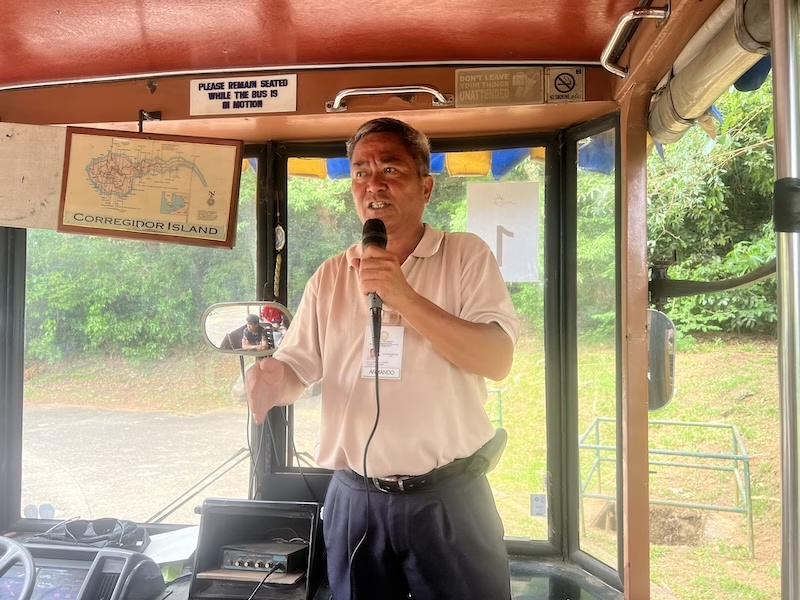
And here I would just like to give top kudos to our wonderful Filipino guide, Armando. He gave impassioned speeches throughout the tour that moved us by the words and the spirit. With conviction, he spoke about the injustice that was done to the Philippines during the Pacific War. No, not just by the Japanese, but also in the way that the Americans have not managed to do enough for the Filipinos either. It was a sombre occasion for all.
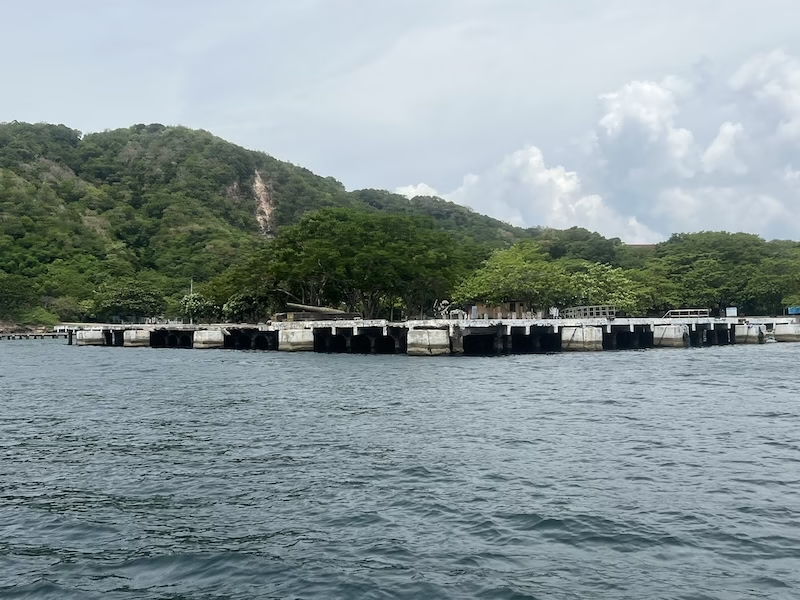
From the Zero Kilometer Death March Park, the van took the tour group to board a boat. We were on our way to the island, finally. On our way, we passed by the Sisiman Cove, where the PT boats once docked for their night patrol missions.
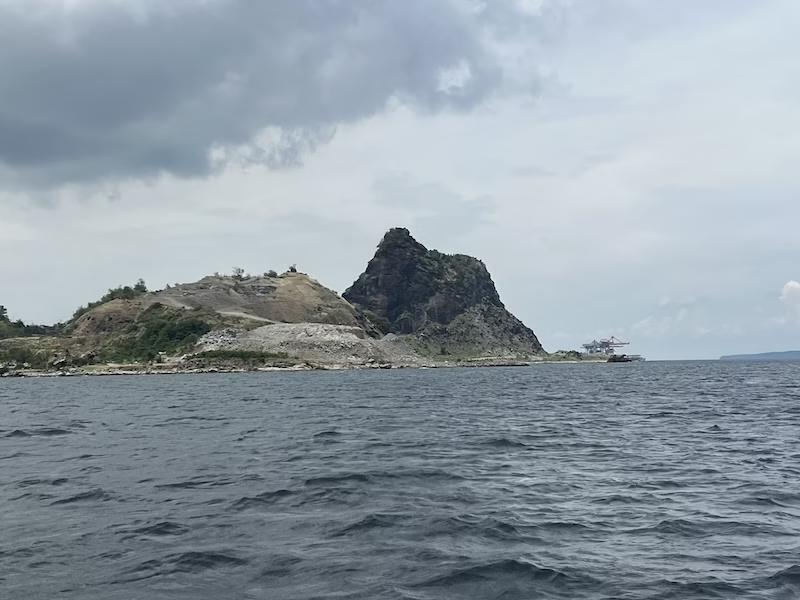
When I arrived, the first impression of Corregidor was, “it is now, finally, at peace.”
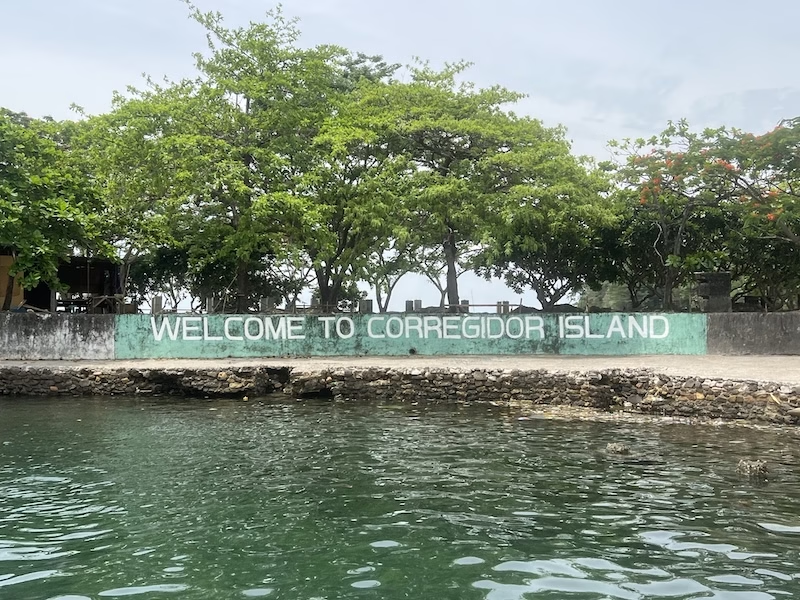
Application for the Corregidor Island to be a UNESCO World Heritage has been submitted and it is on the tentative list for consideration.
Sources
Tour of the Corregidor by Villa Carmen Resort
The Wikipedia on Corregidor.
The UNESCO Tentative List on Corregidor.
The Wikipedia on Fort Drum.
Mtncorg, Artillery of Corregidor – Big Guns on an Island, Meandering Through the Prologue.