
The Fabulous Philippines – The Horrors of the Death March in Bataan
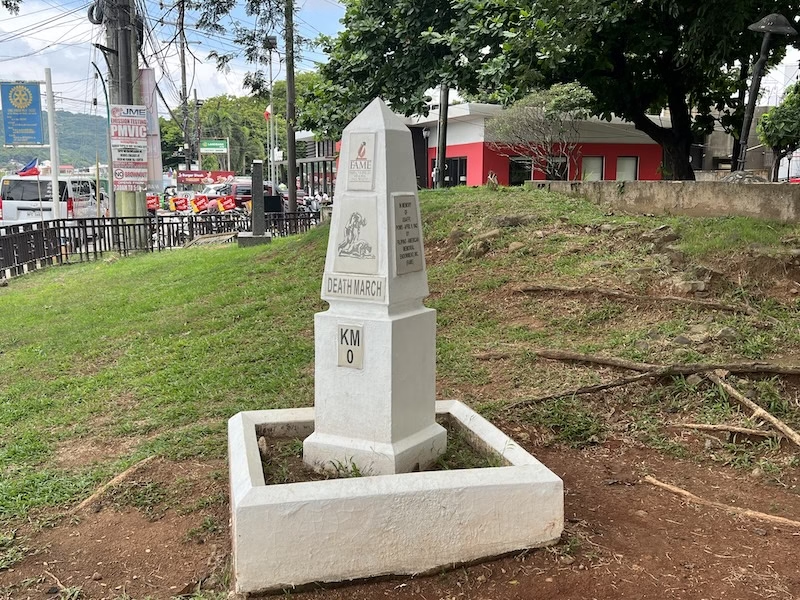
On my way to Mariveles (pronounced “ma-ri-VEI-les”), I checked Google Map impatiently because the bus ride was taking a very long time. As the bus passed through the mountainous road going southwest, I noticed something quite unusual. A pin on the Google map says, “Death March Marker.”
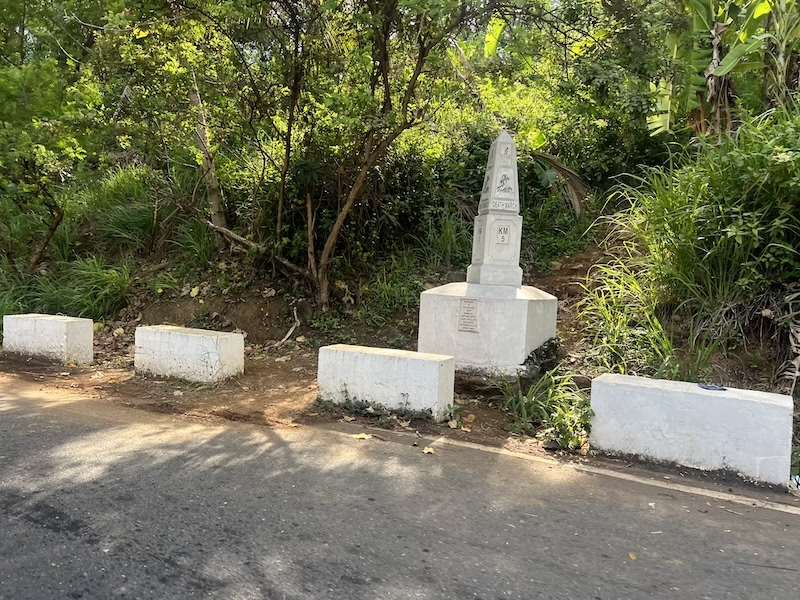
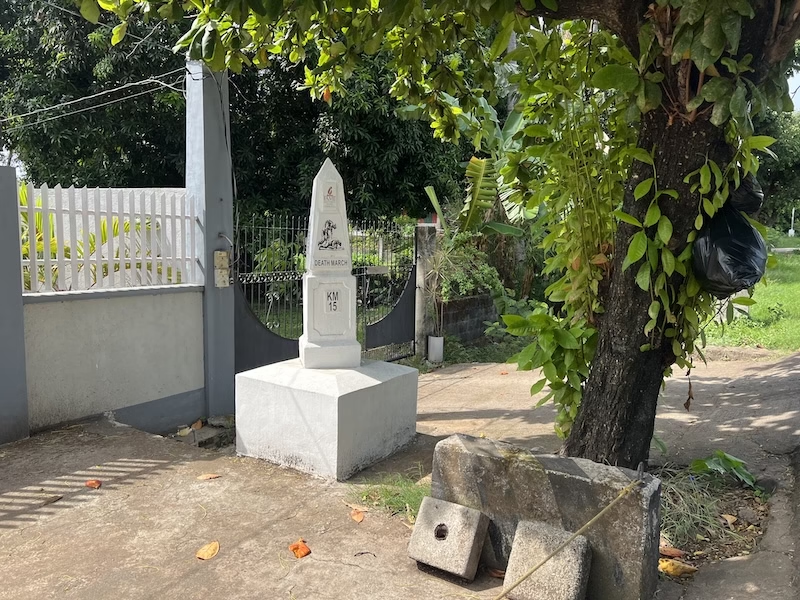
At the time, I had no idea what it is, but it intrigued me. I paid attention when the bus passed by those pinned locations. They were obelisks, with inscriptions saying “Death March” with a number beneath.
The Corregidor Tour
I went to Mariveles all the way from Manila (more than 4 hours on the local bus) for the Corregidor Tour. In fact, I went from Hong Kong to the Philippines for the Corregidor Tour.
I will explain the downlow of the Corregidor Tour in the next entry. It takes a bit of planning and quite a bit of luck for one to be able to visit the island. The history of the Death March was the first story I learned at the Corregidor Tour.
Bataan in the Philippines’ War of Resistance against Japanese Invasion
Japan’s attack at the Pearl Harbor on December 7, 1941 drew the curtain for the grand theater of World War II in Asia. The conflict is commonly referred to as the Pacific War. Japan’s ambitions for domination in Asia (and the world) were long in the making. Its imperial forces were ruthlessly effective.
Most Asian countries (especially in Southeast Asia) were then either colonies or the territories of the Allies. Therefore, the pacific warfront was a face-down between the aggressors of WWII and the Allies. Asia fell quickly into Japanese hands, one after the other, within the first year of America and Great Britain’s official declaration of war against Japan on December 8, 1941. Hong Kong fell and the British retreated to Singapore. Soon enough, Singapore also fell, as with Dutch Java. The war theater was action packed in the Pacific Islands as well, mostly against U.S. forces.
Then there was the defense of the Philippines by the U.S., who lost the naval base of Cavite very soon after the initial attacks made by the Japanese. Following the declaration of Manila as an open city on December 23, 1941, the U.S. forces had to find new bases and they took Bataan as their final position of defense.
Bataan (pronounced “BA-ta-aan”), was the last warfront in the Philippines’ mainland before the island of Corregidor became the last man standing against Japanese invasion. When the Battle of Bataan was fought and lost in April 1942, the U.S. (along with the Allies) defense of Southeast Asia against Japan was left with Corregidor. Corregidor was a historical U.S. army and naval base for as long as the Philippines remained a U.S. territory (until 1946). The only vision for Corregidor was to stall the pace of Japan’s aggression in the Pacific War, for 60 days as it was hoped.
Within this context, the Death March would go down the history of the Pacific War as one of the most excruciatingly cruel war crimes committed by the Japanese commanders of war.
The Battle of Bataan
The peninsula of Bataan was strategically significant due to its location. It is the westernmost landform of the Philippines in the West Philippines Sea, guarding the entry into Manila Bay. Not far away lies the five fortress islands that were historically the military stronghold of the United States. Amongst these five islands, Corregidor is the biggest.
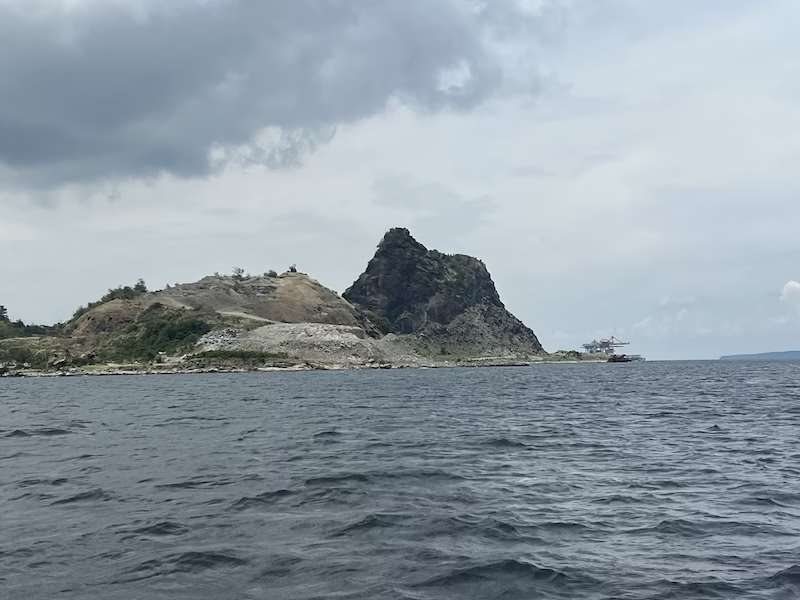
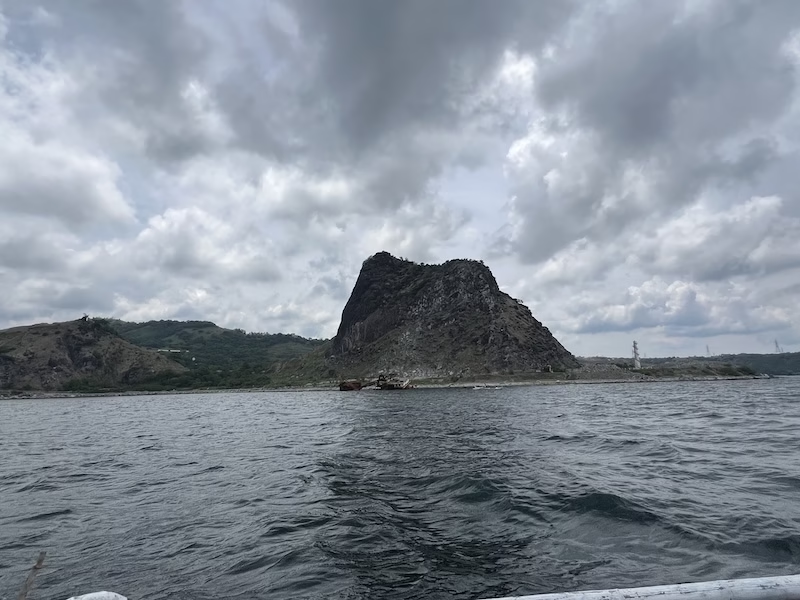
A view of the Sisman Cove on the way to Corregidor Island
On January 7, 1942, the Japanese began to engage the joint U.S. and Filipino forces (USAFFE) in the peninsula of Bataan in battles. As it was known as the Battle of Bataan, the fight would last 99 days before the surrender by the joint U.S. and Filipino forces.
General Masaharu Homma recalled 150,000 Japanese men who were meant to be sent to Australia. Instead, they came back to the Philippines to fight in Bataan. The USAFFE fought heroically despite malnourishment (they were on half rations throughout the battle), tropical diseases, and the lack of supplies and reinforcement. They had no naval support or air coverage during the battle. Major General Edward King Jr. surrendered on April 9, 1942.
The Japanese had not expected such a large number of surrendered troops. General Homma had a problem: Japan told him that he was expected to have taken down the Philippines in 50 days, but it took him 5 months. “We gave you reinforcements. You are on your own now,” he was told, and thus he ordered the surrendered forces marched to Camp O’Donnell.
The Death March
“The Death March and the Battle of Corregidor were two separate historical events,” said our wonderful tour guide Armando as he introduced us to the story of the Pacific War in the Philippines. They were two different lines of battles that raged concurrently during the spring of 1942 in the vicinity of the Bataan peninsula.
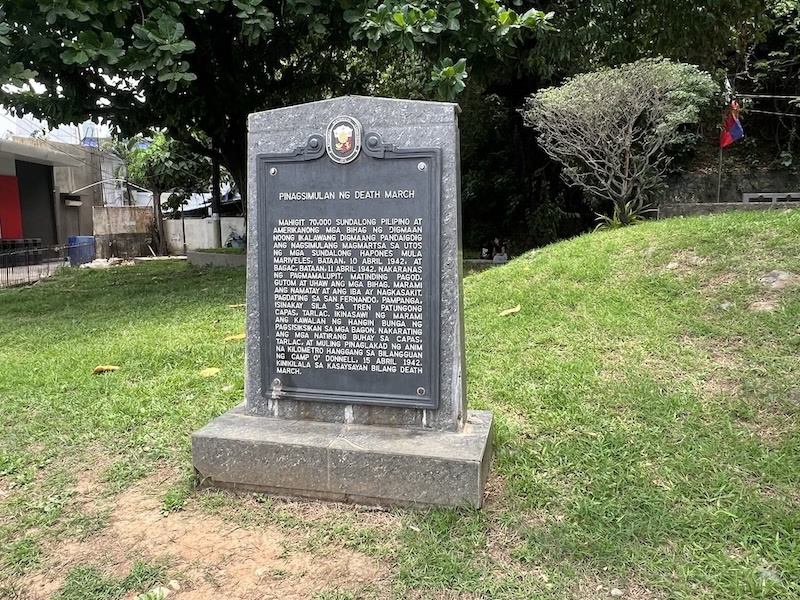
The Death March began on April 10, 1942.
78,000 surrendered U.S. and Filipino servicemen were rounded up, 60,000+ were Filipinos and around 12,000 were U.S. servicemen. The Japanese troops marched them from Bataan to Camp O’Donnell in the north for a distance of 65 miles. The U.S. forces in Corregidor were unable to counter-attack Bataan because the Death March was ongoing.
“For each one of you that you save, we kill ten in payback.” The Death March proceeded in broad daylight but even the bravest of bystanders dared not rescue the marchers. Homma’s subordinate Colonel Masanobu Tsuji ordered the summary execution of 400 POWs at the Pantingan River during the march.
“One slice of bread, one glass of water per day,” Armando made impassioned speeches throughout the 5-hour tour, “they had diseases and injuries, no shelters and they were stuffed into extremely hot railway boxcars originally meant for cattle. In the Philippines, the temperature in April can be as high as 120 degrees Fahrenheit.” The section on railway boxcars began at the Capas Station. 100 surrendered men were stuffed into a space big enough for only 50. The boxcars were so hot that the captives were skinned inside.
18,000 would die from the march. A lot of those were the results of brutal murders, including by shooting, torture, execution and bayoneting.
Having taken Bataan, the Japanese forces then intensified the shelling of the Corregidor Island. The fall of the Philippines was expected.
Remembering the Death March
Our first stop of the Corregidor Tour was at the Zero Kilometer Death March Park, namely, where the march started in Mariveles. It is also at the entrance to the Mariveles Municipal Hall.
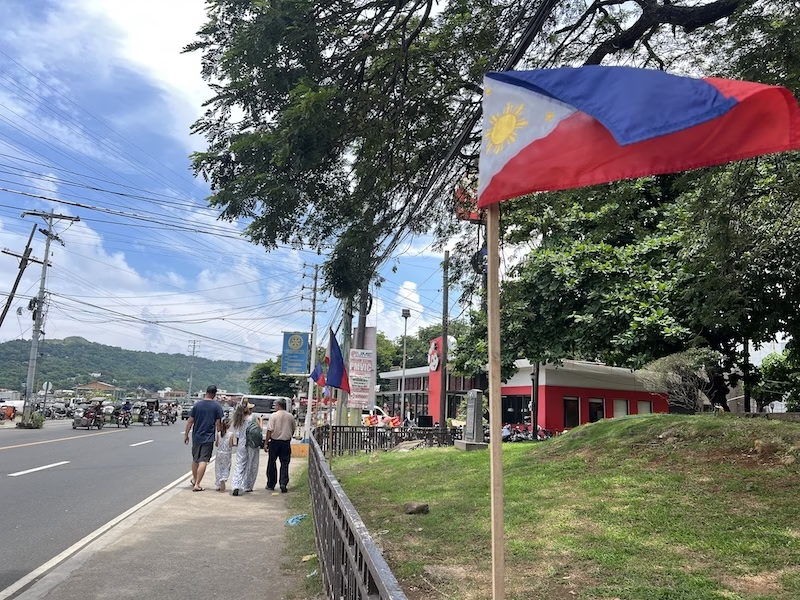
From this point on, the troops had to go uphill. They went through the mountainous region that I passed by with the Google pins (5km) and then Villa Carmen area (15 km, where we began the Corregidor tour).
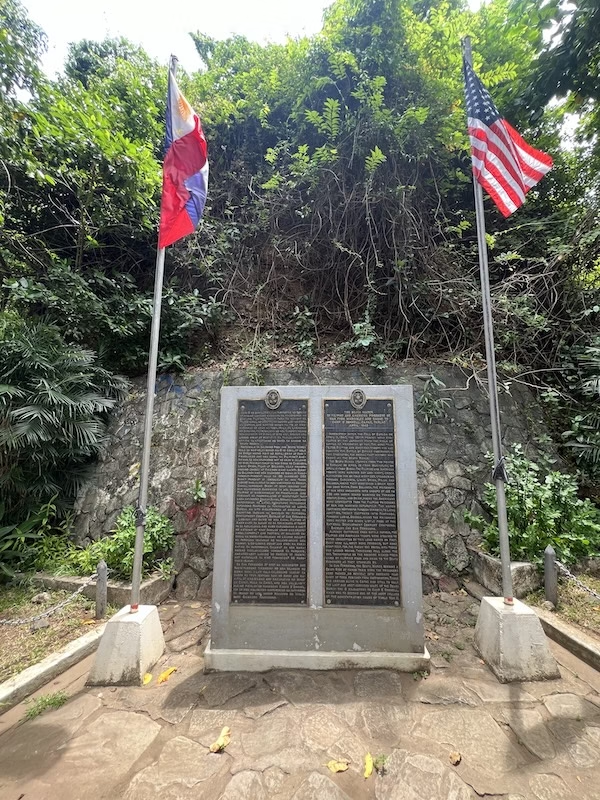
The obelisk marking “0 km” stood in tranquility inside a rather small garden, but in no way was it insignificant. The national flags of the Philippines flew along the fence. The garden showed the effort in commemorating those who suffered immensely at the hands of inhumane treatment.
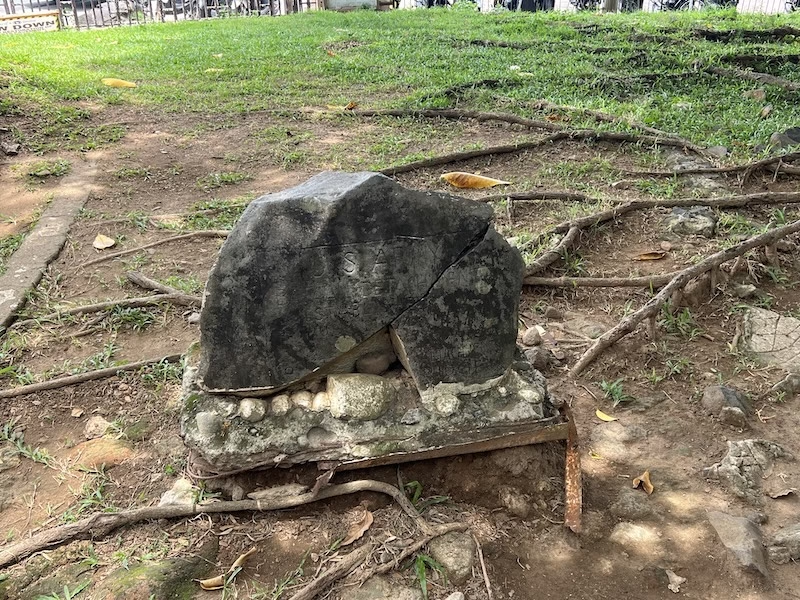
Photo: The stone tablet says: U.S. Bataan Detachment
I said my prayers to those lost souls. It is due to their sacrifices that I get to live the life that I want today, in (relative) peace.
The stories were very difficult for me to stomach, but that was only the beginning of the Corregidor tour.
The War Crime Trial for the Death March
General Masaharu Homma would eventually be held responsible for the atrocities of the Death March. Major General Yoshitaka Kawane and Colonel Kurataro Hirano were also prosecuted for the atrocities of the Death March.
General Homma’s defense at the U.S. held tribunal in the Philippines in 1945 was that he had no knowledge that atrocities of such scales were committed by his subordinates (it is believed that he was unable to control them, especially Masanobu Tsuji). The principle that was relied on to convict him was respondeat superior, that eventually he was held accountable for the actions of his subordinates. He was given death by firing squad in 1946 (a manner of execution that is perceived to be somewhat more honorable than death by hanging, see below).
Major General Yoshitaka Kawane and Colonel Kurataro Hirano were prosecuted by the American commission of Yokohama in 1948 and they were given death by hanging.
Finally, Colonel Masanobu Tsuji, the most merciless of them all, who ordered the massacre at the Pantingan River, fled to Thailand from China after the war. He disappeared when he ended up in Laos and was declared dead after 7 years. He was never brought to proper justice – a heinous coward by all measures.
Sources
The Corregidor Tour, Villa Carmen.
The Wikipedia on the Bataan Death March.
The Wikipedia on Masaharu Homma.