Prosperous Phu Quoc — First Impressions of Phu Quoc
I stepped out of the airplane and could smell the ocean already. It is properly “winter” time even for this part of the world. The humidity greeted me all the same, in a somewhat tamed tropical heat. I hoped for some really sunny days on this trip, as I looked to be by the beach sipping margaritas like I would in any beach resort destination.
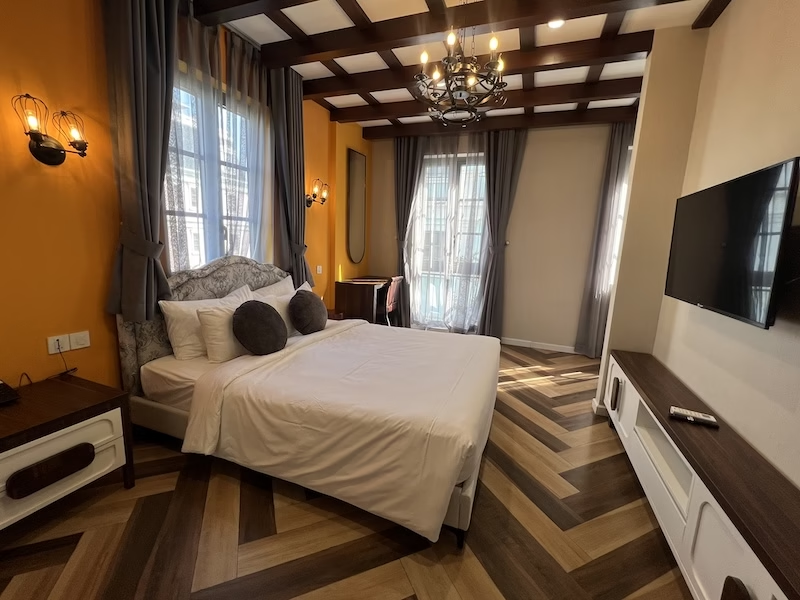
After landing, it took me a full hour before I checked out immigration, set up my mobile data and exchanged money. It took maybe half an hour for me to arrive at Skyline Hotel, who arranged the ride. I was very eager to see my room. Each room on each floor featured a theme of the world. I think I got the Morocco room.
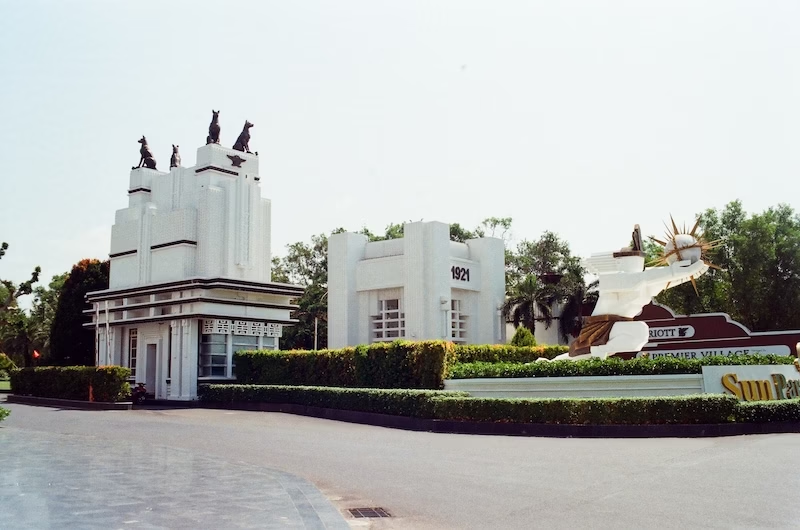
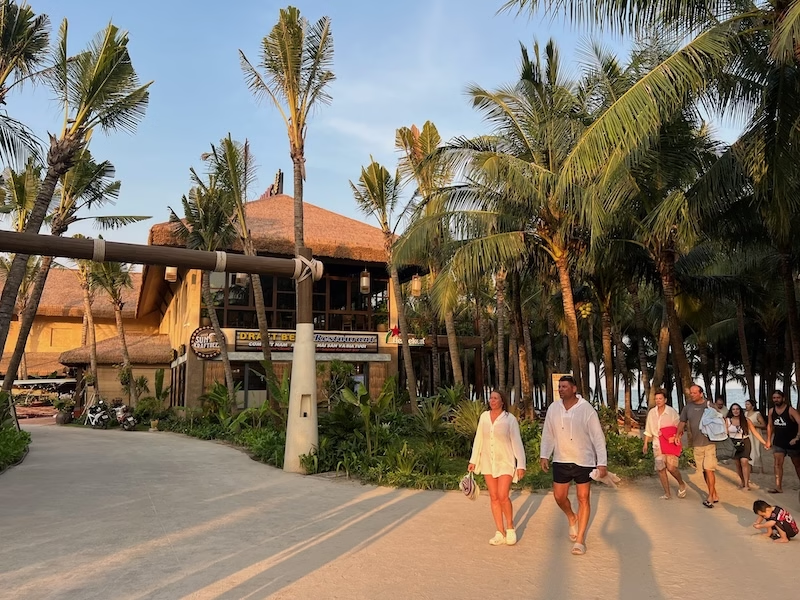
When I arrived, I realized that the whole area surrounding the Khem Beach is a resort town. Hotels spanning the full price range, from budget to luxury, could be booked there. The structures were new, built in a rather uniform faux European style — one could be easily lost within the resort town because every row of townhouses looked the same.
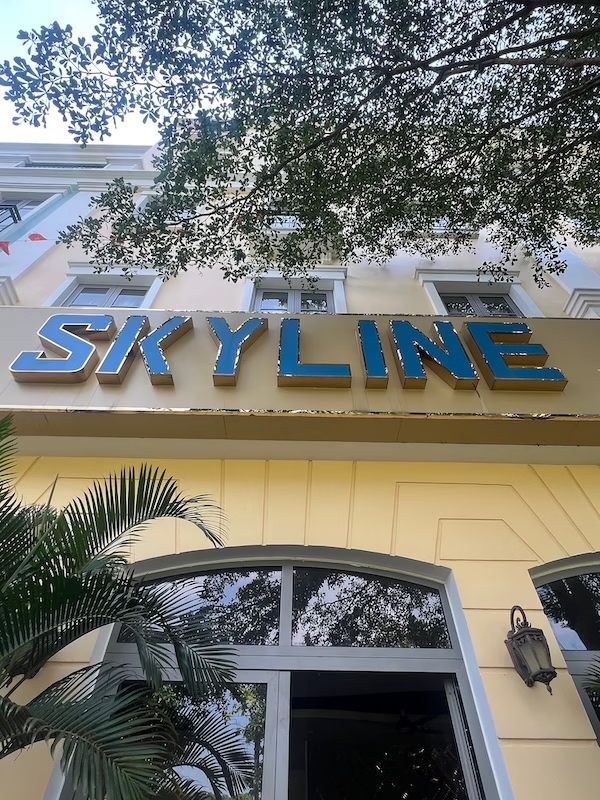
The Skyline Hotel lied very close to a stretch of restaurants and spa establishments. It took just a minute of walk for me to find food. But as it turned out, I did not eat there even once in my 5 days here. I rather desired very local food instead.
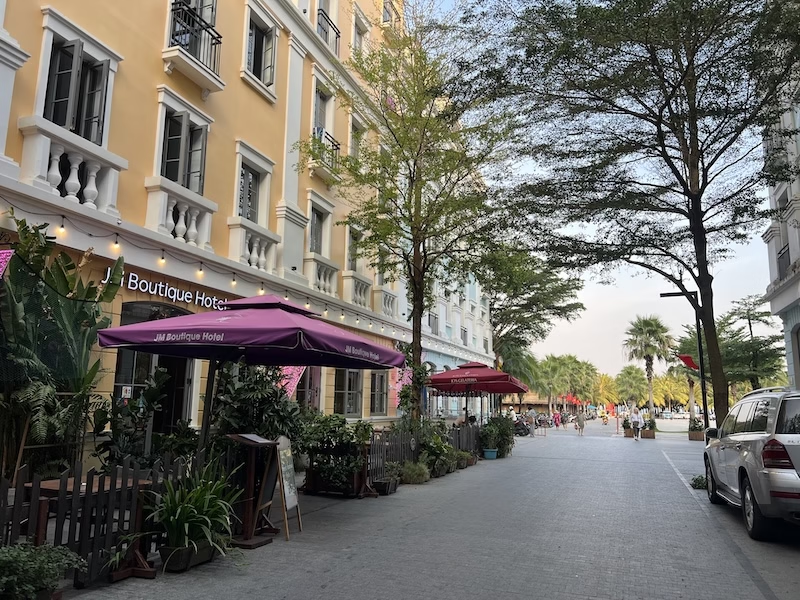
After checking in, I ventured out looking for food.
The Khem Beach Resort Town
I would like to stay away from calling Grab to the extent possible. Therefore, the first act in Phu Quoc for me was to walk 40 minutes to the Coconut Tree Prison as my first sightseeing. The walk from Skyline Hotel out to the entrance to the Khem Beach Resort took a good 15-20 minutes already. I really had a chance to see the reality of tourism in Phu Quoc in this walk.
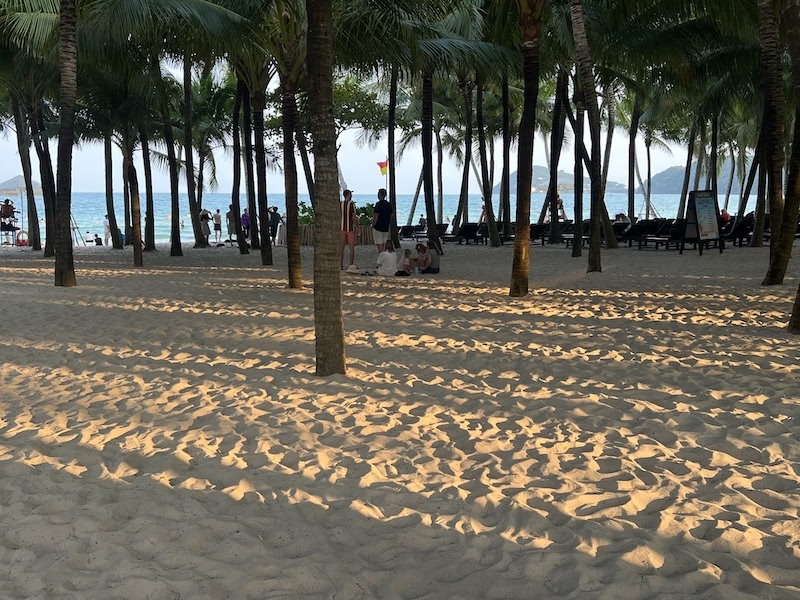
I liked this resort town for what it is. There was certainly the sense that it was meant for much better business than it managed to secure. Of course, the JW Marriot has taken up a prime spot right by the Khem Beach, with the ocean views and the short walk to the beach as its key attraction. From my hotel, it does take 8-10 minutes of a walk to get to the beach.
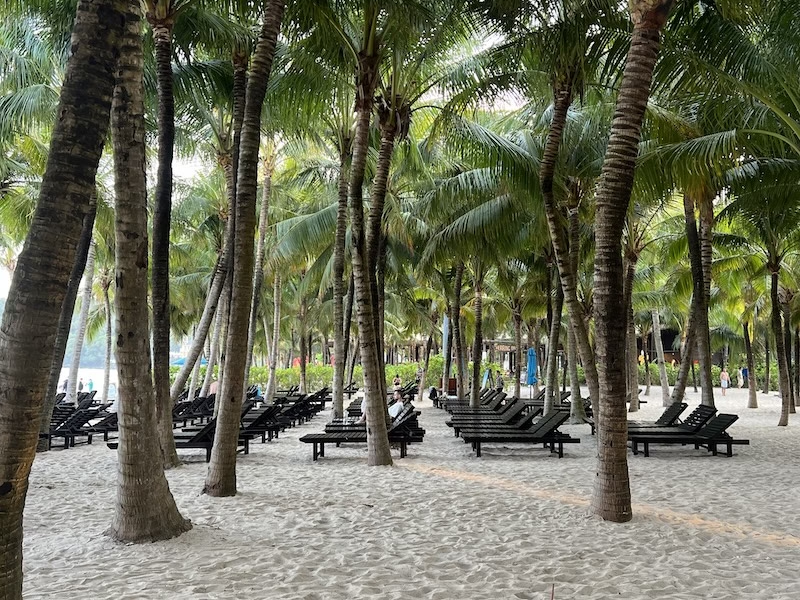
But otherwise, a cursory look into the buildings in the resort town will reveal an unhappy truth about business there. The resort town is 90% empty, save for the two stretches of businesses that are close to my hotel and close to the Khem Beach, respectively.
It is my observation that the theme of dashed hopes is common in planned economies. Surely, Vietnam has embarked upon a program of significant economic liberalization, not unlike that of China, since the 1980s. But what I observed at the Khem Beach Resort was typical of grand visions that were not supported by good economic analysis, a step that should have been taken before making any kind of significant investment. I have no idea if the Khem Beach Resort was a government initiative. If it weren’t, then the investors must have suffered quite a significant loss.
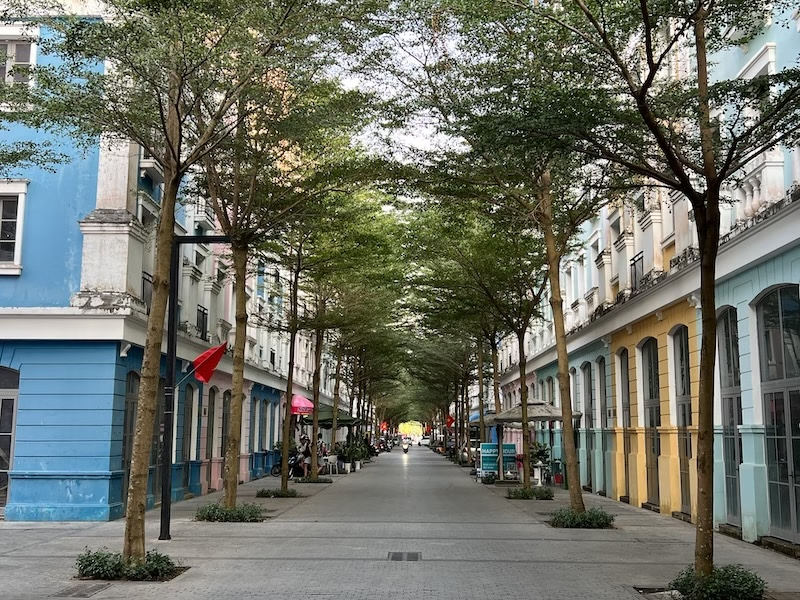
That said, if you turn a blind eye to the rubbles that lie freely in the vacant lots within those townhouses, the environment is well-designed with a very sunny, cheerful vibe, “almost classy,” as I muttered. Decorative trees adorned the well-paved streets. Even for the ghost streets with no tenants, there were workmen there trimming the trees and keeping the streets clean during the day. It appeared to me that dignity was maintained despite the failed business objective.
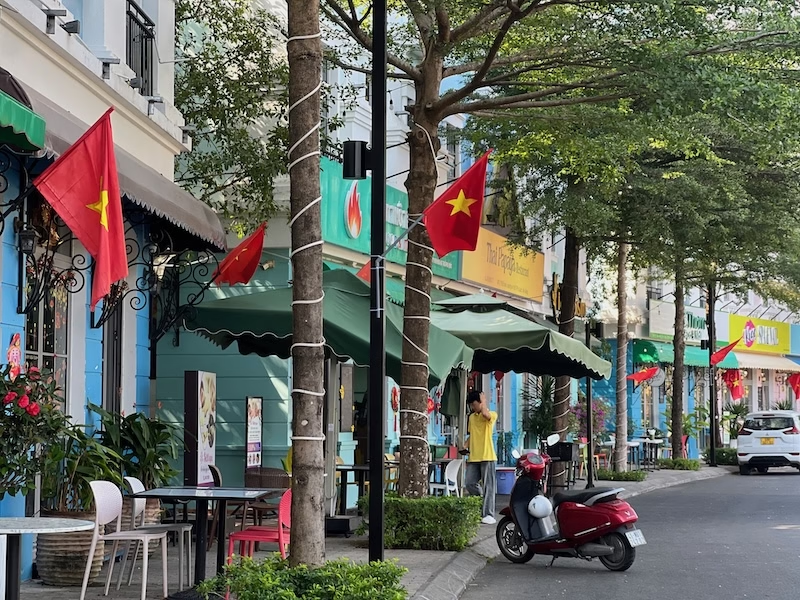
About twenty minutes later, I made it to the proper entrance of the resort town. That was when I ventured into the “real” Phu Quoc. I was on my way to the Coconut Tree Prison.
A Very Local First Lunch in Phu Quoc
The street views beyond the bounds of the resort town did indicate that I was out of the comfort zones for vacationers. There was quite a bit of trash on the way. The wide, multi-lane motorway was simply extended into the expanse of space until it met the houses on the side, with no proper pavement for pedestrians. In fact, some parts of the road are full of sand.
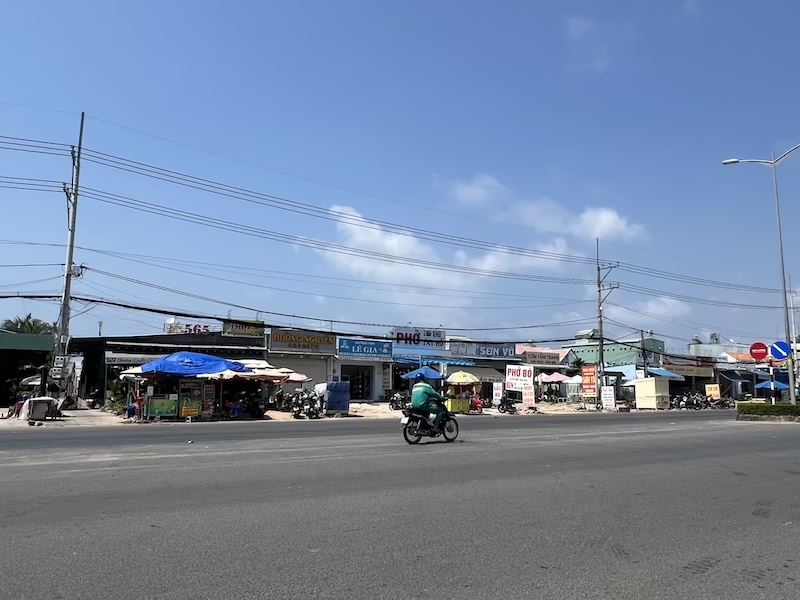
I saw on Google Map that there were some restaurants on the other side of the road. I have had to navigate carefully before making it across to the other side of the road. I found Com Tam Trang for a plate of com tam (grilled pork chop over broken rice).
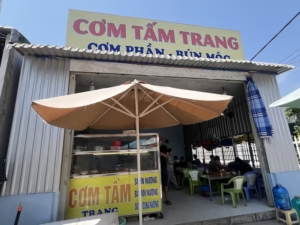
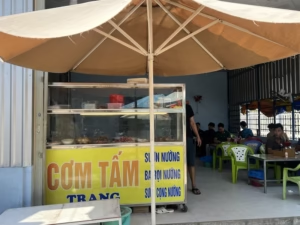
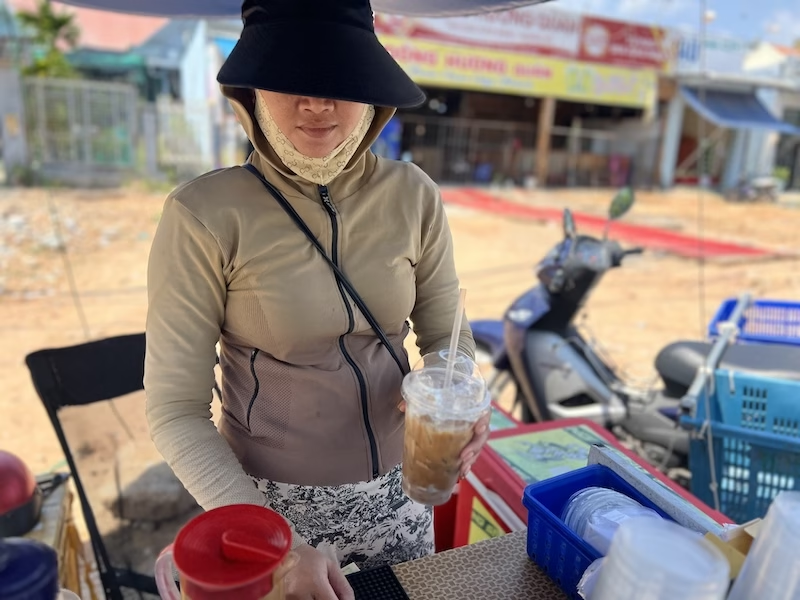
A lady fully wrapped in her upper body was running a little coffee stand by the road. I envied her for the attire because I would rather be wrapped in this heat than be breathing in the diesel and the dust. Neither the humidity nor the sea breezes mediated the dustiness of a busy roadway in Phu Quoc.
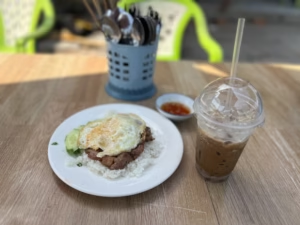
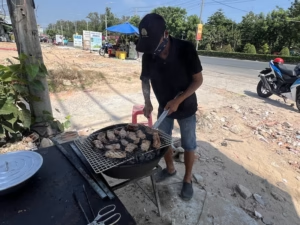
I ordered my favorite Vietnamese drink, ka phe sua da (iced coffee with milk), for 15,000₫. As I sipped my coffee, I watched the old man grill his meat over an open charcoal fire. For a moment, I was concerned with this dustiness. But I pushed the thought aside. It is worth all the dust to eat like a local.
I sat down with my plate of pork chop rice and at once felt at home in Phu Quoc. This was my fifth time visiting Vietnam.
A Brief History of Phu Quoc as Part of Vietnam
Historically, both Cambodia and Vietnam lay claims on the island. The issue has resulted in conflicts between the two nations, namely the Cambodian-Vietnamese War of 1979. As the history is presented in Wikipedia, it seems to be the case that the historical rulers or administrators of Phu Quoc have pledged their allegiance to Vietnam. On a balance, it does seem that the island had stronger ties with Vietnam.
In 1739, the Cambodians attempted to liberate Phu Quoc but failed in their expeditions. Since then, the island has enjoyed independence from Cambodia. The French missionaries arrived during the 1760s. They noted that the population there were of Vietnamese descent. Over those times, there were accounts to the French empire indicating acknowledgement of Cambodia’s formal claim of sovereignty over the island. In 1867, the Vietnamese rulers of Phu Quoc pledged allegiance to the French.
In 1939, the Governor General of French Indochina, Jules Brevie, drew a maritime demarcation line (The Brevie Line), between Cambodia and Vietnam, and the island fell within the territory of Vietnam.
With the Geneva Accord of 1954, sovereignty over Phu Quoc Island was handed to Vietnam. Yet, there were continuous tensions between the Cambodian government and the Vietnamese government over their claims to the island. In 1975, a squad of Cambodian soldiers took Phu Quoc, but the island was retaken by the Vietnamese forces soon. Although the Cambodian government dropped its claim to sovereignty over Phu Quoc Island in 1976, there was a series of attacks and counter attacks, culminating in the Cambodian-Vietnamese War of 1979.
In 1982, the two governments signed an agreement to settle the dispute. In 1999 the Cambodian representative to the Vietnam-Cambodia Joint Border Commission affirmed the state’s acceptance of the Brevie Line and Vietnamese sovereignty over Phu Quoc, a position reported to and accepted by the National Assembly.
Under Vietnamese sovereignty, Phu Quoc Island is a special administrative zone since 2025.
Sources
The Wikipedia on Phu Quoc.