
Prosperous Phu Quoc —The Horrors of the Coconut Tree Prison
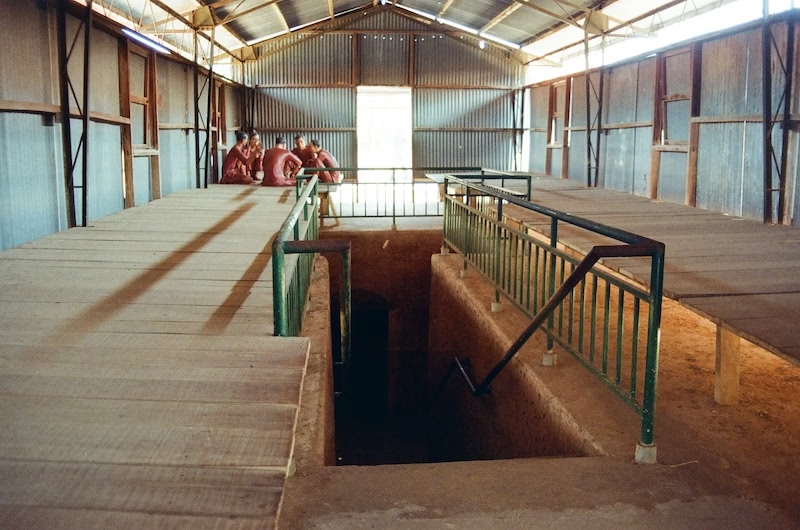
The Coconut Tree Prison is the most unhappy place in Phu Quoc, and that is an understatement. It stands testament to the ubiquity of political division that haunted the nation during much of the 20th century. In the Coconut Tree Prison, this political division manifested itself in “innovative” tortures against the ideological enemies of the same blood.
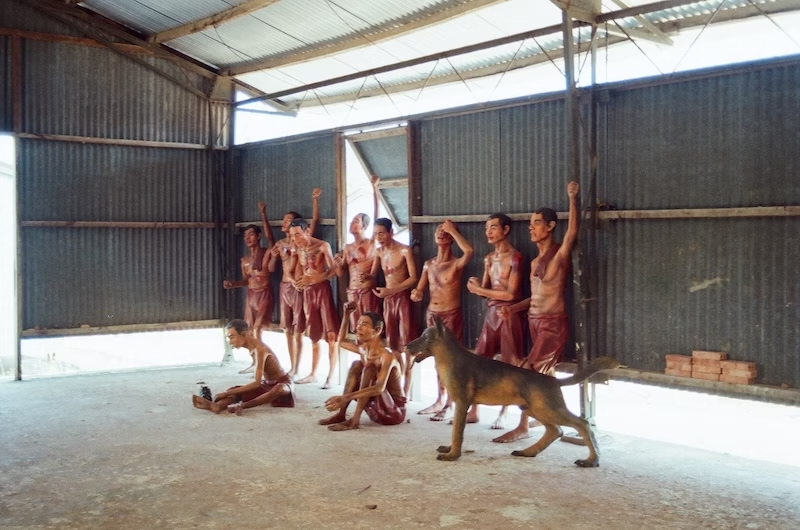
Both sides of the ideological divide were guilty of crimes against humanity on a very significant scale during the Vietnam War. At the Coconut Tree Prison, the perpetrators were the Southern Vietnamese that sided with the Americans during the Vietnam War. North Vietnam eventually won, and to this day Vietnam remains the only and the last communist bastion in Southeast Asia.
The history of the Coconut Tree Prison is straightforward. The French kept a prison camp in Phu Quoc as a detention center of anti-colonialists, and the administrators of the prison have been the successive authorities that inherited that side of the conflict — first the French, then the South Vietnamese as they sided with the Americans.
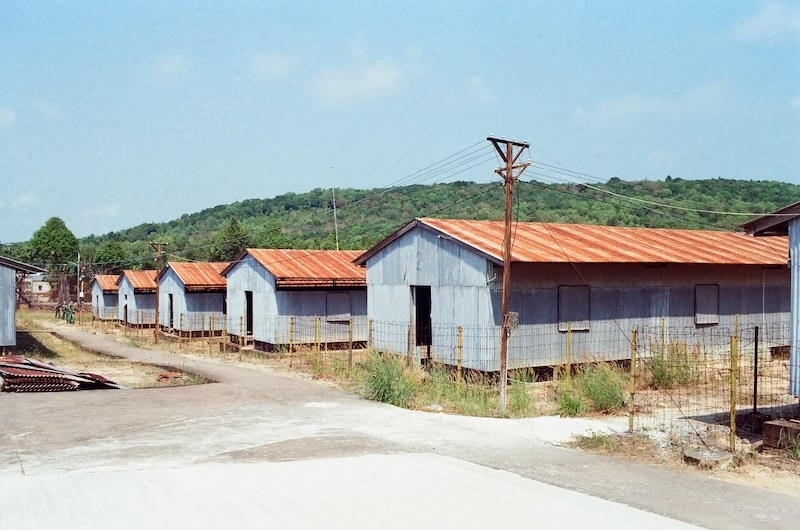
The name “Coconut Tree” (Trai Cay Dua in Vietnamese) is more suitable for a small and cute inn. This prison is so named because it is what its name says — for this was where the prisoners had to grow coconut trees. In 1949, the French took over the facilities in Phu Quoc that the Chinese nationalists left behind (the Chinese nationalists eventually fled to Taiwan and settled there as the Republic of China permanently). The French set up camps here to detain the nationalist fighters of Vietnam (mostly communists) that were captured all over Vietnam’s mainland. At its peak, the number of prisoners kept here totaled 14,000. The camp took up an area of about 40 hectares and consisted of the four sections named A, B, C, and D.
Came the time of the war between the two Vietnams, the South Vietnamese government rebuilt and expanded the site during the 1960s. The camp then had 12 zones, each with 4 sections. Each section could host as many as 950 prisoners. By 1972, the number of prisoners held there reached 40,000 at one point. Both prisoners of war and political prisoners were held here. The site was heavily guarded by American battalions at one time. The estimate is that 4,000 died here during the 5 years between 1967 and 1973. Mass graves were found on site.
The Coconut Tree Prison is infamous in all of Vietnam. For a very long time, even after the Vietnam War ended, the prison was likely what Phu Quoc was best known for. The Communist Government of Vietnam closed the prison in 1975 when the Vietnam War ended.
From the Khem Beach Resort I walked about 40 minutes to arrive at the Coconut Tree Prison.
The Torture
The part of history that is in focus at the museum is the campaign to force prisoners to the New Activity Area, which took place between 1969 and 1972. The campaign began with mass arrests, and then the systematic torture of the prisoners at the camp.
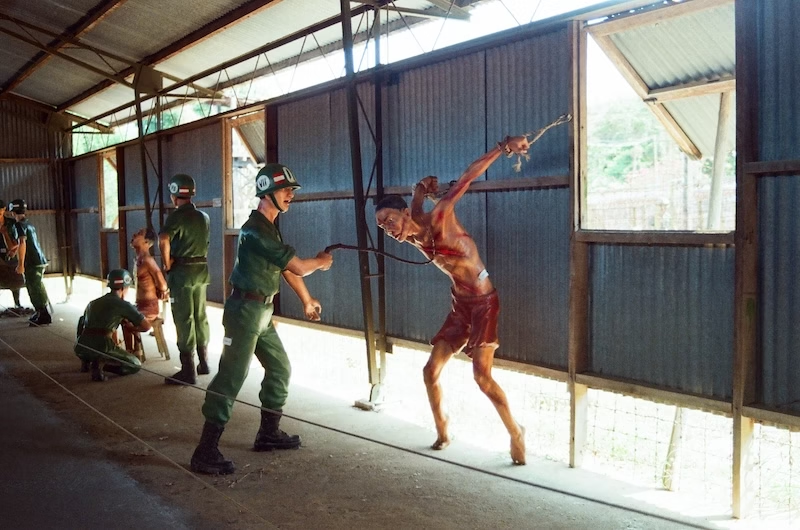
The torture there was systematic, both in terms of the schedules and manners of the torture. There was a set time to beat prisoners at the camp. It is also said that 45 types of torture, consisting of both ancient and modern varieties (some are pretty “innovative,” see below) were raged against the prisoners. One purpose of the torture was to collect intelligence about the ongoing war, such as the organization, leadership, guidelines and the escapes of the revolutionaries. But I suspect that there were elements of hatred and spite as well.
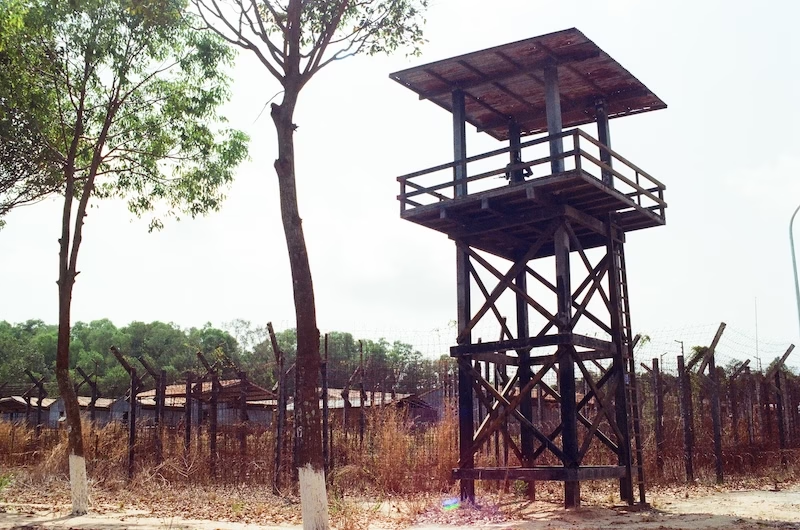
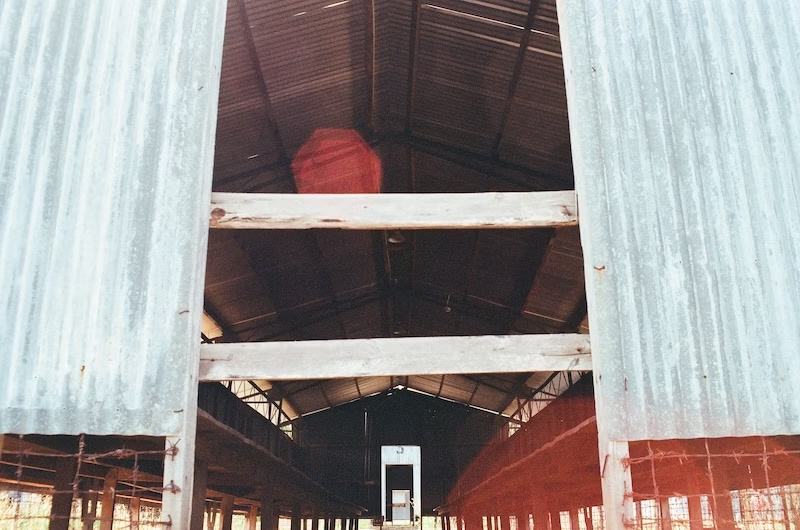
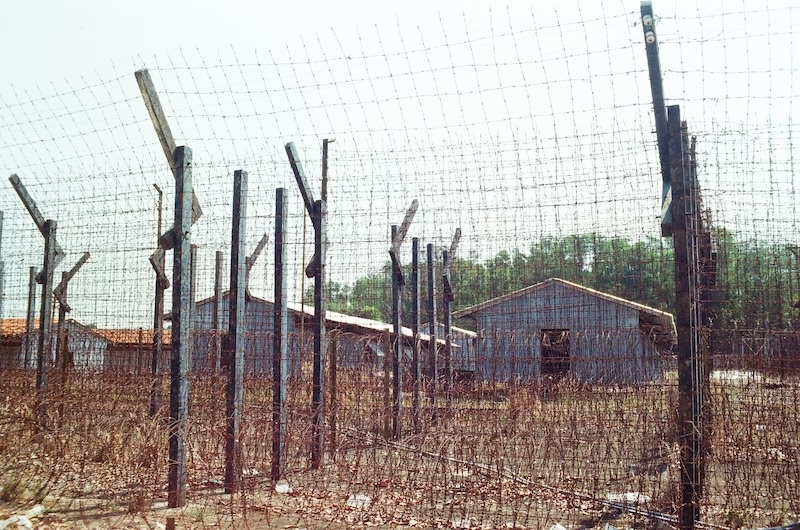
The Coconut Tree Prison is an open-air museum now, but the spirits of those that were tortured to death here are felt. They plead their case through the apparent inhumanity of war, and it is amply shown. The structures are bare, consisting of shacks with ceilings and walls of corrugated iron. Some sections are separated by thickets of barbed wire.
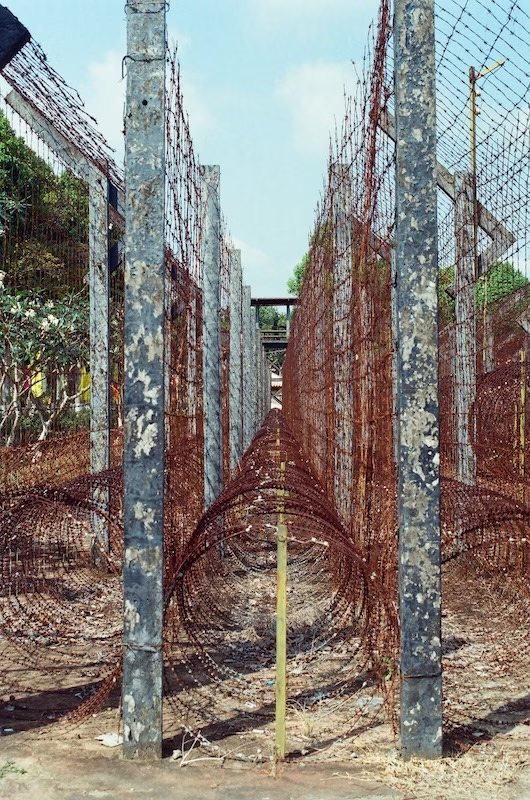
The environment itself bears telltale signs — it is more than an eerie vibe. A mere look at the structures shows the conditions that the prisoners had to endure. The shacks had to be incredibly hot in Vietnam’s tropical summers and unbearably cold amidst the winter breezes of the sea.
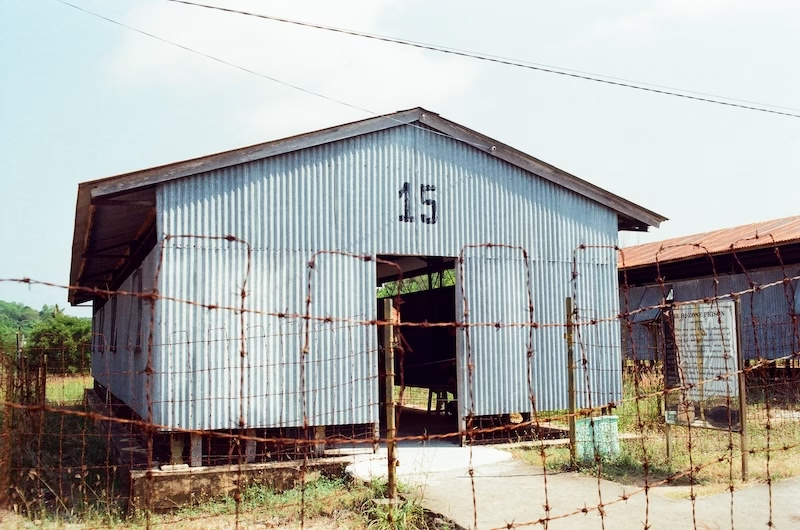
Besides the harsh conditions of the environment, the inmates had very little food, and when they did eat, the food was terrible. They had stale rice and spoiled fish, and perhaps a pinch of salt for taste, if they were lucky.
As discussed below, the captions are written in line with classic communist propaganda, but one must also be serious about the claims made therein. It takes more brain work to sift the facts out of such representations, but a lot of those claims are factual and true.
The Tiger Cage
The first exhibition of torture are the tiger cages. The administrator of the museum placed life-sized mannequins in the cage to show how it was done.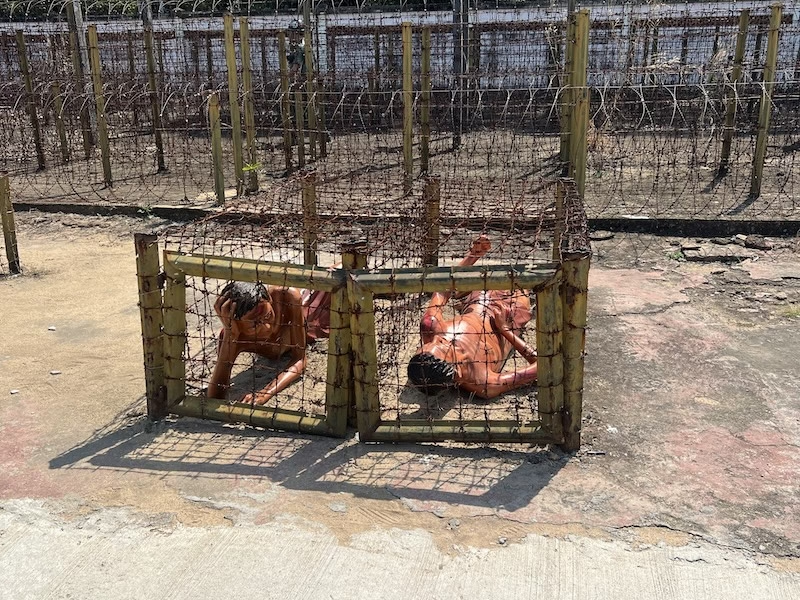
The tiger cages were barbed wire cages that were just big enough for the number of people to be held inside. There were one-person cages and there were 3-5 people cages. Some prisoners were made to stand all day inside the cage. Some were made to lie down all day. The prisoners wore nothing but shorts inside the cage, and they did not have bathroom breaks.
It is not hard to imagine that prolonged captivity inside these cages would result in the prisoners being skinned. On hot and cold days they were similarly exposed to the forces of nature, including insects and mosquitoes. It is said that the prison administrators would flush them with cold water during the winter, and bittern during the heat of the summers.
The prisoners were kept in these cages for days on end, and some died from the combination of exposure and skin wounds. This part of the exhibition provokes quite a bit of a shock to visitors, as it is the first section that one comes across when you enter the museum.
Other Types of Torture
Besides the appalling tiger cages, there were also the Catso tiger cage, which is much like cargo containers but very small. The prisoners were also kept inside these cages for days without being let out for air. The air inside these cages was limited, and needless to say, part of the torture depended on the extremity of weather conditions in this part of Vietnam. It could be scorching hot during the daytime and frigid cold in nighttime. The Catso tiger cage was meant to be a disciplinary measure.
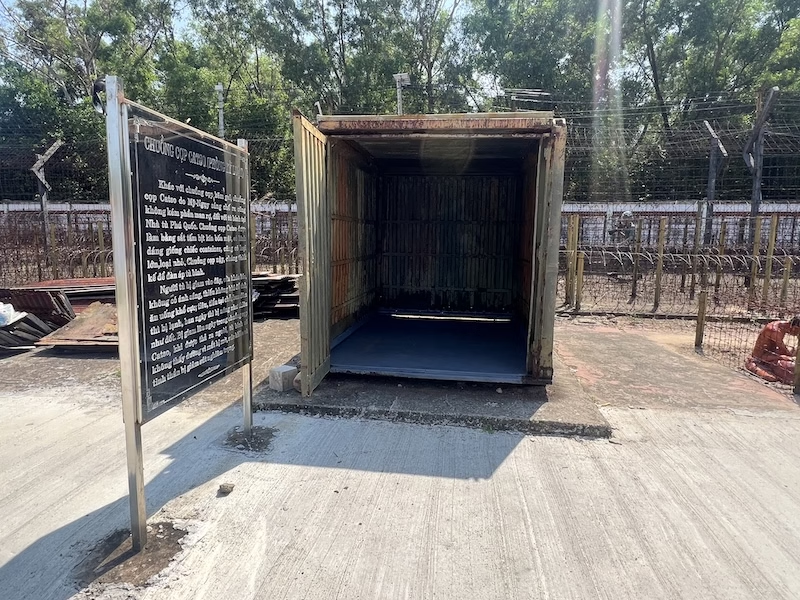
There were other “classic” types of torture at the prison, such as nail-driving, electric shock, tooth extraction, and submersion in boiling water.
Acts of Survival
The Tunnels
Those incarcerated at the Coconut Tree Prison survived in the typical way that the Vietnamese people survived wars. Having traveled to various different historical places in Vietnam, I have observed the somewhat odd, distinctively Vietnamese preoccupation with using tunnels as a primary means to survive and fight wars. There are the famous Tunnels of Cu Chi in Saigon, and there are the Vinh Moc Tunnels in Quang Tri. In the Coconut Tree Prison, the captives there also dug tunnels to flee.
The tunnel digging at the Coconut Tree Prison turned out to be the most effective means for prison breaks. The resistance inside the prison was systematic as well. It is said that the Communist Party assigned tunnel digging teams inside the prison. The prisoners made tools with their mess kit, spoons, barbed wire, iron stake and plastic crane.
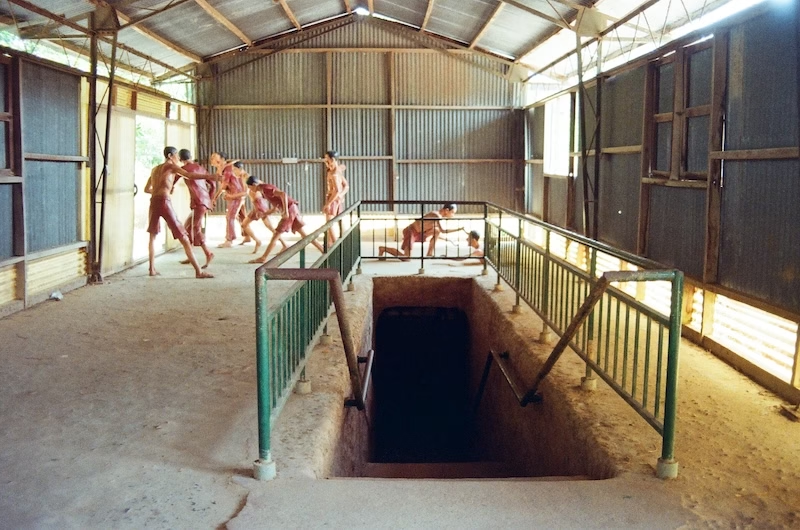
They began with a spot under the wooden sitting floorboard, then made their way through the ground. The opening was carefully disguised. The most successful escape plan was a tunnel dug in subregion A4, with 113 meters in length, 1.5 meters into the ground, 0.65 in diameter. It enabled the escape of 41 prisoners. This was the most successful prison break that took place in 1971.
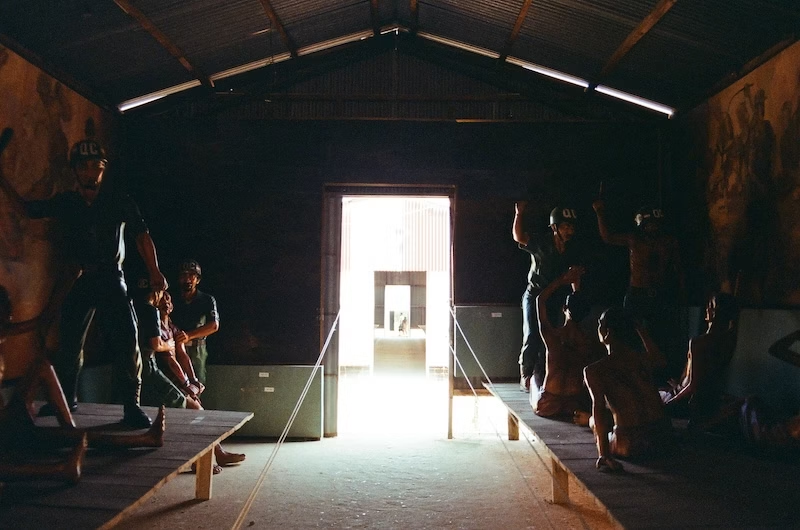
Photo: Room 13 in subregion B2 was where the first tunnel was dug. 21 prisoners escaped via this tunnel.
In the museum now, one original tunnel of escape was preserved and expanded for visitors to experience the prison break themselves. It was quite cool for me to walk through this tunnel because my phone battery died and the tunnel was pitch dark for the most of it. I had to feel my way through the tunnel.
Other Means of Escape
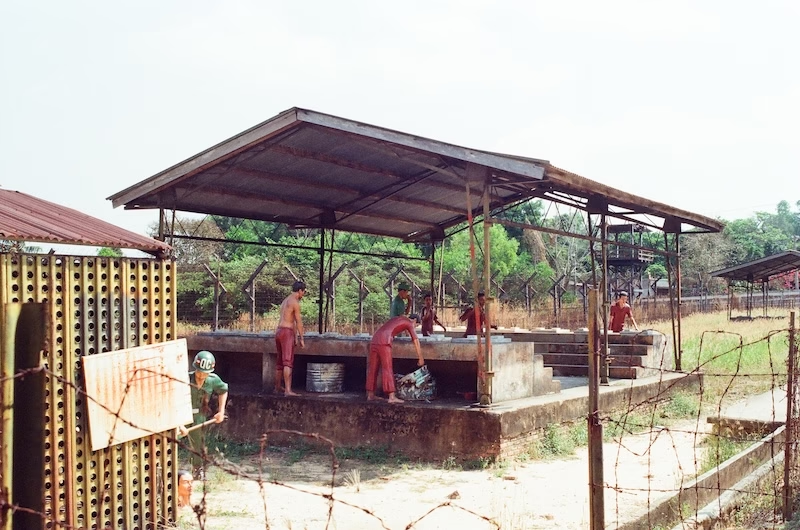
The prisoners certainly had a ready camaraderie, as they ended up here due to a shared vision for Vietnam’s future. The kitchen was where a lot of the resistance plans were made. The prisoners could communicate amongst themselves as they cooked, and there were two successful prison breaks out of the kitchen.
The prisoners hid themselves inside the oil drums. Others covered them in sandbags, muggy soil and a layer of wet garbage. They laid the top layer with firewood and smoking charcoal to create a vent for breathing. Then other prisoners moved these oil drums for “dumping,” enabling the escape of the ones hidden inside.
 /
/
Reconciliation?
At the state-run museums of Vietnam, the narratives are cloaked heavily in ideology. The captions are somewhat contentious to the western eye. Much of it reads like orthodox propaganda. If one only takes this as the reference point, then the feeling is clearly that of a disappointingly adamant refusal to reconcile a past that was rife with irreconcilable worldviews. Granted, that history is written by the victor, and Communist Vietnam certainly does not see the need for reconciliation, especially not at this prison.
I do wonder if, as it is today, that Vietnam sees its equal share in the atrocities of the Vietnam War.
Truth be told, that acts of torture were pervasive in the Coconut Tree Prison. And I do not question so much the facts as they are presented. I can imagine South Vietnam committing these types of war crimes during the war. And I would accept that maybe there are some exaggerations here and there. That’s all understandable. What I question is the clear intention in telling the “truth” for sakes other than telling the truth.
I felt rather strongly that this is the venue where Communist Vietnam states its case against the western world (as led by the Americans) for the Vietnam War. My issue with that is, Communist Vietnam does not come with clean hands. I refer to the booby traps in the Tunnels of Cu Chi, the surprise attack of the Tet Offensive and the Highway of Horror in Quang Tri. They were similarly horrific.
Perhaps I am quite accustomed to the idealistic notions of “truth” in the western world. In contemporary practice, a truth-finding mission has the goal of reconciliation. That is not the case here, because, very frankly, this “truth” being told in the Coconut Tree Prison is very one-sided. If people do not do the hard work to learn about how the Viet Cong fought its wars, then they leave Phu Quoc thinking that South Vietnam, which allied itself with the Americans, were absolute devils. While that is certainly the case in many respects (and I do not speak apologetically for America in its conduct of the Vietnam War), the Viet Congs were just as innovative in their own war crimes.
Allow for a little more than one hour to fully experience the Coconut Tree Prison.
Sources
The Wikipedia on Phu Quoc.
Vietnamstory.in, A Coconut Prison Phu Quoc guide: A solemn journey into Vietnam’s past.
Localvietnam.com, Phu Quoc Prison — Complete Travel Guide of the Coconut Tree Prison.