To the Outback and Back — Embrace East Macdonnell at Emily Gap
I lined up a trip to East Mac with Kirsty of Red Earth Roaming. She is a fantastic tour guide, who engaged me on so many different disciplines of knowledge. In this 6-hour tour, we went through amazing learning in geology, Aboriginal and Aussie culture, fauna and flora, the tour business and a touch of Australia’s position in world affairs. I am incredibly thankful to Kirsty for her hospitality. If you are going to do a tour there (she runs tours in West Mac and East Mac), please approach Red Earth Roaming. She will also be able to tailor the itinerary to your specific interests.
As said in the preliminaries entry, late April was not the high season for the Outback. I was the only one that signed up for this East Macdonnell tour with Kirsty. As such, we had long conversations about everything under the sun. There were also few souls at East Mac, as it clearly was much less popular than the West Mac. I enjoyed the tour thoroughly.
The Itinerary
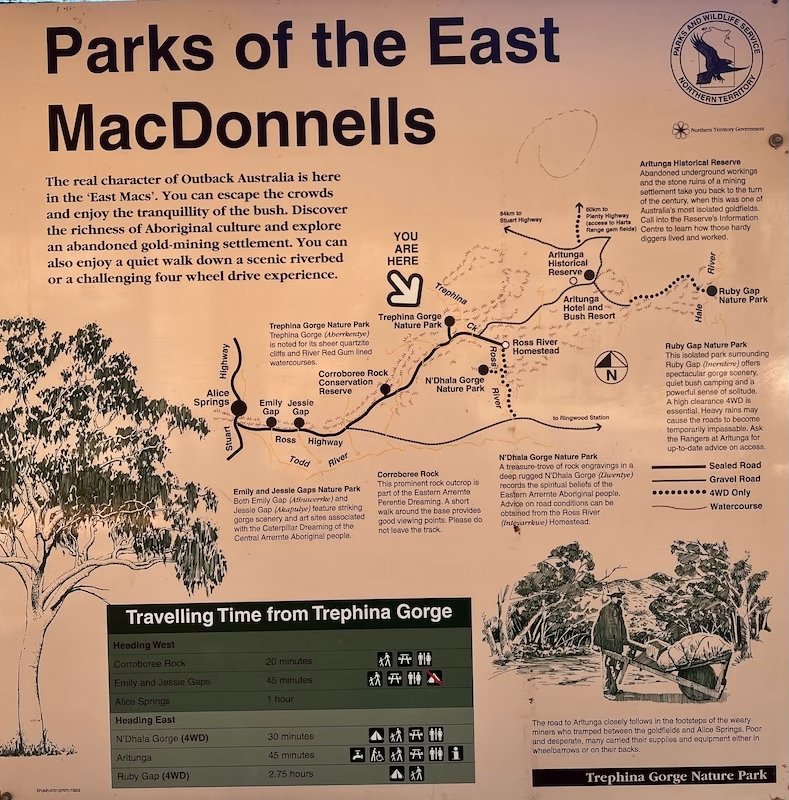
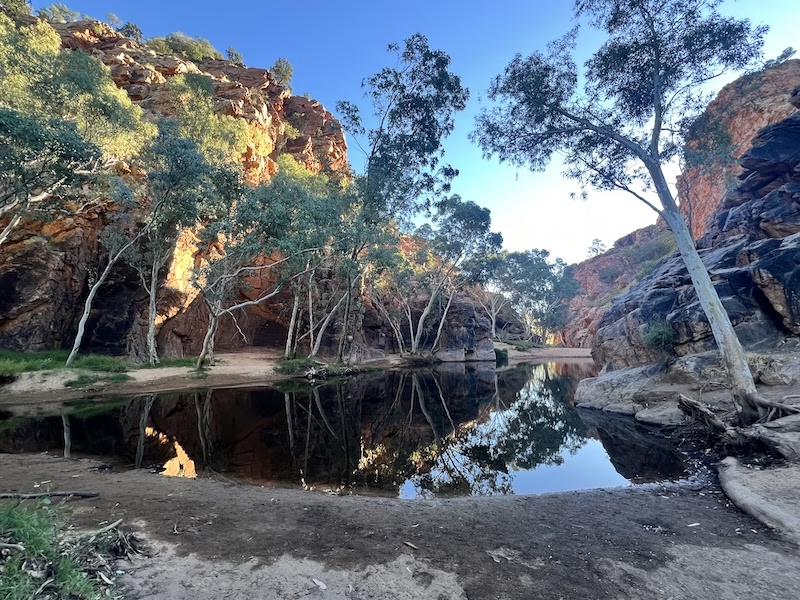
We started the chilly morning at Emily Gap. Then we visited Jessie Gap, Corroboree Rock, Trephina Gorge, The Ghost Gum Tree, and the Ross River Resort.
It felt colder than the previous day, when I visited West Mac. I wore my leggings, but those turned out to be a little bit too hot for the afternoon, when we did a couple of easy hikes. It was a pretty smart choice to wear a tank top beneath a jacket.
The Emily Gap
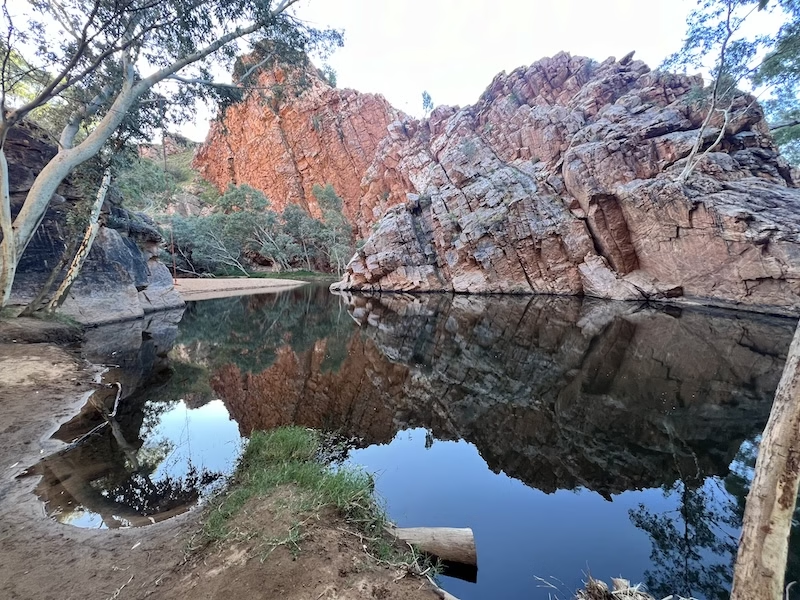
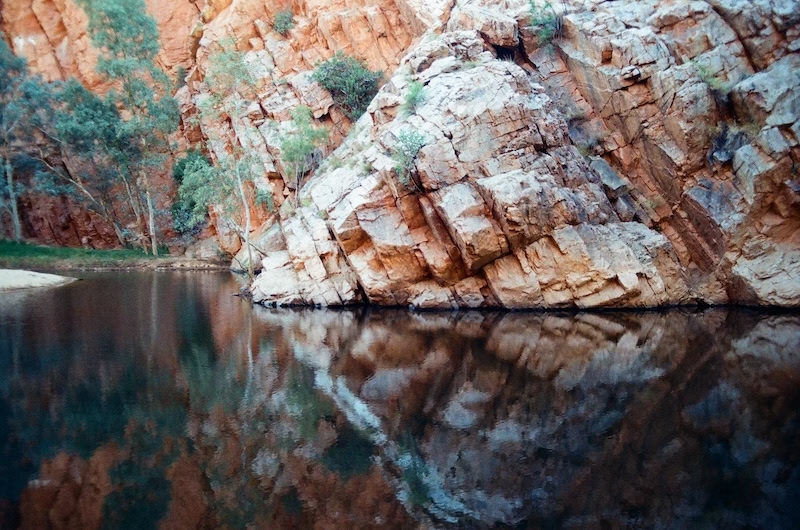
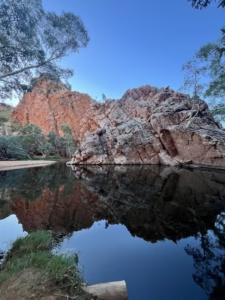
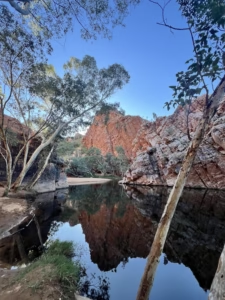
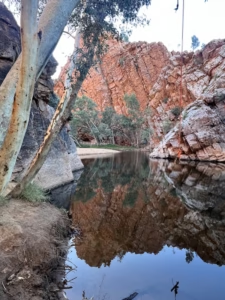
One aspect of traveling in the Outback is the varieties amongst the different sites. Although the general geological composition is similar in the area, each site appears to exude distinctive vibes. I can’t quite articulate how, but in that early morning when I came upon the waterhole at Emily Gap, it felt as if the ancient spirits were there to greet me, uttering poetry in nature’s language. I must have heard quite a few birds chirping to garner that impression.
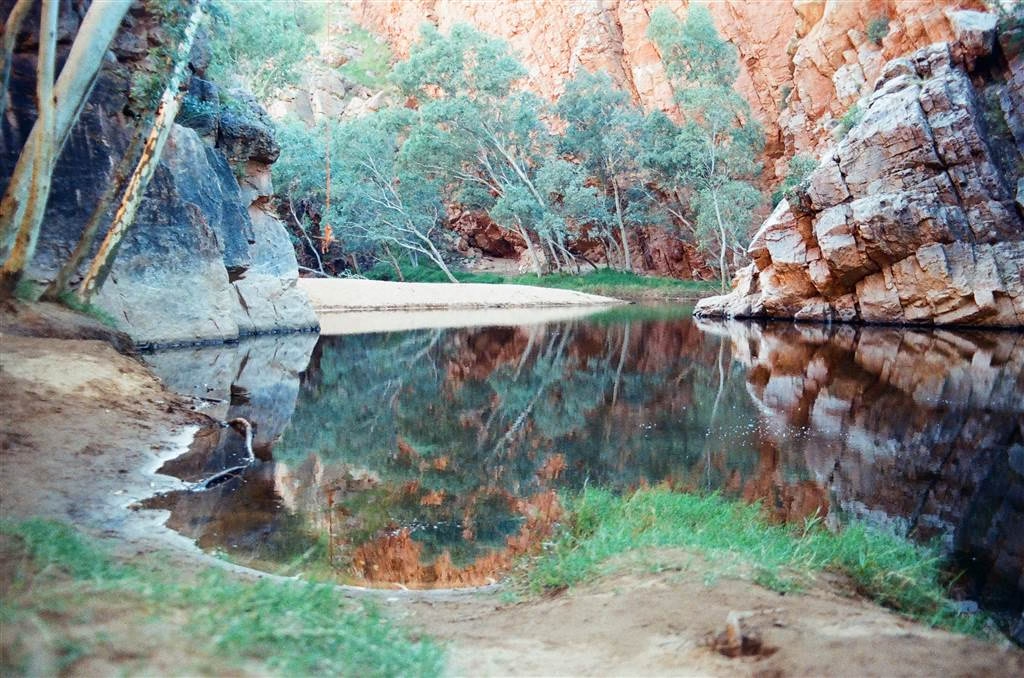
Known to be Anthwerrke (pronounced “an-tur-ka”) in the native language, the Emily Gap is traditionally a cultural site for Aboriginal men. The men-women division is clear in Aboriginal cultures, and that includes the exclusiveness with which they used land for educational and community purposes. The Emily Gap is sacred for the Western Arrernte Aboriginals. The men do not swim in the waterhole here, as the water is for drinking only (both for humans and animals).
This area of the Macdonnell ranges prided a whole lot of games and a large number of Aboriginal families. But over times, 19 species of mammals were lost to cats and the other predators, such as foxes. There was once a high diversity of plant lives as well.
The Caterpillar Dreaming
The Caterpillar Creation Dreaming is the single most significant Dreaming in the Macdonnell Ranges. It comes into full focus in East Macdonnell, where Aboriginal rock paintings depicting the Caterpillar Dreaming are found in the Emily / Jessie Gap (Yeperenye Nature Park) area.
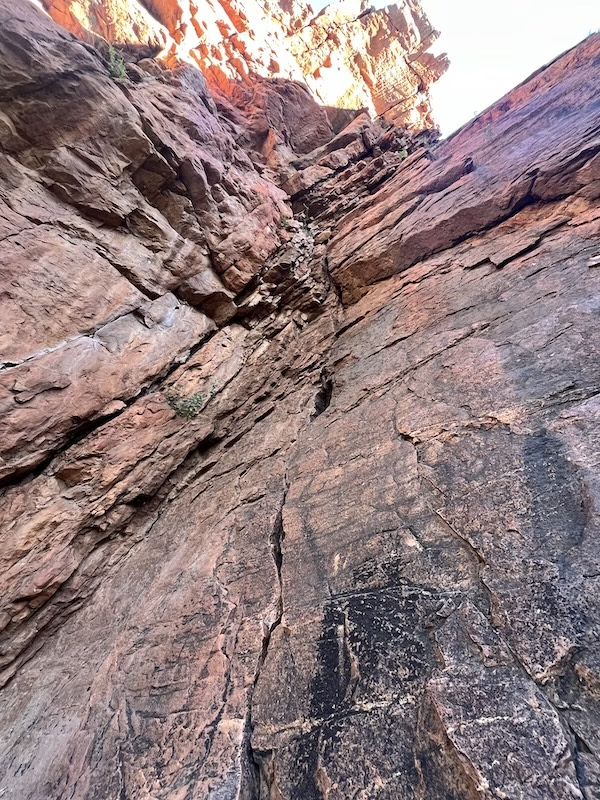
The creation stories were how the Aboriginals impart on the children their laws. The Aboriginals believe that the earth was flat and nothing, until the gods came out of the earth and created creatures and oceans. The Three Caterpillars of Yerperenye, Ntyarlke and Utnerrengatye are believed to be the ancestors of the Aboriginals. Each of these caterpillars are associated with one kind of plant on which the caterpillar survives. The Yerperenye and Ntyarlke caterpillars feed on the Tar vine. The Utnerrengatye caterpillar feeds on the Emu Bush.
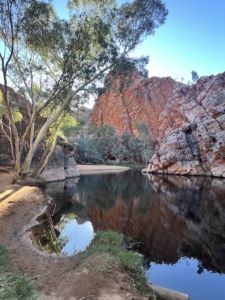
The caterpillars were walking across Central Australia, and came upon the territory of the green beetles. They didn’t ask for permission, the beetles were angry and killed them all.
This creation story is to teach the children about territorial respect. When you go to a place you set up a fire and someone would come to you — do not ever cross a territory without permission. The caterpillars became the mountain ranges here.
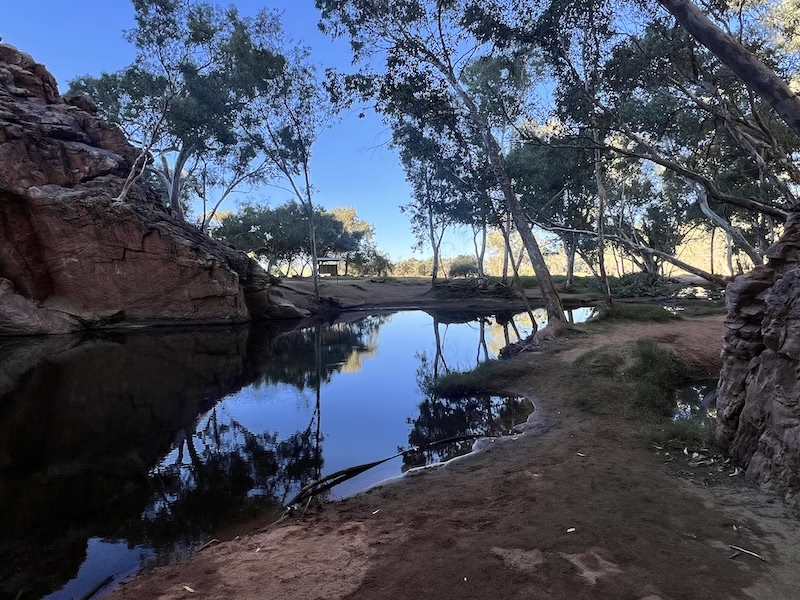
When the Emily Gap is filled with water, one would not be able to get to the rock paintings to admire the Caterpillar Dreaming. Suffice it is to say, that the various imageries bear specific meanings in Aboriginal culture. For example, the stars represent change and transformation.
Sources
Descriptions on site at the Emily Gap.
Tour with Red Earth Roaming.