
To the Outback and Back — The Wonders of West Macdonnell at the Ochre Pits
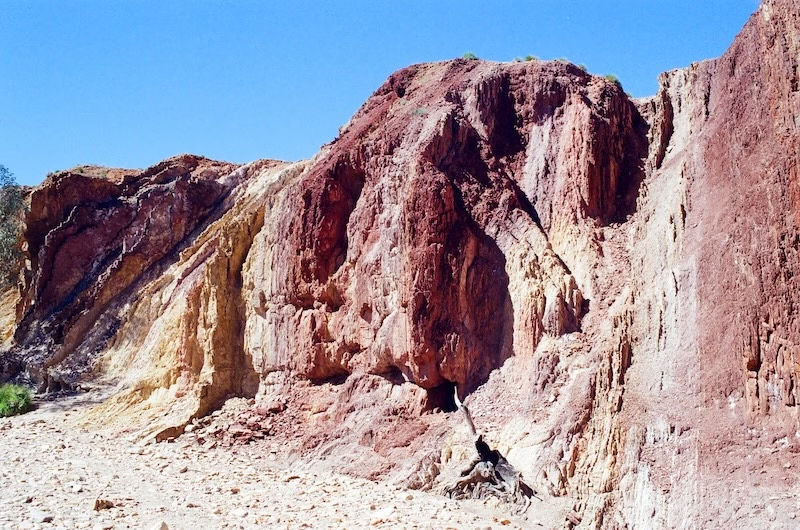
In the last entry on the Ellery Creek Big Hole, I noted that the colors of the desert evoked an unexpected marvel upon my sensations. Perhaps that observation has come into full focus at the Ochre Pits.
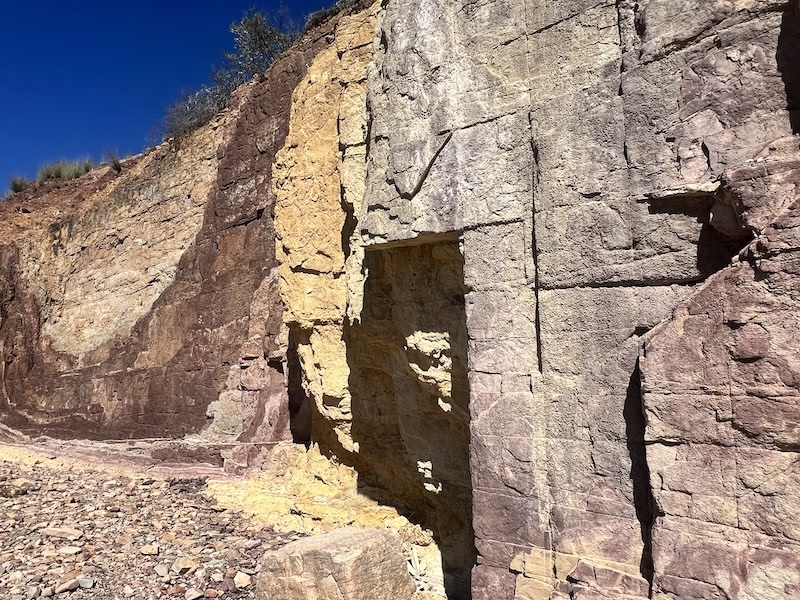
It is said that the Ochre Pits is “where color and culture meet,” (Off the Main Road) and I completely agree. For thousands of years, the Ochre Pits has occupied a place of cultural significance for the Western Arrernte Aboriginals, who gathered and used ochre daily here for both cultural and medicinal purposes.
I had never seen ochre in my life before. In fact, I had to google the word to know what it is as a material. But at the sight of this wonderful ochre mine, I soaked in its cultural significance.
The Material Qualities of Ochre
According to the Britannica, ochre is “a native earth colored with hydrated iron oxide. It varies in color from pale yellow to deep red, brown, and violet. There are two kinds: one has a clayey basis, while the other is a chalky earth. The former variety is in general the richer and purer in color of the two. Both kinds are widely distributed in beds or pockets, mainly in stratified rocks and rubble and rarely as extensive deposits.”
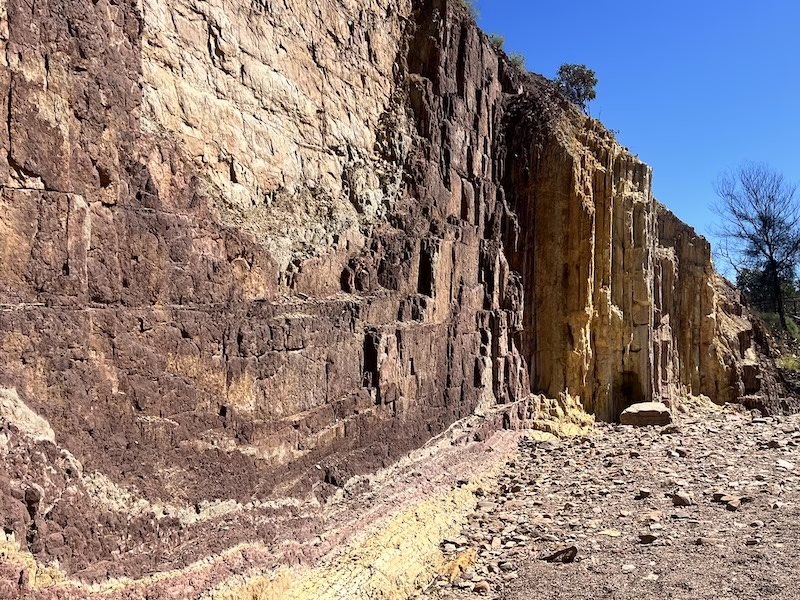
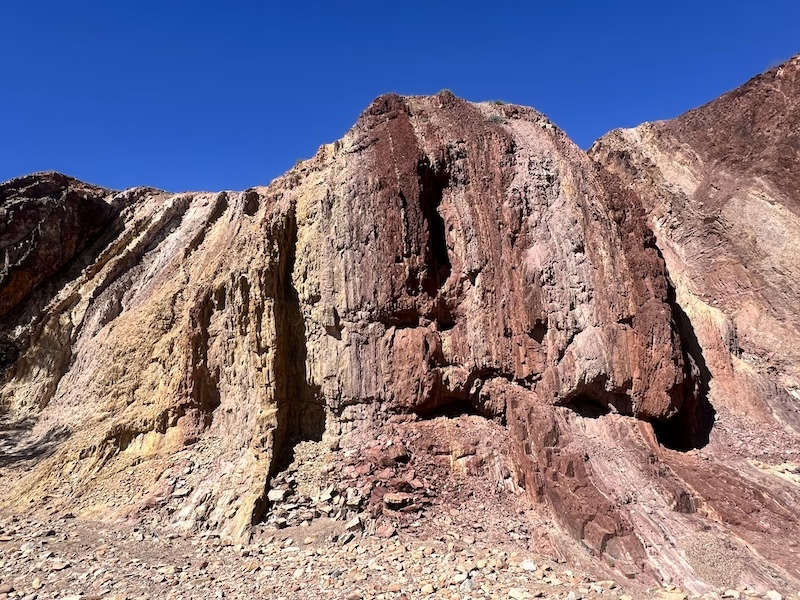
At the Ochre Pits, one can easily observe the colors white, yellow and red ochre. Red, by far the most treasured color, represents strength and the earth, while white represents the spirit, and yellow represents the sun. According to descriptions on site, the colorful ochre-bearing cliffs is a manifestation of 700 million years of geological formation. That was a time when the mountain ranges of West Macdonnell were yet to be formed from a massive push-up event 300 million years ago.
The Use of Ochre
The Western Arrernte Aboriginals commonly used the colors white and yellow for cosmetics. When mixed with water or animal fat (such as from a goanna, possum or emu), the ochre becomes a colored paste that was smeared onto the body with a finger or a feather. Otherwise, ochre was also mixed with ashes and charcoal.
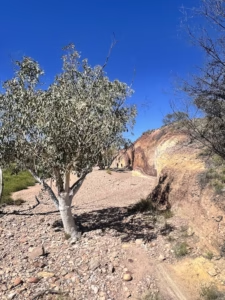
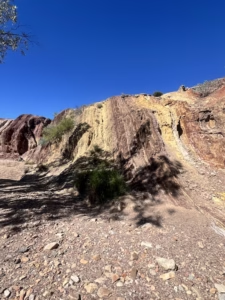
Sometimes berries were packed within ochre for the purpose of food preservation. Domestic implements were coated with ochre to preserve them against termites.
Finally, ochre was an item of trade for the Aboriginals, especially red ochre. Some ochre are higher quality, as they may bear with them a silvery sheen. Those were considered fine ochre. Since ochre is commonly found in the West Mac, the trade here is not a vibrant one, but it did occur. The Aboriginals would trade ochre for bush tobacco, mulga woods, bush foods, boomerang or other types of colored ochre. In this area, the trade between mulga tree products and ochre was common.
The Cultural Significance of Ochre
As said above, the Western Arrernte Aboriginals place the red ochre at the top on the scale of importance. As the color represents strength, it is a main color at the initiation ceremonies of their teenage boys (and these ceremonies are very severe trials that result in bodily injuries). The boys are painted in the red ochre, preferably with an eagle feather, at their initiation.
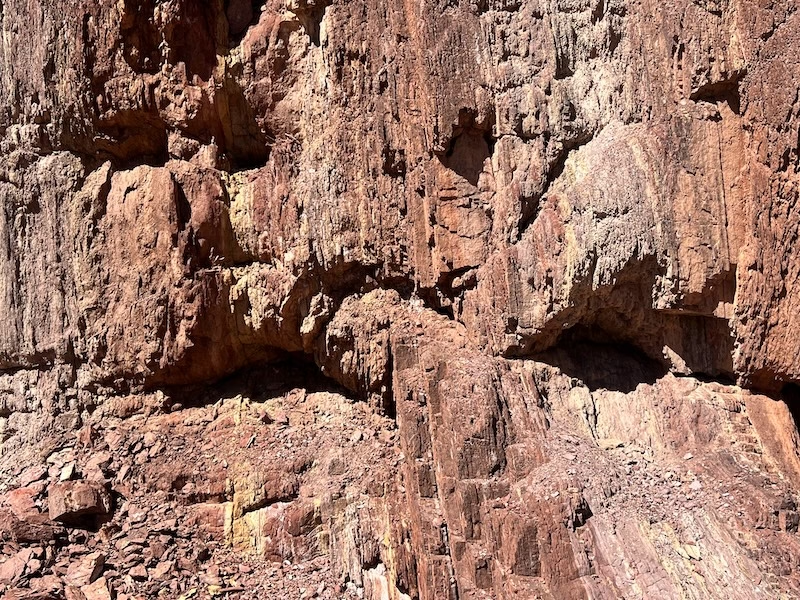
The division of labor is very clear in aboriginal societies, and the digging of ochre is the responsibility of the men, although its cultural uses concern more so with women’s affairs in arts and beautification. The men first made sure that all ochre needed by the women were provided for.
As a medication, ochre was mixed with grease and applied directly onto wounds. Ochre was wrapped in eucalyptus leaves to treat head and chest colds. Red ochre has the specific use in muscle ache, by rubbing mixed red ochre with grease onto the muscles. When applying ochre, the West Arrernte Aboriginals sang the wulya to enhance its healing power.
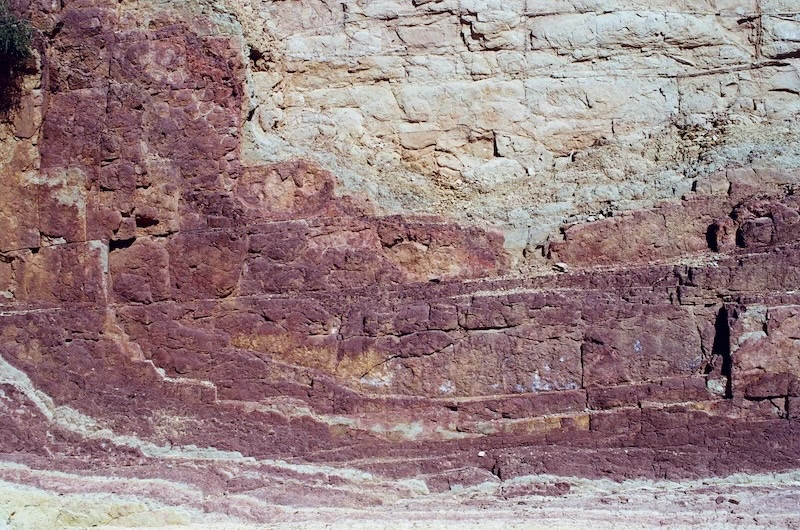
The Western Arrernte Aboriginals have a Dreamtime that involves the Ochre Pits. It is believed that the Wedge-tail Eagles patrol the Macdonnell ranges between the Serpentine Gorge and the Ochre Pits. The men of Western Arrernte have their storytelling about this eagle, and they make elaborate sand paintings in their eagle ceremonies, which are off bounds to the women, children and young men. Before the ceremony is over, these sand paintings are destroyed, and the men’s stories are never told to the outsiders.
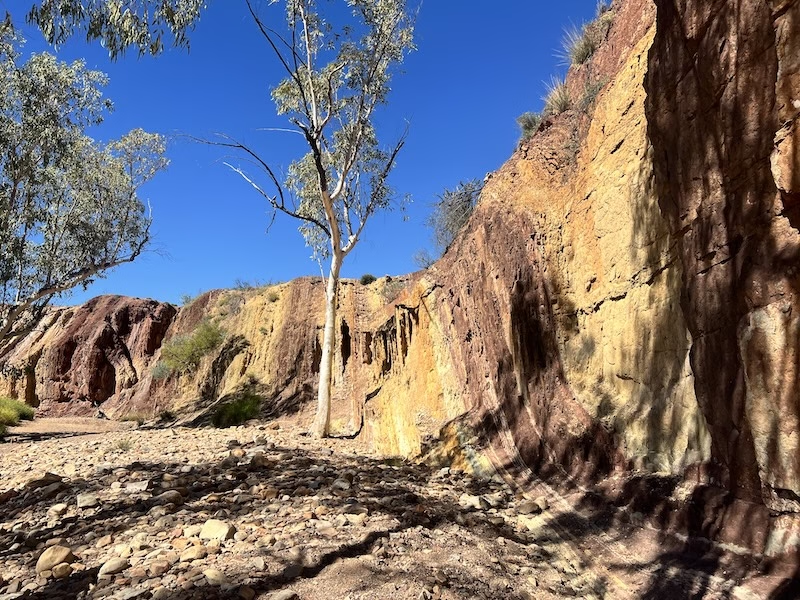
The Ochre Pits at West Macdonnell remains an important cultural site for the Aboriginals, although it is by no means considered sacred. The ochre here is still mined (by them, exclusively) for ceremonial and artistic purposes today. Therefore, keep your hands off the pits (no, don’t even touch) and admire them from a distance only.
Sources
Descriptions on site at the Ochre Pits.
Off the Main Road, The Ochre Pits: A Sacred Palette.
The Britannica on Ocher.