
The Luen Wo Market of Fanling
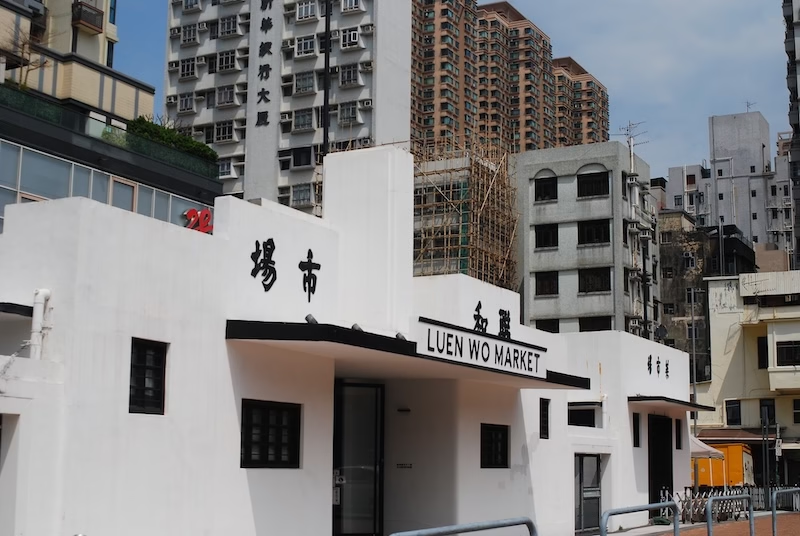
The Luen Wo Market was once the lifeline for the people of Fanling. As a key marketplace, it served as the venue where the community interacted in their daily affairs. It was once a critical market for trade in produce and livestock in the New Territories, along with the four other major markets of Shek Wu Hui (Sheung Shui), Tai Po Hui and Tai Wo Hui (Tai Po) and Tung Wo Hui (Sha Tau Kok).
Luen Wo Hui: The Beginning
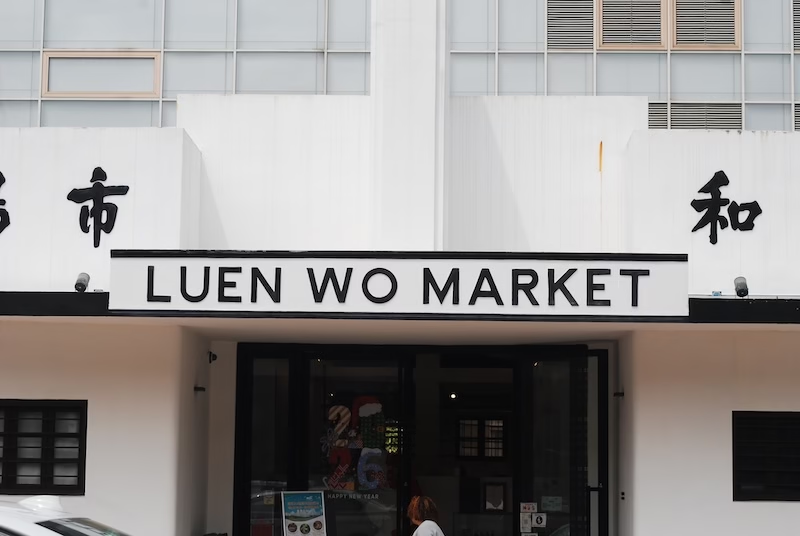
Luen Wo, in Chinese meaning “united in harmony,” came to be the name of Fanling’s marketplace. In 1951, a group of rural merchants in Fanling, including Pang Lok Sam Lee Chung Chong and Tang Fan Shan etc., joined hands in creating the Luen Wo Market as an alternative (really, as a rival) to Shek Wu Hui of Sheung Shui (which was, by and large, of the Liu clan). This effort originated from the merchants’ discontent against the unfair practices that plagued the businesses in Shek Wu Hui.
The Luen Wo Land Investment Company Limited raised funds for Luen Wo Market by a shareholding structure. At $10 each share, this fundraising arrangement was ahead of its time. Many New Territories villages considered it an investment and bought these shares. The company raised $250,000 in 1948. The pooling of funds resulted in a well-planned marketplace in Fanling.
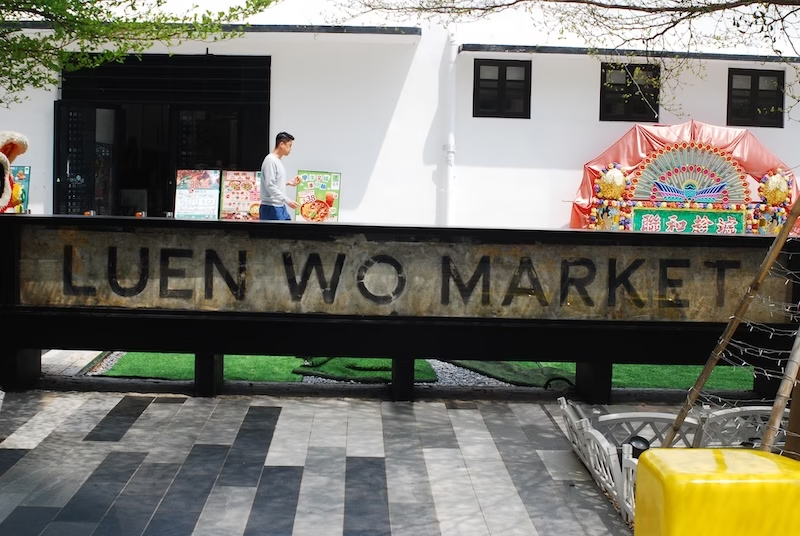
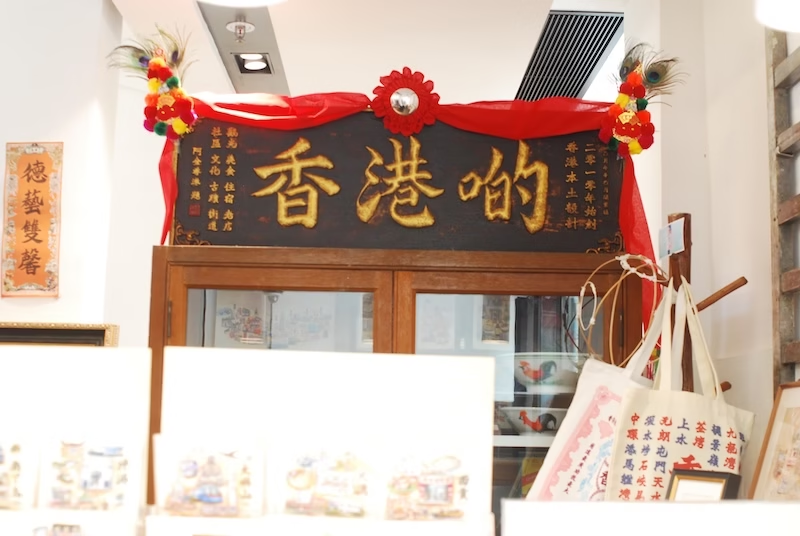
Photo: The original headplate for the market is preserved and now featured in the community area.
In those times, what is considered a “hui” (marketplace) is more than a venue where people gather to trade goods. In Fanling, the vision for Luen Wo Hui is a kind of space that combines residential and commercial uses, with utility infrastructures and means of transportation. In essence, it was meant to be the hub of life for a community. In many of such “hui” in the New Territories, there were religious structures and cultural venues.
What is special about Luen Wo Hui is that the most significant religious structure that remains today is the St. Joseph’s Church, built in 1953 with land donated by a businessman. Most of the New Territories “hui” feature temples and ancestral halls in their layout. Moreover, Luen Wo Hui was also the first planned development post WWII in Hong Kong. It was considered a well-thought-out plan. At its heyday, the Luen Wo Market was home to 60 stalls selling all kinds of daily necessities for the dining table.
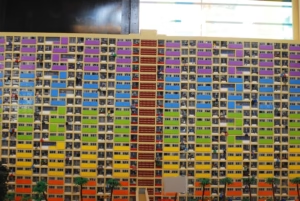
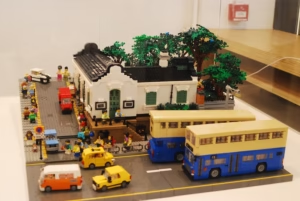
Photos: The Luen Wo Market exhibits other Hong Kong heritage models
There is a large vacant area in front of the Luen Wo Market, and that used to be the bazaar for the special “hui” meetings that were held on the “1-4-7 schedule.” This schedule was the market dates on the lunar calendar, when farmers and traders gathered in the open area. The Luen Wo Hui market dates were set to be the same as that of Shek Wu Hui, a deliberate measure to compete with the merchants of Sheung Shui. Both the “1-4-7” schedule and the Dawn Market were long in the running, until the 1980s.
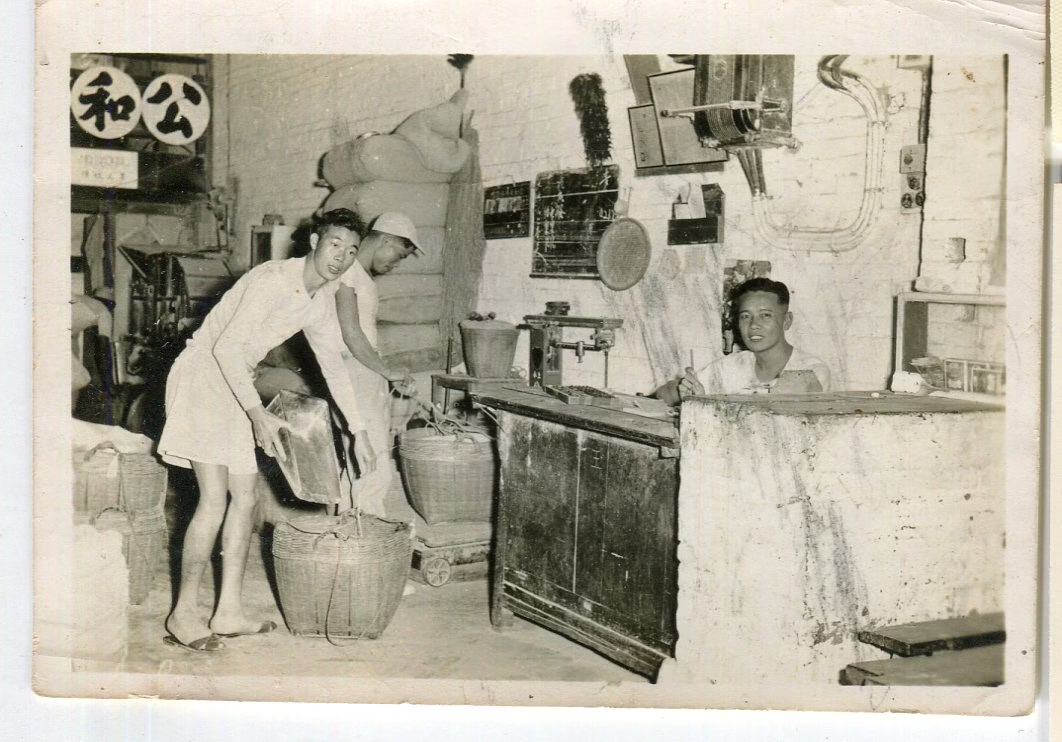
My own family has lived through those beginning times of Fanling, when it was a bourgeoning business community. After my grandfather’s rice business was burned down in the Shek Wu Hui Fires of the 1950s, he moved his business to Luen Wo Hui. It was in Luen Wo Hui that his business became a success.
Architectural Features of the Luen Wo Market
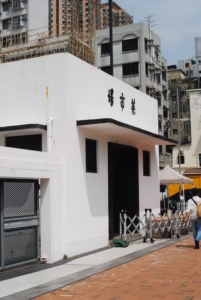
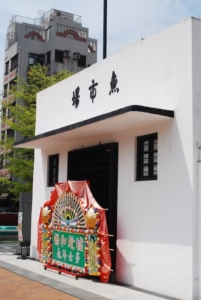
The Luen Wo Market was the work of architect Mok Yeuk Chan. He draws upon the early Modernist style for the Luen Wo Market. There is art deco feature above the main entrance. The brick and concrete structure is one story, in a symmetrical E shape.
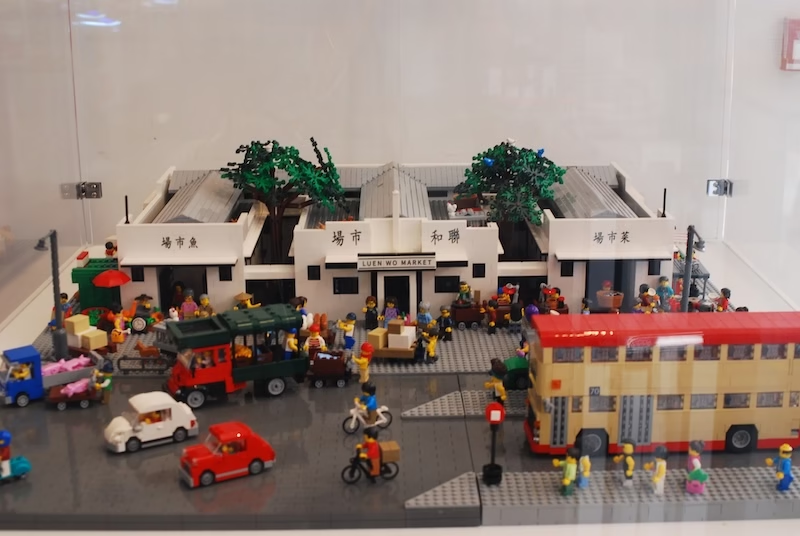
It is said that the “clearstory and the courtyard facilitate natural cross ventilation and natural lighting for better hygiene.”
The Luen Wo Market Revitalized
Since the Luen Wo Hui Market and Cooked Food Centre opened in the late 1990s a few streets away, the former Luen Wo Market retired from its historic role in 2002 as the key marketplace for the people of Fanling.
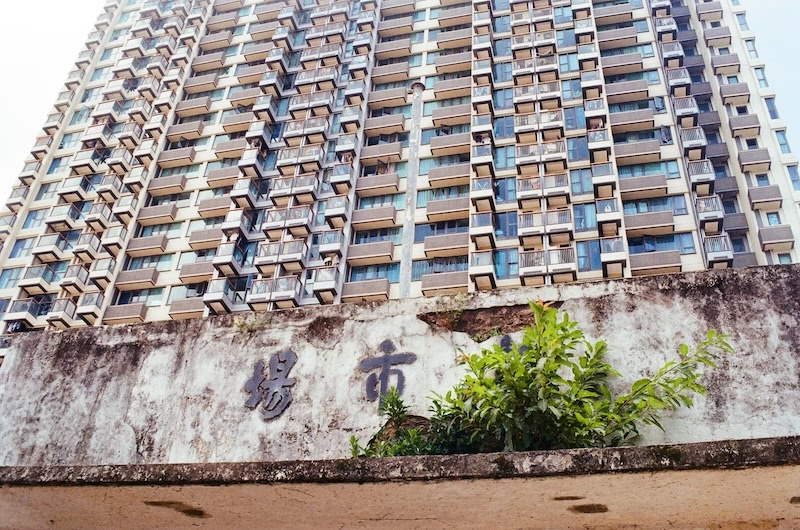
From then on, the market was lying in waste until there were solid plans for revitalization.
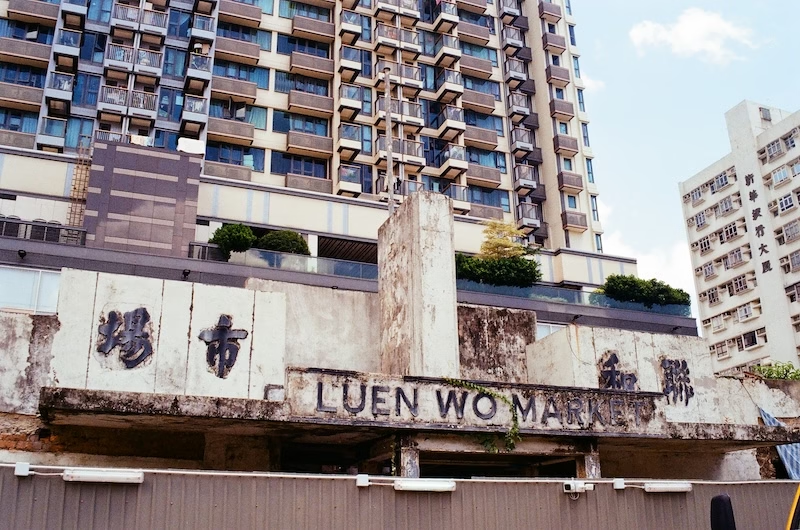
Photos: Before Luen Wo Market was revitalized, it was lying in waste. Compare to the photo post revitalization, below.
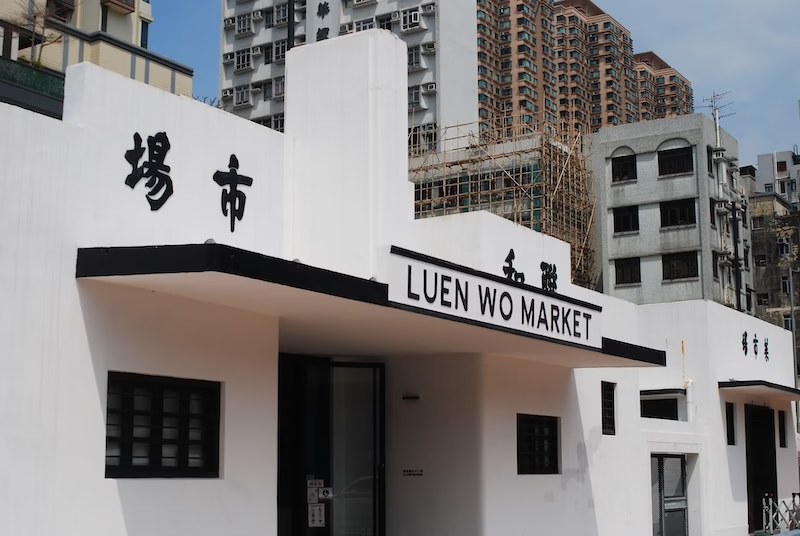
During revitalization, there was significant effort to touch up its appearance and merchants moved in to run gift shops and restaurants featuring Hong Kong themes on site.
It reopened its doors in a renewed commitment to Fanling as its key heritage site in 2024.
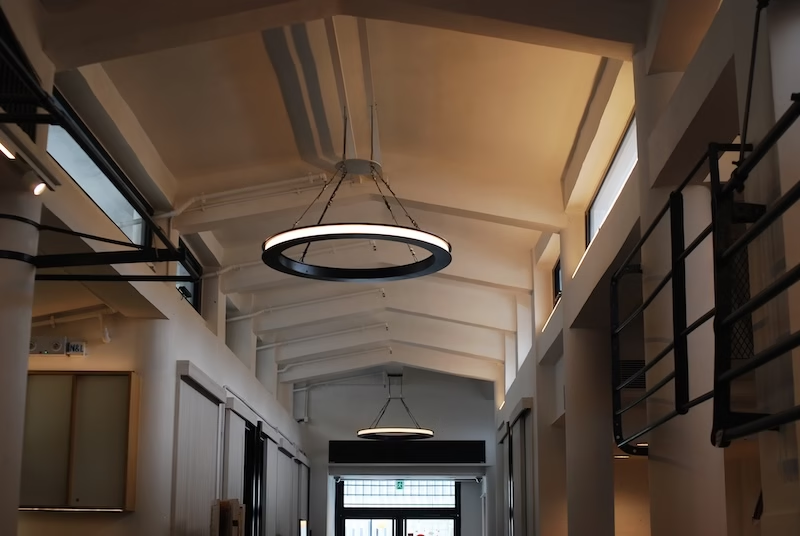
Photo: The original roof of the Luen Wo Market is preserved.
Major community events are still held at the former bazaar now, in line with the memory of the open-air market.
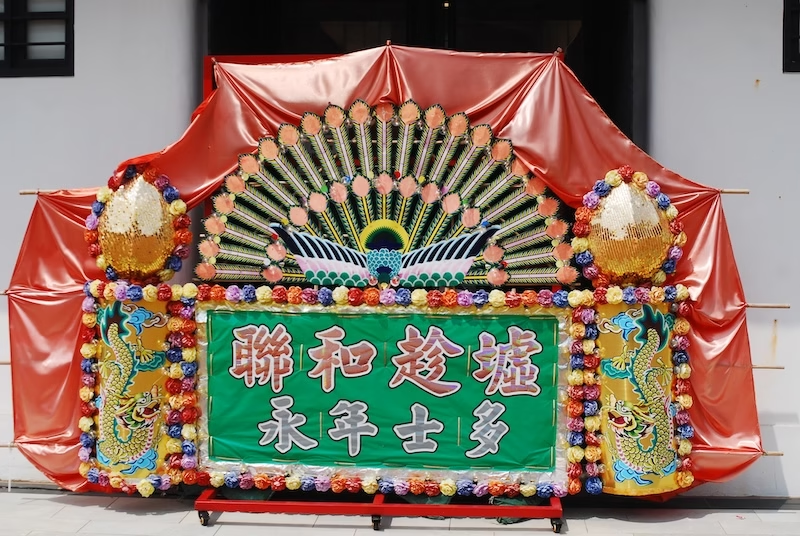
The Luen Wo Market is a Grade 3 Historic Building.
Sources
The official website of Luen Wo Market.
The Antiquities Advisory Board, Heritage Impact Assessment in Respect of the Revitalisation of Luen Wo Market.
he Antiquities Advisory Board, Historic Building Appraisal No. 793, Luen Wo Market.
The Antiquities Advisory Board, Historic Building Appraisal No. 758, St Joseph’s Church.