
The Fabulous Philippines – Corregidor’s Middleside Barracks and Battery Way
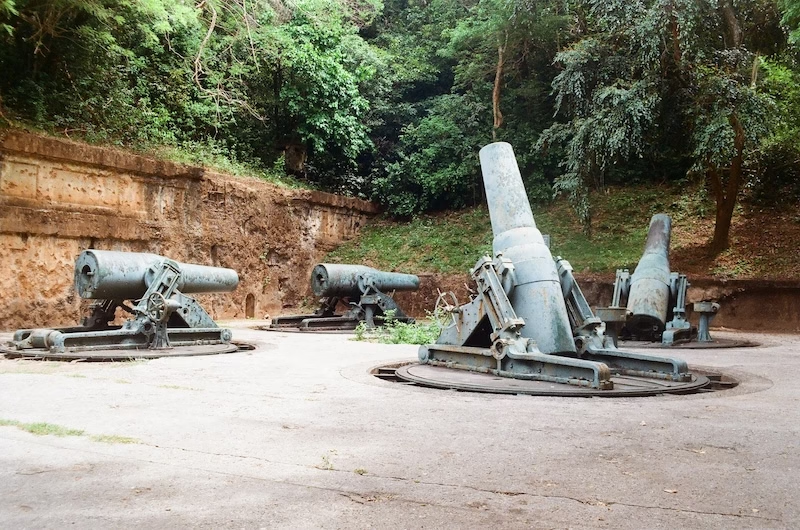
We were the only tour in this slightly overcast afternoon. Armando began the stories of Corregidor as our tour bus took us to the first spot, the Battery Way.
The Middleside Barracks
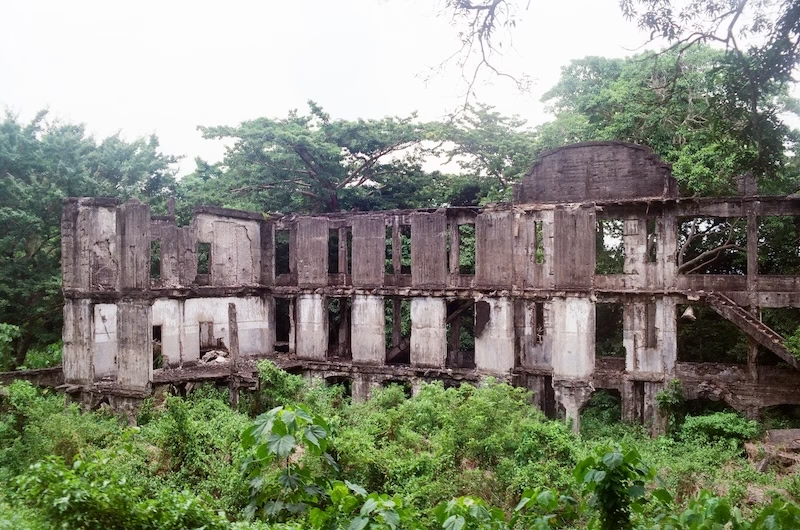
We passed by the Middleside Barracks, it being located in the middle section of Corregidor’s hilly inland terrain. All of the barracks in Corregidor are in ruins now, but an interesting fact is that Japanese materials (what) were used for the construction of the barracks in Corregidor.
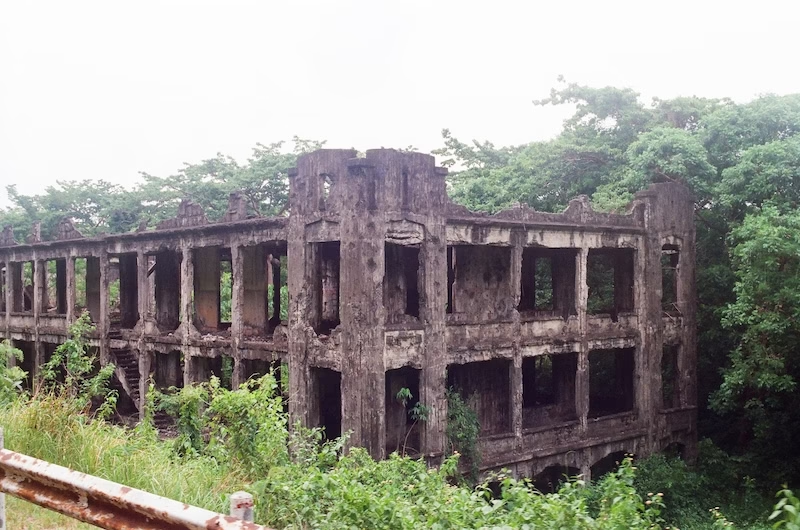
The Middleside Barracks come with two distinct sections, and it was home for the the 60th Coast Artillery of the United States Army and 91st of Coast Artiliary Philippine Scouts. The Philippine Scouts were the Filipino or Filipino-American troops that fought alongside in the frontlines. Needless to say, the troops were friends, but their living quarters were separated.
Due to Japanese bombing, the Middleside Barracks was destroyed in December 1941.
During the critical period of Japan’s air force campaign on the island (from January 1942 to the final surrender by the American forces on May 6, 1942), the Middleside Barracks were used as the kitchen and mess hall during the final stretch of battle, in which Battery Way was engaged.
Battery Way
There are 23 gun batteries in Corregidor. In this tour, we visited 4 batteries, each having its own functional and historical significance. Battery Way, which was named after Lieutenant Henry N. Way of the 4th U.S. Artillery, was our introductory course in the arsenal of the island.
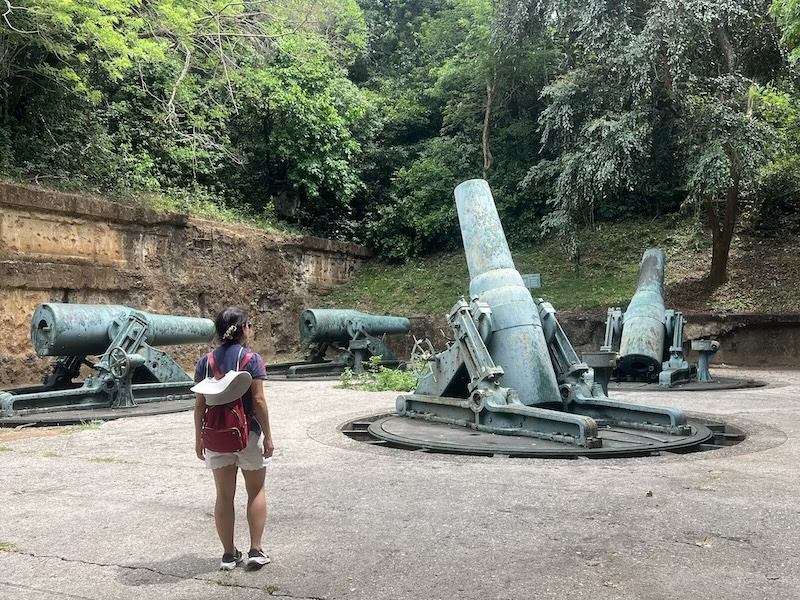
As a war history buff, I have seen a number of war machineries in Hong Kong and abroad. The guns in Corregidor were the largest I have ever seen, in the ranks of being wildly enormous. Starting from the first four guns at Battery Way, the scale and capabilities of the following batteries seemed to step up as we went on the tour. I certainly struggled with the technical capabilities of these guns as they were told to me, as such I could only marvel at their bewildering sizes.
Technical Capabilities
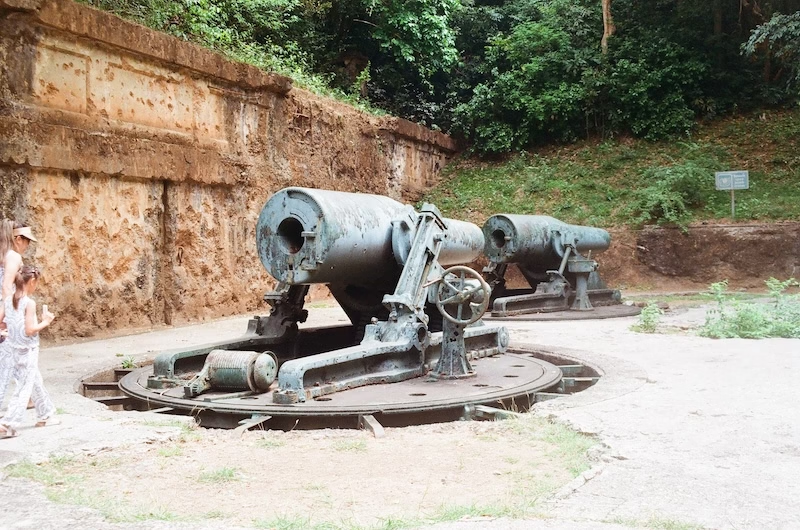
There are four 12-inch mortars at Battery Way. Each can fire one round per minute, in all directions. As each gun weighs 13 tons, it took 14 men to handle one gun, 8 of whom handled loading. These guns fired 1,000-pound shell up to a maximum range of 8.3 miles.
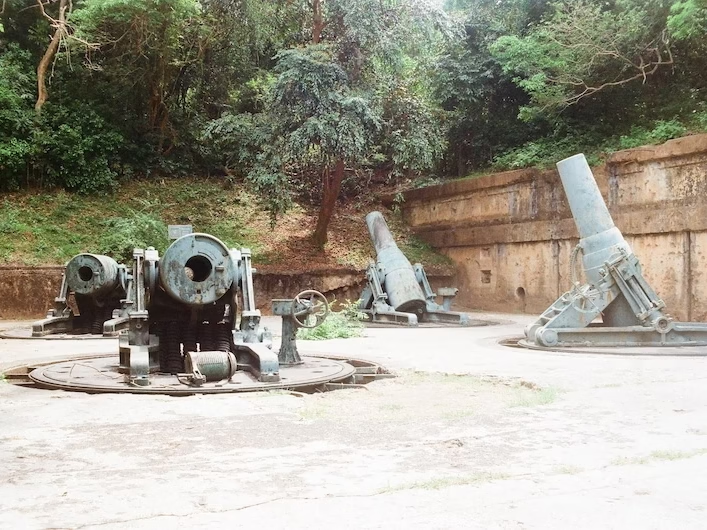
The four guns at Battery Way was designed to penetrate warships. Its range would also enable the fire to reach the highlands of Bataan Province. However, because its firing impact could affect the hospital in Corregidor, it was unmanned for a very long period of time.
Battery Way took 10 years to build and it has existed since 1914, before the WWI years, as part of the Taft Board’s fortification plan in the Philippines. It being constructed before WWI, Battery Way was considered obsolete by the time of the Pacific War.
But it engaed in real battles during the final week of the Japanese attack on the island, all the way until the surrender on May 6, 1942. As the world witnessed aerial warfare during WWI, the artillery in Corregidor had to be somewhat upgraded to counter airborne attacks. To this end, Battery Way was camouflaged after WWI.
The War Story at Battery Way
At the time when the Corregidor artilleries took over the battle against the impending Japanese assault on the island, Battery Way had not been manned since 1935. One can only imagine the work it took to rework the machinery and to train the men to do so. Battery E, the 60th Coast Artillery Corps, would engage the Japanese in the eleventh hour resistance.
Major William Massello Jr. was the captain overseeing the final shelling against the Japanese that attempted to land the north dock at Corregidor in the earning morning hours of May 6. He ripped off the phone so that he could not take the order of surrender.
Despite being severely wounded, he directed, resolutely, his men to engage in continuous shelling against the Japanese airforce. At one point, only one gun at Battery Way (No. 2) was working. He continued to instruct his men, while being placed on a stretcher, for 11 hours until that moment when even the final gun gave way at 11am. 70% of Battery E was wounded by then. Battery Way surrendered last on May 6, 1942.
General Wainwright ordered the firing pits and bridge flops dismantled. All guns were decommissioned so that the Japanese could not use them anymore.
Major William Massello Jr. then endured three years of POW camps in the Philippines and Japan. He did live till 1997, and was celebrated with two Presidential Citations with the 60th Coast Artillery, as the most decorated soldier of the Philippines Campaign.
The Ammunition Bunker at Battery Way
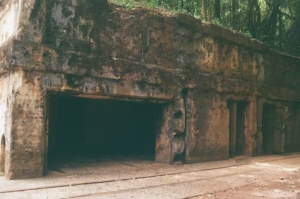
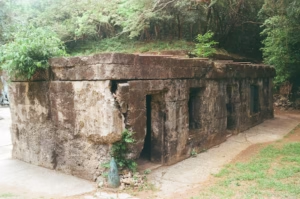
Needless to say, a visit at the ammunition bunker at the Battery Way, which is also in ruins, will reveal some really eerie vibes. The bunker consisted of the cartridge and generator rooms. The structure was supposedly bomb-proofed, 3-feet think walls, with 8-feet roof built of reinforced concrete.
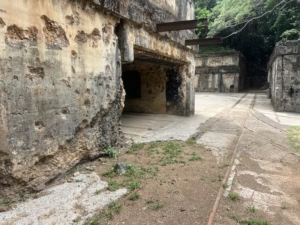
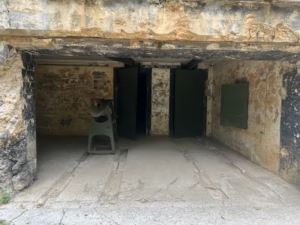
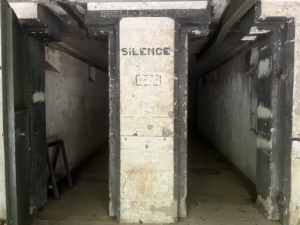
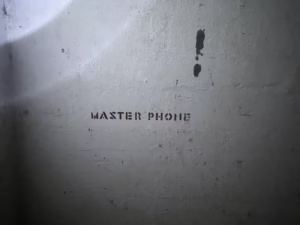
The holes and damages seen were not bullet holes. A bomb was dropped here, damaging the floor, with fragments and sharpnels flying all over that created these eternal traces of war on the building.
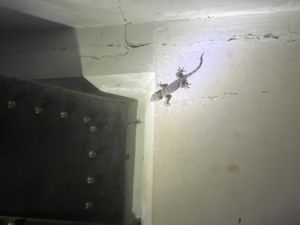
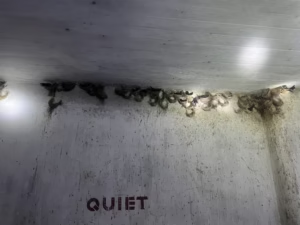
Photos: There are enormous geckos in the area. The flying creatures at the Battery Way bunker are birds, not bats—and the birds nest inside the ruins now.
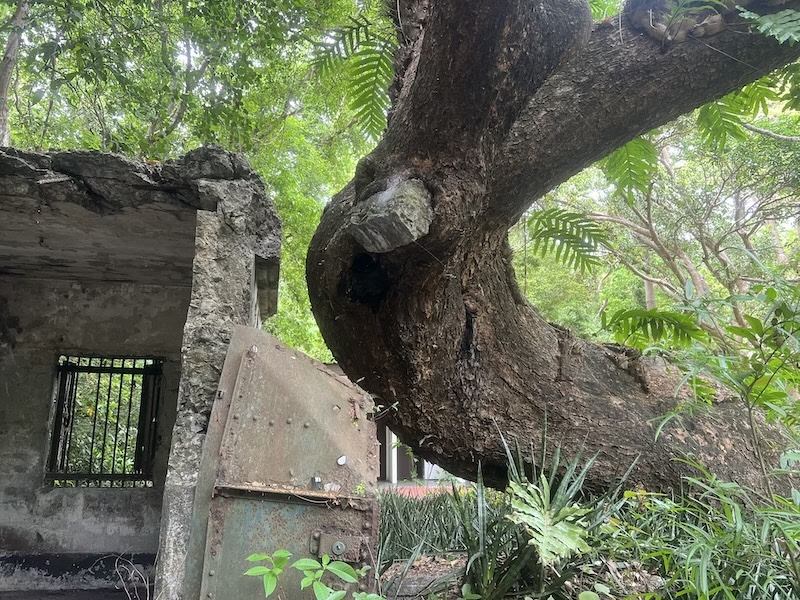
Photo: This tree trunk was bent by a debris caused by the impact of a bomb.
Sources
Tour of the Corregidor by Villa Carmen Resort
Descriptions on site at Battery Way, Corregidor.
Corregidor Historic Society.
Corregidor Historic Society, Corregidor, Middleside Barracks.
Corregidor Historic Society, Battery “E” History.
The Wikipedia on War Plan Orange.
The Wikipedia on Battery Way.
Mtncorg, Artillery of Corregidor – Big Guns on an Island, Meandering Through the Prologue.