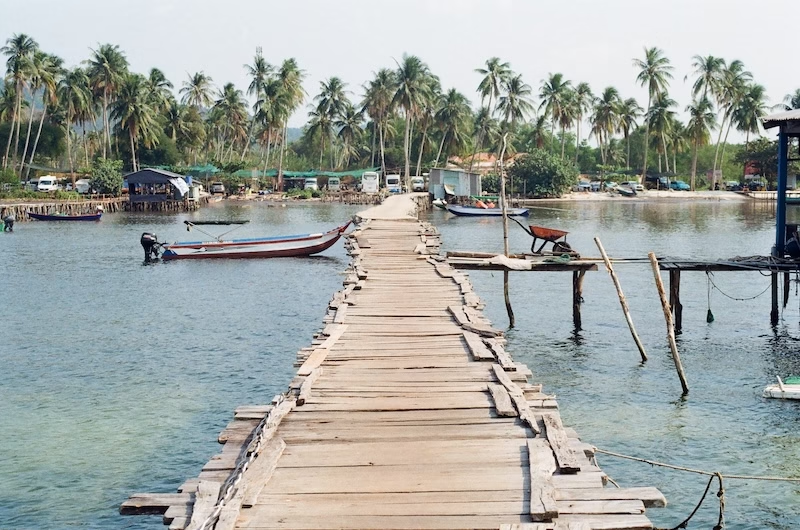
Prosperous Phu Quoc — I am American, and You?
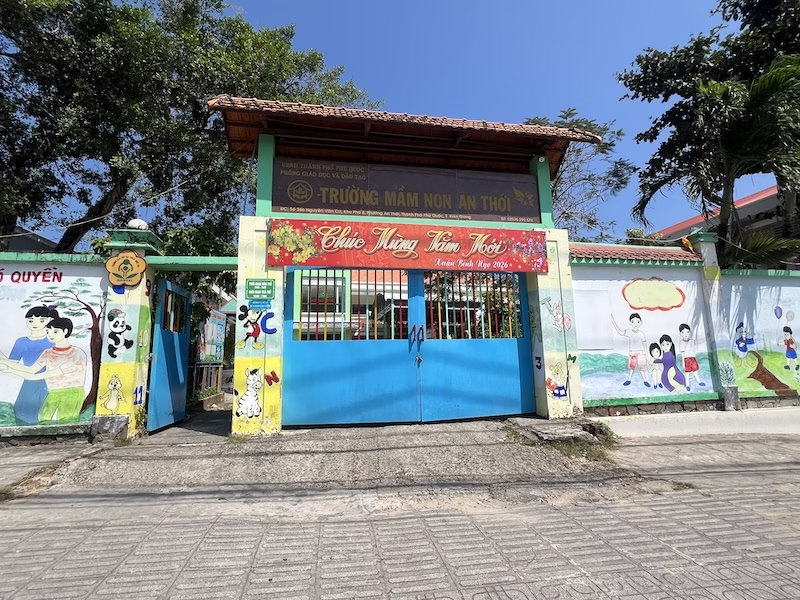
At the Skyline Hotel, there are a few staff that take turns doing different shifts in the day. The ladies bring their child with them to work sometimes. And I try to talk to the children, in whatever simple Vietnamese that I am able to speak.
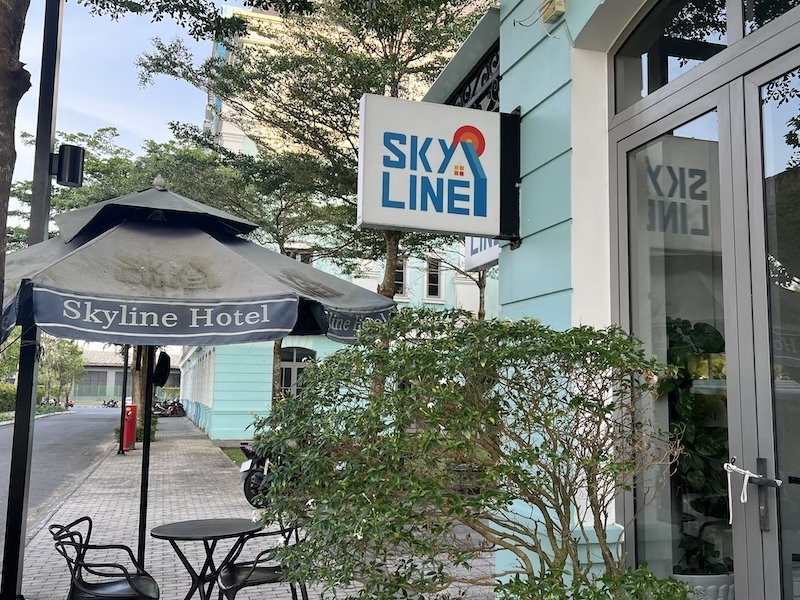
Me: Toi la Helen (pointing at myself, then pointing at the child)
Mother: Gong Chai!
So this lovely child’s name is Gong Chai. He was doing his homework. A leftie, I see, and I was a leftie at his age too.
I went in and out of the hotel often, and the second time I saw him, his mother brought him lunch. It was rice in a tin box, with small pieces of meat. Judging from the color, the meat was cooked in soy. It was certainly not the heavenly morsels that I get at the Vietnamese restaurants, but it was good, simple, humble and motherly.
At that moment, I thought of my grandma and her food. Perhaps in an effort to tame the emotions that were welling within me, I pulled out another Vietnamese word that I gathered over the years. In the most dramatic, theatrical manner, I delivered the one word that suited the occasion, “ngon!!” (Delicious!)
The child looked at me like “huh” but her mother laughed. She was probably thinking, “why is she trying so hard?”
In the evening, around 8 or 9, I took my New Yorker and sat at the table outside to read a bit before bed. The lady was off duty then, about to get home. She was on the motorbike, and the child was seated at the back. I saw her carrying two big bags of soda cans with her.
Her shift was probably as long as half a day. At this hotel, the child encounters all sorts of foreigners, and this can be a part of his early education. He’d be quite accustomed to the idea that people look different, speak different languages, dress quite nicely, and some would be kind to him.
They didn’t see me, so I didn’t get to say goodbye. I watched them leave quietly, a mother with her precious child at the back on the motorbike, with two bags of soda cans hanging on the side, almost as tall as the child. They slowly disappeared into the lull of the night.
Seeing this, I said to myself, “that’s telling.”
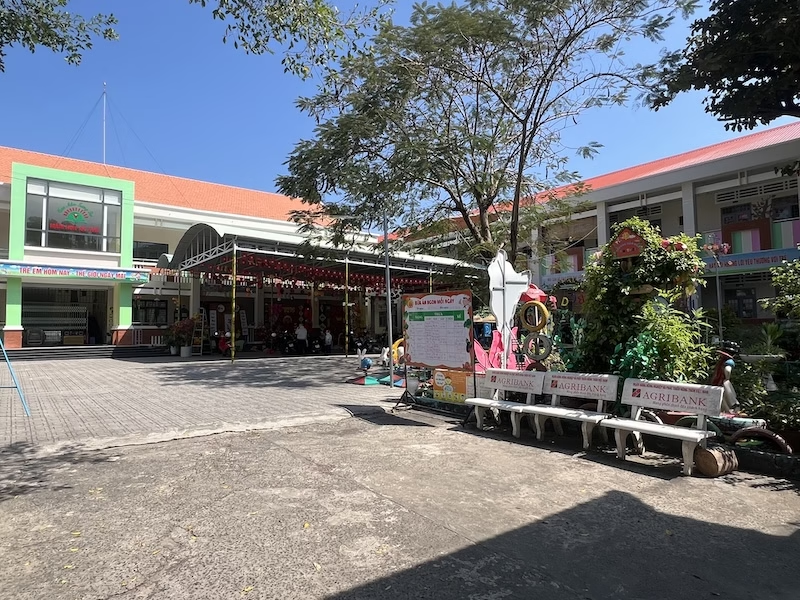
I wondered about hope. What this last sight of the lady and her son suggests to me is that she would do what she could to earn just a few more bucks, for the sake of her child’s future. She has a proper job at the hotel already, but in her capacity as a hotel staff she comes across the opportunity for a minuscule more. And why not? The dignity that she has exhibited is in the fact that she allows her child to grow up having realistic views of the world, being exposed to the enormous gap between those who have plenty and those who don’t. Maybe he will be inspired to be more than his humble mother. Whether he becomes successful or not, he will appreciate the young days when he saw his mother hard at work, and taking the extra opportunity to provide for him. For he is her hope.
Surely, in the times that I have visited Vietnam, I always could see that the country has hope. At least in the urban areas, what I could observe is that the Vietnamese people are way beyond mere survival in their standard of living. Phu Quoc, being primarily a tourist location, bustles with the dynamics that sets the tone between those foreigners who spend money for fun and those locals that earn the same money for a chance to do more with life.
In this dynamics, the foreigners’ expectation of “what I am supposed to get with this much money” are the terms that govern the relationship. Having joined a couple of island tours in Phu Quoc, I must say that the Vietnamese people are very adept at handling challenging situations. I would not say that they are professional, for there are many scenes of chaos, and in so many ways things aren’t communicated adequately because of the language issue. But my experience has been that “no one is left behind,” even for me, this one lone fish in an ocean’s worth of tourists in the tours. When they see that someone awaits to be taken care of, they simply find the solution. They do not do so out of a sense of professionalism. They do so out of a sense of responsibility that likely comes from old-fashioned family values and socialist school education.
Hope is expressed in the way that people handle life and business, how they hustle for more and always strive to meet expectations. I seem to be able to see a common spirit behind the way that they manage their operations. They work in the belief that “with hard work I will get better in life.” They solicit opportunities with the mindset that “I am willing to do more for you tomorrow.” And that is how their hope is shown, in embracing the value of hard work. They do not question the expectation that has been shown to them. When the tourist demands something, they take it as a given that it is the standard to meet. Then they do what they have to do to satisfy the same. No attitude, no complaints, no arguments.
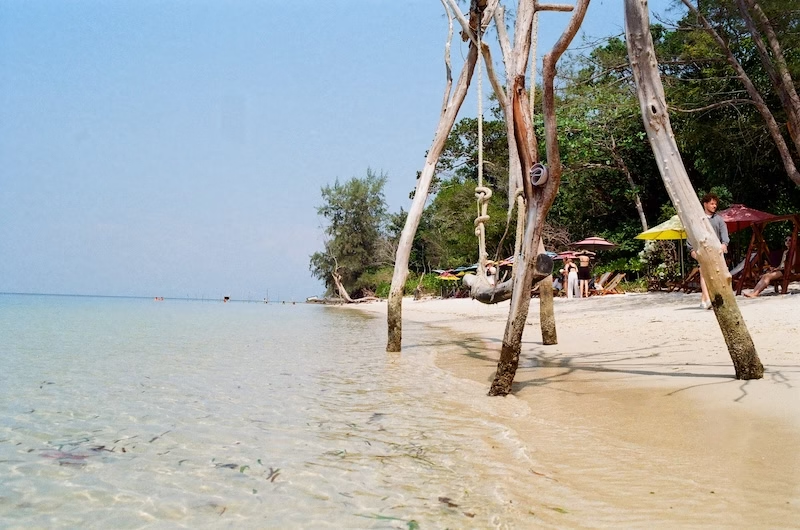
As you can see, I am roundly impressed by what I saw in Phu Quoc, beyond the beauty of its natural endowments. The airport certainly lived up to its notoriety for being wildly inefficient, but if you would tolerate just this one bit of extreme inconvenience, Phu Quoc is a wonderful alternative to other beach towns in Southeast Asia.