
Prosperous Phu Quoc — Local Phu Quoc in An Thoi
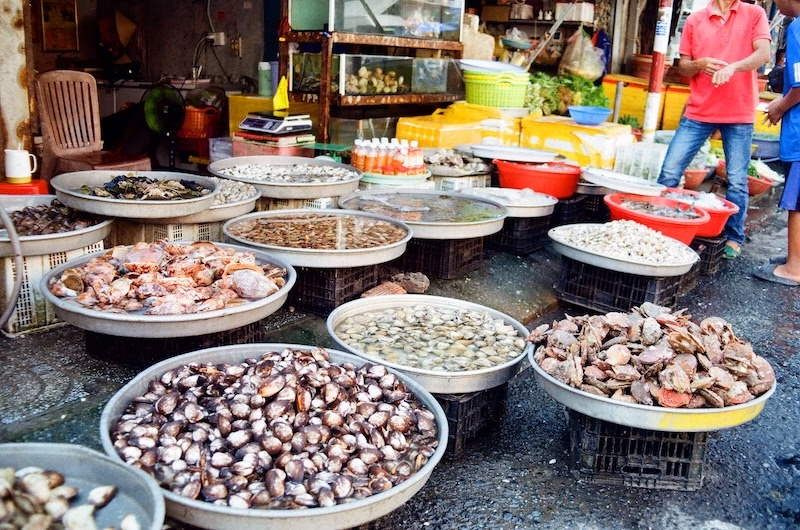
Phu Quoc is a beautiful island with countless beaches. Its tourism revolves around the beach towns that it builds to attract foreign tourists. Of course, for the sake of a holiday I could just stay in the “nice” parts of Phu Quoc and be wilfully ignorant about the true conditions of the island. But I always appreciate the opportunity to see “what’s real.” In order to do that, however, I did have to make some effort.
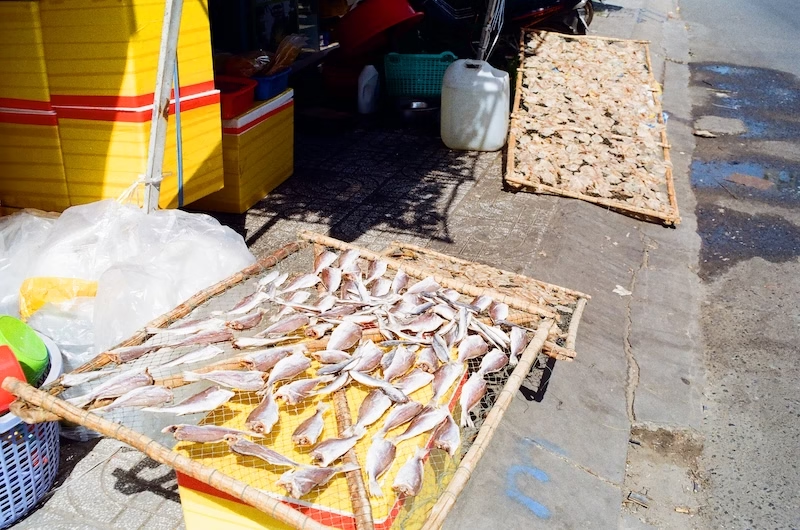
When I went on the island-hopping tour, the coach took us to the pier at An Thoi and on our way I saw a vibrant scene of local street markets, where a lot of people went by their daily lives. I decided that I would visit that part of An Thoi when I had the opportunity.
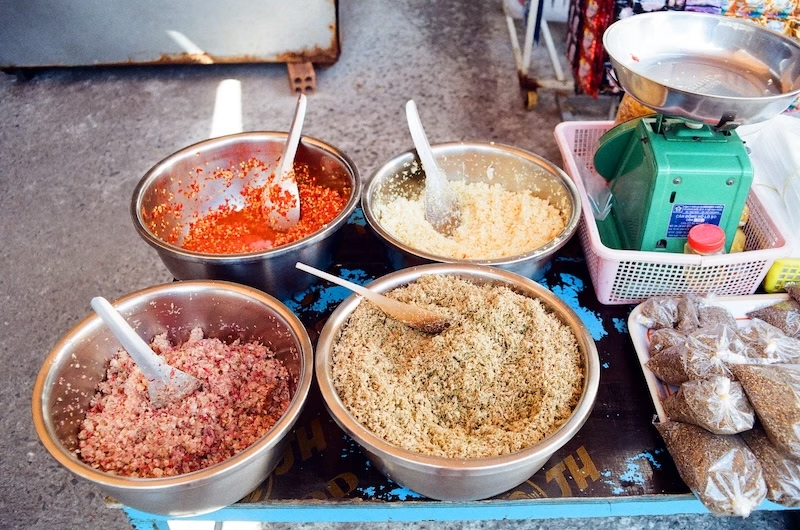
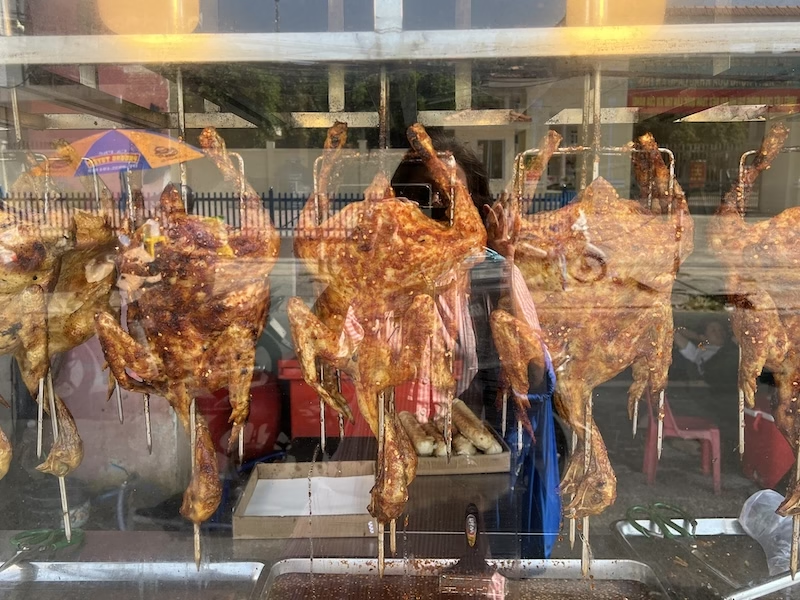
It was certainly a decision that tested my resolve, but I insisted on walking from Stella’s for 20 minutes to get to the part of local An Thoi before one reaches the pier. In the early afternoon the temperature was climbing to its peak for the day. On my way, I walked on a major motorway, where there was no proper pavement. The whole 20-minute walk did not come with shades from trees or structures. But I did see some interesting venues, such as live poultry butchers, schools, goldsmith and such.
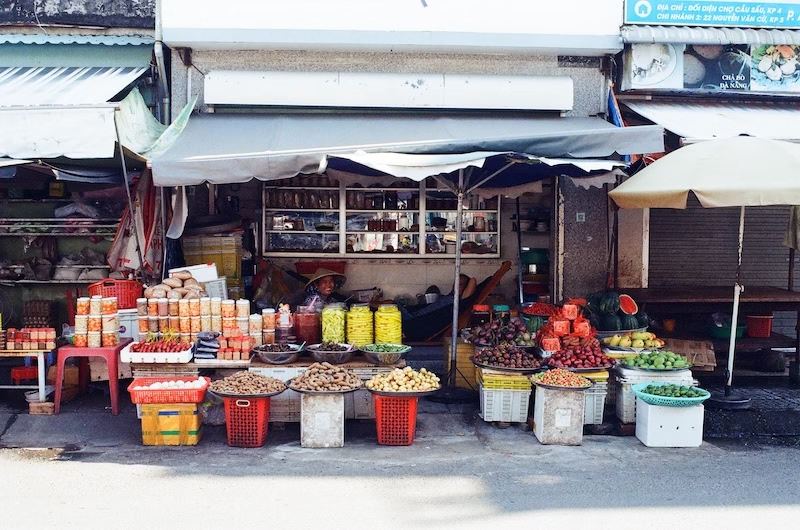
I was a little surprised when I arrived at the part of An Thoi that intrigued me. People appeared to be going by their usual business, but not in any sense bustling, unlike the scene I saw previously. It felt a little stagnated when I strolled on the main street. I was hoping for good street food, but the vendors were barely beginning to set up their stands for the day.
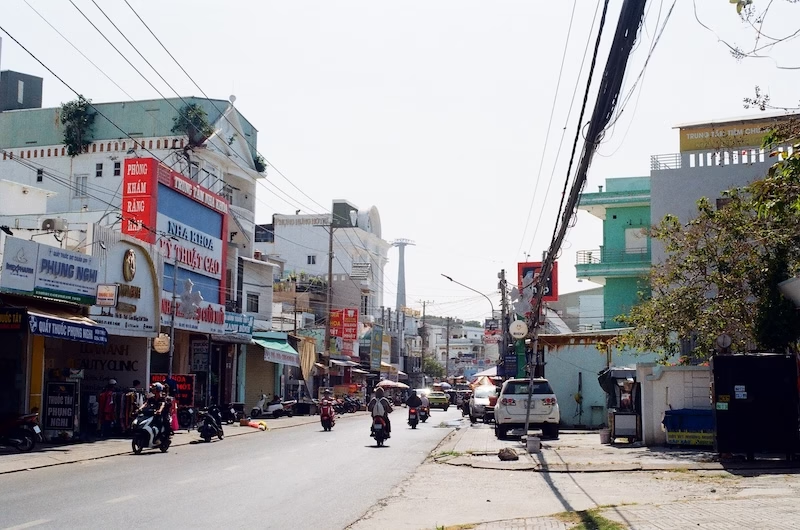
I sweated through the rising stillness of the heat. The main thoroughfare felt quite a bit more sluggish than I had hoped, perhaps because it was simply so hot.
Needless to say, that the vibes of the Khem Beach Resort Town and the local sections of An Thoi were a difference between heaven and earth. I packed some fruits and the lady smiled ear to ear at me.
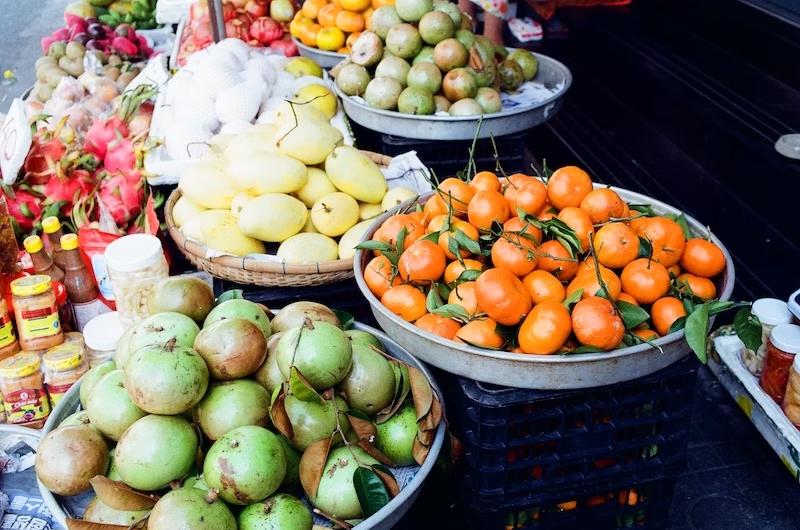
Make no mistake, I am no Vietnamese and my presence there was awkward. People were not accustomed to seeing a non-Vietnamese in that area. They likely did not understand what about that market was interesting to a tourist.
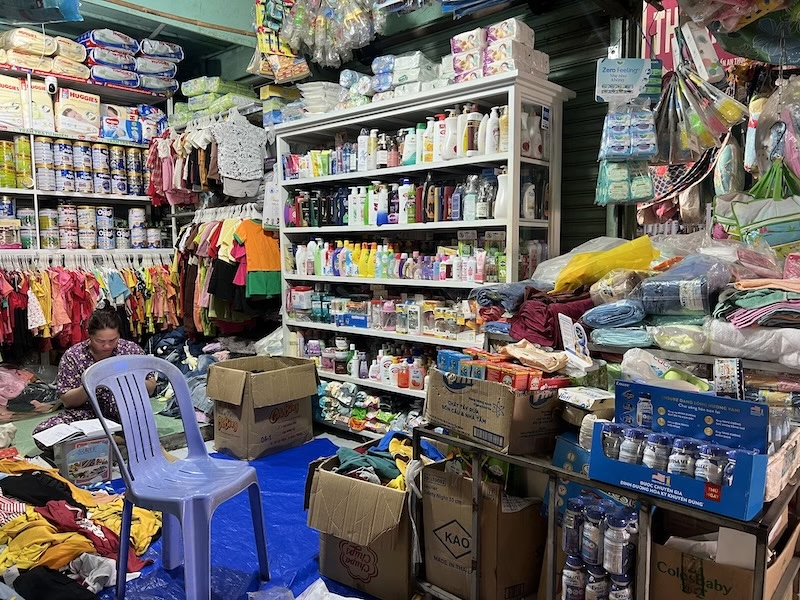
I went into a grocer and saw a whole shelf packed with an innumerable variety of Vietnamese ground coffee. The two shopkeepers appeared to have made a decision to ignore me. They could be thinking that the foreigner should have no business there. They could also be thinking that serving me would take too much work for what it was worth, because there would not be an effective way to communicate with me. I sensed the cold shoulder there, but Vietnamese coffee was the only other thing that I wanted to bring home besides the Phu Quoc red pepper.
I took a bag of ground coffee, then I said, “how much” in Vietnamese, at the same time showing my phone to the lady in the calculator mode. At that point, I seemed to sense a disinct moment of icebreaking. The lady pulled a smile. She entered the price, I paid in exact change, transaction done within a minute and she did not have to struggle to say anything to me. But before I left, I uttered “thank you” in Vietnamese and the lady returned with a genuine, broad smile.
Banh Mi Done the Right Way
In a previous entry I talked about the really bad banh mi that I got from Grab takeout. It was the only terrible food I had in all of my visits in Vietnam. The banh mi is my soft spot in Vietnamese food. That was part of the reason why I wanted to visit a very local community — the best banh mi are the ones in the food stands.
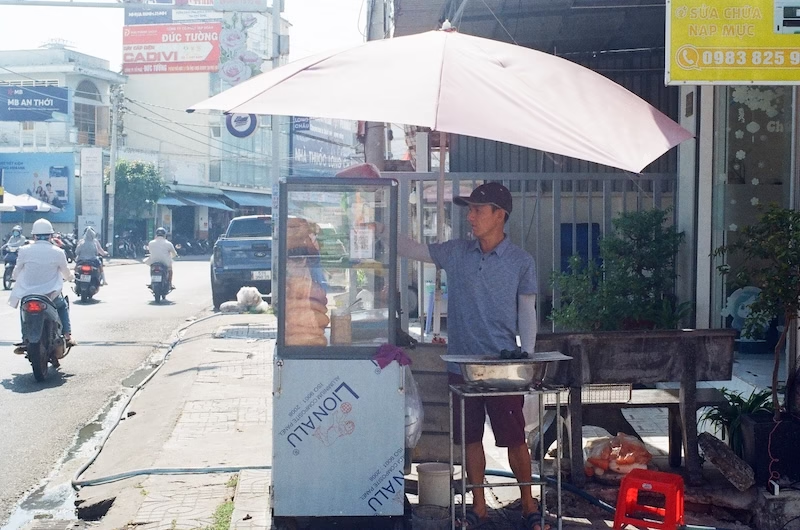
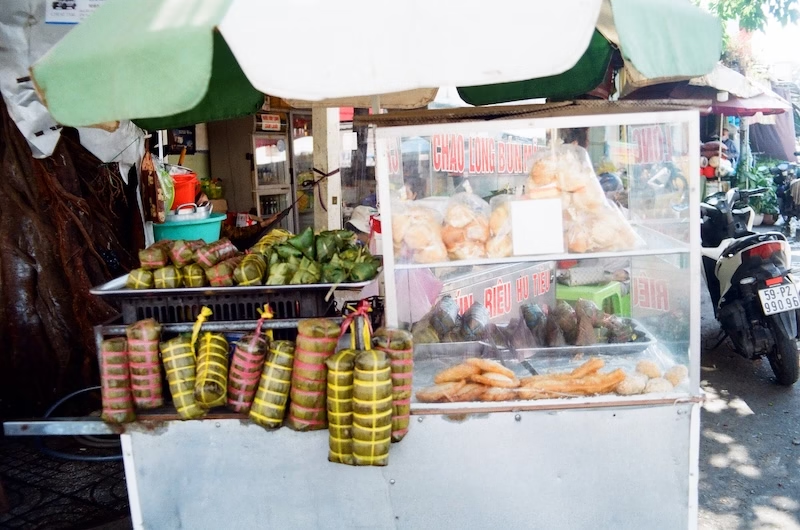
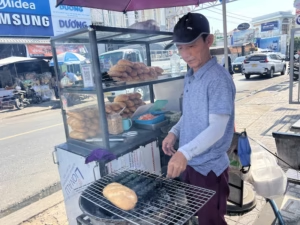
There was just one vendor at work when I toured the local community of An Thoi. He was grilling leaf-wrapped sausages on charcoal fire. His banh mi was simple: he placed those leaf-wrapped sausages in a Vietnamese baguette roll with some pickled vegetables. That‘s it and it was heavenly!
In Vietnam, so much of the local communities is about food. In local street markets there are endless vendors selling all kinds of food. Where the vendor is not selling food, then it has to be some kind of household and daily goods. I felt with my own senses the kind of local action that took place outside the luxurious bubbles of resort towns. Not too bad really, the local Phu Quoc at An Thoi is the Vietnam that I so fondly remember.
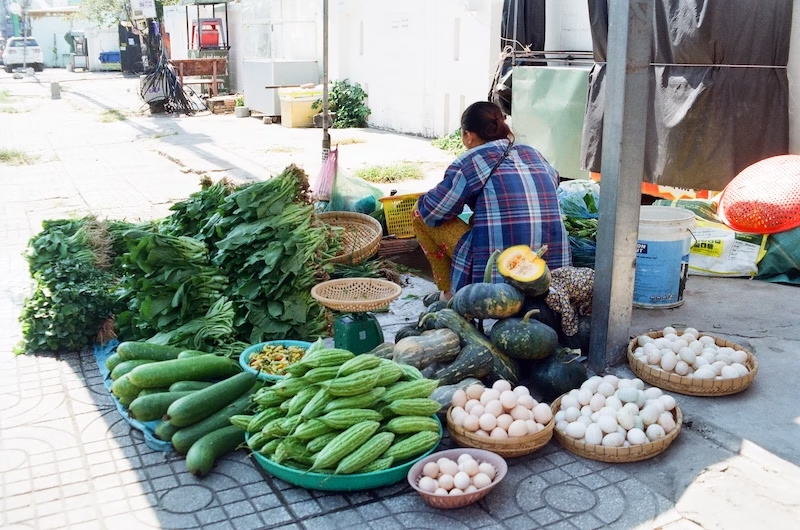
The Far and Few in Between
I said goodbye to An Thoi and decided to visit a very cute coffee shop in Sunset Town. Sunset Town is the place to be for tourists looking for luxuries and gimmicky instagrammable photos. As its name suggests, it is also a popular location for viewing sunset.
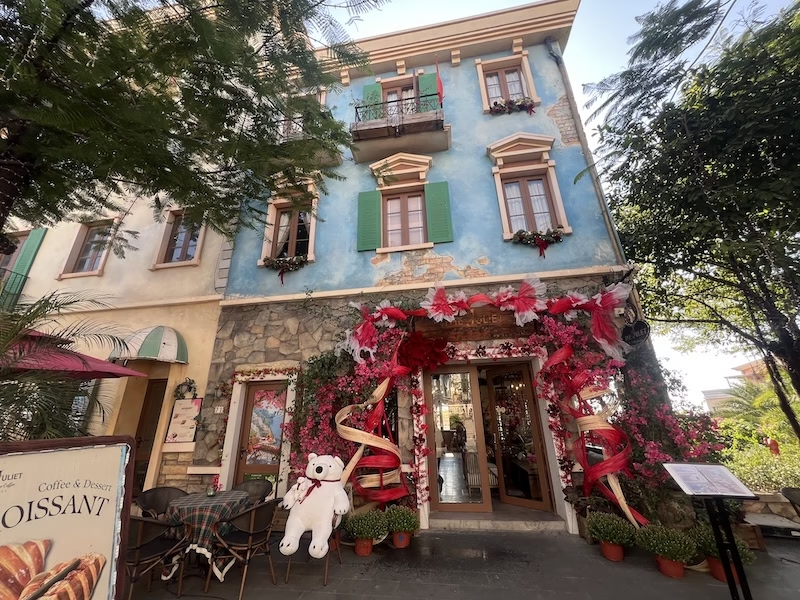
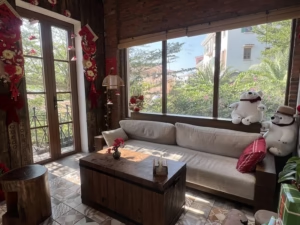
The Juliet earns good reviews on Google Review. I thought I should have a nice time too, so I went to this coffee shop, which features a sweet and cosy teddy bear theme. The wooden décor exhibits a classy atmosphere as well.
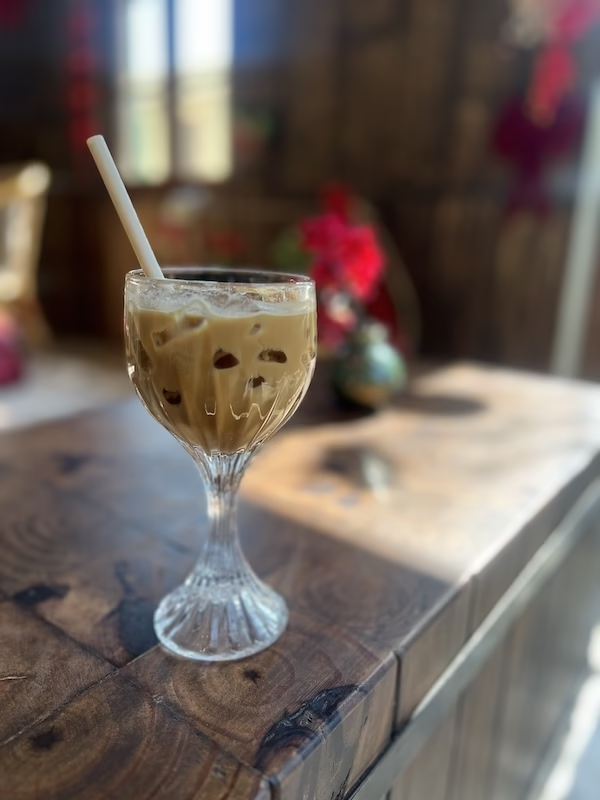
Surely, I ordered my usual coffee of choice here, Vietnamese iced coffee with milk, for a much higher price than any local coffee stand or cafes, but you pay more for the sake of experience. There were a couple non Asian looking souls there. I took out my New Yorker and read maybe half a page. I did not plan on viewing sunset there at the shore. It was time to head back to the Khem Beach Resort for an early evening dip at the beach.
From the pizza lunch at Stella’s, to the visit at local An Thoi, then back in the luxurious Sunset Town, I spent the day shuttling between the dichotomies of intentional touristy setups and the genuine expressions of local life. There were takeaways in both. They certainly looked and felt worlds apart, but there were no antagonism, contradictions or rivalries between these two narratives of Phu Quoc. Both were equally authentic, even in the touristy resorts, as I could observe.