Exhibition at The Monetary Authority
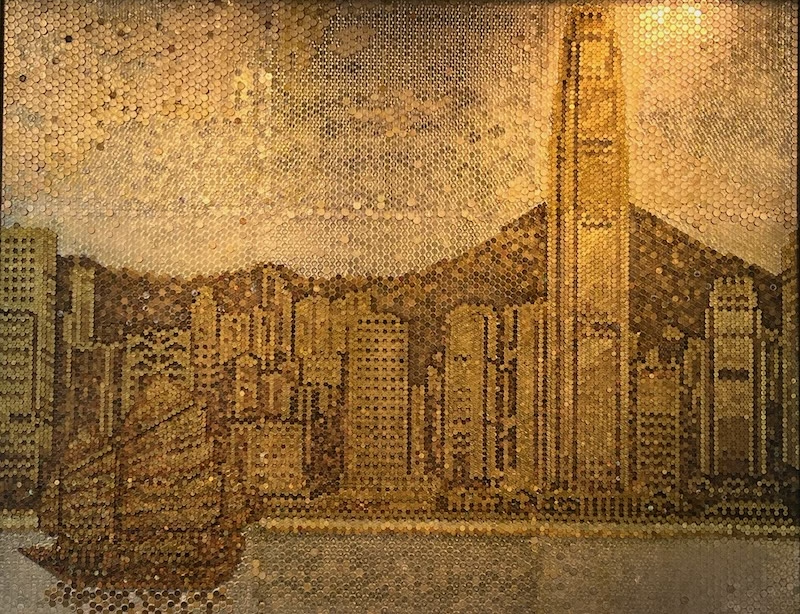
The Hong Kong Monetary Authority Information Centre Exhibition really is a lesser-known thing in Hong Kong. It has been there since 2003 and I had never known about it. I went for a look a couple days ago and enjoyed myself thoroughly.
The Hong Kong Monetary Authority
The Hong Kong Monetary Authority is Hong Kong’s central bank. It was established in 1993 by merging the Office of the Exchange Fund and the Office of the Commissioner of Banking.
Perhaps it goes without saying that the prosperity of Hong Kong depends on the policies and work of the HKMA, because the economy here is so heavily dependent upon finance. The HKMA maintains the currency peg, regulates the banking system and manages the Exchange Fund. In terms of the interest rate, the HKMA does not actively manage it in Hong Kong. Instead, it follows the trend of interest rate as the Federal Reserve determines it.
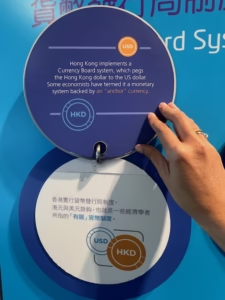
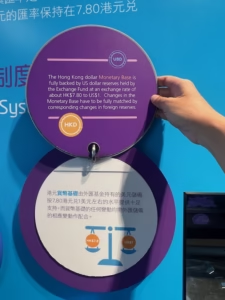
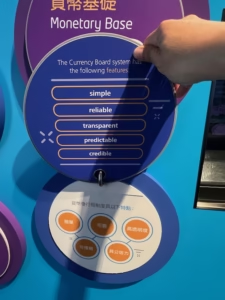
The exhibition at the HKMA Information Centre is thus all about money, from the history of Hong Kong’s currency to the technicalities of monetary policy.
The exhibition is simple, educational and fun. There are the three sections: the policy section, the historical timeline of Hong Kong’s legal tender and the currency section.
The Historical Timeline
I found the historical timeline to be the most effective part of the exhibition (as in, communicating through words in proper paragraphs instead of interactive gadgets). I will retell the history of Hong Kong money briefly here.
In the pre-British days, several kinds of valuables were used in transactions, as the Qing dynasty government set the rules. For small transactions, bronze, iron and copper coins were used. Large transactions were concluded with silver.
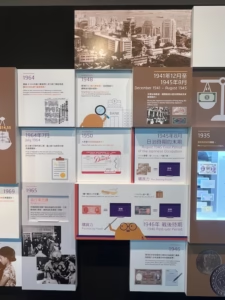
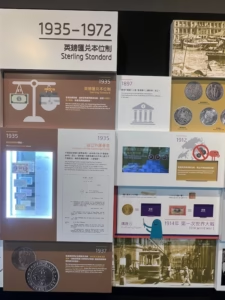
In the early days of British administration, there were periods where foreign coins were used in Hong Kong. In 1845, the Oriental Bank Corporation was the first bank in Hong Kong that issued banknotes, in 5-dollar denominations. In 1863, the Hong Kong Government declared the silver standard. In the following year, Hong Kong makes its first coins. The first mint opened in 1866 but it closed down two years later.
The next significant development came in 1935. Due to a worldwide silver crisis, the Hong Kong Government declared the sterling standard, and Hong Kong’s monetary system is linked to the British sterling. The Exchange Fund, which carries on with the same functions today, began operating in the same year.
In 1937, various kinds of silver dollars were no longer recognized or redeemable as the Hong Kong Government as the Hong Kong dollar became the only legal tender.
The progression of monetary development was disrupted by World War II. During the years of Japanese Occupation, Hong Kong’ legal tender was exchanged with the military notes of Japan, which had no currency backing. The economy relied on military notes as its tender of exchange.
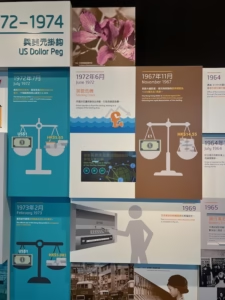
The sterling crisis of 1972 precipitated another significant change in Hong Kong’ monetary policy. The rapid depreciation of the sterling in 1967 culminated in the eventual floating of the British pound. In July 1972, the government linked the Hong Kong dollar with the U.S. Dollar. The exchange rate then was every one U.S. Dollar for HK$5.65, with the intervention band set at 2.25% plus or minus.
The Bretton Woods system collapsed as the world lost confidence in the U.S. economy following the global recession of 1974. In response, Hong Kong floated its currency. This was again reversed in October 1983. Under the Currency Board System, the Hong Kong dollar is pegged to the U.S. Dollar again at the exchange rate of $7.8, a policy that is still in place today.
Historically, the Hong Kong Government keeps an astronomical amount of reserves at the Exchange Fund for the purpose of maintaining the currency peg. There were incidents that the funds there were used to stabilize economic crises, including the stock market crash of 1987 and the bank runs of 1991. The Monetary Authority was established in 1993.
I came away from this visit feeling like I learned something interesting and important in Hong Kong history. There was a conscious effort to make the experience kids-friendly by their interactive and cute, somewhat gimmicky features.
A Bonus for Tourists
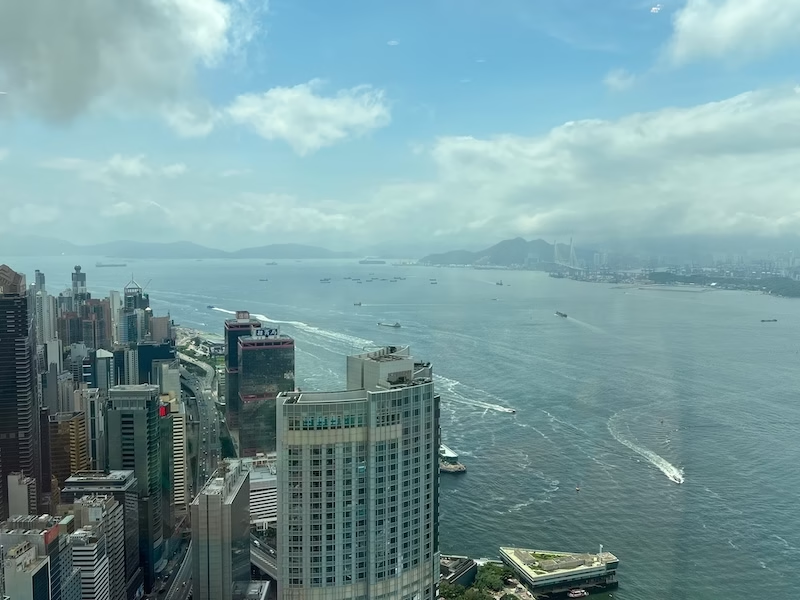
At 55th floor in such a prime location as the IFC 2, the HKMA exhibition room’s full sized glass panels enable a 270-degree view of the most iconic city views of Hong Kong Island. This is certainly a bonus for tourists — not to mention the nice air conditioning in a spacious indoor environment. We visited on the hottest day of 2026 up to that time. This short stop was very much appreciated.
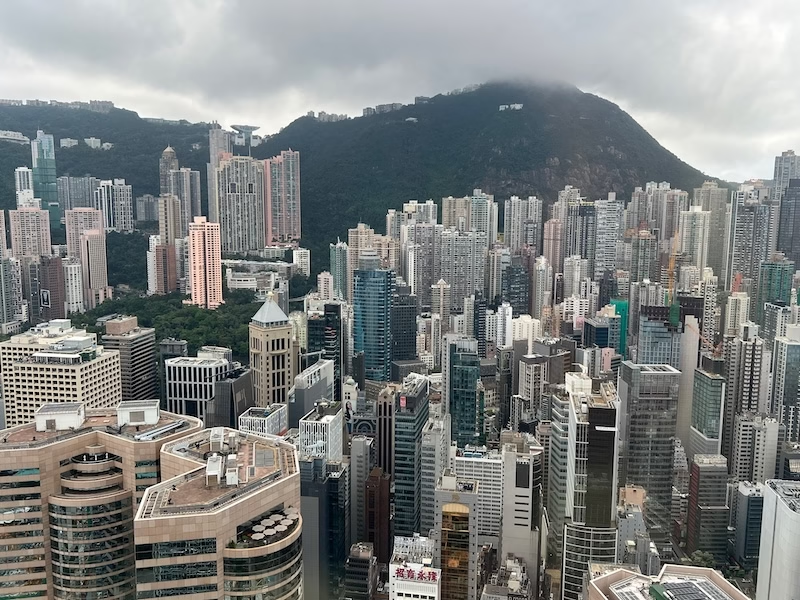
On the first floor of the building, show the receptionist your ID. Both HKID and passports would do. You will be given visitors’ badges. Wear that with you during your visit. Then head up the elevator to the 55th floor.
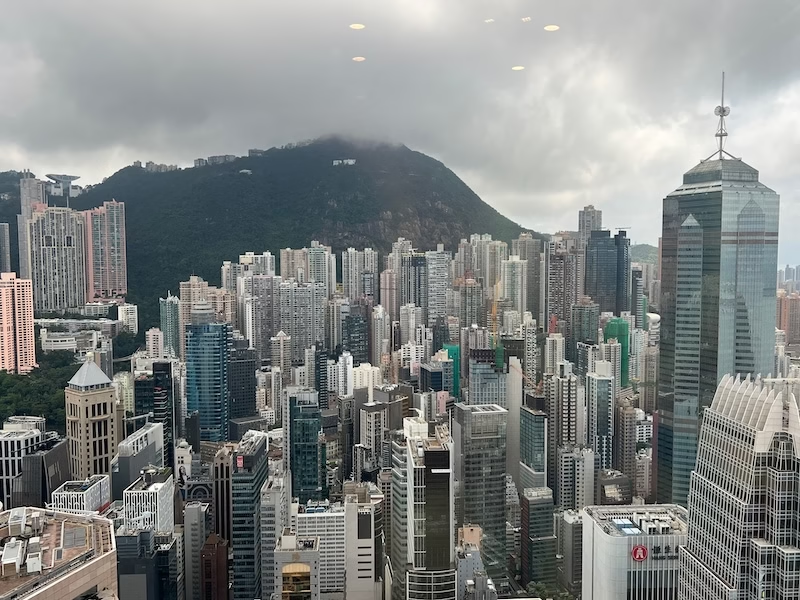
Note that a party of over 10 visitors must first make reservations with the HKMA for entry into the exhibition.
Tour Suggestions
In this part of Hong Kong Island, there are a few sites of interest for tourists. Those who stay on the Kowloon side can take the Star Ferry to arrive at the Central Piers. Then they can get up the ferris wheel (the Observation Wheel). Stop by this exhibition at IFC 2 before heading out to other tour areas in Central. Our itinerary that day was to head up the Peak after, because both the buses and minibuses bound for the Peak are in the IFC area. See a four-hour itinerary suggestion here.
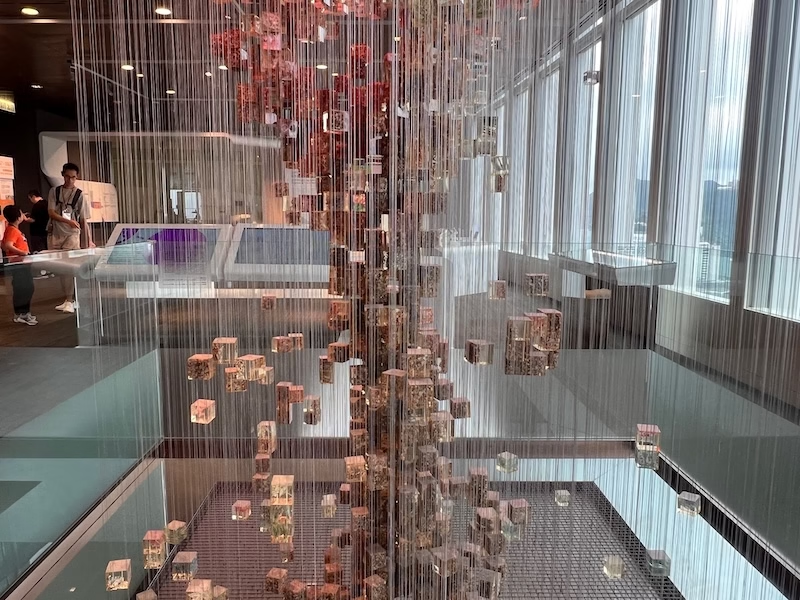
The Hong Kong Monetary Authority is located on 55th Floor, 2 International Finance Centre, 8 Finance Street, Central, Hong Kong.
Sources
Descriptions on site at the Monetary Authority Information Centre.
The official website of the Hong Kong Monetary Authority.