To the Outback and Back — Up Close with the Uluru at the Mala Walk
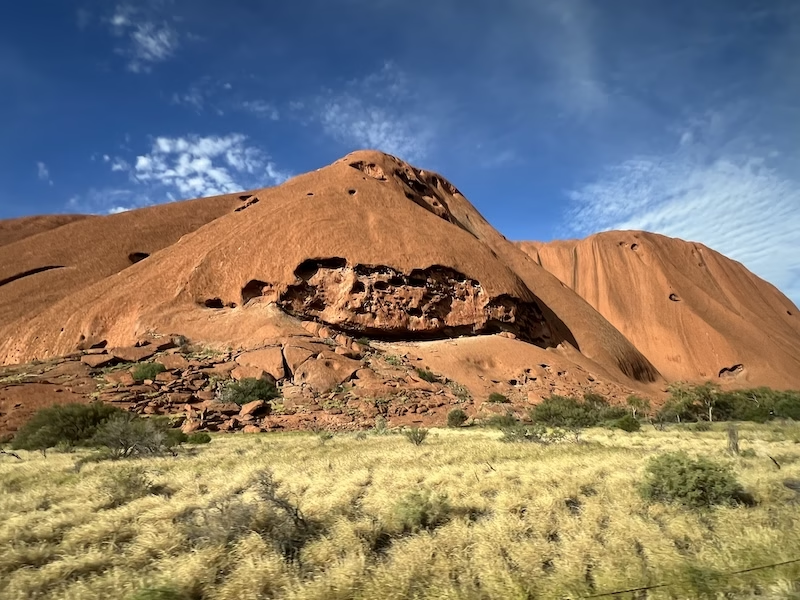
We had a fascinating lesson of the Uluru being the beloved nature that bestows life and meaning upon the Anangu peoples. But a basic understanding of the geology of the rock is another way to appreciate the Uluru.
The Geology of Uluru
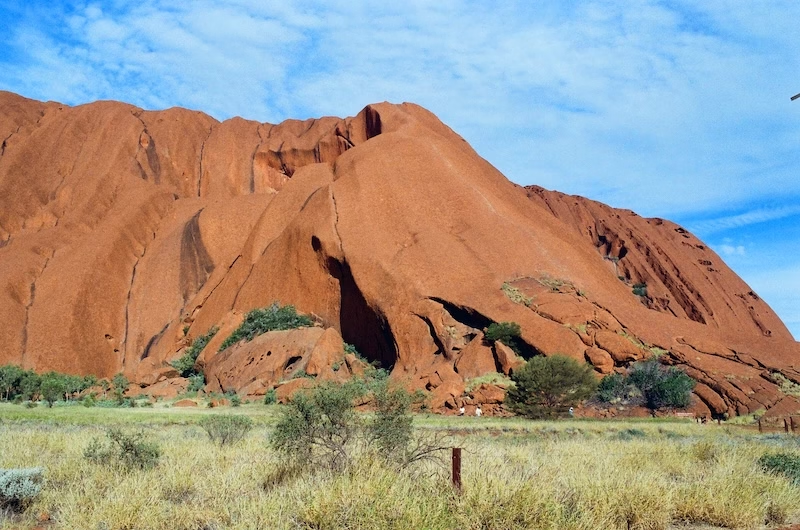
Within its embrace the Uluru reveals its essence in the minute geological details that stretch one’s imagination. Perhaps in so many words I will explain briefly the geology of the Uluru.
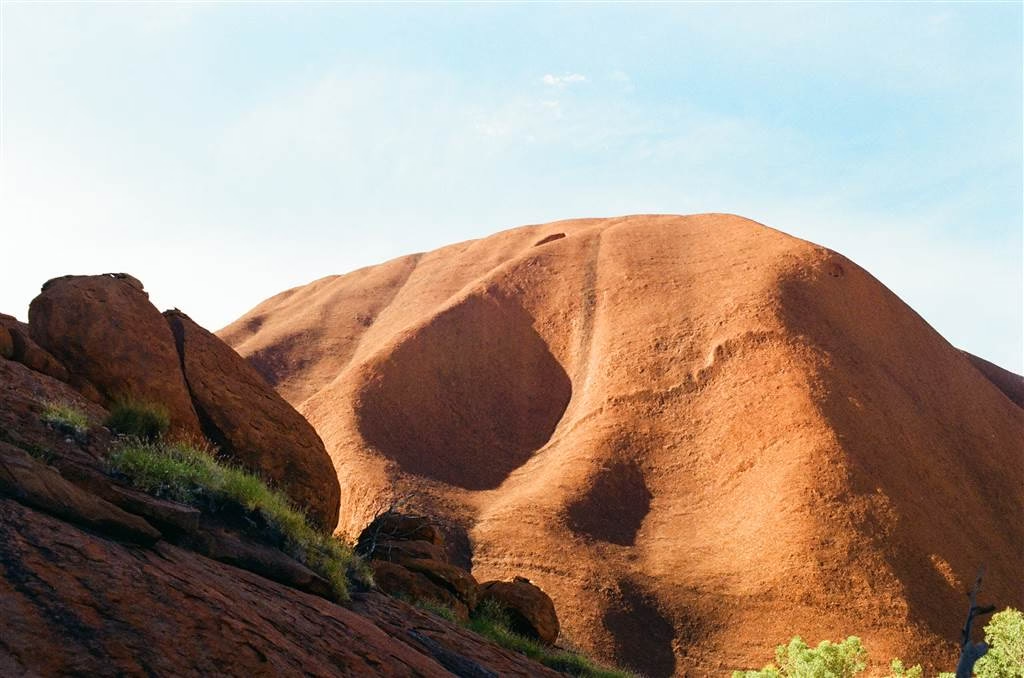
It is established science that the Uluru and the neighboring Kata Tjuṯa rocky mount are of different compositions. The rock that makes up the Uluru is arkose, a coarse sandstone with crystal structure and consisted of high contents of the mineral feldspar. There is also 24% iron content in the sediments, and that is the agent that gives the rock its rusty crimson surface. Kata Tjuṯa is a conglomerate consisting of gravels, with large, grainy and coarse surface.
Photo: Eorsion forces expose the arkose that lies beneath the rusty surface of the Uluru, and the natural color of arkose is dark gray.
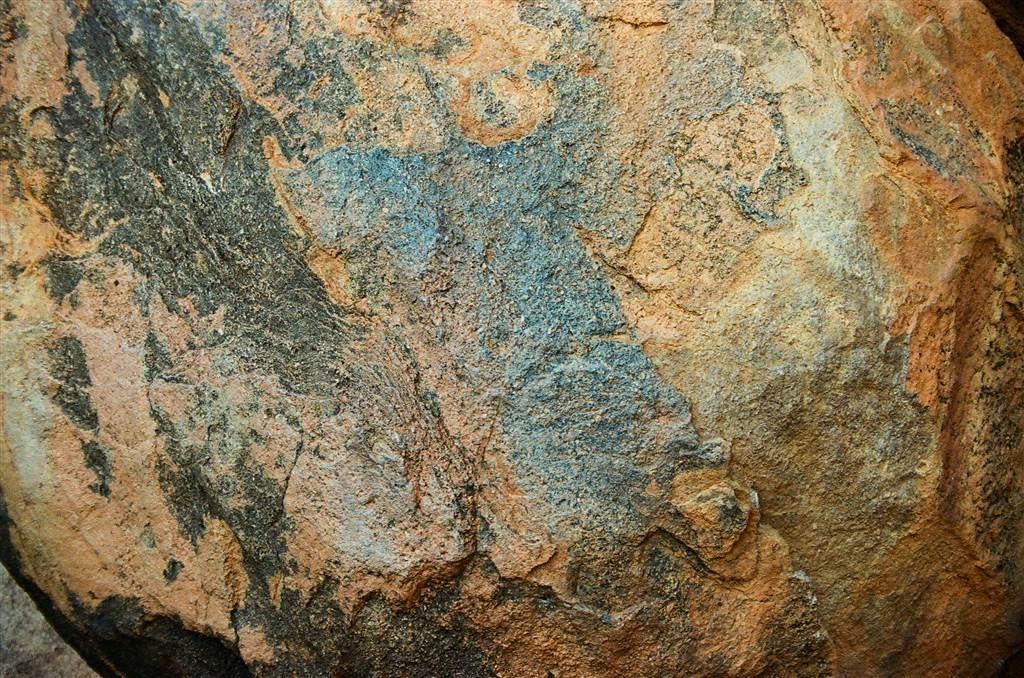
There were two significant geological events that resulted in the geological landscape that we see today. In this part of Australia, the Amadeus basin, which is now a salt lake, was a geological depression where lots of sediments deposited 900 million years ago into the shallow sea then. About 550 million years ago, the Petermann Orogeny resulted in the Petermann Ranges. Layers of sediments at the basin were crumpled and buckled, then pushed up. The Petermann Orogeny resulted in mountains as high as the Himalayas today.
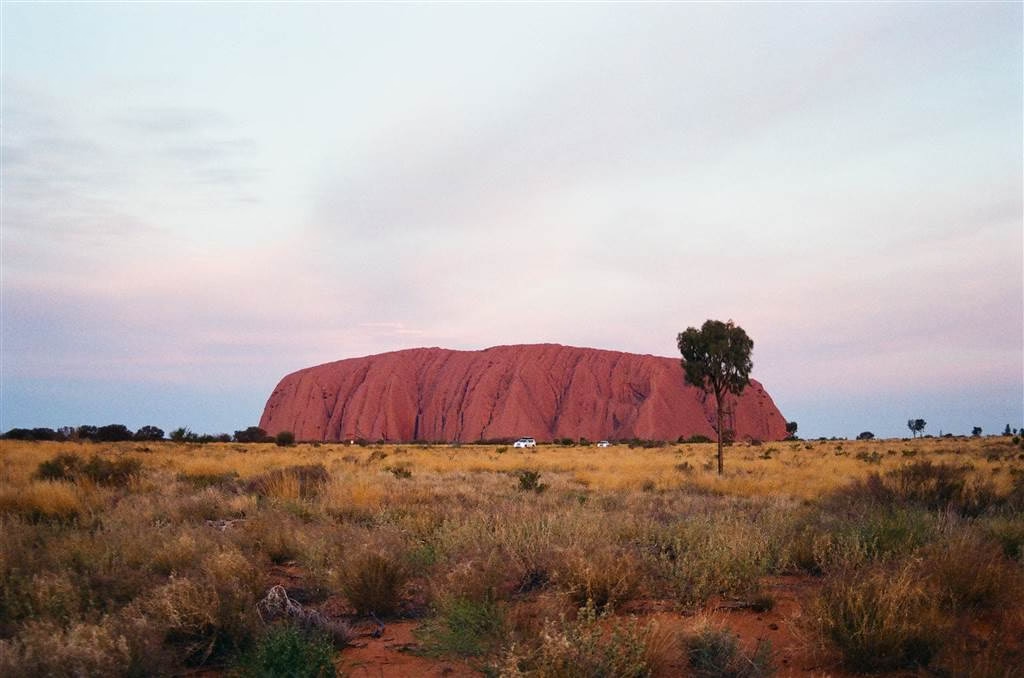
But erosions were severe at the Petermann Ranges because there were no vegetation or trees at the time. This in turn deposited an enormous trove of rock sediments down to the plains, forming alluvial fans, which would become the bases upon which both the Uluru and the Kata Tjuta formed.
In the case of the Uluru, fine sediment sandstones resulted. The inland sea in the area 500 million years ago receded, then the Alice Springs Orogeny followed about 300 million years ago. Again, the orogeny fractured and pushed the sandstone layers that lie at the core of the Uluru upward. For Uluru, the alluvial fans were pushed upward as far as 90 degrees. The Uluru that we see now emerged. Since the Alice Springs Orogeny, the landcrust movements slowed down.
The Uluru is layers of sandstone compressed underground. At its highest point, the Uluru measures 348 meters in height. The true wonders of these geological formations are buried, however. The “root” of the Uluru reaches 5 kilometers underground. It is the character of sand that insulates the inner structure of Uluru and slows down the constantly weltering forces of erosion.
The Mala Walk
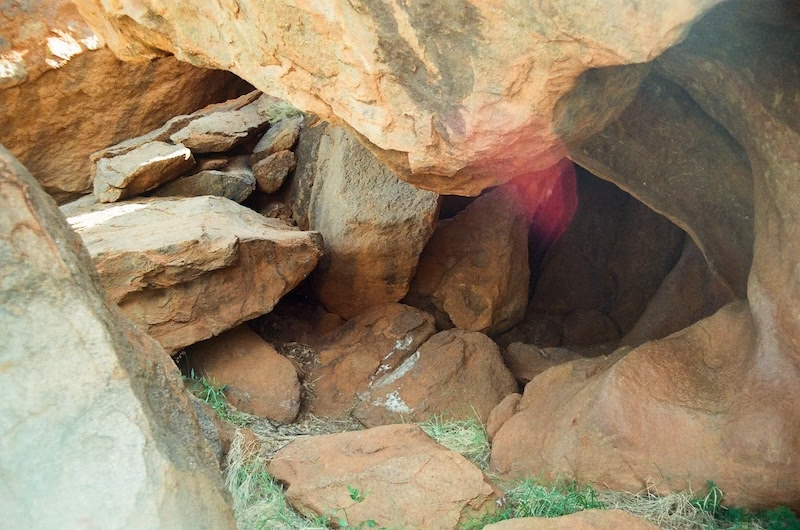
The Mala Walk, known also as the men’s cave, was a site of practical significance for the Anangu men. This was the place where they grew up to be a respectable member of the community by work and training.
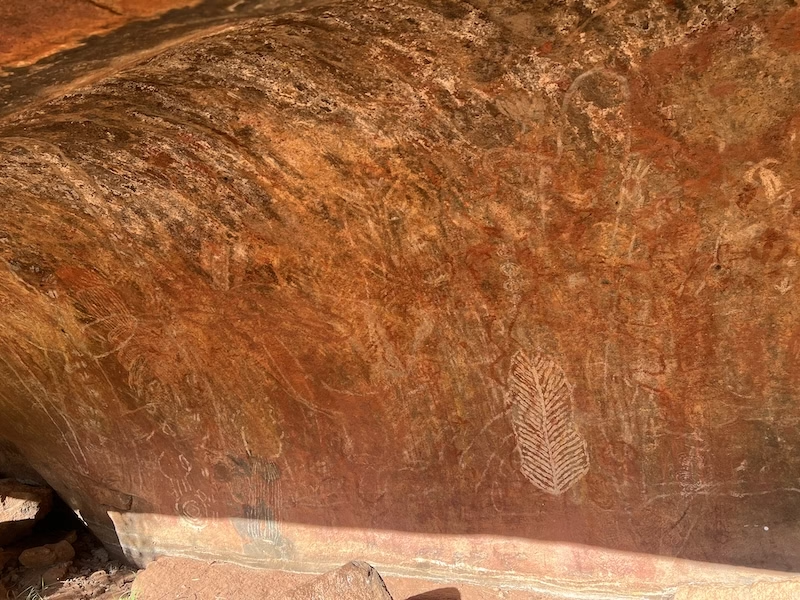
The grandfathers train the Anangu boys in life skills. Besides the basics of hunting, an Anangu boy was solemnly instructed on the laws and customs as told through the Tjukurpa. This aspect of an Aboriginal boy’s upbringing is critical because the harsh environment of the Outback makes survival the foremost concern for the whole community. If one member makes a mistake, the consequences are of dire propotions for the whole group.
Take, for example, the sacred Mutitjulu Waterhole. It is the only permanent waterhole in Uluru, and the next available water source is 30 kilometers away. It is therefore critically important that all abide by the strict rules in approaching the water at the waterhole.
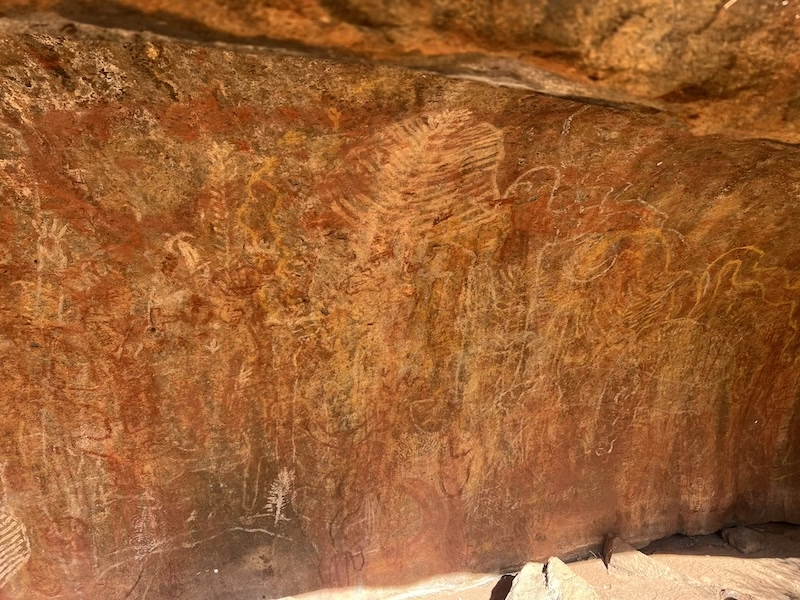
The Men’s Cave at the Mala walk is where the boys observed the animals in the context of hunting. Groups of animals came by here to drink water. The hunting rule for the Anangu boys is that you always only hunt the very last of the herd of any animal here. That is the wisdom distilled through time-tested practice — you don’t want to scare the whole group of animals away. It is also here that they learn other survival skills, such as finding water and making weapons. The Men’s Cave is the high school for Anangu boys.
After training in hunting skills and Aboriginal laws and customs, the boys then must prove themselves. The rite of passage ceremonies for many Aboriginal tribes are known to be exceedingly severe, to a point where the boys are expected to suffer quite a bit of physical injuries in the process. You won’t miss it when you meet an Aboriginal man that has gone through the proper rites — their scars will show, in an intentional accentuated manner. When the Aboriginals treat the injuries, they use the blood tree fruit, which has antibiotic quality and is red in color. As a result, the scars show bright red when they heal.
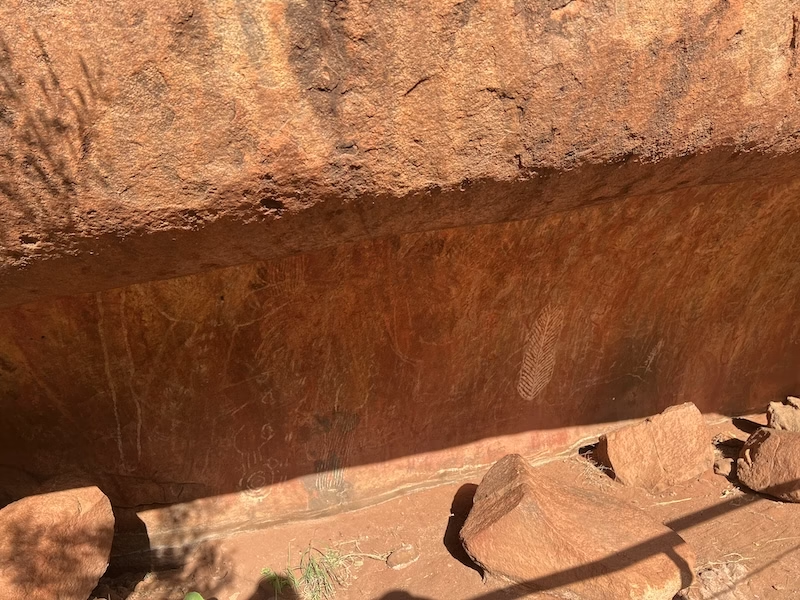
Although the severity of the trials at the rite of passage has ameliorated, it is still perceived to be much of a horror to the Aboriginal boys today.
Tjukurpa at the Mala Walk
Again, it is stated explicitly on the on the uluru.gov.au website not to replicate or retell the Creation Story of the Mala, and I shall respect that. Perhaps, briefly, the Tjukurpa on Mala has to do with the Aboriginals’ respect for ceremonies (inma) and the grave consequences in not heeding the warnings of danger. The Mala people have had to flee south after the incident. Suffice it is to say that, by the third day in the Outback, I have noticed some common elements in almost all of the Dreamtime stories that I have heard.
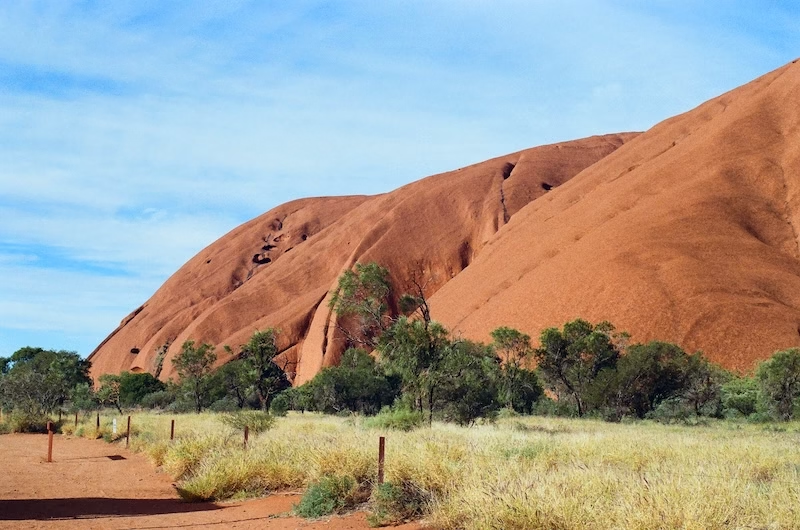
The stories almost always start with a moral wrong committed by an individual (or an outsider). The resident Aboriginals are the ones that rise against a wrongdoer as a group. There is the sense that survival is a collective matter and it is imperative upon everyone to defend a group’s interest together. What I find to be somewhat puzzling is that these wrongdoers are actually perceived as Ancestral Beings even if they committed grave wrongs. They often end up becoming the defining natural features that make the wondrous scenery before us. For reference, revisit the Caterpillar Dreamtime and the Perentie Dreamtime.
Footprints of the Dingoes
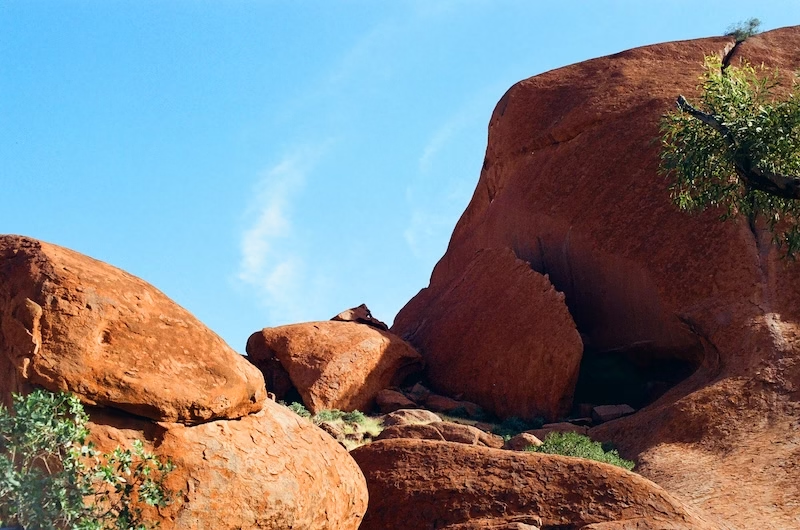
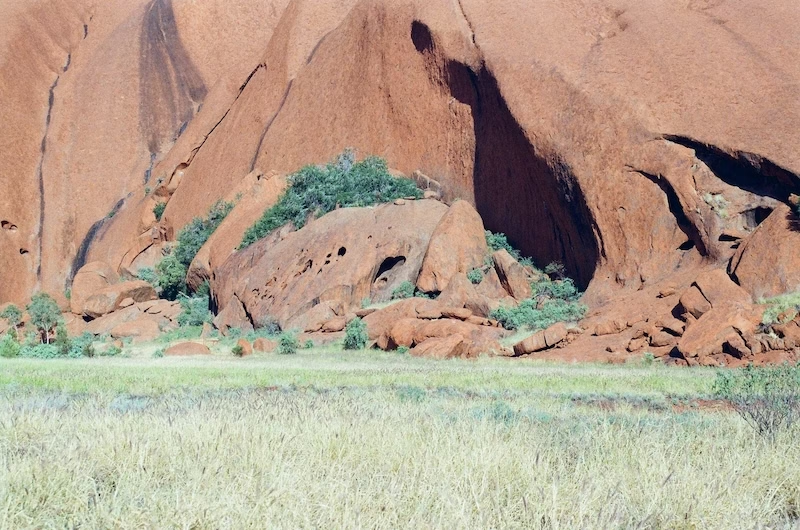
Science would explain the potholes that are seen in the Mala Walk differently from the Aboriginals. Put it simply, the potholes that we see on the cliff faces are the works of water erosion. To the Aboriginals, these potholes are the dingo steps, and the dingoes are part of the Tjukurpa on the Mala.
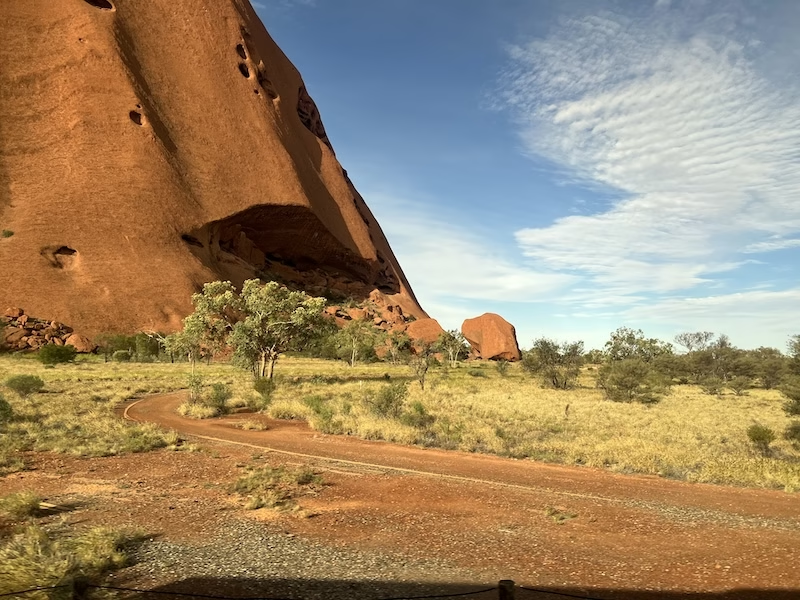
At this point of the tour at Uluru, I came to appreciate the arguments that are live at Uluru (though subtly made). There is a way that westerners and outsiders come into Uluru and readily admire it through science, viewing it as a geological wonder.
There is a way that the natives that have lived here for 30,000 years explain the natural phenomenon within which they have survived for generations. Call it science or Dreamtime, both the western way and the Aboriginal way represent perfectly valid worldviews. And the curiosity and love toward nature thus shown are equally admirable human qualities.
Whose worldview must take priority at the Uluru? I think it is beyond argument in Australia that the Aboriginals’ worldviews must prevail. This is simply because they are, by law, recognized as the traditional owners of the land now. Where they tell outsiders “this area is sacred, do not photograph,” then it is what one must accept as the rule.
The Tjukurpa is as every bit of truth as it is the Bible to the Christian world. By calling it “truth” the Aboriginals interpret the Tjukurpa in all dimensions of time, in past tense that the Ancestral Beings morphed into the nature, in the present that their actions still govern the Aboriginals’ conduct today, and in the future that the Ancestral Beings are eternal, both as manifested in nature and in the Aboriginals’ instructed memories.
I also learned that the reason to cease all scaling of the Uluru’s summit was a consensus between both the Anangu peoples and the park administrator. Besides the fact that there is that sacredness to the rock, there were other supporting reasons too. There were incidents of heat stroke and heart attack resulting in deaths there. Stopping human traffic was also the way to slow down erosion. Finally, there were a whole lot of trash up there due to human presence too. The summit was off bounds to tourists since 2019.
Sources
Tour with White Emu Run.
The Official Website of the Uluru Kata Tjuṯa National Park, Factsheet: Geology.