
Historic Macau — St. Joseph’s Seminary and Church
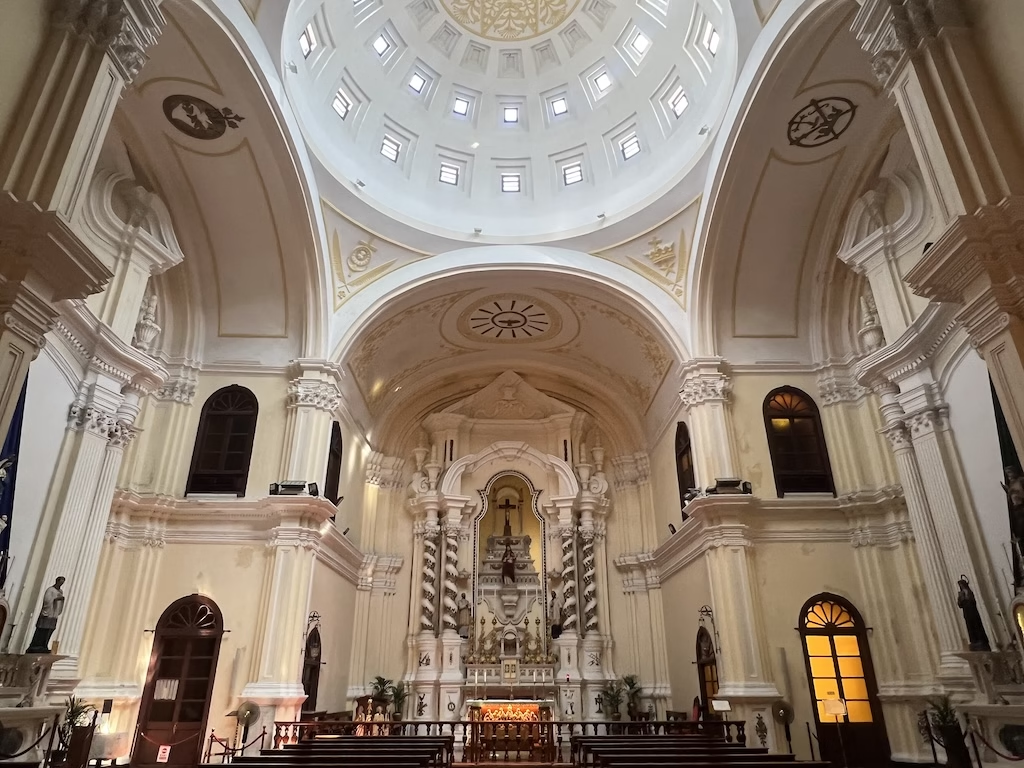
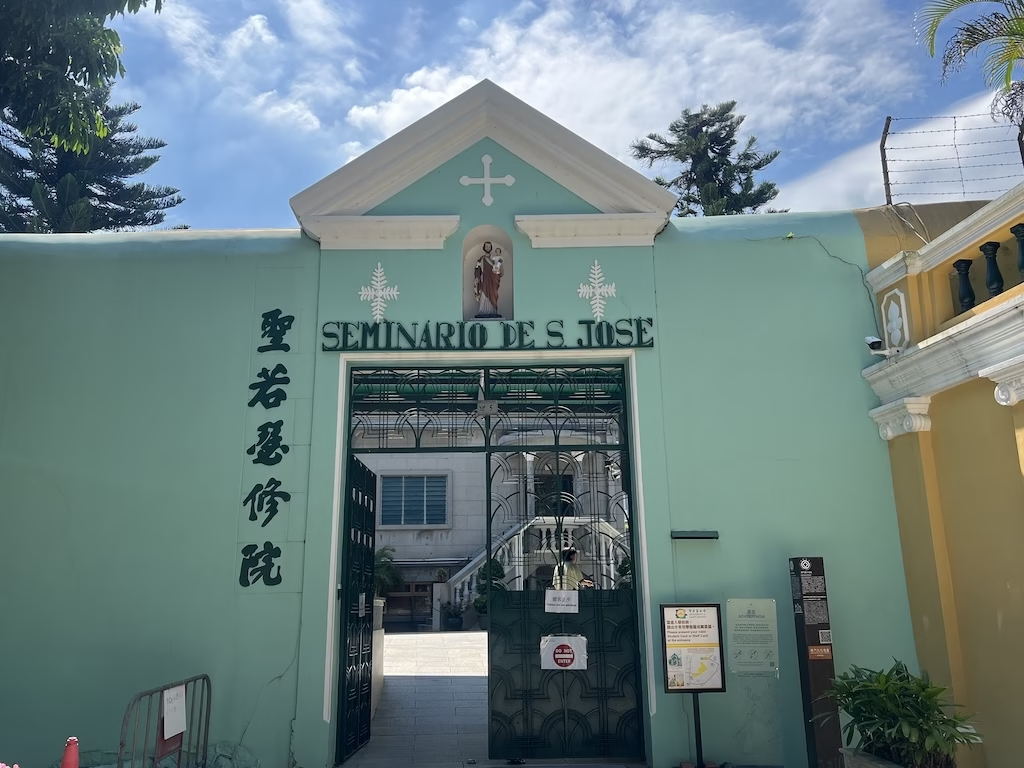
Its name Igreja e Seminário de São José in Portuguese, St. Joseph’s Seminary and Church was a church of the Jesuits. The seminary was founded in 1728, while the construction of the church building completed in 1758. As with the St. Lawrence’s Church, St. Joseph’s Seminary and Church stands in the São Lourenço neighborhood.
Yet as a religious institution, the St. Joseph’s Seminary and Church had a significance beyond the pastoring of its parish. Before the Jesuits were expulsed from Macau in 1762, the seminary was the training base for the missionaries that answered the call to missions in China, Japan and other neighboring countries. It offered training to the Jesuit missionaries in tandem with the College of St. Paul. The Seminary offered an academic curriculum, not unlike a university. In 1800, the Portuguese Queen Dona Maria I conferred the royal title “House of the Mission Congregation” upon the seminary.
When the Jesuits were expulsed from Macau in 1762, the Lazarites took over the administration of the St. Joseph’s Seminary and Church.
Some Features of the St. Joseph’s Seminary and Church
I headed up the famous granite steps to reach the forecourt and came upon the St. Joseph’s Seminary and Church. Its appearance struck me as I adored the perfectly aligned roman columns in three stories. The windows on each story show mouldings of different Baroquian motifs.
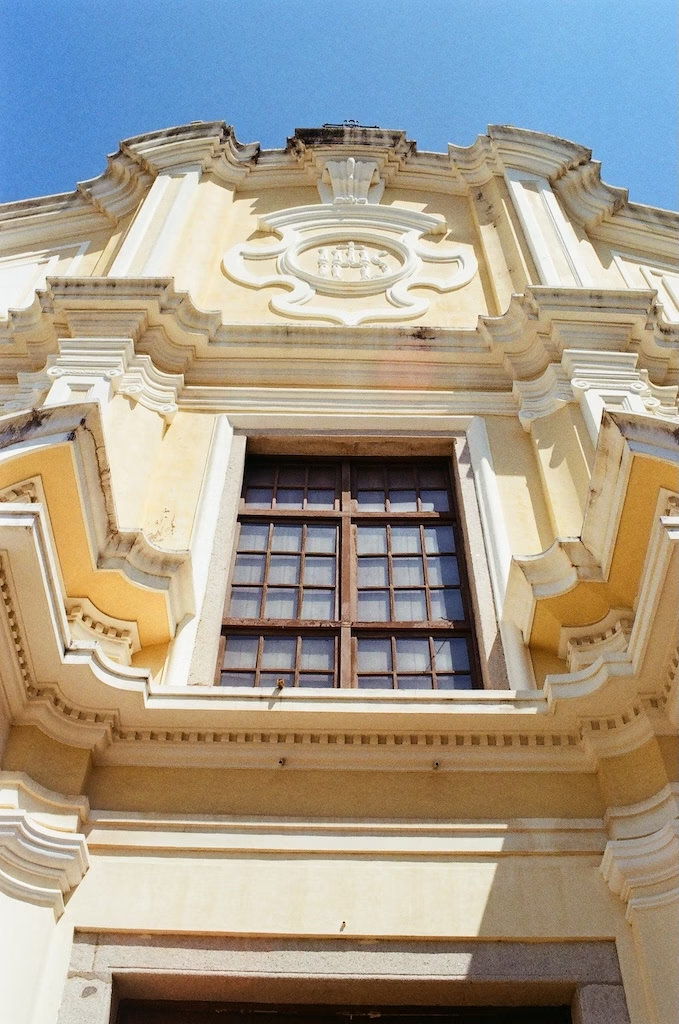
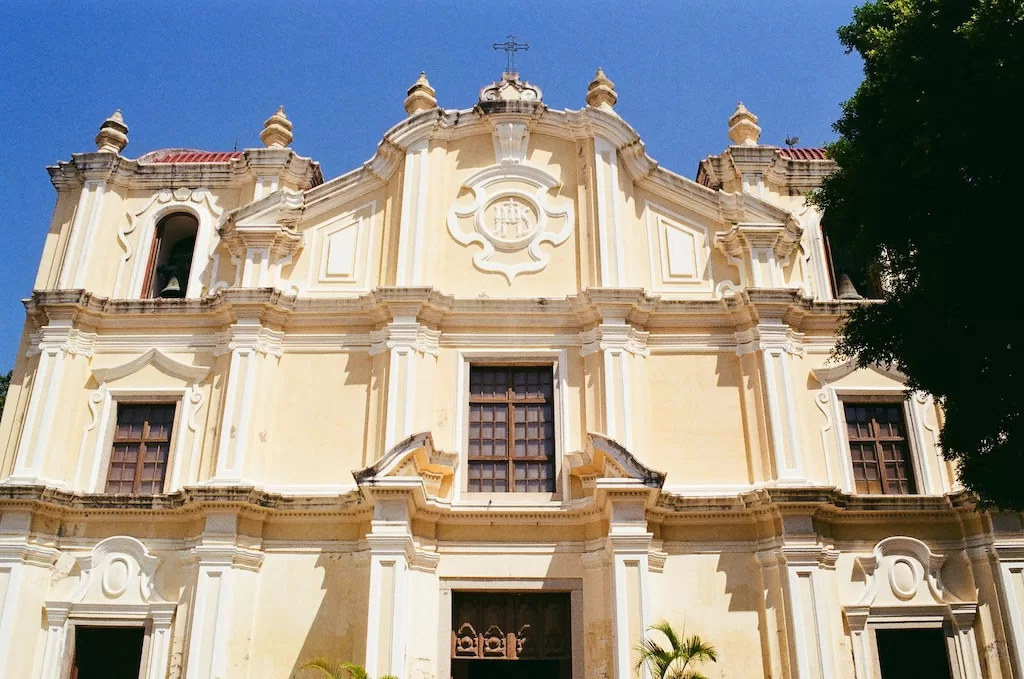
Although both are structures of the Jesuit Order, the St. Joseph’s Seminary and Church and the St. Lawrence’s Church have notably different architectural styles. The St. Joseph’s Seminary and Church is distinctly baroque in character, very much a contemporary feature of the time that it was built. Like the St. Lawrence’s Church, the St. Joseph’s Seminary and Church has a yellow exterior, glistening a warm brilliance.
The baroque architecture of the St. Joseph’s Seminary and Church is significant as an example of Portuguese baroque architecture abroad. The churches of Asia are typically built in much simpler architecture than those of Europe’s. Yet they never lack the chief importance of church architecture, which is itself the very dedication to God and holiness. Along with the St. Paul’s Ruins, this church stand for the only two examples of baroque architecture in China.
The façade shows the main entrance representing the baroque style of adornment, with a grandeur that moves the aesthetic senses. There is a central dome, as well as two onion shaped small domes on the side towers by the façade. These domes are the chief architectural feature that enables the drawing of natural sunlight into the nave. In the St. Lawrence’s Church, the conduit of natural sunlight are the roof windows that are built on the sides, instead of at the top.
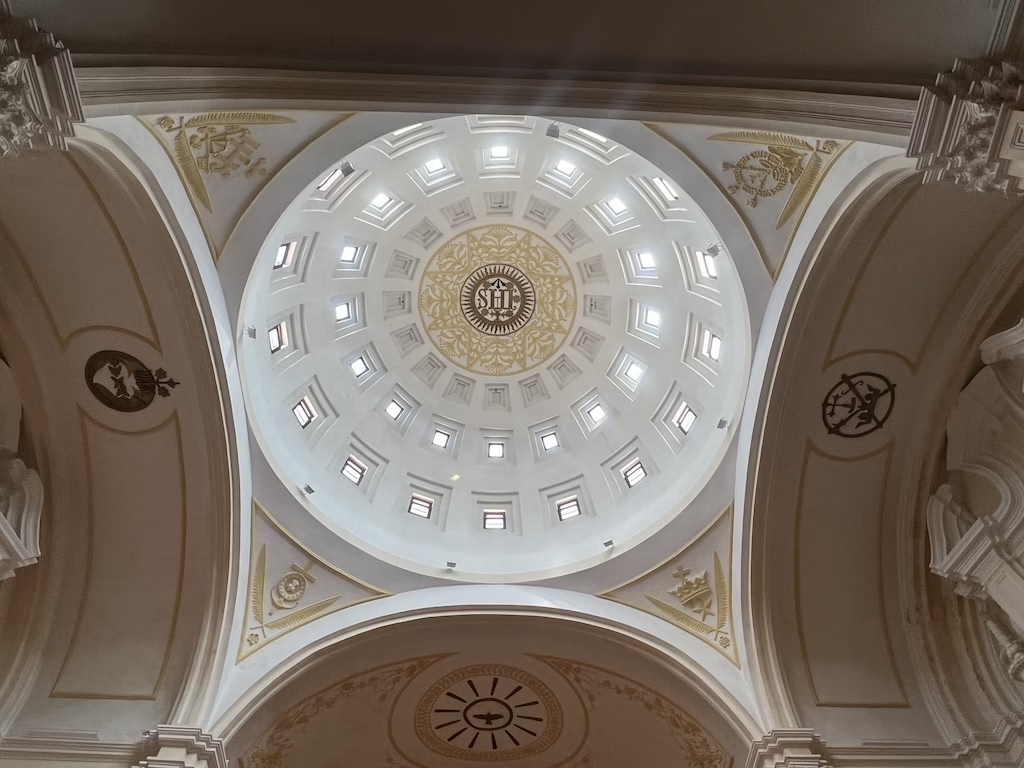
There is a certain sense that the St. Joseph’s Seminary and Church are a notch more elaborate than the St. Lawrence’s Church. Its sanctuary is adorned with significant architectural features, with domes and arches presenting a unity in the whole. The nave conveys an echo of holiness and solemnity that fills the space and the soul.
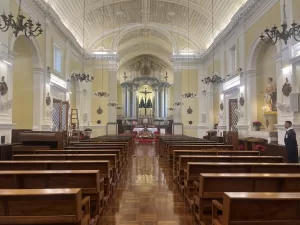
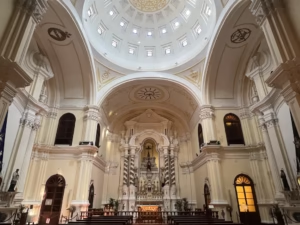
Photos: On the left, the nave of the St. Lawrence’s Church. On the right, the nave of the St. Joseph’s Church.
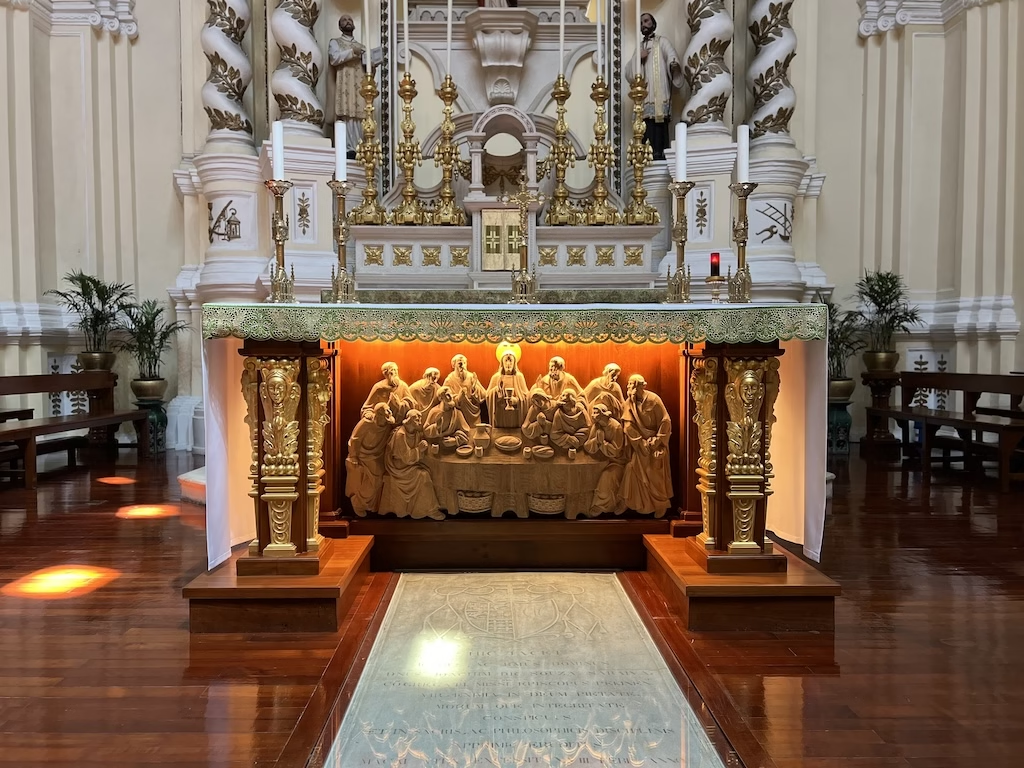
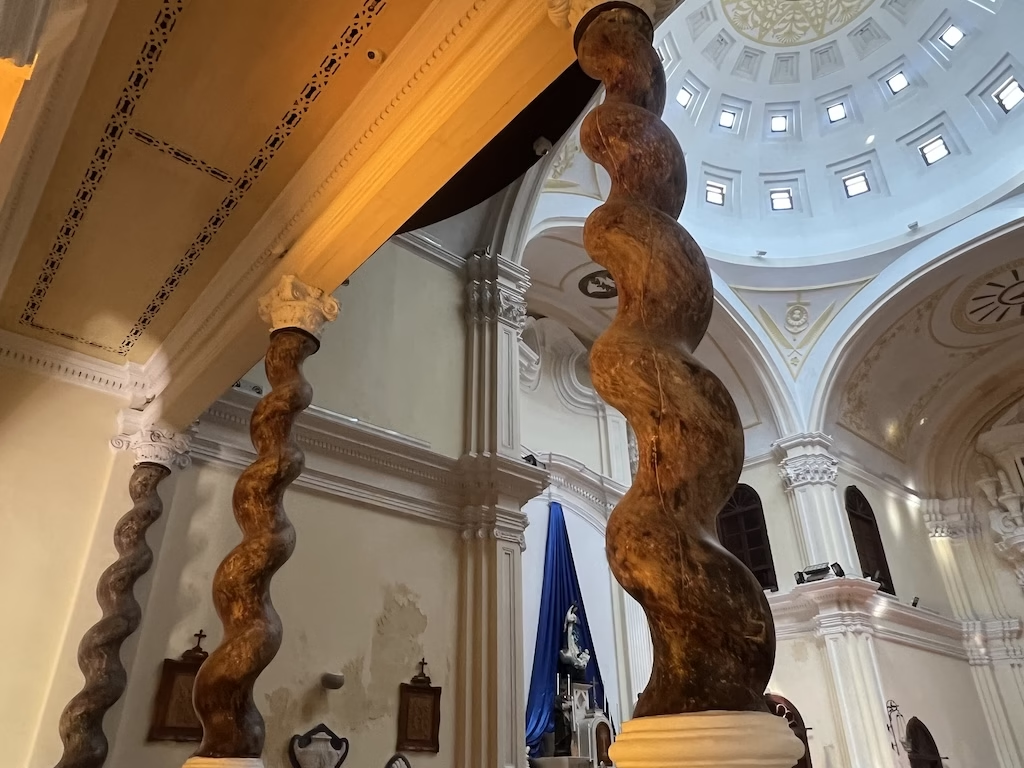
I was particularly drawn to the interior Solomonic columns that are distinctive in this church. They appear to be wooden and concrete structures. As the name suggests, this architectural feature is meant to resemble the columns of the Israelites’ Temple of Solomon (First Temple).
Finally, the St. Joseph’s Seminary and Church houses quite a number of sacred relics, including books and documents, oil paintings, icons, liturgical vestments and vessels, together they are known to be the Treasure of Sacred Art of St. Josephe’s Seminary. It also houses the shoulder blade of St. Francis Xavier, who, although never visited Macau, was a key figure in the Catholic missions of the world and also a founder of the Jesuit Order.
While the St. Joseph’s Church is open to the public, the St. Joseph’s Seminary is not.
Sources
The Wikipedia on the St. Joseph’s Seminary and Church at https://en.wikipedia.org/wiki/St._Joseph%27s_Seminary_and_Church
Museum of Macau, The Treasure of Sacred Art of St. Joseph’s Seminary.
The Macao News, Behind the Relic: St Francis Xavier’s perilous mission to spread Catholicism across Asia.
The Wikipedia on Solomonic Column.
Open House Macau, Saint Joseph’s Seminary and Church.